Stoke-by-Nayland
John Constable · 1836
Explore the painting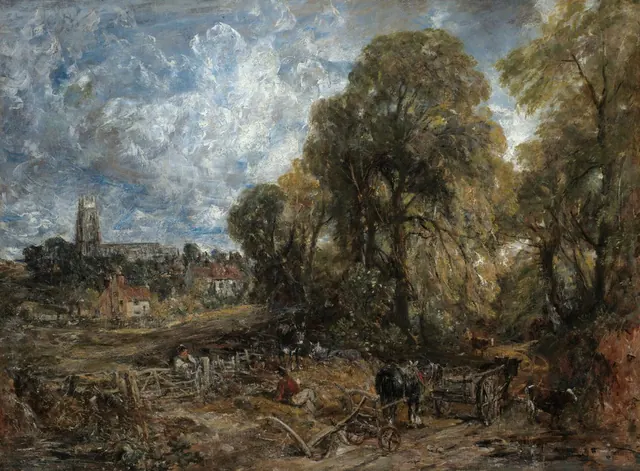
The painting’s story and details
John Constable painted this large study in 1836 after many years in London. Stoke-by-Nayland lay near his childhood village. In a letter to a friend he specified even the hour and weather: a summer morning following light overnight rain. The canvas was intended as a full-scale study for a finished exhibition landscape that never materialised. What survives already gives the conception its intended scale.
The church tower rises above roofs on the left. A recognisable landmark gathers scattered buildings into a village. Our gaze passes freely towards it through open light. Returning to familiar countryside from urban life, Constable brings recognition together with memory.
A large tree divides two unequal spaces. Distance opens on the left while a lane tunnels under dark branches on the right. Constable explained that leaves remained weighted with overnight moisture. The tree organises space and describes a particular state of weather at once.
A dark horse stands near a cart in the foreground. Roughly indicated, its outline remains clear among pale touches on the ground. Animal and equipment connect the landscape with human work. The village appears as inhabited and cultivated ground through which everyday movement continues.
Wheels project towards the viewer near the lower edge. Energetic curves and spokes dispense with detailed finish. Constable used brushes and palette knife to apply, shift and scrape paint. At this scale he could judge those movements in the same proportions as the planned final painting.
A red figure beside the lane is small against the tree. One strong colour accent makes it conspicuous. People provide scale, while weather and land occupy most of our attention. Their presence belongs to a wider rural world where different activities share one setting.
Irregular bright marks cover the sky. The letter specifies July or August, around eight or nine in the morning. White touches on clouds, leaves and earth suggest moisture and sparkle after rain. A shared technique connects distant sky with nearby puddles, producing a sense of damp air throughout.
Red roofs gather in a bright opening between dark trees. The lane on the right almost disappears into shade. These directions offer two passages through the picture: towards the distant village or into enclosed space nearby. Free handling sustains both movements without slowing them through numerous small details.
Constable’s rural England included an ideal of agreement between nature and inhabited land. Cart, church and trees belong to one order, shaped by his chosen viewpoint and childhood memory. The unfinished study makes landscape’s construction through selection, hand movement and attachment to place particularly visible. Its roughness allows the act of painting itself to contribute to the experience of a summer morning.
More paintings to compare
 John Constable
The Hay Wain
1821 Frederic Edwin Church
Heart of the Andes
1859 Thomas Cole
Distant View of Niagara Falls
1830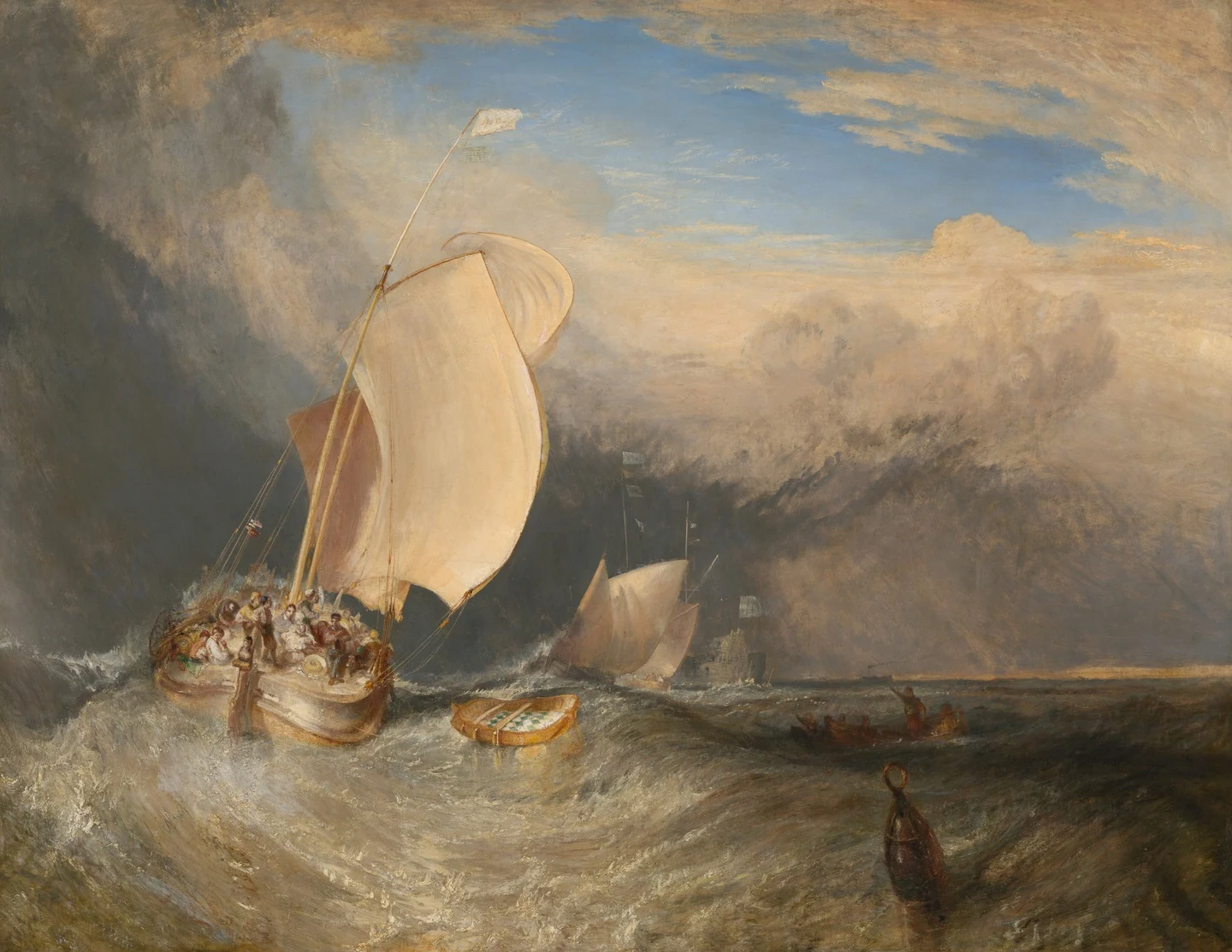 Joseph Mallord William Turner
Fishing Boats with Hucksters Bargaining for Fish
1837–38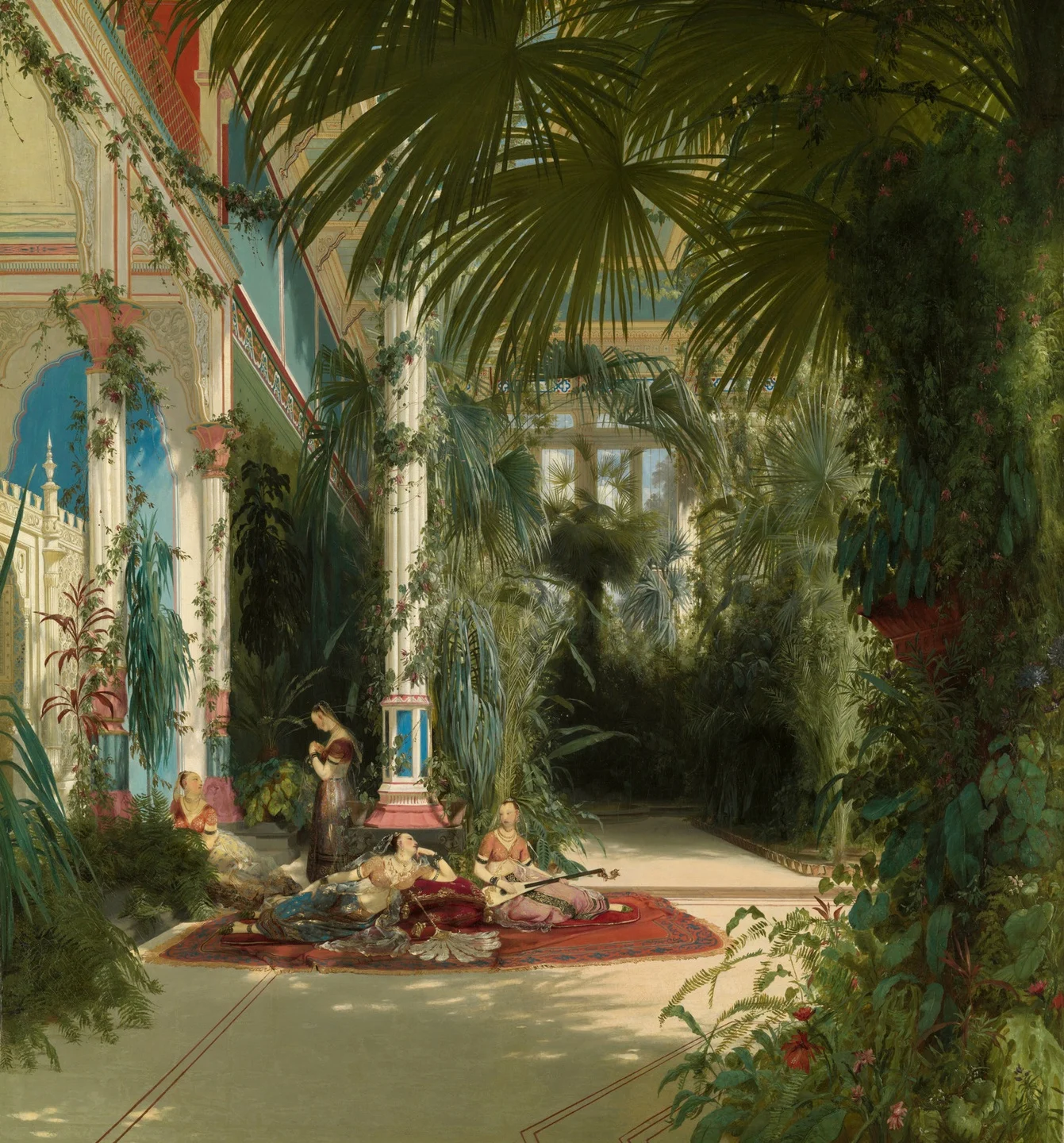 Carl Blechen
The Interior of the Palm House on the Pfaueninsel Near Potsdam
1834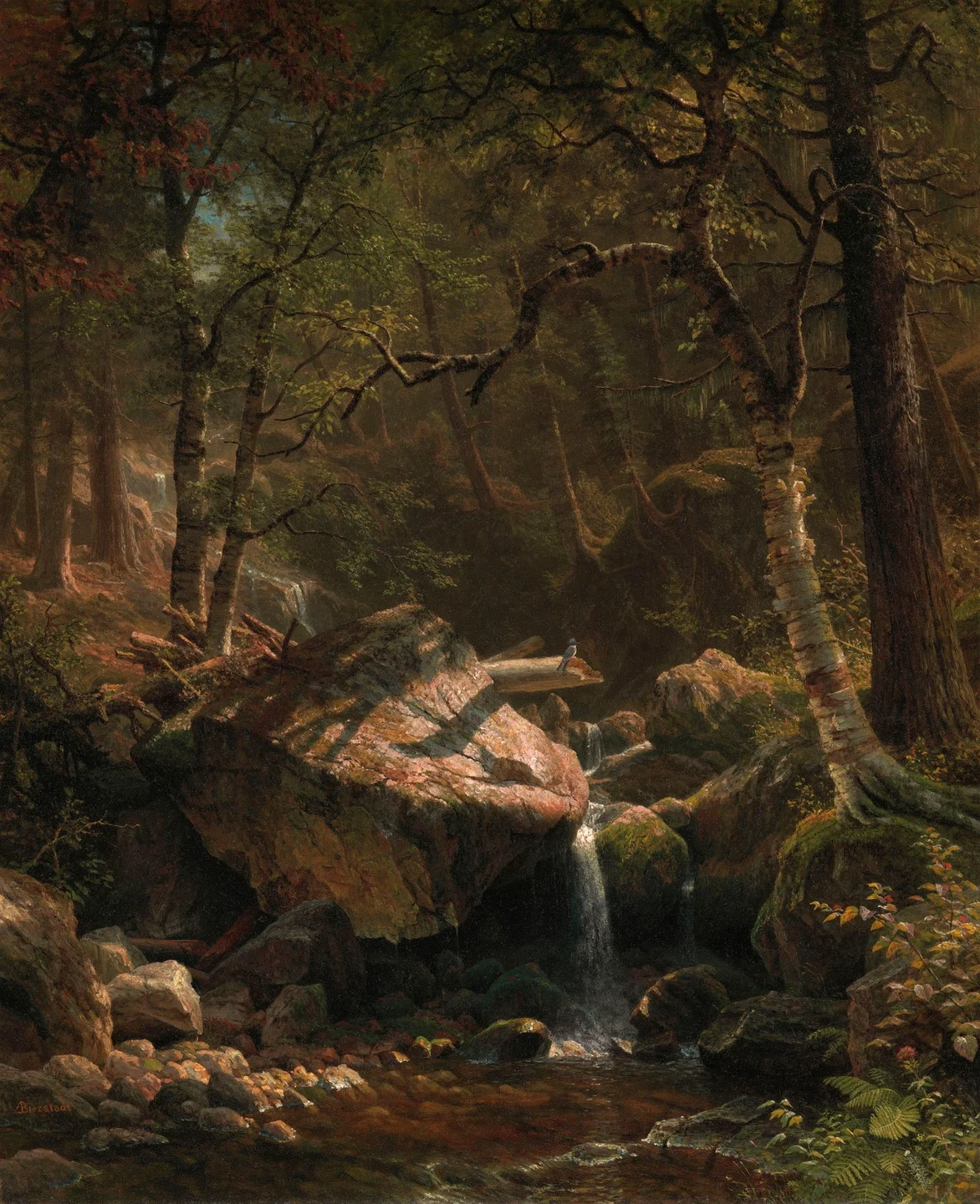 Albert Bierstadt
Mountain Brook
1863Period, style and subject
- Movement
- Romanticism
- Genre
- Landscape
- Medium
- Oil on canvas
- Collection
- Art Institute of Chicago
- Dimensions
- 126 × 169 cm
- Accession number
- 1922.4453
Sources
Image provided under CC0. Image licence
Adapted and translated from Art Institute of Chicago materials. · Text licence