Mountain Market, Clear with Rising Mist
Unidentified Korean painters · early 1500s
Explore the painting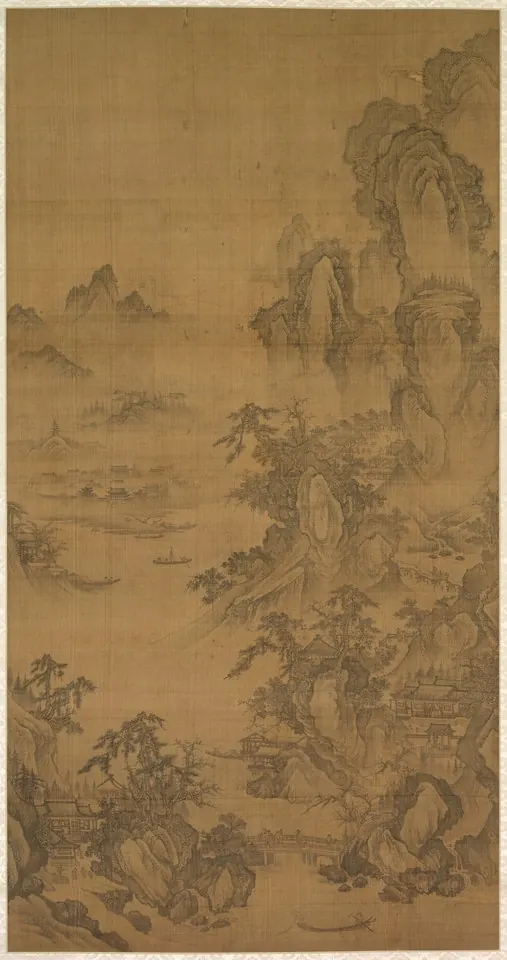
The painting’s story and details
In this early-sixteenth-century Korean landscape, a scholar receives visitors, walks and continues his journey with servants. In the museum’s reading, several small groups represent successive episodes of his travels. Bridges and paths extend between them. The mountain world is inhabited: people sustain friendships, trade and cross waterways. An educated person’s retreat retains many connections with surrounding society.
At the lower left, people meet beside a house. Trees and rocks shelter the building, but a path leads towards the water and bridge. Such a dwelling offers protected space for study while allowing visitors to arrive. The painter begins the story with a particular human exchange, almost hidden beneath the landscape’s immense expanse.
Another group pauses on the bridge. Its curved span connects rocky banks and carries the narrative into the next episode. The crossing demands close attention because its figures are tiny. Viewers alternate between two scales: a panorama of terrain and brief encounters among people for whom that terrain is an everyday world.
A compound of buildings, courtyards and covered passages stands at the right. Beside it, the modest house at the journey’s beginning takes on a different character. The landscape contains different degrees of wealth and forms of residence. Yet a shared system of routes connects them. Mountain life here includes hospitality, neighbours and opportunities to visit one another.
Farther up, tightly gathered roofs and numerous small figures appear. The museum identifies this as a busy market that the scholar and his entourage may be approaching. Even solitary study requires objects made and delivered by other people. Books, paper and brushes connected scholarly life with exchange. The market places that dependence within the ideal landscape.
Steep rocks rise at the right, while the left is almost free of ink. Mist separates the near bank from distant peaks. This organization leads the eye upwards without turning the terrain into a map of precise scale. The journey’s duration emerges through alternating detailed stopping points and spaces crossed more freely in imagination.
For a long time, stylistic features led this work to be classified as twelfth-century Chinese painting. The museum now assigns it to Korea’s Joseon period. Its attribution history shows how readily a shared artistic language can be mistaken for a single national identity. Understanding the picture benefits from retaining both connections: its Korean making and the broader mountain-landscape tradition within which artists from different countries could speak related visual languages.
More paintings to compare
 Unidentified Korean painters
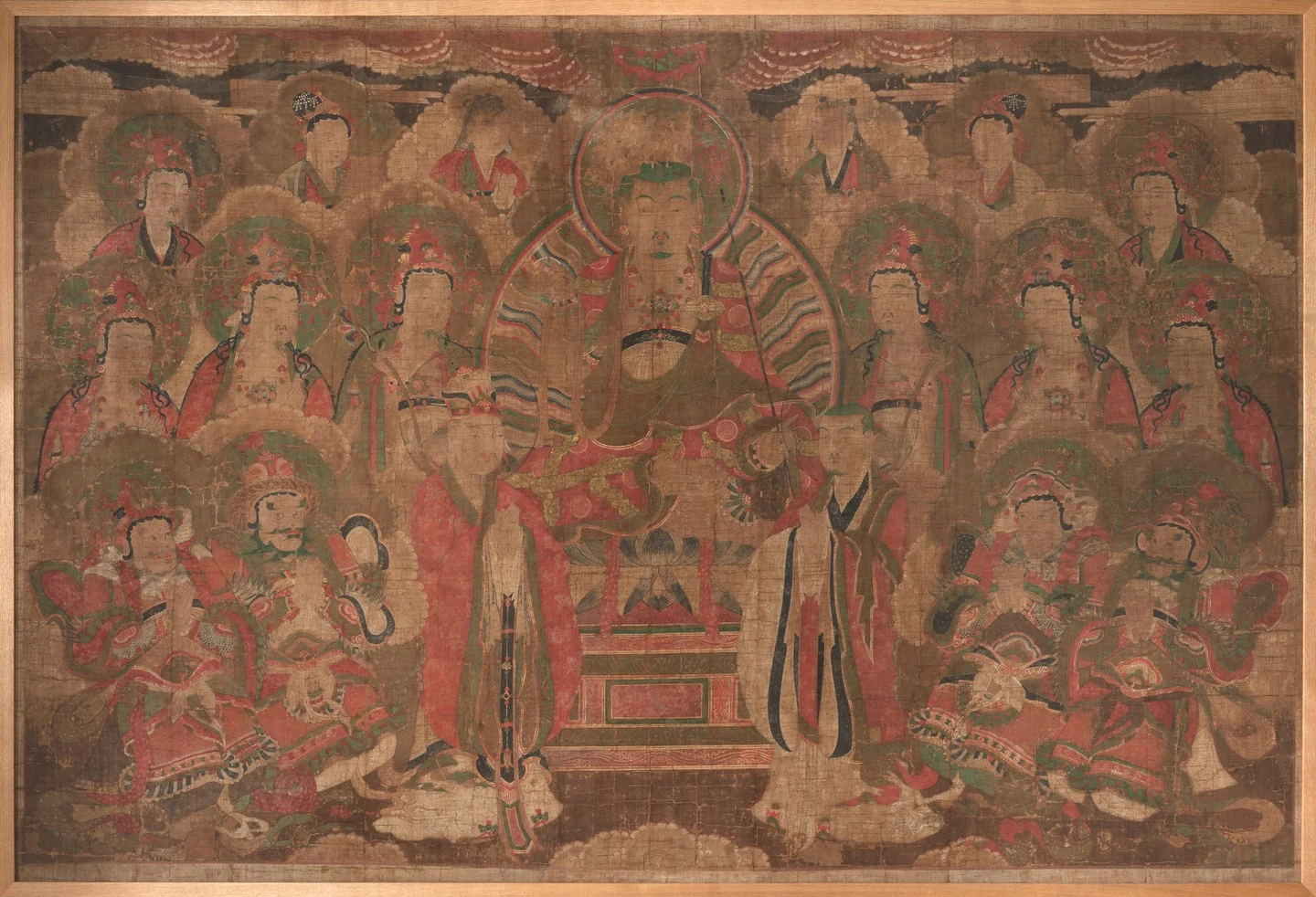
Ksitigarbha Bodhisattva with Assembly
late 16th/early 17th century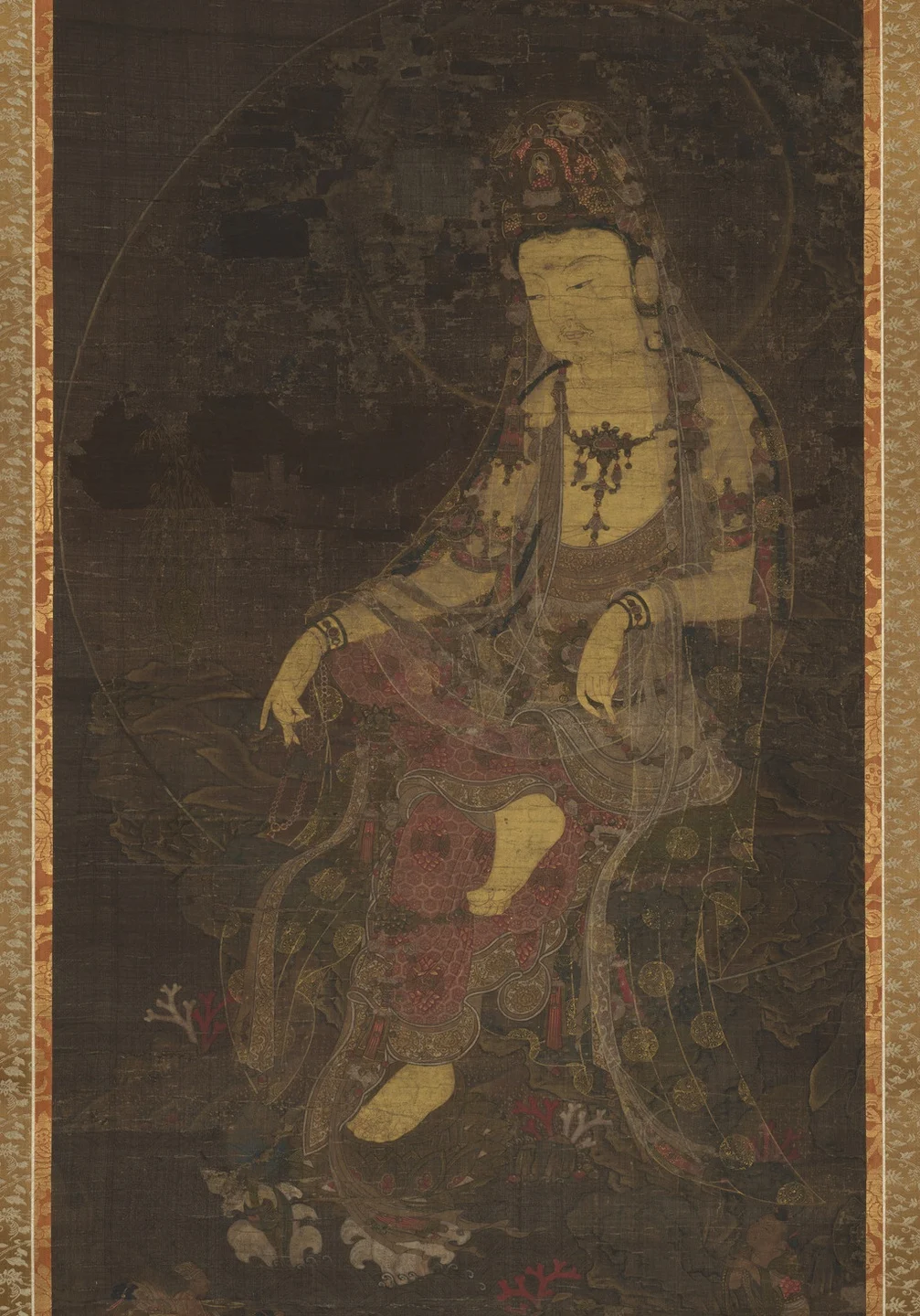 Unidentified Korean painters
Water-moon Avalokiteshvara
first half of the 14th century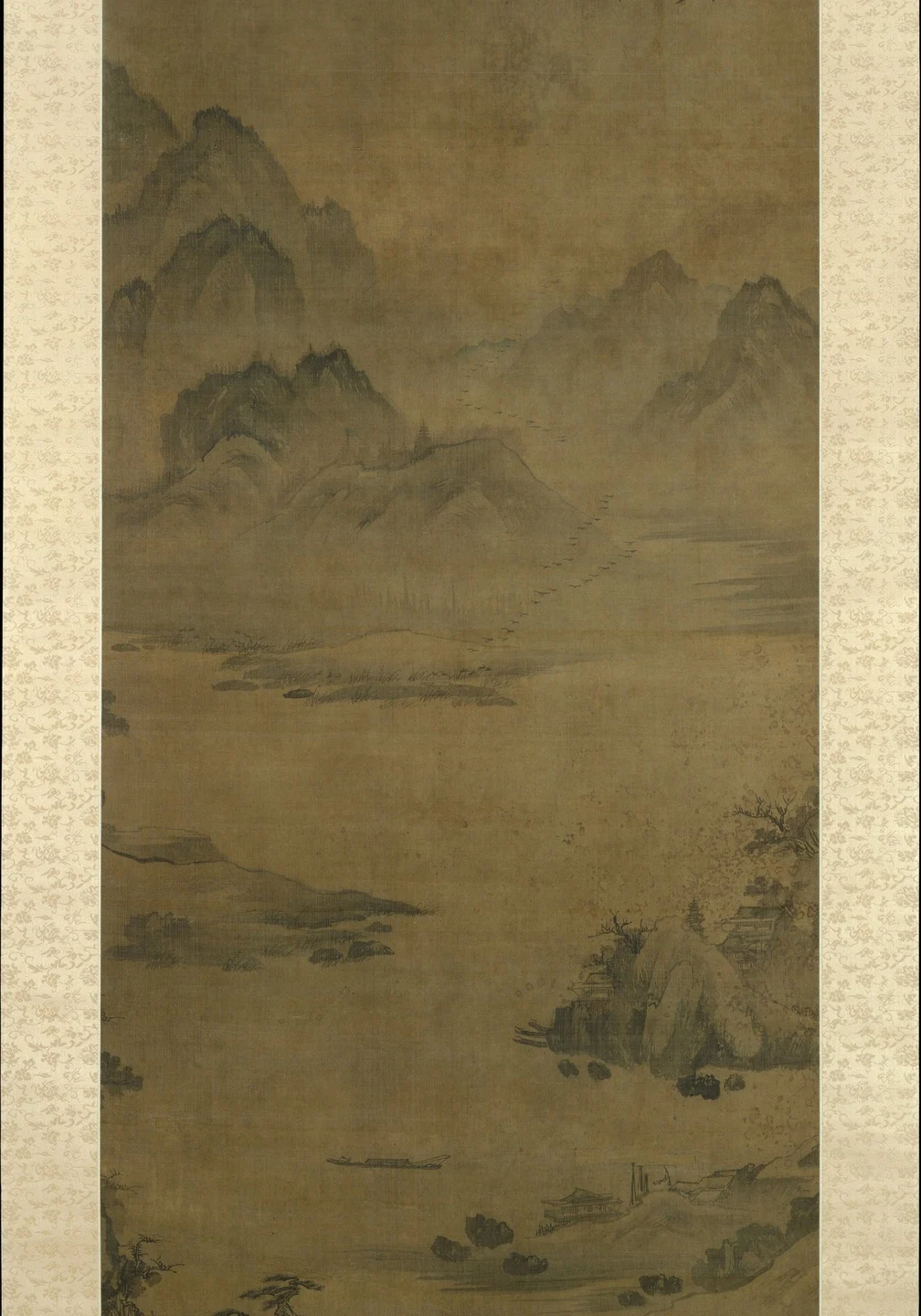 Unidentified Korean painters
Wild geese descending to sandbar
late 15th–early 16th century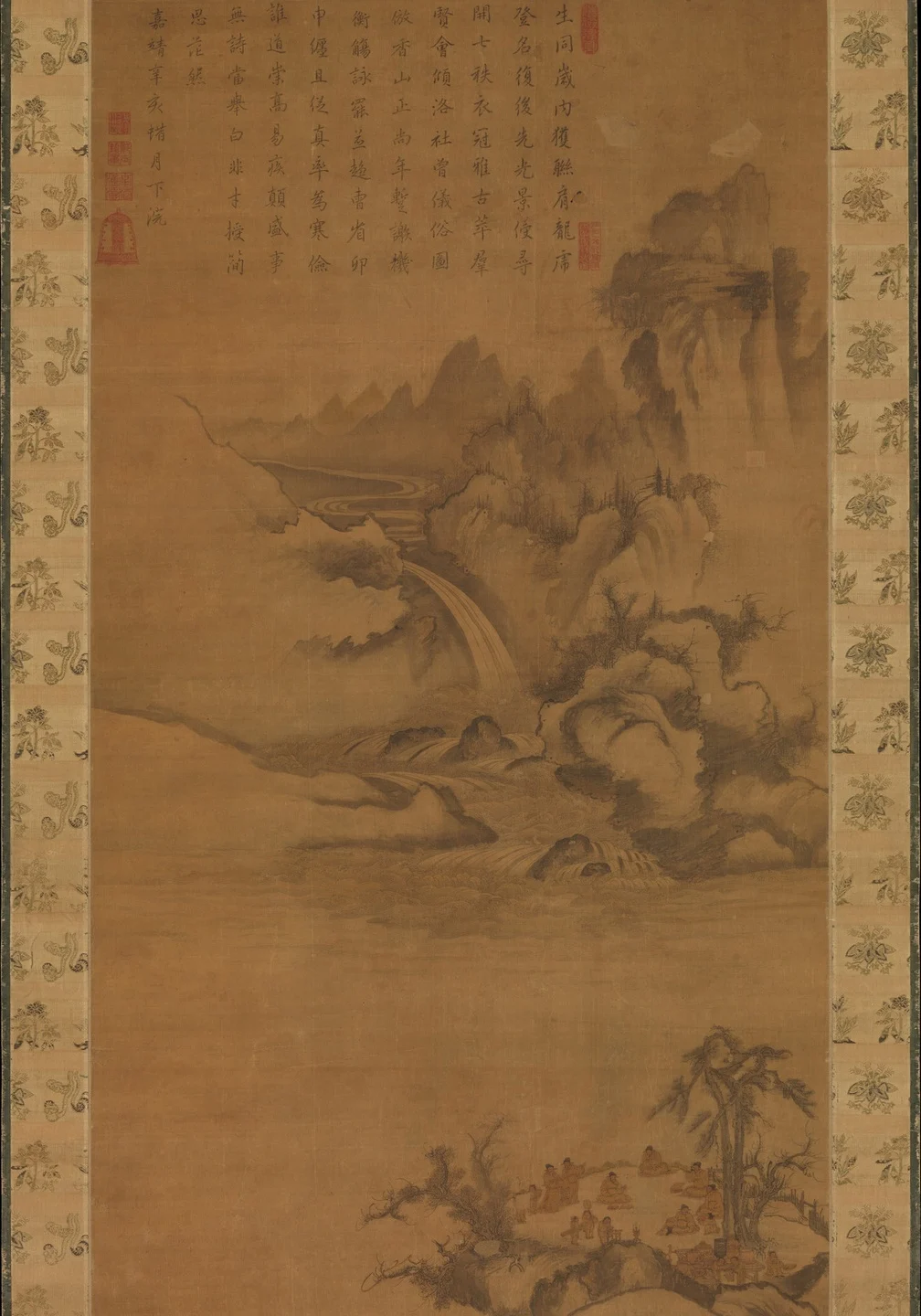 Unidentified Korean painters
Gathering of government officials
ca. 1551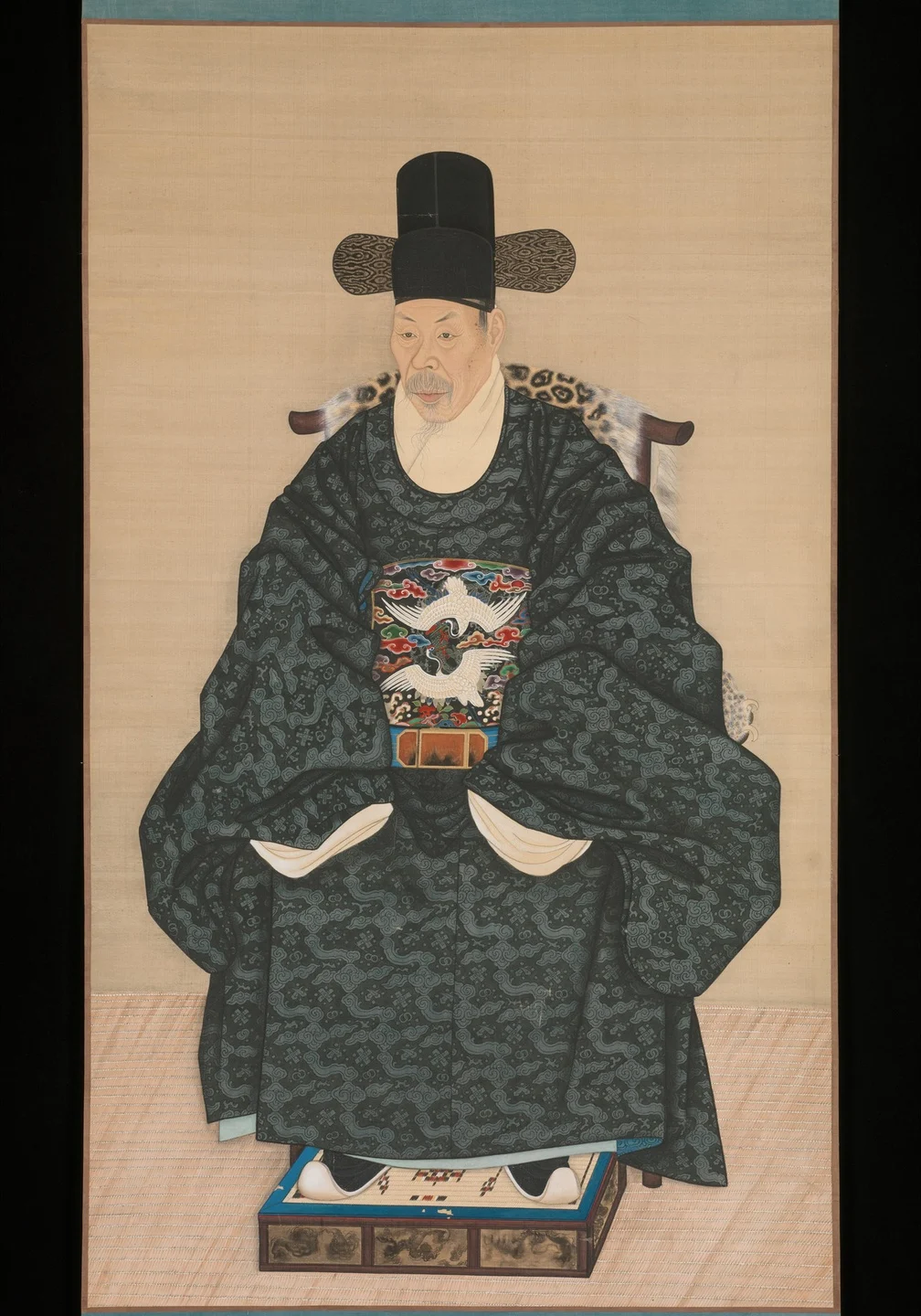 Unidentified Korean painters
Portrait of Yun Dongseom (1710–1795)
ca. 1790–1805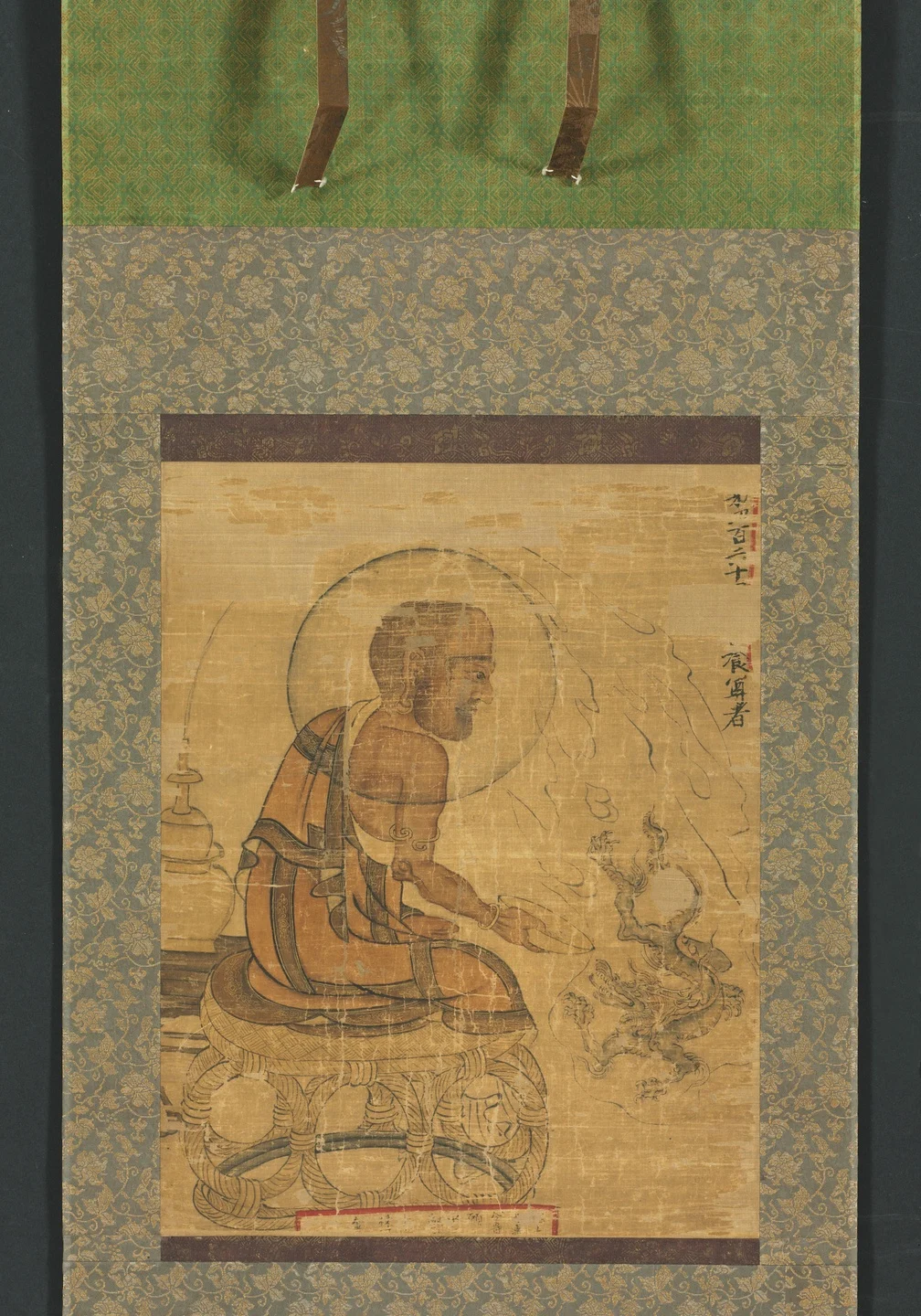 Unidentified Korean painters
Arhat
1235Period, style and subject
- Movement
- Korean painting
- Genre
- Landscape
- Medium
- Hanging scroll; ink on silk
- Collection
- Cleveland Museum of Art
- Dimensions
- Painting, 115.3 × 60 cm
- Accession number
- 2015.517
Sources
Image provided under CC0. Image licence