"The Concourse of the Birds", Folio 11r from a Mantiq al-Tayr (Language of the Birds)
Painting by Habiballah of Sava · ca. 1600
Explore the painting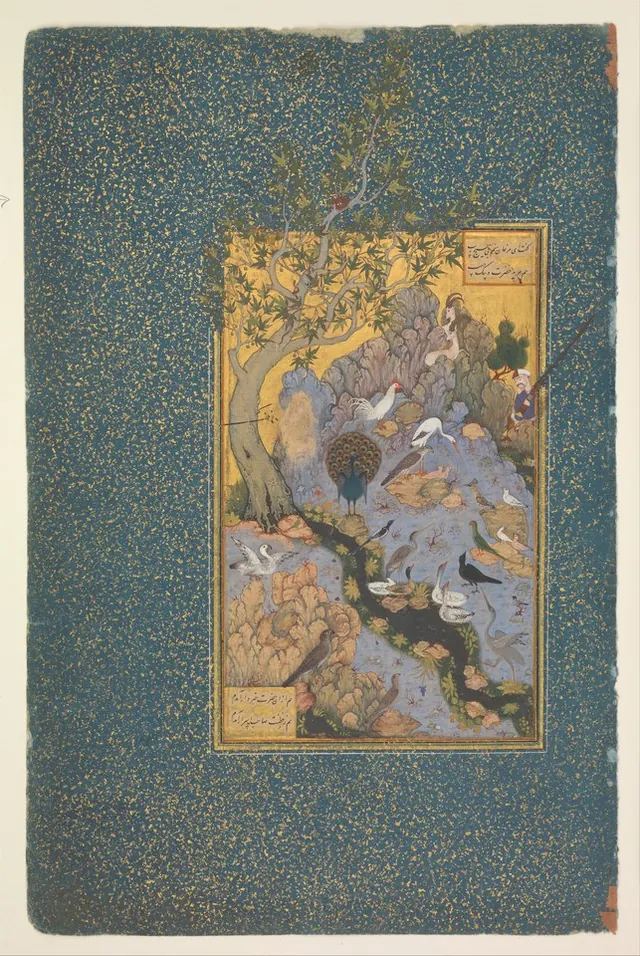
The painting’s story and details
Birds gather beside a stream before a long journey. In a poem by the Persian author Attar, they seek Simurgh, their king. The museum explains the story as an account of souls seeking spiritual unity. Habiballah of Sava shows the beginning of the journey, when the assembly still consists of many different creatures, each with its own appearance.
A small crested hoopoe sits on a rock at the right. This bird will become the guide. Its position above some of its neighbours helps us find it, although the painter does not enlarge it into a dominating protagonist. Understanding the assembly requires attention to relationships among tiny figures, just as reading the poem requires following its sequence of events.
The peacock opens its tail towards us. The rounded eyes of its feathers form a fan that stands out among long necks and folded wings. White, grey, black, and green birds appear together. This variety makes the spiritual story tangible, but appearance alone does not establish a particular human vice or virtue for every bird.
The stream runs down the page as a broken dark ribbon. Birds stand on both banks, and the water connects several small groups. Rocks are shown largely from above, birds mostly from the side. These combined viewpoints let us see the arrangement of the bank and recognise its inhabitants at the same time. The painter carefully fits them onto a narrow page.
A hunter at the right holds a firearm. He does not belong to the corresponding episode of the poem. This added figure became important in dating the miniature. Together with Habiballah’s signature, the firearm points to work around 1600, although some illustrations in the same manuscript were made in the fifteenth century.
The tree extends beyond the rectangular boundary of the scene. Its branches continue over the blue page border, crossing the visible gold frame. The frame nevertheless remains clearly visible. The painter allows two ways of organising the leaf to coexist: the book page’s regular rectangle and the branching shape of a plant.
The blue border occupies much of the leaf and is scattered with gold. The illustration and its border occupied a manuscript page. The blue field emphasises the small size of the drawing itself. Precious materials are used both around the story and within it.
The hunter changes how the assembly can be read. He may appear to threaten the birds, yet the poem gives such a character no role in this episode. Associating him with a particular spiritual obstacle would therefore be a hypothesis. The text’s meaning and the painter’s addition should remain distinguishable.
This leaf reminds us that a manuscript could have several lives. A later painter worked alongside the achievements of earlier masters and adapted his manner to theirs. A treasured book was enlarged generations later while retaining earlier illustrations. The hunter’s firearm makes that difference in time visible within the picture itself.
Featured in tours
The courtly book. Iran and India
Poets, scribes, painters and rulers make an illustrated manuscript.
More paintings to compare
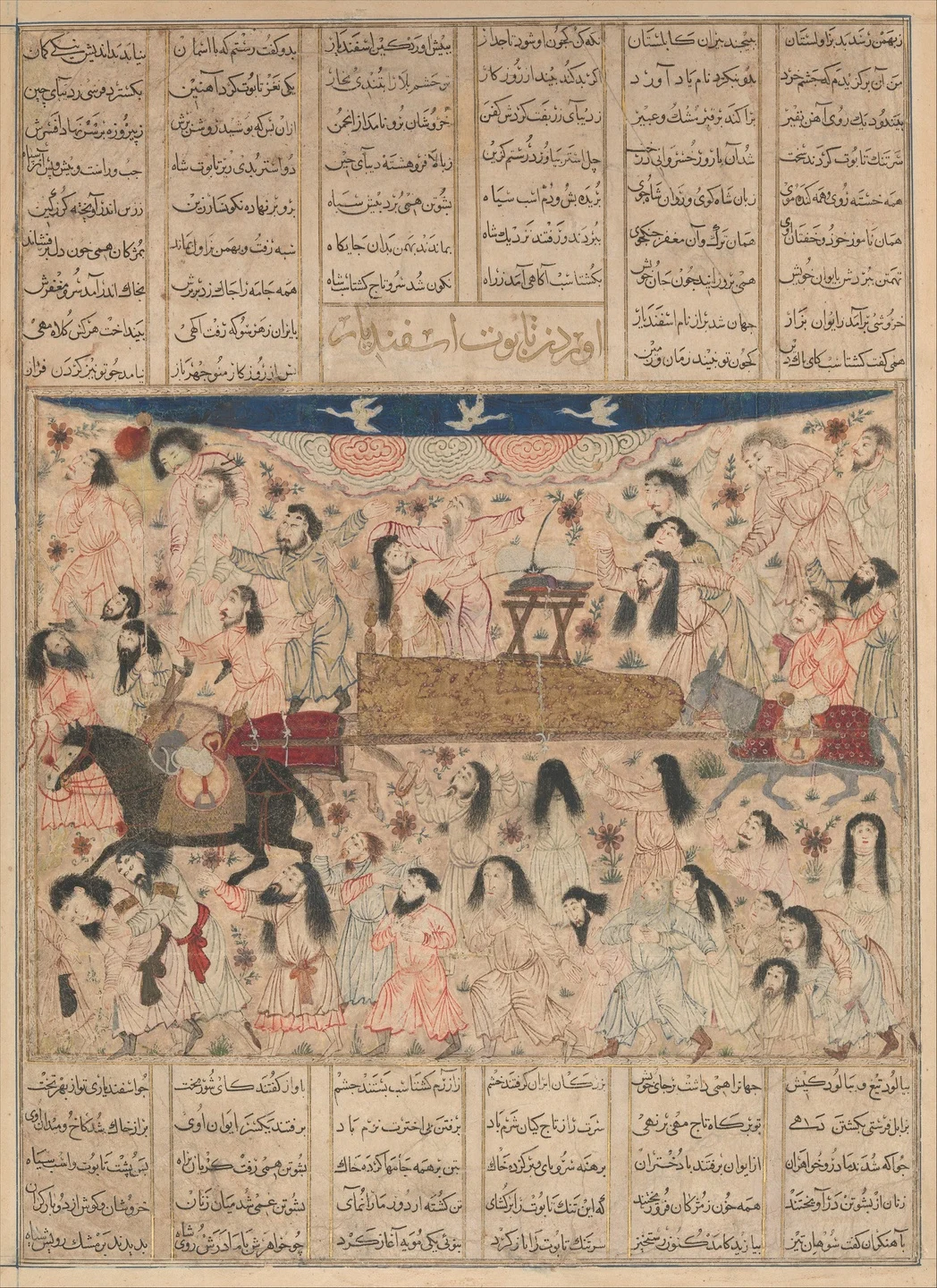 Unidentified Iranian painters
"The Funeral of Isfandiyar," Folio from a Shahnama (Book of Kings)
1330s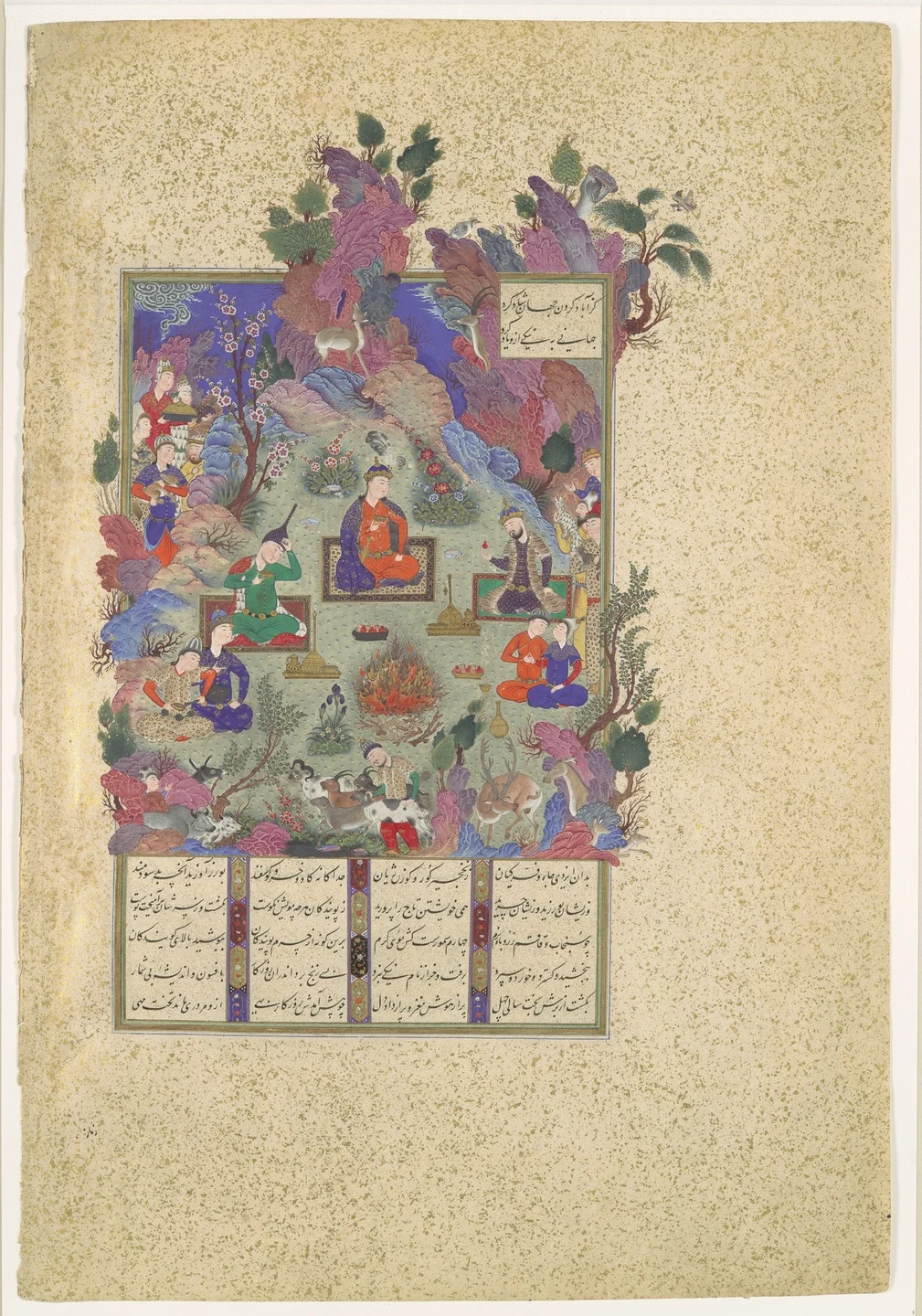 Attributed to Painting attributed to Sultan Muhammad
"The Feast of Sada", Folio 22v from the Shahnama (Book of Kings) of Shah Tahmasp
ca. 1525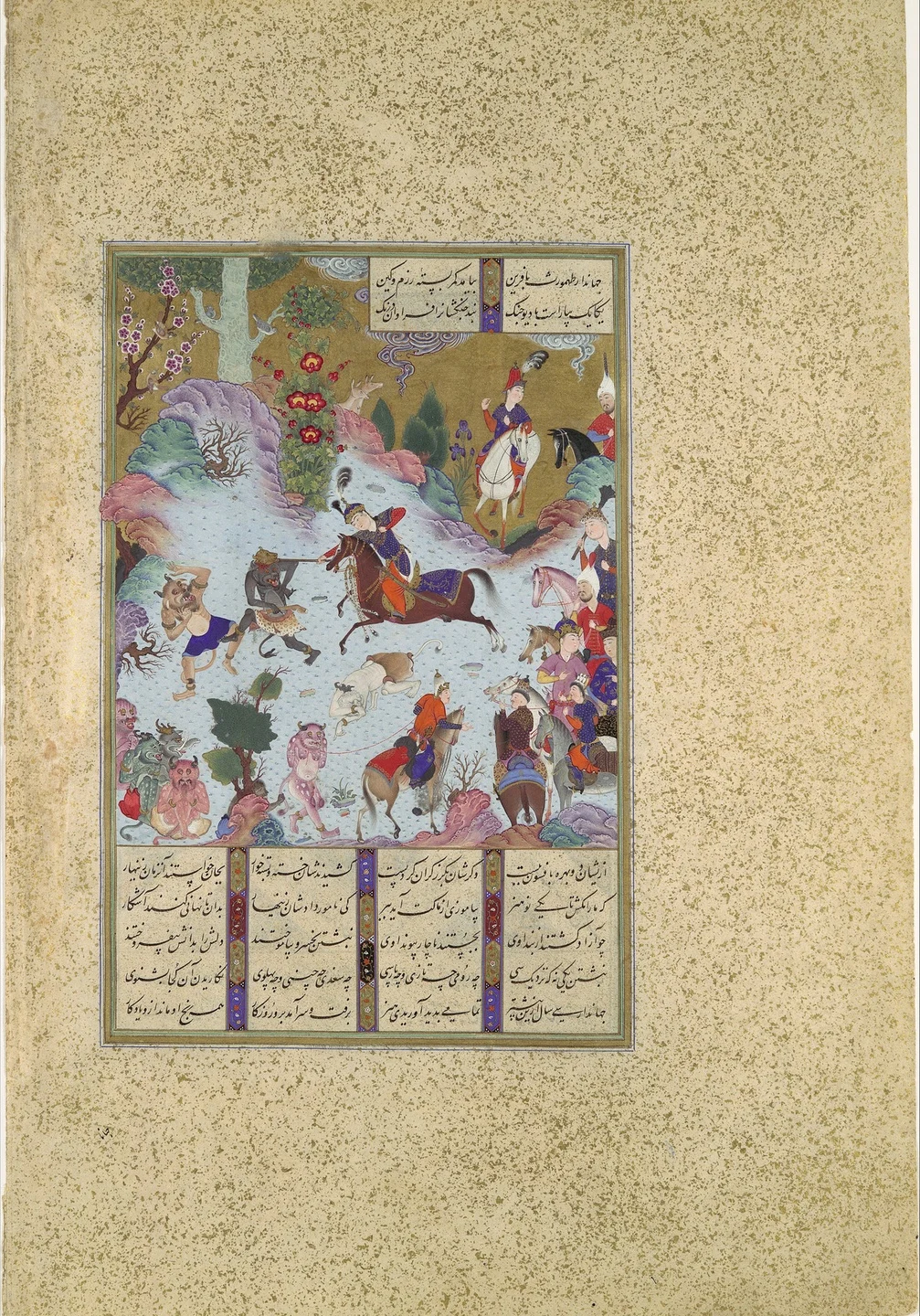 Attributed to Painting attributed to Sultan Muhammad
"Tahmuras Defeats the Divs", Folio 23v from the Shahnama (Book of Kings) of Shah Tahmasp
ca. 1525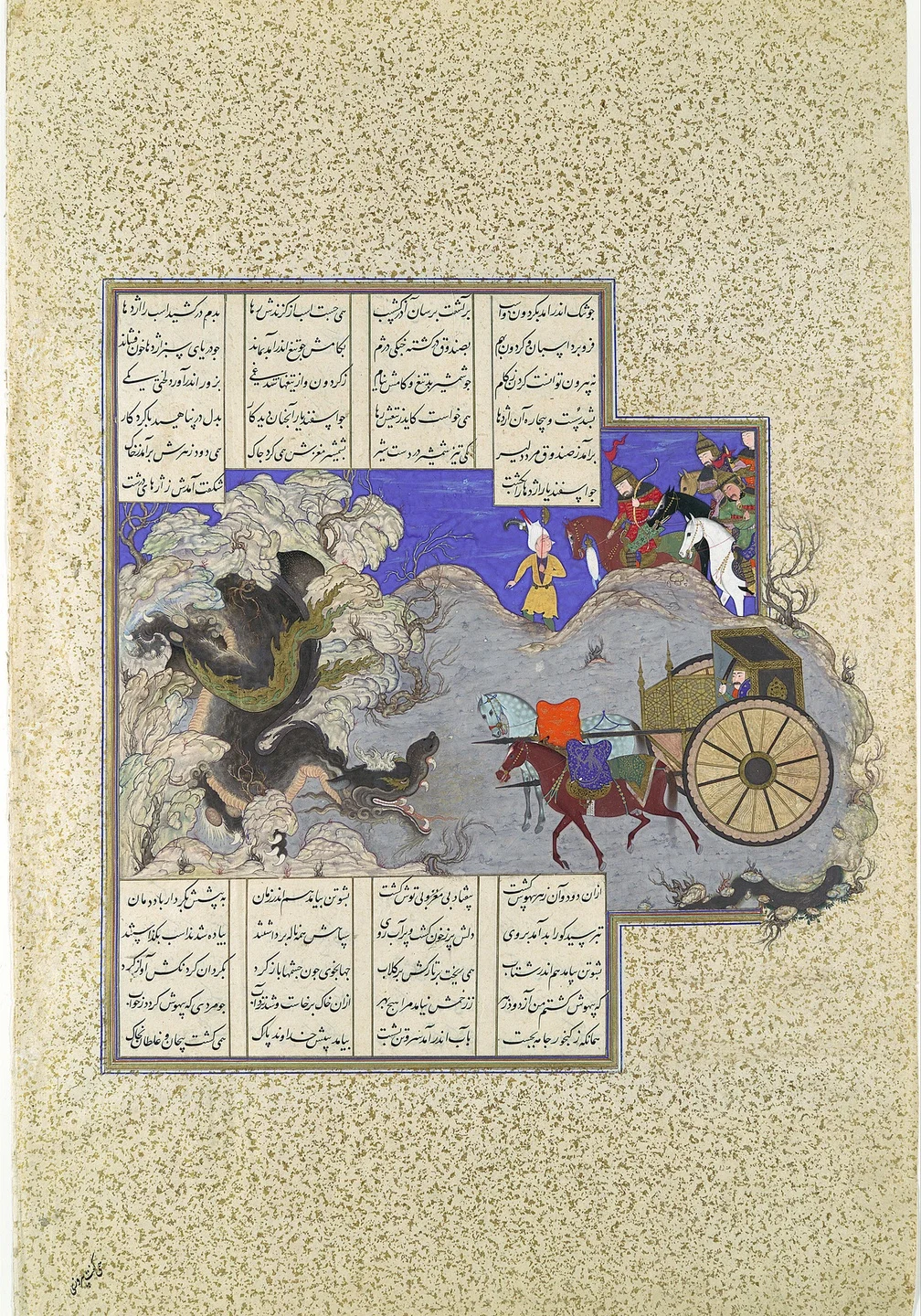 Attributed to Painting attributed to Qasim ibn 'Ali
"Isfandiyar's Third Course: He Slays a Dragon", Folio 434v from the Shahnama (Book of Kings) of Shah Tahmasp
ca. 1530Period, style and subject
- Movement
- Persian painting
- Genre
- Literary subjects
- Medium
- Ink, opaque watercolor, gold, and silver on paper
- Collection
- The Metropolitan Museum of Art
- Dimensions
- Painting, 25.4 cm
- Accession number
- 63.210.11
Sources
Image provided under CC0. Image licence