Ceiling painting from the palace of Amenhotep III
Unidentified Egyptian painters · ca. 1386–1347 BCE
Explore the painting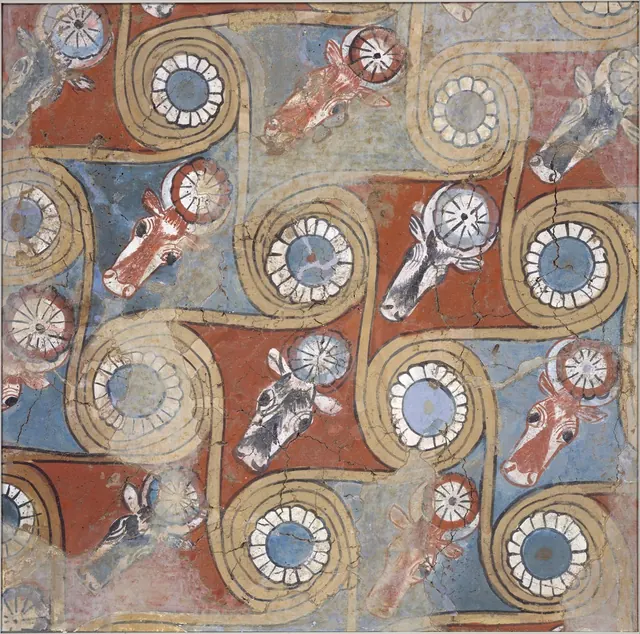
The painting’s story and details
This painting was seen overhead. The ceiling fragment was found in a room beside Amenhotep III’s bedchamber at the palace of Malqata, on the Nile’s west bank opposite Thebes. Floors, walls, and ceilings in the complex’s important buildings were painted. The surviving surface represents only a small part of a colourful fourteenth-century BCE interior.
Malqata was associated with royal jubilees, celebrations renewing the pharaoh’s authority. Palaces, ceremonial structures, and administrative buildings were constructed for them, with workers and craftspeople housed nearby. The ceiling pattern belonged to this larger building programme, which required labour, materials, and supplies for an entire temporary court city.
White petals surround a blue circle. These rosettes recur across the surface. A dark outline keeps the pale shape distinct beside yellow bands. The flower has been adapted for regular repetition within a larger ornamental scheme.
Yellow bands curl around the rosettes and continue into adjacent areas. Following one line leads from a single flower to the arrangement of the whole network. The pattern has no obvious dominant centre and can continue beyond the boundaries of the present museum fragment.
Ox skulls with horns occupy the spaces between spirals. Red and black versions alternate against blue and red backgrounds. Calling each head the portrait of a sacred animal would be too specific. Here it forms part of a repeating pattern, and a more precise meaning would require additional evidence.
The black-and-white head combines broad areas of colour with a fine outline. A neighbouring red head retains the same form. Colour is the principal change, keeping the repetition consistent without making every unit identical.
Cracks cross the surface and some areas are paler than their neighbours. The fragment has been partially restored. Individual lines and colours should therefore not automatically be treated as untouched ancient paint. Comparing repeated elements reveals the overall design but cannot replace conservation evidence about particular areas.
Related ceiling patterns occur at earlier Aegean sites. This opens discussion of connections between palace cultures, but resemblance alone cannot identify the painter as a foreigner or establish an exact route of borrowing. The fragment provides evidence for comparison while also setting limits on what a surviving ornament can tell us.
Featured in tours
Cave, tomb and Roman home
Where images belonged before the familiar museum painting.
More paintings to compare
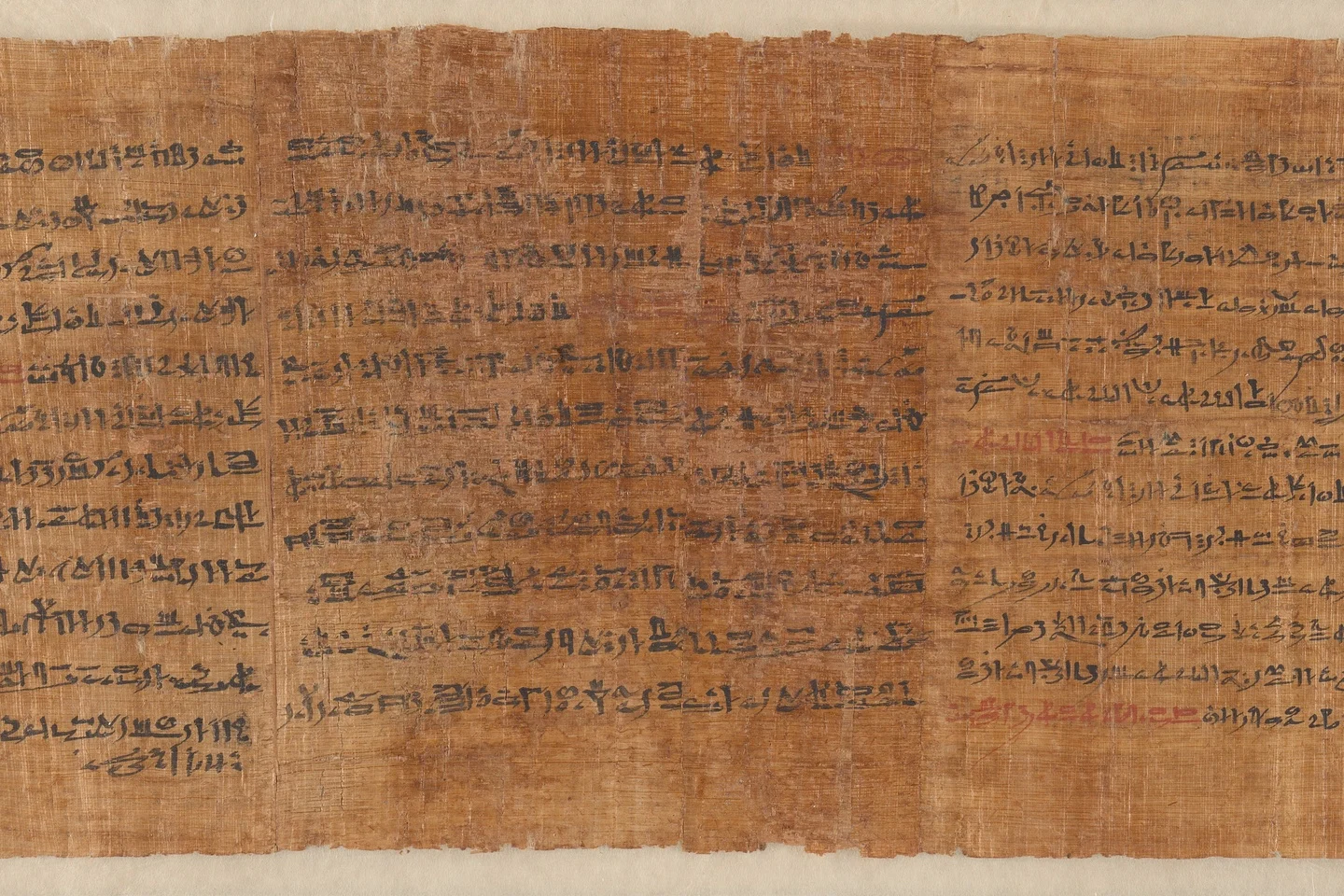 Unidentified Egyptian painters
Funerary Papyrus of Tayuhenutmut
Third Intermediate Period, probably Dynasty 21 (about 1069-945 BCE)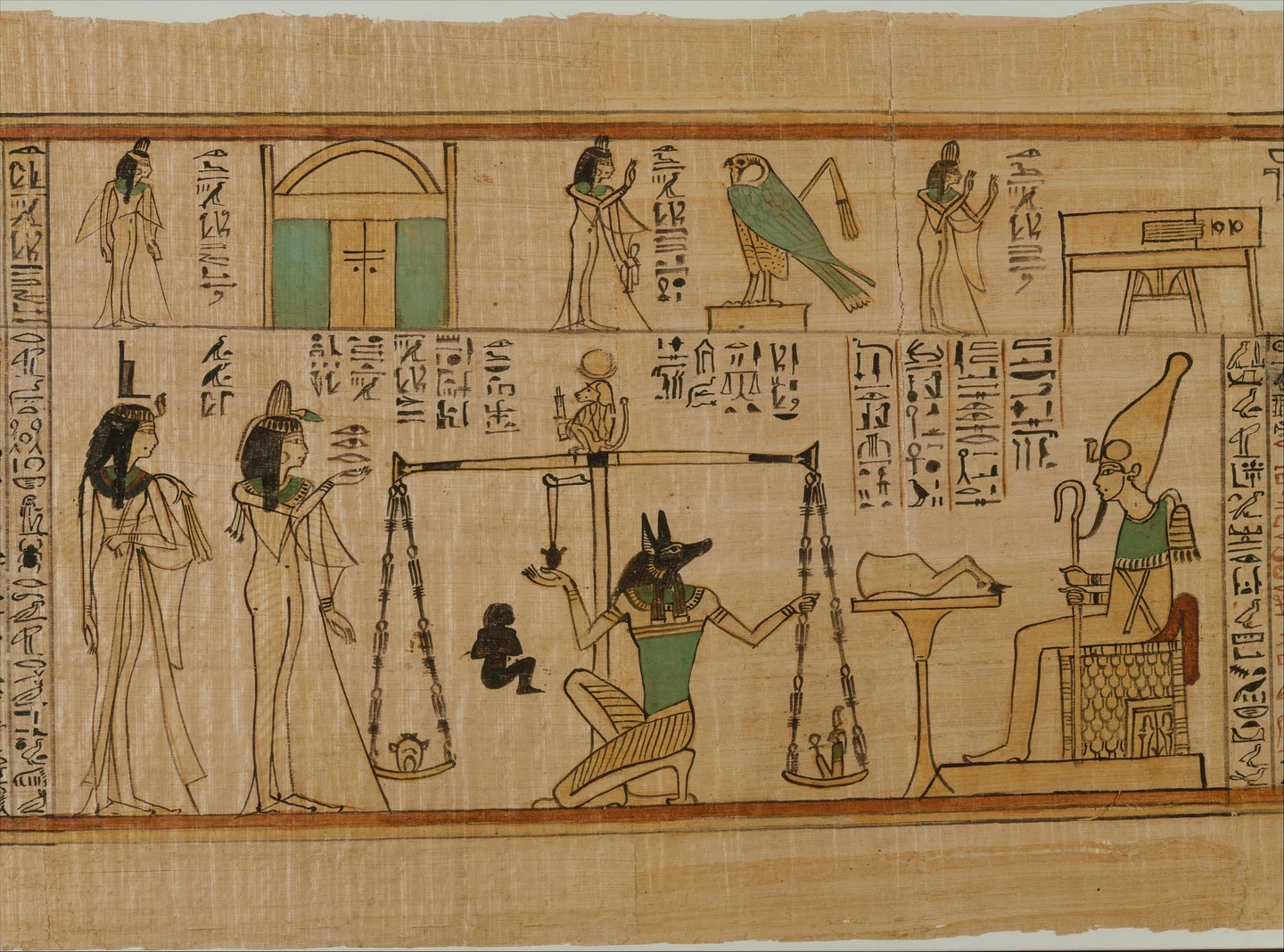 Unidentified Egyptian painters
Book of the Dead for the Chantress of Amun, Nauny
ca. 1050 BCE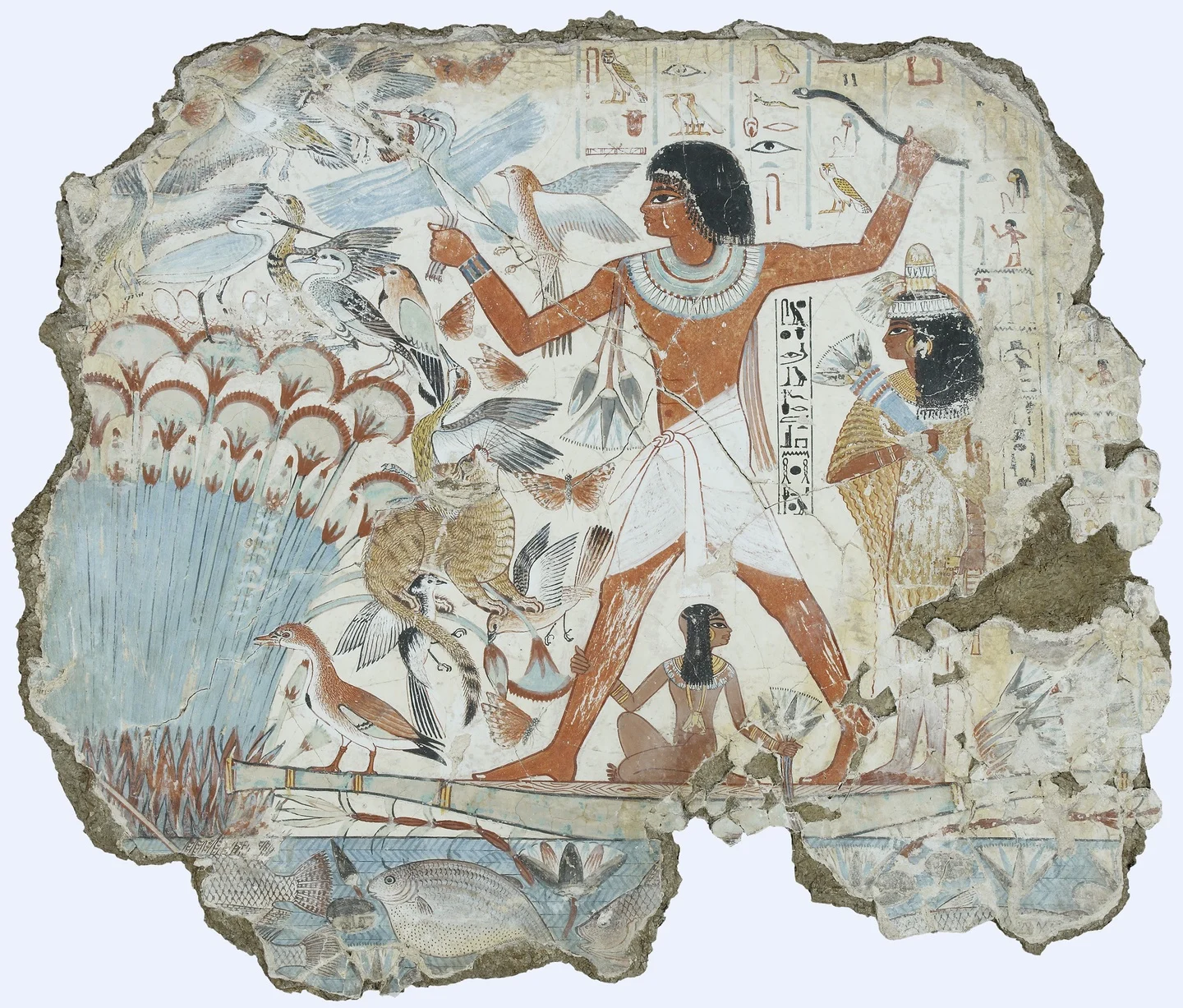 Unidentified Egyptian painters
Nebamun Fowling in the Marshes — original tomb-painting fragment
c. 1350 BCEPeriod, style and subject
- Movement
- Ancient Egyptian painting
- Genre
- Decorative painting
- Medium
- Dried Mud, mud plaster, paint, gesso
- Collection
- The Metropolitan Museum of Art
- Dimensions
- 140 × 140 cm
- Accession number
- 11.215.451
Sources
Image provided under CC0. The surviving fragment of a painted ceiling. Image licence