Saint Lucy
Francisco de Zurbarán · c. 1625/1630
Explore the painting
The painting’s story and details
Zurbarán painted Saint Lucy around 1625–1630. Christian tradition places her in Syracuse, where she died for her faith in the early fourth century. Here the martyr wears rich clothing recalling seventeenth-century Seville fashion. An ancient story becomes accessible through an appearance familiar to the painter’s contemporaries.
The face turns aside, with the eyes directed towards the viewer. Soft light catches forehead, nose and cheek while leaving the other side in shadow. This lighting gives the figure volume. A dark background clears space around her outline and removes an everyday setting.
A flower wreath sits on her head, with a faint halo above. Flowers appear as small physical objects; the golden circle signifies holiness. Placed together, these elements connect a carefully observed appearance with the figure’s sacred status.
A pair of eyes rests on a plate, Lucy’s recognisable attribute. This conventional sign belongs to her legends and veneration as a protector of sight. The museum notes a possible connection between her name and the Latin word for light. It identifies her without depicting martyrdom in detail.
A long palm branch rises along the right edge. Narrow leaves cross the dark background beside her hand. In Christian art the palm signifies martyrdom. The upright object both steadies the composition and provides another sign for reading the image.
Large folds gather the white sleeve. Lit surfaces stand out between a red bodice and green cloth below. Different colours preserve the clothing’s density and weight. Convincing fabric brings this idealised saint closer to everyday material experience.
The original commissioner is not securely established. Her costume therefore cannot be tied to a particular purchaser or vow. What we can observe is a combination of luxurious fabric, separate signs of martyrdom and a still figure. This arrangement allowed viewers to recognise the saint and direct personal devotional attention towards her.
More paintings to compare
 Bartolomé Estebán Murillo
Virgin and Child
1670s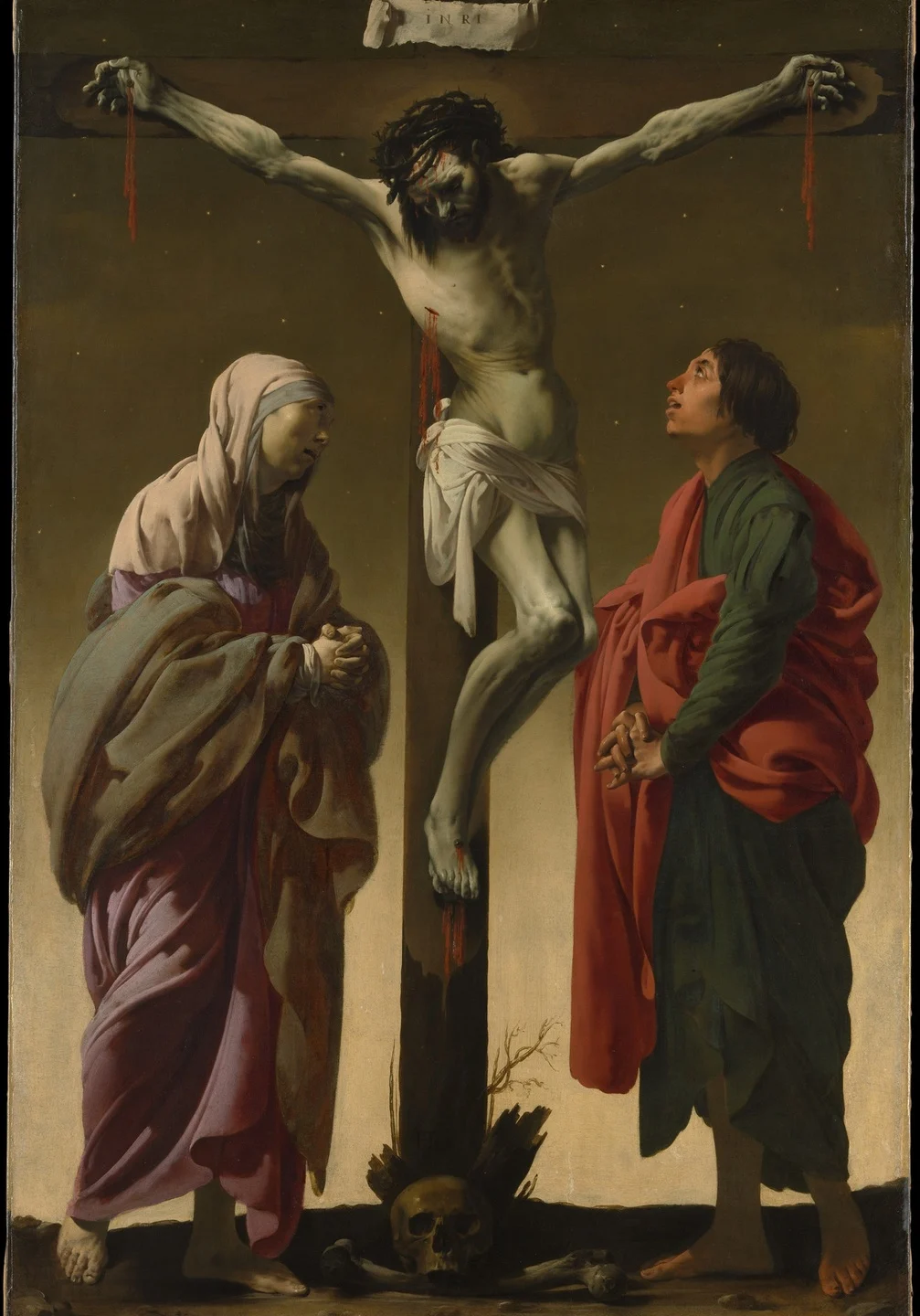 Hendrick ter Brugghen
The Crucifixion with the Virgin and Saint John
ca. 1624–25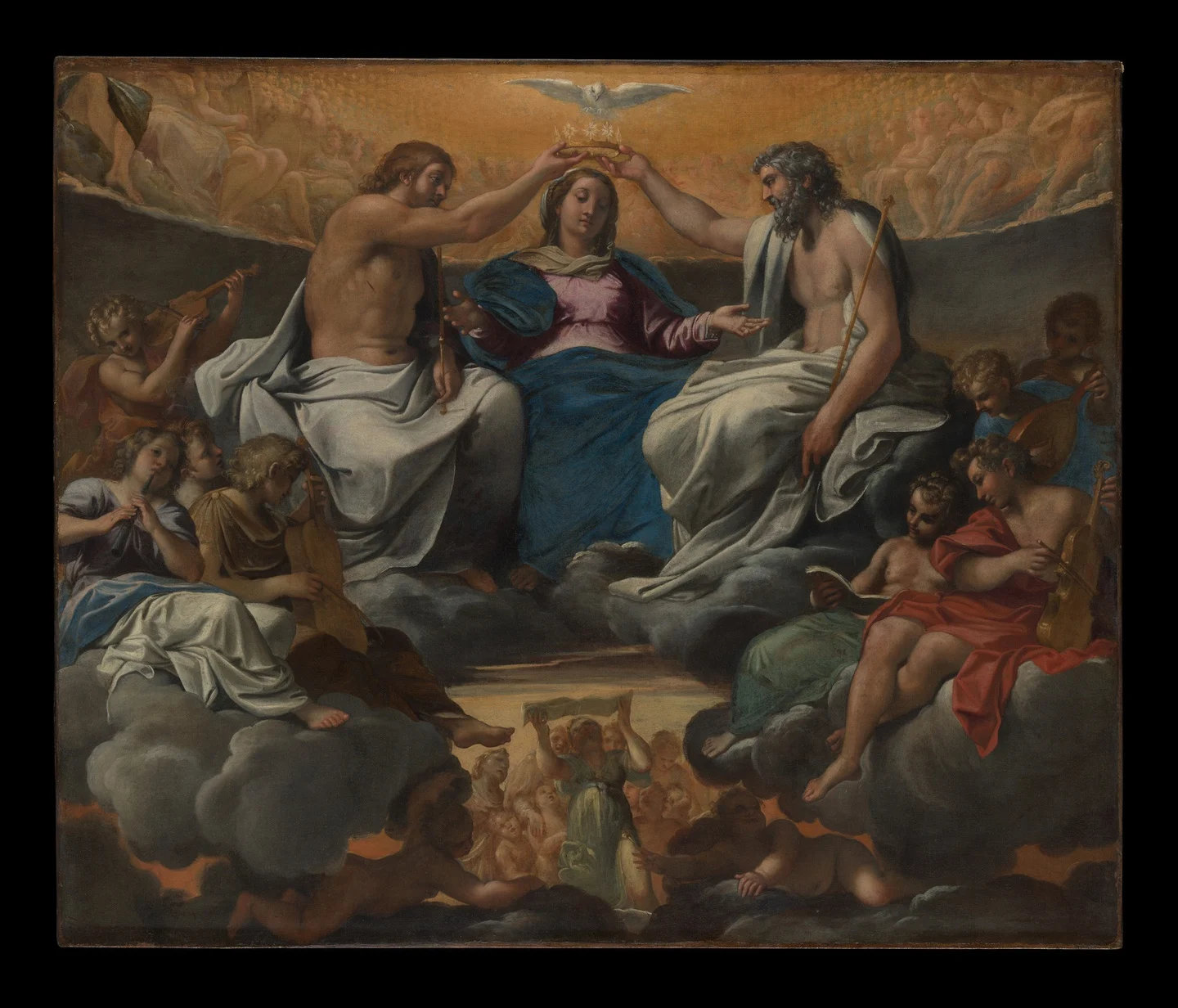 Annibale Carracci
The Coronation of the Virgin
after 1595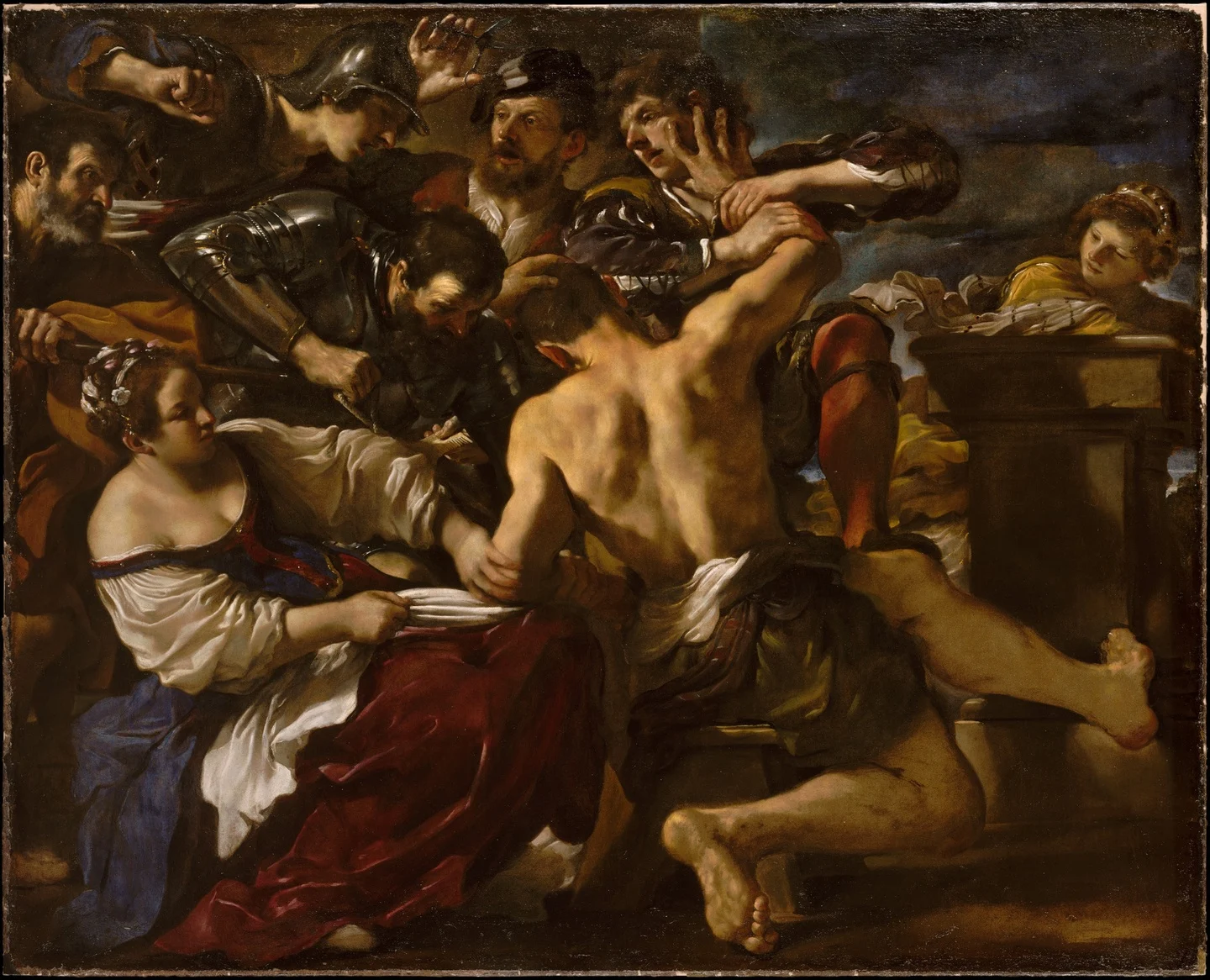 Guercino
Samson Captured by the Philistines
1619 Nicolas Poussin
Landscape with Saint John on Patmos
1640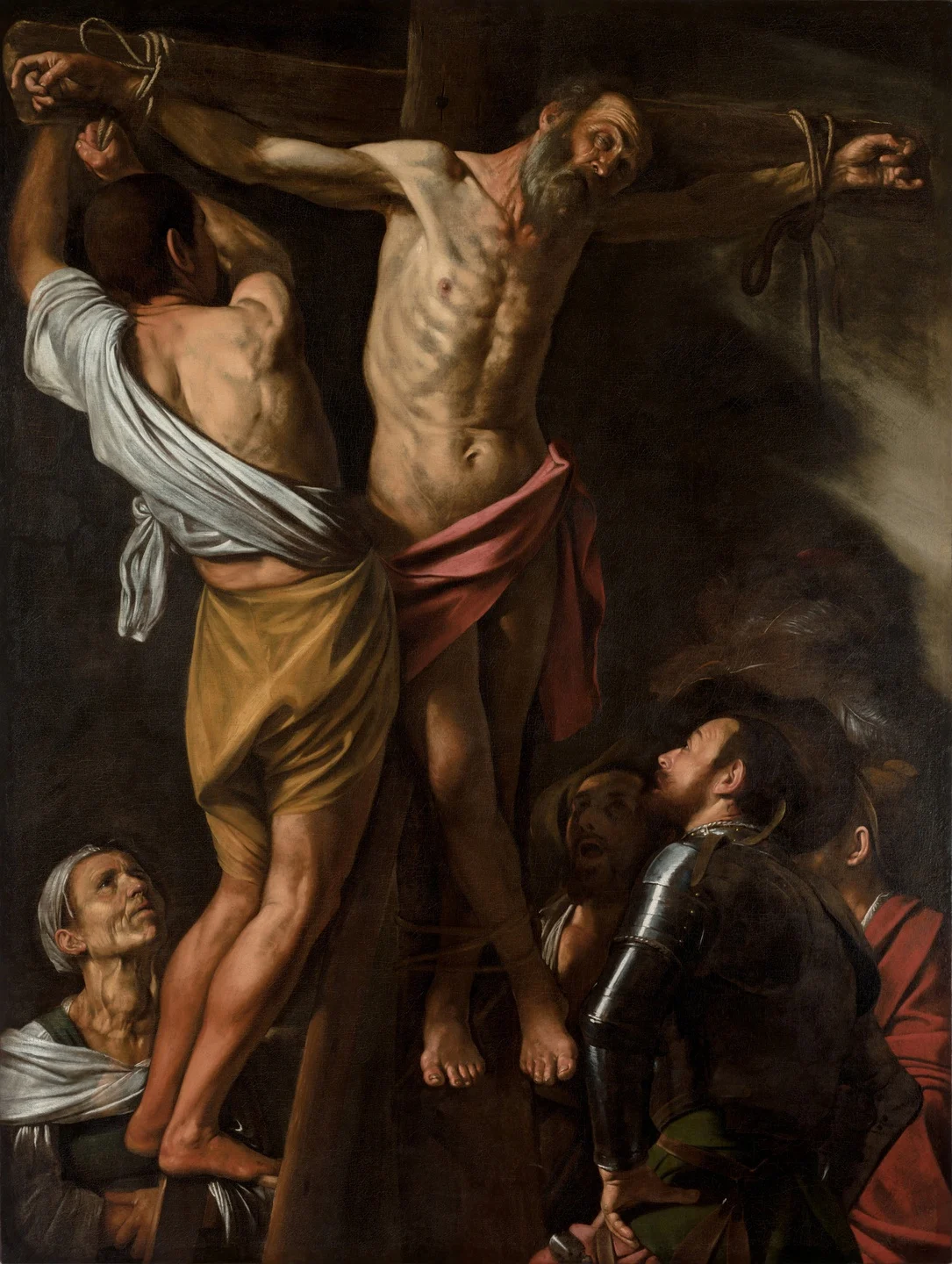 Caravaggio
The Crucifixion of Saint Andrew
1606–7Period, style and subject
- Movement
- Baroque
- Genre
- Religious art
- Medium
- oil on canvas
- Collection
- National Gallery of Art, Washington
- Dimensions
- 104.14 × 77 cm
- Accession number
- 1943.7.11
Sources
Museum reproduction. Public domain; CC0, NGA Open Access. Image licence