Valley of Aosta: Snowstorm, Avalanche, and Thunderstorm
Joseph Mallord William Turner · 1836–37
Explore the painting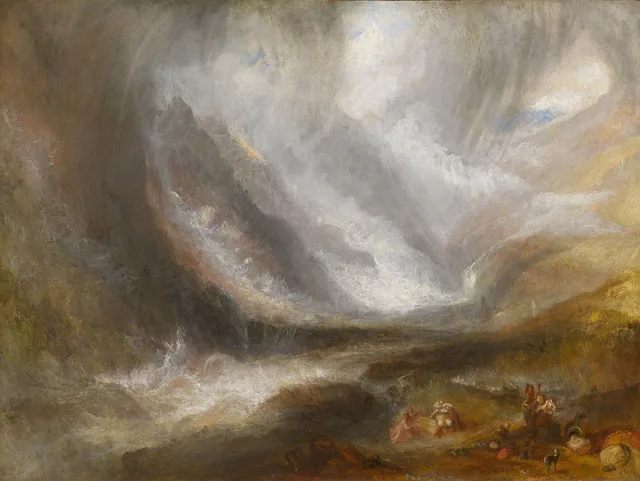
In Valley of Aosta, Turner combines a snowstorm, avalanche and thunderstorm. Painted in 1836–37, it shows a mountainous landscape whose stable outlines almost disappear in moving air and water. He believed landscape could convey historical and emotional meanings as complex as those of large narrative paintings. Here the scale of a natural event governs perception. We have to search for people below after the eye has already felt the pressure of the vast pale vortex between the slopes.
The pale central mass descends diagonally while also turning in a spiral. Sky, snow and suspended cloud are difficult to separate into distinct objects. That difficulty belongs to the impression of a storm. Turner creates a changing environment in place of a view easily surveyed. Brush directions set the eye moving, while differences between transparent and dense paint suggest varying densities of air.
The dark slope on the left provides a heavy support for the pale movement. Narrow bands of water and light cut across its surface. Rock appears solid, yet the mountain’s own edges vanish in places. Turner brings together two experiences of nature: immense material weight and change faster than an observer can comprehend. Precise geographical description gives way to the experience of being near forces beyond ordinary human control.
Tiny figures, animals and belongings gather at the lower right. Warmer colours than those of the storm gradually make them legible. A raised arm, bent body and inclined head communicate strain, but their scale prevents us from reading faces as in a portrait. The human body measures the space. Once these figures are discovered, the event seems much larger. What initially resembled free movement of paint becomes an environment containing vulnerable creatures.
White touches over a grey-brown base mark the foreground torrent. Its movement continues beyond the frame, hiding its full course. This makes the observer’s position uncertain. We seem close enough to notice foam, yet can also survey the valley with a clarity unavailable to a participant. From this position we can inspect the storm while remaining outside its danger.
Yellow illumination on the right breaks through cold greys and whites. It does not unequivocally promise that the storm is ending, but intensifies differences within the space. Turner lets light dissolve outlines while retaining them where scale requires them. This helps explain his importance for later painting. Colour and illumination gain expressive independence, even as the work remains connected with a particular natural situation and recognisable human figures.
Aesthetic theory called such an experience the sublime: fear before immense power joined with pleasure in contemplating it safely. Turner makes that contradiction tangible. We can admire beautiful paint where depicted people face danger. Today the same position is familiar from photographs of disasters and spectacular footage of extreme weather. The painting makes us notice the distance between participation and observation without removing our capacity to admire the natural world.
More works by Joseph Mallord William Turner
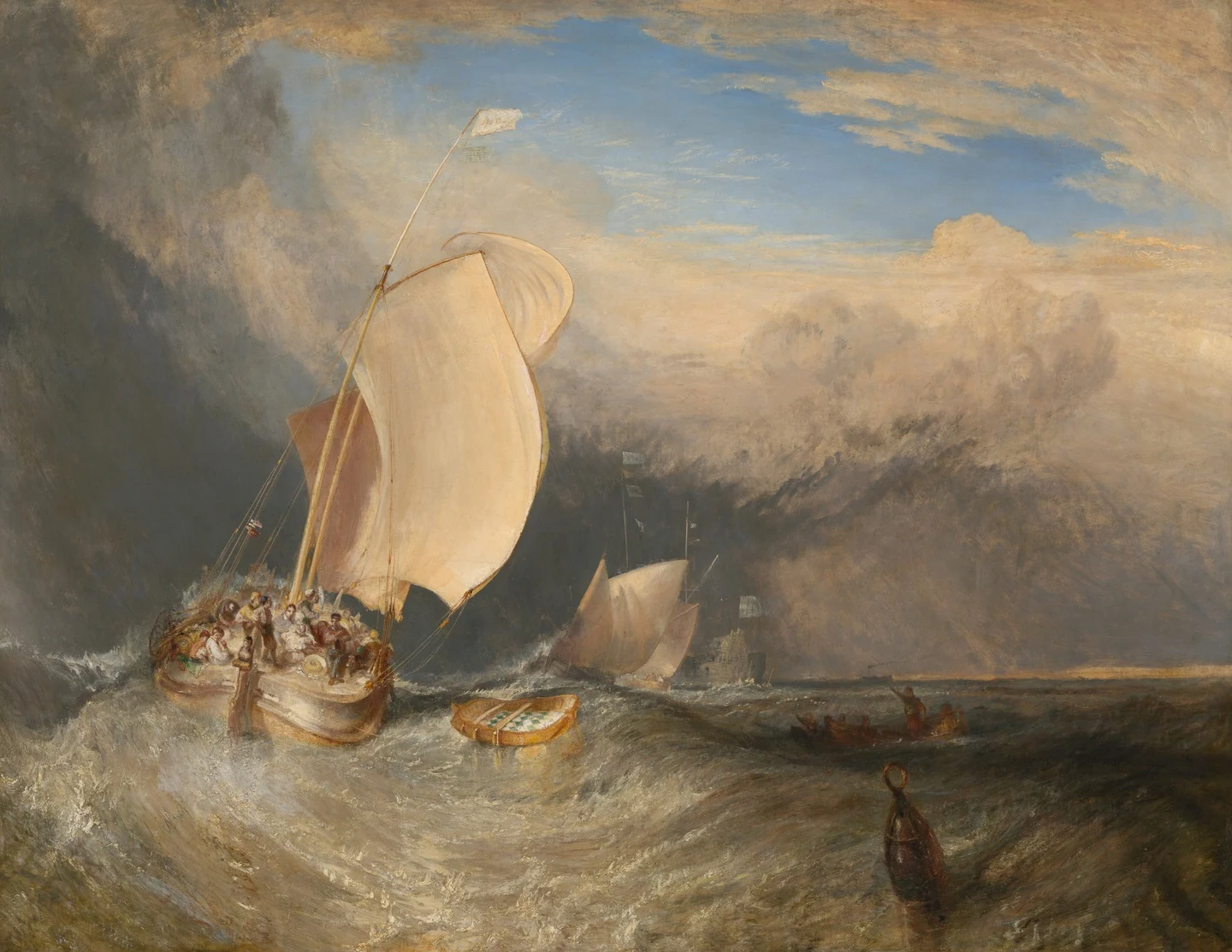 Joseph Mallord William Turner
Fishing Boats with Hucksters Bargaining for Fish
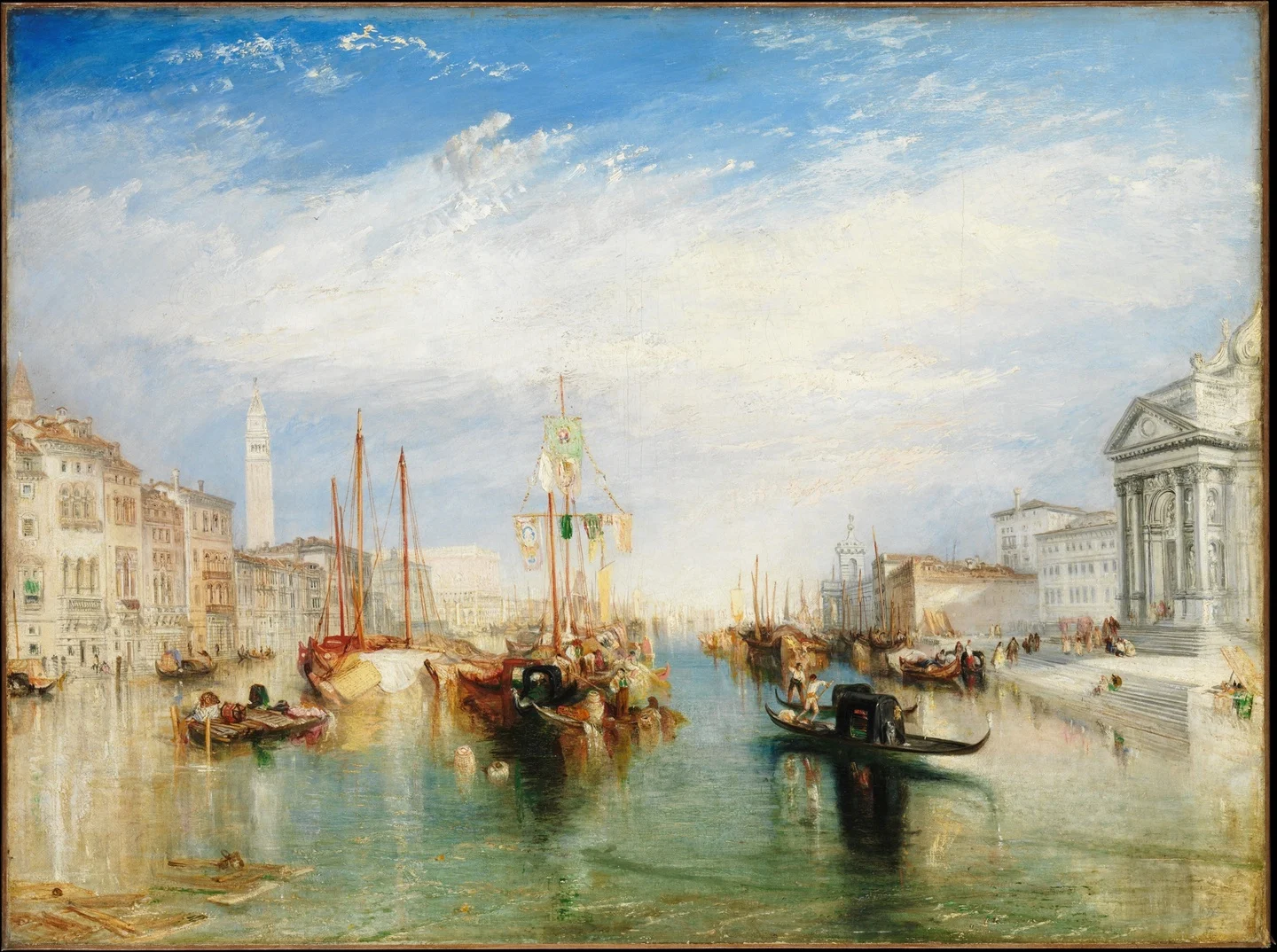 Joseph Mallord William Turner
Venice, from the Porch of Madonna della Salute
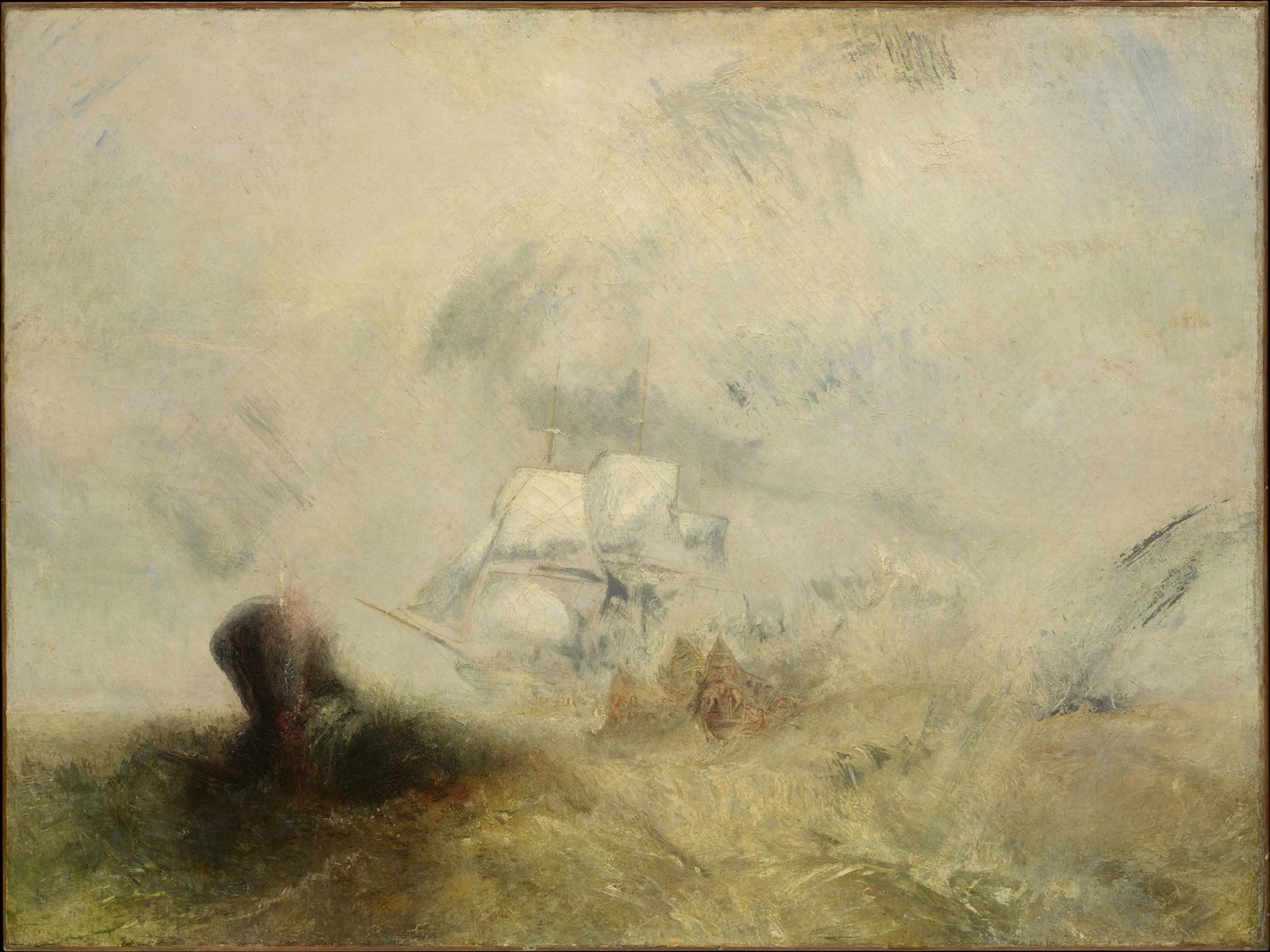 Joseph Mallord William Turner
Whalers
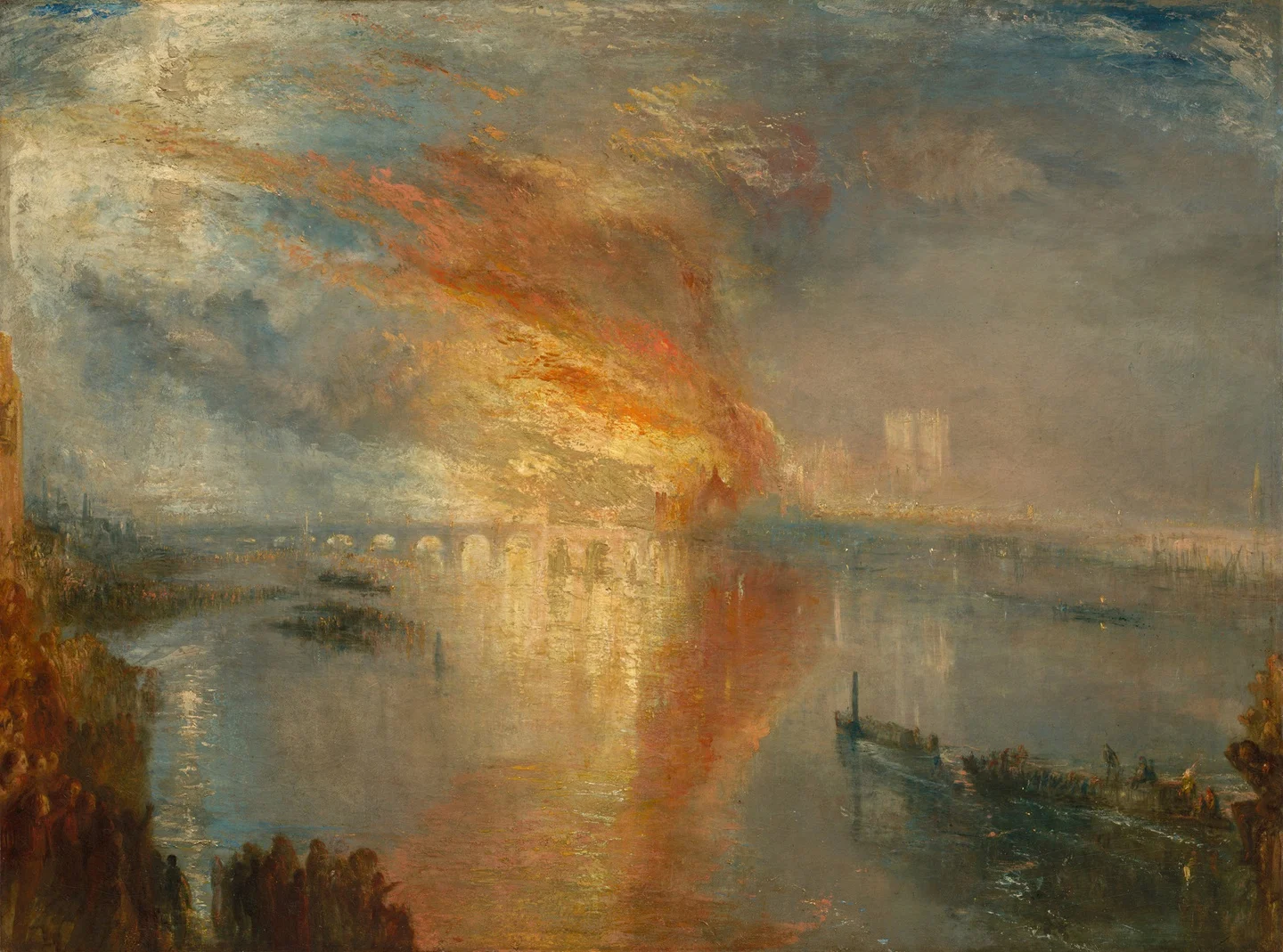 Joseph Mallord William Turner
The Burning of the Houses of Lords and Commons, 16 October 1834
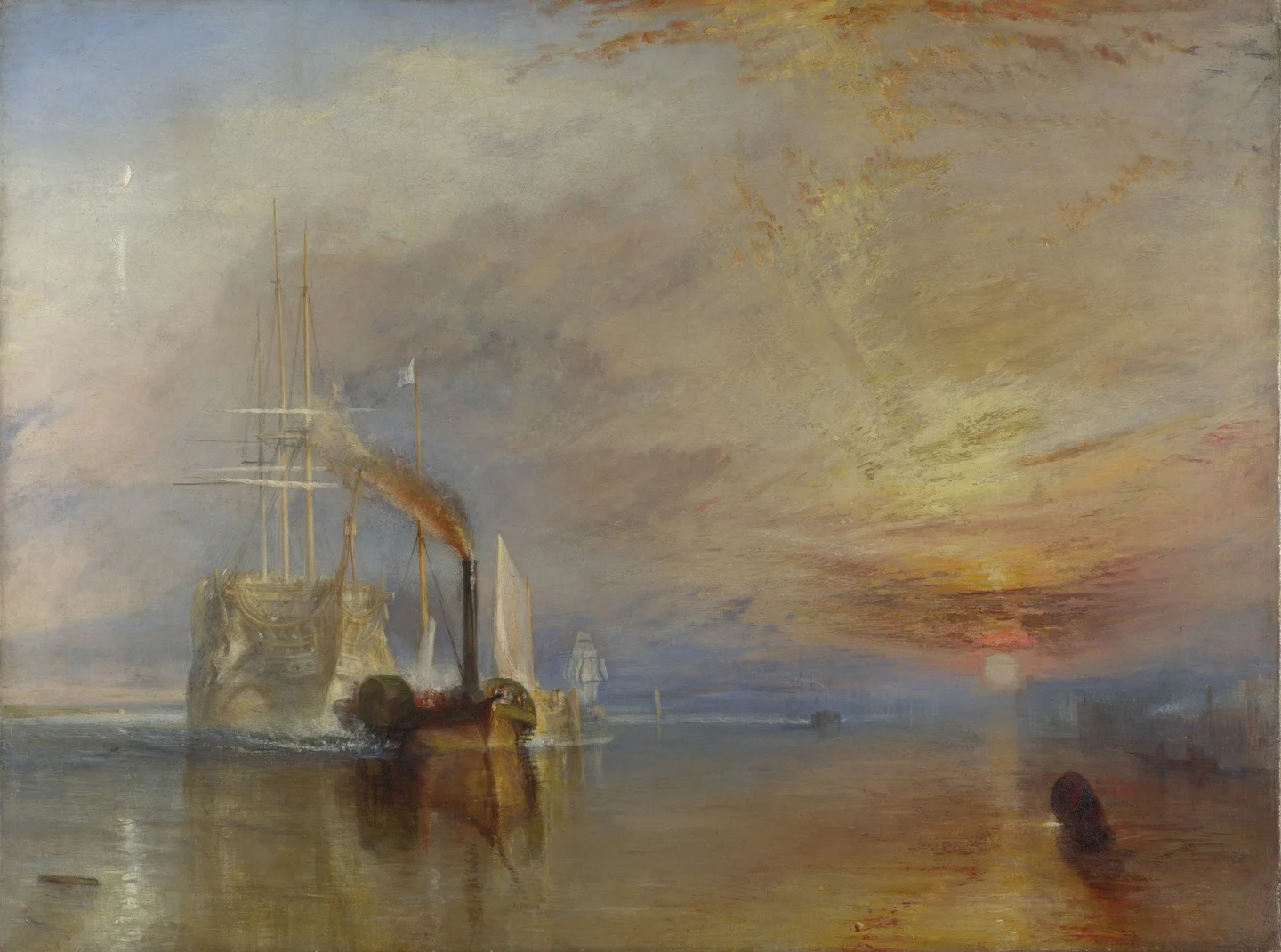 Joseph Mallord William Turner
The Fighting Temeraire
- Medium
- Oil on canvas
- Collection
- Art Institute of Chicago
- Accession number
- 1947.513
Sources
Wikimedia Commons reproduction. Public domain. Image licence