Streams and Mountains without End
Unidentified Chinese painters · 1100–1150
Explore the painting
The painting’s story and details
This landscape was made for a slow journey at a table. A handscroll was opened from right to left in small sections, rolling up what had already been seen. An unknown painter of the early twelfth century connected rivers, mountain gorges and settlements so that each turn revealed another place. A screen exposes the entire route at once; its original viewer discovered it gradually.
At the right, low banks recede into mist. A few dark marks distinguish trees and buildings, while the distance remains almost empty. This opening allows time to settle into the scale. Before large mountains appear, the eye moves across an accessible plain where a journey might begin.
Roofs and enclosures appear among the mountains. Buildings occupy ledges linked by paths. Their fine straight lines help measure the surrounding rocks. The painter shows how people find places to live within a vast landscape, supplying enough detail to imagine passing from one courtyard to another.
A boat carrying small figures moves beside the bank. Water offers a way around places where an overland route disappears among slopes. Several journeys are possible. Following the bank or mentally climbing towards the houses changes the order of encounters within the scroll.
In the middle, a path crosses a stream beside a settlement. Tiny strokes indicate people, while branches and foliage distinguish trees. Such details invite a pause within the panorama. A long distance ceases to be an empty interval between impressive mountains; someone’s everyday life occupies it.
Large rocks at the left consist of overlapping masses. Dark folds and light projections lift the eye although the scroll opens horizontally. The painter joins two movements, along the route and up the slope. A narrow strip of silk consequently conveys considerable height.
Later owners, including Qing emperors, added the red seals. In 1953 Sherman Lee acquired the scroll for Cleveland as a foundation for its Chinese landscape collection. A private journey became available to a large audience, while earlier owners’ marks remained on the image. The mountains appear timeless, but the object preserves the history of people who kept, valued and passed it on.
Featured in tours
Chinese landscape. The scholar’s life
Public service, retirement, gardens, poetry and the memory of earlier masters.
More paintings to compare
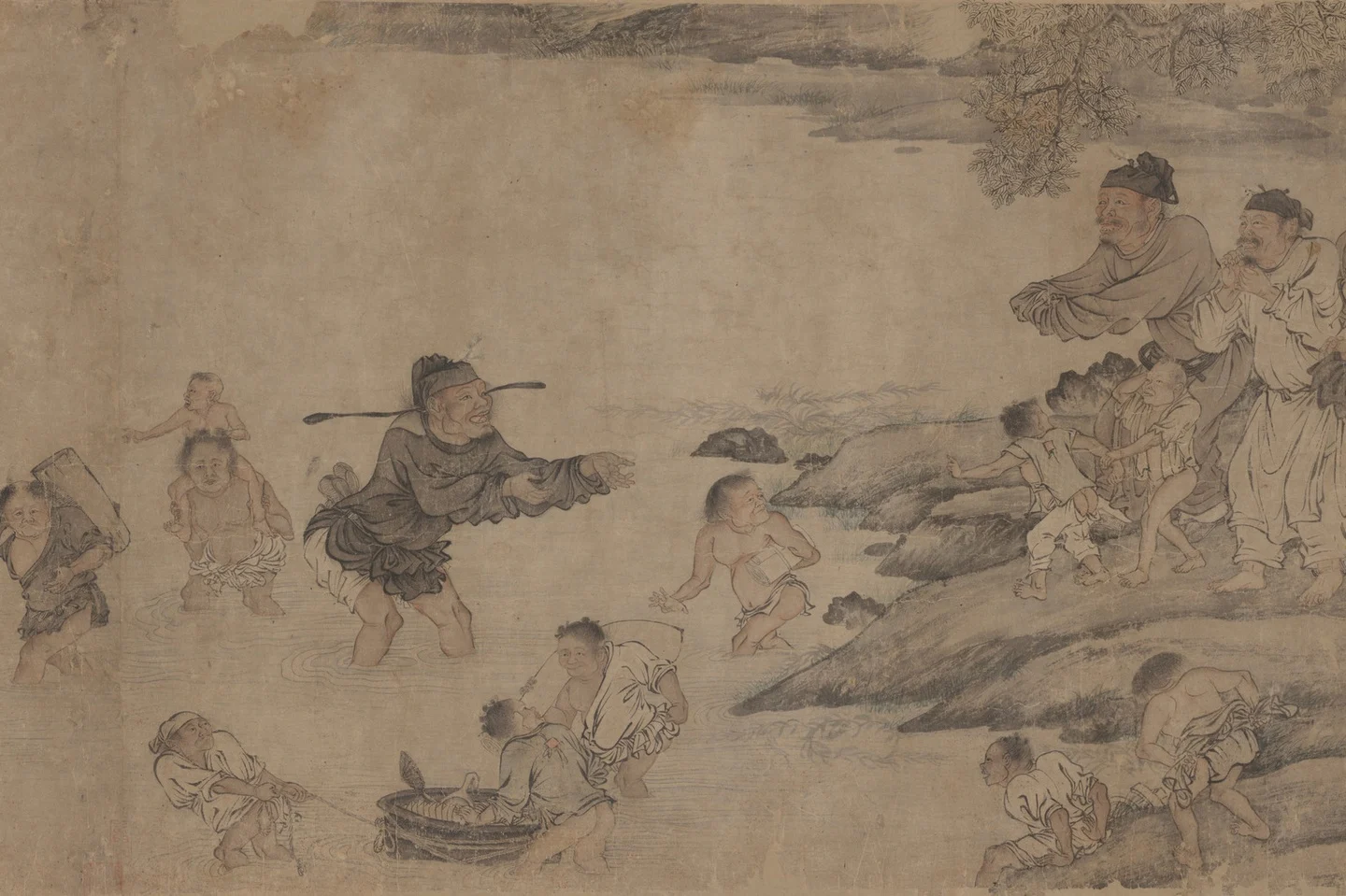 Unidentified Chinese painters
Yang Pu Moving His Family
Yuan dynasty (1279–1368) 元朝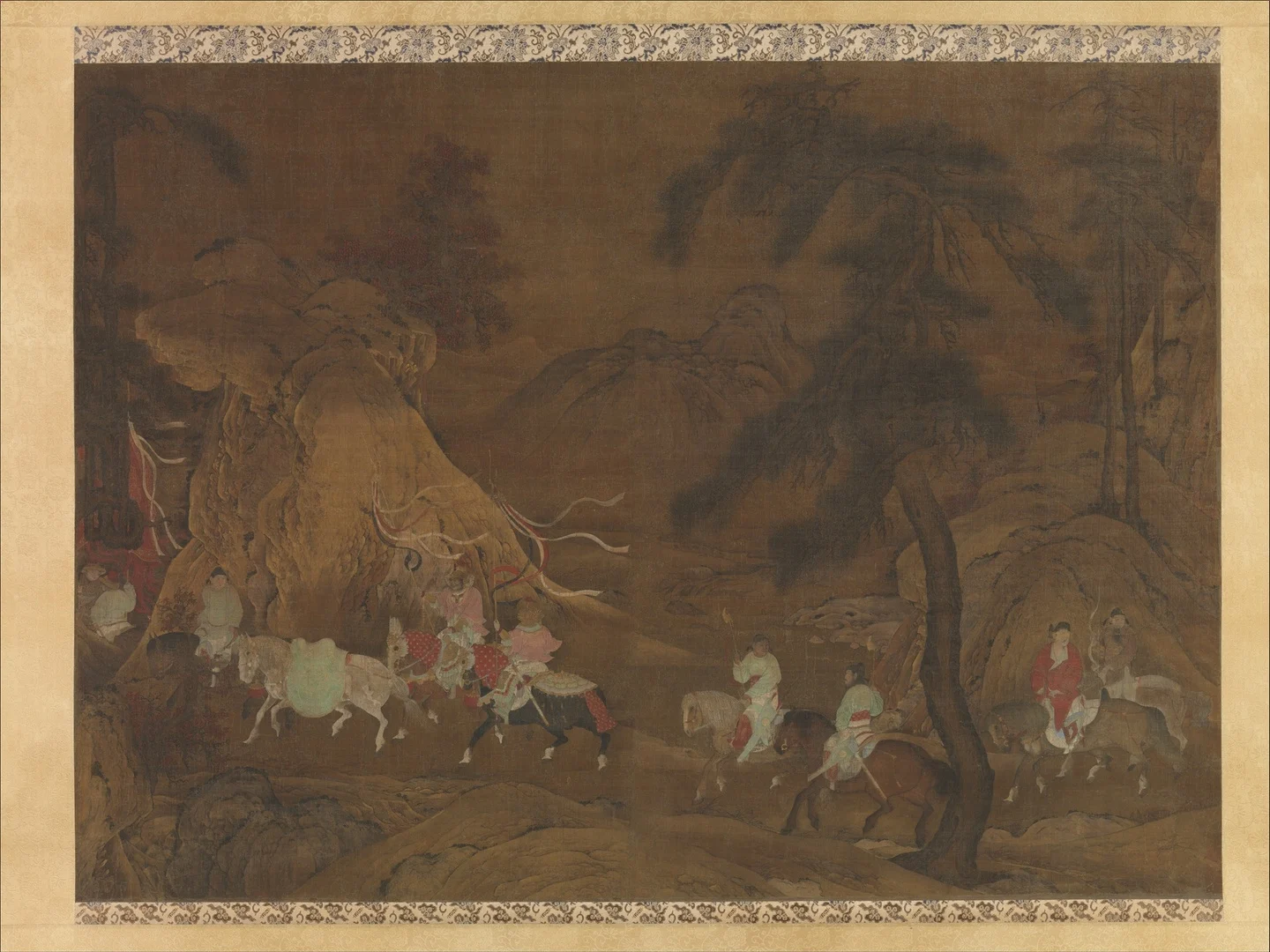 Unidentified Chinese painters
Emperor Xuanzong's flight to Shu
mid-12th century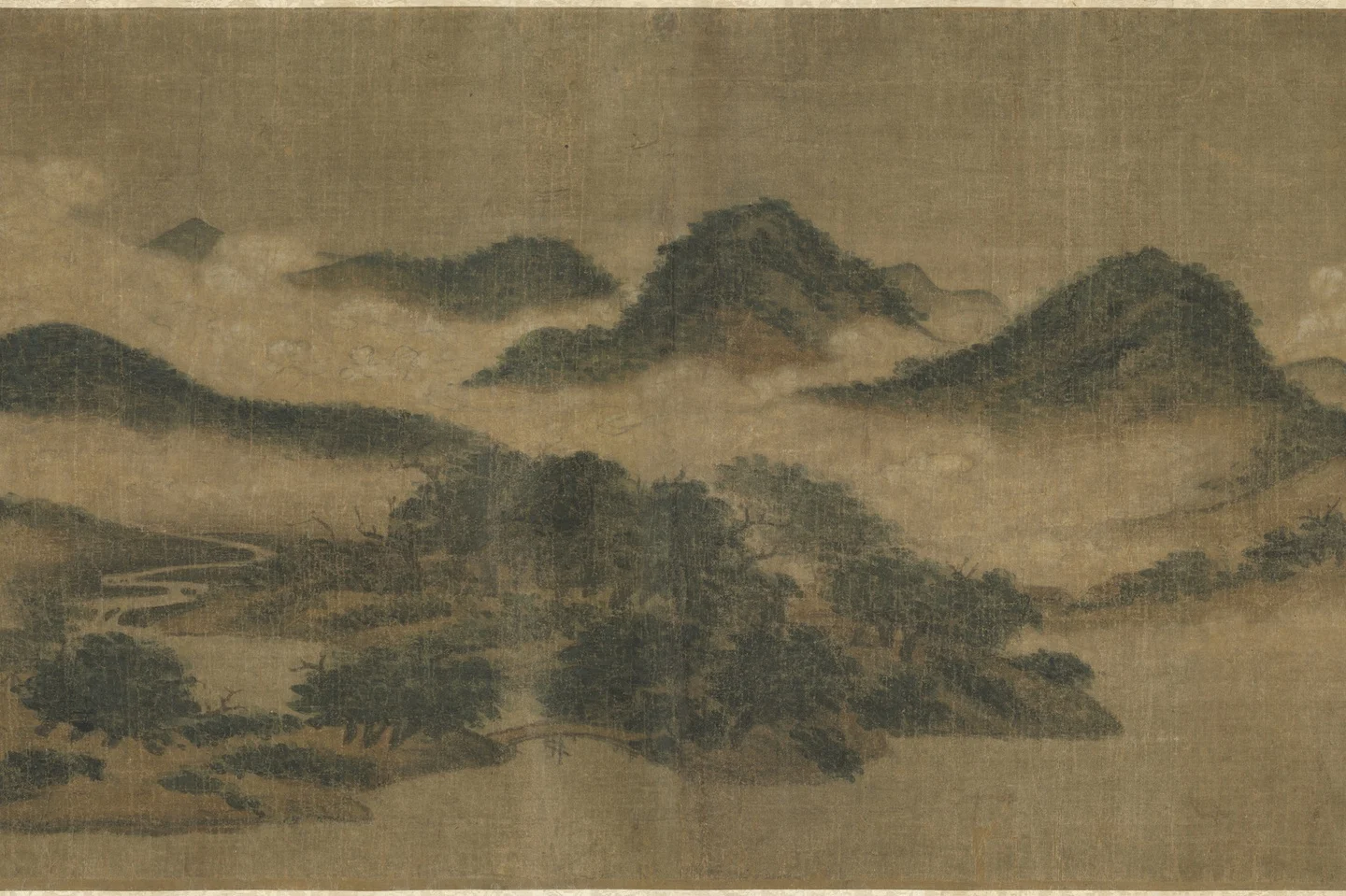 Mi Youren
Cloudy Mountains
1130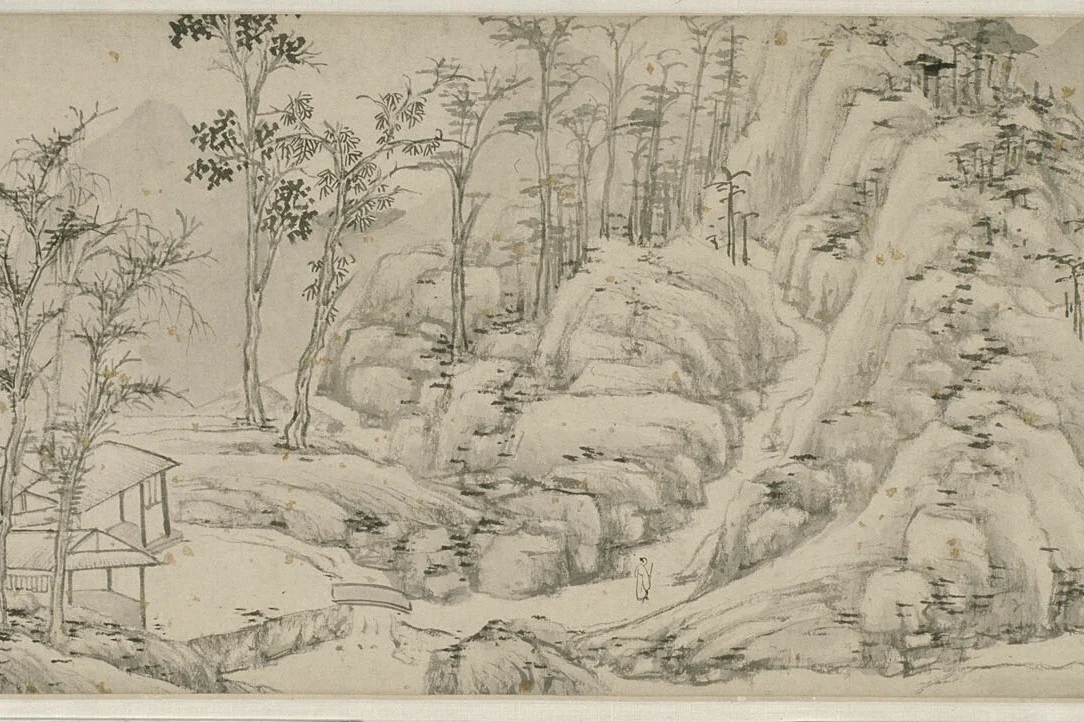 Wen Zhengming
Autumn Mountains 秋山圖
Ming dynasty (1368–1644), early 16th century 明朝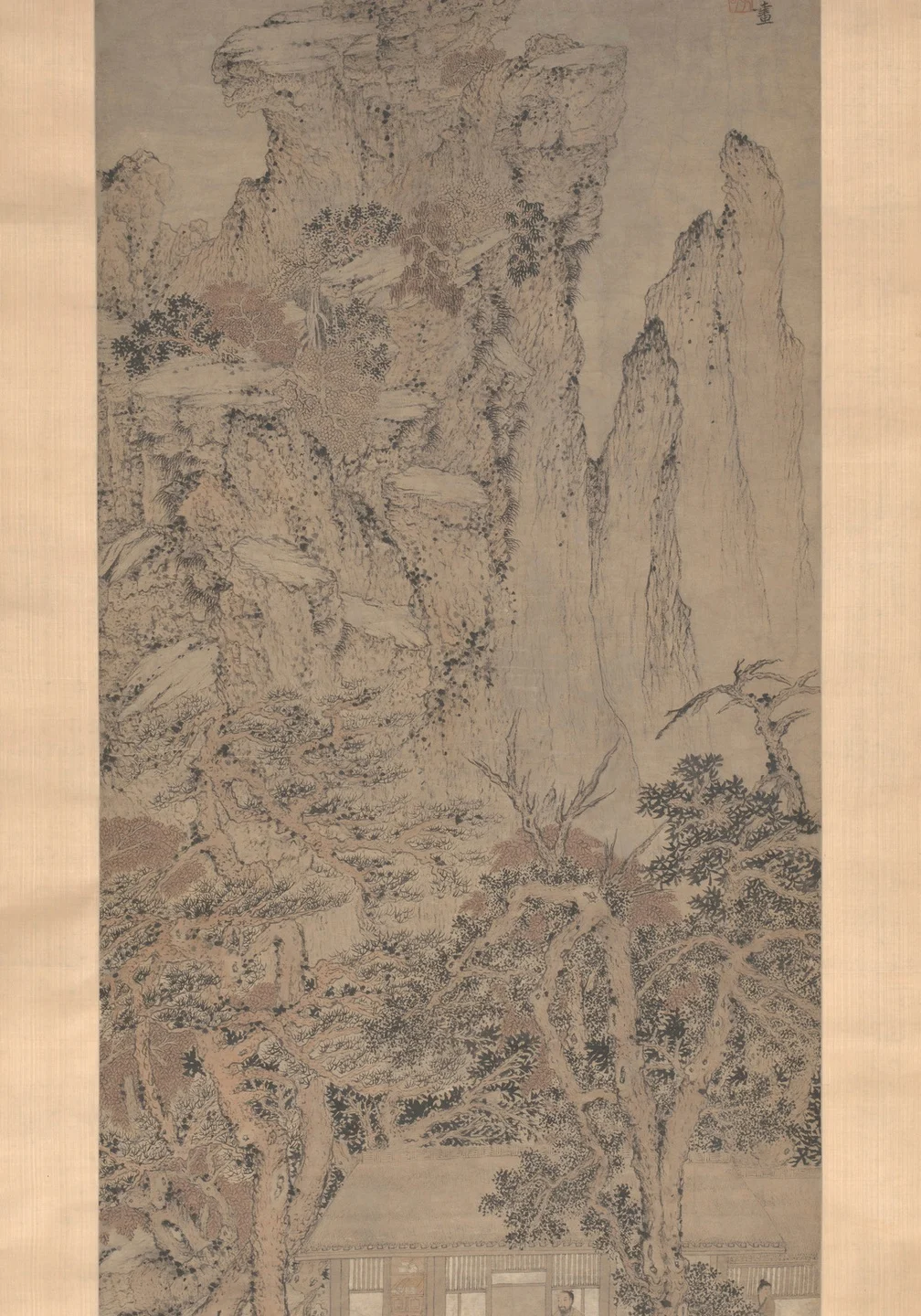 Wang Meng
Quiet Life in a Wooded Glen 林麓幽居圖
Yuan dynasty (1279–1368), dated 1361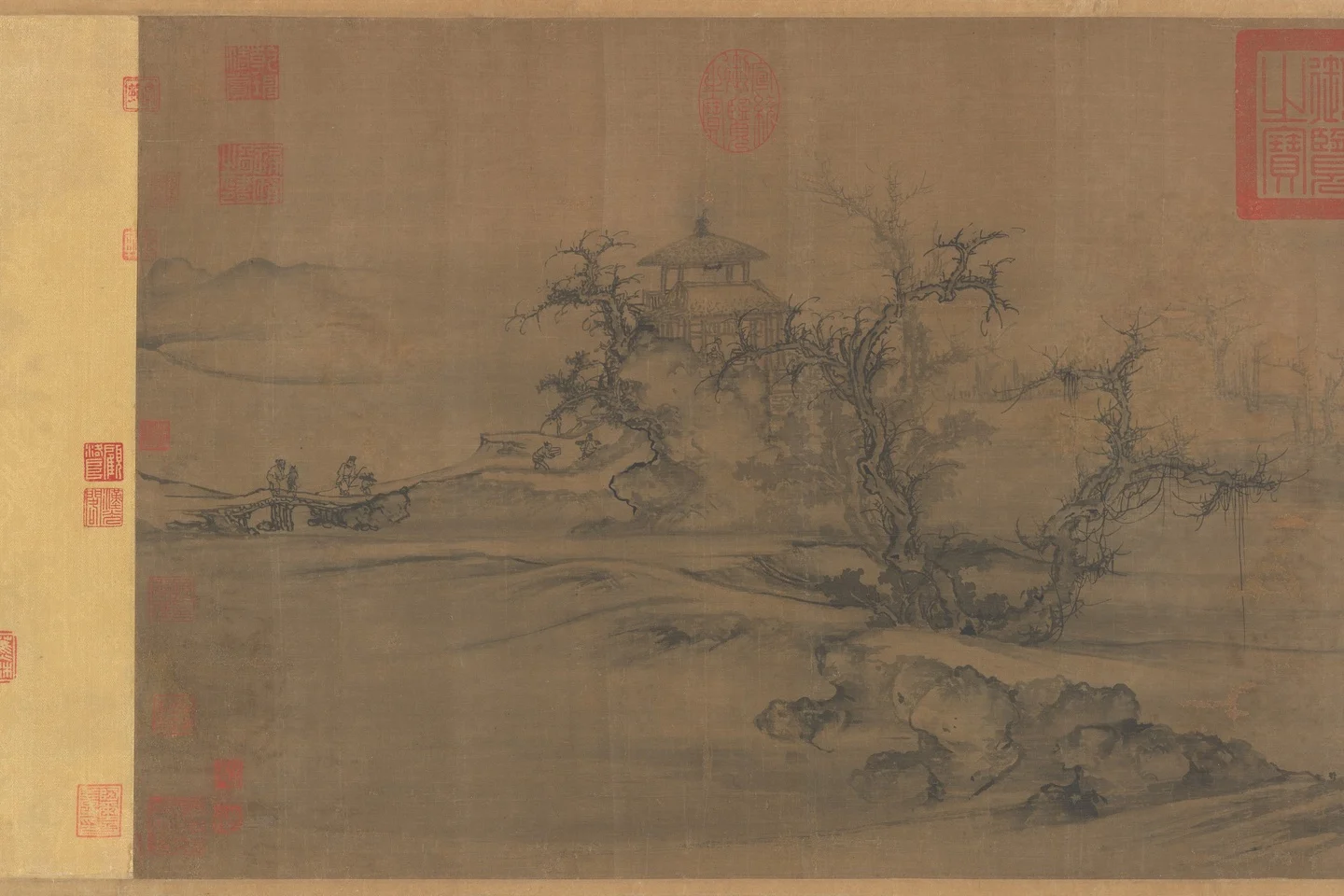 Guo Xi
Old Trees, Level Distance
ca. 1080Period, style and subject
- Movement
- Chinese painting
- Genre
- Landscape
- Medium
- handscroll; ink and slight color on silk
- Collection
- Cleveland Museum of Art
- Dimensions
- Image, 35.1 × 213 cm
- Accession number
- 1953.126
Sources
Image provided under CC0. The painted field is shown without later colophons or outer mounting. Image licence