Snowscape with Figures
Kim Si · 1584
Explore the painting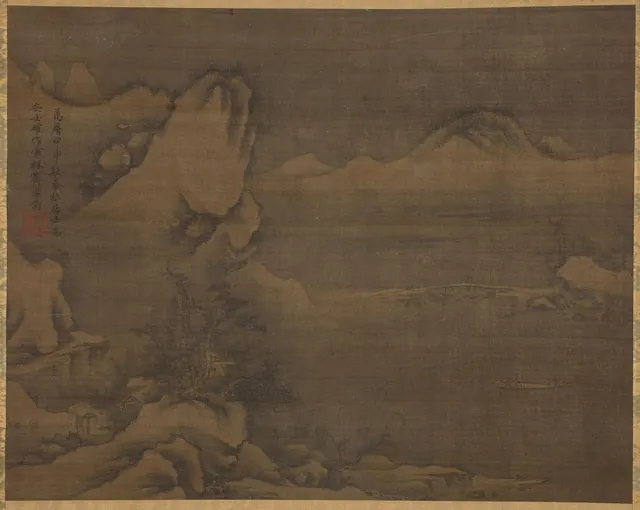
The painting’s story and details
Kim Si painted this winter landscape in 1584. He belonged to an educated Korean family affected by his father Kim Anro’s political downfall. A withdrawn life became important to his biography. The museum relates the quiet dwelling among snowy mountains to that experience of retreat. The landscape reveals solitude’s ambiguity: freedom from court service alongside restricted possibilities following a family catastrophe.
A great pale rock rises at the left. Snow appears through largely unpainted areas of silk, with dark ink gathering along edges and recesses. The painter allows the support itself to work for him. The contrast between its faint tone and dense contours makes the heavy mountain mass palpable without bright colour.
A small house with a figure inside appears among the trees. The person is so tiny that the dwelling can initially resemble another fold in the rock. This difference of scale contains a choice of life. A human occupies an immense natural setting, without everyday activity becoming the visible world’s centre.
At the left, a bridge crosses a narrow stretch of water. Nobody occupies it. The route maintains the dwelling’s connection with the outside world, although movement has ceased for now. Solitude lies between the possibility of a meeting and its absence. An open but empty crossing makes distance from other people especially noticeable.
A small boat can be distinguished on the water at the right. Its low silhouette almost dissolves into the dark surface. A broad open area separates it from the house. The painter distributes sparse human traces so that the eye travels considerable distances between them. Space itself slows the act of looking.
Distant ridges emerge through soft outlines beyond a band of mist. Ink is darker and more detailed in the foreground, becoming quieter farther away. That gradual loss of distinction creates depth. Winter weather connects separated parts of the terrain, placing the nearby house and distant mountains within the same cold air.
The scholar-recluse ideal promised independence from official intrigue. Yet living in such a house and pursuing art depended on education and a certain family position. Kim Si’s biography gives that ideal tension. Withdrawal from power could be an honourable choice and a consequence of exclusion at the same time. The painting’s calm accommodates both sides of that experience.
More paintings to compare
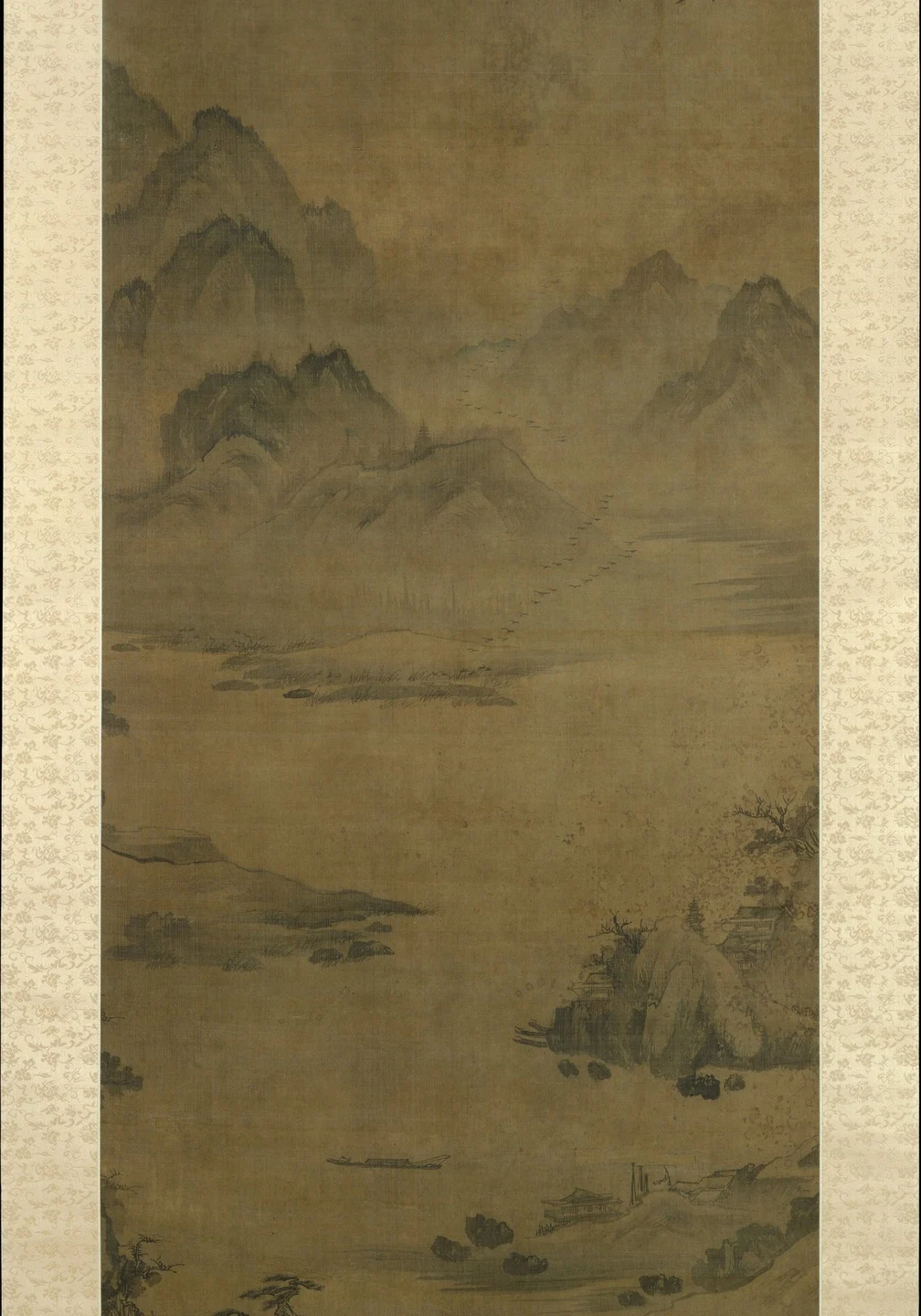 Unidentified Korean painters
Wild geese descending to sandbar
late 15th–early 16th century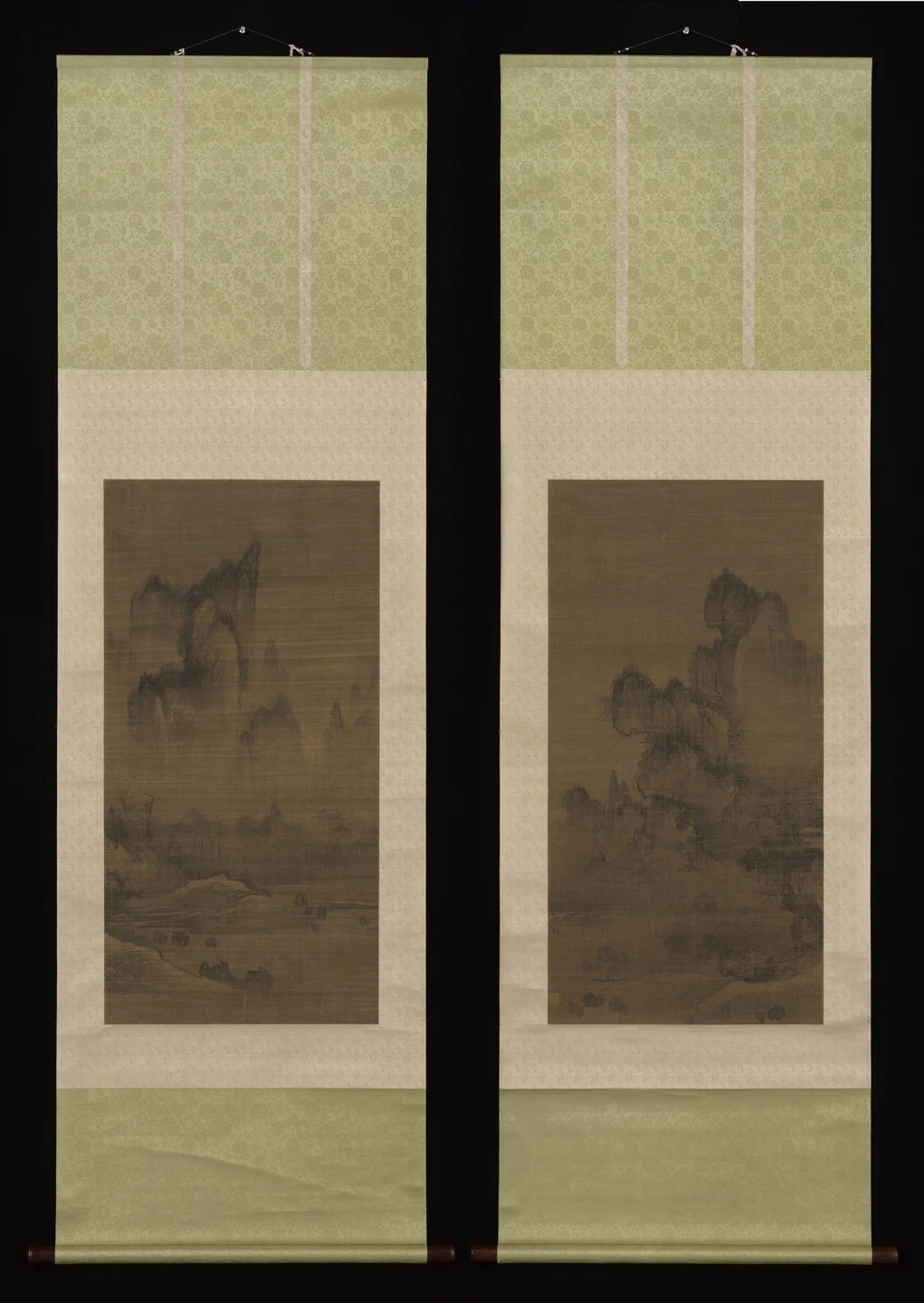 Unidentified painter in the style of An Gyeon
Evening bell from mist-shrouded temple (left); Autumn moon over Lake Dongting (right)
ca. 1450–1500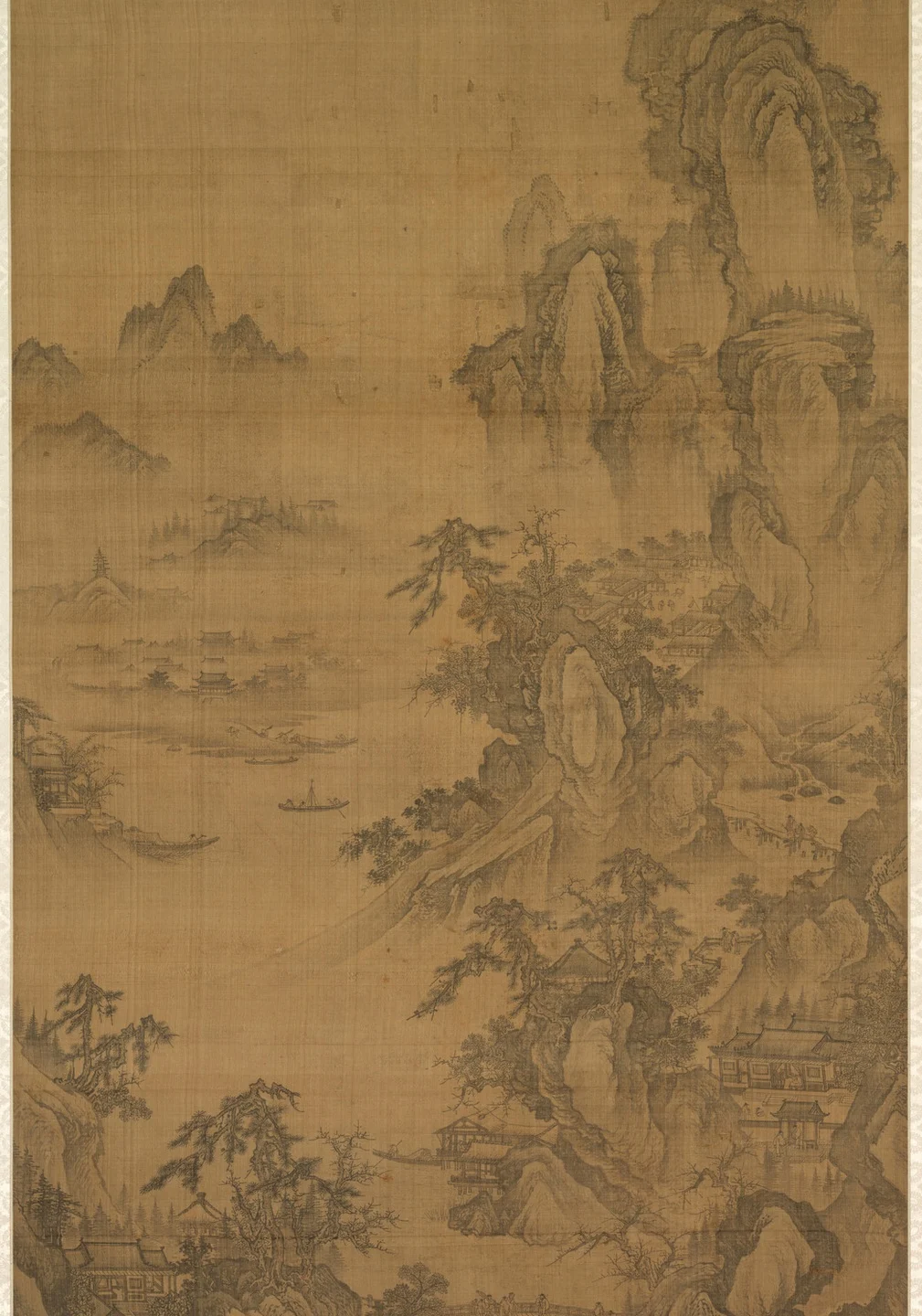 Unidentified Korean painters
Mountain Market, Clear with Rising Mist
early 1500sPeriod, style and subject
- Movement
- Korean painting
- Genre
- Landscape
- Medium
- hanging scroll; ink on silk
- Collection
- Cleveland Museum of Art
- Dimensions
- Painting only, 53 × 67.3 cm
- Accession number
- 1987.187
Sources
Image provided under CC0. Image licence