Terracotta column-krater (bowl for mixing wine and water)
Attributed to Lydos · ca. 550 BCE
Explore the painting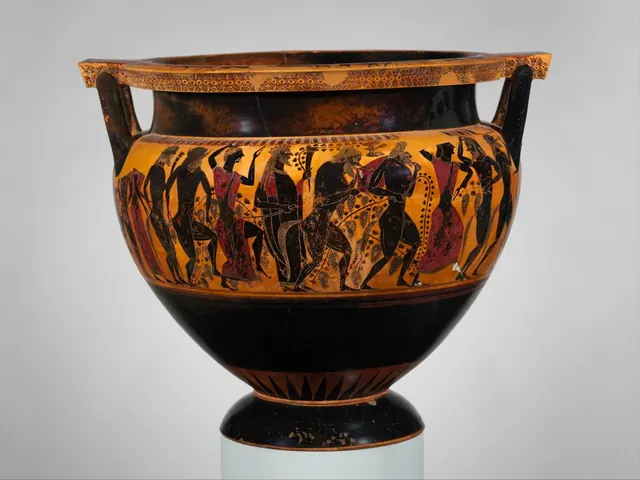
The painting’s story and details
This krater, a vessel for mixing wine with water, carries the myth of Hephaistos’ return to Olympus. The smith god returned through Dionysos and wine. It was a fitting subject for equipment used at a symposium, a gathering involving drinking, music, and conversation. The decoration is attributed to the Athenian painter Lydos, active around the middle of the sixth century BCE.
According to the myth, Hera rejected her son Hephaistos because of his disability. He retaliated by making a throne from which she could not rise. Only its maker could release her. Dionysos gave Hephaistos wine and brought him back to the gods with satyrs and maenads. Their lively procession extends around both sides of the vessel.
Dionysos stands near the centre of the side shown here, with long hair. His long garment and relatively still stance distinguish him from his moving followers. A drinking vessel and a plant branch appear in his hands. The god’s figure connects the surrounding procession to wine and its consumption.
Satyrs combine human bodies with animal features. Bent legs and turning heads interrupt an even procession. The painter differentiates participants despite their shared movement, allowing the scene to be examined gradually around the curved wall of the vessel.
Maenads appear among Dionysos’ followers in long garments and animal skins. Red areas of clothing alternate with black silhouettes. Fine incised lines mark folds, hair, and patterns, keeping the crowded band of figures from merging into a single dark patch.
Raised hands, tilted heads, and turned feet establish movement. Hephaistos himself, riding a mule, is on the other side and is not visible in this photograph. A single myth continues beyond the available view. The central figure on the side shown should therefore not automatically be identified with the protagonist named in the title.
The broad rim and capacious bowl suit the krater’s purpose. The vessel stood among participants, who were served wine from a shared supply. Its Dionysiac decoration entered that activity. Image and use became particularly closely connected during drinking.
The symposium was an important setting for social exchange, but it should not be imagined as a gathering of the whole population. The decoration shows a mythical celebration, not the complete membership of an actual party. It invites discussion of what drinkers might recognise in themselves and what aspects of social order the lively procession left outside its frame.
Featured in tours
Cave, tomb and Roman home
Where images belonged before the familiar museum painting.
More paintings to compare
Period, style and subject
- Movement
- Greek vase painting
- Genre
- Myths & allegories
- Medium
- Terracotta
- Collection
- The Metropolitan Museum of Art
- Dimensions
- Overall, 56.4 × 69.3 cm
- Accession number
- 31.11.11
Sources
Image provided under CC0. One view of a painted object. The reverse is not shown. Image licence