The Penitent Magdalen
Georges de La Tour · ca. 1640
Explore the painting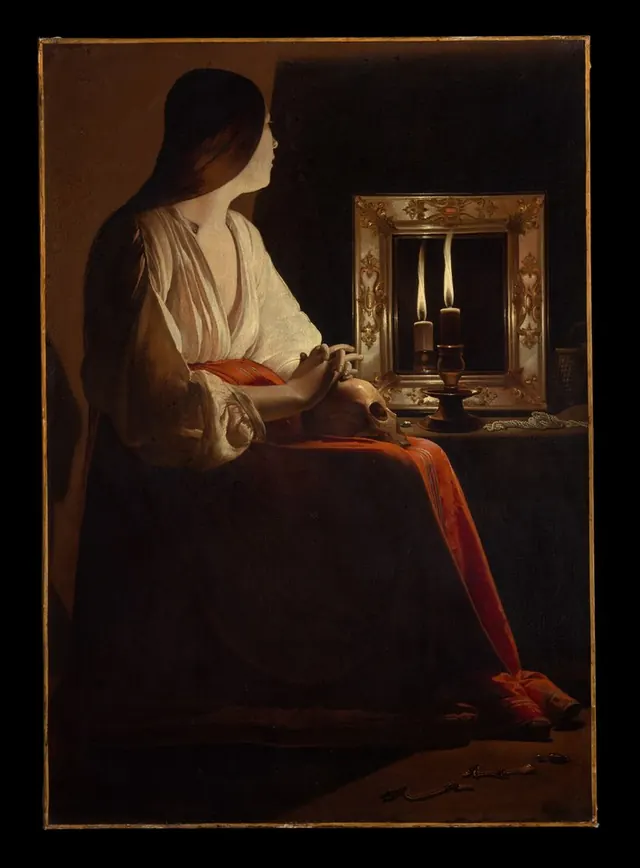
The painting’s story and details
Around 1640 La Tour painted Mary Magdalene beside a candle. In Western devotional tradition she became a model of penitence and renunciation of earthly pleasures. The artist expresses this through domestic objects: a mirror, jewellery and a skull. Little happens in the room, yet a former life and the thought of death gather together on table and lap.
Magdalene’s face appears in strict profile. Light picks out forehead, nose and neck, leaving her long hair as a dark mass behind the shoulder. She faces the table with hands clasped. Simple outlines make small changes of posture especially noticeable: the head’s turn and the hands’ position take the place of elaborate action.
The skull rests in her lap directly beneath the clasped hands. Its eye socket darkens beside a pale hand. This traditional reminder of mortality is placed immediately next to a living body. Magdalene touches it calmly. It belongs to sustained meditation, with its rounded form recurring in the curves of hands and knees.
The flame appears twice, before the mirror and in its reflection. The actual candle lights fingers, skull and white shirt. The reflected flame deepens a small area of darkness behind the glass. In a devotional reading, light may signify spiritual illumination, an interpretation the museum treats as probable. It is also a carefully organised study of a light source and its reflection.
The mirror has an ornate rectangular frame but reflects the candle. Within the traditional theme of vanity, that is a significant change of use: an object of personal grooming now participates in contemplation. Pearls lie on the table and other ornaments on the floor. Their separation from the body makes renunciation visible through the placement of things.
Red cloth descends from waist to feet in a long diagonal. Candlelight touches it above, while its colour almost disappears into shadow below. Broad areas of red, white and brown give the figure stability. La Tour simplifies fabric and body into clear volumes, making the light especially distinct: a few surfaces establish the whole room.
This painting emerged in Lorraine amid war, famine and epidemics. In 1638 Lunéville was devastated; La Tour fled with his family and lost his studio, which he later had to rebuild. Against that history, reminders of death and renunciation carried concrete weight.
More paintings to compare
 Georges de La Tour
The Fortune-Teller
probably 1630s Bartolomé Estebán Murillo
Virgin and Child
1670s Hendrick ter Brugghen
The Crucifixion with the Virgin and Saint John
ca. 1624–25 Annibale Carracci
The Coronation of the Virgin
after 1595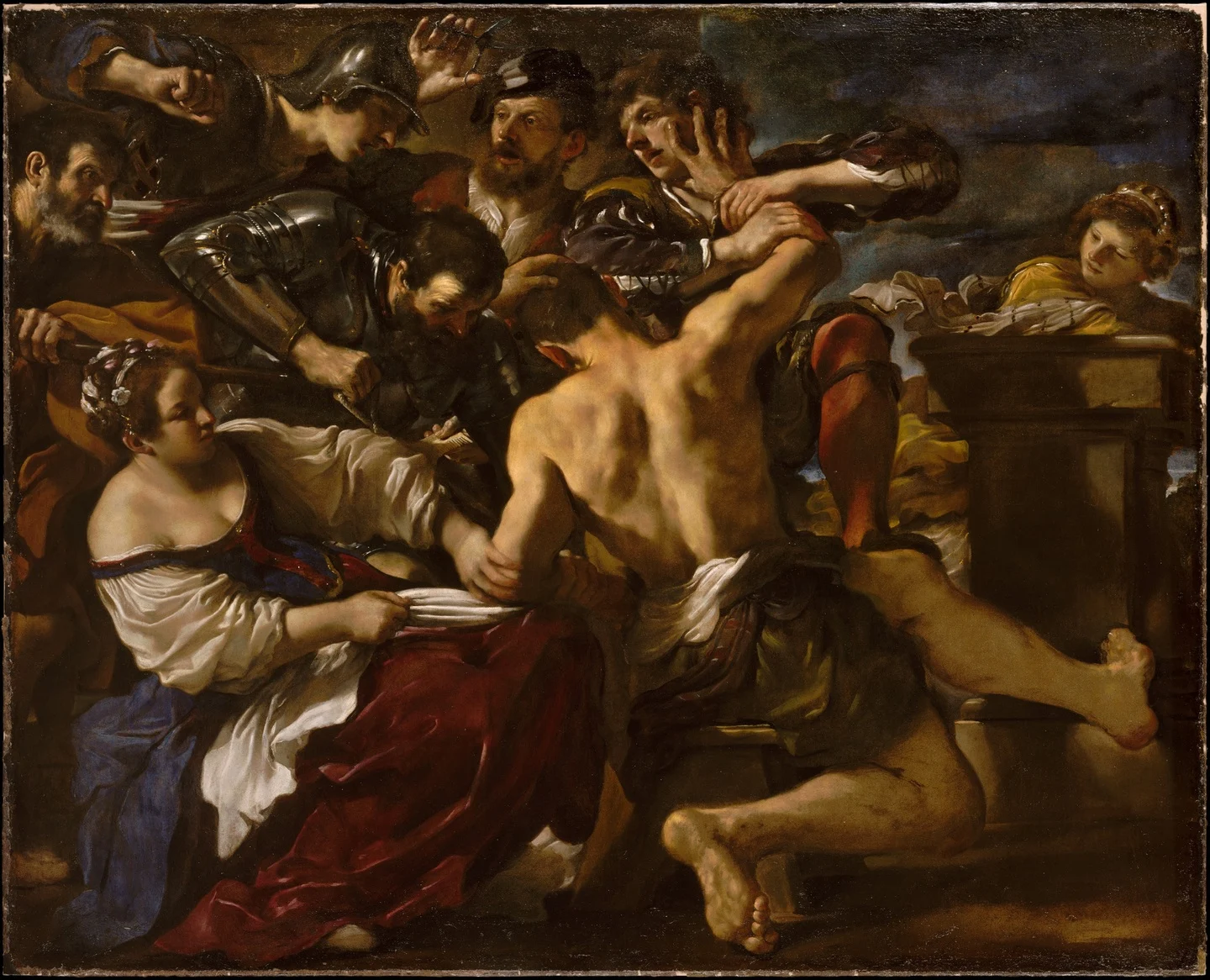 Guercino
Samson Captured by the Philistines
1619 Nicolas Poussin
Landscape with Saint John on Patmos
1640Period, style and subject
- Movement
- Baroque
- Genre
- Religious art
- Medium
- Oil on canvas
- Collection
- The Metropolitan Museum of Art
- Dimensions
- 133.4 × 102.2 cm
- Accession number
- 1978.517
Sources
Image provided under CC0. Image licence