Maharana Sangram Singh Riding a Prize Stallion
Stipple Master · ca. 1712
Explore the painting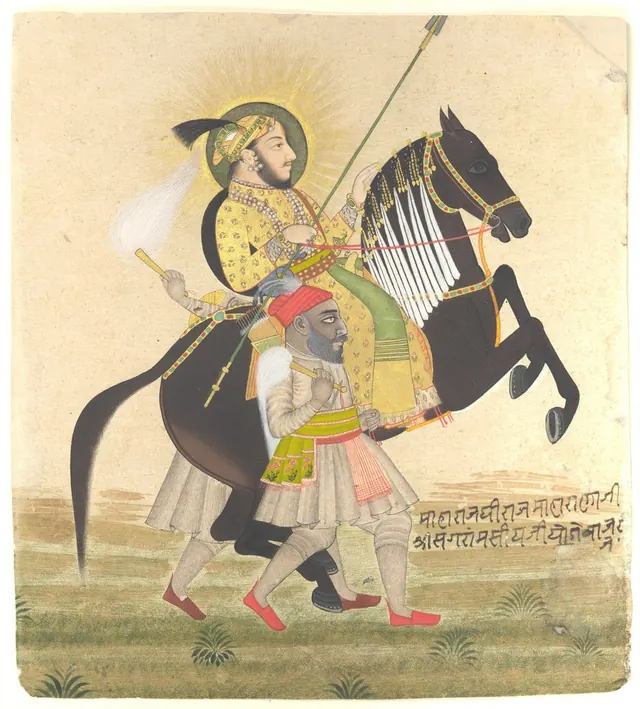
The painting’s story and details
Maharana Sangram Singh sits on a rearing horse, flanked by attendants. The portrait, made around 1712, is associated with the artist conventionally called the Stipple Master. The museum record also tentatively names Jai Ram. Martial prestige, courtly luxury, and a claim to divine dynastic descent come together in the image.
Golden rays spread around the ruler’s head. The museum relates the radiance to his dynasty’s claimed descent from the sun god. His profile is set against a darker circle, keeping individual features clear within a sign that grants him an extraordinary status.
One hand holds a long weapon while the other touches the horse near its neck. The gestures appear composed despite the animal rearing. A stable rider joined to a forcefully moving horse forms a familiar formula of authoritative portraiture. The ruler is presented as maintaining his position and directing a force others make room for.
White pendants and bright harness cross the horse’s dark neck. Contrast makes the ornaments especially conspicuous. The animal participates in the courtly display of wealth. Its trappings continue the rider’s costly dress, joining horse and human in an elaborate silhouette.
The red-turbaned attendant’s face sits below the ruler, partly overlapping the horse. He carries a fly whisk. Another servant is largely concealed behind the rider. Each has a task in the ceremony, but their arrangement serves the sovereign’s visibility. The image of authority literally requires people attending to it.
Tiny dots and short strokes appear in faces and garments. The painter seldom covers the paper completely with dense color. Its pale ground shows through, softening transitions. This stippled manner is unusual in Rajput painting, although it has precedents in Mughal and Deccan art. The court portrait preserves traces of artistic exchange.
The portrait occupies a small sheet, about twenty-one centimeters high. Its materials include gold and even Basra pearls. Wealth exists both within the image and in the object itself. The ruler appears as heir to a solar dynasty, yet his splendor is produced through the earthly labor of an artist, makers of objects, and court attendants.
Featured in tours
Indian painting. Recognising a story
Jain manuscripts, Hindu subjects and regional court life.
More paintings to compare
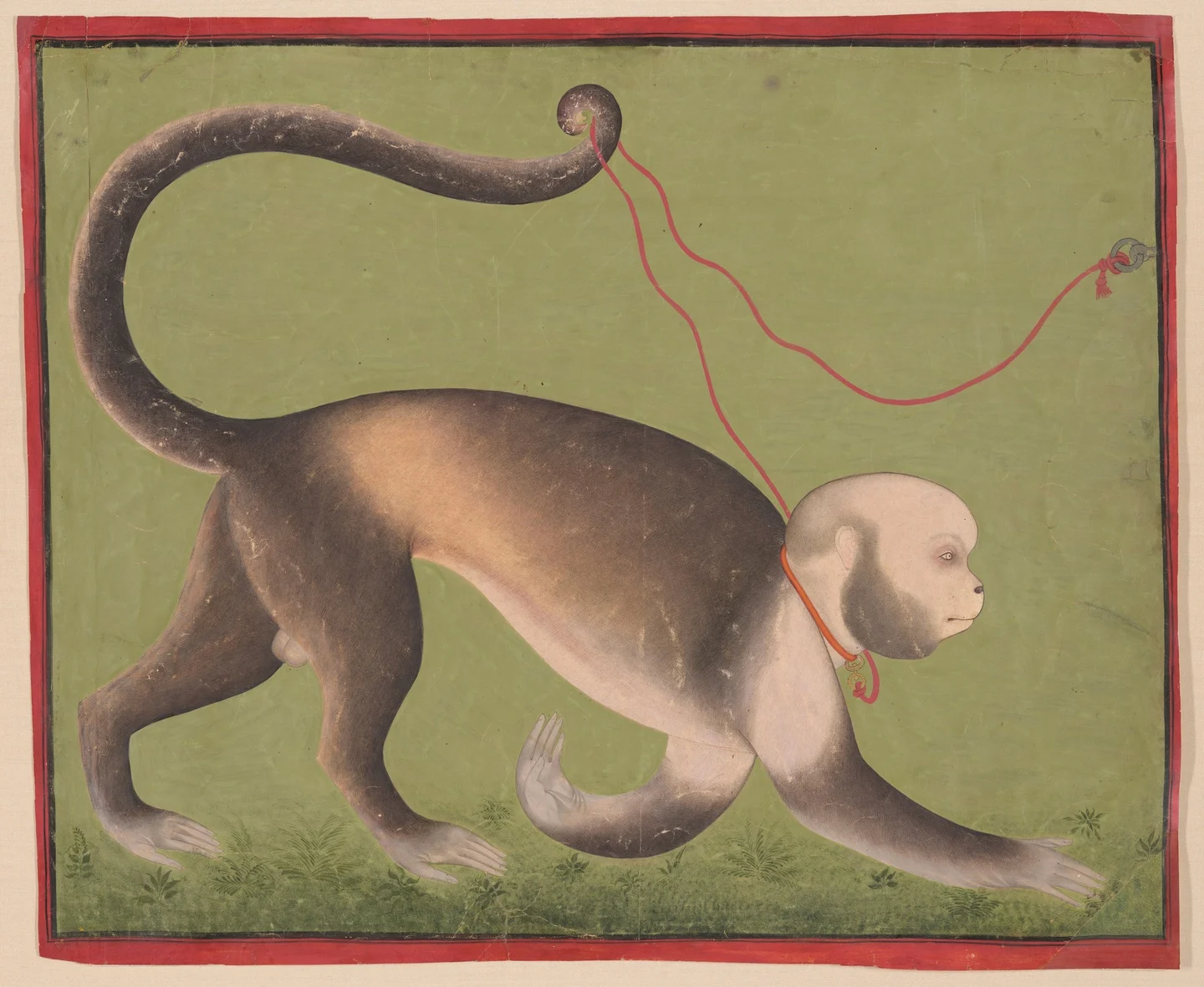 Attributed to Stipple Master
A Monumental Portrait of a Monkey
c. 1705–1710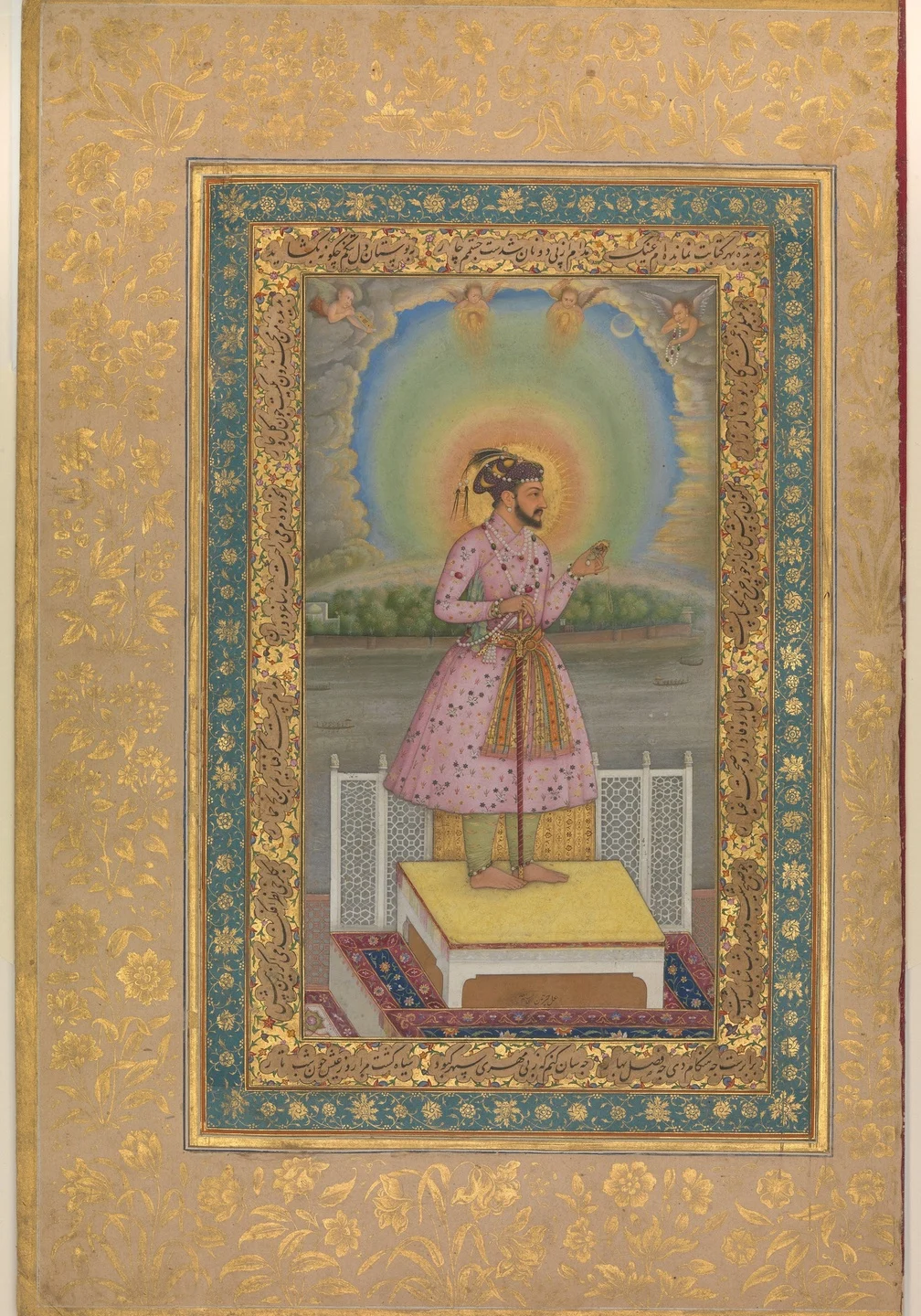 Chitarman
"Shah Jahan on a Terrace, Holding a Pendant Set With His Portrait", Folio from the Shah Jahan Album
recto: dated 1627–28; verso: ca. 1530–50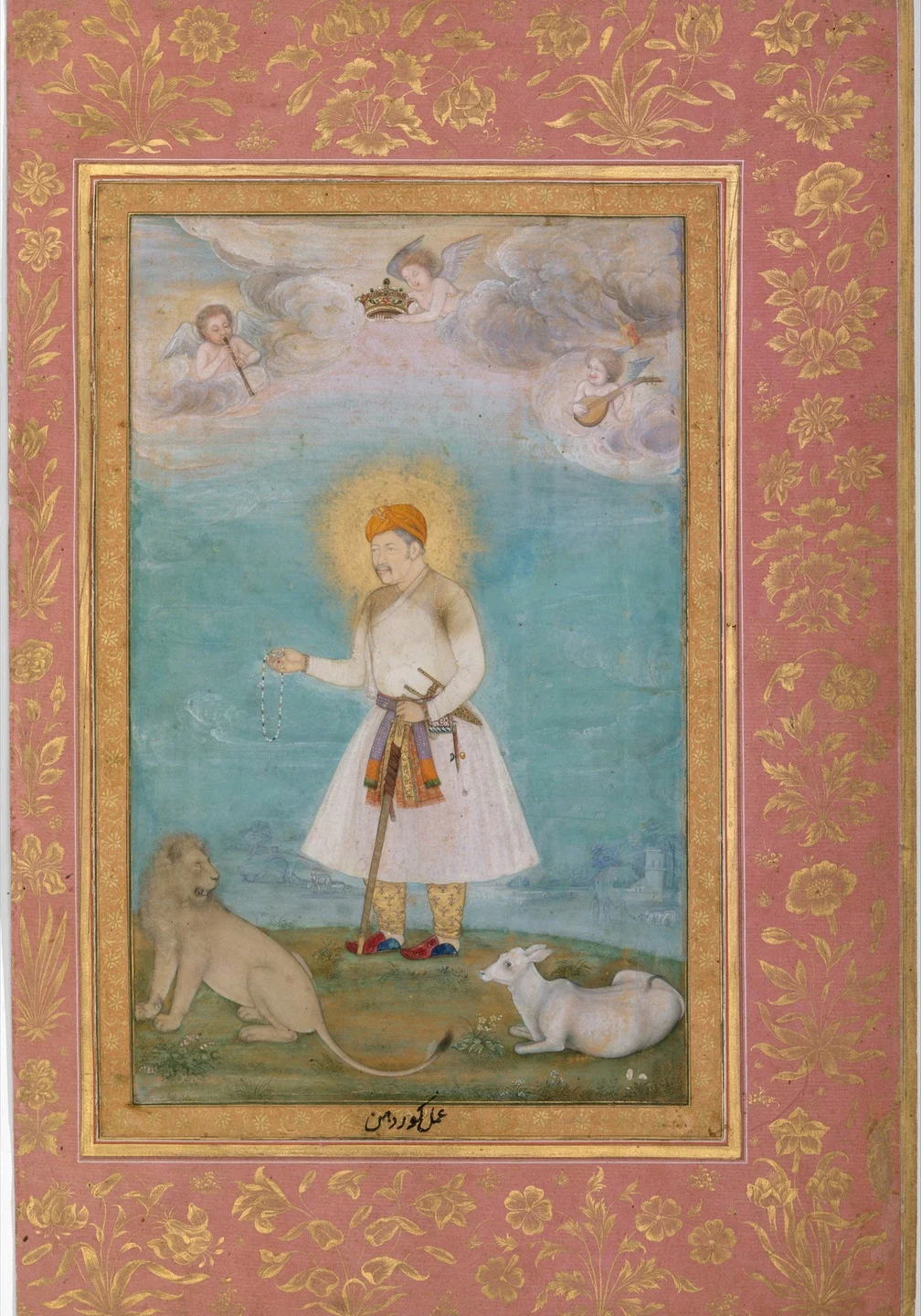 Govardhan
"Akbar With Lion and Calf", Folio from the Shah Jahan Album
verso: ca. 1630; recto: ca. 1530–50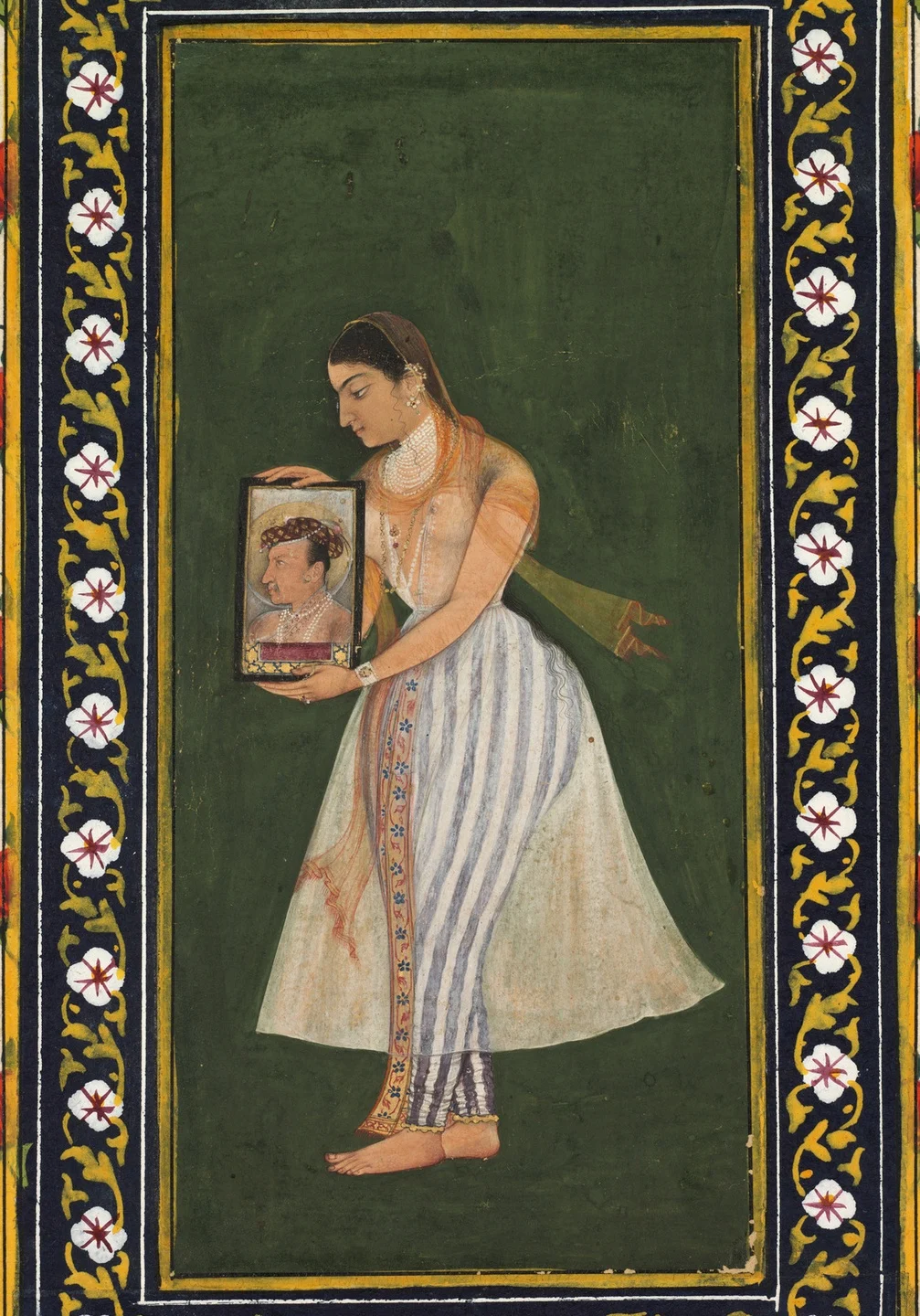 Attributed to Bishandas
Nur Jahan holding a portrait of Emperor Jahangir
c. 1627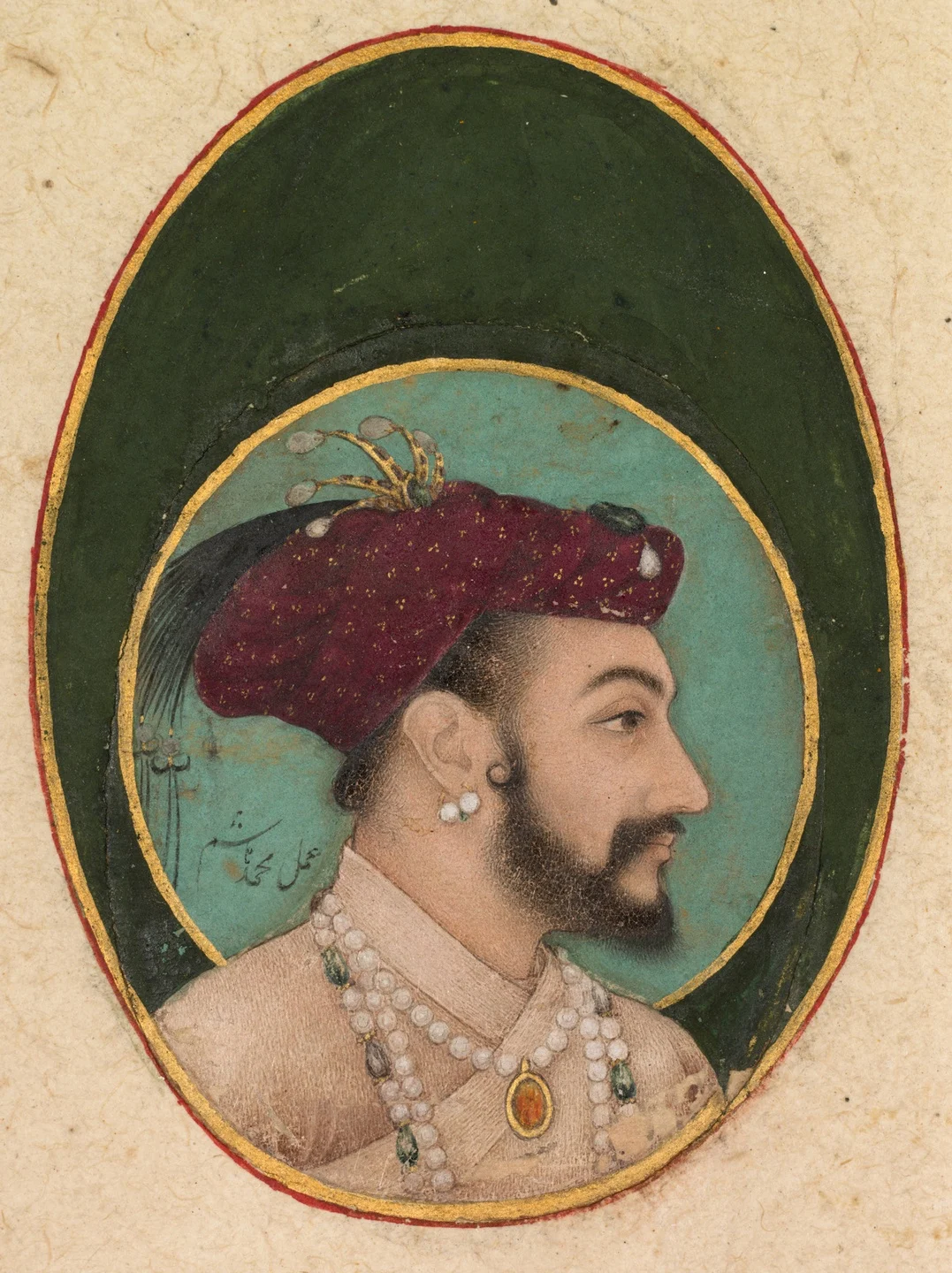 Hashim
Shah Jahan
c. 1630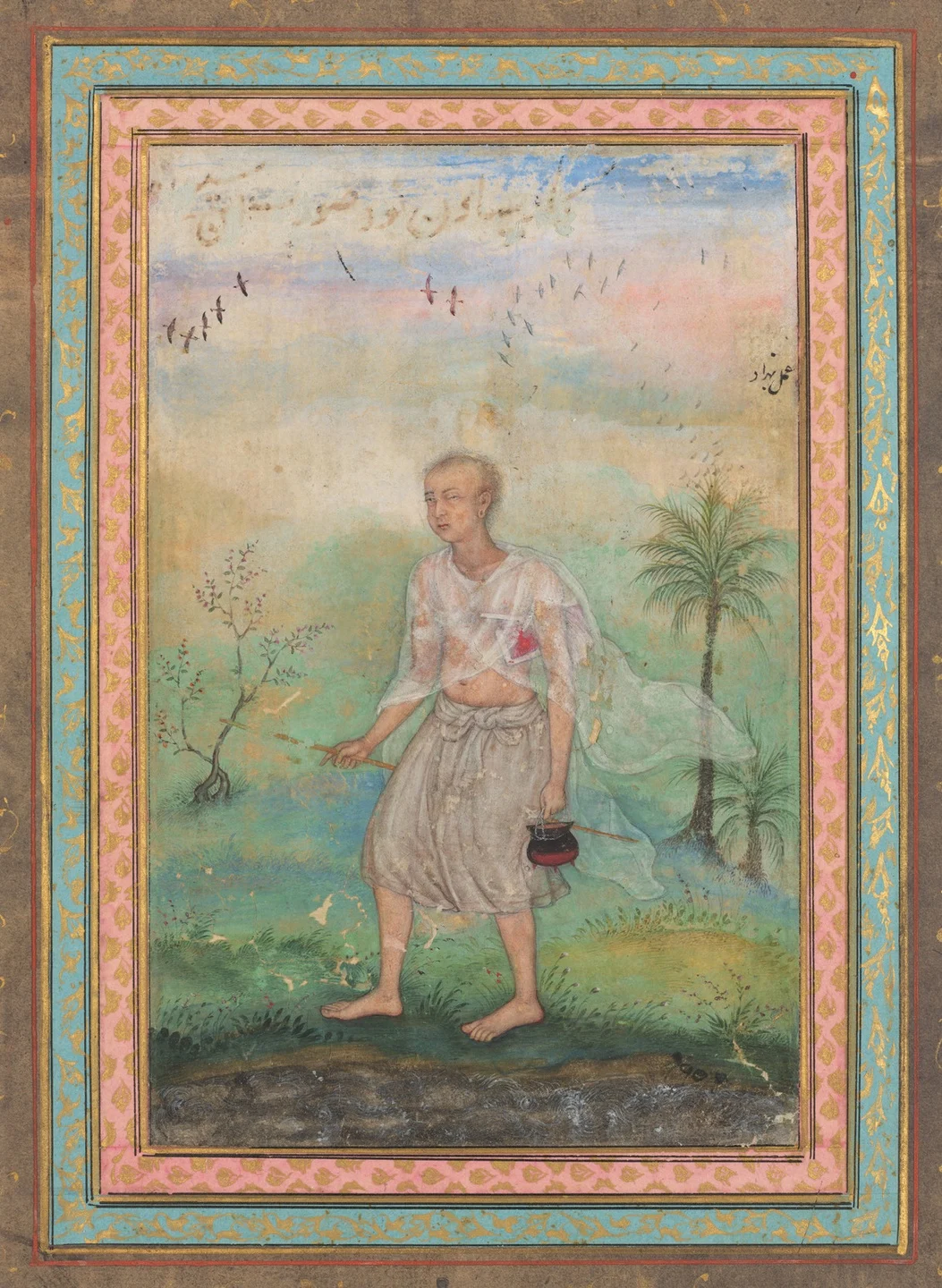 Basawan
Jain Ascetic Walking Along a Riverbank
c. 1600Period, style and subject
- Movement
- Mughal painting
- Genre
- Portrait
- Medium
- Ink, opaque watercolor, gold, and Basra pearls on paper
- Collection
- The Metropolitan Museum of Art
- Dimensions
- 21 × 19 cm
- Accession number
- 2004.403
Sources
Image provided under CC0. Image licence