Daniel in the Lions' Den
Peter Paul Rubens · c. 1614/1616
Explore the painting
The painting’s story and details
Daniel survives a night among lions, where he has been thrown for loyalty to his God. Rubens chose this Old Testament subject for a canvas over three metres wide. Scale turns a religious story into an almost bodily encounter. We stand close to the animals while the protagonist looks upwards, beyond their crowded enclosure.
Daniel clasps his hands and raises his face towards the cave’s opening. Illuminated shoulders and chest separate from dark rock. Prayer becomes legible through posture and gesture. Rubens leaves the space before the face open although animals crowd almost the entire lower picture.
The lion behind Daniel opens its jaws. Light picks out teeth and tongue as its head tips back. A yawn can look threatening until compared with its motionless neighbours. Different animal states keep danger present even without an attack.
A standing lion looks ahead, its front paws set apart. Long wavy strands describe the mane, while shorter transitions model the muzzle. These differences make its mass convincing. Its gaze points roughly towards the viewer, extending the scene’s reach.
Another lion sleeps below with its head on the ground. Closed eyes and an extended muzzle differ sharply from the open jaws above. The story of miraculous survival gains a visible basis. The animals retain their power, but their postures show that no attack is taking place now.
A skull near the lower edge recalls the consequences of meeting predators. Long bones lie nearby. These objects are closer to us than Daniel, allowing danger to register before his preserved life. The foreground’s arrangement participates in the religious narrative.
In 1618 diplomat Dudley Carleton received the painting from Rubens in exchange for ancient sculpture. It later belonged to Charles I of England. Its circulation therefore links a biblical subject with collecting and diplomacy. Skill in portraying animals offered owners value alongside the religious content.
More paintings to compare
 Peter Paul Rubens
Rubens, Helena Fourment (1614–1673), and Their Son Frans (1633–1678)
ca. 1635 Peter Paul Rubens
Marchesa Brigida Spinola Doria
1606 Peter Paul Rubens
The Fall of Phaeton
c. 1604/1605, probably reworked c. 1606/1608 Bartolomé Estebán Murillo
Virgin and Child
1670s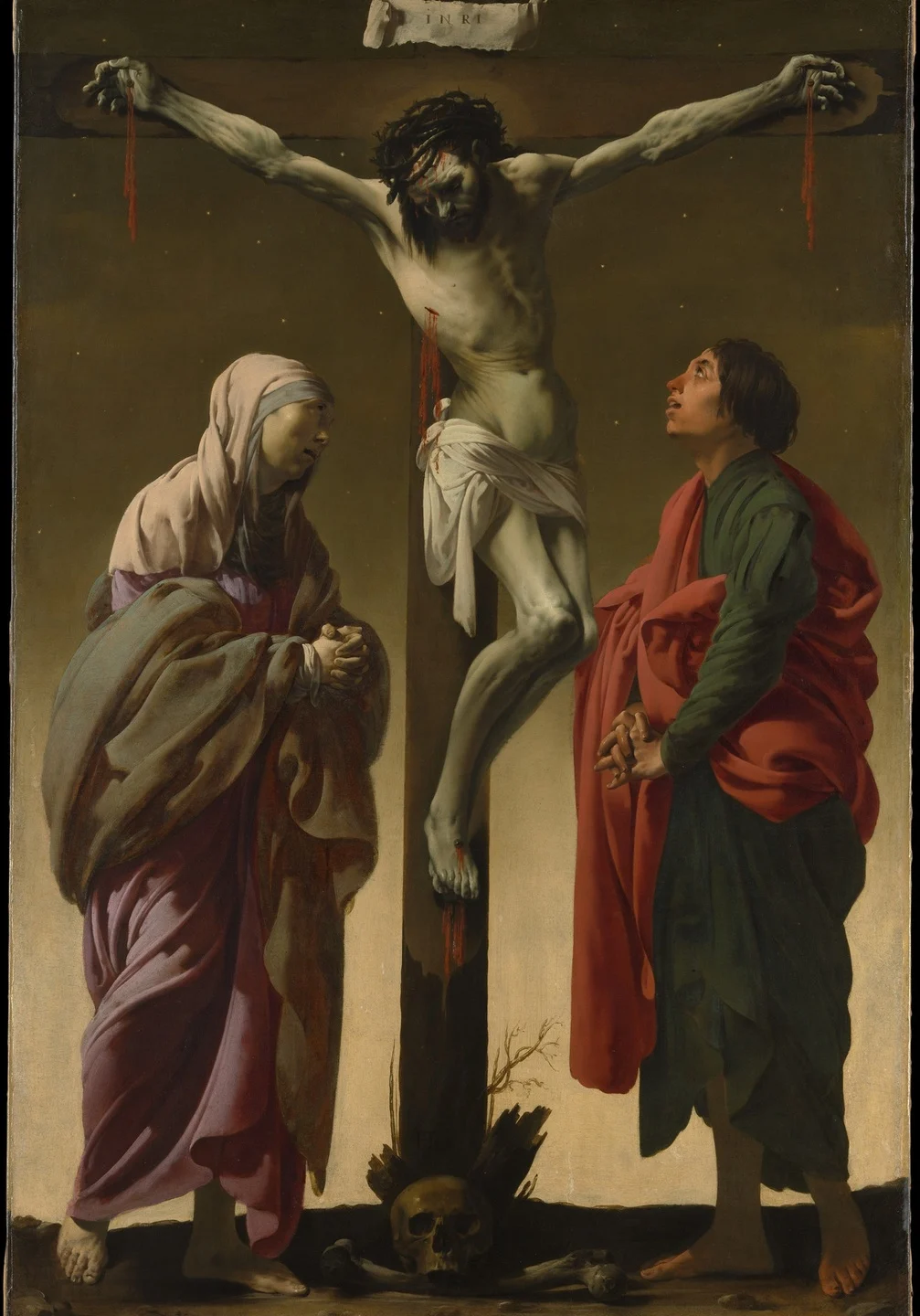 Hendrick ter Brugghen
The Crucifixion with the Virgin and Saint John
ca. 1624–25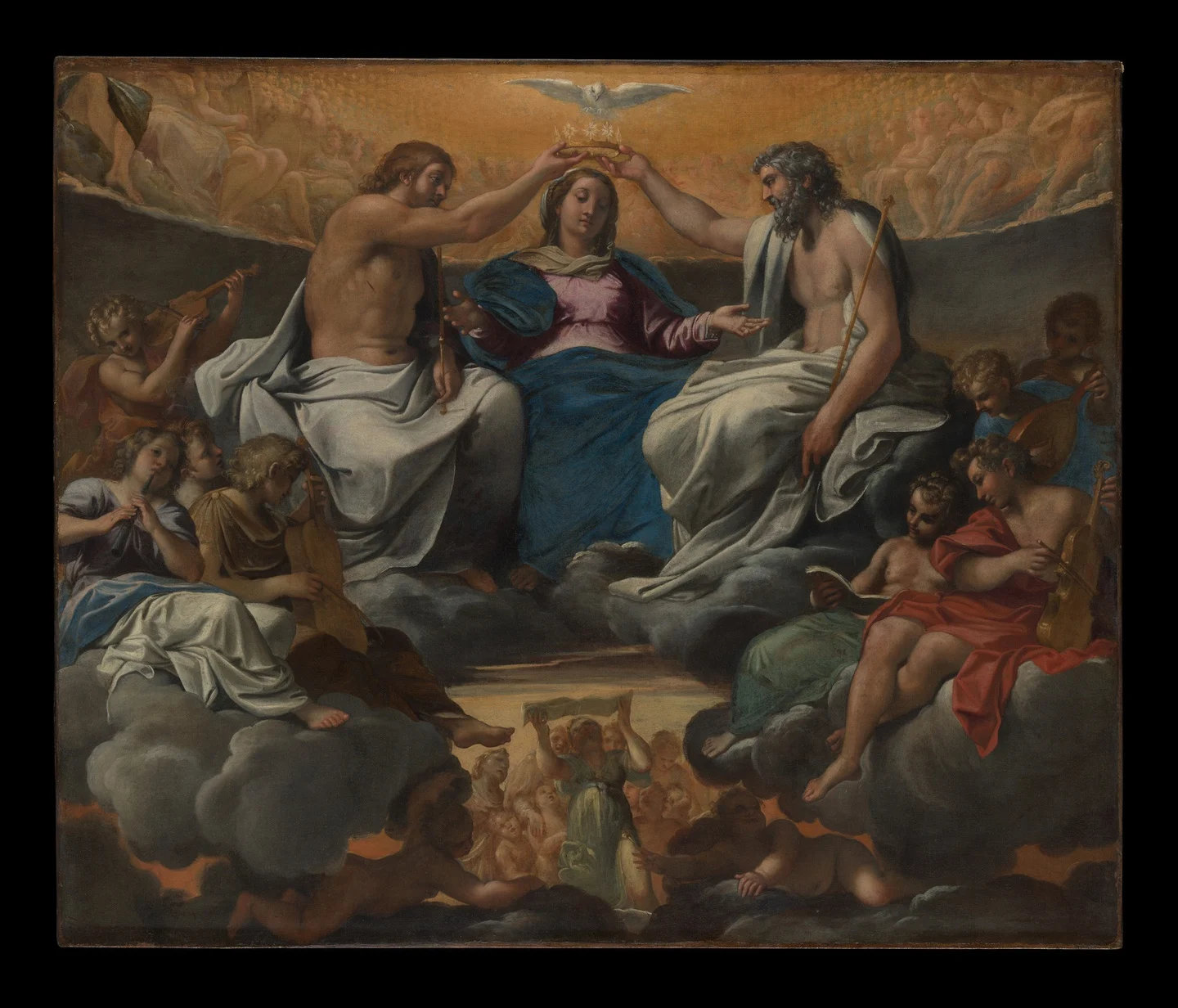 Annibale Carracci
The Coronation of the Virgin
after 1595Period, style and subject
- Movement
- Baroque
- Genre
- Religious art
- Medium
- oil on canvas
- Collection
- National Gallery of Art, Washington
- Dimensions
- 224.2 × 330.5 cm
- Accession number
- 1965.13.1
Sources
Museum reproduction. Public domain; CC0, NGA Open Access. Image licence