The Fall of Phaeton
Peter Paul Rubens · c. 1604/1605, probably reworked c. 1606/1608
Explore the painting
The painting’s story and details
Phaeton persuaded his father, the sun god, to let him drive his chariot and lost control. Rubens painted the catastrophe during his Italian years, drawing on a myth known through Ovid’s Metamorphoses. Another person’s mistake becomes everyone’s disaster. The story is organised through falling bodies and a breakdown of shared order.
Phaeton falls headfirst beside the overturned chariot. One arm extends downwards while the legs remain above the torso. Red fabric helps us find him among many bodies. His unusual orientation asks us to turn the figure mentally, making the fall particularly tangible.
A pale horse rears above the wheel. Mane and reins pull in different directions. It no longer moves with the rest of the team. Conflicting directions make lost control visible before we identify every mythological participant.
Another horse plunges headfirst on the left. Its pale body crosses dark clouds opposite the rearing horse on the right. A stretched diagonal forms between them, spanning almost the whole painting. The disaster becomes a shared movement rather than a single local incident.
Winged women recoil amid billowing cloth. The museum identifies them as the Horae, personifications of seasons and cosmic order. Their scattered movements help describe a disruption of ordinary time. Butterfly-like wings distinguish them from participants in an earthly scene.
Fire appears on the distant earth at lower right. Tiny beside the celestial figures, it reveals consequences for the world below. Yellow-red strips echo the sky’s illumination, joining cause and result within one composition.
In 1604 theorist Karel van Mander connected the myth with the danger of inexperienced rulers. The museum presents this as contemporary context, not Rubens’s proven intention. The painting supports discussion of who receives power, whether they can manage it and who bears the consequences. Its original commissioner is not securely identified.
More paintings to compare
 Peter Paul Rubens
Rubens, Helena Fourment (1614–1673), and Their Son Frans (1633–1678)
ca. 1635 Peter Paul Rubens
Daniel in the Lions' Den
c. 1614/1616 Peter Paul Rubens
Marchesa Brigida Spinola Doria
1606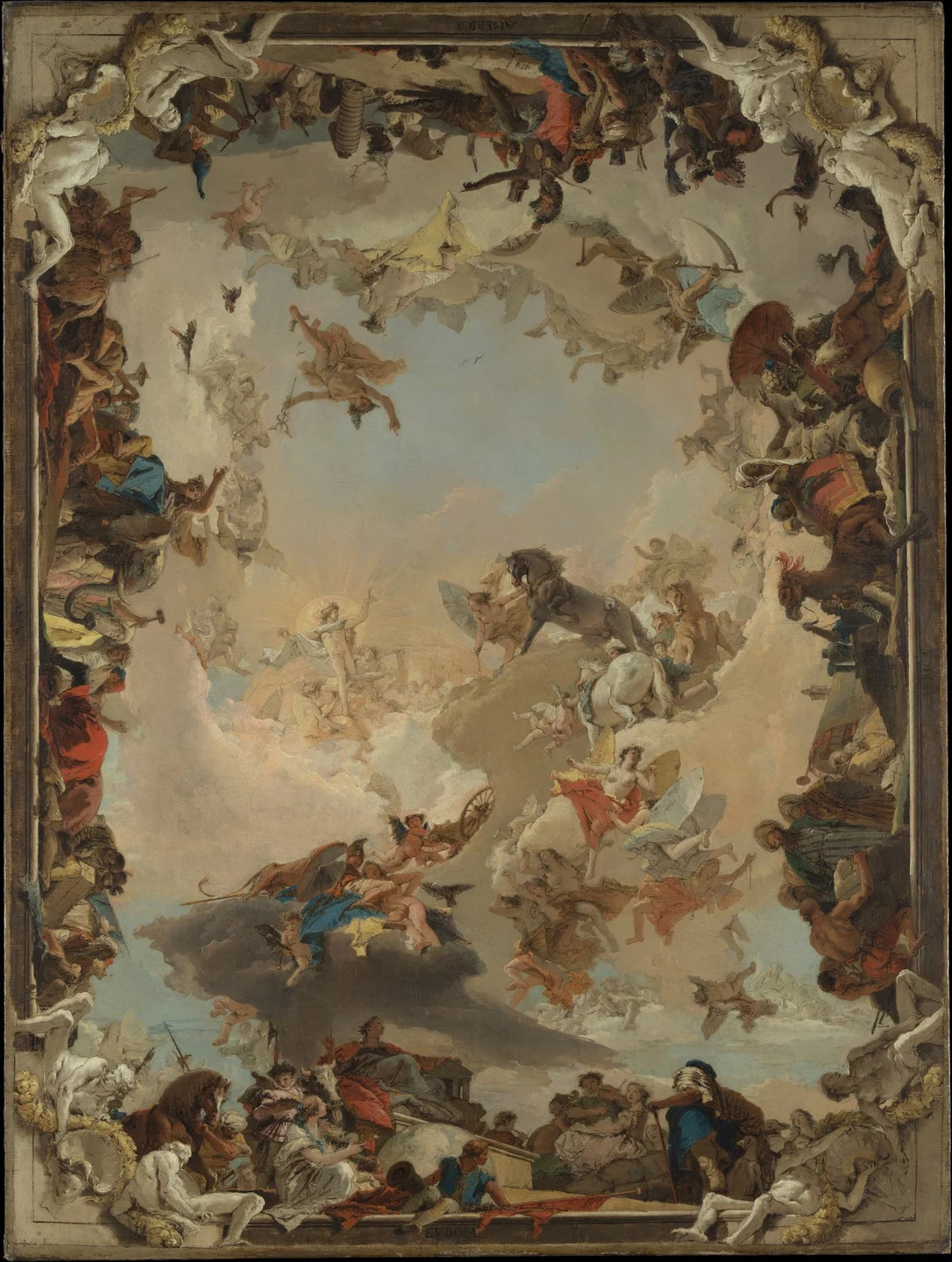 Giovanni Battista Tiepolo
Allegory of the Planets and Continents
1752 Nicolas Poussin
Blind Orion Searching for the Rising Sun
1658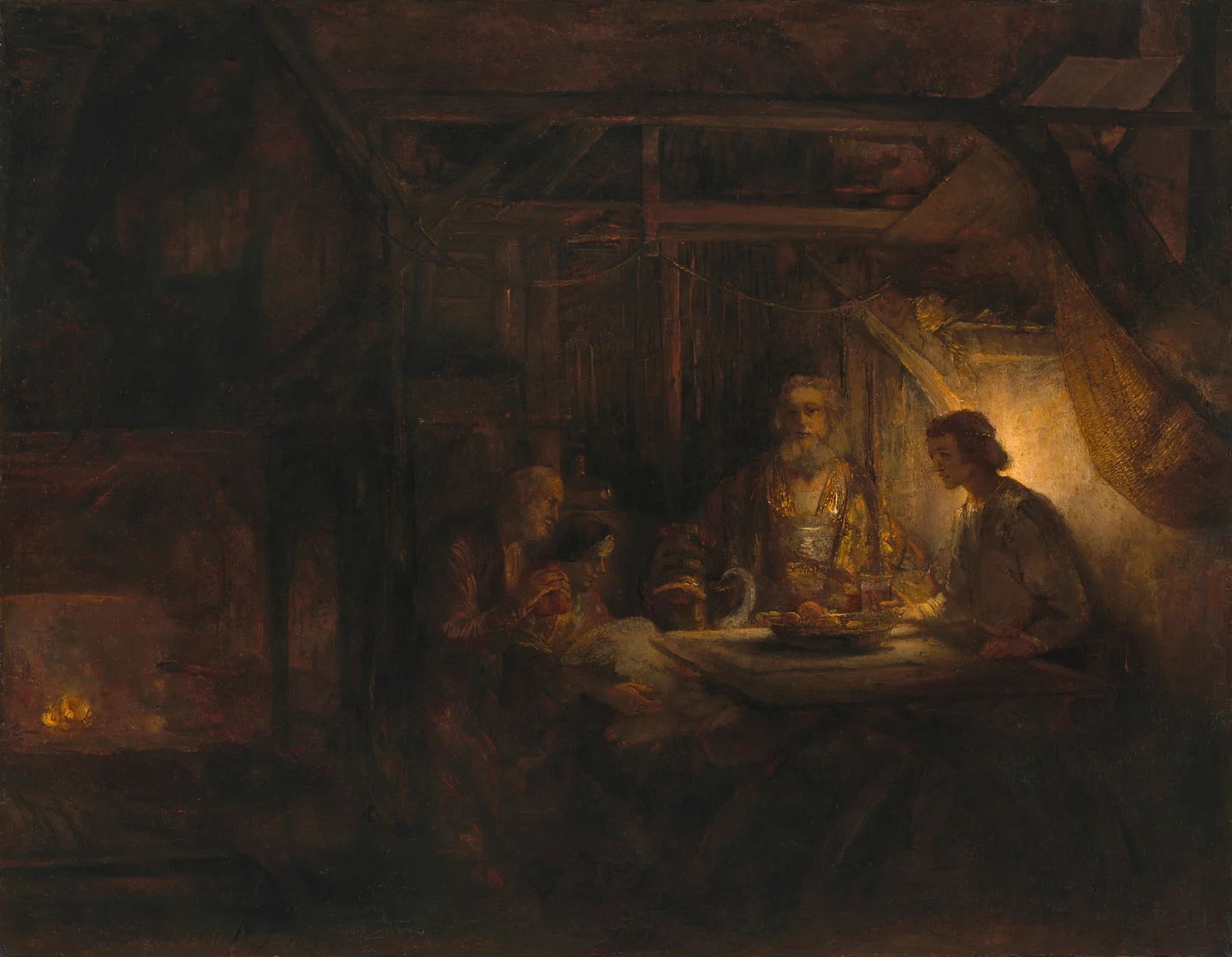 Rembrandt van Rijn
Philemon and Baucis
1658Period, style and subject
- Movement
- Baroque
- Genre
- Myths & allegories
- Medium
- oil on canvas
- Collection
- National Gallery of Art, Washington
- Dimensions
- 98.4 × 131.2 cm
- Accession number
- 1990.1.1
Sources
Museum reproduction. Public domain; CC0, NGA Open Access. Image licence