Wanderer above the Sea of Fog
Caspar David Friedrich · c. 1817
Explore the painting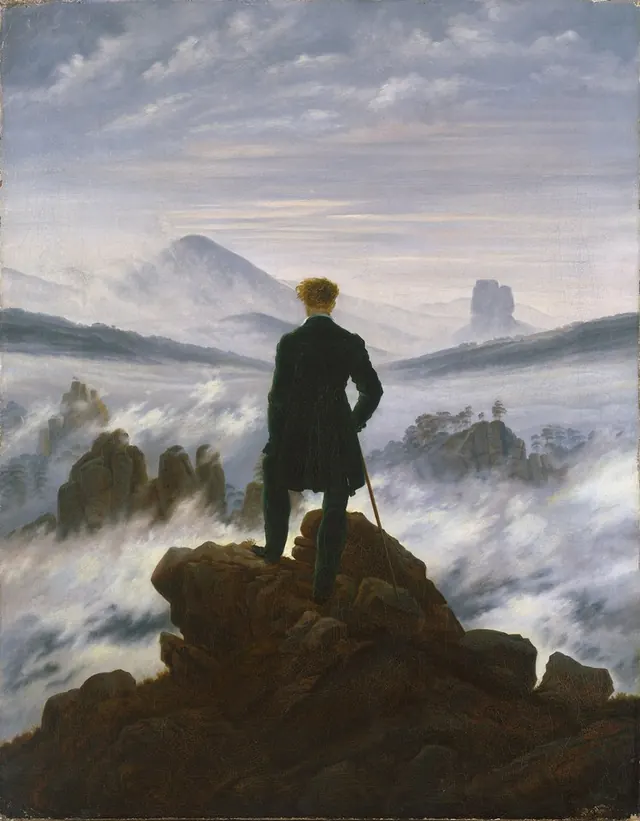
The painting’s story and details
A man has climbed above the fog and stopped with his back to us. His face is hidden, and his own body partly blocks the view ahead. Friedrich painted the work around 1817, by which time he was an established landscape artist and a member of the Dresden Academy. Drawings made on his travels supplied material. Observations from different years became a convincing mountain world assembled in the studio.
The figure occupies the exact centre. We look in the wanderer’s direction but cannot see the precise space before his feet. His turned back mediates our relation to the landscape. We may feel close to his view while also unable to share it fully. The painting does not tell us whether he experiences triumph, anxiety or calm attention.
His feet stand at different heights on uneven rock. The dark foreground is clear enough for us to imagine its support beneath the body. Friedrich used an 1813 drawing made on the Kaiserkrone for these rocks. A specific observation helps establish the place’s credibility even though the whole landscape does not correspond to one actual viewpoint.
Rocks emerge from the white mist in separate groups on the left. Their bases are hidden, making the distance between them uncertain. Friedrich used motifs drawn near Rathen in this area. Fog allows fragments to join without a continuous route between them. We see enough to believe in the terrain and little enough to feel its inaccessibility.
A walking stick rests against the rock on the right. Beside the dissolving distance it is a practical, tangible object. Its fine line clarifies the position of hand and body. Feet and support suggest the physical movement that brought the wanderer here. The object cannot, however, establish either the journey’s purpose or the man’s identity. Portrait identifications require evidence beyond the painting.
The distant mountain is lighter than the foreground rocks, its edge almost merging with the sky. This motif relates to drawings of the Rosenberg from 1808. Differences in clarity establish distance more strongly than a detailed map of the slopes would. Friedrich transforms his archive of observations into a new spatial experience through a prolonged process of selection between journey, drawing and canvas.
Small trees can be distinguished on the right-hand rock. They establish the rocks’ size and their distance. Against this terrain, the central figure seems both large within the image and small within the world. Two readings become possible: he commands the view through his position, or merely occupies a temporary point before a much greater expanse.
Friedrich’s landscape makes viewers consider their own position. There is no event whose solution must be guessed. A body, solid footing and a space of vanishing boundaries remain. The Romantic character lies in this connection between precise observation and the viewer’s personal experience. The hidden face keeps that experience open rather than settling it into a formula.
More paintings to compare
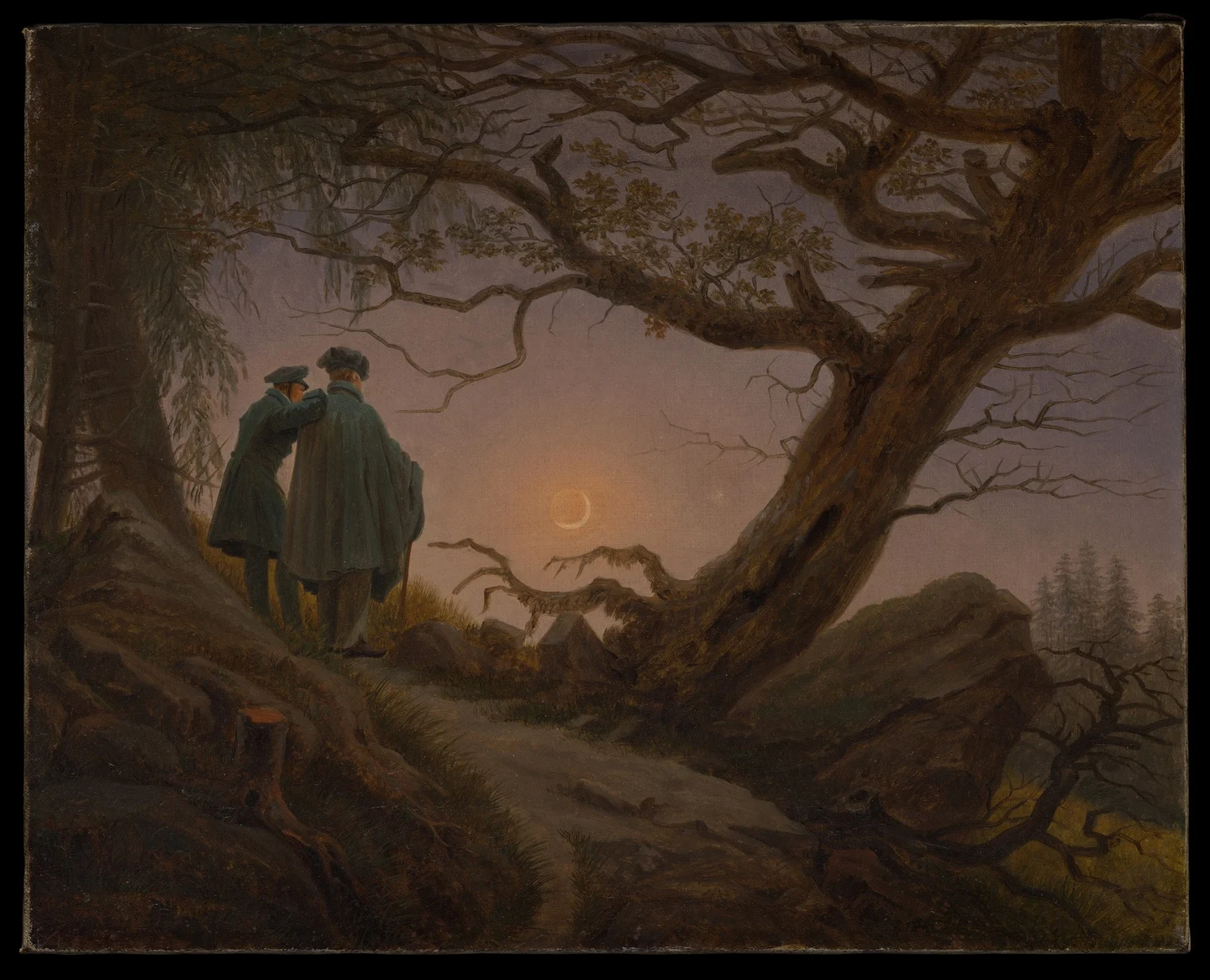 Caspar David Friedrich
Two Men Contemplating the Moon
ca. 1825–30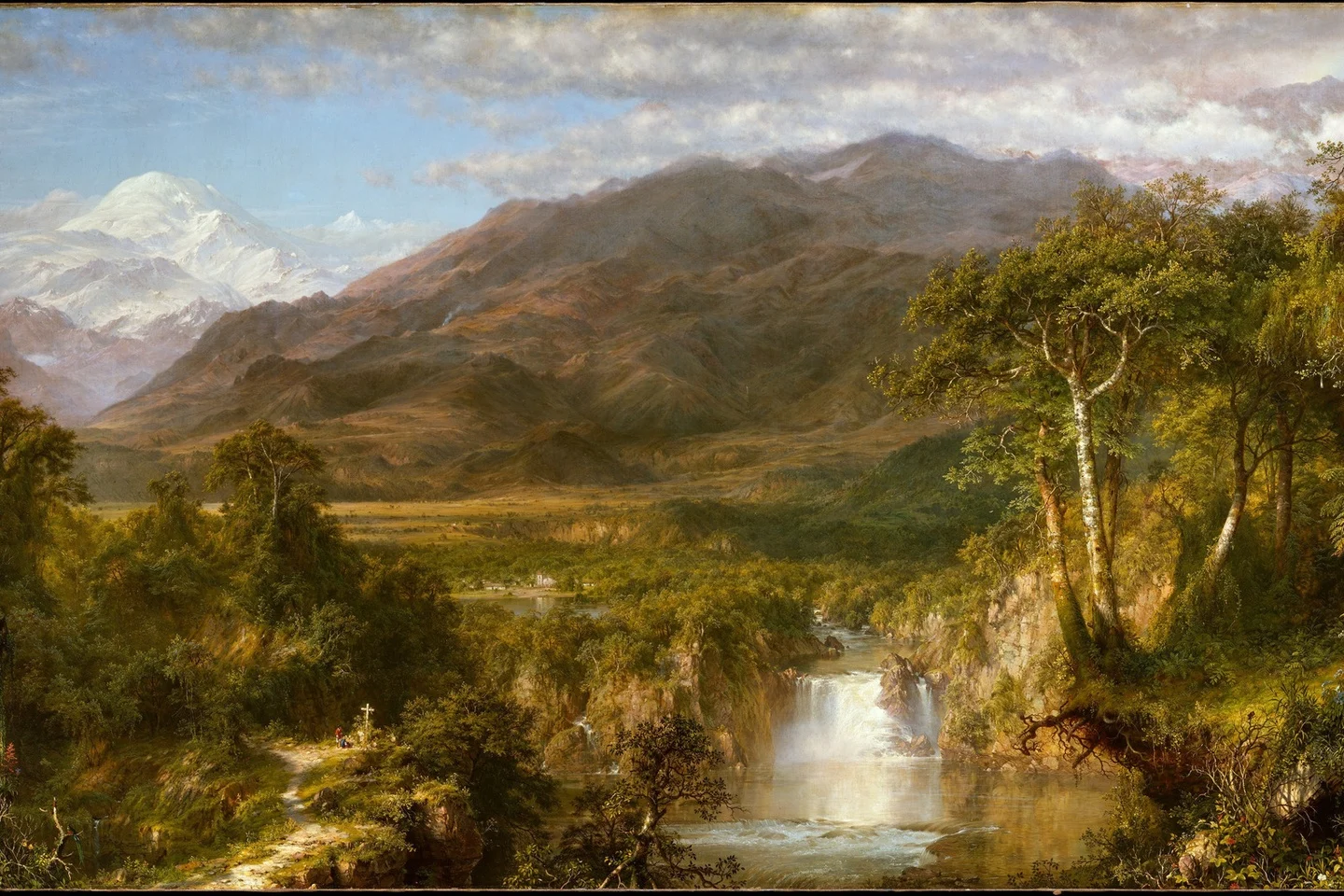 Frederic Edwin Church
Heart of the Andes
1859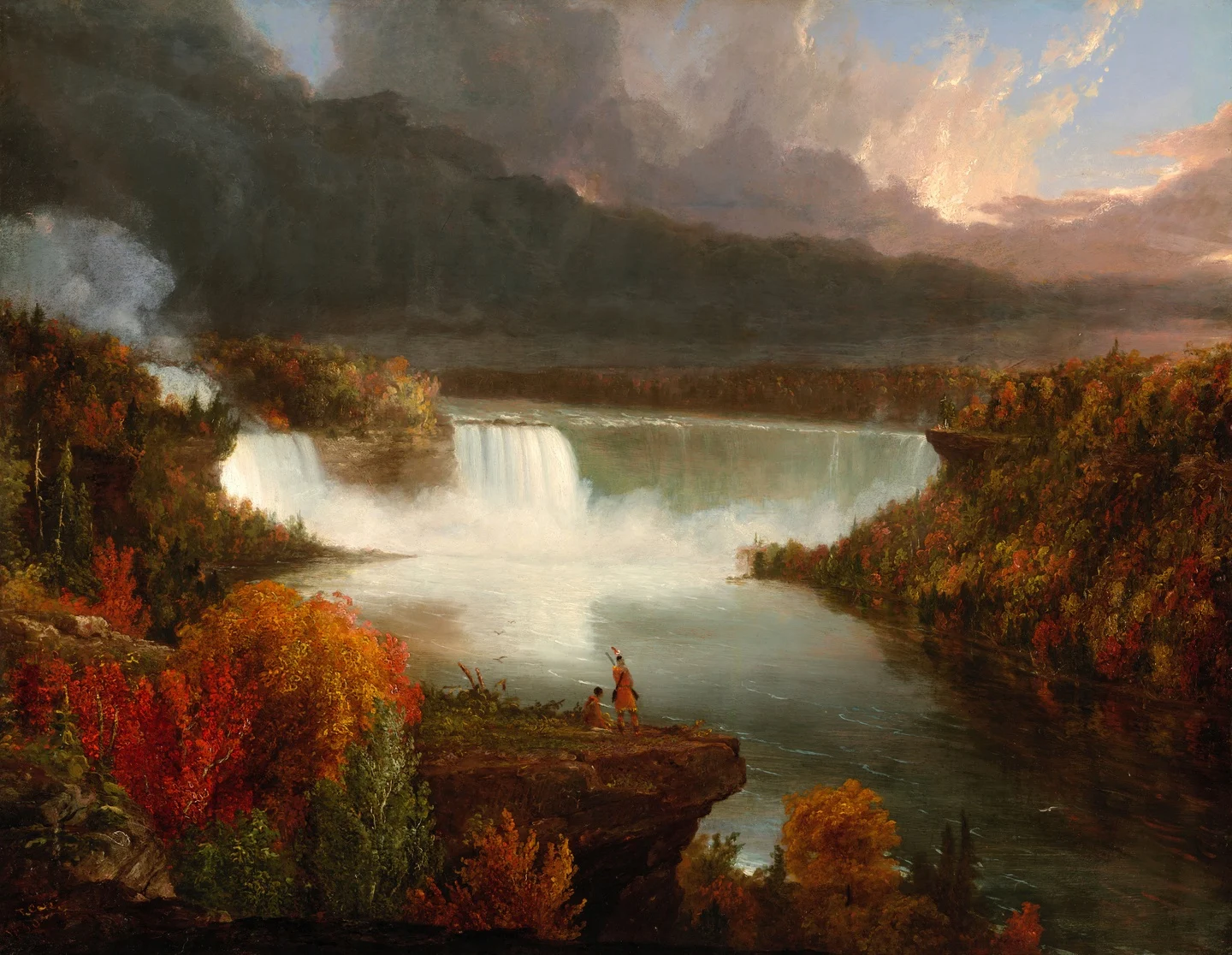 Thomas Cole
Distant View of Niagara Falls
1830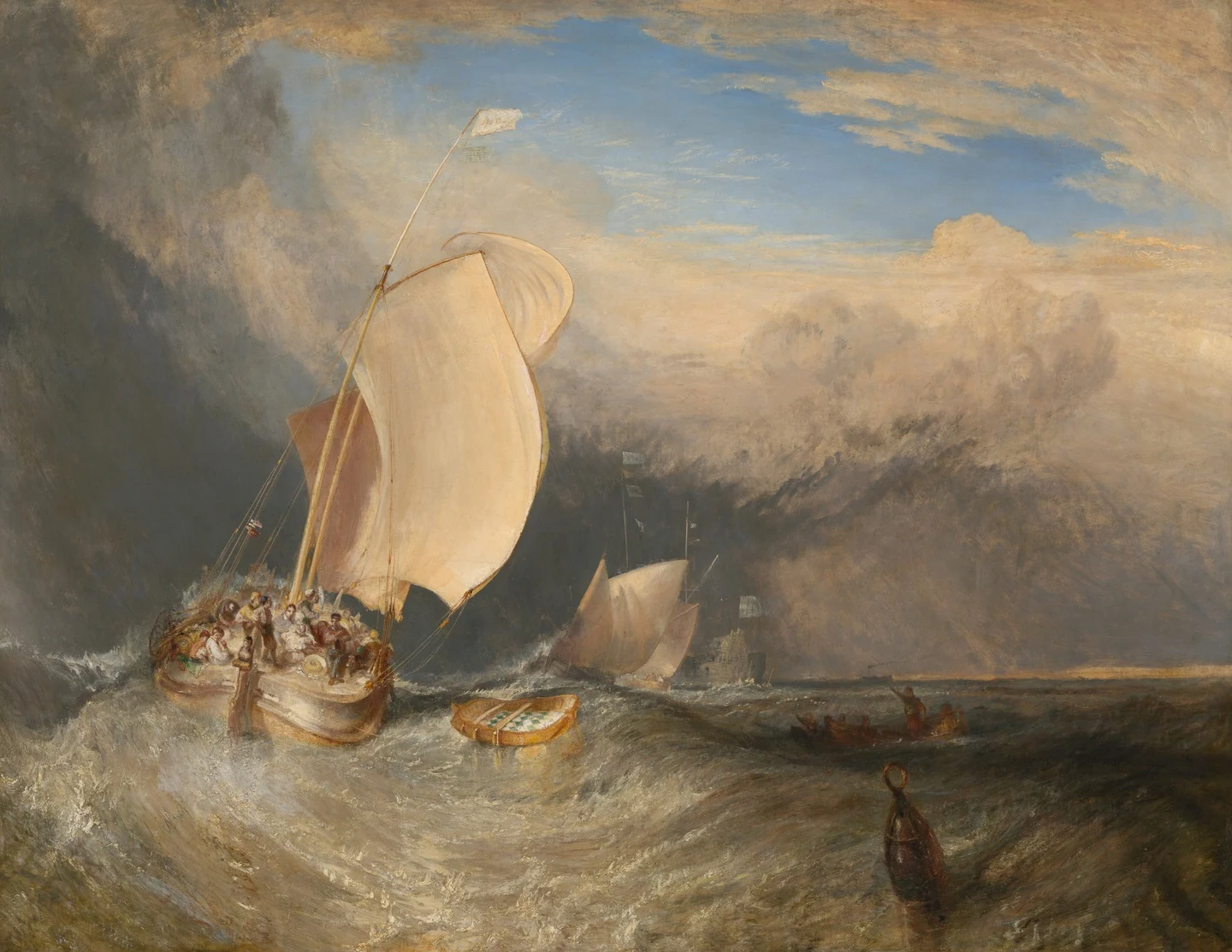 Joseph Mallord William Turner
Fishing Boats with Hucksters Bargaining for Fish
1837–38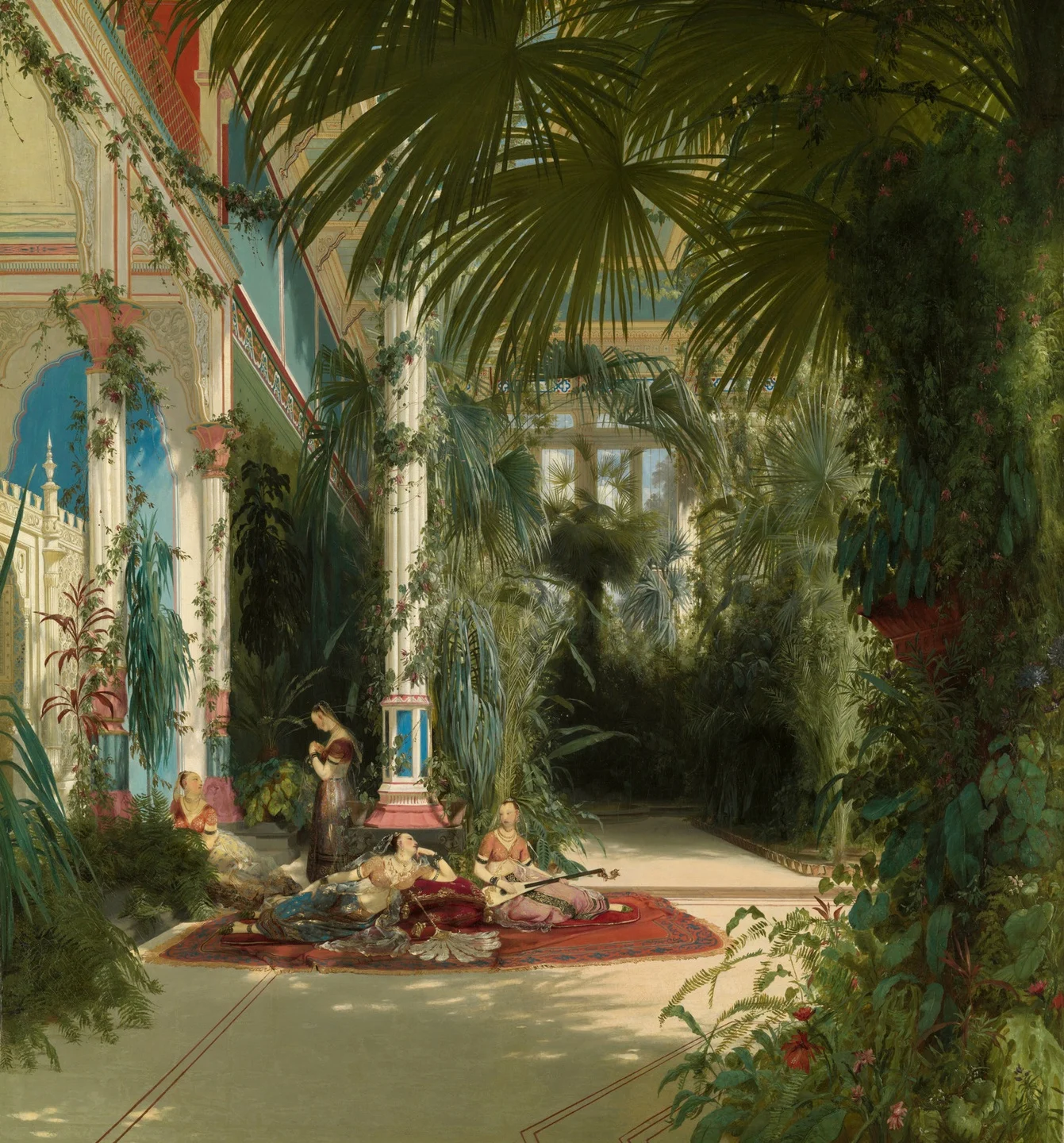 Carl Blechen
The Interior of the Palm House on the Pfaueninsel Near Potsdam
1834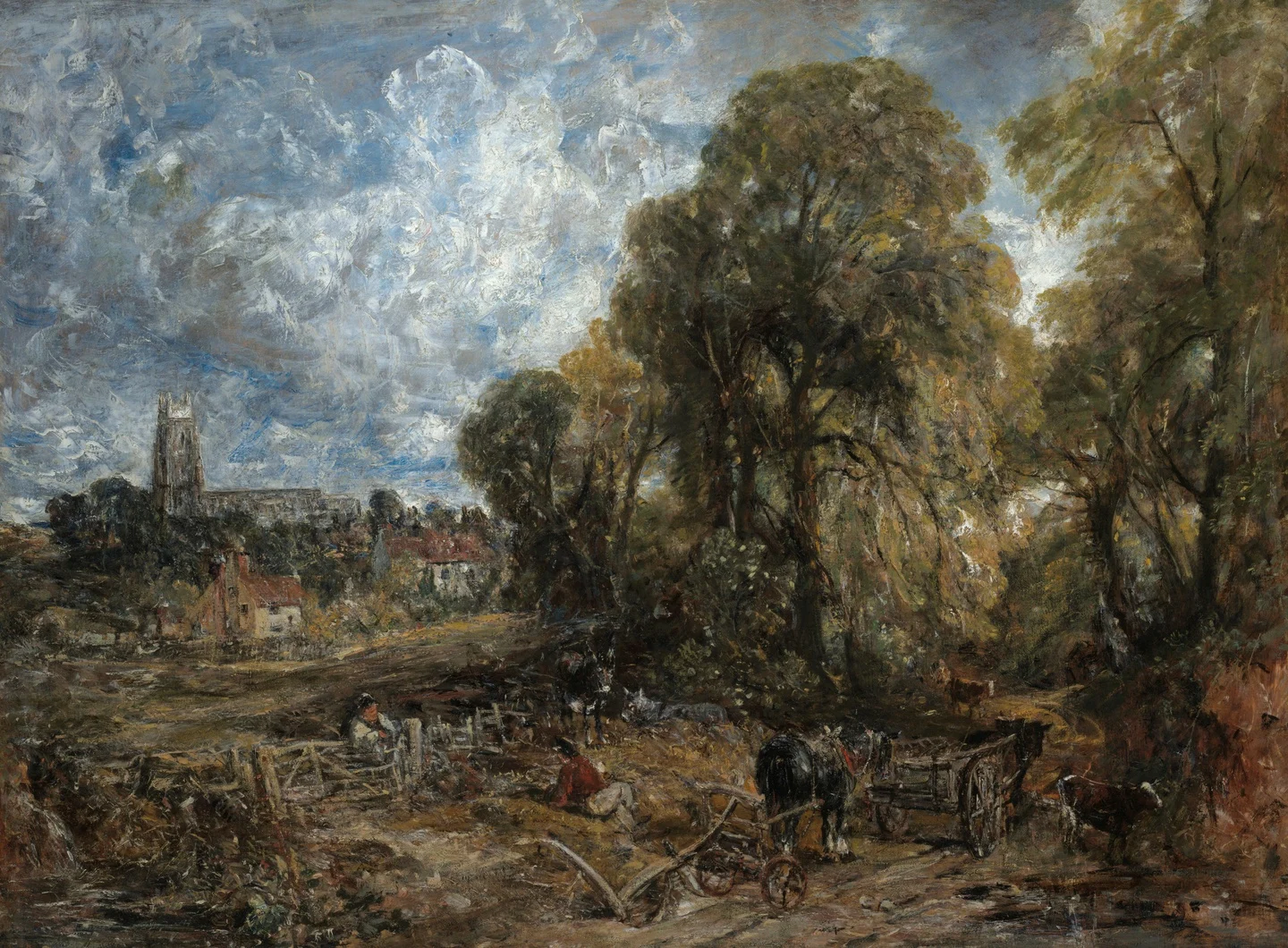 John Constable
Stoke-by-Nayland
1836Period, style and subject
- Movement
- Romanticism
- Genre
- Landscape
- Medium
- Oil on canvas
- Collection
- Hamburger Kunsthalle
- Dimensions
- 94.8 × 74.8 cm
- Accession number
- HK-5161
Sources
Reproduction of a public-domain artwork. Image licence