Mrs. George Swinton (Elizabeth Ebsworth)
John Singer Sargent · 1897
Explore the painting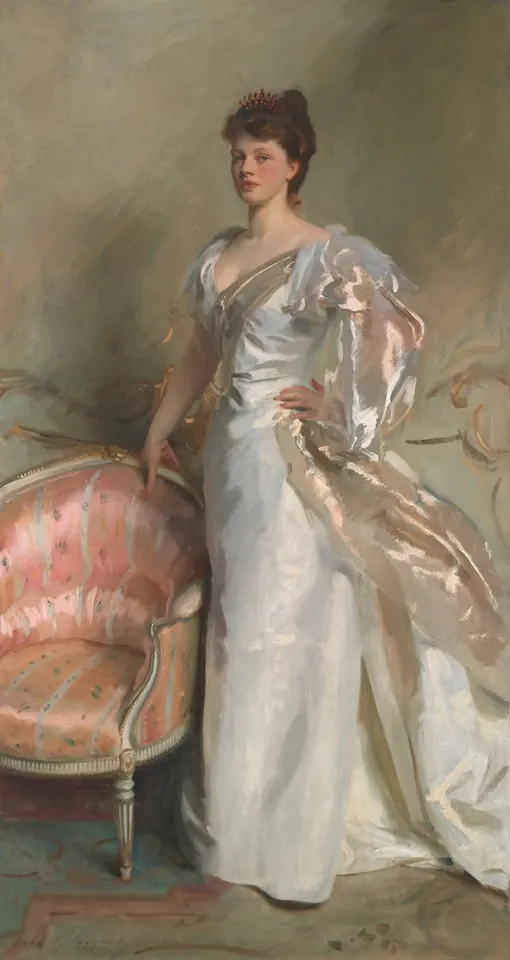
The painting’s story and details
In 1897 Elizabeth Swinton was celebrated in society as an amateur singer. During the following decade she began performing professionally. Sargent painted her full-length, joining likeness with a striking image of a society woman. This combination made him one of the most sought-after portraitists in late-nineteenth-century Europe and America. A commission offered both a recognisable face and virtuoso painting.
The face is handled more quietly than the dress. Soft transitions preserve nose, eyes and mouth, with warm cheeks among cooler tones. Likeness anchors the freer painting below. This imposing figure belongs to a particular person even as surrounding fabric nearly dissolves into strokes.
A hand rests on her hip. Upright bearing, turned shoulders and space around the head lend distinction. The pose suggests a performer’s presentation of herself, although instruments and music are absent. Her ability to occupy space confidently gains another dimension through knowledge of her musical life.
The other hand touches a chair back. A small movement connects her with the interior and balances the arm at her hip. The chair establishes scale while leaving most of the surface to the dress. Its curved back continues fabric lines and supports the tall composition.
Pink upholstery answers warm reflections in the clothing. A few light marks suggest gilded fittings. Luxury becomes recognisable quickly. Shared colour links furniture and sitter, making the setting support both her image and the artist’s display of skill.
Translucent fabric descends from her shoulder in broad shining folds. Separate strokes retain abrupt edges and surprising pink, grey and white passages. Close up we see brushwork; farther away, a light shimmering material emerges. Paint turning into fabric becomes a particular pleasure of the portrait.
The pale skirt nearly reaches the lower edge. Vertical strips and a dark fold elongate the figure, while a heavy hem restores weight. Different degrees of detail distinguish face, hands and clothing. This hierarchy makes the person recognisable before the painting’s effects become objects of inspection.
The title Mrs. George Swinton preserves a social convention of naming a married woman through her husband. Elizabeth’s biography adds her own musical career. These levels can be compared with the portrait: dress and interior present position, pose and face convey an individual presence. The image participated in status culture while preserving a person whose activity continued beyond that role.
Featured in tours
Portraits. How people presented themselves
Rulers, merchants, artists and private patrons before a viewer.
More paintings to compare
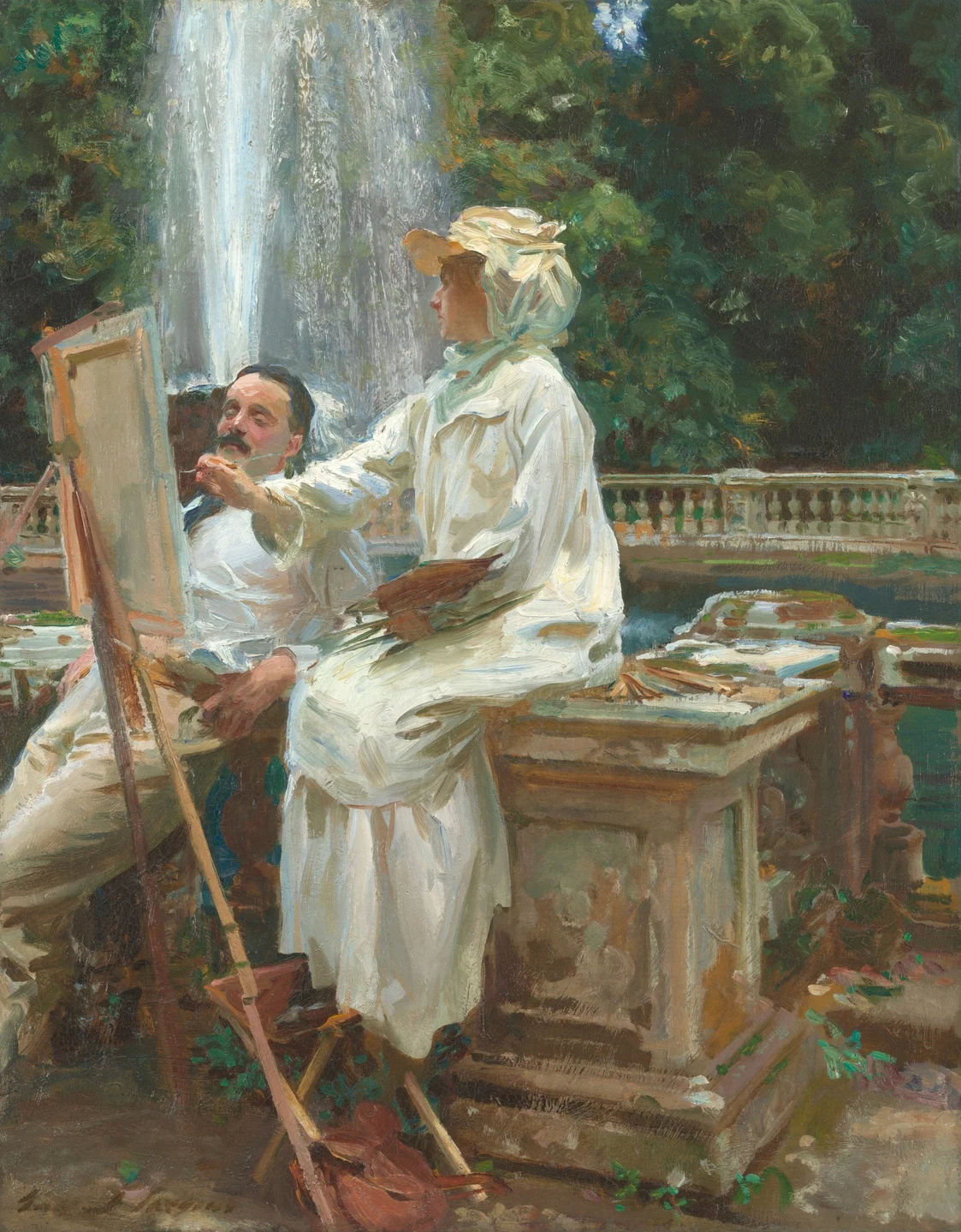 John Singer Sargent
The Fountain, Villa Torlonia, Frascati, Italy
1907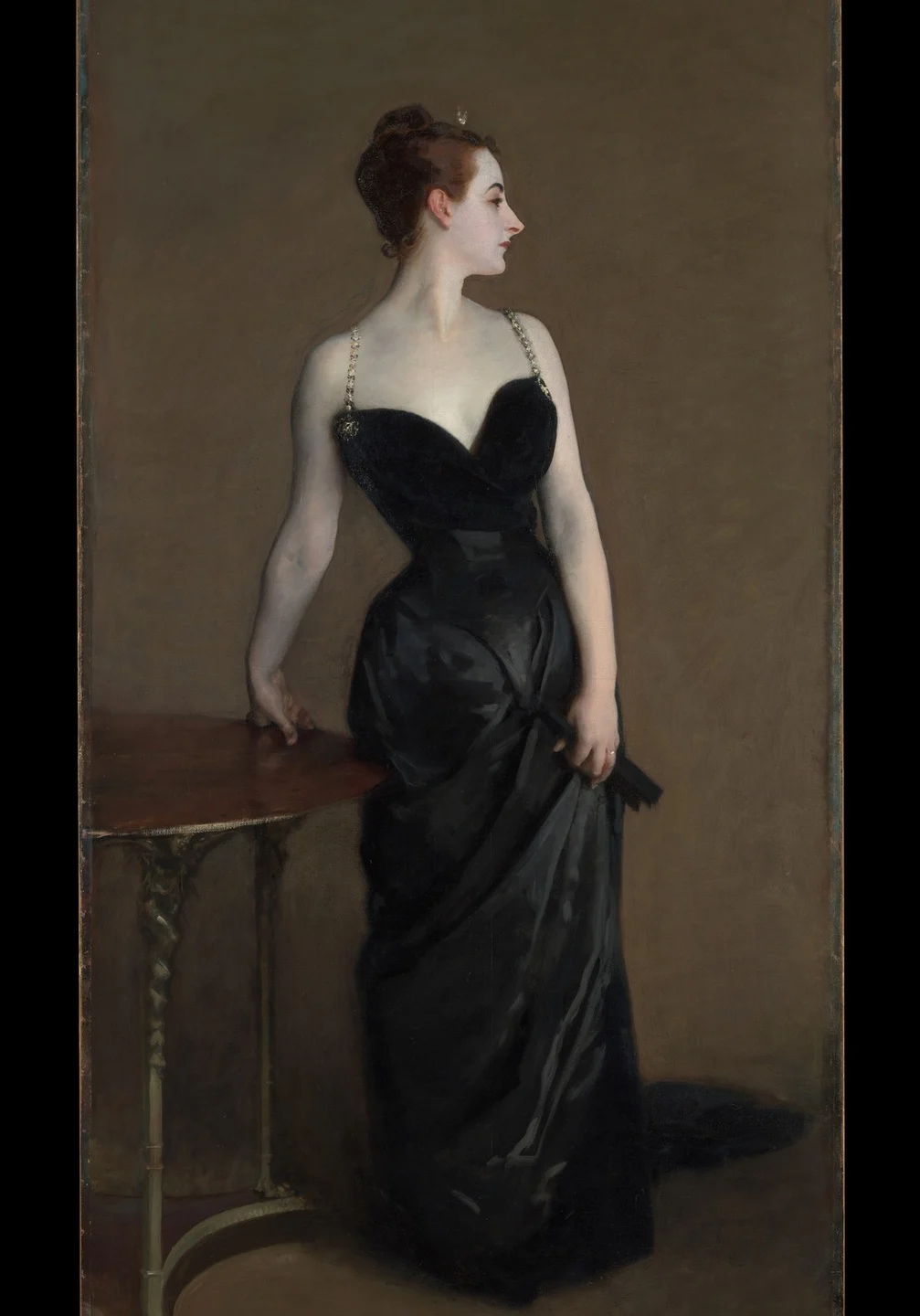 John Singer Sargent
Madame X (Virginie Amélie Avegno Gautreau)
1883–84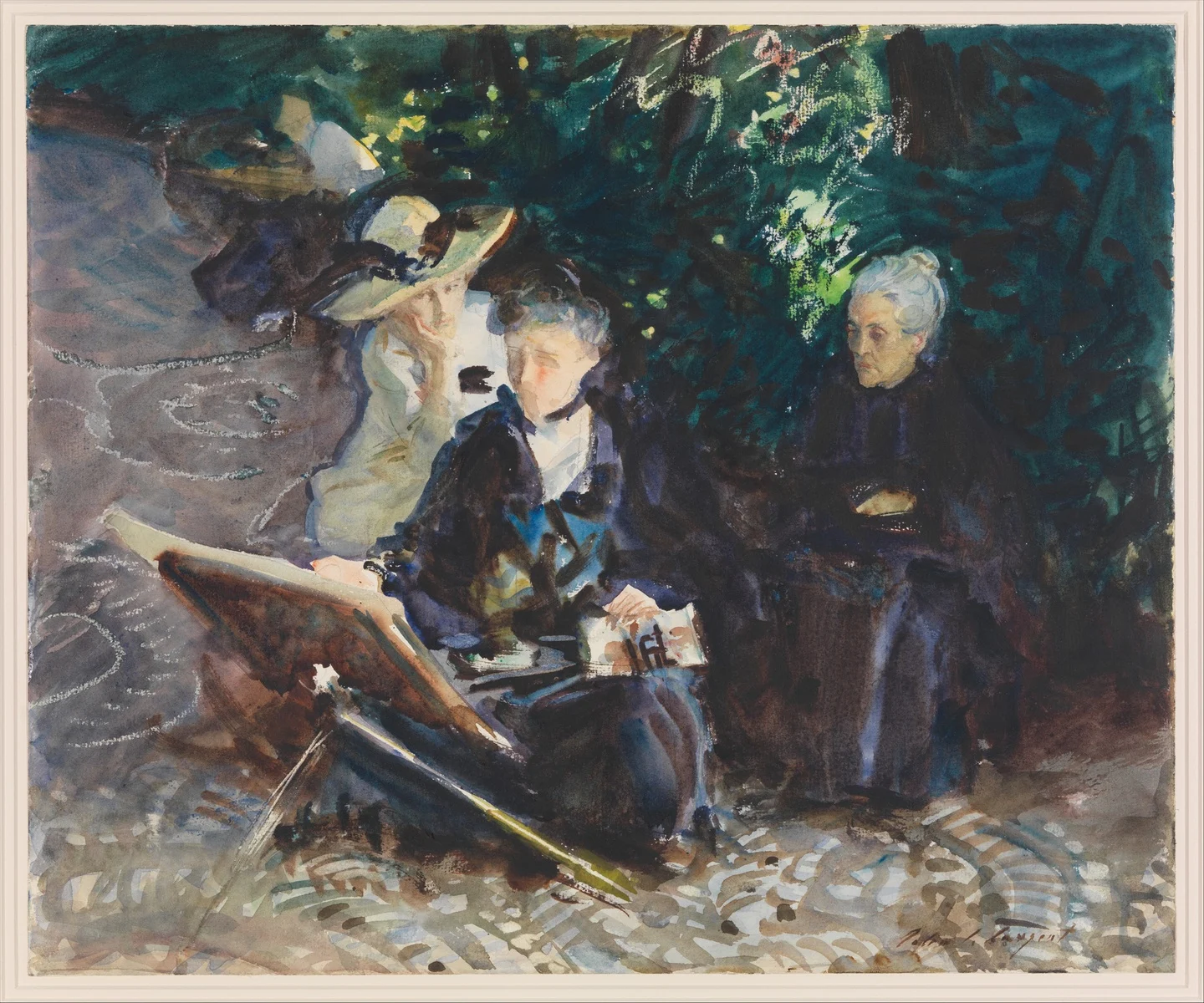 John Singer Sargent
In the Generalife
1912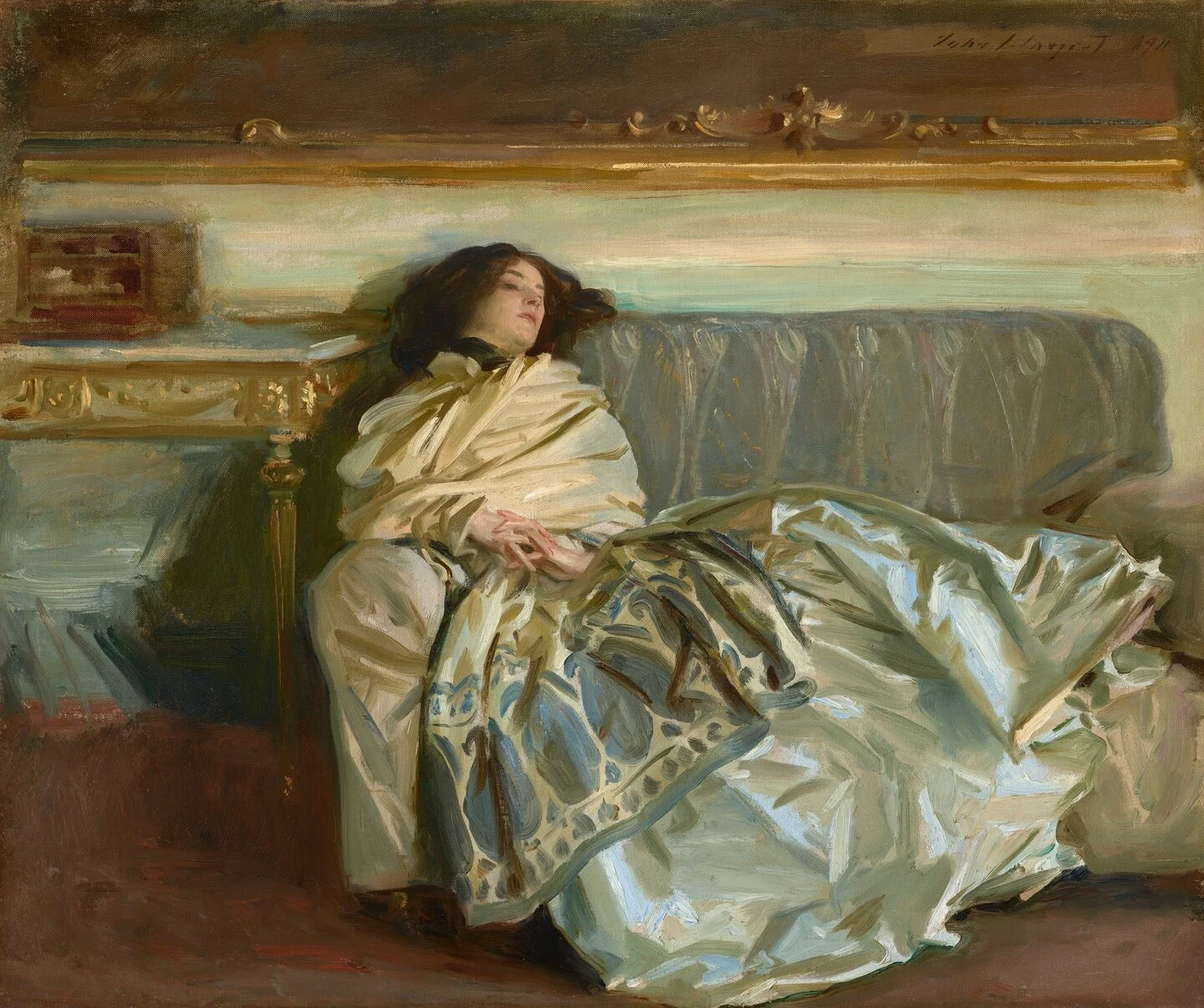 John Singer Sargent
Nonchaloir (Repose)
1911 Pierre-Auguste Renoir
By the Seashore
1883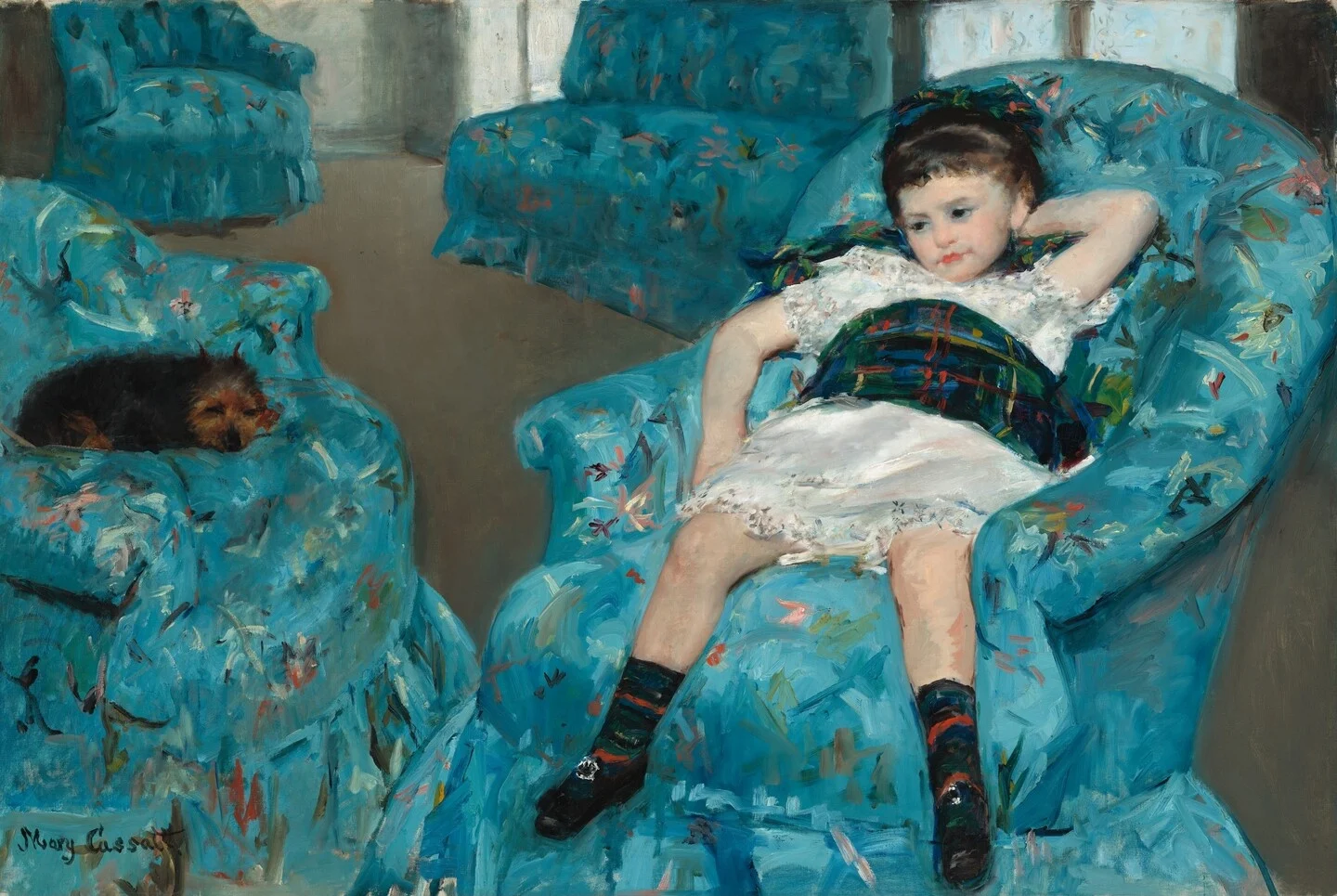 Mary Cassatt
Little Girl in a Blue Armchair
1878Period, style and subject
- Movement
- Impressionism
- Genre
- Portrait
- Medium
- Oil on canvas
- Collection
- Art Institute of Chicago
- Dimensions
- 231 × 124 cm
- Accession number
- 1922.4450
Sources
Image provided under CC0. Image licence
Adapted and translated from Art Institute of Chicago materials. · Text licence