View from Mount Holyoke, Northampton, Massachusetts, after a Thunderstorm—The Oxbow
Thomas Cole · 1836
Explore the painting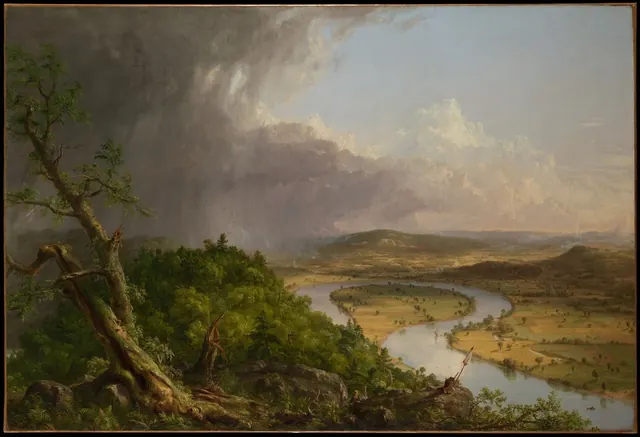
The painting’s story and details
Thomas Cole painted this bend of the Connecticut River in 1836 while interrupting work on his large Course of Empire series. His patron Luman Reed suggested a temporary return to landscape. An approaching National Academy exhibition offered an opportunity to sell a new picture. This meditation on nature and human settlement thus had a practical cause. The painter needed both time for his difficult series and a separate work for exhibition.
A storm still passes over the slope at the left. Dark cloud covers part of the sky, with trees and rocks close to the viewer. Cole chose a view from Mount Holyoke but organized the observed terrain into a pronounced juxtaposition. Irregular forms and bad weather dominate one side, while an illuminated valley opens on the other. The division registers before individual fields become clear.
A broken tree projects in the foreground. Its damaged trunk and bare branches continue the rocks’ angular shapes. Nature has destructive forces of its own. The storm complicates any opposition between untouched woodland and cultivated ground. The wooded space is imposing, but hardly unconditionally safe or comfortable for people.
At the right, the river curves around a broad plain. Fields are divided into small plots, while roads and buildings mark settlement. The elevated viewpoint gathers separate farms into a comprehensible order. For a nineteenth-century viewer, this could suggest prosperity and productive land use. At the same time, the partitioned valley reveals the extent of human transformation.
Below the center, Cole’s tiny figure appears among the rocks, turning from his work toward the viewer. His place on the slope connects the nearby wood with the distant valley. The self-portrait reminds us that a particular person selected and constructed this panorama. In his exhibition painting, Cole arranged storm, sunlight and cultivated fields to make their proximity immediately apparent.
Painting equipment and an umbrella appear on the slope. Outdoor work leads into studio labor and the sale of a canvas. Cole told Reed that invented compositions sold less readily and took longer than views of actual places. The Oxbow did find a buyer at the exhibition. The market supported a landscape that nevertheless left the cost of transforming the land open to consideration.
The panorama can appear to tell a story of settling empty space. Yet the valley had a life before the depicted farms. A contemporary reading holds the view’s beauty alongside what its elevated perspective conceals: earlier inhabitants, changes of possession, and labor in the fields. The painting makes a powerful authorial selection. Its clear division into woodland and settlement does not encompass the territory’s full history.
Featured in tours
American landscape. Land and its inhabitants
Nature, territorial expansion, the Civil War and urban life in American painting.
More paintings to compare
 Thomas Cole
Distant View of Niagara Falls
1830 Thomas Cole
The Titan's Goblet
1833 Thomas Cole
The Voyage of Life: Youth
1842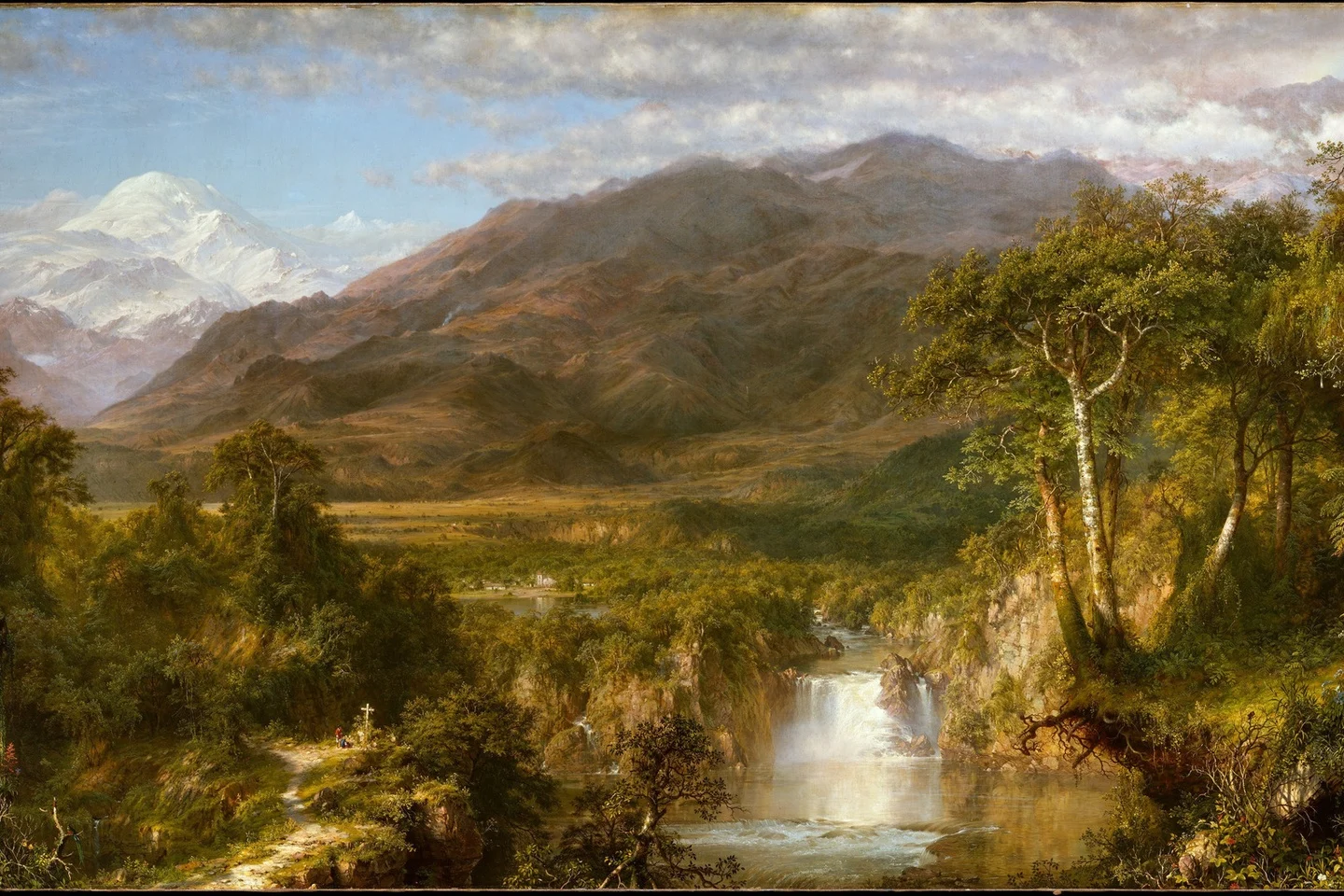 Frederic Edwin Church
Heart of the Andes
1859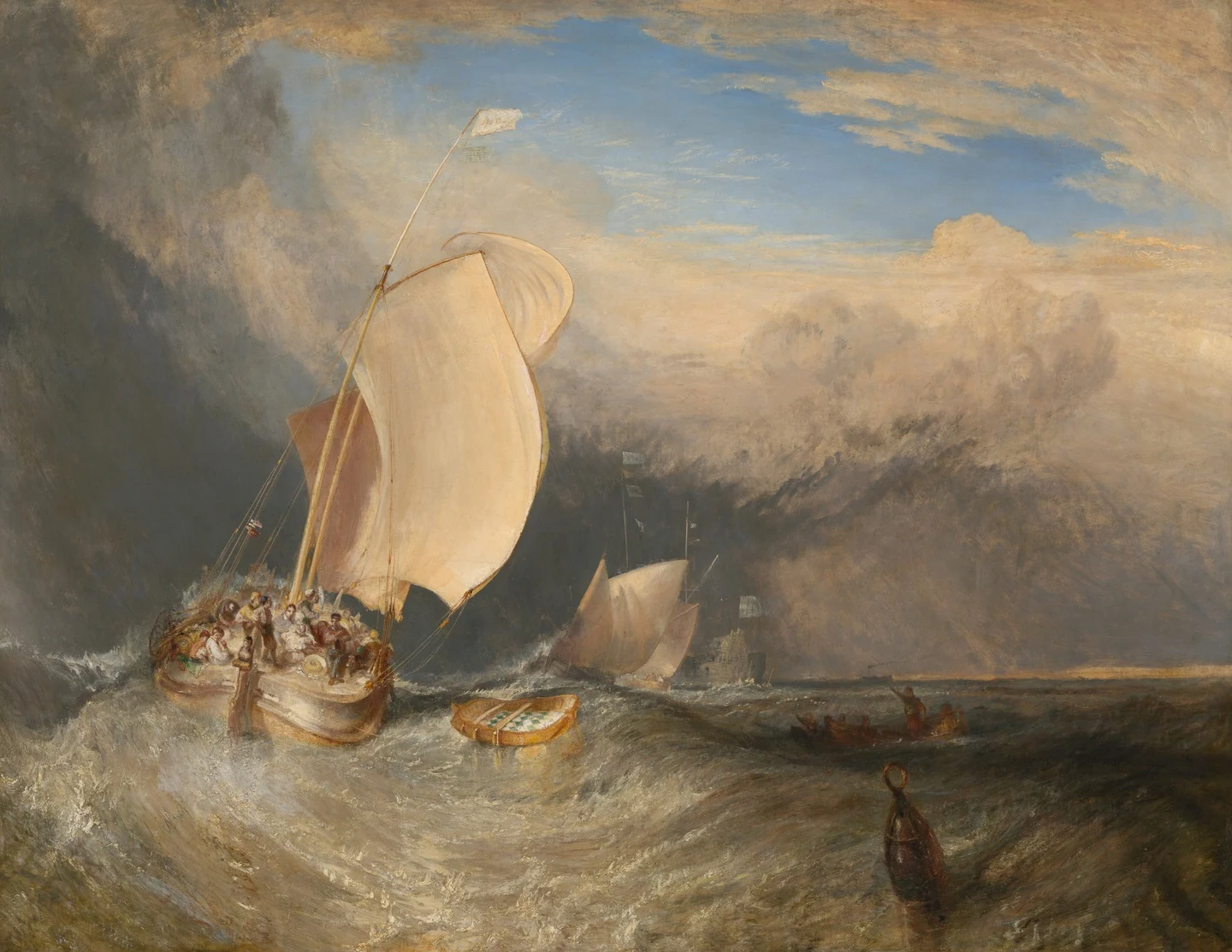 Joseph Mallord William Turner
Fishing Boats with Hucksters Bargaining for Fish
1837–38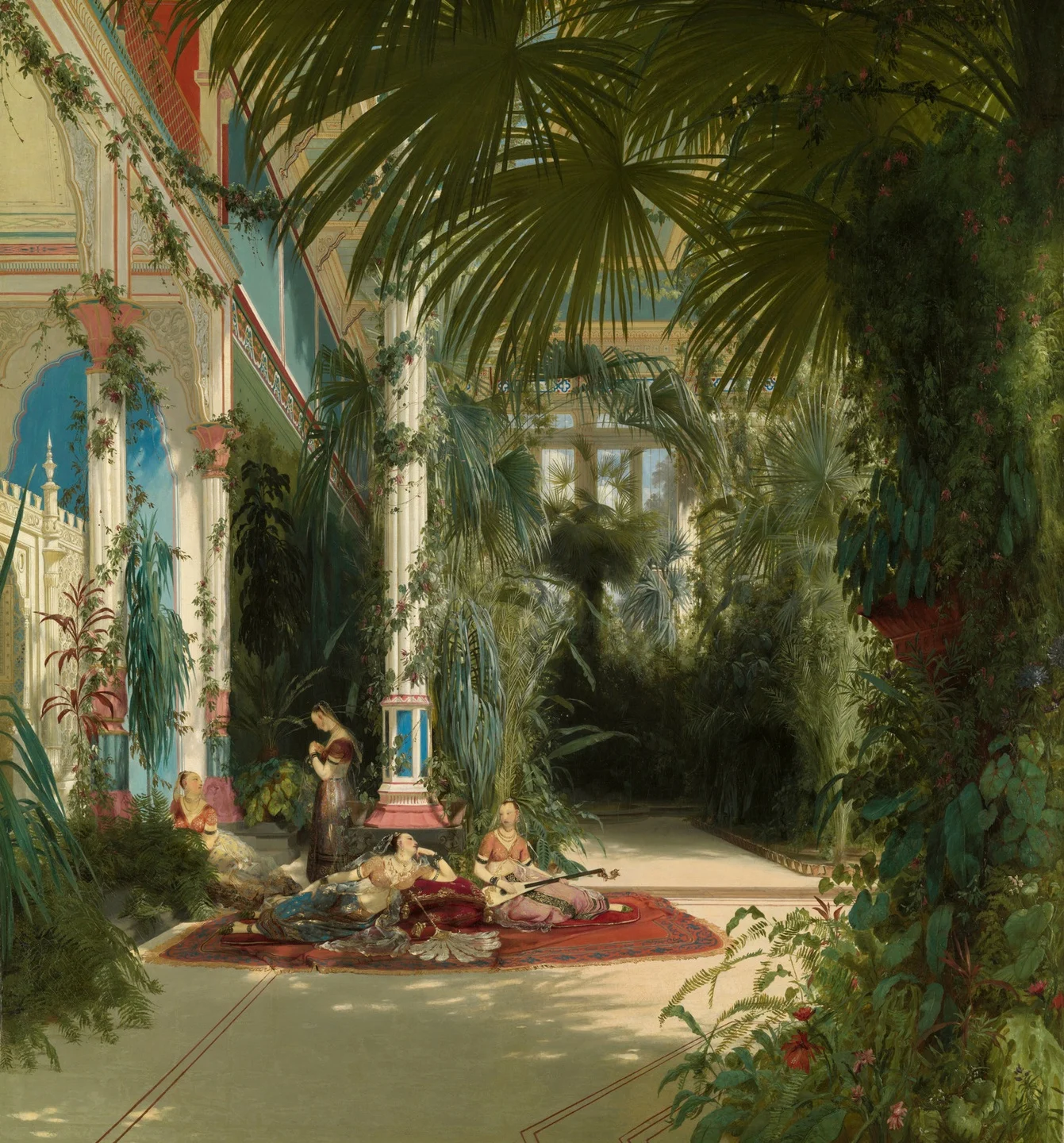 Carl Blechen
The Interior of the Palm House on the Pfaueninsel Near Potsdam
1834Period, style and subject
- Movement
- Romanticism
- Genre
- Landscape
- Medium
- Oil on canvas
- Collection
- The Metropolitan Museum of Art
- Dimensions
- 130.8 × 193 cm
- Accession number
- 08.228
Sources
Image provided under CC0. Image licence