The Beeches
Asher Brown Durand · 1845
Explore the painting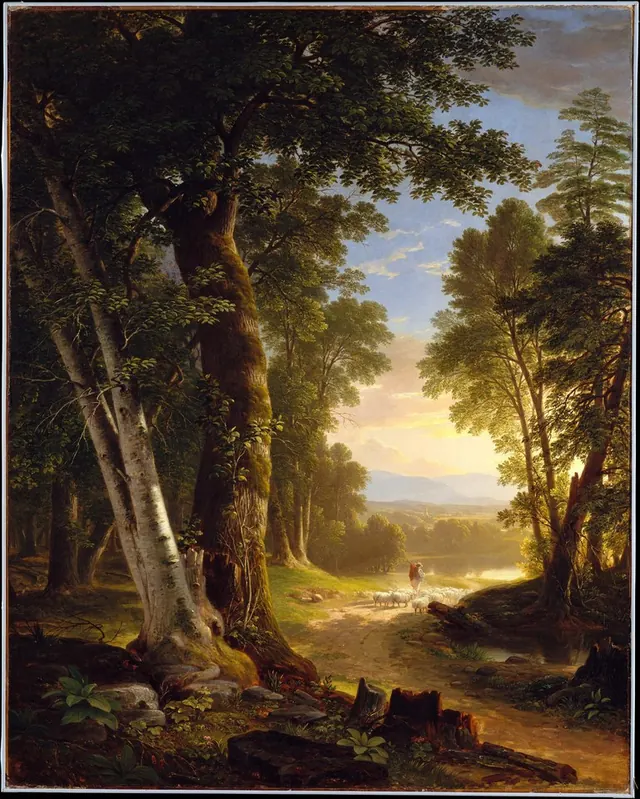
The painting’s story and details
The trees come so close that their tops no longer fit within the canvas. A road opens between them towards water and distant hills. Asher Brown Durand painted the work in 1845 for the New York collector Abraham Cozzens. At the following year’s exhibition it was called Landscape Composition; The Beeches became its title later. The earlier name usefully recalls the painter’s work. This convincing woodland was constructed through both observation of nature and encounters with other paintings.
The smooth pale trunk on the left is a beech; the darker moss-covered one is a basswood. Durand’s attentive eye distinguishes their species. He records knots, irregular bark and small shoots that could disappear in a broad panorama. The trunks extend from the lower edge to the very top of the canvas. An individual tree becomes the landscape’s principal subject. We can spend time examining its surface before noticing the small figure on the road.
Stones, fallen timber and a jagged stump lie among the roots. Broad leaves grow between them. Light picks out particular surfaces while leaving recesses dark. The woodland gains tangible depth in its nearest section. It cannot easily be read as a flat green backdrop. Yet the painter still chooses and arranges its details. The large stones and fallen trunk hold our attention beside the road before we begin to follow it.
A shepherd and sheep move along the sunlit road. The person seems small beside the immense trunks, while the flock helps us judge their scale. This is land used for everyday work. A worn path connects the woodland to open ground and water. Durand includes productive life within a peaceful view of nature. The figures are close enough for their occupation to be recognisable and distant enough for the flock’s movement to preserve the scene’s calm.
Slender trees on the right admit light, while the dense crown on the left closes off the sky. Between them the road leads into brightness. As we follow it, objects gradually become smaller and strong differences of light and dark soften. Nearby we can distinguish individual leaves; at the horizon broad bands of colour remain. The painting accommodates both distances. It offers detail to inspect and open space through which we can imagine walking.
During his visit to England, Durand studied Constable. Scholars connect The Beeches with The Cornfield, which also has large trees to either side, a road and sheep. Durand used his own outdoor study of a beech for the foreground. Close observation and a borrowed arrangement therefore work together. The painting’s naturalness is a constructed impression. The road we might imagine walking along also serves as an established way to lead the eye into the distance.
Early critics noticed the painting’s quiet, everyday character and compared it with Thomas Cole’s dramatic landscapes. A woodland road was enough for Durand to sustain attention across a large canvas. For its owner, the work brought a view of nature into the home. We can still examine our own response. Do we notice the sunlit distance, an individual tree or the shepherd first? The landscape organises this journey while leaving us free to return to any part of it.
Featured in tours
American landscape. Land and its inhabitants
Nature, territorial expansion, the Civil War and urban life in American painting.
More paintings to compare
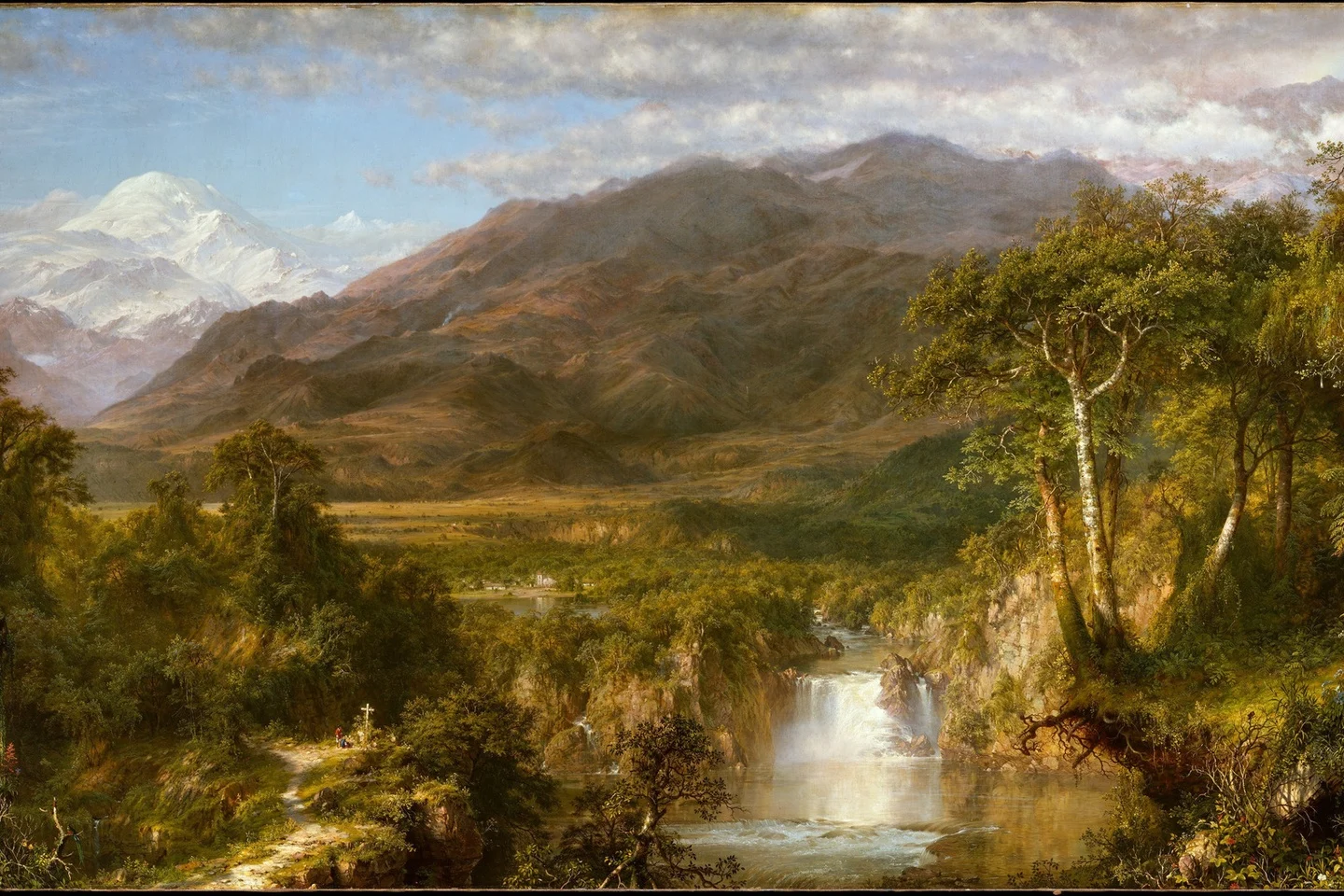 Frederic Edwin Church
Heart of the Andes
1859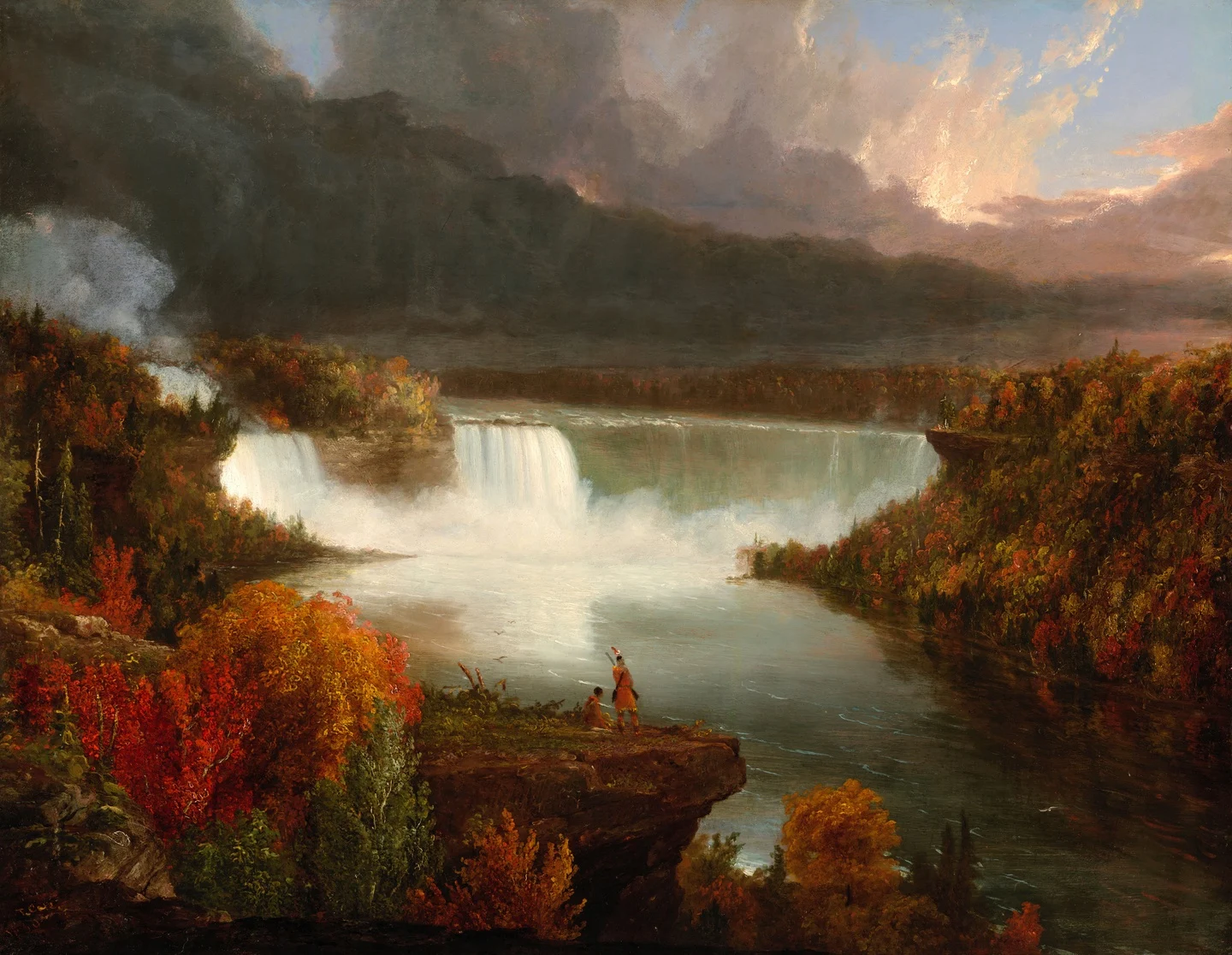 Thomas Cole
Distant View of Niagara Falls
1830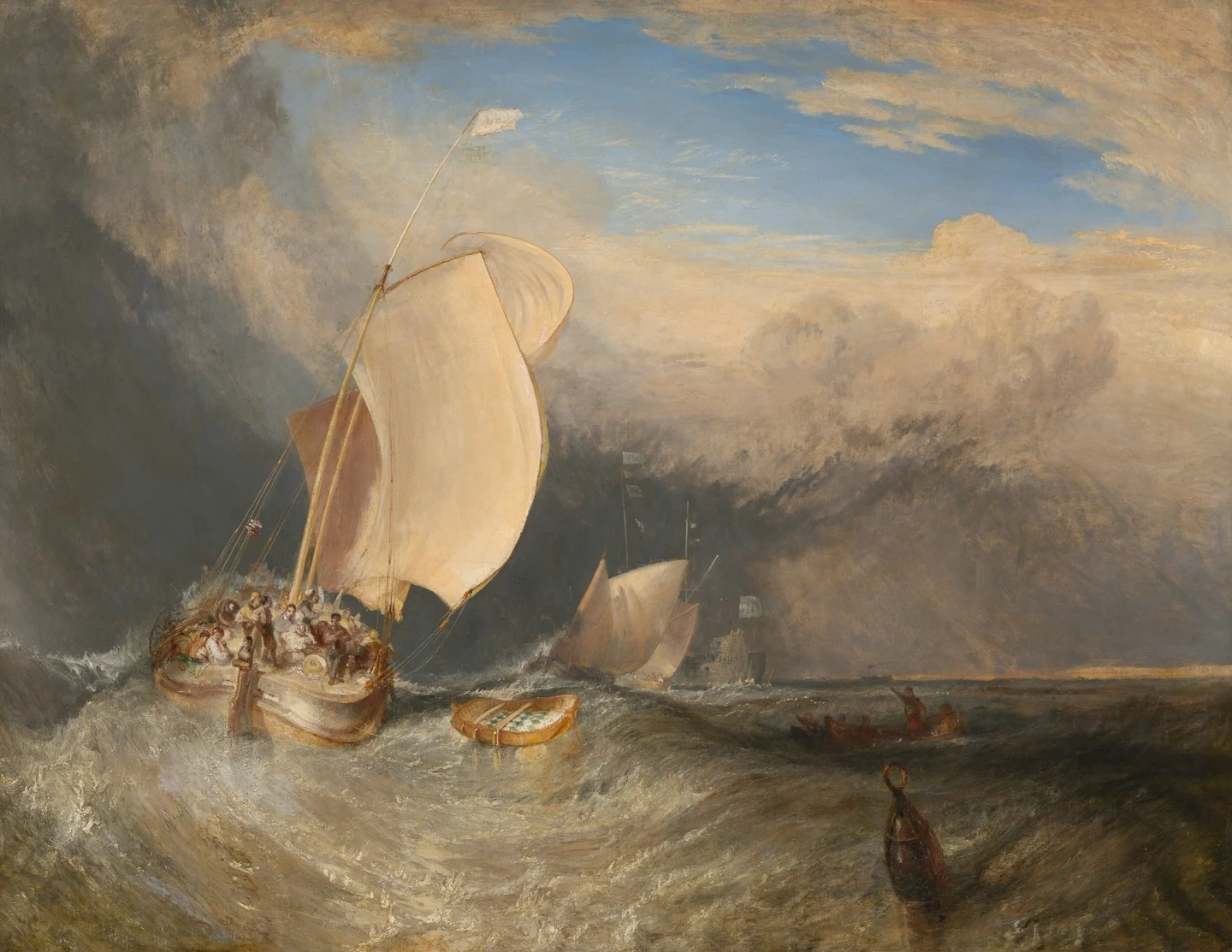 Joseph Mallord William Turner
Fishing Boats with Hucksters Bargaining for Fish
1837–38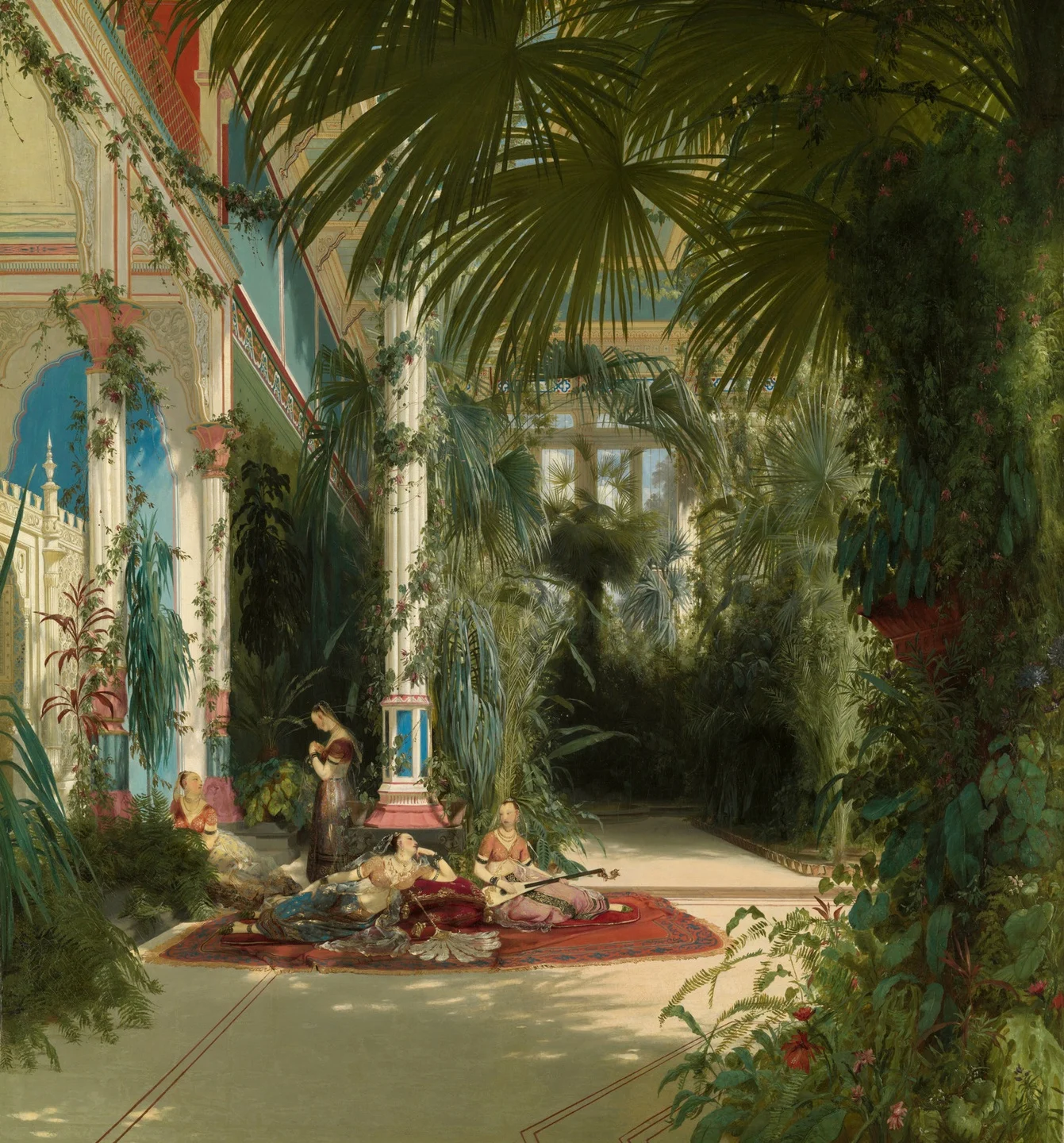 Carl Blechen
The Interior of the Palm House on the Pfaueninsel Near Potsdam
1834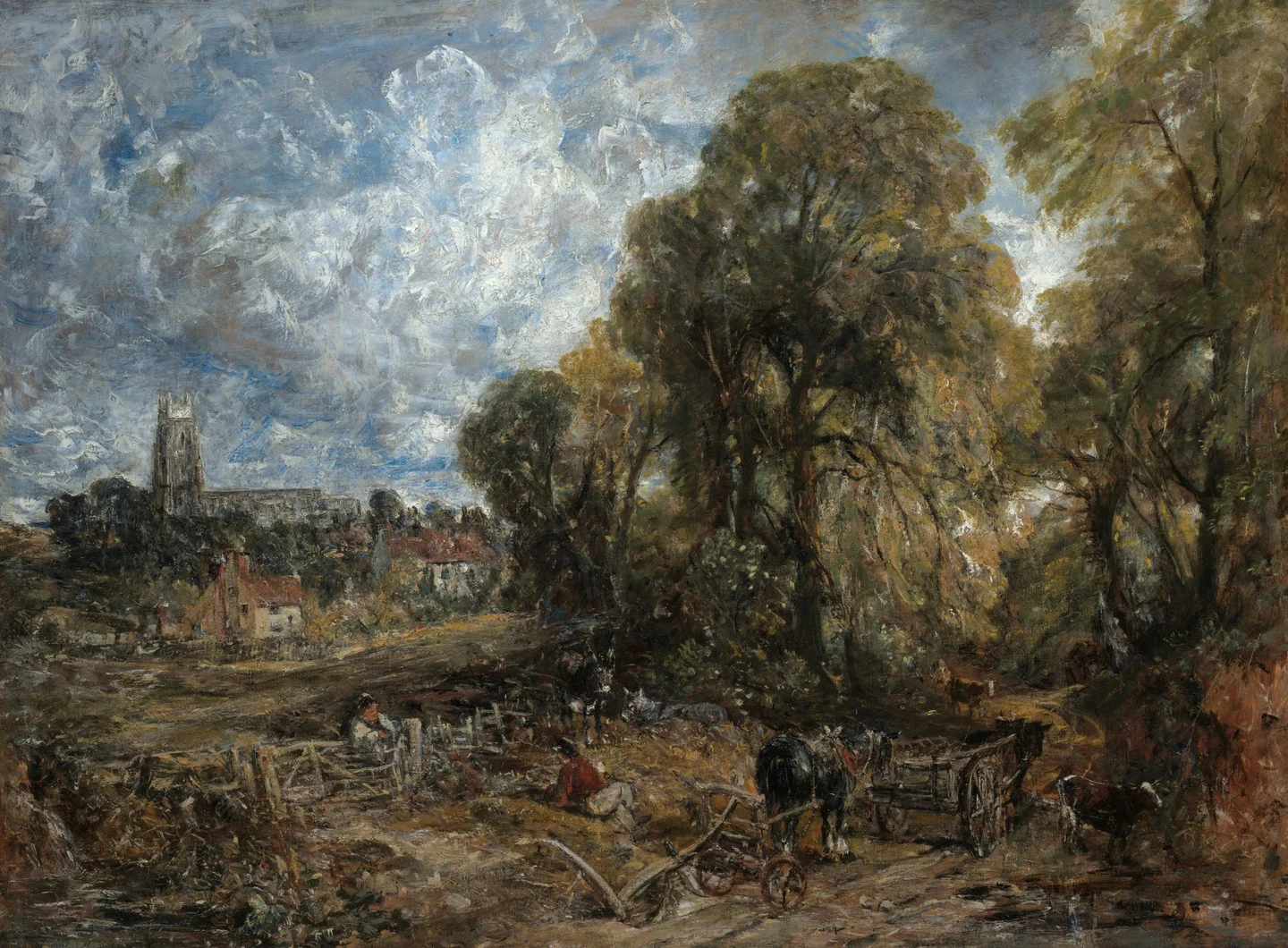 John Constable
Stoke-by-Nayland
1836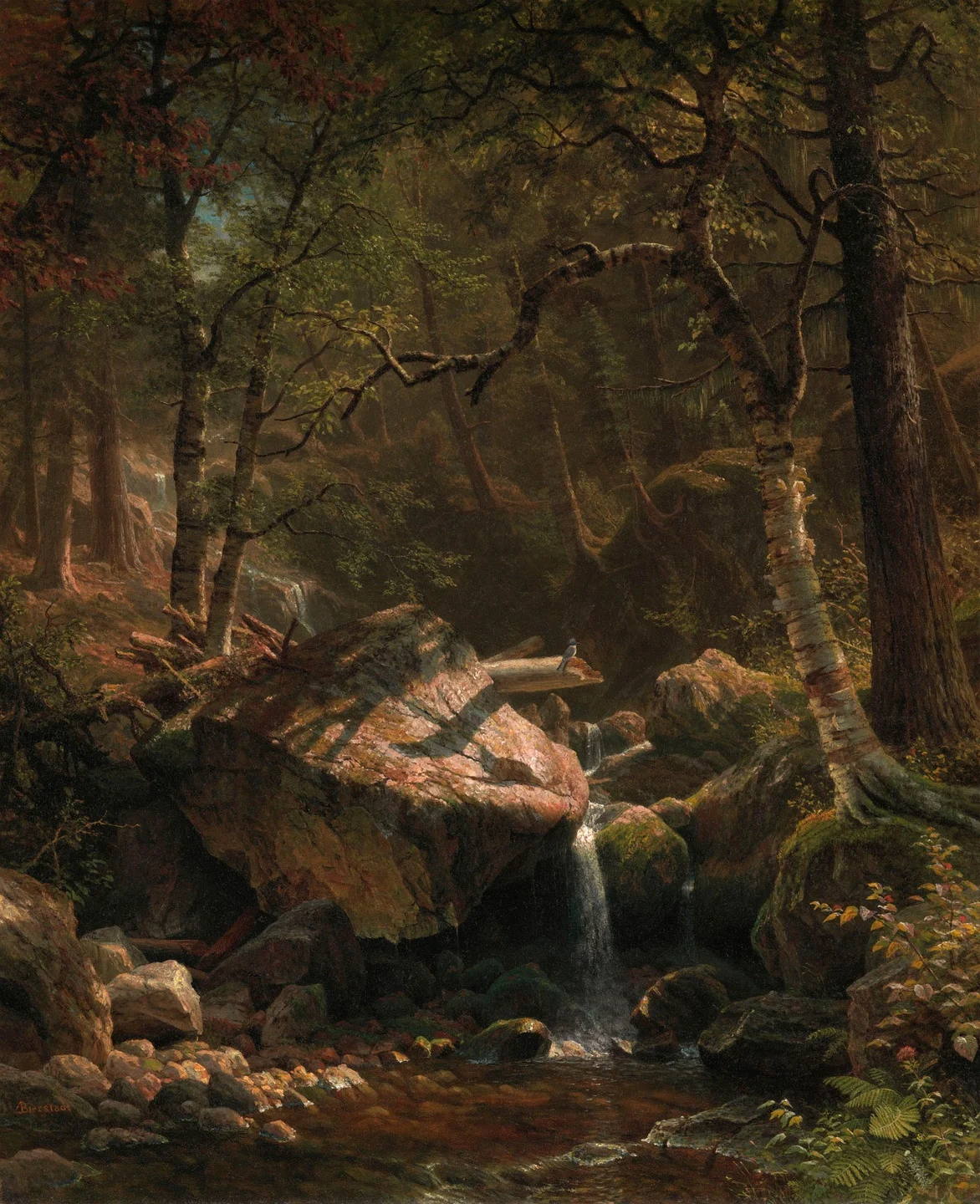 Albert Bierstadt
Mountain Brook
1863Period, style and subject
- Movement
- Romanticism
- Genre
- Landscape
- Medium
- Oil on canvas
- Collection
- The Metropolitan Museum of Art
- Dimensions
- 153.4 × 122.2 cm
- Accession number
- 15.30.59
Sources
Image provided under CC0. Image licence