Rama Releases the Demon Spies Shuka and Sarana: Folio from the Siege of Lanka series
Attributed to Manaku · ca. 1725
Explore the painting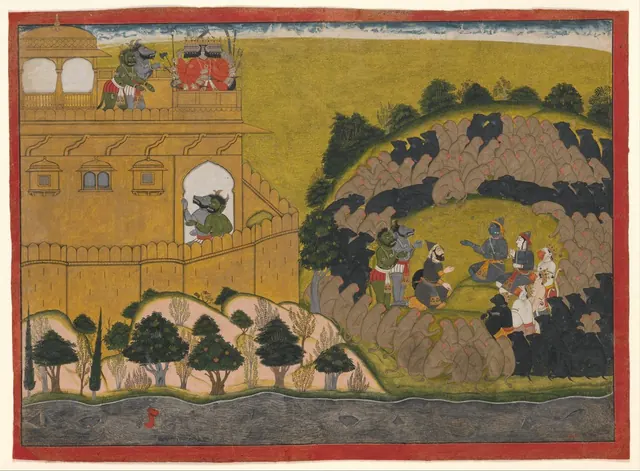
The painting’s story and details
Before battle, Ravana sent Shuka and Sarana to assess Rama’s forces. They were captured, but Rama released the unarmed envoys. This folio, made around 1725, unfolds the Ramayana episode in three moments. It is attributed to Manaku of Guler, who continued a large illustrated series begun by his father, the painter Pandit Seu.
Blue-skinned Rama sits at the right among his allies. The spies stand before him after being brought by Vibhishana. Rama’s extended hand belongs to his decision to release them. The museum’s account emphasizes their status as envoys and their lack of weapons, despite their arrival from the enemy camp.
The same two spies reappear in the gateway of the golden fortress. Moving across the picture replaces turning a page. Their distinctive colors and similar forms help trace the journey from the camp to the palace.
On the upper terrace, the spies report to many-headed Ravana. This third episode completes their return. They describe Rama’s powerful army and his decision to spare them. The enemy thus learns of his mercy as well as his strength. The narrative presents a ruler capable of limiting the use of force.
Monkeys and bears form a dense ring around Rama, their dark and pale bodies gathered into separate groups. Overlapping figures make a continuous outer row. Straight walls and terraces organize the fortress on the left, while the living bodies of allies shape the camp on the right.
Carefully differentiated trees grow along the lower edge. Their varied crowns sit beside broad flat areas of green and gold. The museum identifies a transition from Basohli conventions toward the more naturalistic elements of Guler and Kangra painting. Manaku adapted inherited practices to complex multi-episode storytelling.
Ravana learns of Rama’s mercy from his own spies. The released enemies themselves testify in favor of the man who could have killed them. Releasing them strengthens Rama’s authority beyond his camp. Military superiority is reinforced by an act demonstrating a ruler’s ability to limit his own power.
Featured in tours
Indian painting. Recognising a story
Jain manuscripts, Hindu subjects and regional court life.
More paintings to compare
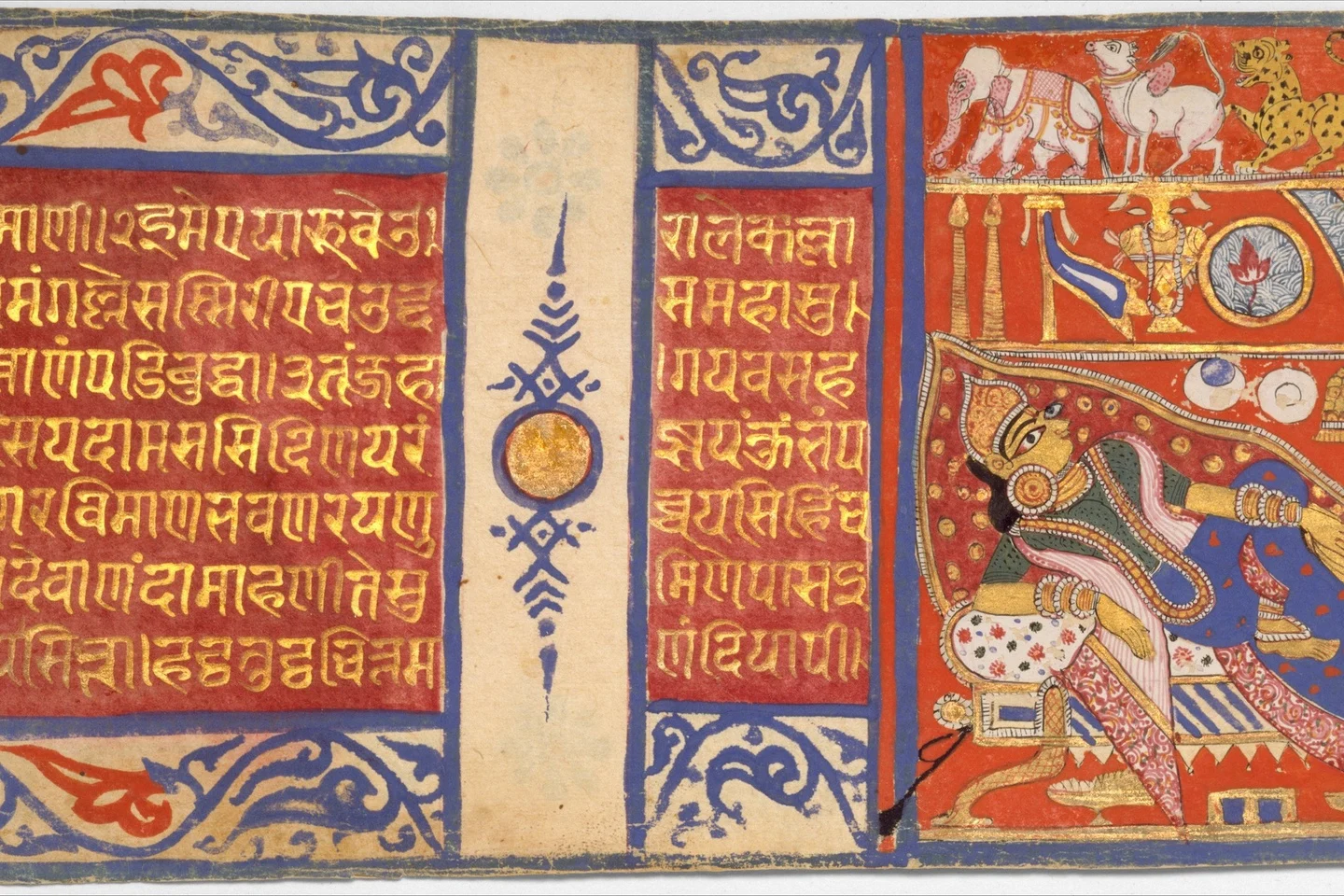 Master of the Jaunpur Kalpasutra
Devananda's Fourteen Auspicious Dreams Foretelling the Birth of Mahavira: Folio from a Kalpasutra Manuscript
ca. 1465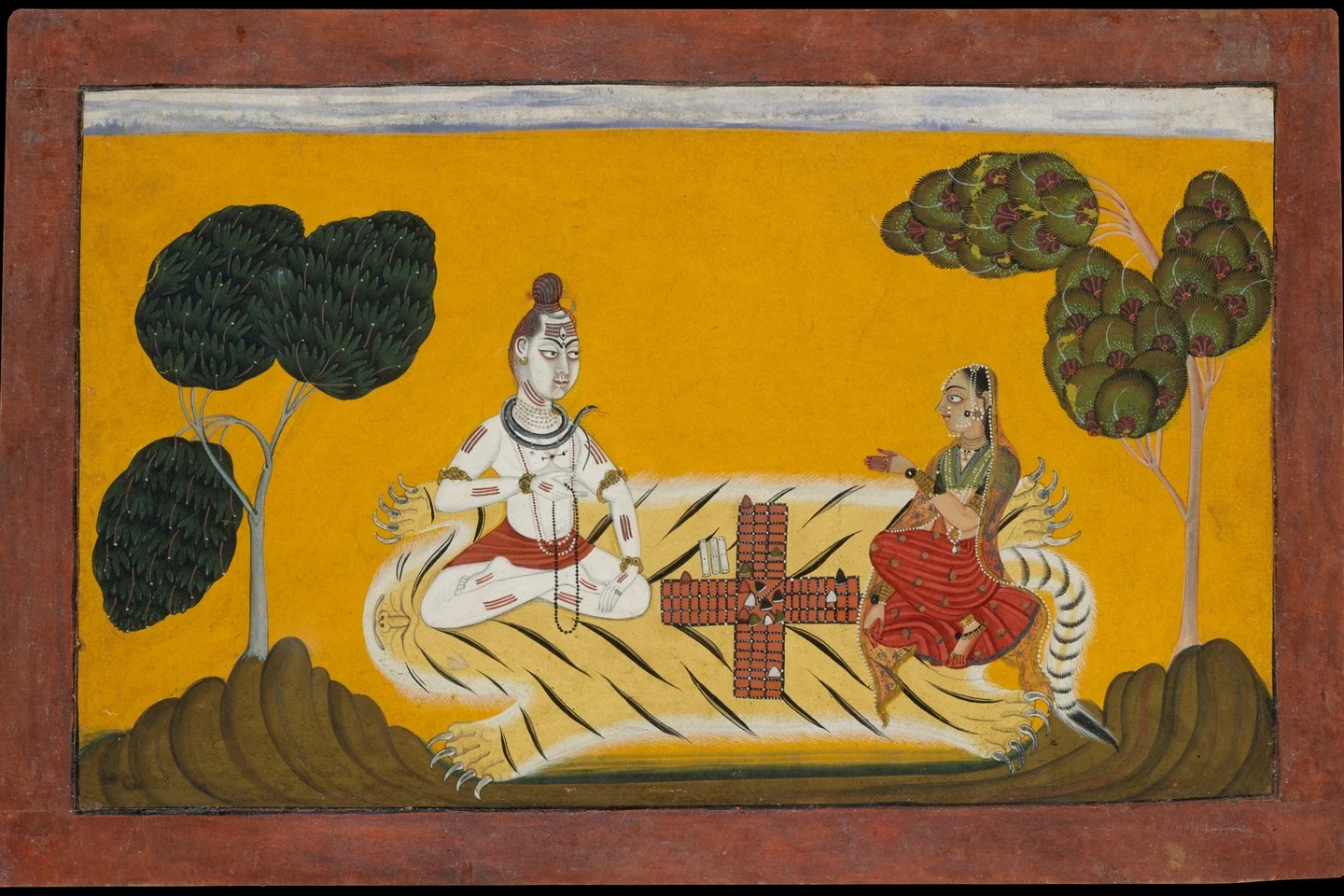 Devidasa of Nurpur
Shiva and Parvati Playing Chaupar: Folio from a Rasamanjari Series
dated 1694–95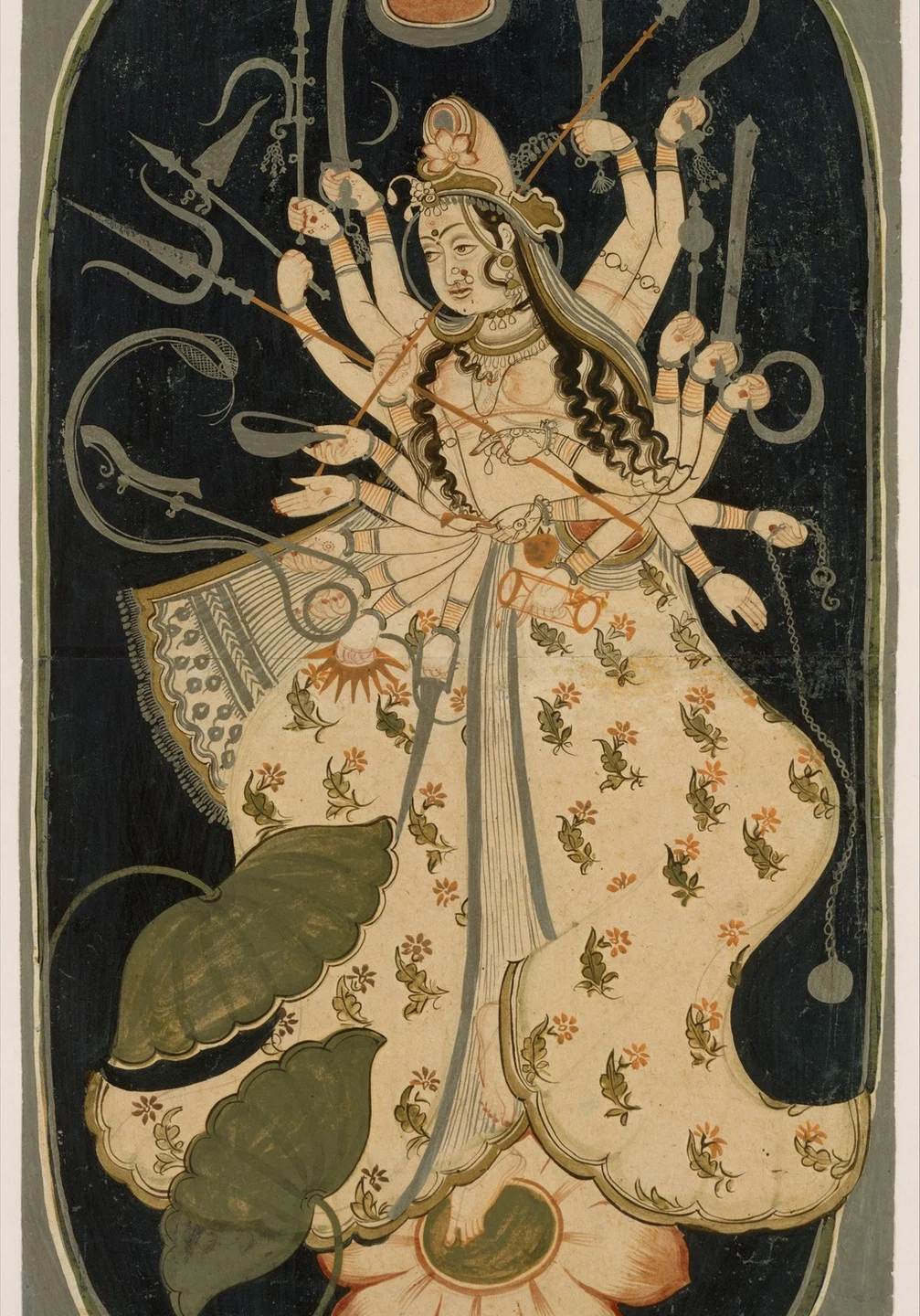 Unidentified Bikaner painter
Mahadevi, the Great Goddess
ca. 1725 Unidentified Indian painters
The Demon Hiranyaksha Departs the Demon Palace: Folio from a Bhagavata Purana Series
ca. 1740 Mahavihara Master
Avalokiteshvara Teaching a Devotee
early 12th century Unidentified Malwa painter
Krishna Revels with the Gopis: Page from a Dispersed Gita Govinda (Song of the Cowherds)
ca. 1630–40Period, style and subject
- Movement
- Indian painting
- Genre
- Religious art
- Medium
- Opaque watercolor, ink and gold on paper
- Collection
- The Metropolitan Museum of Art
- Dimensions
- Image, 56.5 × 79.4 cm
- Accession number
- 19.24.1
Sources
Image provided under CC0. Image licence