The Demon Hiranyaksha Departs the Demon Palace: Folio from a Bhagavata Purana Series
Unidentified Indian painters · ca. 1740
Explore the painting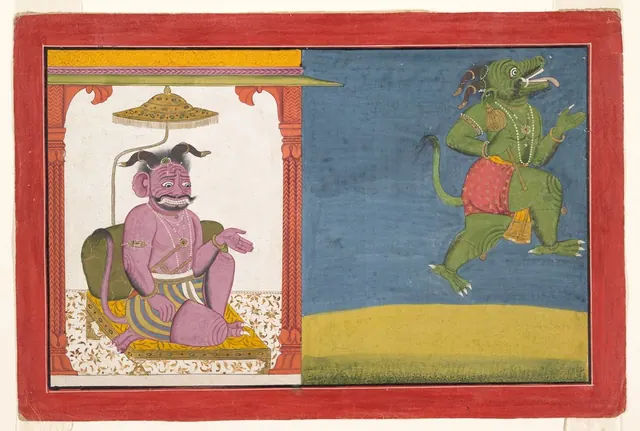
The painting’s story and details
Hiranyaksha leaves the palace to attack Mother Earth. While Vishnu is in cosmic sleep, the world lacks protection. An unidentified Guler painter depicted this opening to a Bhagavata Purana episode around 1740. Neither Earth nor her rescuer appears yet. Attention concentrates on the aggressor’s departure.
The green demon’s head combines an elongated snout, horns, fangs, and human ornaments. His demonic identity is immediately visible. Necklaces, earrings, and clothing also associate him with a courtly world. The dangerous adversary has luxury and social position of his own.
The legs spread widely without touching the ground. A tail curves behind the body and clothing lifts away from it. Movement is expressed through a clear silhouette, without a long road or successive poses. The figure heads toward the right edge, making the page’s boundary separate departure from the coming attack.
Hiranyaksha holds a mace. The relatively small weapon beside his body connects his rapid movement to aggression. His target is Earth herself. Vishnu will subsequently assume the boar form Varaha, kill the demon, and raise Earth from the cosmic ocean.
At the left, another demon sits on cushions beneath the palace roof, an open hand directed toward the departing figure. Seated and flying bodies differ in color, posture, and surroundings. A vertical support divides the palace from the exterior, juxtaposing an established seat of power with action beginning from it.
An elaborate parasol hangs over the seated figure. Textiles, cushions, and decorated supports create a complete court. Vishnu’s opponents inhabit a world organized through familiar human signs of authority. Within this arrangement, the threat comes from a being with resources and standing, rather than formless disorder outside society.
Earth is vulnerable and requires protection, yet the first figure shown is the one intending to seize her. This beginning creates an expectation of Vishnu’s intervention while giving the threat a recognizable form. Strength, courtly magnificence, and the right to control the surrounding world are separated. Possessing the first two does not confer the third.
Featured in tours
Indian painting. Recognising a story
Jain manuscripts, Hindu subjects and regional court life.
More paintings to compare
 Unidentified Indian painters
I'timad-ud-Daula's Tomb at Agra
c. 1820 Unidentified Indian painters
Royal lovers watching rain clouds: The month of Bhadon, from a Barahmasa
c. 1790 Master of the Jaunpur Kalpasutra
Devananda's Fourteen Auspicious Dreams Foretelling the Birth of Mahavira: Folio from a Kalpasutra Manuscript
ca. 1465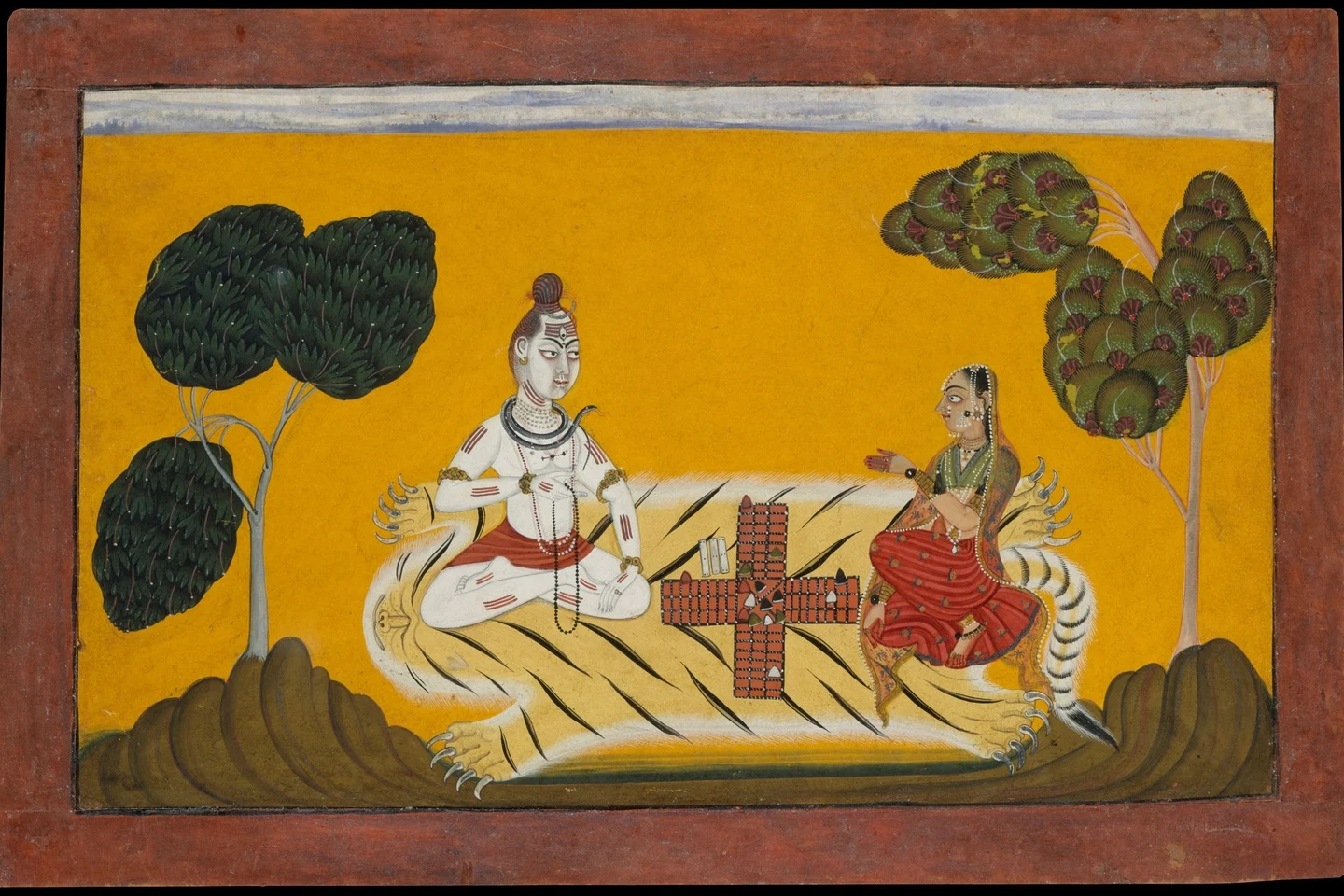 Devidasa of Nurpur
Shiva and Parvati Playing Chaupar: Folio from a Rasamanjari Series
dated 1694–95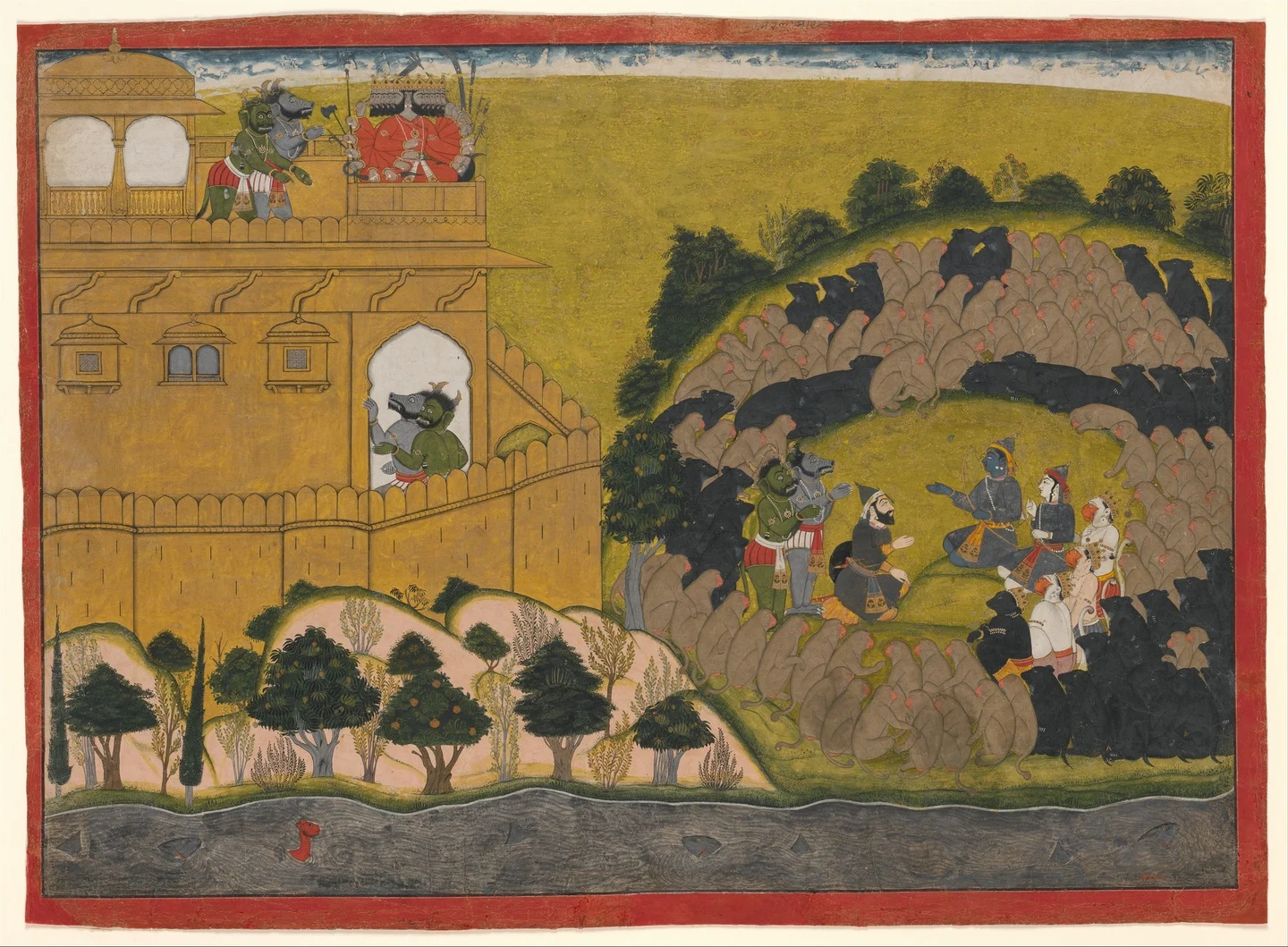 Attributed to Manaku
Rama Releases the Demon Spies Shuka and Sarana: Folio from the Siege of Lanka series
ca. 1725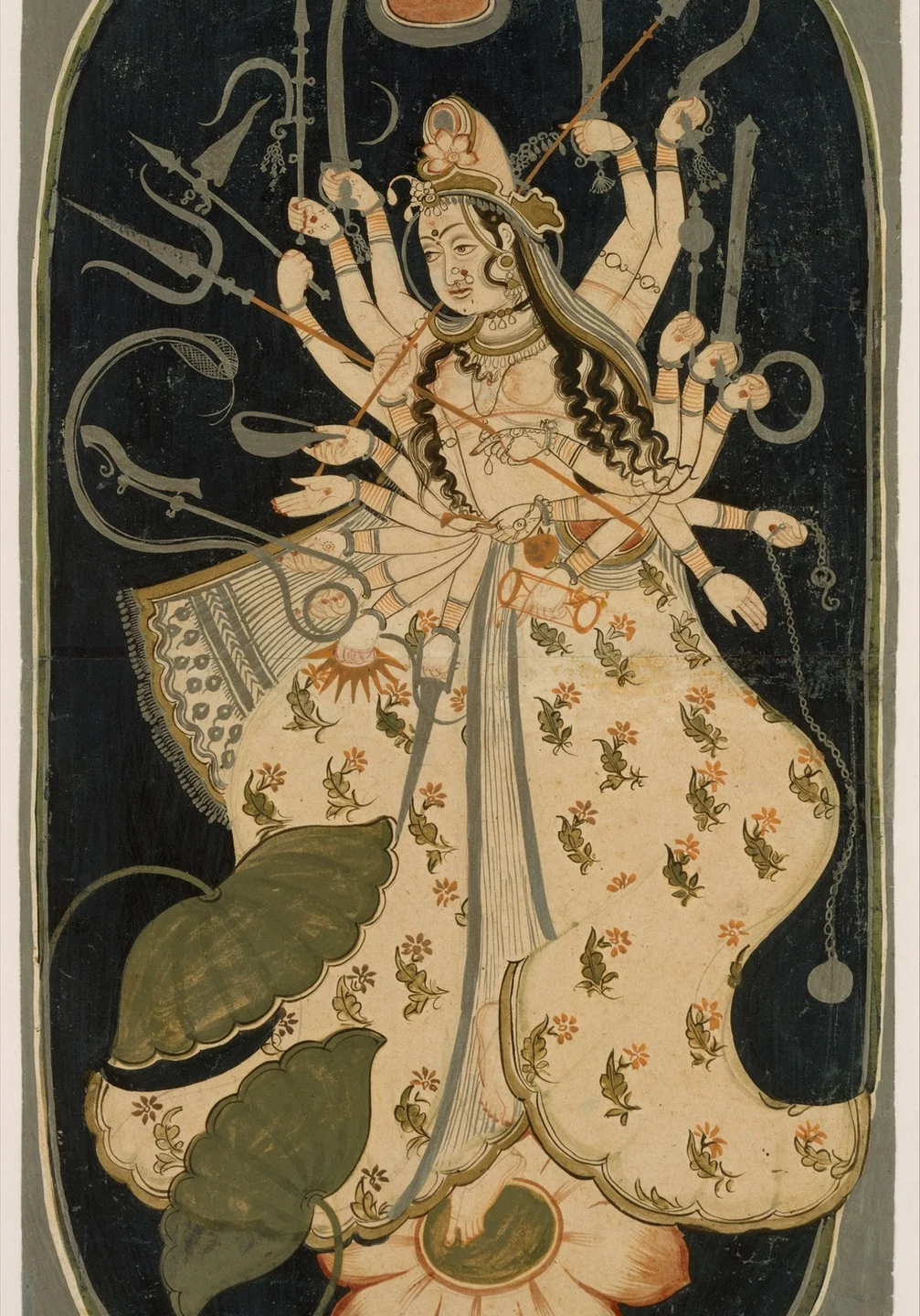 Unidentified Bikaner painter
Mahadevi, the Great Goddess
ca. 1725Period, style and subject
- Movement
- Indian painting
- Genre
- Religious art
- Medium
- Opaque watercolor, ink and gold on paper
- Collection
- The Metropolitan Museum of Art
- Dimensions
- Image, 17.9 × 28.6 cm
- Accession number
- 2002.179
Sources
Image provided under CC0. Image licence