Simple Retreat
Wang Meng · ca. 1370
Explore the painting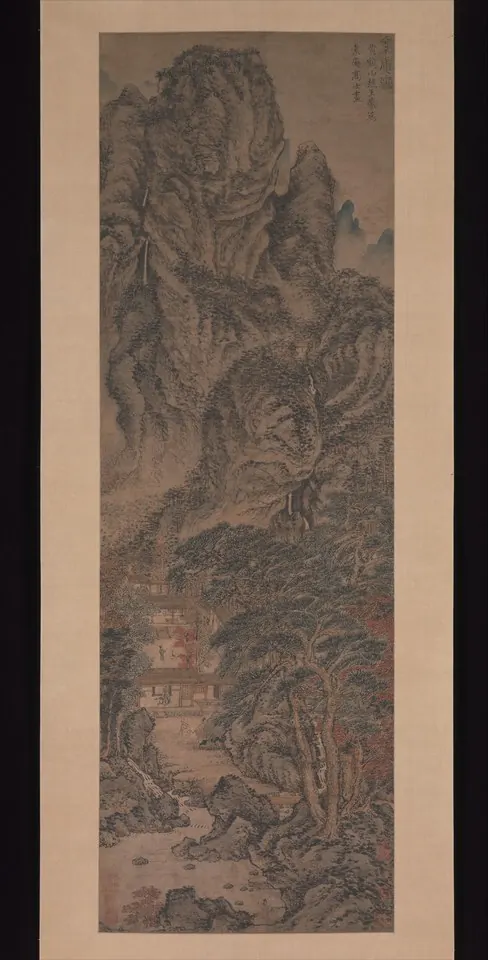
The painting’s story and details
A dwelling almost disappears among trees at the foot of enormous mountains. Wang Meng painted Simple Retreat around 1370, near the transition from the Yuan to the Ming dynasty. The place looks inhabited, although it is an imagined picture of a scholar’s life. There is a master, attendants and animals. Their activities reveal what such retreat could offer: distance from the wider world while retaining companionship, care and an agreeable rhythm within a small estate.
The master sits at the entrance holding a magic fungus, an auspicious Daoist image. An attendant and two deer approach the gate. The figures are so small that a first glance can miss them, yet they explain the dwelling’s purpose. A secluded life appears prosperous and desirable.
Beyond the gate, another attendant offers a sprig to a crane. The courtyard is open, with light wooden buildings around it. Like the deer, the crane belongs to auspicious Daoist imagery. The attendant tends to the bird. The scene occupies little space, yet lets us look inside the estate as an inhabited setting with its own daily activities.
The approach to the house passes between rocks and a spreading pine. Branches overlap roofs and buildings recede behind one another. Finding the master requires gradually distinguishing several layers of space. Dense painting sets a slow pace for looking. The dwelling’s modest appearance does not mean its occupant is entirely self-sufficient: attendants are at work nearby. The scholar’s ideal includes choosing his pursuits while others undertake some of the care.
Winding lines mingle with dense dots and patches of colour across the slopes. Individual brush marks become rocks, trees and vegetation while retaining their own rhythm. Wang Meng reworked landscape methods associated with the tenth-century master Dong Yuan. For an educated viewer, references to earlier painting formed part of the content. A predecessor could be recognised and the transformation of a familiar language assessed. Mastery appeared through a new handling of inherited forms.
In the upper section, mountains nearly displace the sky. They occupy far more space than the house and surround it on all sides. Such a setting can feel protective or confining. The Metropolitan Museum suggests that its shifting forms might evoke the period’s political instability. This remains an interpretation. No particular conflict is depicted on the scroll; the tension arises from the scale and density of the surrounding landscape.
Wang Meng was the grandson of the painters Zhao Mengfu and Guan Daosheng. His art developed in a setting where brush skills, knowledge of earlier masters and educated acquaintances passed through close relationships. The imagined estate is therefore deeply connected to culture, carrying selected parts of it into the mountains.
Featured in tours
Chinese landscape. The scholar’s life
Public service, retirement, gardens, poetry and the memory of earlier masters.
More paintings to compare
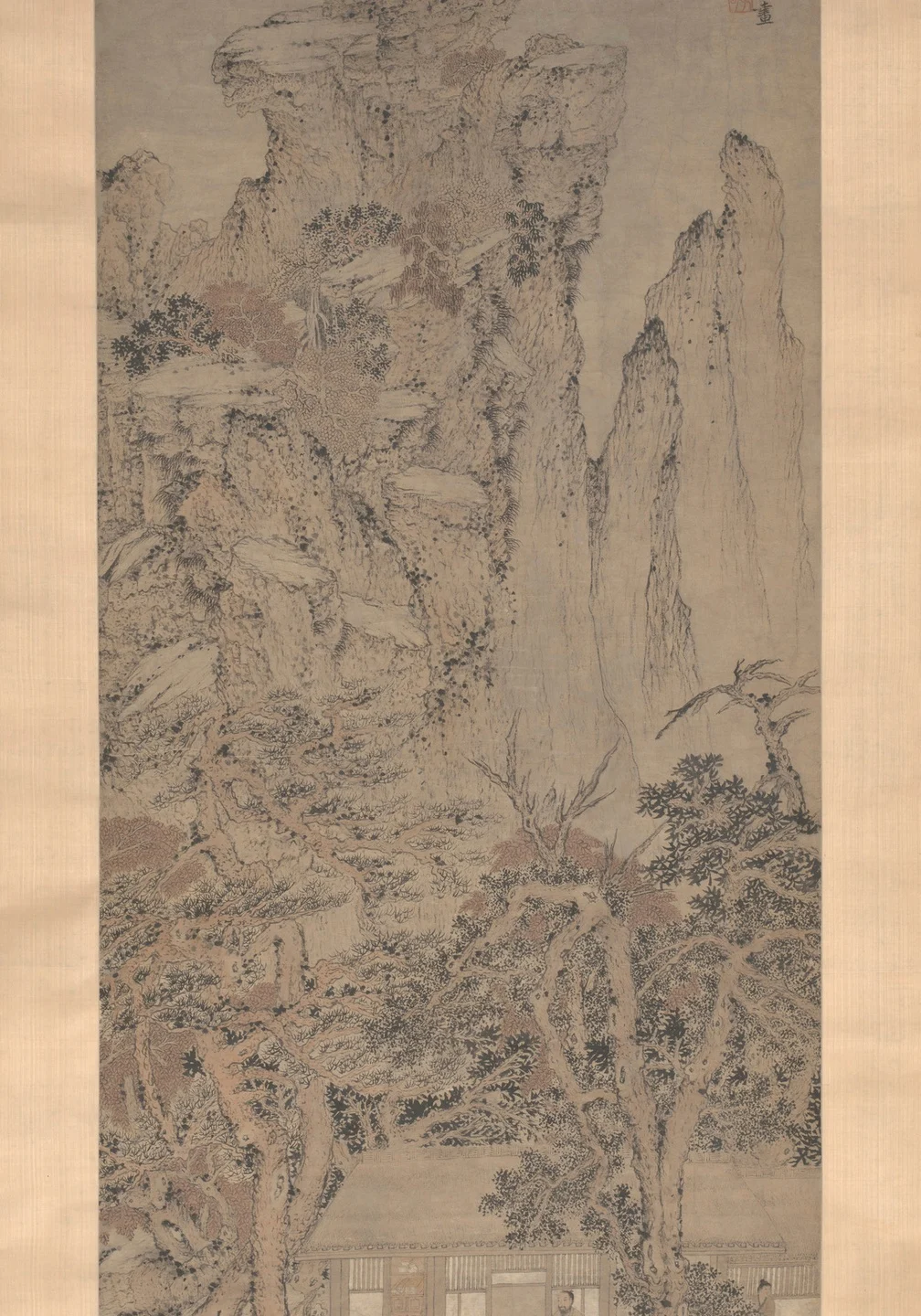 Wang Meng
Quiet Life in a Wooded Glen 林麓幽居圖
Yuan dynasty (1279–1368), dated 1361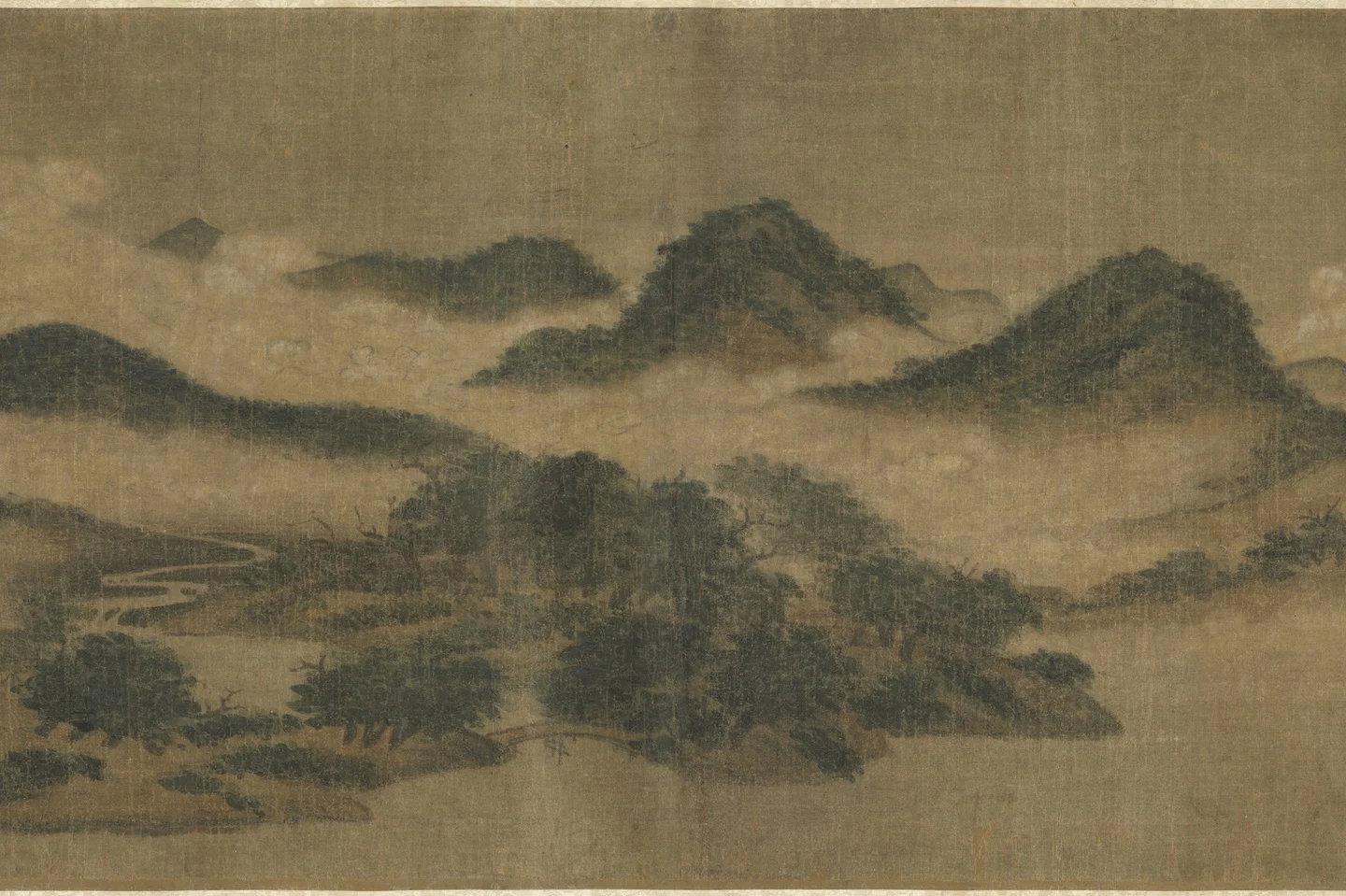 Mi Youren
Cloudy Mountains
1130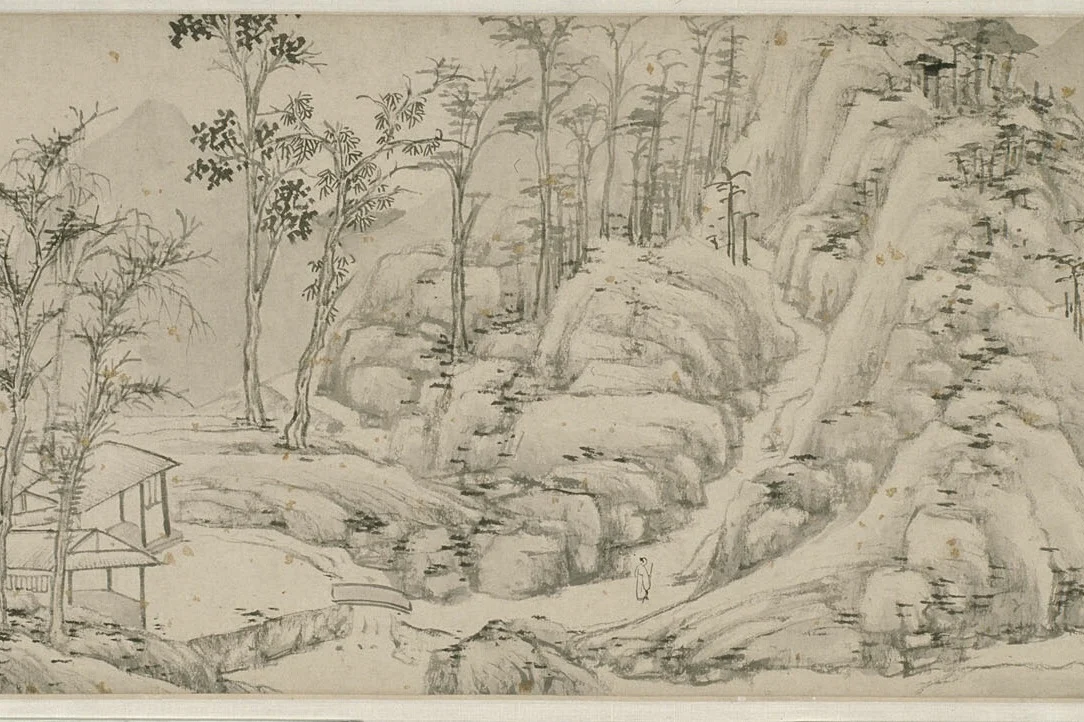 Wen Zhengming
Autumn Mountains 秋山圖
Ming dynasty (1368–1644), early 16th century 明朝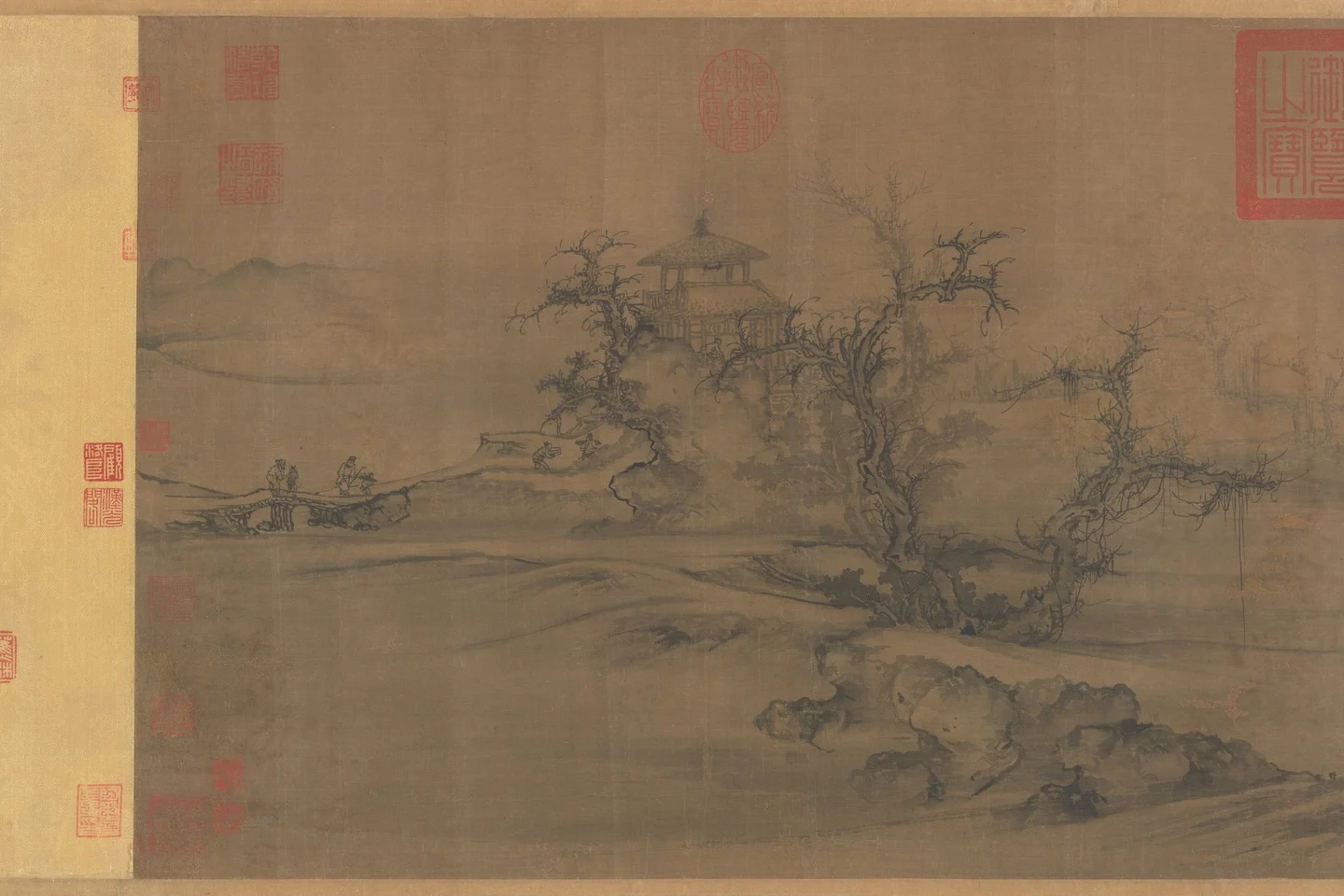 Guo Xi
Old Trees, Level Distance
ca. 1080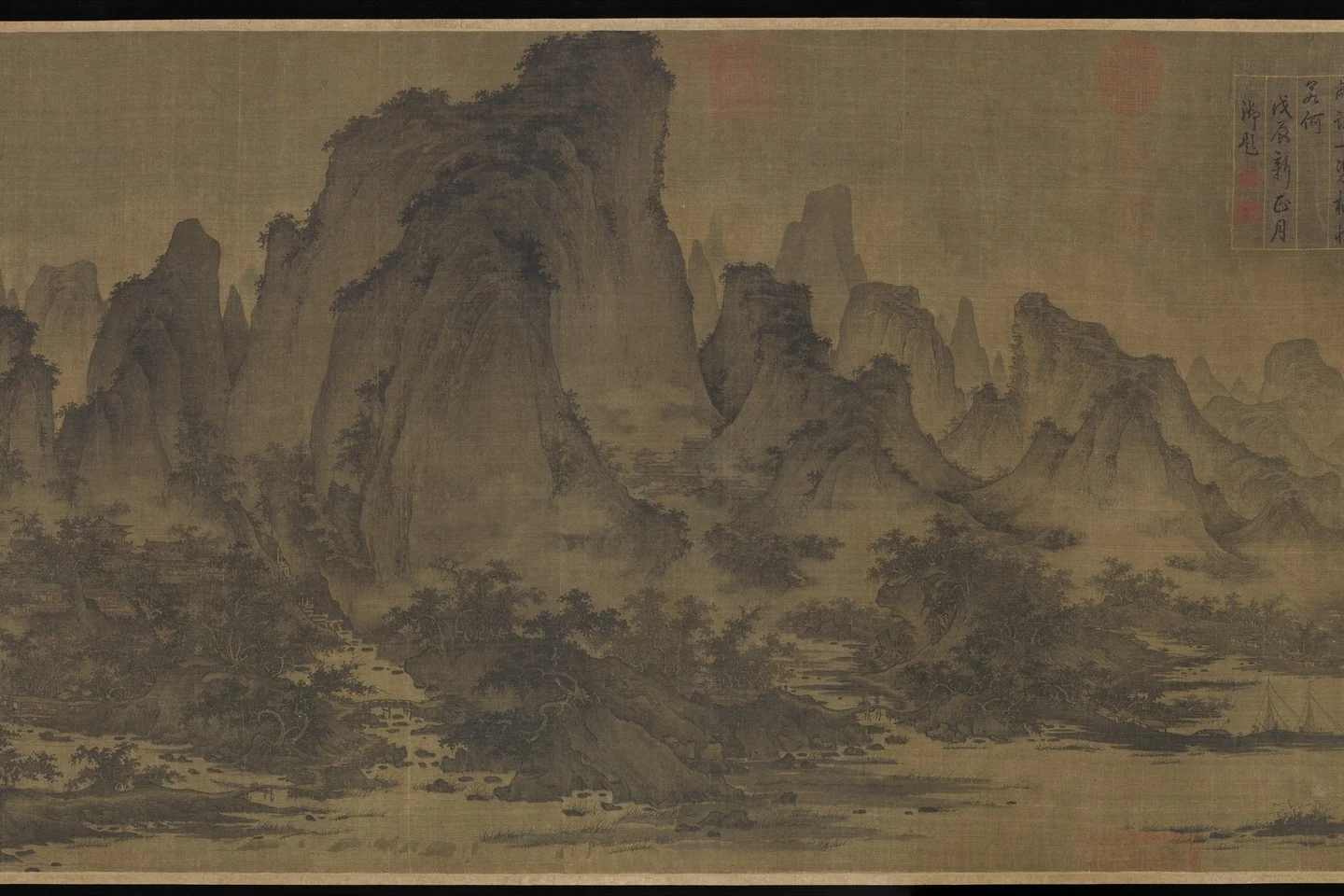 Attributed to Qu Ding
Summer Mountains
ca. 1050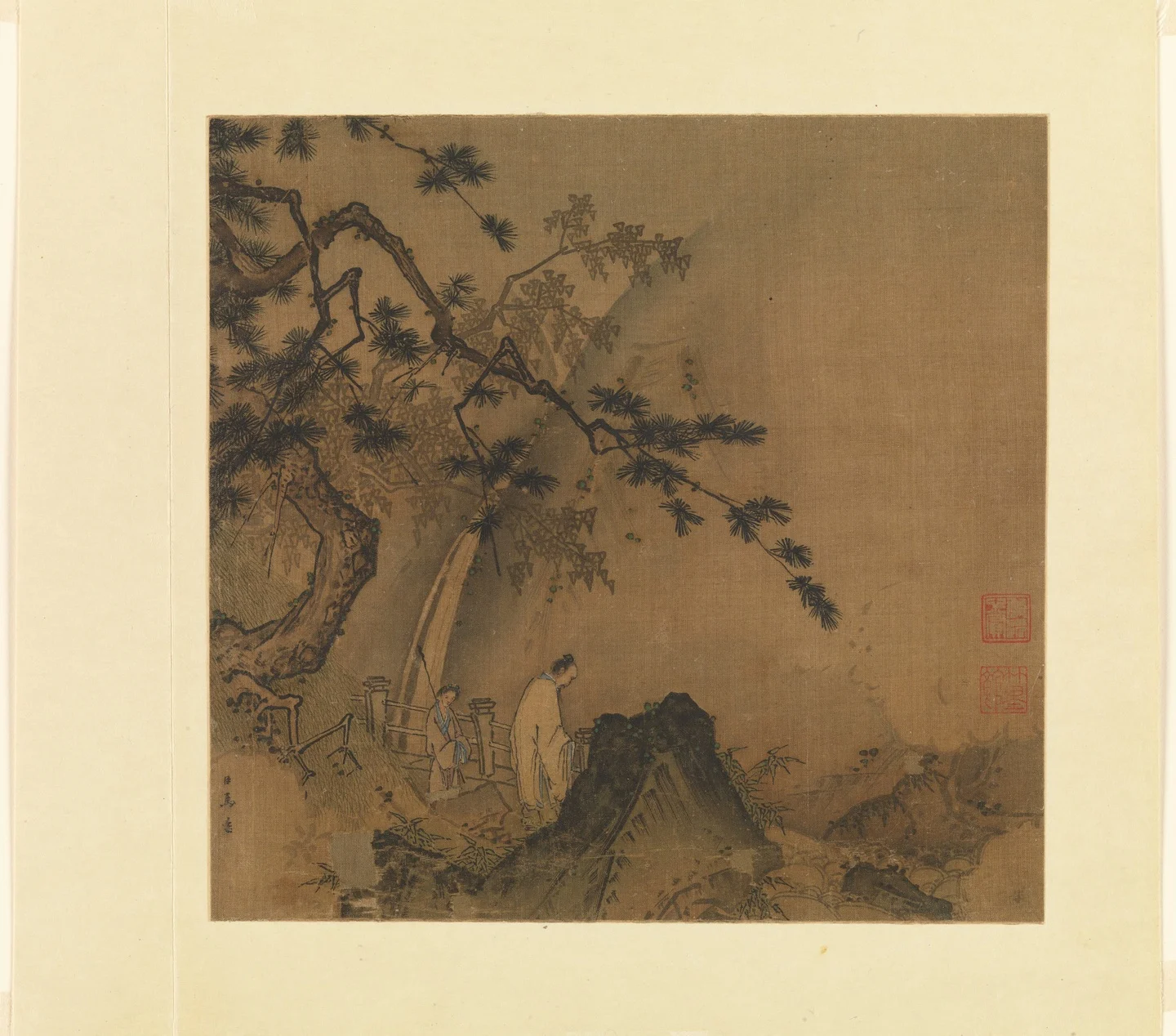 Ma Yuan
Scholar viewing a waterfall
early 13th centuryPeriod, style and subject
- Movement
- Chinese painting
- Genre
- Landscape
- Medium
- Hanging scroll; ink and color on paper
- Collection
- The Metropolitan Museum of Art
- Dimensions
- Image, 136.5 × 44.8 cm
- Accession number
- 2012.526.2
Sources
Image provided under CC0. Image licence