The Annunciation
Jan van Eyck · c. 1434/1436
Explore the painting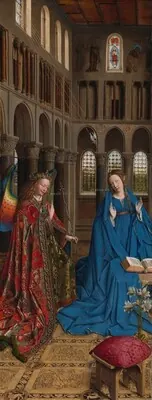
The painting’s story and details
The archangel Gabriel tells Mary that she will become the mother of Christ. Jan van Eyck painted the Annunciation around 1434–1436, placing the event in a church familiar to European viewers of his time. The tall interior occupies almost the entire picture. It situates the encounter within the history of faith, with other biblical stories contained in the windows, inscriptions and floor around the figures.
Gabriel wears heavy patterned fabric decorated with gems and pearls. Several colours move through wings whose feathers resemble those of a peacock. The museum relates them to ideas of immortality found in medieval animal books. Precious materials express the heavenly messenger’s dignity. Van Eyck differentiates their qualities in oil paint, from soft cloth to hard, reflective stone.
Mary raises her palms before an open book. Her reply to the angel’s greeting appears beside her face. The gesture therefore belongs to a dialogue whose actual words occupy the painted surface. The broad blue folds of her clothing stand out beside Gabriel’s intricate patterns. The eye moves easily between the two speakers.
The white lilies at Mary’s feet signified her purity. Stories from the Old Testament, including Samson’s deeds, appear on the decorated floor. Medieval interpreters found anticipations of Christ’s life in them. This way of reading joined different biblical books into a single history of salvation. A viewer could move from a tiny scene beneath the angel’s feet to the painting’s central event and understand them as parts of one design.
Seven golden rays descend from a window, accompanied by a dove representing the Holy Spirit. The museum explains their number through the Spirit’s seven gifts. Light passing through glass was associated with the virgin conception because the glass remained intact. This historical analogy shows an observable material property becoming a means of discussing a miracle.
The golden letters of Gabriel’s greeting face the viewer, while Mary’s answer is inverted. It can be imagined as read from above by God. Written language introduces another participant whom the painter does not represent in human form. Viewers occupy an earthly church interior, while the dialogue extends beyond it.
Van Eyck had served Philip the Good, Duke of Burgundy, since 1425. The museum identifies the duke as a likely patron, although the painting’s original location is unknown. It may have been a wing of a three-part altarpiece. In such a work, a sumptuous surface could hold attention and support prayer. We can recover part of that experience by moving from the whole interior to its letters and tiny scenes. The neighbouring panels, if they existed, are no longer before us.
More paintings to compare
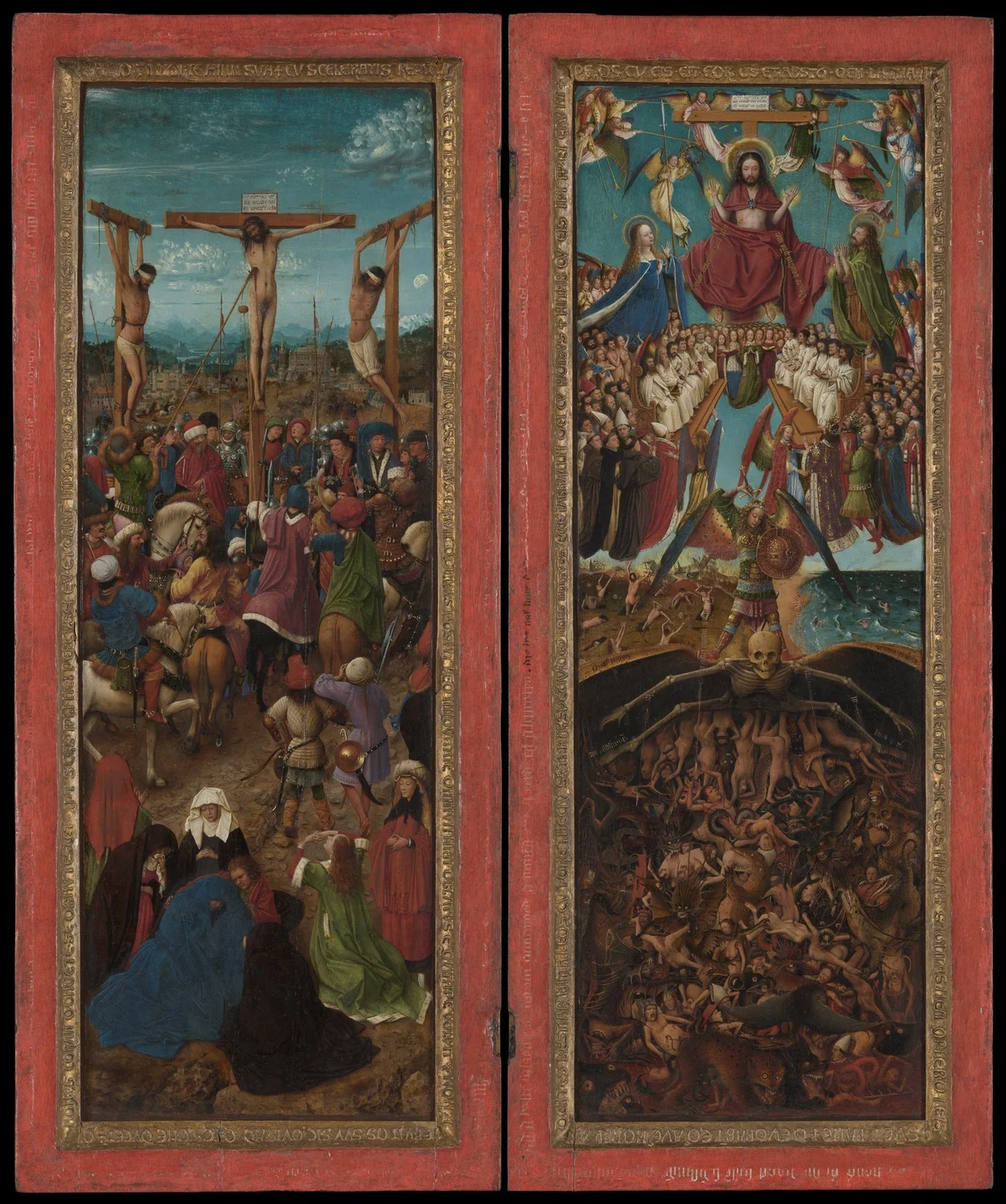 Jan van Eyck
The Crucifixion; The Last Judgment
ca. 1436–38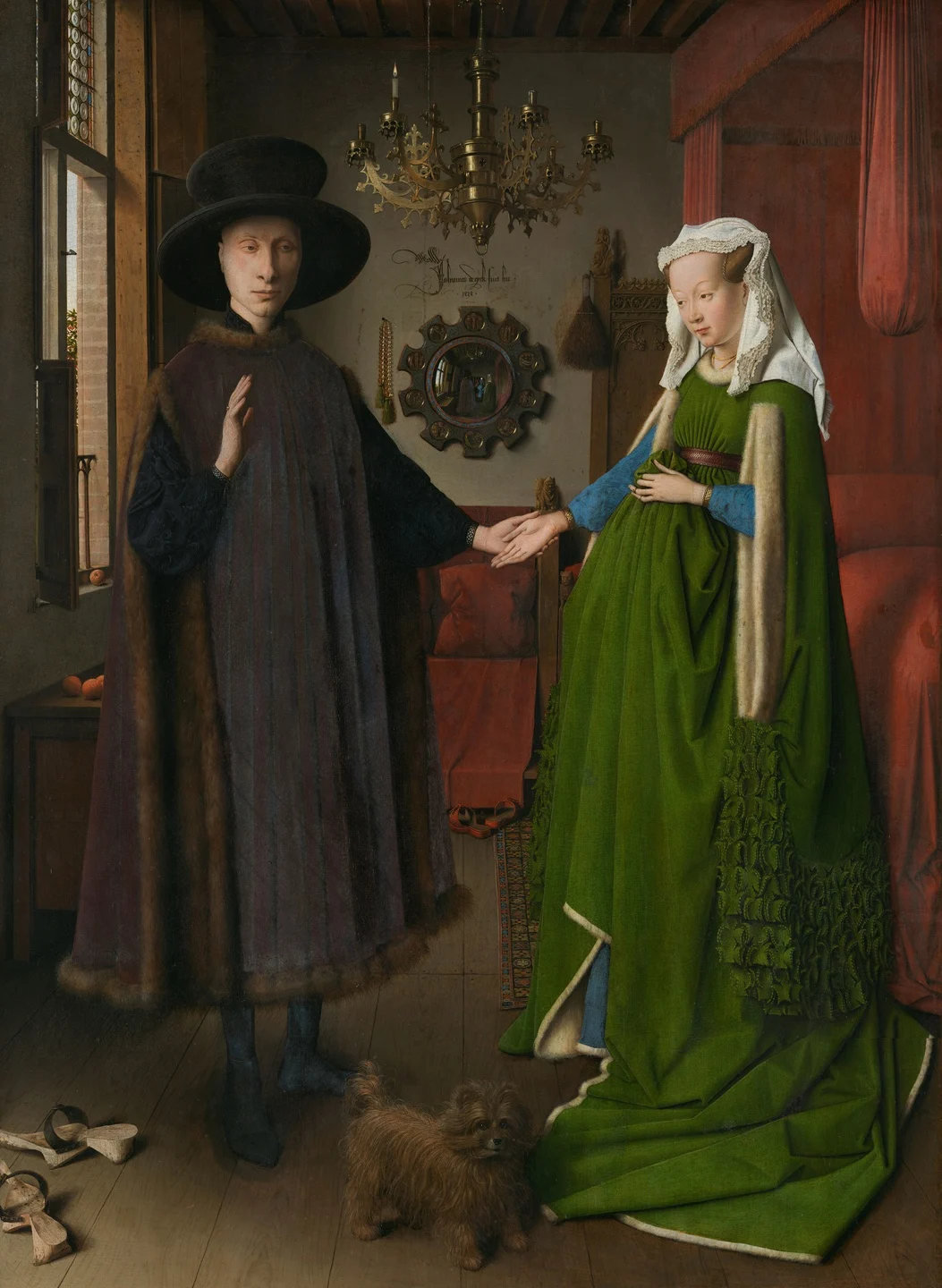 Jan van Eyck
The Arnolfini Portrait
1434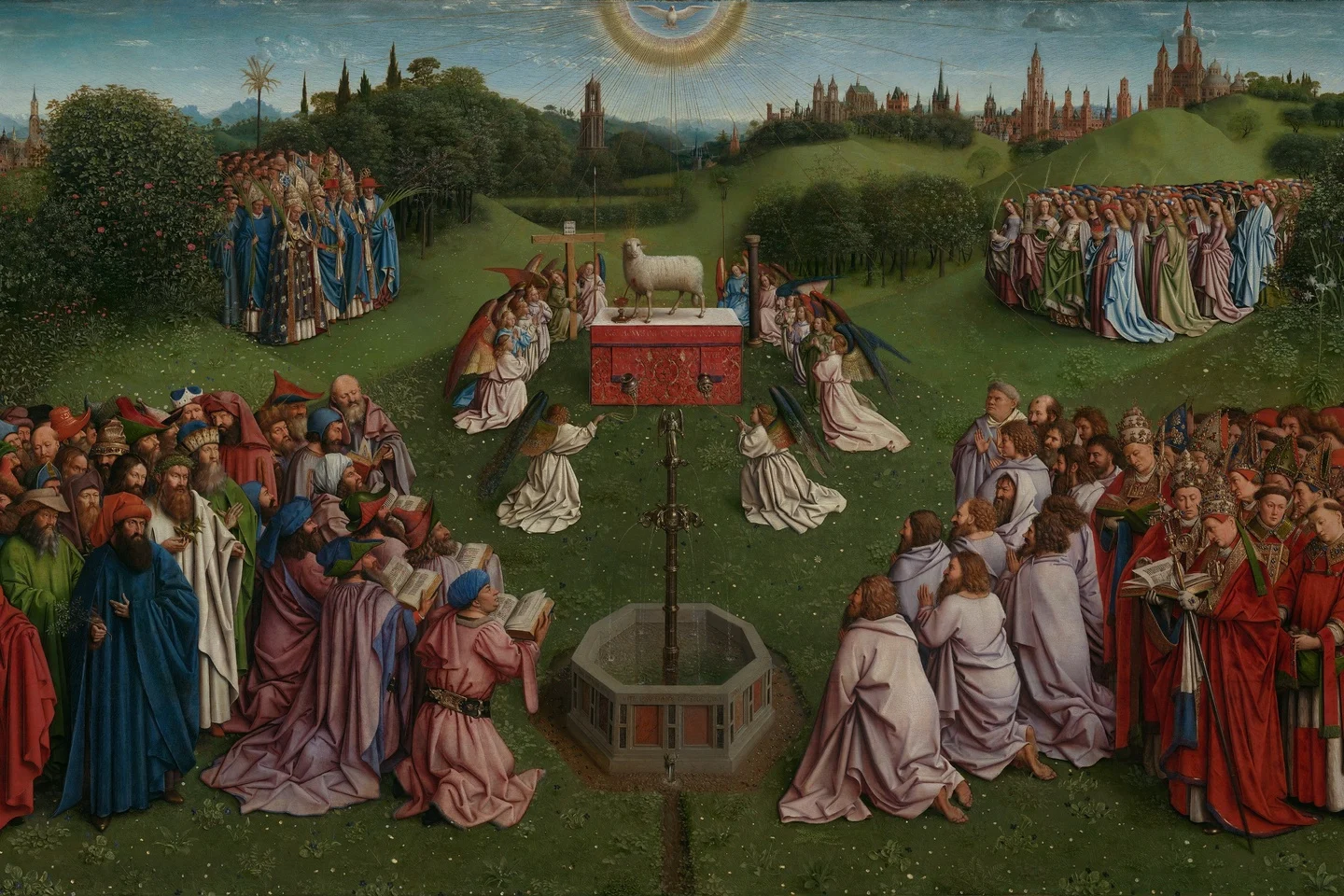 Hubert and Jan van Eyck
Adoration of the Mystic Lamb — original central panel of the Ghent Altarpiece
Completed 1432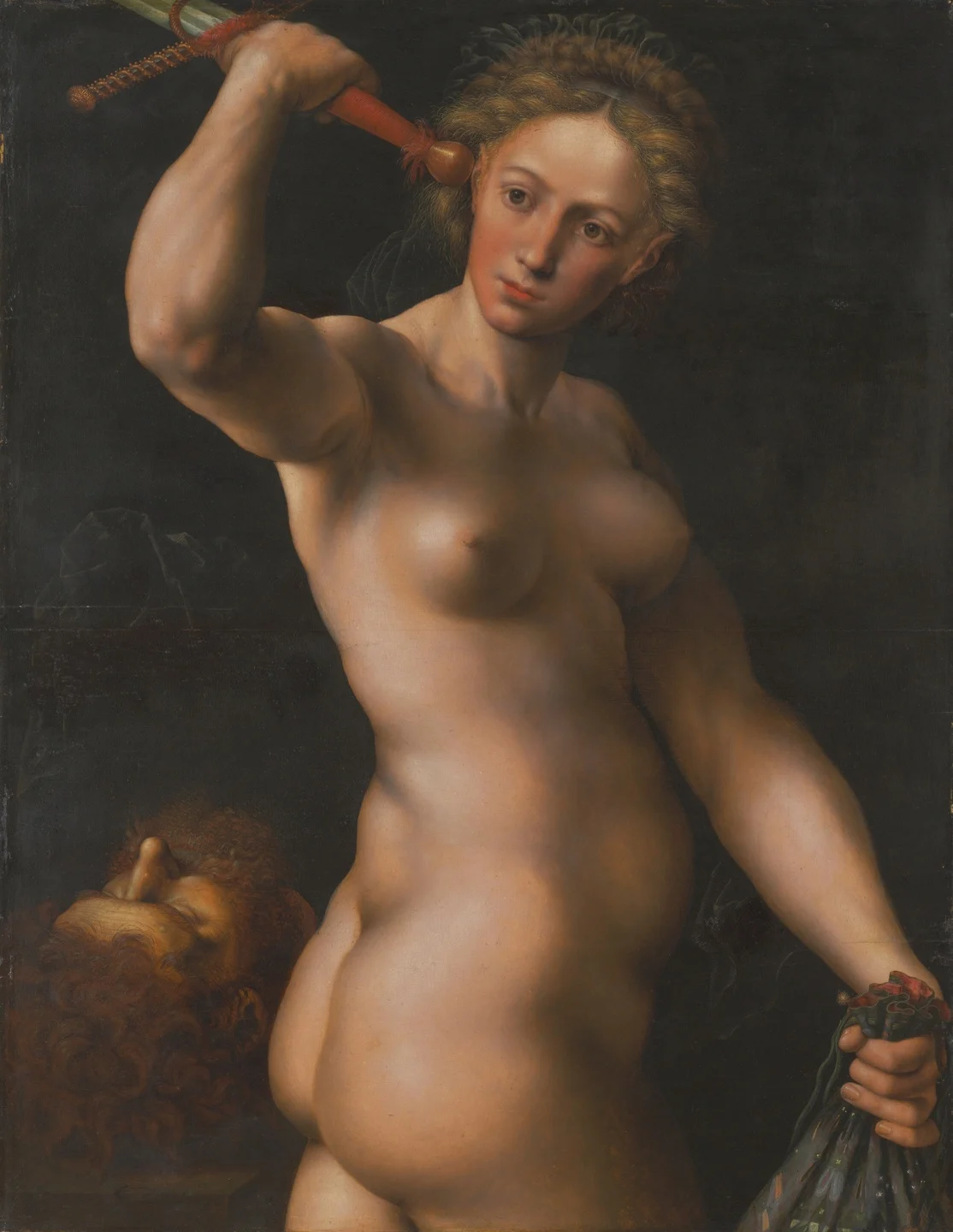 Jan Sanders van Hemessen
Judith
c. 1540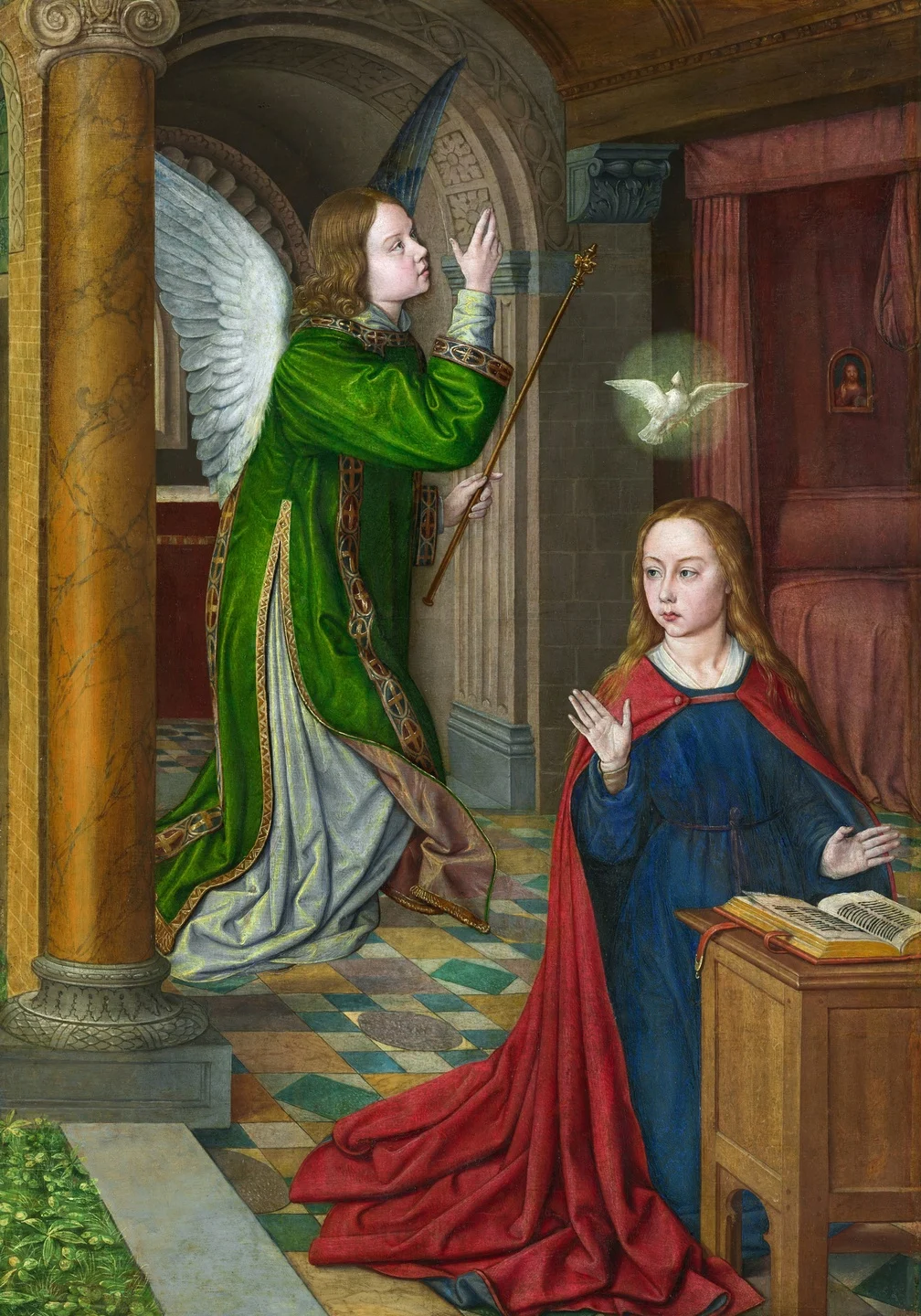 Jean Hey, Master of Moulins
The Annunciation
1490–95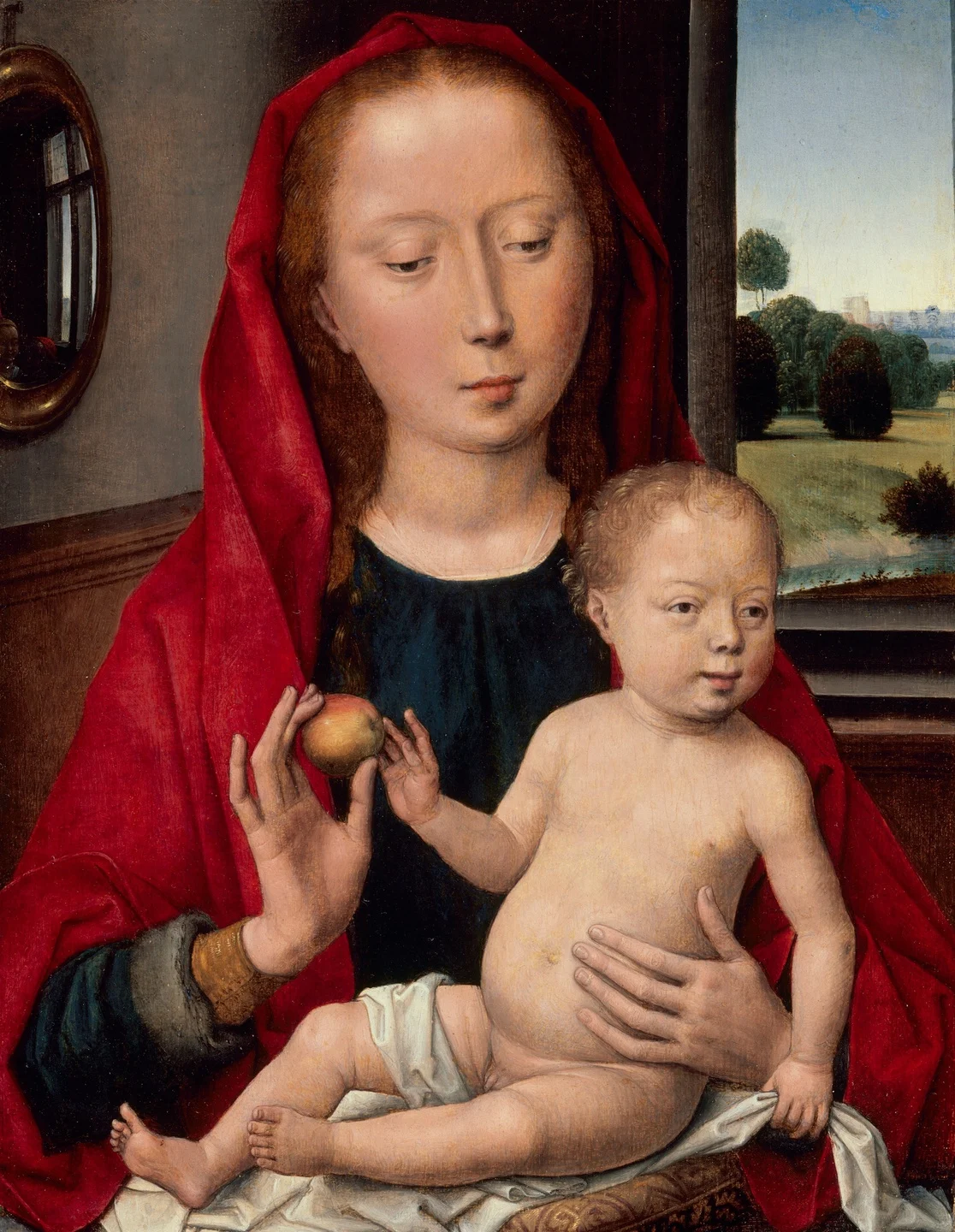 Hans Memling
Virgin and Child
c. 1485Period, style and subject
- Movement
- Northern Renaissance
- Genre
- Religious art
- Medium
- oil on canvas transferred from panel
- Collection
- National Gallery of Art, Washington
- Dimensions
- Painted surface, 90.2 × 34.1 cm
- Accession number
- 1937.1.39
Sources
Reproduction of a public-domain artwork. Image licence