Buddhist images. Gesture, mandala and journey
How images participated in teaching and ritual across Asia.
Open the tour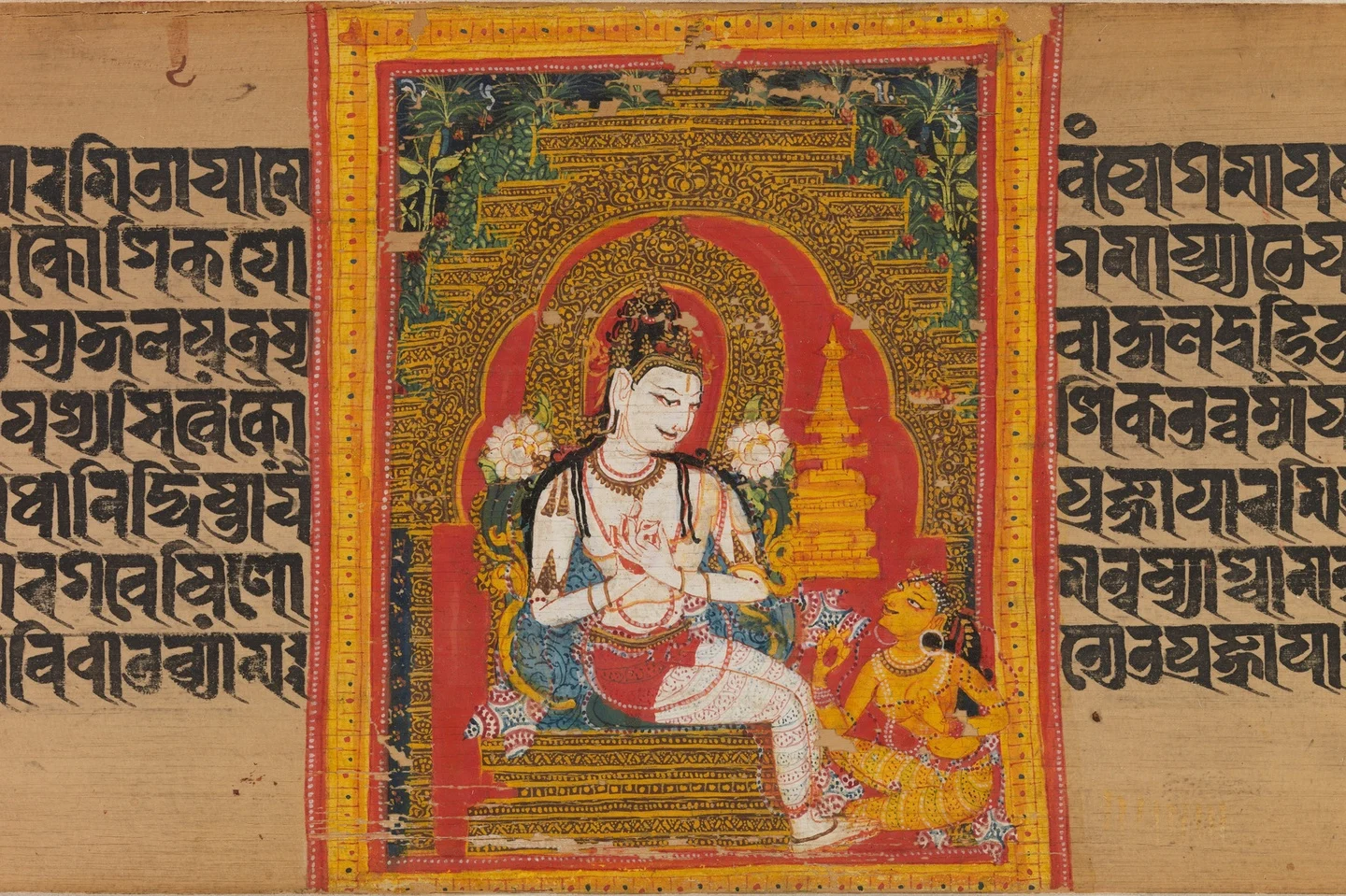 Mahavihara Master
Avalokiteshvara Teaching a Devotee
early 12th century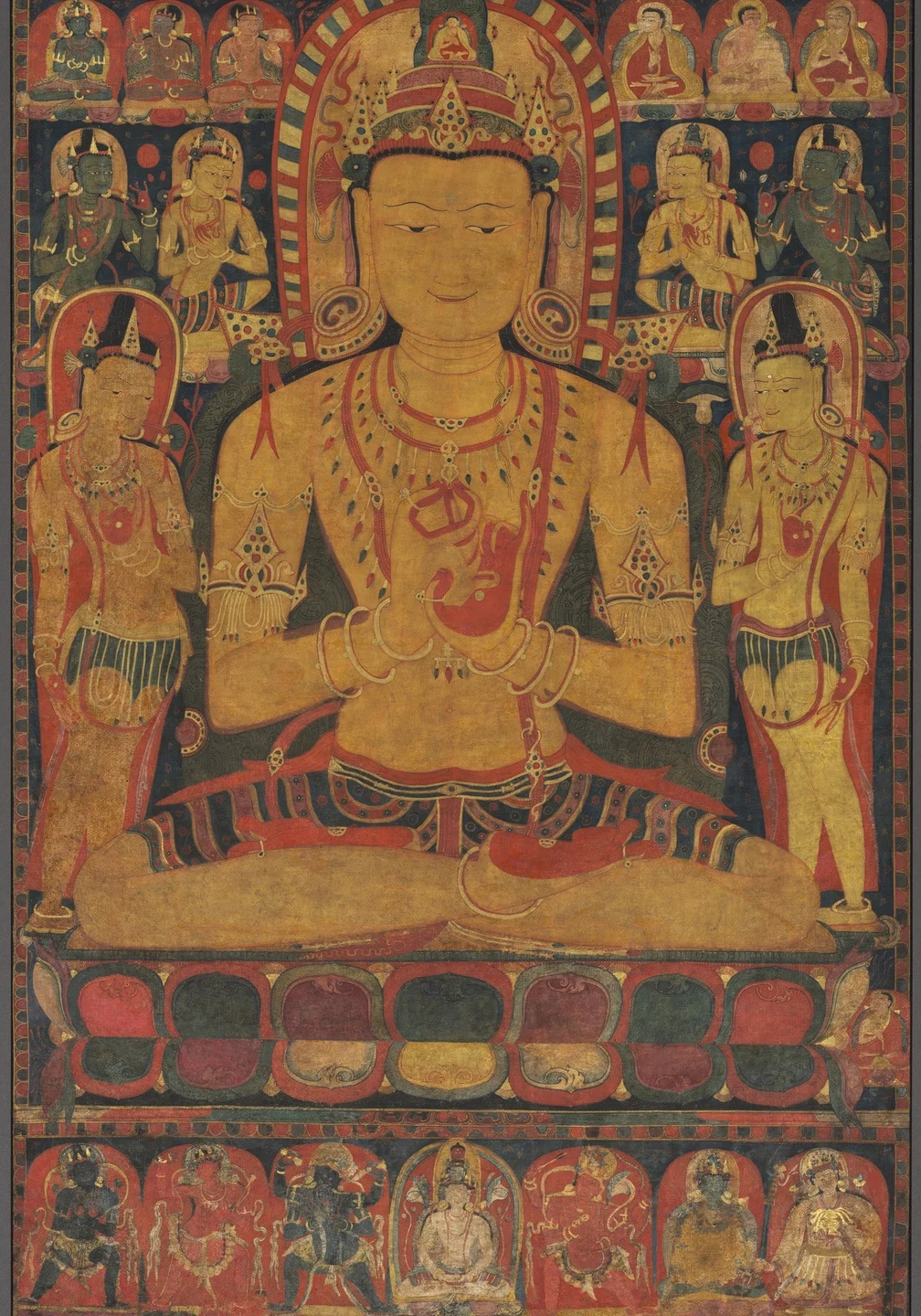 Unidentified Tibetan painters
Tantric Buddha Vairochana as Vajrasattva
c. 1150–1200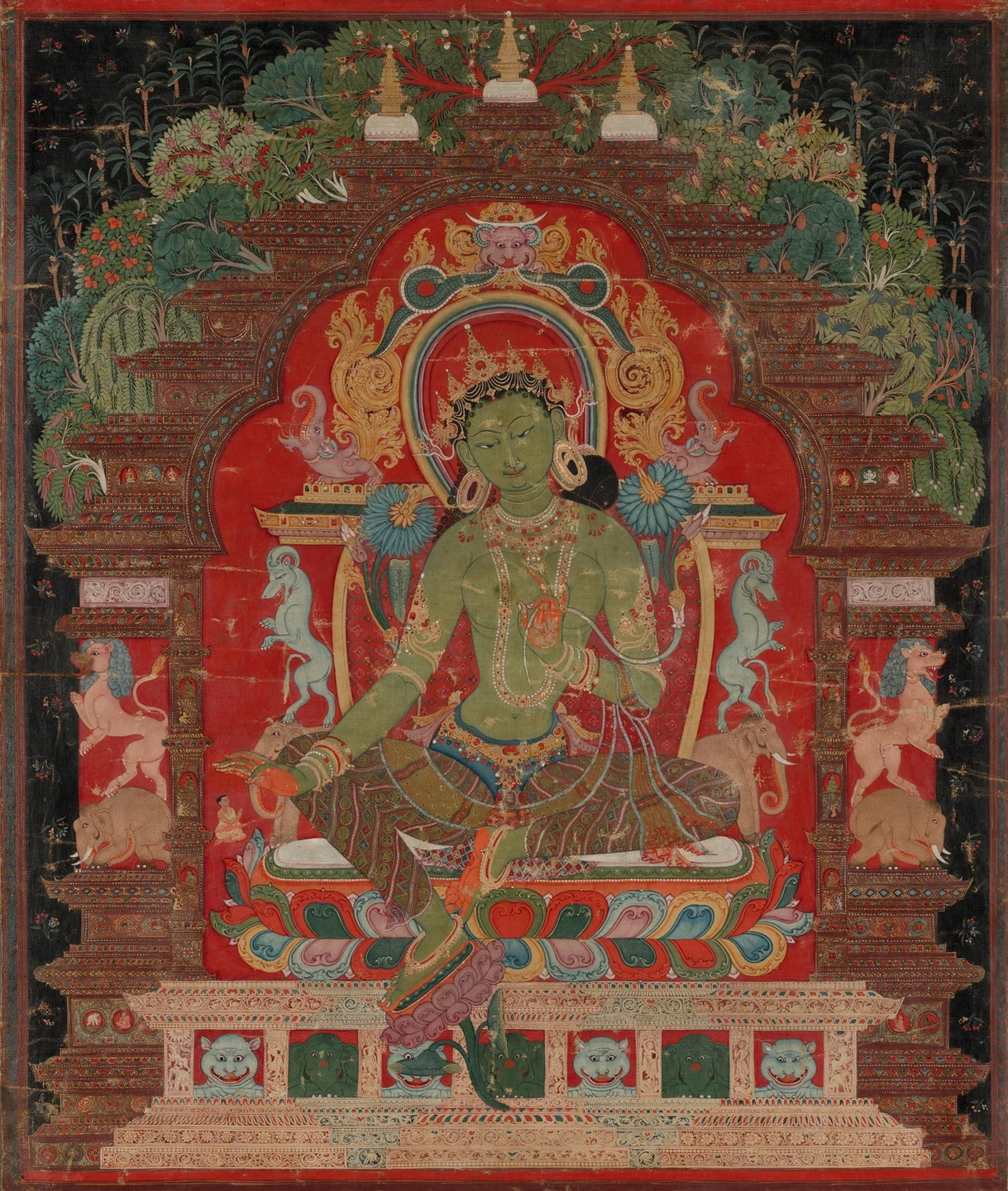 Attributed to Aniko
Green Tara
c. 1260s, mounted 2020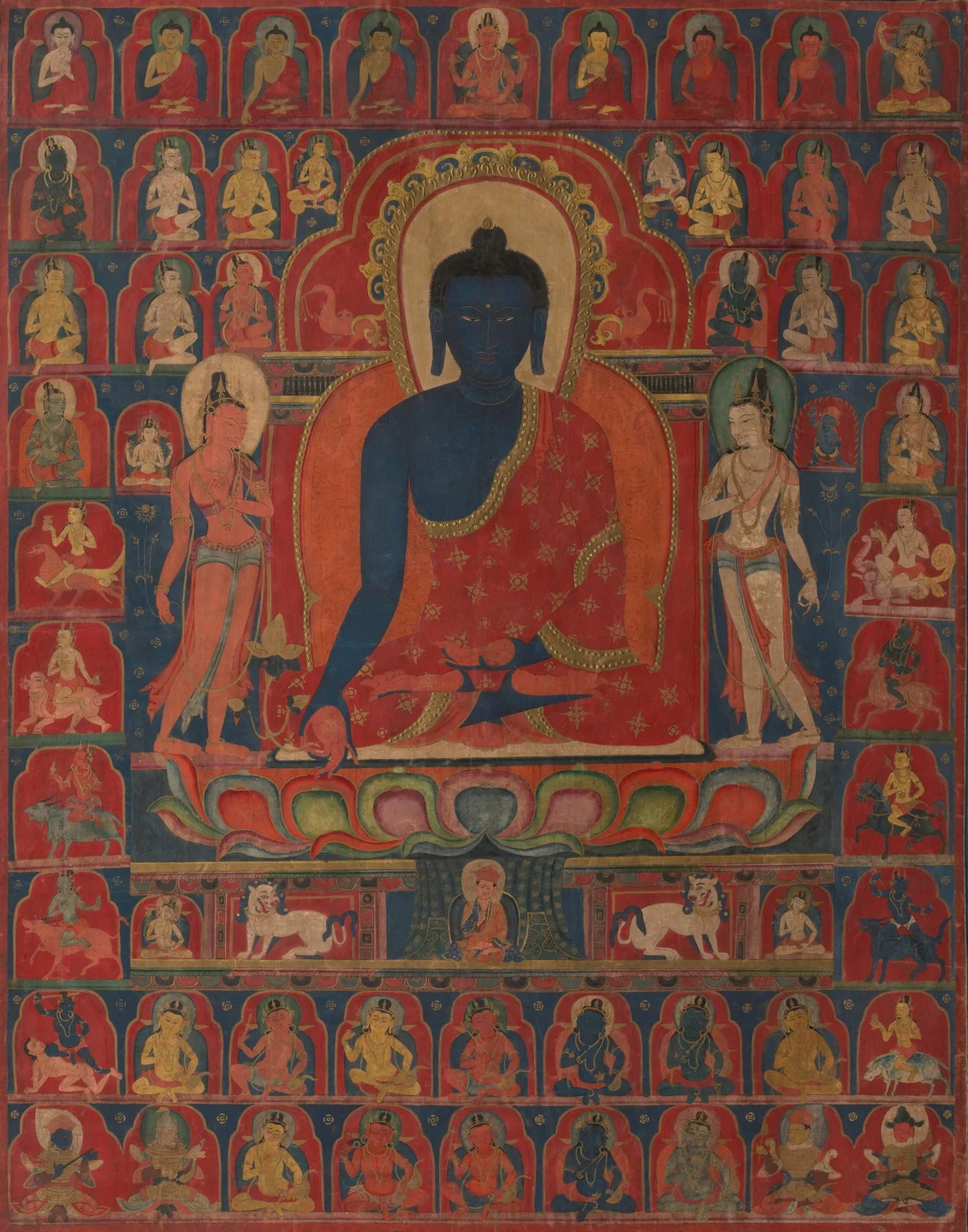 Unidentified Tibetan painters
The Medicine Buddha Bhaishajyaguru With His Mandala Retinue
14th centuryHow images participated in teaching and ritual across Asia.
Manuscript leaves, cloth, wall paintings and ritual crowns served different practices. Hand positions, numbers of figures and attributes have meanings within particular traditions. We begin in India and the Himalayas, then see familiar images take distinct forms in China, Korea and Japan.
India and the Himalayas
Manuscripts, deity images and mandalas establish different relationships between viewer and image.
Avalokiteshvara Teaching a Devotee
Mahavihara Master · early 12th century
Avalokiteshvara teaches a woman visiting a shrine. A surviving colophon names Queen Vihunadevi as donor. Pala Buddhist manuscripts joined teaching with gifts and religious merit. The anonymous master’s surviving manuscript is divided between New York and Lhasa.
Tantric Buddha Vairochana as Vajrasattva
Unidentified Tibetan painters · c. 1150–1200
The hand gesture identifies Vairochana, while the golden color and tiny vajra connect him with Vajrasattva. A monk-donor appears below. The monk represented in the crown was probably his teacher. Mantras on the reverse invoke the presence of those depicted on the cloth.
Green Tara
Attributed to Aniko · c. 1260s, mounted 2020
Tara is venerated as a savior who dispels fear. The corresponding mantra appears on the reverse, and a small monk-donor is placed beneath her hand. The painting is attributed to the Nepalese artist Aniko, who worked in Tibet. It joins an individual offering with a major devotional image.
The Medicine Buddha Bhaishajyaguru With His Mandala Retinue
Unidentified Tibetan painters · 14th century
The blue Medicine Buddha holds a medicinal plant and is surrounded by bodhisattvas and guardians. Tibetan devotees associated him with healing and release from suffering. Padmasambhava’s presence and an invocation on the reverse may connect the thangka with Nyingma practice. The inscription also preserves the donor’s prayer.
Ritual Crown with the Five Transcendent Buddhas
Unidentified painter, possibly Newari · late 14th–early 15th century
This painted crown was worn during monastic rituals and some ceremonial dances. Its five sections represent directional Buddhas. The museum suggests that a Newari painter working in Tibet made it. The paintings were experienced on a moving ritual object.
Twenty-three Deity Nairatma Mandala
Unidentified Tibetan painters · c. 1375
Nairatmya dances at the center of a palace, while cremation grounds occupy the outer ring. The mandala organizes a contemplative passage through sacred space. Images of death relate to overcoming fear and attachment to the body. Such a painting was used within a practice guided by a teacher.
Sadaksari-Lokeshvara Surrounded by Manifestations and Monks
Unidentified Tibetan painters · late 15th century
The central figure is Avalokiteshvara in the form associated with the six-syllable mantra. Usually white, the deity is painted gold here. Bodhisattvas, protectors, and members of a monastic lineage surround him, connecting the devotional image with a tradition of transmitted teaching.
Ushnishavijaya Within a Chaitya, Commemorating the Laksha Chaitya Vrata (Thousand Chaitya Ritual), with Dated Inscription
Unidentified Newari painter · 1513
An inscription connects this painting with a ritual in autumn 1513 for a patron’s household. Participants made numerous small clay stupas, consecrated them and deposited them in a sacred place. Ritual actions appear at the bottom. The image both participated in the ceremony and preserved its memory.
Milarepa on Mount Kailash
Unidentified Tibetan painters · c. 1500
Milarepa, a Buddhist teacher and singer-poet, sits in a cave among disciples. His teacher Marpa appears above. A long Tibetan inscription on the reverse recounts his life and helps identify this as an early surviving image of him. The portable thangka could travel with a practitioner.
China and Korea
Buddhist figures could occupy a landscape or appear among an assembly of other beings.
Buddhist Retreat by Stream and Mountains
Juran · 960–85
The monk Juran served the Southern Tang court and moved to Kaifeng after its submission to the Northern Song. The painting combines a towering mountain with wet ink and long fibrous strokes associated with southern practice. Different landscape methods meet as the painter moves between political and cultural centers.
The Sixteen Luohans
Wu Bin · dated 1591
Wu Bin’s Buddhist holy men have unconventional, sometimes strange appearances. Their outward forms conceal spiritual achievement. The museum connects such figures with hopes of miraculous salvation during late-Ming instability. This is among his earliest surviving dated works.
Arhat
Unidentified Korean painters · 1235
An enlightened disciple of the Buddha lures a dragon into an alms bowl. He is Segongyang jonja, number 464 in a group of five hundred arhats. Only about ten scrolls from the original series are known to survive. This single figure gives a measure of a largely lost religious commission.
Water-moon Avalokiteshvara
Unidentified Korean painters · first half of the 14th century
Sudhana’s encounter with Avalokiteshvara provides the scriptural basis. Goryeo painters applied pigment to both sides of translucent silk, producing luminous colour. Gold costume patterns record the labour and materials invested in this Buddhist devotional image.
Ksitigarbha Bodhisattva with Assembly
Unidentified Korean painters · late 16th/early 17th century
Kshitigarbha was revered for rescuing beings from hell. The Ten Kings of Hell and guardians surround him. As Buddhism spread more widely among ordinary people in later Joseon Korea, red and green replaced costly gold and lapis lazuli. More affordable supports also broadened access to devotional images.
Japan. Aid and salvation
Images of paths, descents and pilgrimages connected teachings to actions viewers could recognise.
The White Path Between Two Rivers
Unidentified Japanese painters · 1200s
A narrow path leads between rivers of fire and water toward Amida's realm. The painting illustrates a teaching attributed to the Chinese monk Shandao. Its obstacles represent dangers on the way out of the cycle of rebirth. A memorable journey makes the religious teaching visible.
Welcoming Descent of Jizō
Unidentified Japanese painters · 1200s
Jizo descends on clouds toward a suffering person who has called for help. The bodhisattva appears as a monk with a jewel and a ringed staff. In Japanese Buddhism he is particularly venerated as a rescuer from hells. Lotuses and clouds make the descent part of a recognizable image of aid.
Legends of the Yūzū Nembutsu Sect
Unidentified Japanese painters · Kamakura period (1185–1333), 14th century
The handscroll recounts the monk Ryōnin’s life and the spread of his teaching. After a vision of Amida Buddha, he encouraged shared recitation of the nembutsu prayer. One person’s merit was understood to benefit everyone. Unrolling the work an arm’s length at a time revealed successive encounters and conversions.
Group Pilgrimage to the Jizo Nun
Ike Taiga · 1755/65
Pilgrims visit a nun believed able to communicate with the bodhisattva Jizō. Taiga accompanies the scene with his own inscription. He renewed Chinese-derived literati painting through Japanese everyday life and humour. The marks may have been made with twisted paper dipped in ink rather than a conventional brush.
An image could travel between countries
An image could travel between countries. Recognisable features survived while materials, drawing and uses changed.
Both a figure’s religious identity and the object’s origin matter. A ritual crown and a scroll with related figures call for different ways of viewing.
Artists in the tour
Sources
- Mahavihara Master — Avalokiteshvara Teaching a Devotee
- Unidentified Tibetan painters — Tantric Buddha Vairochana as Vajrasattva
- Attributed to Aniko — Green Tara
- Unidentified Tibetan painters — The Medicine Buddha Bhaishajyaguru With His Mandala Retinue
- Unidentified painter, possibly Newari — Ritual Crown with the Five Transcendent Buddhas
- Unidentified Tibetan painters — Twenty-three Deity Nairatma Mandala
- Unidentified Tibetan painters — Sadaksari-Lokeshvara Surrounded by Manifestations and Monks
- Unidentified Newari painter — Ushnishavijaya Within a Chaitya, Commemorating the Laksha Chaitya Vrata (Thousand Chaitya Ritual), with Dated Inscription
- Unidentified Tibetan painters — Milarepa on Mount Kailash
- Juran — Buddhist Retreat by Stream and Mountains
- Wu Bin — The Sixteen Luohans
- Unidentified Korean painters — Arhat
- Unidentified Korean painters — Water-moon Avalokiteshvara
- Unidentified Korean painters — Ksitigarbha Bodhisattva with Assembly
- Unidentified Japanese painters — The White Path Between Two Rivers
- Unidentified Japanese painters — Welcoming Descent of Jizō
- Unidentified Japanese painters — Legends of the Yūzū Nembutsu Sect
- Ike Taiga — Group Pilgrimage to the Jizo Nun