Welcoming Descent of Jizō
Unidentified Japanese painters · 1200s
Explore the painting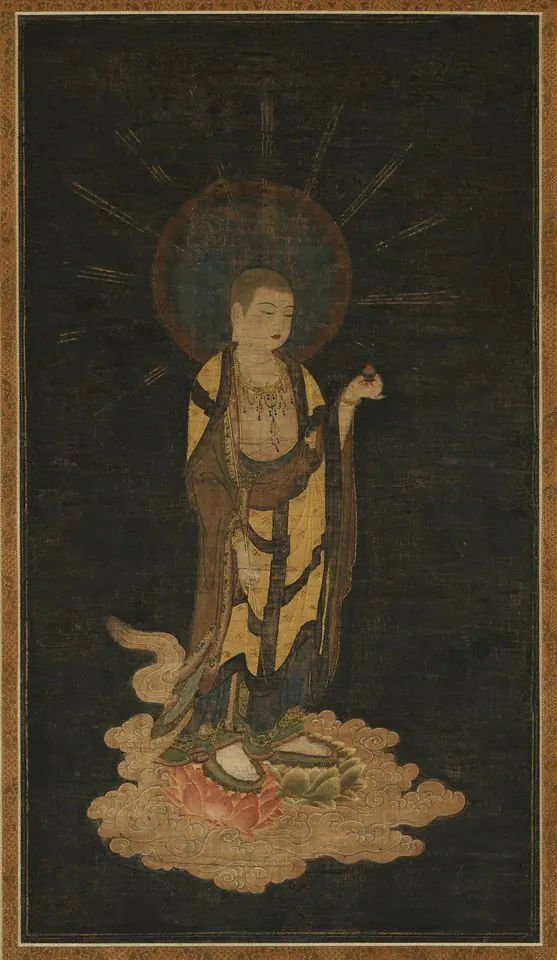
The painting’s story and details
Jizo descends on a cloud to help those who call upon him. This thirteenth-century Japanese scroll shows the bodhisattva as a shaven-headed monk. His compassion extends to beings suffering in Buddhist hells. The painting centres on a promise of assistance. Instead of a long narrative, the artist presents the moment when someone able to answer an appeal approaches.
The head inclines slightly, with lowered eyes. The face remains calm, its mouth marked by a small red shape. Pale skin stands out against the scroll’s dark surface. Monastic appearance gives a supernatural being a familiar human form. An appeal to him can be imagined as an encounter with someone who has paused to listen.
A wish-fulfilling jewel rests on the raised palm. Its small size encourages closer inspection. The hand extends into open space, presenting the object to the viewer. The capacity to help receives a tangible sign. It appears beside the face, held lightly without a display of physical effort.
The other hand holds a long ringed staff. It belongs to Jizo’s monastic appearance and runs alongside the body, maintaining a straight line among the folds. A staff suits a traveller; here it makes a heavenly appearance resemble the arrival of a wandering monk. Assistance becomes something requiring a journey.
Each foot stands on its own lotus blossom. A pale cloud curls beneath them. Two supports let the figure suggest movement while remaining stable. Robe folds and the cloud’s trailing edge strengthen the sense of approach. The rescuer does not wait for a sufferer to climb towards him; descent itself is the painting’s central action.
Fine golden rays spread from the halo. Gold and cut gold foil also appear in the robe. These materials reflect light differently from dark silk and paint. As illumination changed, individual lines would shine. Radiance therefore existed both within the image and on the surface of the actual object before a worshipper.
Jizo retains a monk’s approachable appearance despite his radiance and cloud-borne stance. The painting connects human proximity with help beyond ordinary experience. For someone fearing death and suffering afterwards, the promise of an arriving rescuer could have particular force. Today the graceful figure can readily become simply a beautiful museum object. Its movement recalls the original addressee: someone expecting an appeal to be answered.
Featured in tours
Buddhist images. Gesture, mandala and journey
How images participated in teaching and ritual across Asia.
More paintings to compare
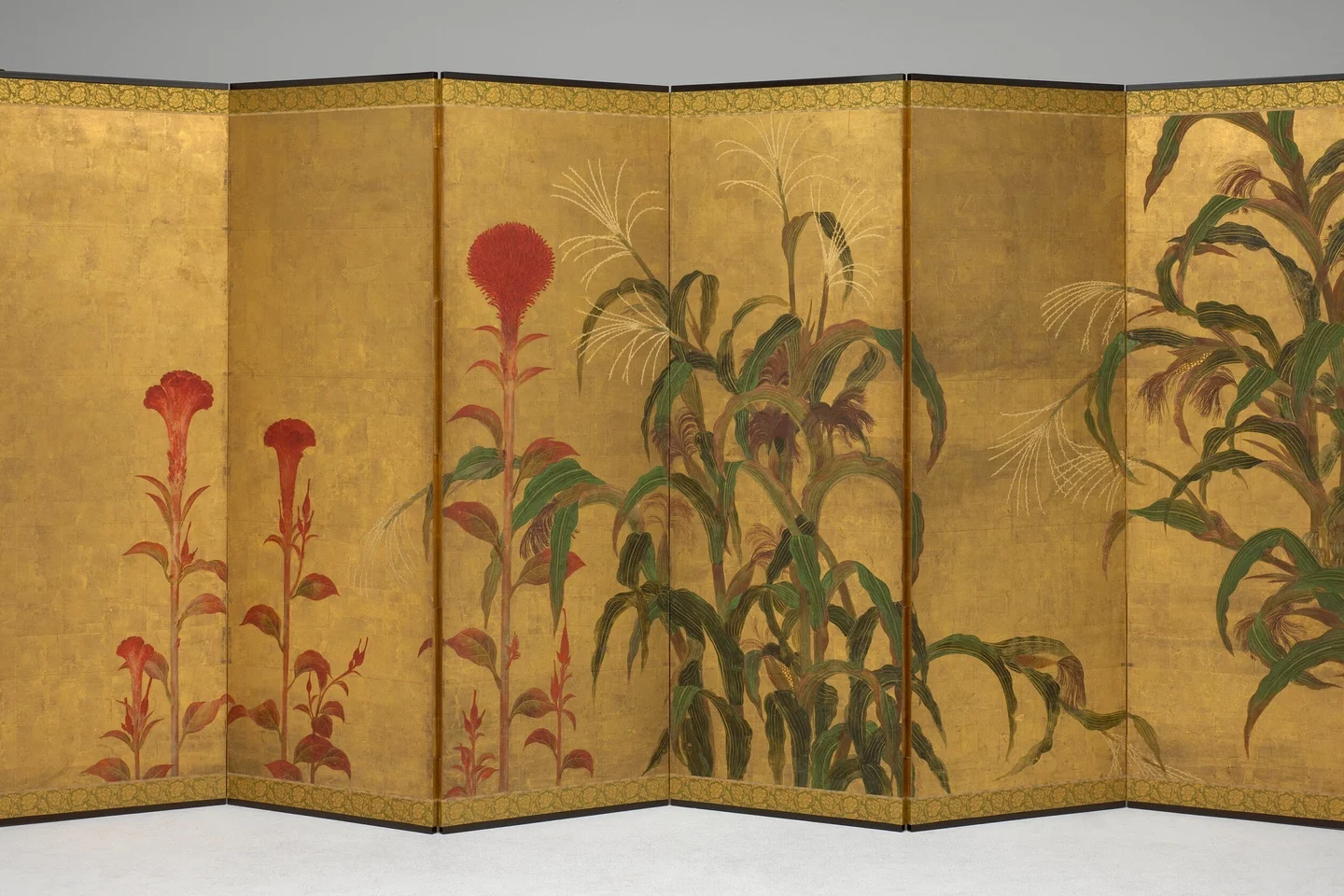 Unidentified Japanese painters
Maize and Cockscombs
mid 17th century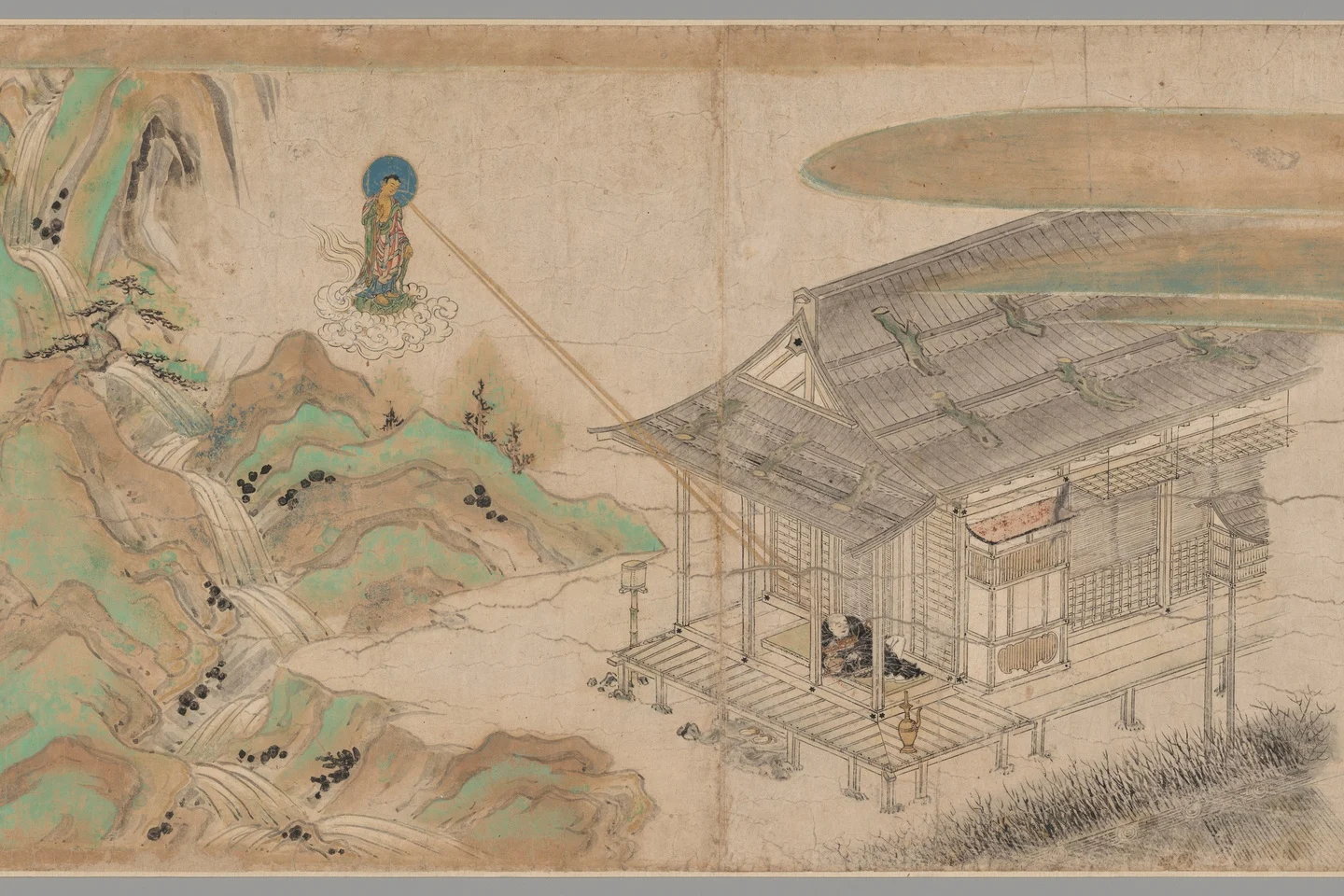 Unidentified Japanese painters
Legends of the Yūzū Nembutsu Sect
Kamakura period (1185–1333), 14th century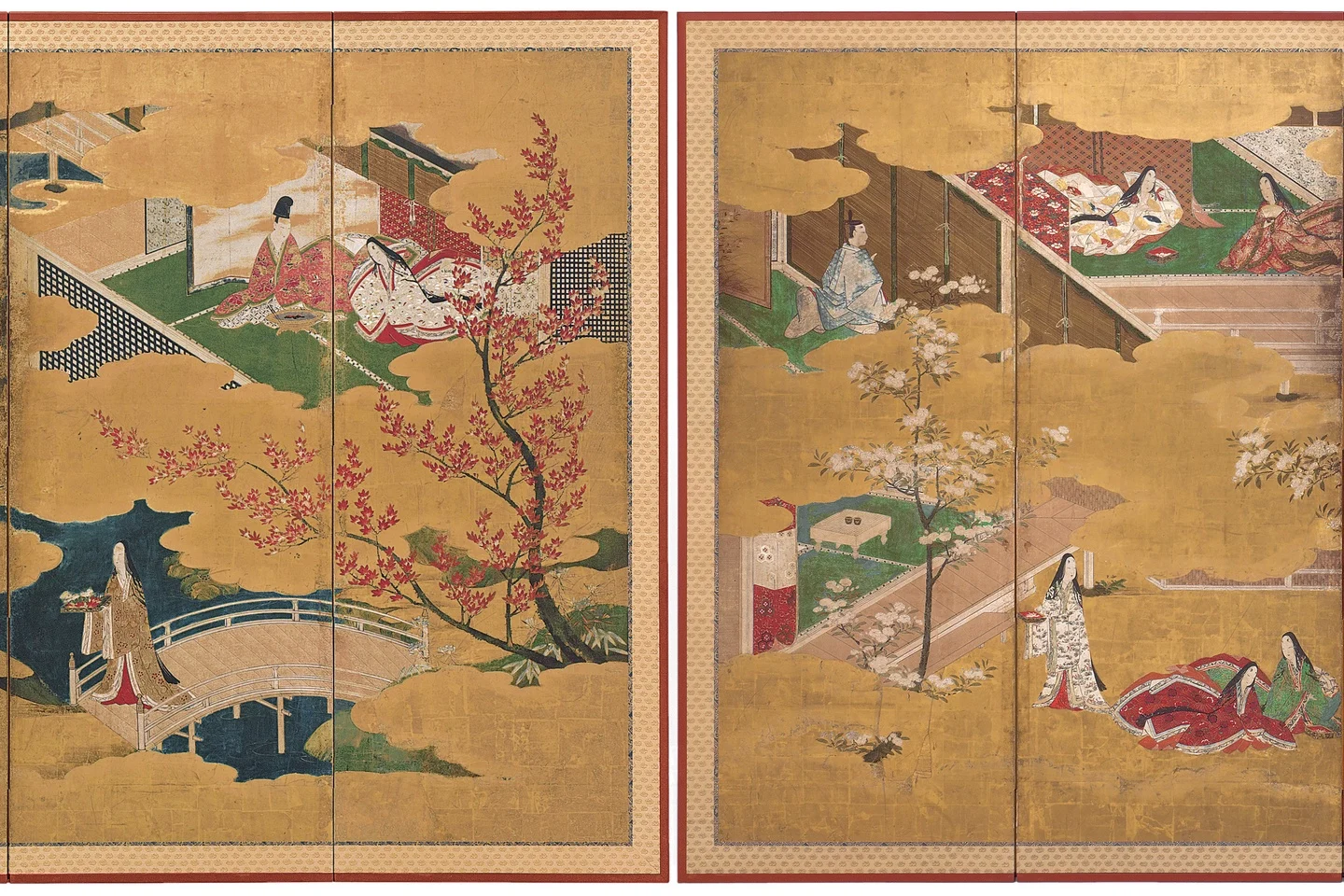 Unidentified Japanese painters
The Tale of Genji
early 17th century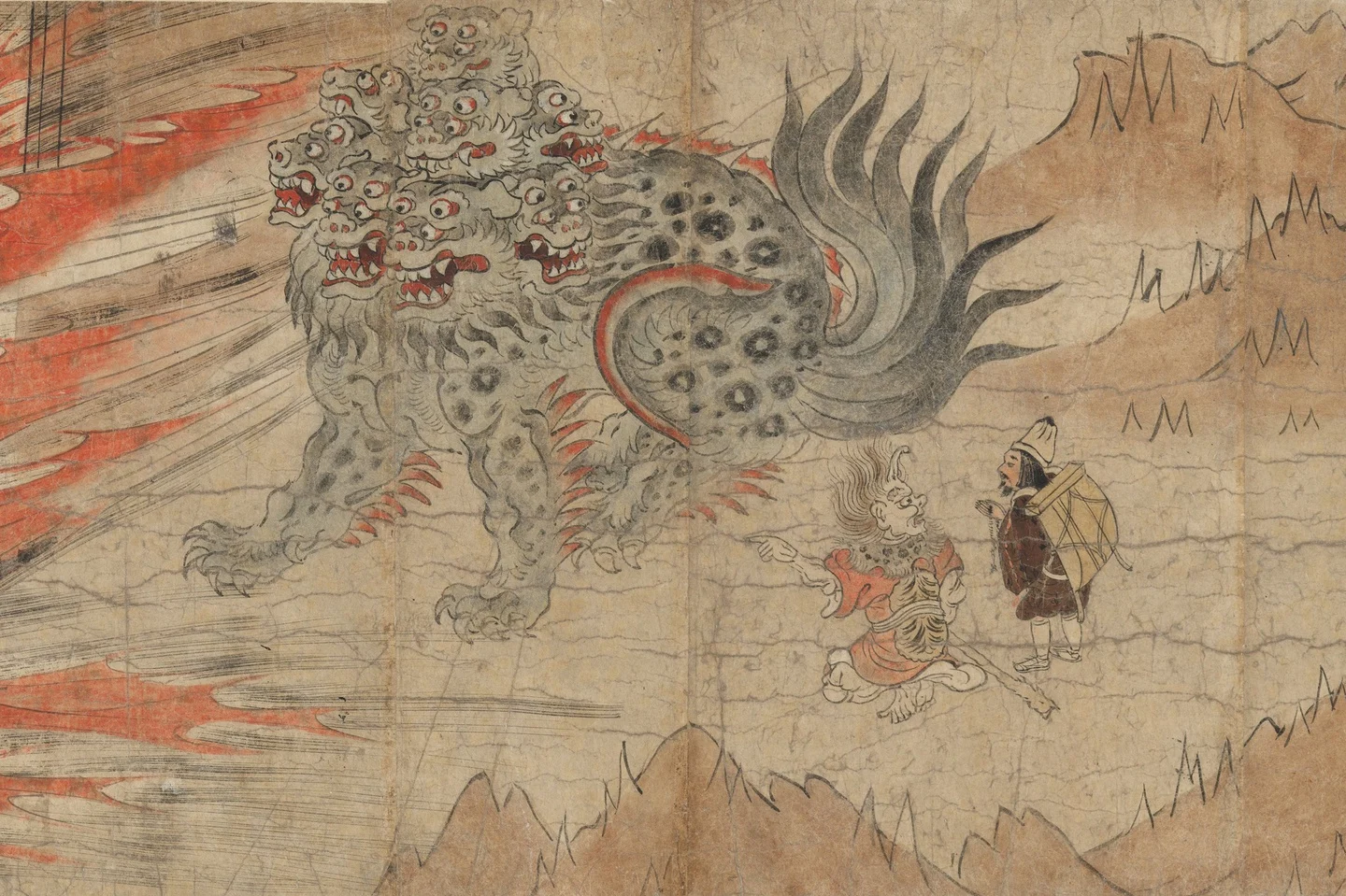 Unidentified Japanese painters
Illustrated Legends of the Kitano Tenjin Shrine (Kitano Tenjin engi emaki)
late 13th century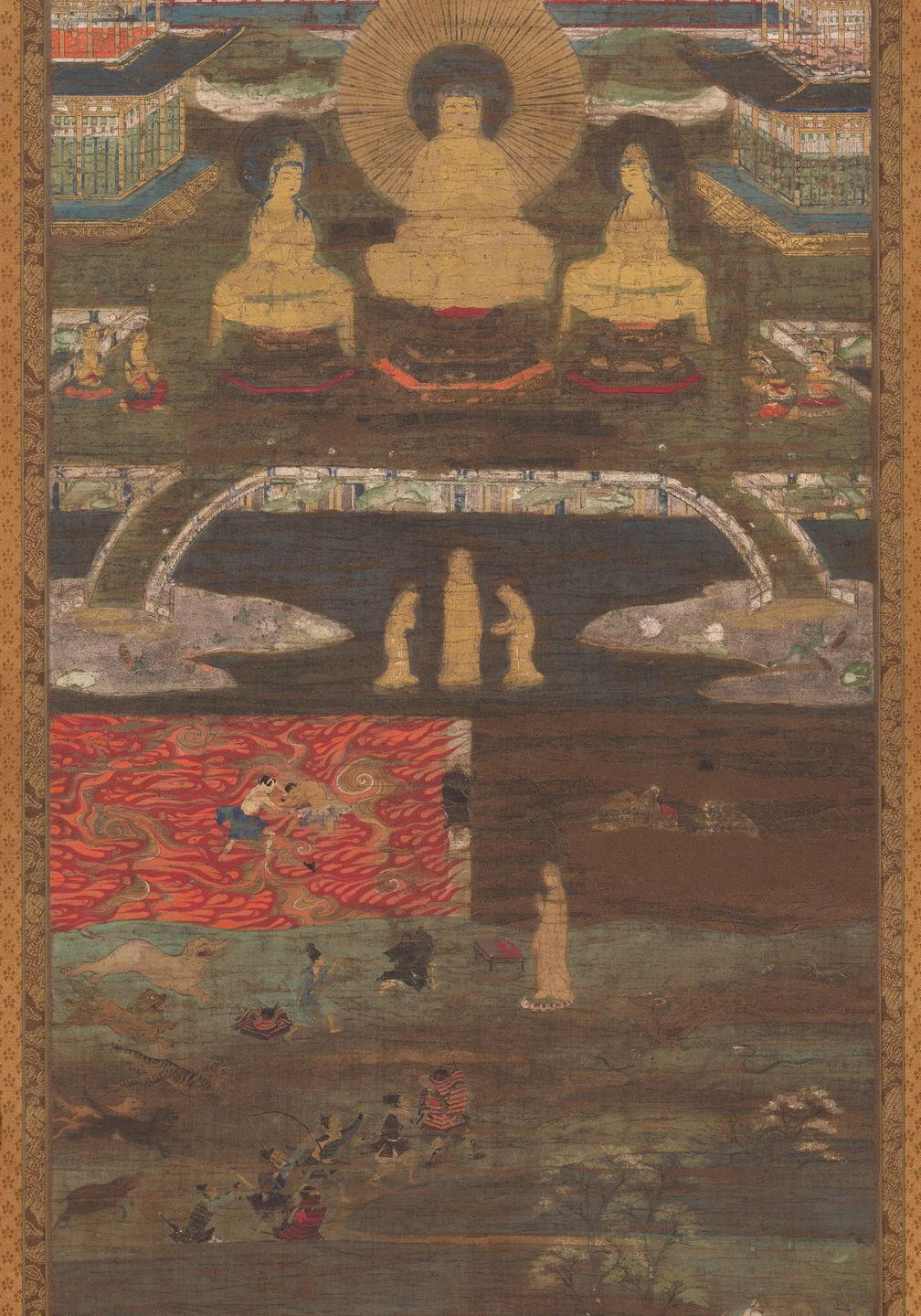 Unidentified Japanese painters
The White Path Between Two Rivers
1200s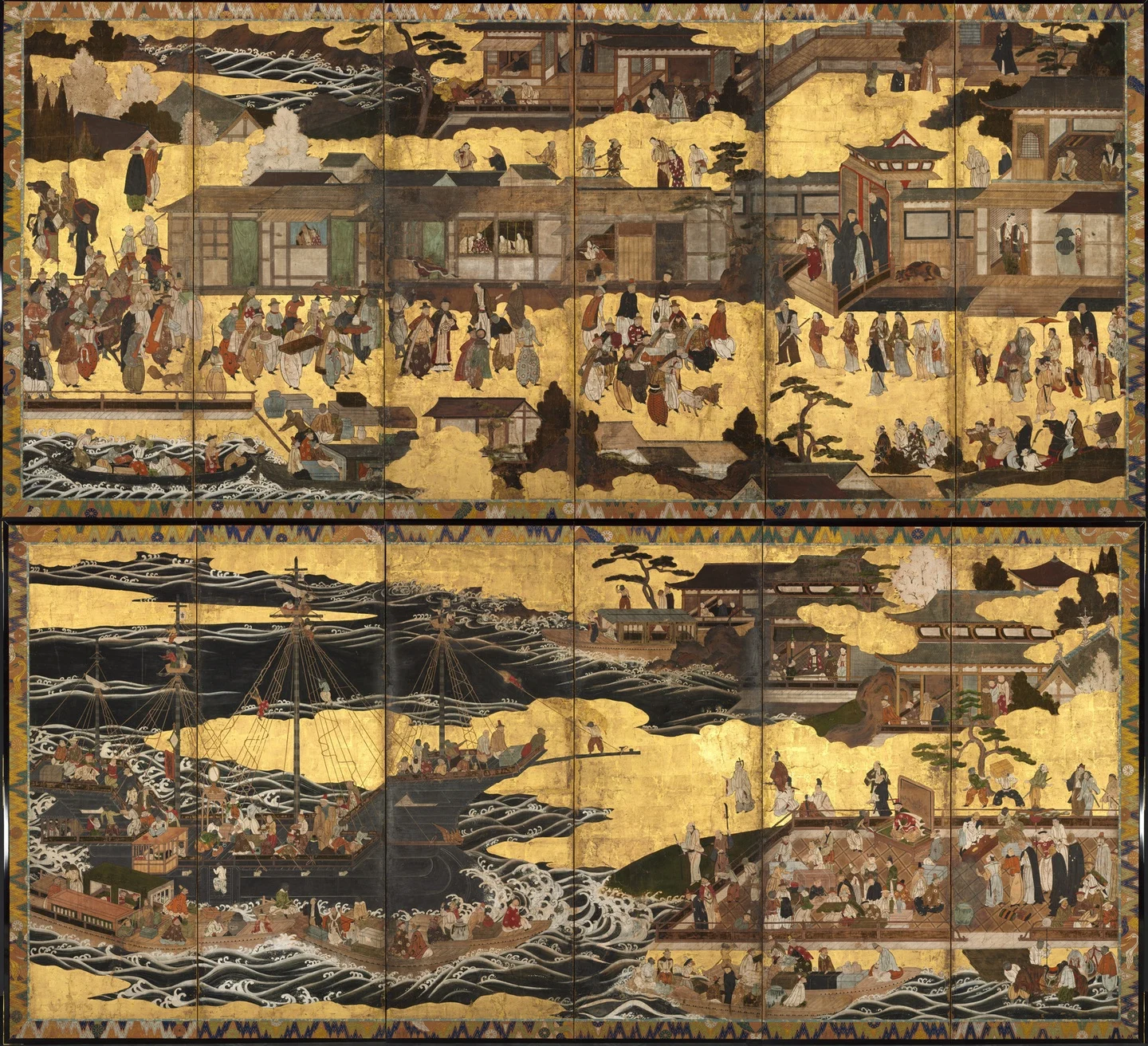 Unidentified Japanese painters
Arrival of the "Southern Barbarians"
c. 1600Period, style and subject
- Movement
- Japanese painting
- Genre
- Religious art
- Medium
- Hanging scroll; ink, color, gold, and cut gold on silk
- Collection
- Cleveland Museum of Art
- Dimensions
- Image, 59 × 33.2 cm
- Accession number
- 1983.75
Sources
Image provided under CC0. Image licence