Portrait of Jean Gros (recto); Coat of Arms of Jean Gros (verso)
Rogier van der Weyden and workshop · 1460–64
Explore the painting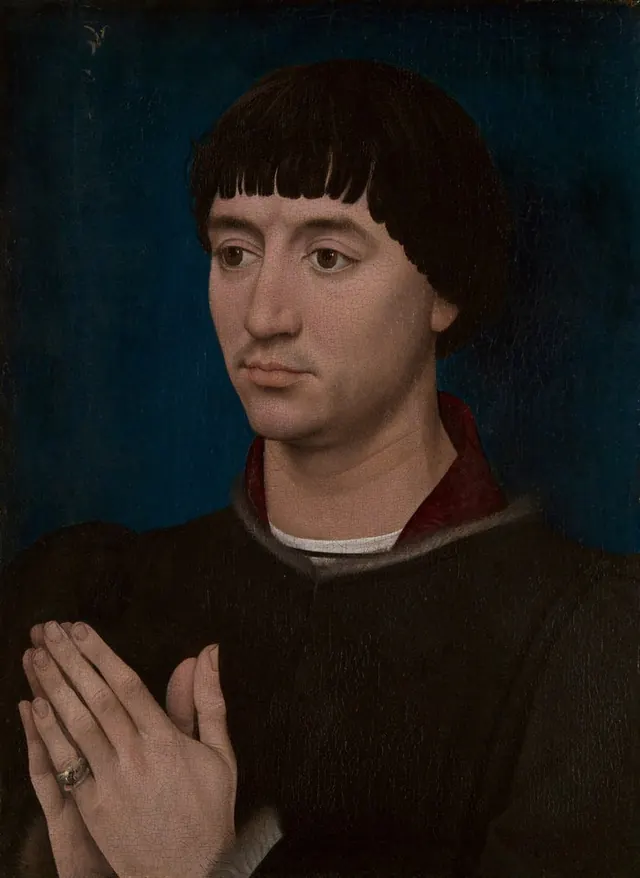
The painting’s story and details
Jean Gros appears near the beginning of a successful court career. He served the future Duke of Burgundy and later accumulated considerable wealth. Around 1460–1464 Rogier van der Weyden and his workshop portrayed the administrator in prayer. Today this is an independent portrait, but it originally formed half of a folding diptych. Mary and the infant Christ occupied the other panel.
The face turns towards the left edge. The gaze now seems to leave the painting, although it originally addressed the sacred image on the adjacent panel. Separation left the gesture without its visible recipient. The portrait’s quiet concentration belongs to a specific act of prayer that the museum arrangement only partly preserves.
Dark hair and a plain background concentrate attention on the face. Soft transitions describe cheeks, eyelids and lips with almost no visible brushwork. Such precision preserved the patron’s recognisable features. His painted presence continued whenever the diptych was opened, even without its owner standing before it.
Joined hands occupy the foreground. In a small portable diptych, they formed the principal connection between portrait and devotional image. Such objects served personal piety while fixing the patron’s features in a lasting image of prayer. Individual appearance and a repeatable gesture worked together.
A gold ring is visible on one finger. The clothing is restrained, but this detail recalls the sitter’s standing. High-ranking members of the Burgundian court commissioned diptychs of this kind. Gros adopted a prestigious form of self-presentation together with its devotional use. The choice of object expresses ambition.
Small illuminated passages at the neck and ear emerge against the dark background. Visual restraint does not imply social anonymity. Arms, a motto and initials on the reverse established Gros’s identity. Even when closed, the diptych communicated ownership through signs of family and name rather than a face.
The panel of Mary and Christ is now in Tournai. Reuniting the two mentally restores the portrait’s original direction and the scale of private prayer. The commission also shows an administrator asserting his place at court through an artistic format associated with its elite. Devotion and social advancement remain compatible readings of the same act.
More paintings to compare
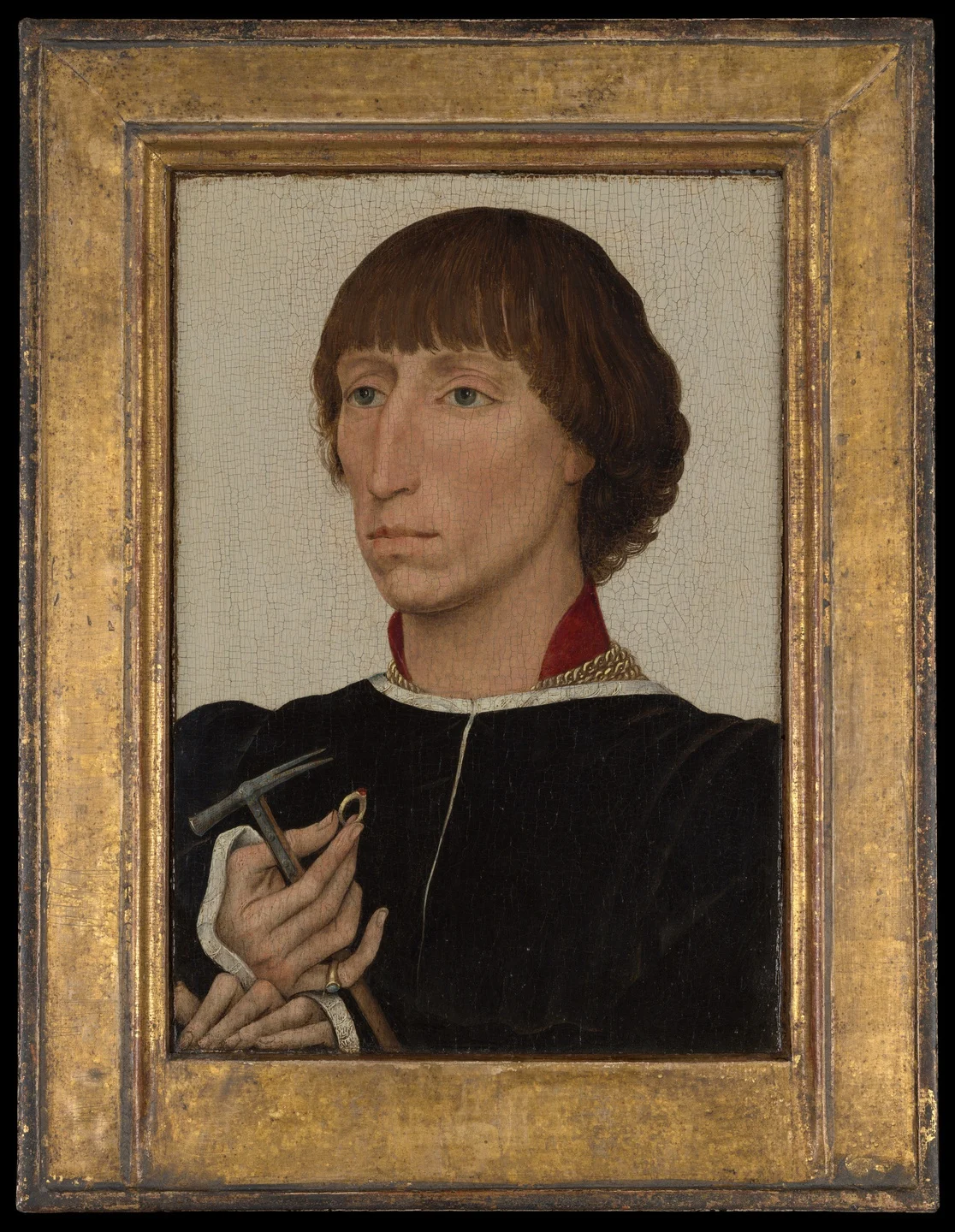 Rogier van der Weyden
Francesco d'Este (born ca. 1429, died after 1486)
ca. 1460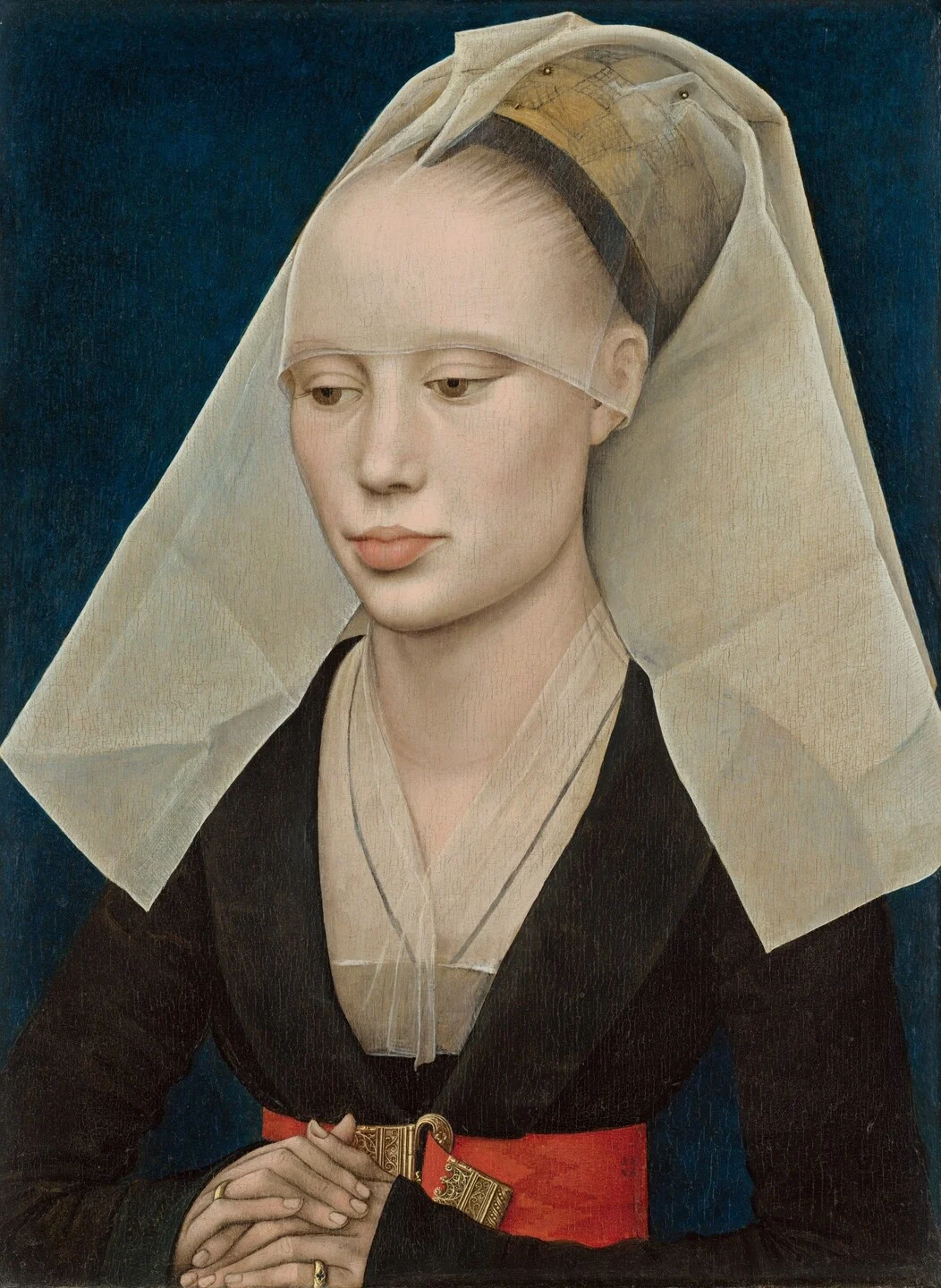 Rogier van der Weyden
Portrait of a Lady
c. 1460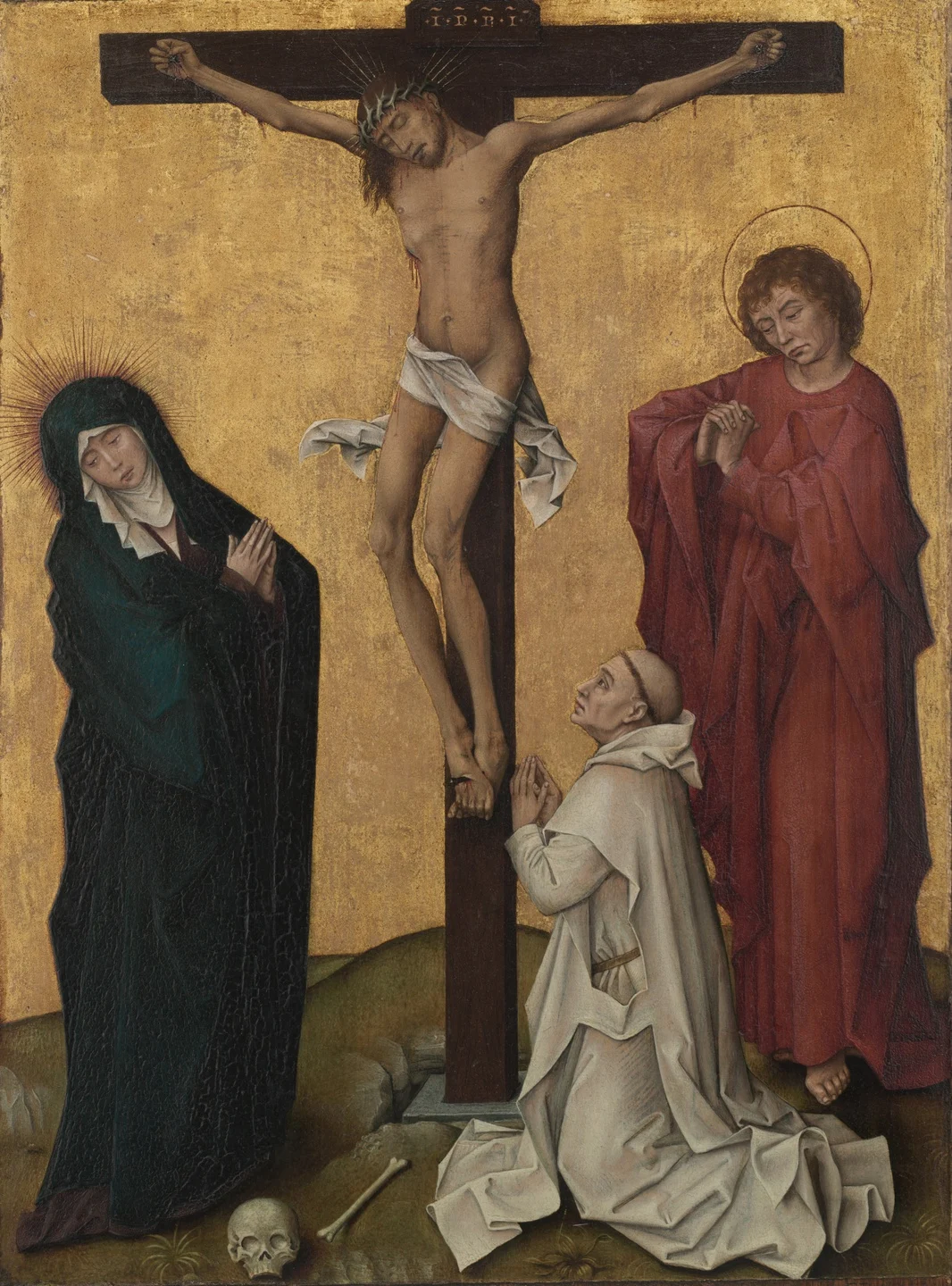 Workshop of Rogier van der Weyden
The Crucifixion with a Carthusian Monk
1460 Hans Holbein the Younger
Edward VI as a Child
probably 1538 Hans Holbein the Younger
The Ambassadors
1533 Petrus Christus
Portrait of a Carthusian
1446Period, style and subject
- Movement
- Northern Renaissance
- Genre
- Portrait
- Medium
- Oil on panel
- Collection
- Art Institute of Chicago
- Dimensions
- 38.5 × 28.8 cm
- Accession number
- 1933.1051
Sources
Image provided under CC0. Image licence
Adapted and translated from Art Institute of Chicago materials. · Text licence