Portrait of a Lady
Rogier van der Weyden · c. 1460
Explore the painting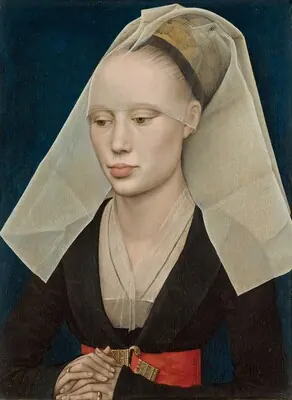
The painting’s story and details
Rogier van der Weyden painted this woman around 1460, near the end of his life. Her name is unknown. Her clothing and bearing have led scholars to suggest that she belonged to the nobility. By then, the artist enjoyed the patronage of influential clients in the Burgundian Netherlands. Their world is recognizable in the expensive materials and controlled pose, although no badge of office or family arms identifies her.
Her eyes are lowered, her lips closed and her forehead very high. This appearance was fashionable among women at the Burgundian court, who plucked their hairlines and eyebrows. What now looks like an unusual individual feature was partly produced by grooming. Rogier combines a recognizable face with accepted ideas of elegance. Likeness and social ideals are consequently difficult to separate.
The thin white veil spreads to either side of her head. The denser headdress shows through it, while light catches its folds. Rogier distinguishes translucent fabric, smooth skin and the dark surface of the dress. At the same time, the veil’s edges form an almost geometric shape. Precision in representing materials contributes to a deliberately ordered image of a person.
The red belt is the portrait’s brightest accent. The gold buckle is painted in much greater detail than the dark fabric around it. It conveys the costume’s value without abundant jewellery. Examination of the surface revealed that the waist was originally even narrower. Rogier changed the silhouette. Even a seemingly natural bodily proportion was therefore a choice within the composition.
Her fingers are folded at the lower edge, as though her hands rested on the frame. The catalogue treats their position as evidence for an independent portrait rather than a devotional wing. A possible companion portrait of her husband remains hypothetical. The joined hands may suggest modesty or concentration, but they provide no secure account of this particular woman’s character.
The headdress widens the upper part of the portrait, while the dress converges towards the belt. Face and hands sit within this clearly organized space. Such an approach characterizes Rogier’s later work. He strengthens selected contours and smooths incidental details. The close viewpoint brings her face near us. Yet the flowing contours of veil, shoulders and hands reveal how carefully Rogier arranged this encounter with the viewer.
No coat of arms appears on the reverse, and comparison with other portraits has not established the sitter’s name. What survives is evidence of how a woman of standing could be presented. Expensive dress accompanies restrained gesture, fashionable appearance an almost motionless pose. We can consider the demands of that restraint without attributing submission or private resistance to the sitter. The portrait shows a social form of behaviour more clearly than her personal response to it.
More paintings to compare
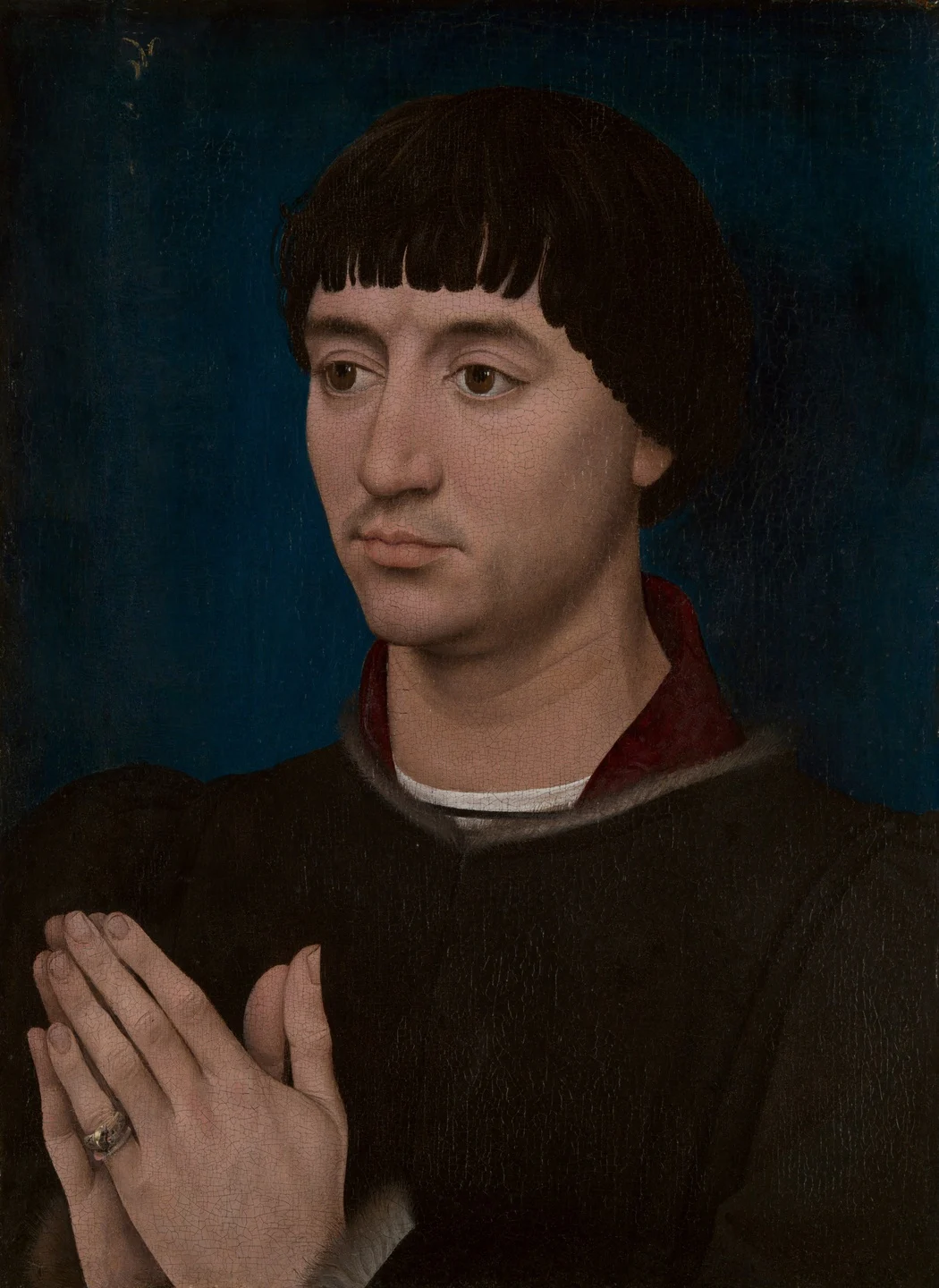 Rogier van der Weyden and workshop
Portrait of Jean Gros (recto); Coat of Arms of Jean Gros (verso)
1460–64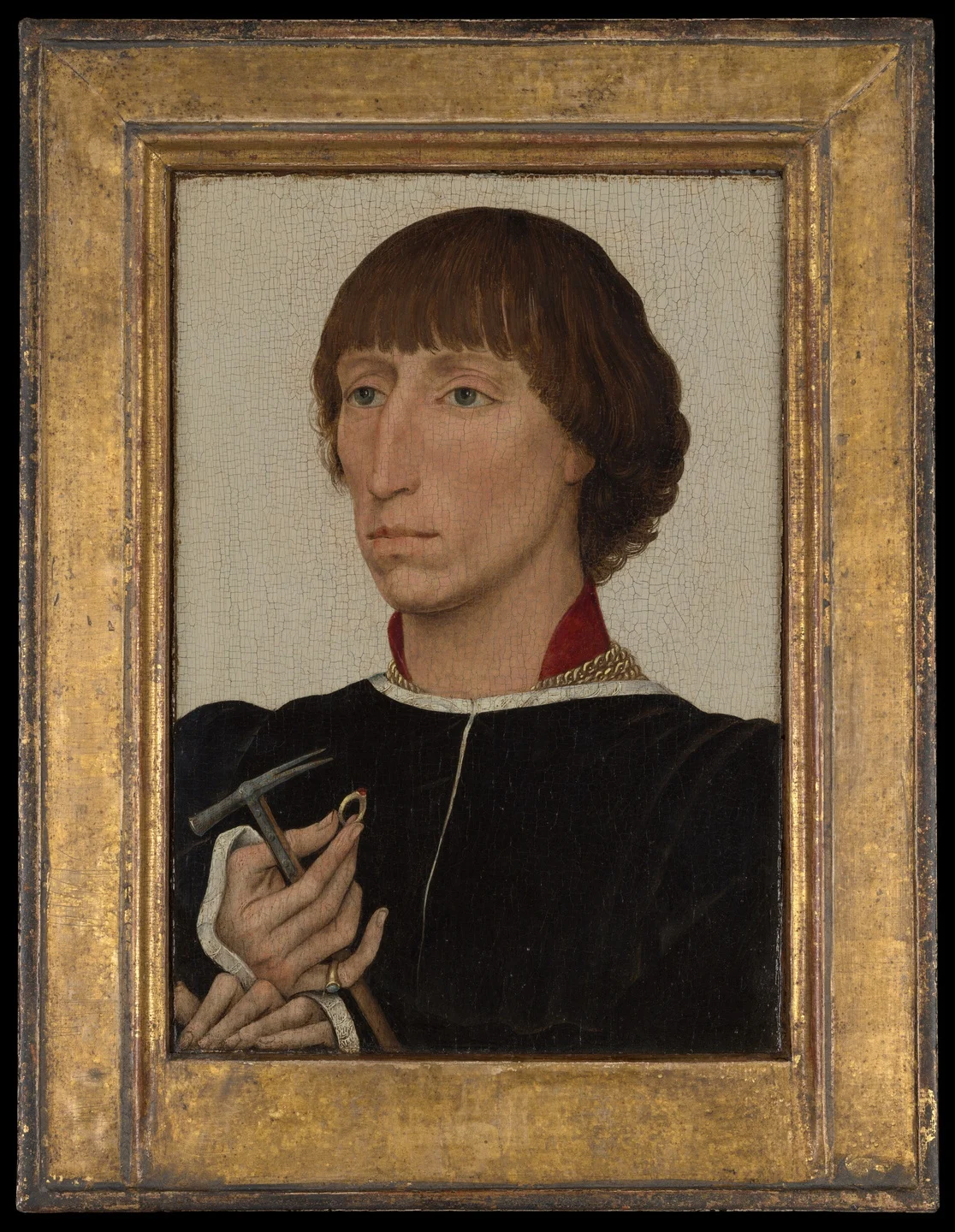 Rogier van der Weyden
Francesco d'Este (born ca. 1429, died after 1486)
ca. 1460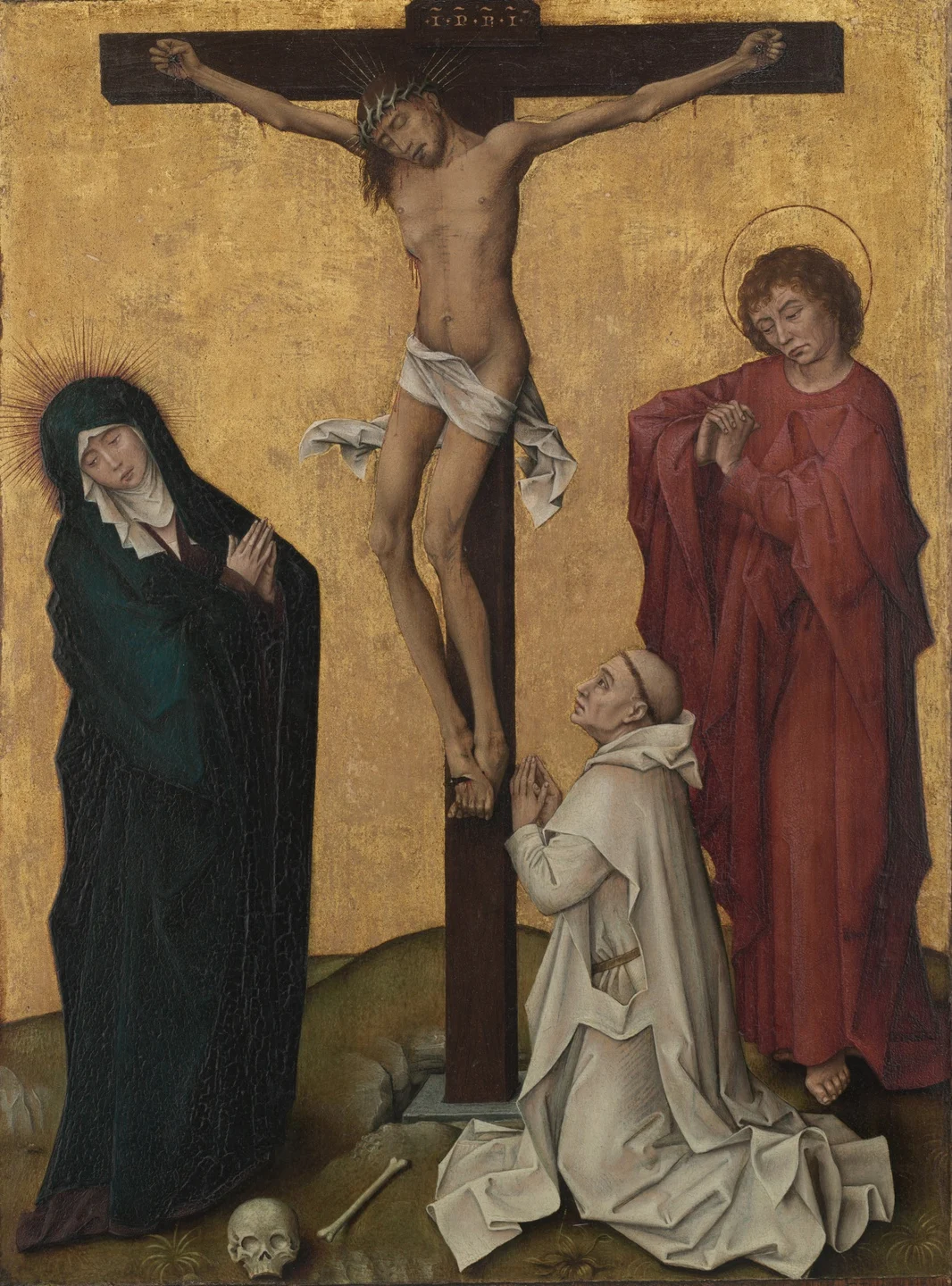 Workshop of Rogier van der Weyden
The Crucifixion with a Carthusian Monk
1460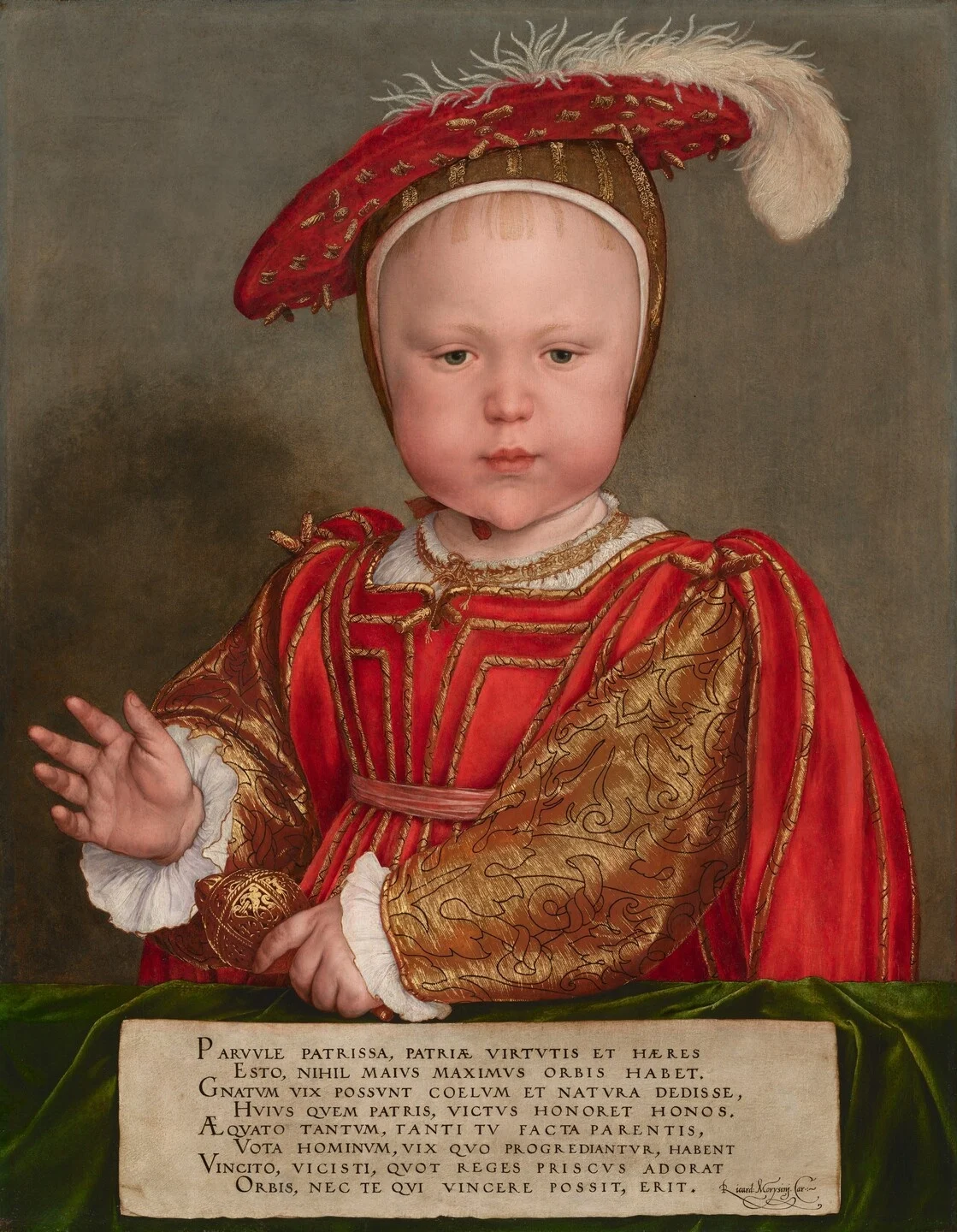 Hans Holbein the Younger
Edward VI as a Child
probably 1538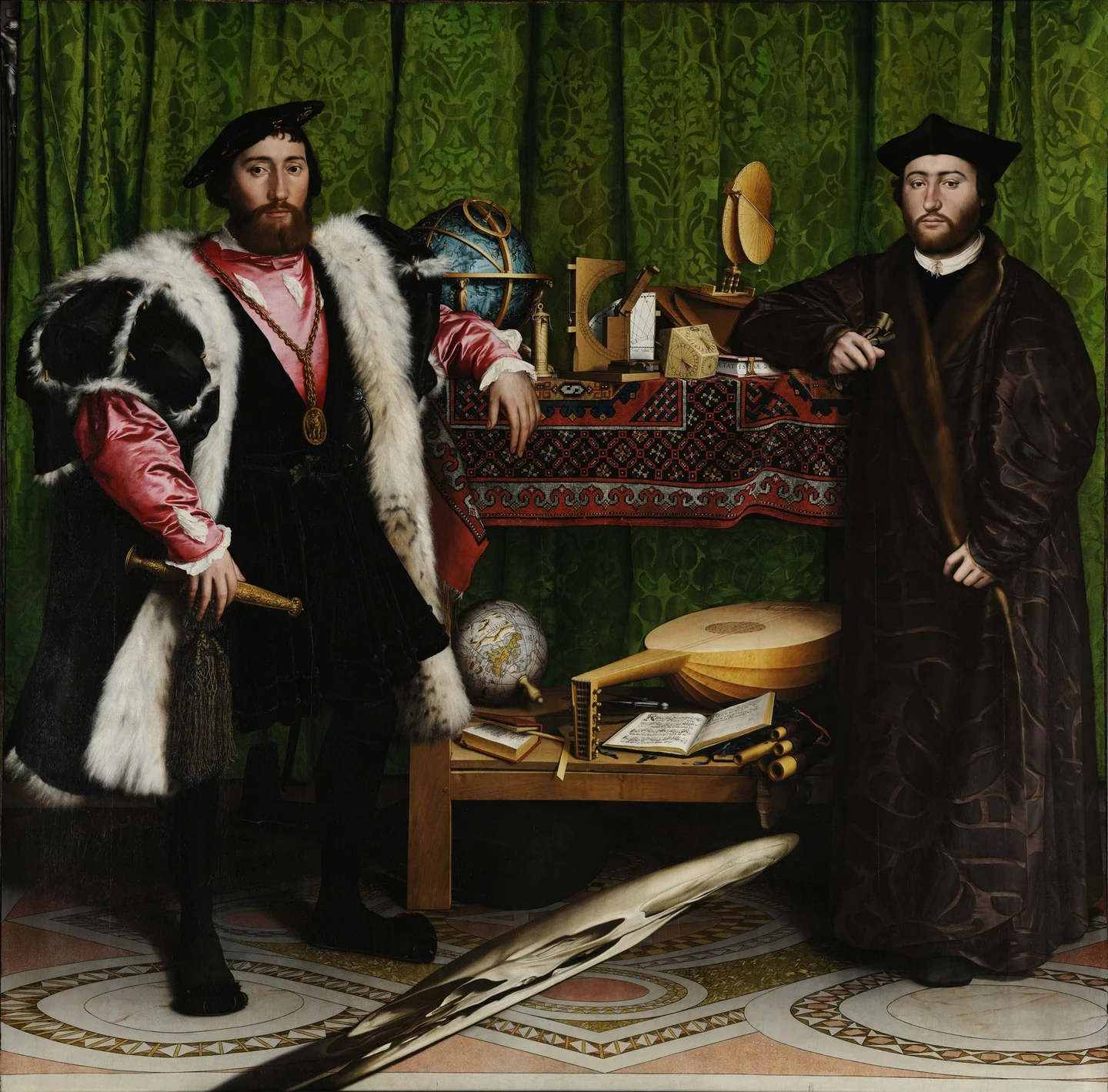 Hans Holbein the Younger
The Ambassadors
1533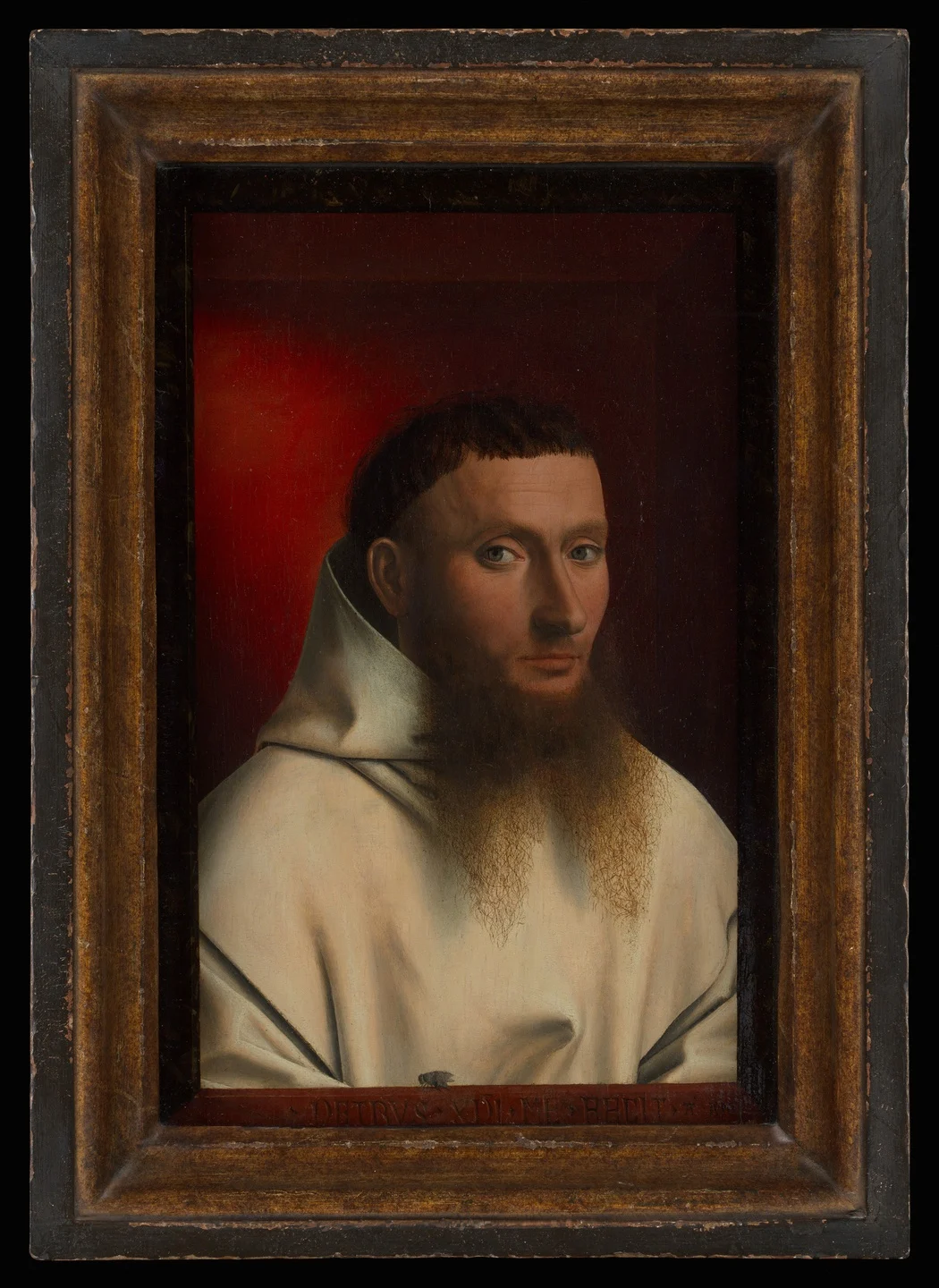 Petrus Christus
Portrait of a Carthusian
1446Period, style and subject
- Movement
- Northern Renaissance
- Genre
- Portrait
- Medium
- oil on panel
- Collection
- National Gallery of Art, Washington
- Dimensions
- Painted surface, 34 × 25.5 cm
- Accession number
- 1937.1.44
Sources
Reproduction of a public-domain artwork. Image licence