Edward VI as a Child
Hans Holbein the Younger · probably 1538
Explore the painting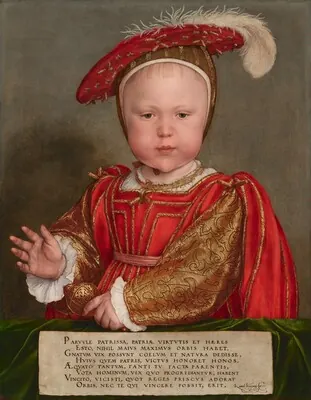
The painting’s story and details
Edward was about a year old when Hans Holbein the Younger painted him dressed as a future ruler. Born in October 1537 to Henry VIII and Jane Seymour, he was the king’s long-awaited legitimate son and heir. This is probably the portrait Holbein presented to Henry for New Year 1539. The courtly gift can suggest a father’s delight, while its clothing, gestures and Latin verses also proclaim the continuation of the Tudor dynasty.
Rounded cheeks and a short fair fringe preserve the recognizable appearance of a small child. Yet Holbein gives his body a stable, almost frontal position. Broad sleeves enlarge the shoulders, and the parapet anchors the figure. This arrangement was familiar from portraits of rulers. The child is already presented as someone adults will obey, although his own life has scarcely begun.
Gold ornaments and a white feather decorate the red cap. The sleeve patterns are so precisely rendered that the clothes invite the close attention we might give a piece of jewellery. Holbein also designed jewellery, metalwork and festival decorations for the court. He knew how to turn its wealth into a persuasive image. The portrait belongs to his English career, which began in 1526 with work for Thomas More’s circle.
An open palm rises before his chest. The National Gallery compares it to a blessing and associates the frontal pose behind a parapet with images of rulers and sacred figures. The infant receives a gesture that adult audiences could read as exceptional status. A religious formula helps represent the legitimacy of future power.
Edward grips a golden object with a round finial in his left hand. The National Gallery identifies it as a sceptre. Small enough for a child’s hand, it carries the adult meaning of authority. Beside it, we can see how the heir’s image is assembled from objects and gestures chosen by adults. The picture asks us to recognize future power before the boy has made decisions or taken actions of his own.
Richard Morison composed the Latin verses below. They address the boy, urging him to inherit his father’s virtues and surpass earlier kings. Henry VIII, however, was another intended audience for this praise. The son provides an occasion to honour the father, and the child’s expected future confirms the present king’s merits. The inscription reveals how closely family feeling, literary flattery and politics could converge at court.
The portrait lets us examine hereditary monarchy at the beginning of a succession. Birth already determines the child’s public place, and painting makes that place visible. Holbein preserves Edward’s individuality in his face while clothing and pose establish what is expected of him. His right to inherit the throne is already presented as certain, although no one can yet know what sort of ruler he will become.
Featured in tours
Portraits. How people presented themselves
Rulers, merchants, artists and private patrons before a viewer.
More paintings to compare
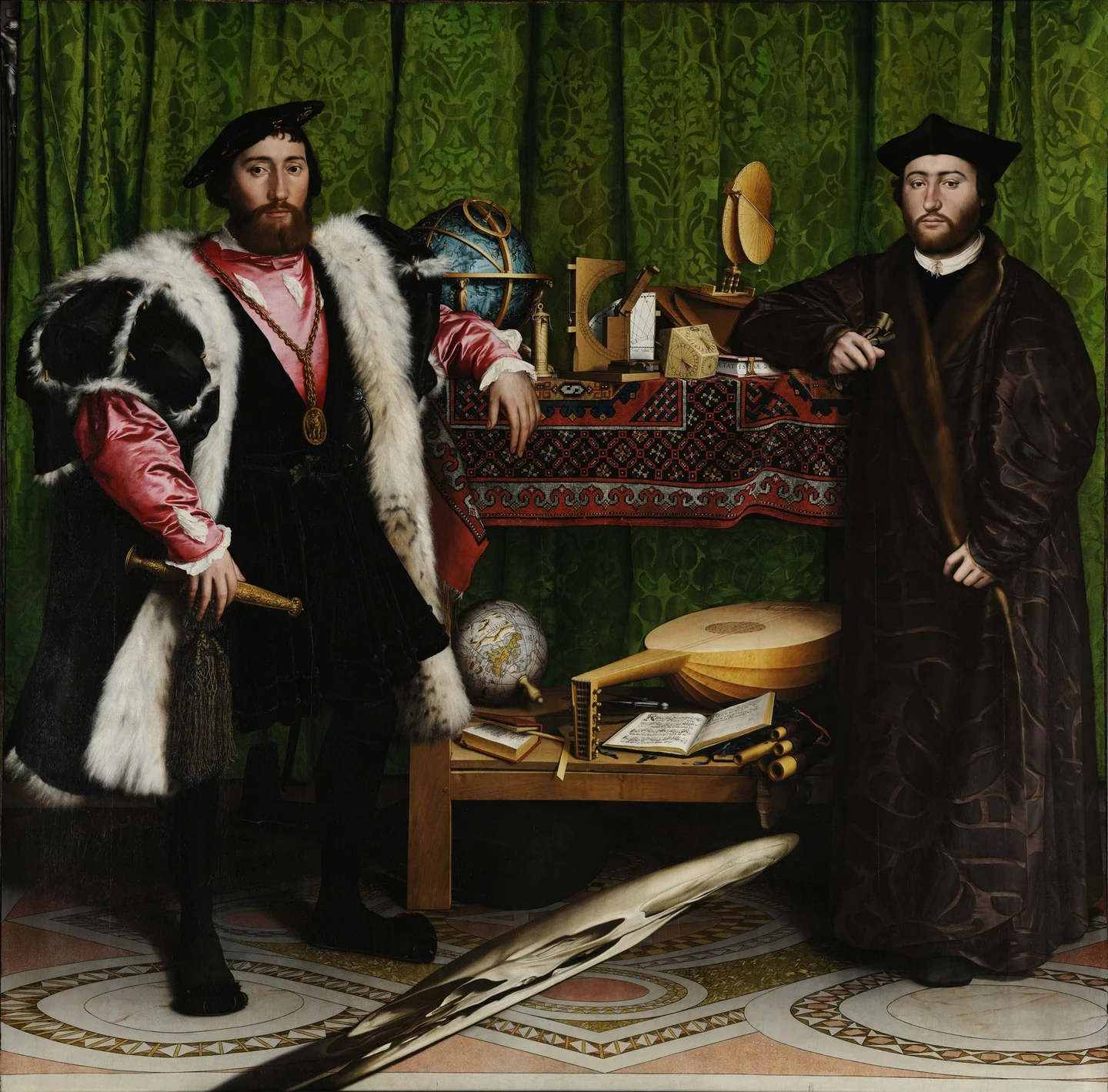 Hans Holbein the Younger
The Ambassadors
1533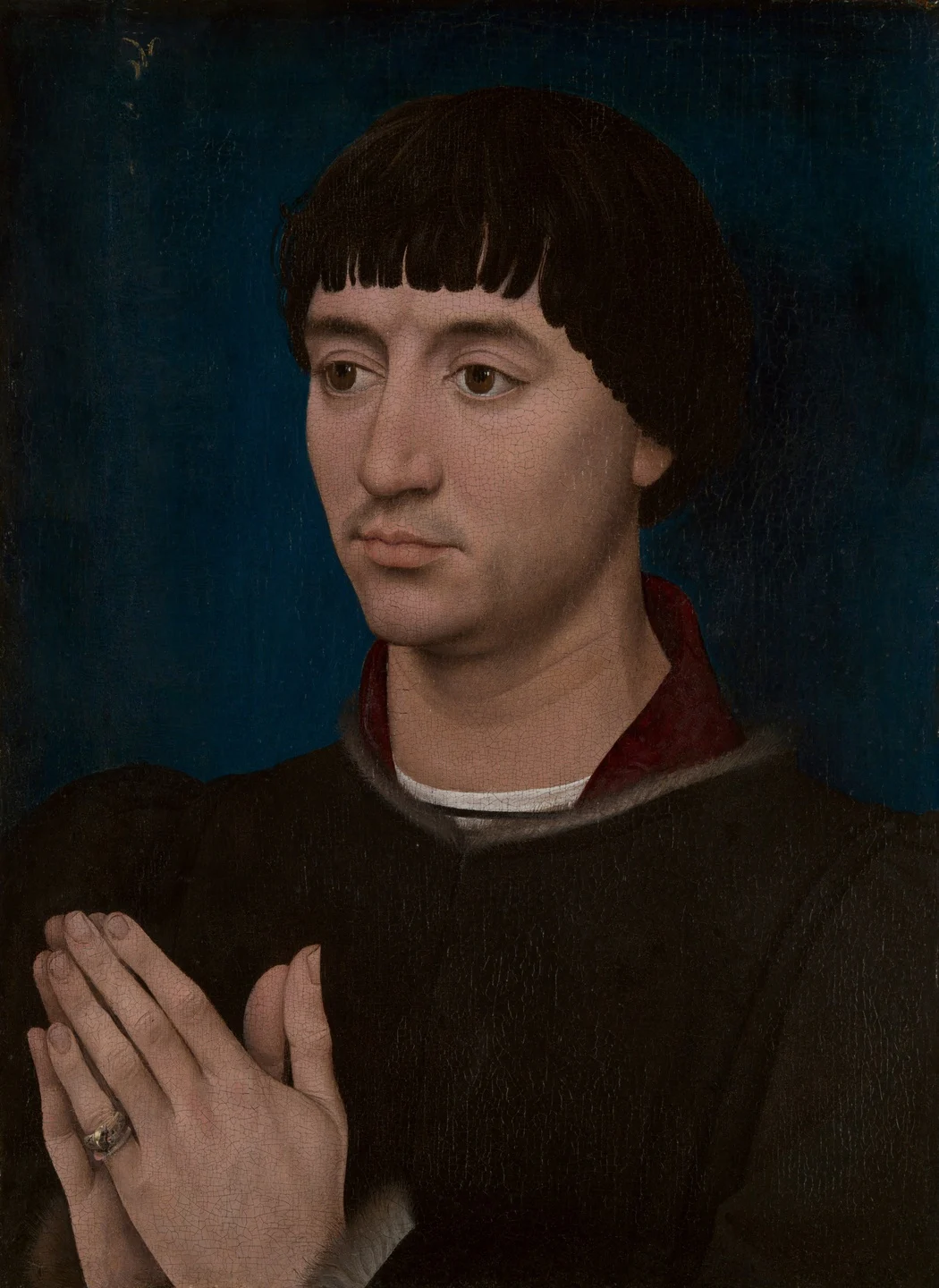 Rogier van der Weyden and workshop
Portrait of Jean Gros (recto); Coat of Arms of Jean Gros (verso)
1460–64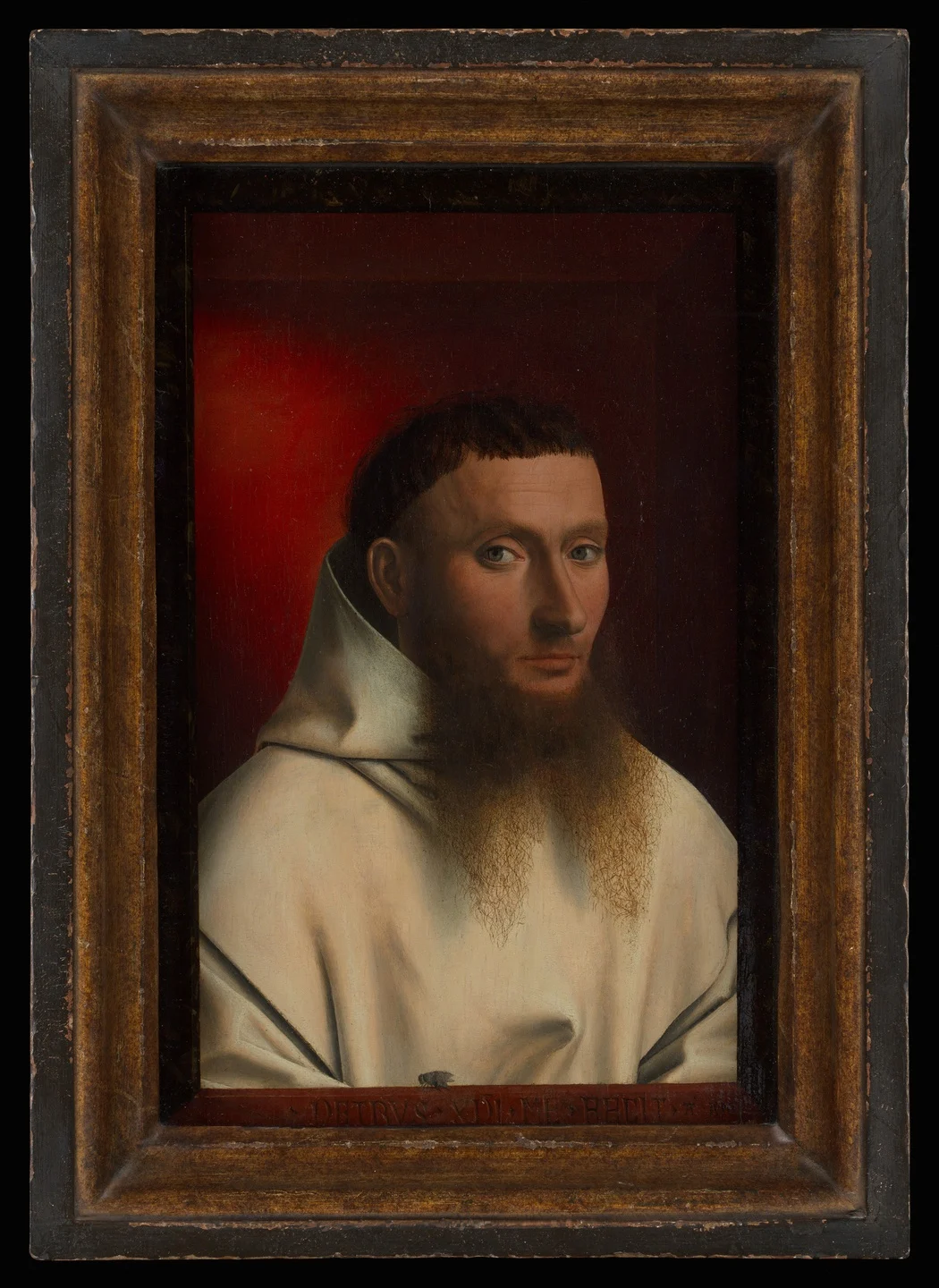 Petrus Christus
Portrait of a Carthusian
1446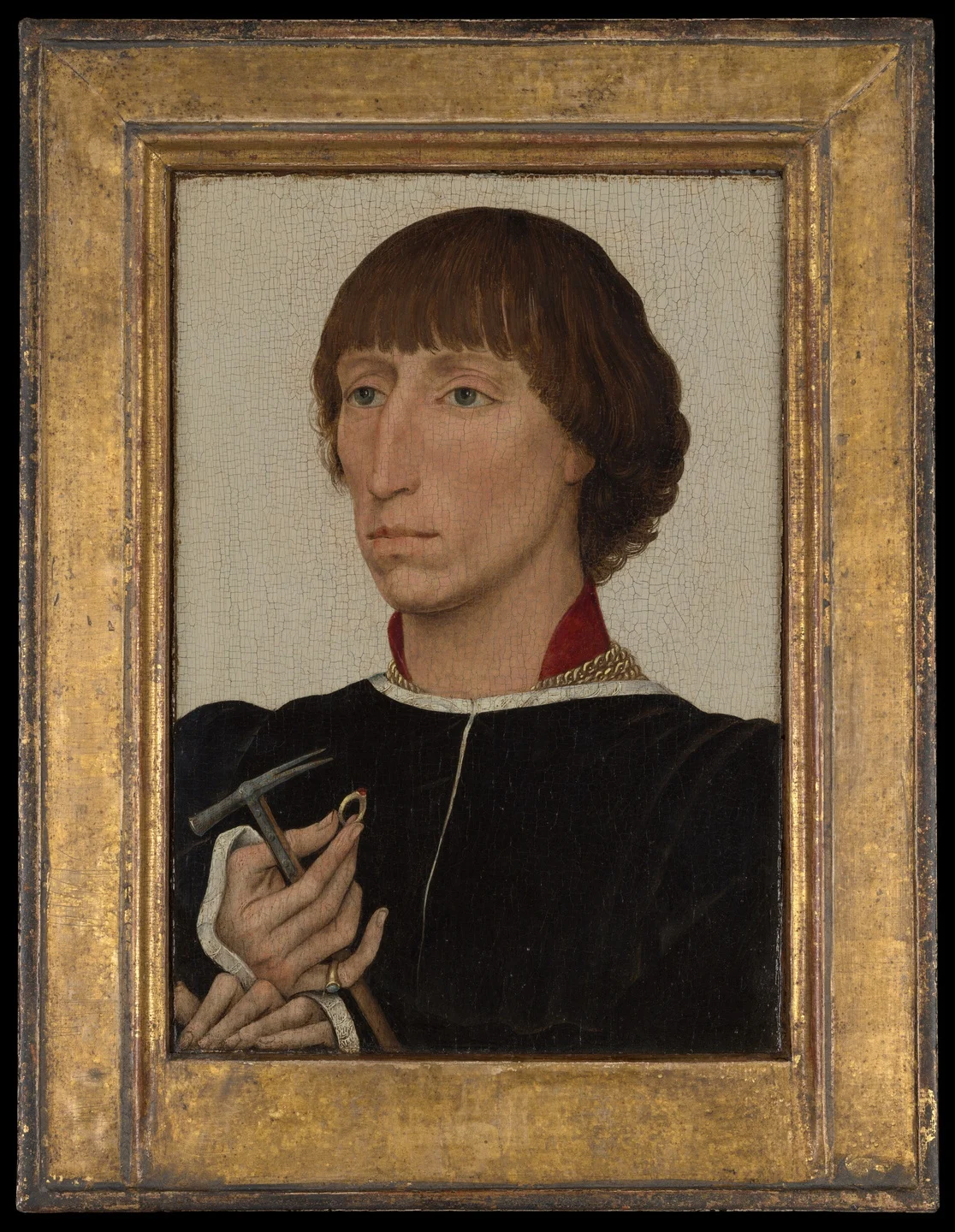 Rogier van der Weyden
Francesco d'Este (born ca. 1429, died after 1486)
ca. 1460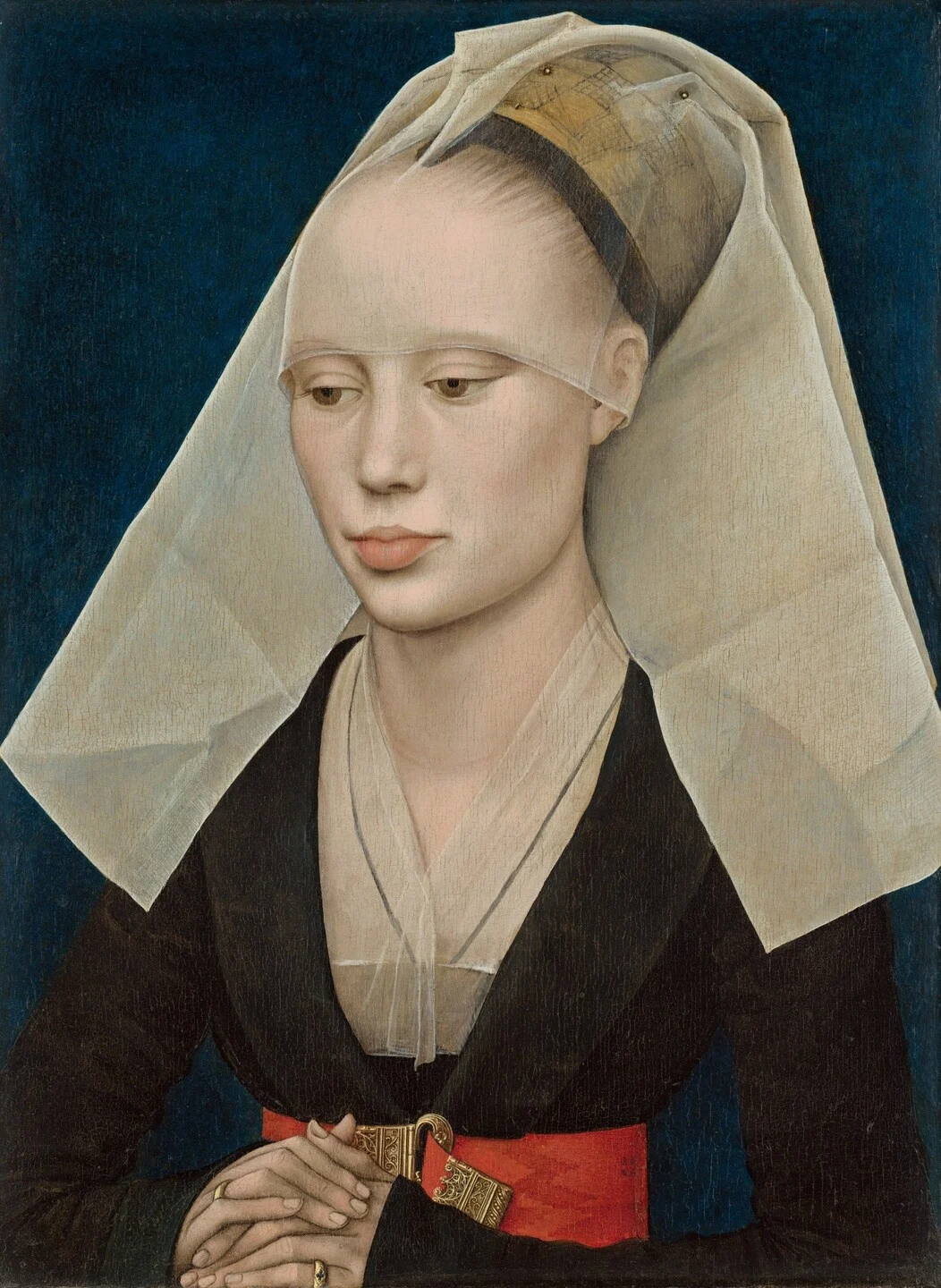 Rogier van der Weyden
Portrait of a Lady
c. 1460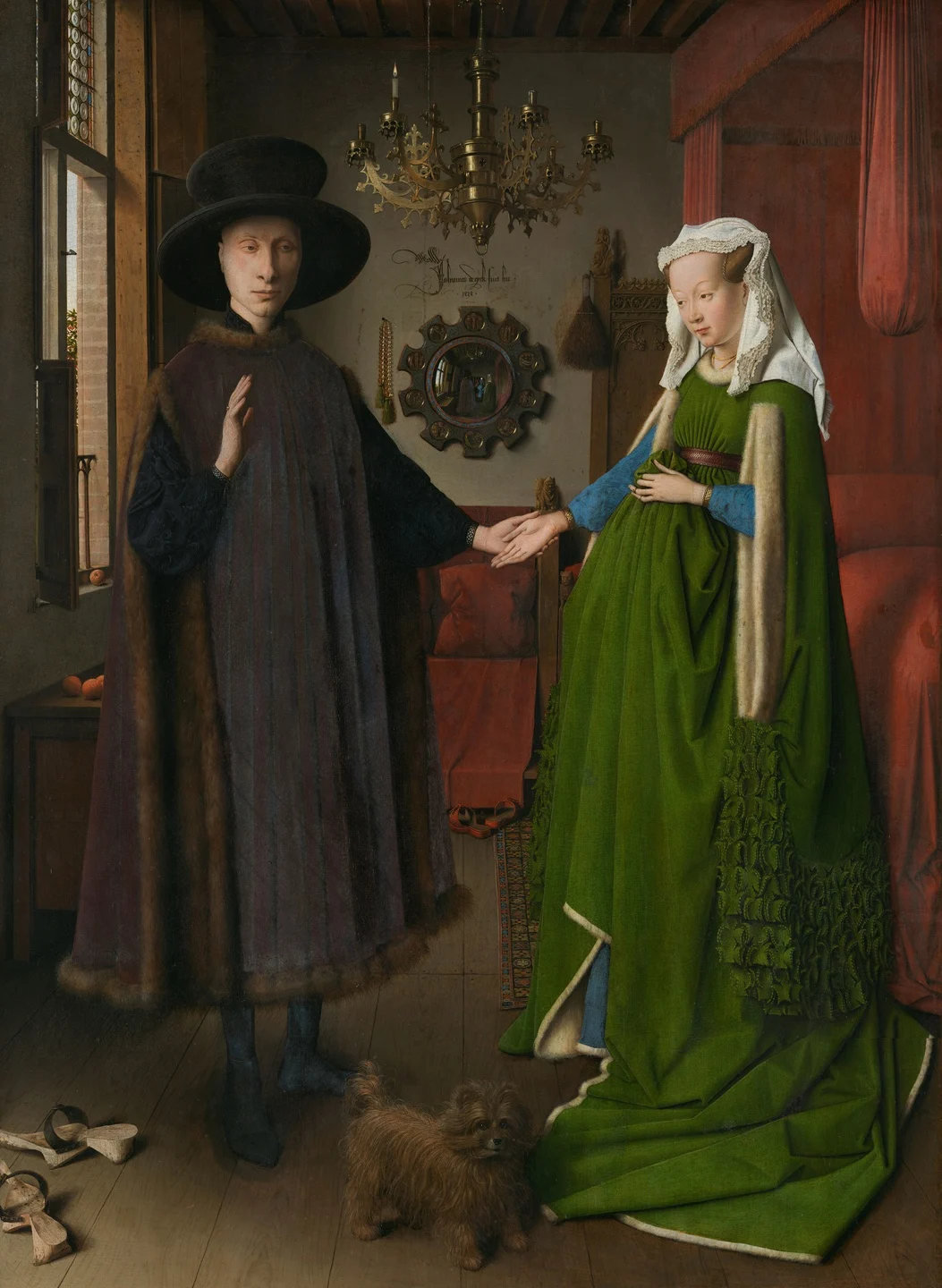 Jan van Eyck
The Arnolfini Portrait
1434Period, style and subject
- Movement
- Northern Renaissance
- Genre
- Portrait
- Medium
- oil on panel
- Collection
- National Gallery of Art, Washington
- Dimensions
- Overall, 56.8 × 44 cm
- Accession number
- 1937.1.64
Sources
Reproduction of a public-domain artwork. Image licence