Francesco d'Este (born ca. 1429, died after 1486)
Rogier van der Weyden · ca. 1460
Explore the painting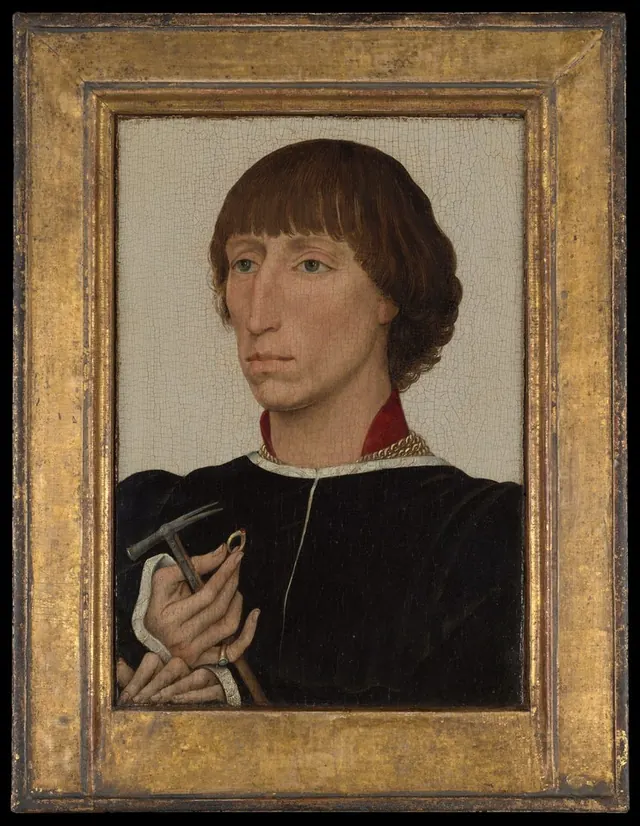
The painting’s story and details
Francesco d’Este holds a small hammer and a ring. Rogier van der Weyden painted him around 1460. The son of Ferrara’s ruler had been educated at the court of Philip the Good, duke of Burgundy. This small portrait therefore connects an Italian dynasty with a northern European court. The sitter’s origins and connections mattered alongside his likeness.
Against the nearly white background, a long nose, narrow lips and rounded mass of hair stand out clearly. Francesco looks aside, without meeting our eyes. The three-quarter turn reveals both eyes and the volume of his cheek. The smooth outer contour nonetheless retains a formality reminiscent of profile images on coins and medals.
The white background is unusual for a portrait of this kind. The museum suggests a connection with the Este family’s colours. A red collar and gold chain appear above black clothing, while narrow pale edging repeats at neck and wrists. A few costly details establish status without the need for a sumptuous setting.
The hammer’s metal head rests above the raised hand, its wooden handle descending below. It is often connected with tournament prizes, although its meaning remains uncertain. It would be misleading to treat it as evidence of Francesco’s craft or occupation. A small object could refer to an event understood by the portrait’s recipient but unavailable to us without further information.
A red-stoned ring is held between the fingers beside the hammer. Another ornament is worn on a finger below. Their positions differ: one is worn, the other presented. The raised ring consequently acquires particular significance. It too has been tentatively associated with a tournament, but the image alone establishes neither a betrothal nor victory in a particular contest.
The long fingers lie almost parallel, with wrists emerging from pale cuffs. The objects are held without visible strain. Rogier combined individual likeness with this courtly elegance. He worked for Philip the Good and foreign rulers, as well as serving as Brussels’s city painter. His portrait types were repeated far beyond the Netherlands, including in Italy.
The portrait has a reverse, not shown here. It bears the Este arms and a dedication meaning “entirely yours, Francesco.” The recipient remains unknown, perhaps an acquaintance at the Burgundian court. The image acted as a token of a relationship. Its front offered Francesco’s presence; its back named his lineage and addressed that image to someone in particular.
More paintings to compare
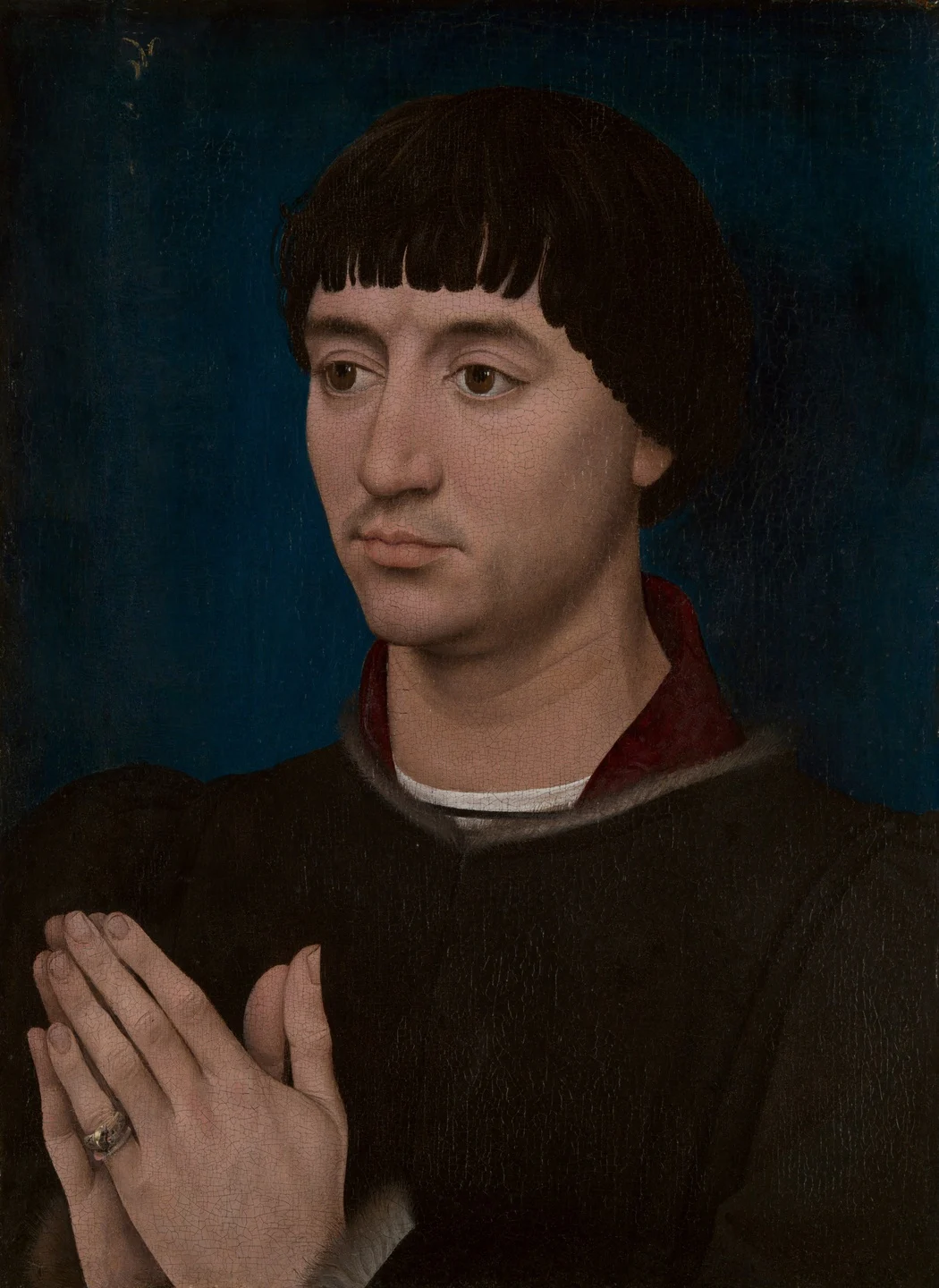 Rogier van der Weyden and workshop
Portrait of Jean Gros (recto); Coat of Arms of Jean Gros (verso)
1460–64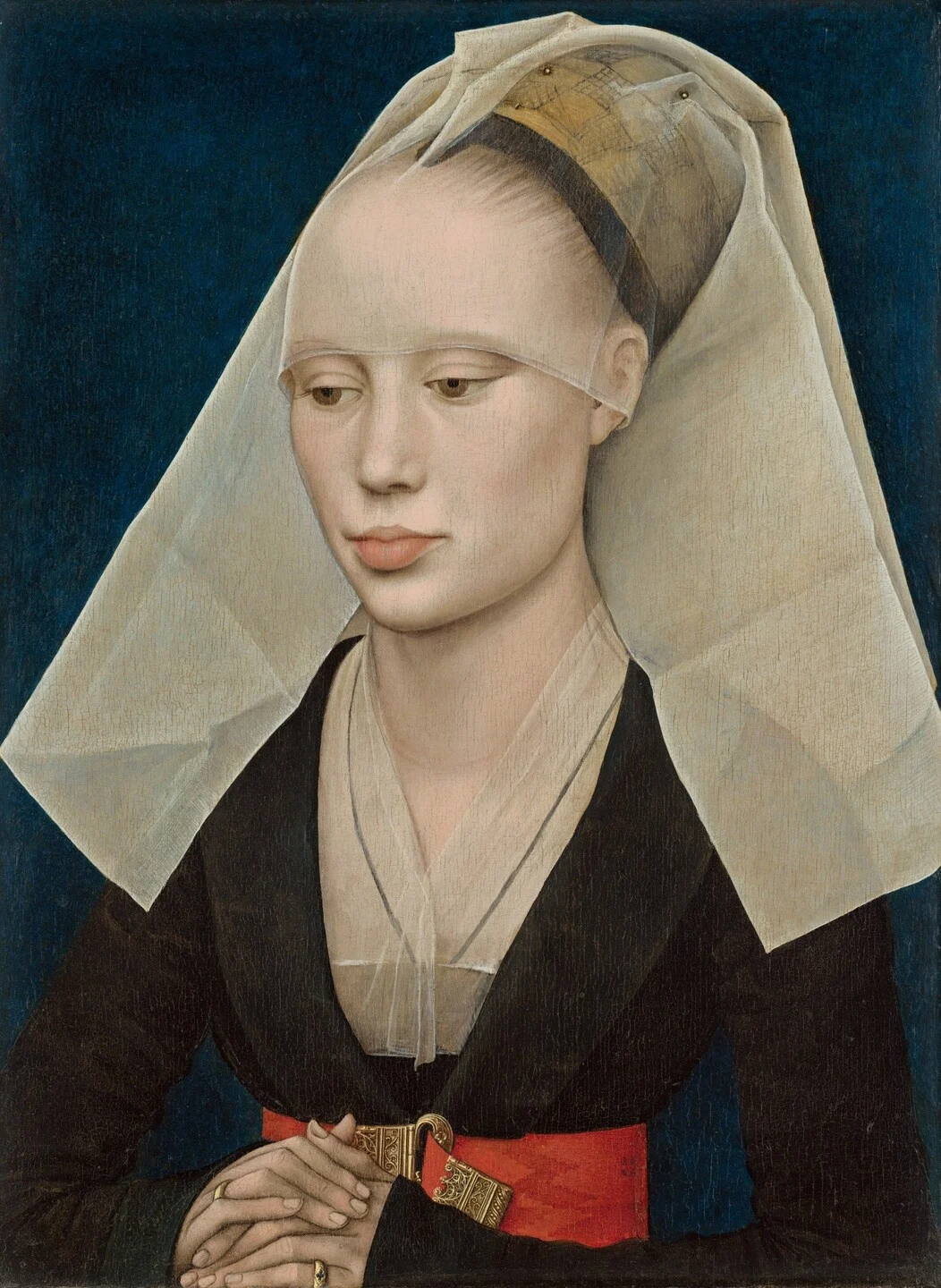 Rogier van der Weyden
Portrait of a Lady
c. 1460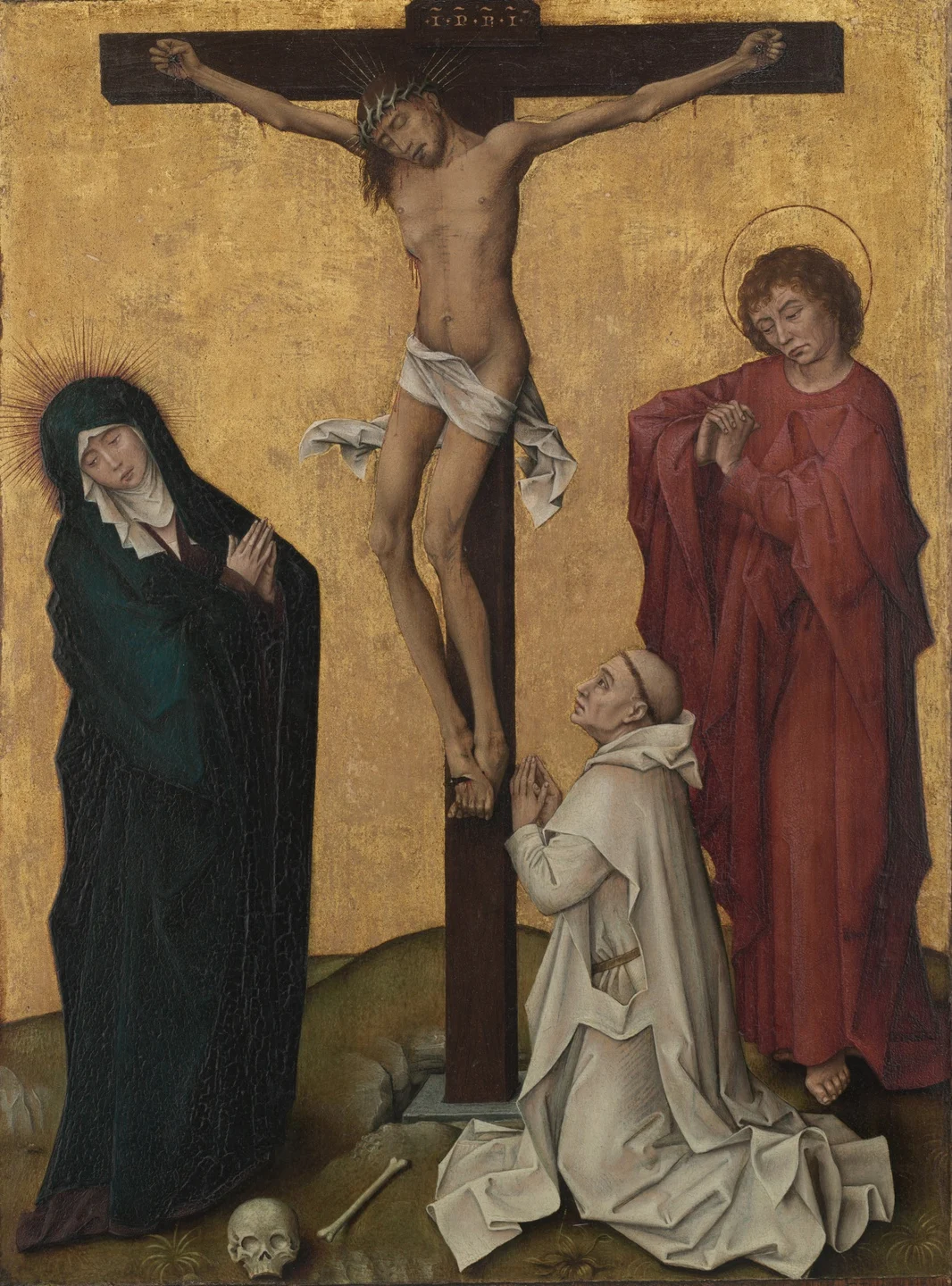 Workshop of Rogier van der Weyden
The Crucifixion with a Carthusian Monk
1460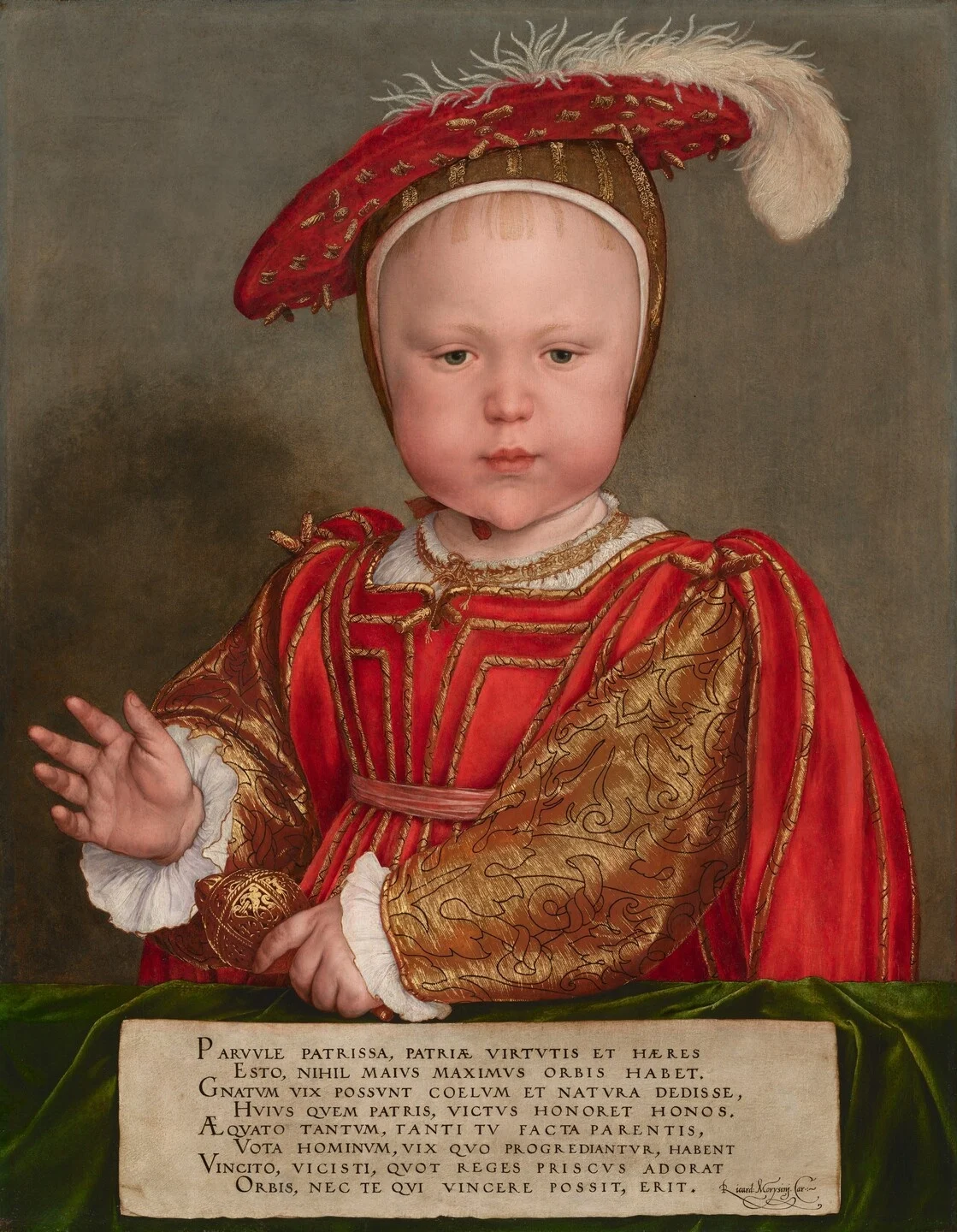 Hans Holbein the Younger
Edward VI as a Child
probably 1538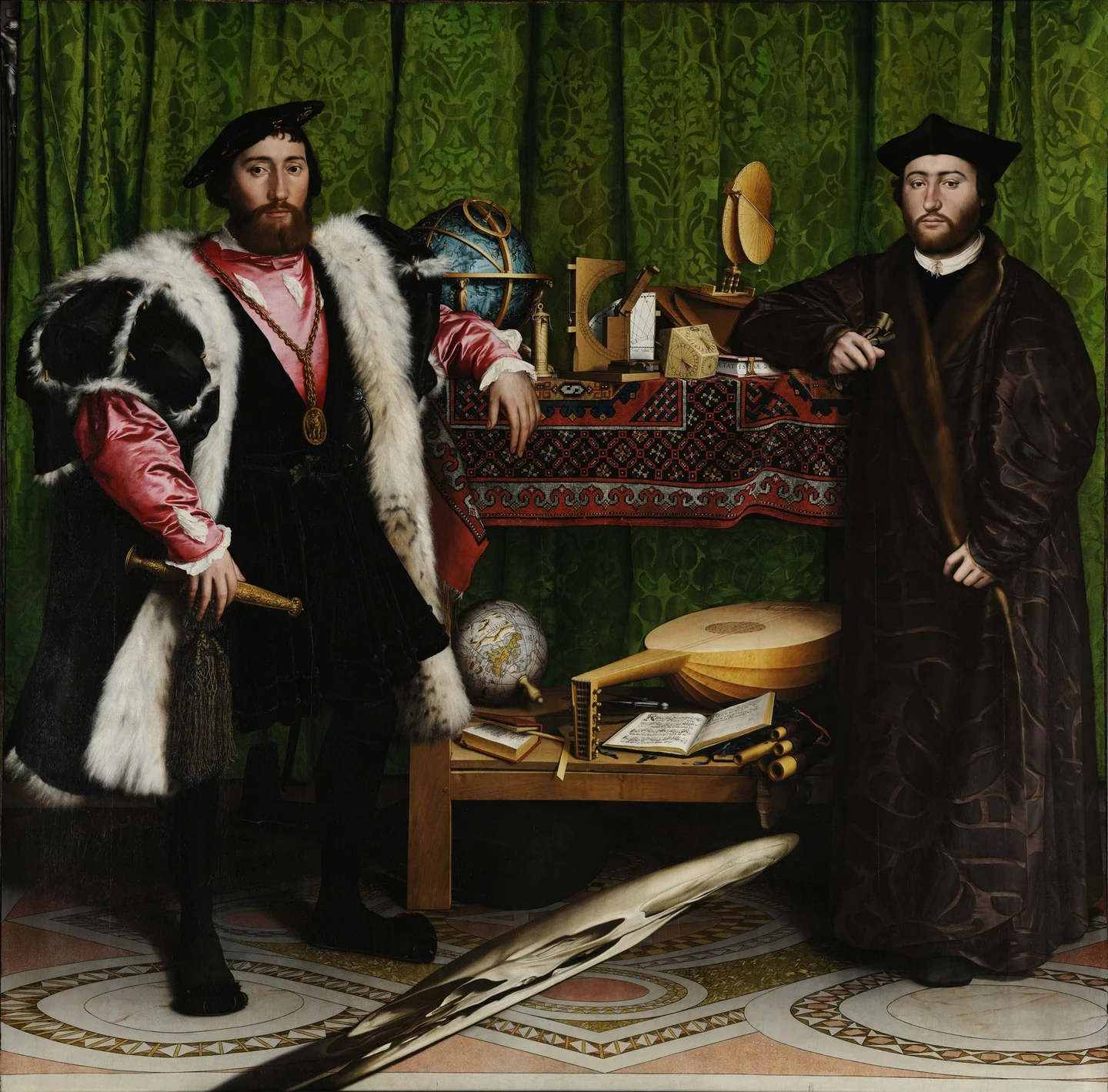 Hans Holbein the Younger
The Ambassadors
1533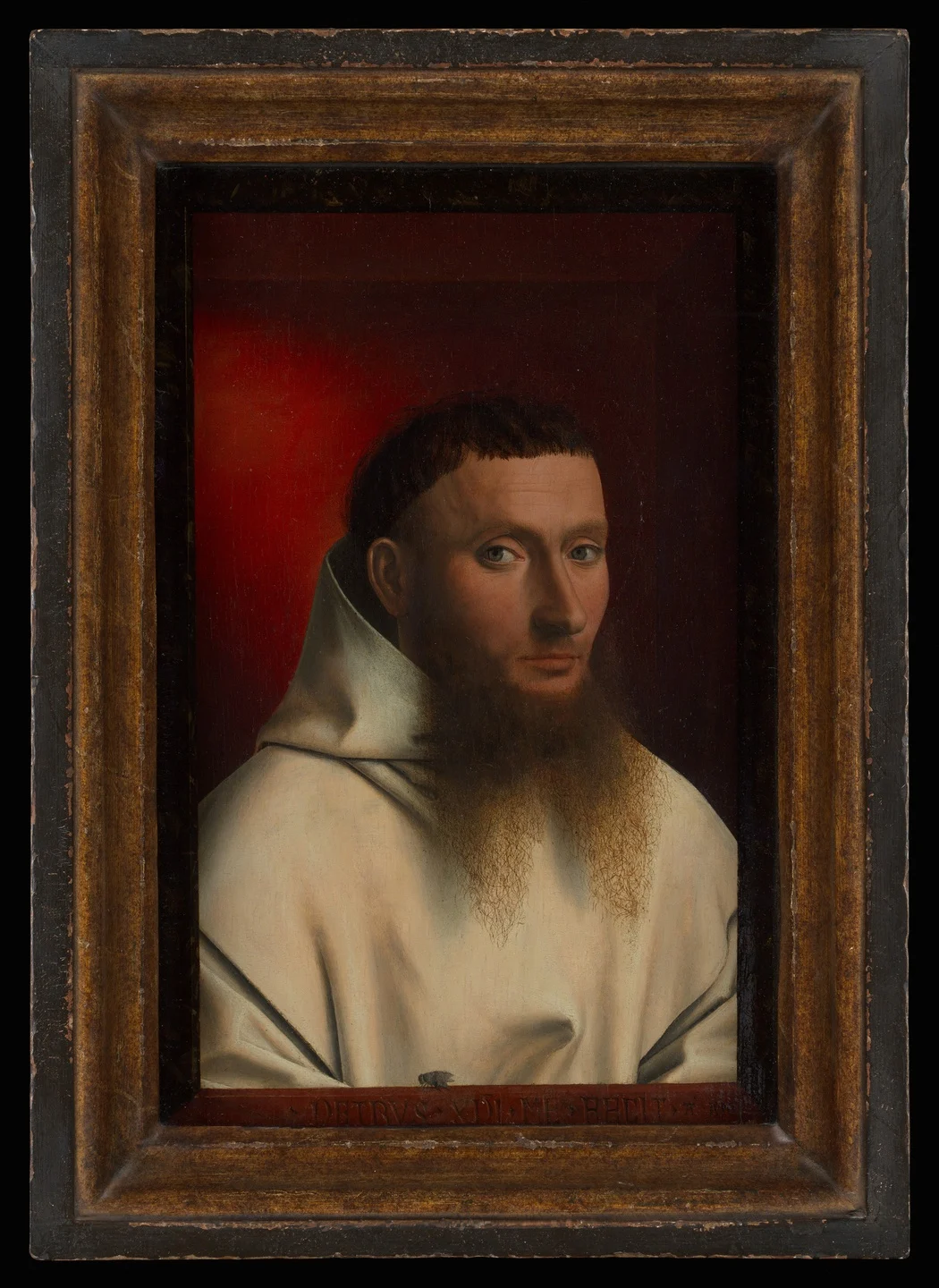 Petrus Christus
Portrait of a Carthusian
1446Period, style and subject
- Movement
- Northern Renaissance
- Genre
- Portrait
- Medium
- Oil on wood
- Collection
- The Metropolitan Museum of Art
- Dimensions
- Overall, 31.8 × 22.2 cm
- Accession number
- 32.100.43
Sources
Image provided under CC0. One side of the work is shown. The reverse is not included. Image licence