Pillars of the Country
Yao Shou · Ming dynasty (1368–1644), 1494
Explore the painting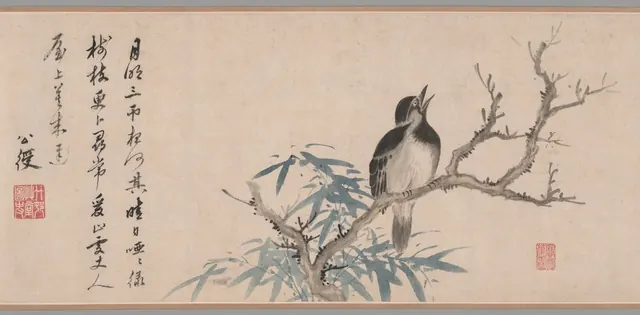
The painting’s story and details
A magpie, branch, bamboo and poem fill this small section. The title of the complete scroll, Pillars of the Country, initially seems distant from the subject. The connection emerges through its maker's life. Almost thirty years earlier Yao Shou had left government service for painting, calligraphy and scholarship. In 1494 he considered the educated person's role from the position of an elderly retiree.
The magpie opens its beak as if calling. Yao's poem considers where it sings and chooses to roost. The bird thus inhabits two parts of the work. Drawing makes it present to the eye; verse extends the observation through time and connects it with literary memory.
The breast remains paler than the head and wings. Nearly all the bird's volume is rendered through different strengths of ink. Restricted means demand a careful distribution of dark and unpainted areas. The work belongs to bird-and-flower painting, while Yao gives it the character of a personal exercise in observation and brush movement.
A thick branch extends to the right. Twigs and small dots are darker than the principal stem. Changes of pressure and ink distinguish surfaces without describing every piece of bark. The hand's movement remains apparent, so we recognise a tree while also seeing the actions that produced it.
Pale bluish strokes indicate bamboo leaves. Colour enters sparingly, preserving the overall restraint. Long movements differ from the short touches on the branch. Different plants become opportunities to compare brush methods within a culture closely connecting writing and painting.
The poem on the left adapts lines by earlier poets. Such allusions anticipated an informed reader, able to recognise inherited language and notice its changes in a new context. Apparent spontaneity coexists with substantial literary learning, something that cannot be measured simply by the number of depicted details.
A red seal completes the inscription, signed with Yao's courtesy name Gongshou. These elements establish his presence alongside the drawing. We encounter the bird through the activities of a particular poet, calligrapher and former official. His identity enters the scroll's surface without a self-portrait.
The magpie is only one of six subjects along the full work. The museum connects its title with intellectuals' responsibility for sustaining the Ming state. Yao's biography leaves the form of that participation open. Could preserving language and cultural memory fulfil a public duty after retirement? The scroll offers no political programme, but allows a comparison between official service and the scholarly life he later chose.
More paintings to compare
 Chai Zhenyi and Chai Jingyi
Flowers and Insects
Qing dynasty (1644–1911), reign of Kangxi (1662–1722) Ren Yi
The Five Virtues
Qing dynasty (1644–1911), 1895 Han Gan
Night-Shining White
ca. 750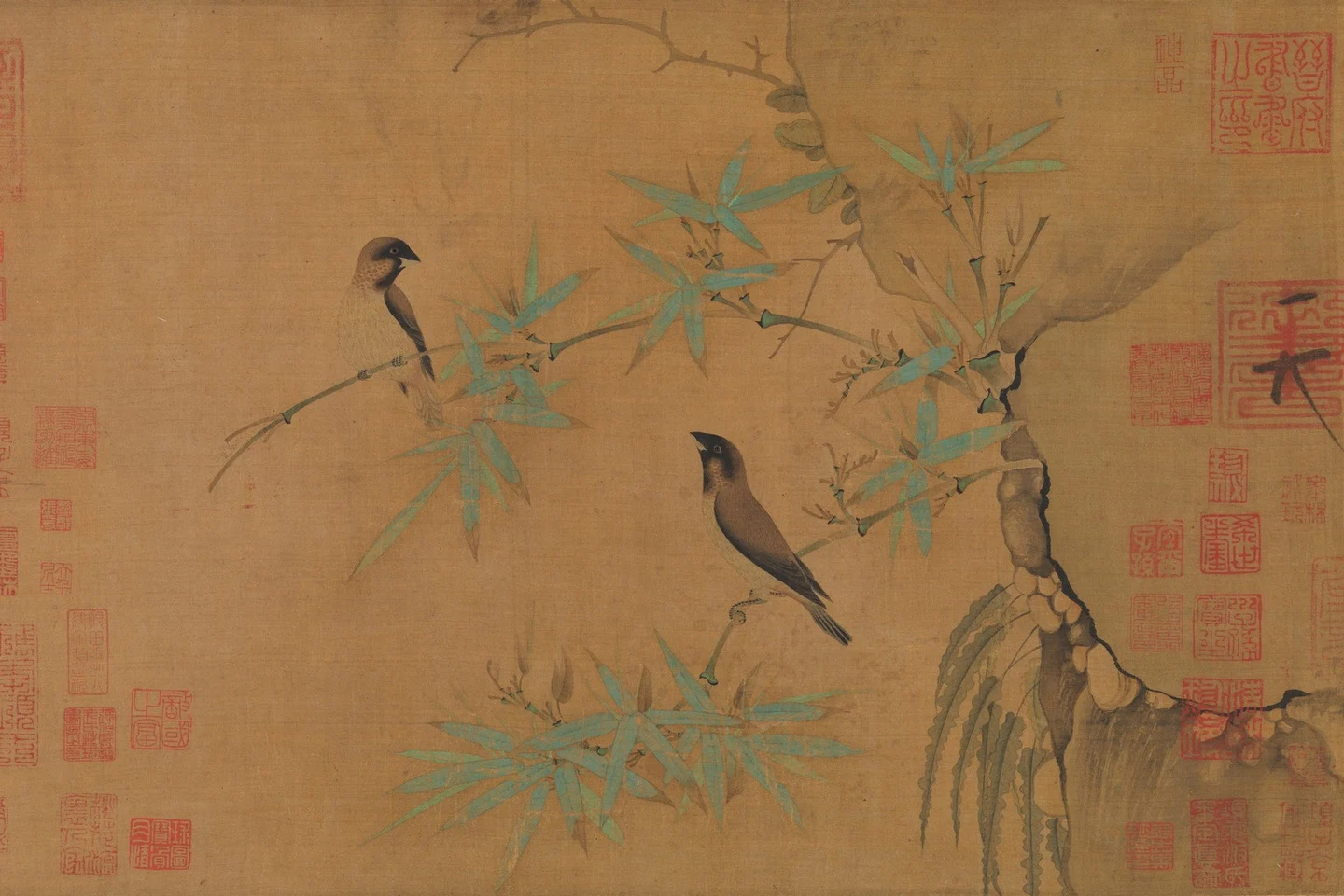 Emperor Huizong
Finches and bamboo
early 12th century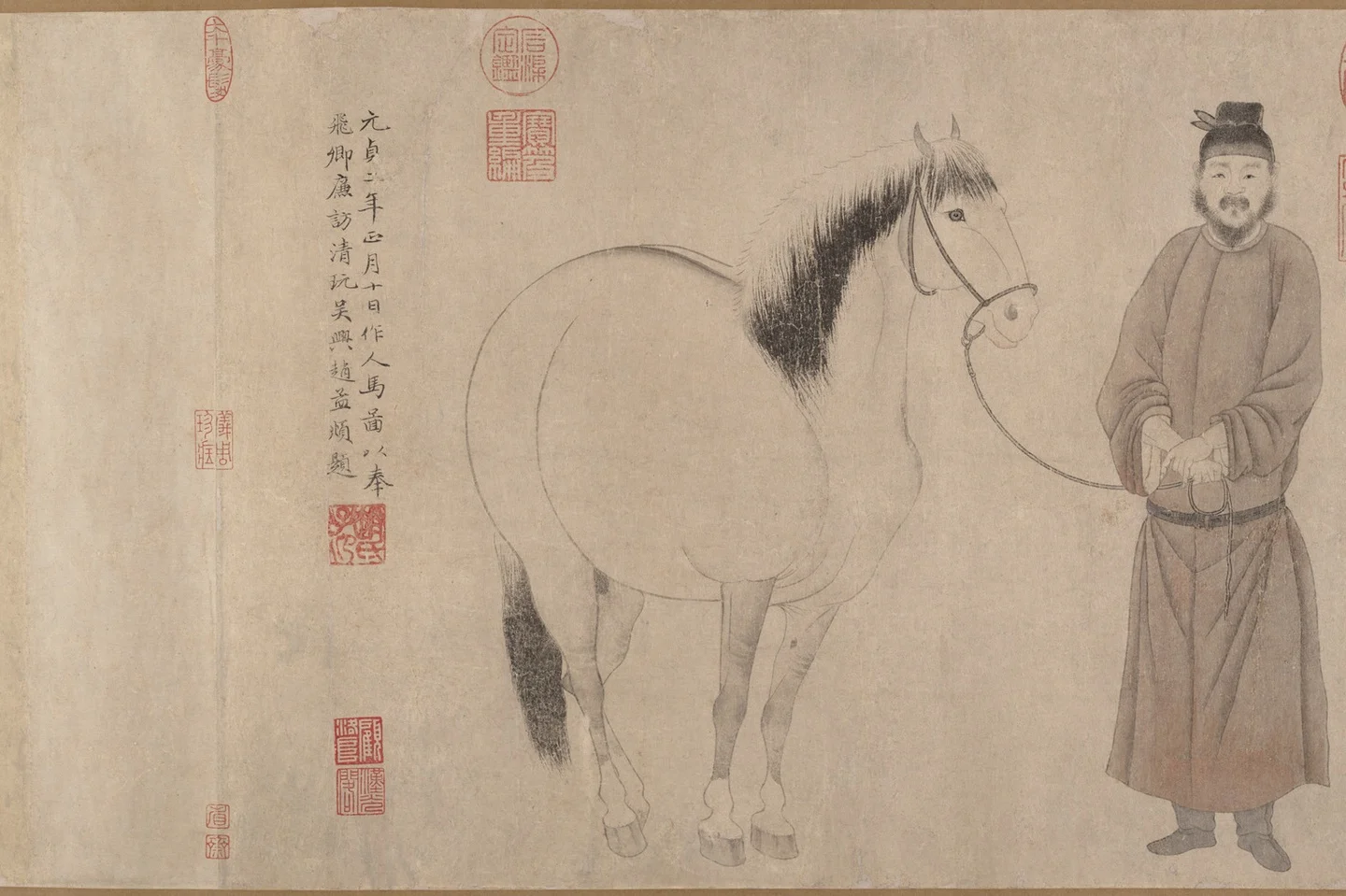 Zhao Mengfu, Zhao Yong and Zhao Lin
Grooms and horses
dated 1296 and 1359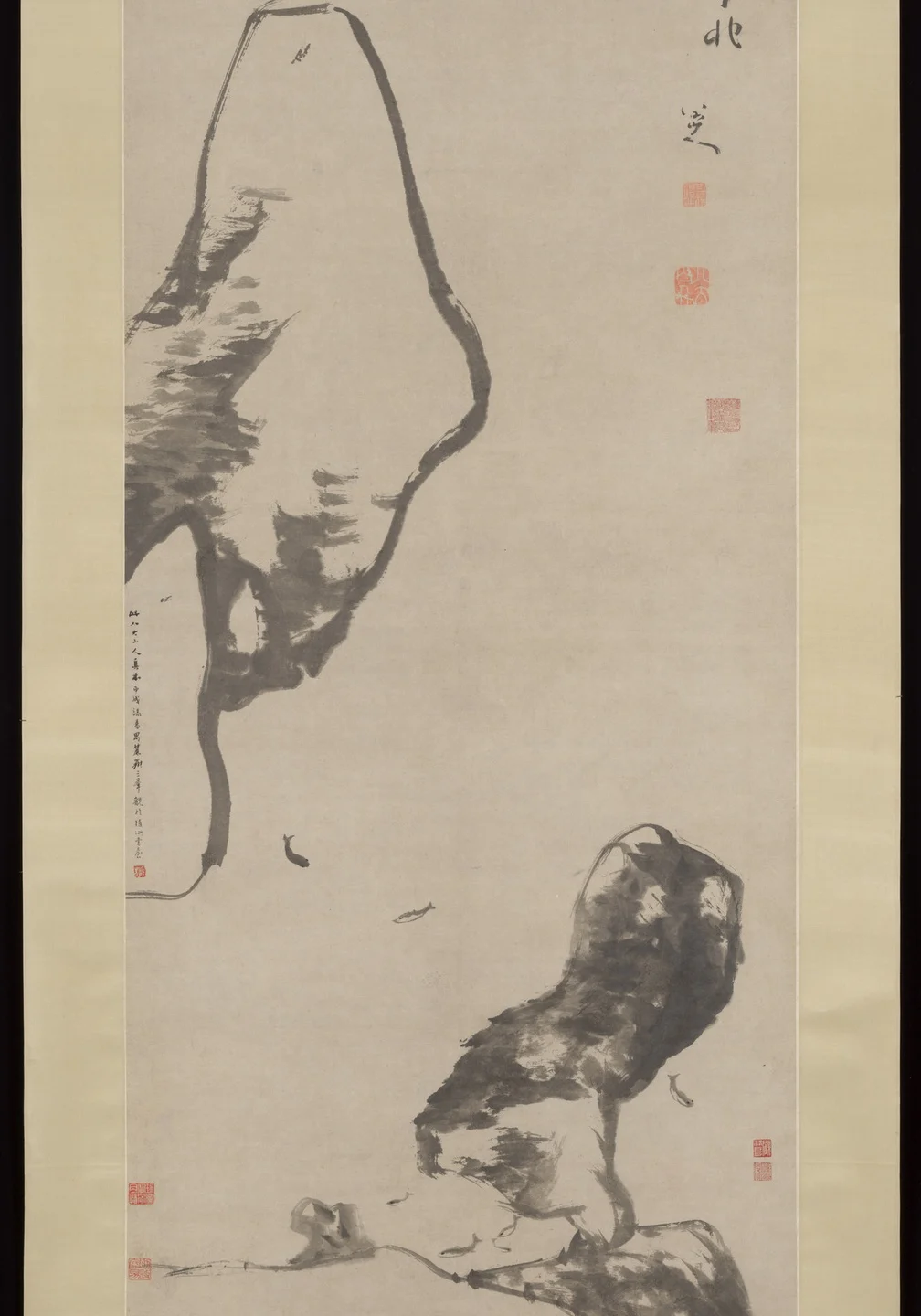 Bada Shanren
Fish and rocks
dated 1699Period, style and subject
- Movement
- Chinese painting
- Genre
- Animals
- Medium
- Handscroll; ink and color on paper
- Collection
- Art Institute of Chicago
- Dimensions
- 29.9 × 759.5 cm
- Accession number
- 1953.281
Sources
Image provided under CC0. A detail of the scroll is shown. Dimensions refer to the work catalogued by the museum. Image licence
Adapted and translated from Art Institute of Chicago materials. · Text licence