Night-Shining White
Han Gan · ca. 750
Explore the painting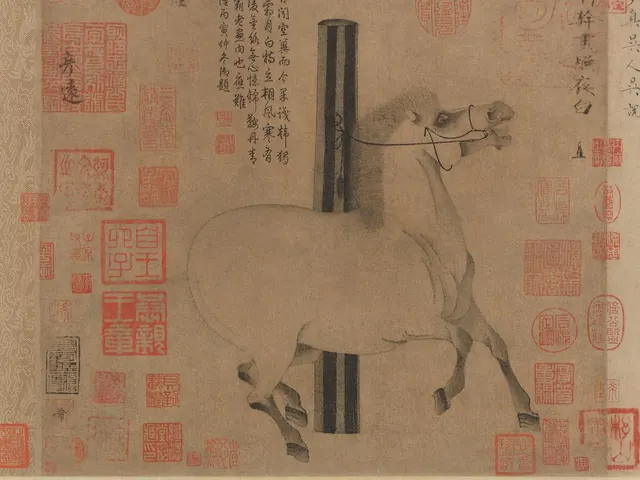
The painting’s story and details
This horse has a recorded name and a place at court. Night-Shining White belonged to the Tang emperor Xuanzong, who ruled from 712 to 756. The drawing, made around 750, is attributed to Han Gan. The animal appears without a rider but tethered to a post. Its strength and restricted movement govern the image.
The eye is wide, the nostril flared, and the mouth slightly open. Fine lines distinguish the muzzle’s features, with dark accents intensifying individual forms. The painter uses relatively little ink. Tension arises from the head’s precise drawing and the taut tether, without an elaborate setting or the presence of a handler.
A rope runs from the head to a post. Its straight vertical contrasts with the turning neck and active legs. The horse belongs to someone, although no person is present. A portrait of an imperial horse can celebrate both the rare animal and its owner. The tether makes possession visible without a throne, emblem, or figure of the ruler.
The broad rounded body contains almost no color. Pale paper supplies the light coat, and diluted ink suggests volume. Long continuous contours contain the heavy body. Beside them, the mane’s numerous short lines appear especially active. Different movements of the brush produce distinctions of weight and texture.
The legs occupy uneven positions, with one hoof raised. Within the compact image, this movement is conspicuous. Chinese tradition associated exceptional horses with celestial steeds believed to be dragons in disguise. The museum places this image within that tradition. Observation of an animal and ideas of extraordinary power could reinforce one another.
Red seals surround the horse, added by owners and connoisseurs through whose hands the scroll passed. Such marks were placed on or beside the painting. They alter the original drawing’s appearance while preserving a history of esteem and ownership. A surface that a modern viewer might prefer untouched could become a place for collectors to continue responding to the work.
The image survived successive dynasties and collections. An imperial horse became the subject of connoisseurship, written judgments, and new marks of ownership. Possession recurs throughout that history. First a person restrains a living animal; later others place their names on its image. The horse remains the most active presence on a sheet bearing successive records of human control.
More paintings to compare
 Yao Shou
Pillars of the Country
Ming dynasty (1368–1644), 1494 Chai Zhenyi and Chai Jingyi
Flowers and Insects
Qing dynasty (1644–1911), reign of Kangxi (1662–1722) Ren Yi
The Five Virtues
Qing dynasty (1644–1911), 1895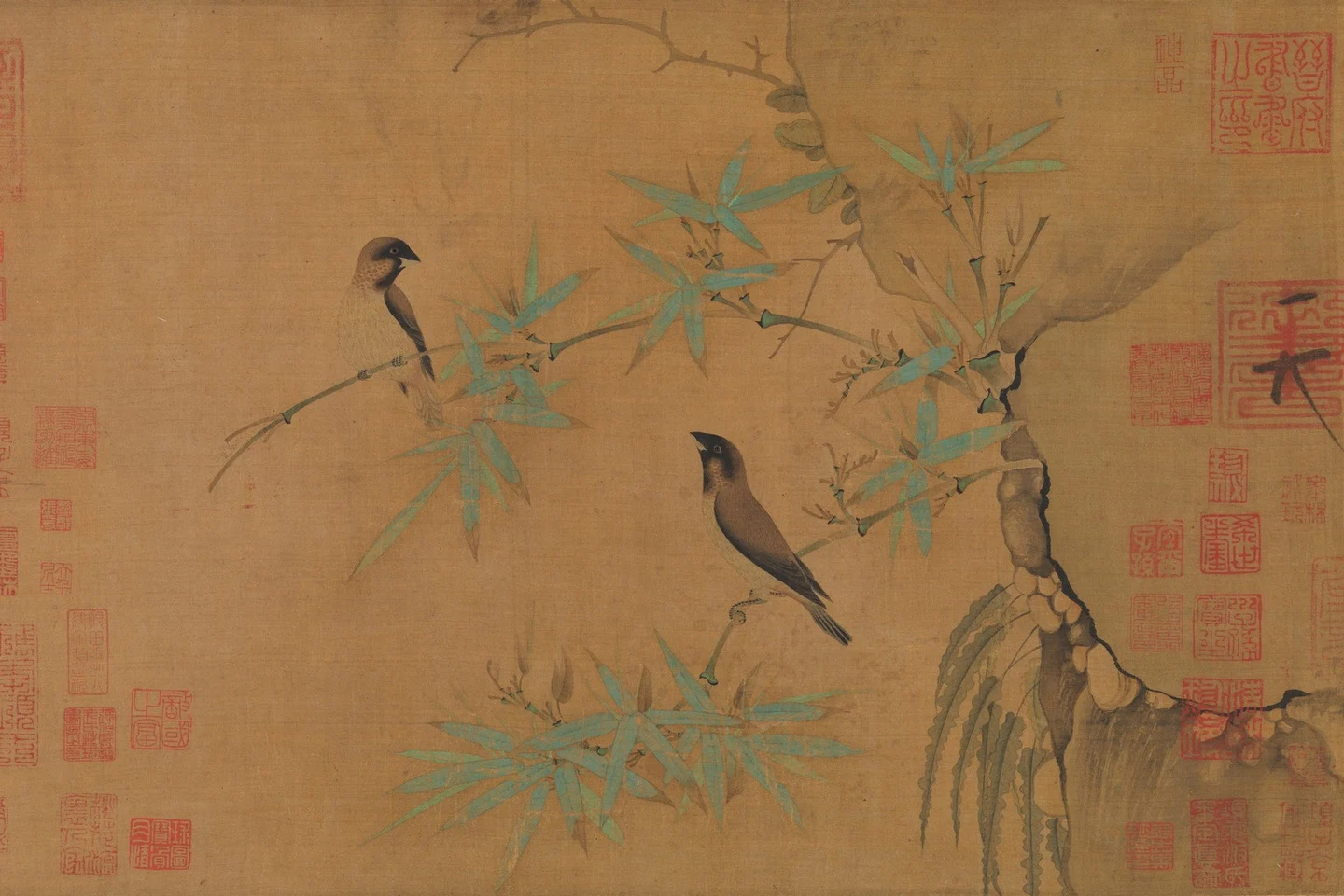 Emperor Huizong
Finches and bamboo
early 12th century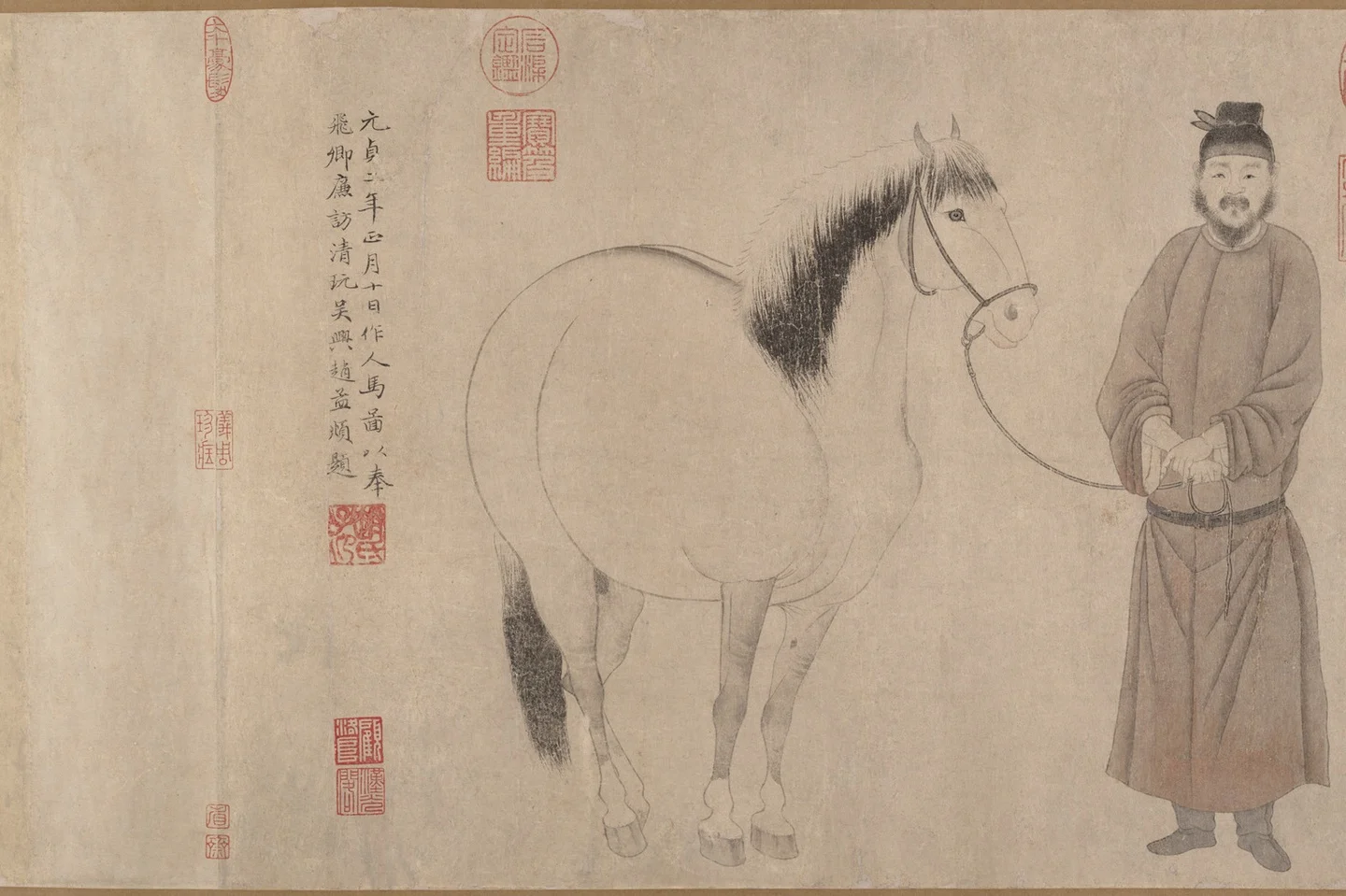 Zhao Mengfu, Zhao Yong and Zhao Lin
Grooms and horses
dated 1296 and 1359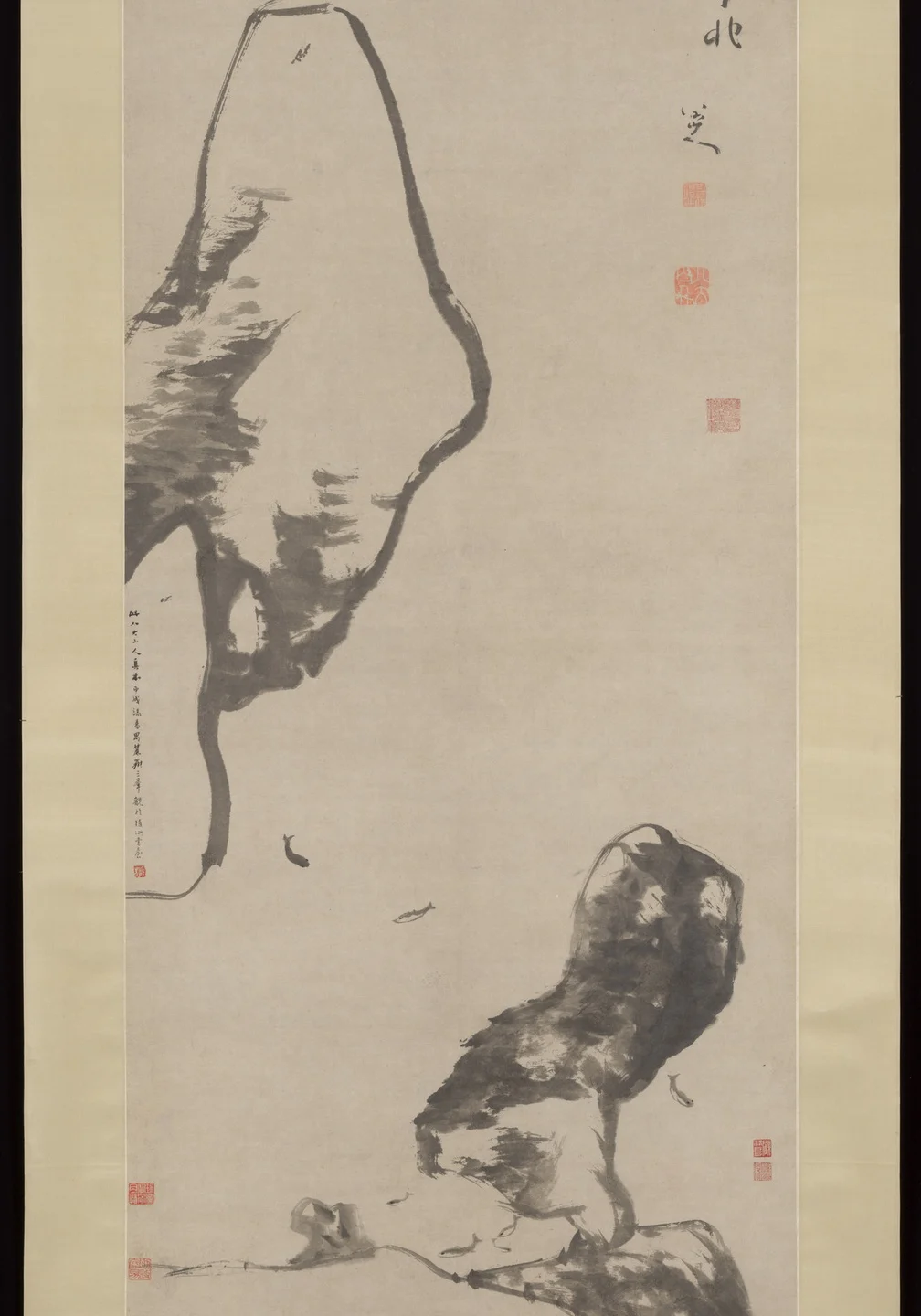 Bada Shanren
Fish and rocks
dated 1699Period, style and subject
- Movement
- Chinese painting
- Genre
- Animals
- Medium
- Handscroll; ink on paper
- Collection
- The Metropolitan Museum of Art
- Dimensions
- Image, 30.8 × 34 cm
- Accession number
- 1977.78
Sources
Image provided under CC0. The horse and part of the surrounding inscriptions. The complete scroll mounting is not shown. Image licence