Fish and rocks
Bada Shanren · dated 1699
Explore the painting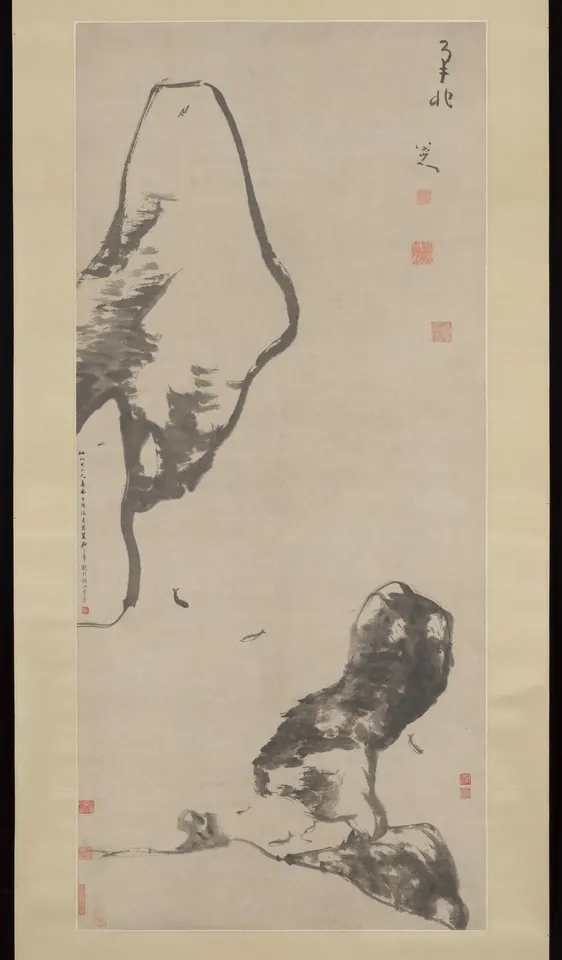
The painting’s story and details
Zhu Da, known as Bada Shanren, painted this fishpond in 1699. He descended from the Ming imperial family. Following the Manchu conquest he took refuge in a Buddhist monastery, later returning to secular life. He made this painting in old age, decades after losing his former position.
A large rock enters from the upper left. Its narrow support and heavy upper section give it an uncertain sense of weight. The outline thickens, then breaks into dry brush traces. Large unpainted areas remain inside, allowing the rock to suggest volume while retaining the openness of an ink drawing.
At the lower right, another rock form bends over the water. The ink is dense in some places and diluted in others. Bada developed a technique of adding a new layer when the earlier one was nearly dry. It produced tonal changes and texture without requiring every crack to be drawn separately.
A small dark fish swims below the upper rock. Its body turns, presenting a different view from the slender neighbouring fish seen in profile. The fish establish the wide unpainted area as water. No waves or reflections are needed to do so.
More fish gather near the lower rocks. They are unevenly spaced, with broad intervals between them. The rocks receive sweeping brush movements, while a fish requires only a few short marks. The sizes of these traces differ sharply on the same sheet.
At the upper right, writing and red seals occupy an open area. Calligraphy shares the painting’s surface without a separate frame. The artist earned income from both painting and calligraphy. According to the Smithsonian, by the mid-1680s he was working for payment, having earlier often given his works away.
The museum reads Bada’s art in relation to loyalty to the fallen dynasty. For many former Ming subjects, painting and calligraphy offered ways to express dissent under the new rulers. In that reading, unstable rocks and separated fish can evoke life after the loss of an earlier order.
More paintings to compare
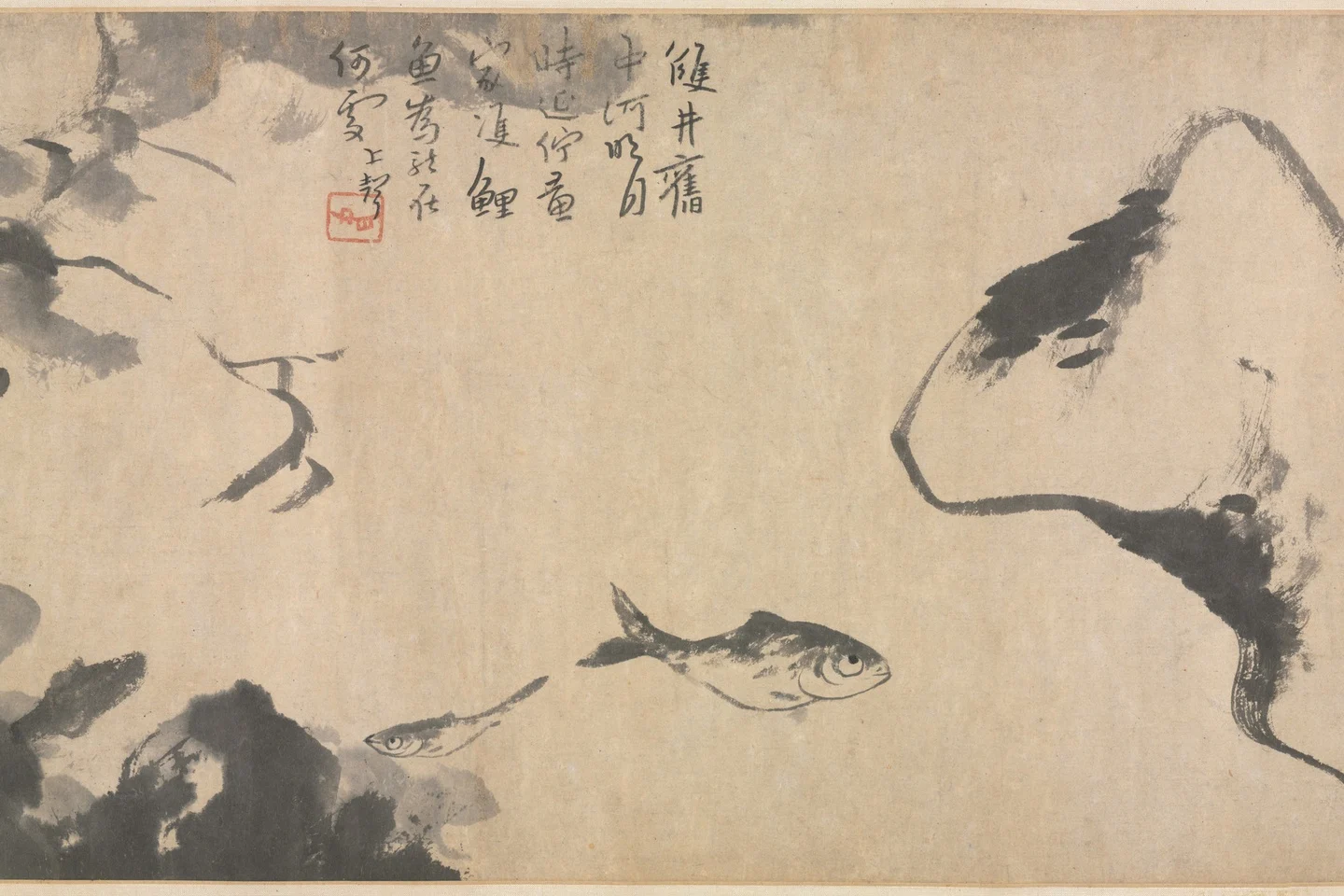 Bada Shanren
Fish and Rocks
mid- to late 1600s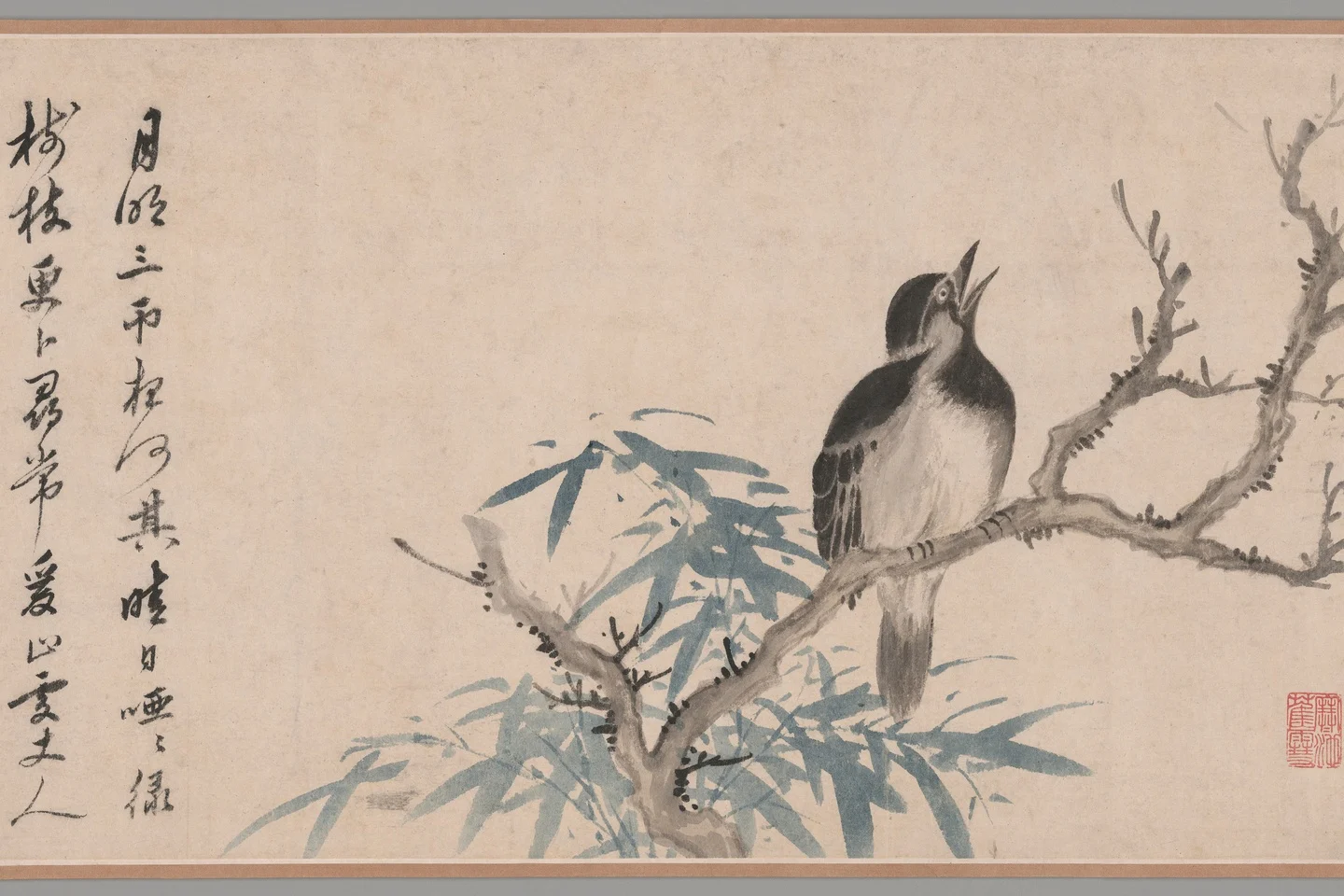 Yao Shou
Pillars of the Country
Ming dynasty (1368–1644), 1494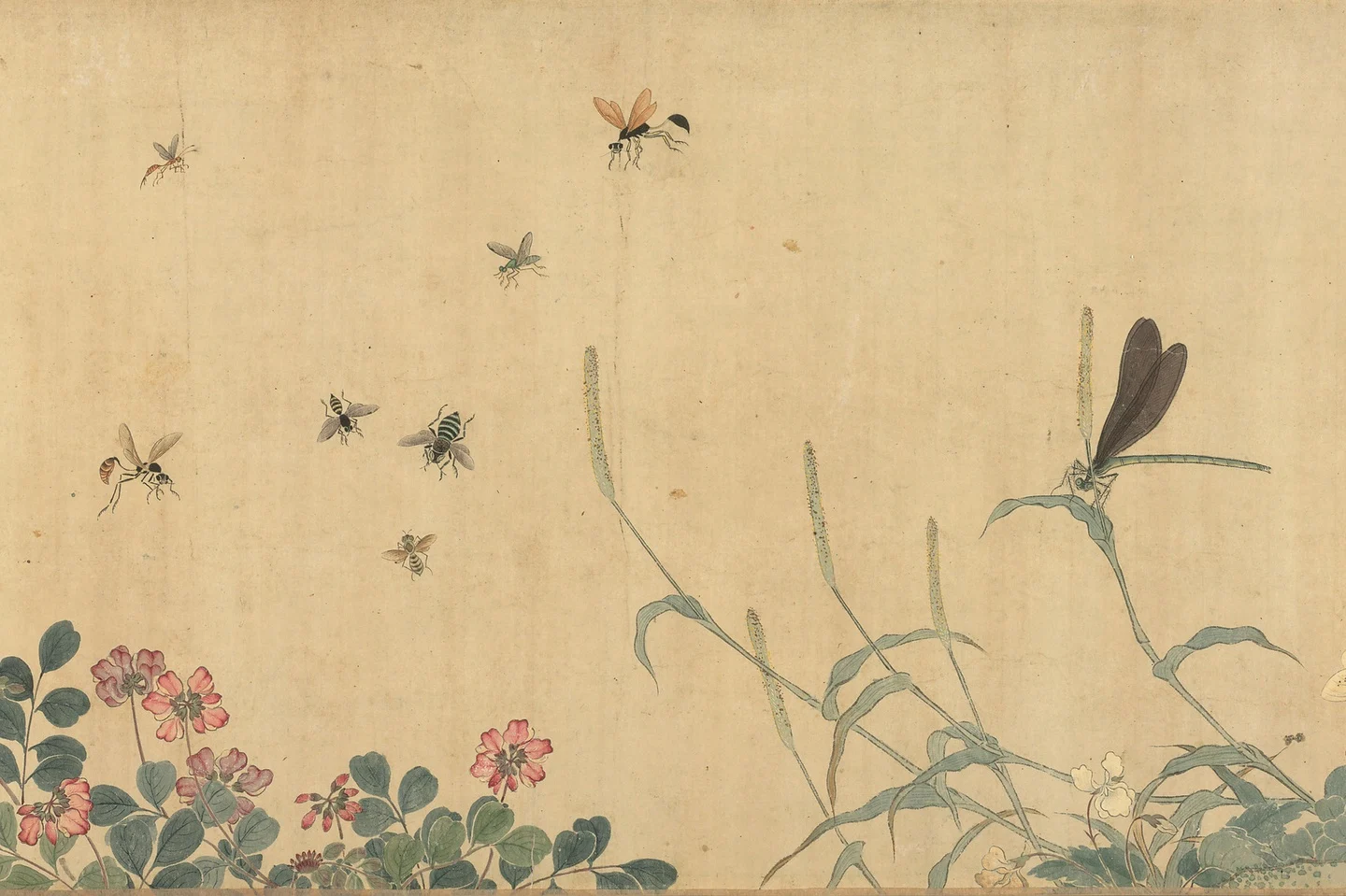 Chai Zhenyi and Chai Jingyi
Flowers and Insects
Qing dynasty (1644–1911), reign of Kangxi (1662–1722)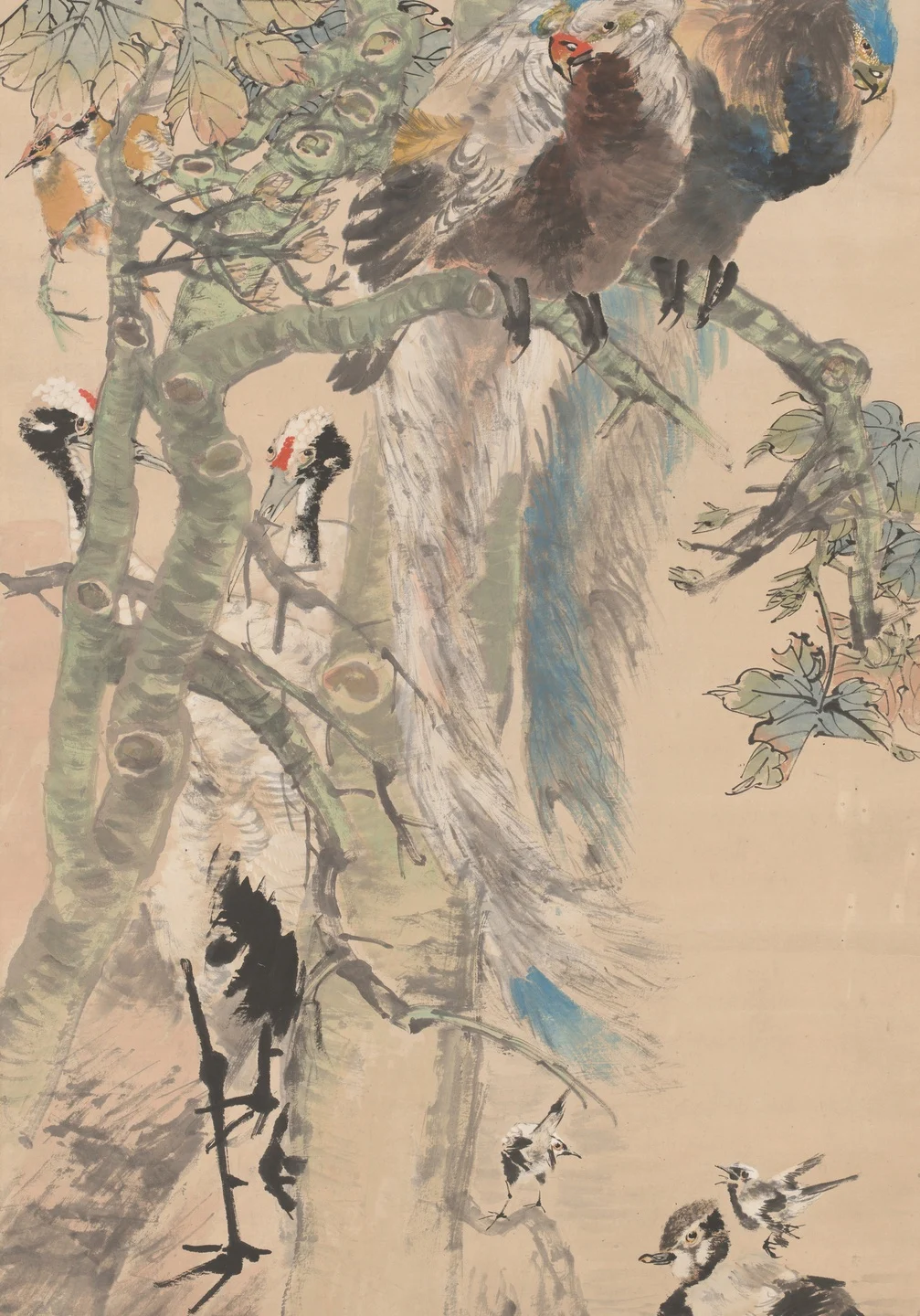 Ren Yi
The Five Virtues
Qing dynasty (1644–1911), 1895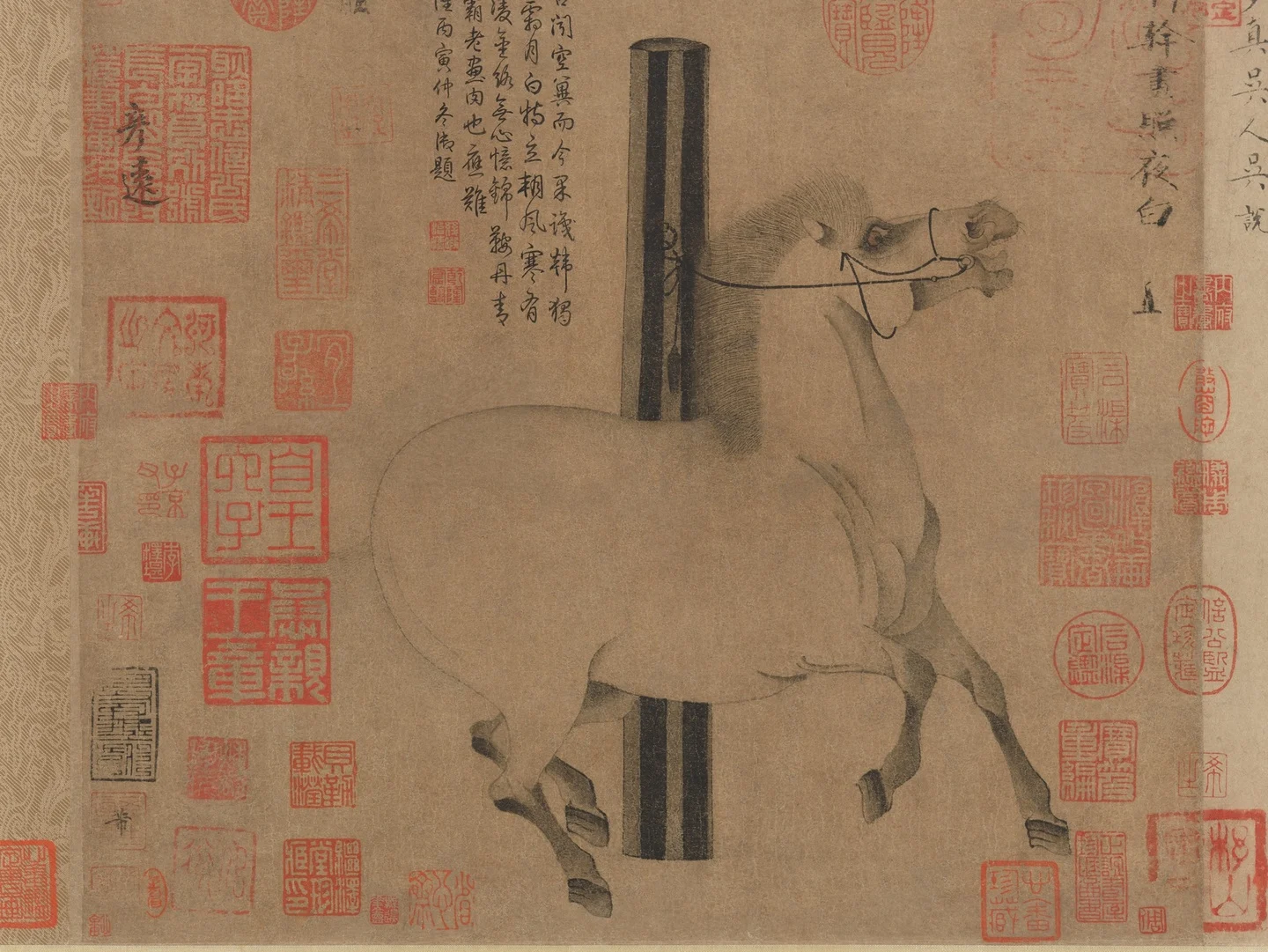 Han Gan
Night-Shining White
ca. 750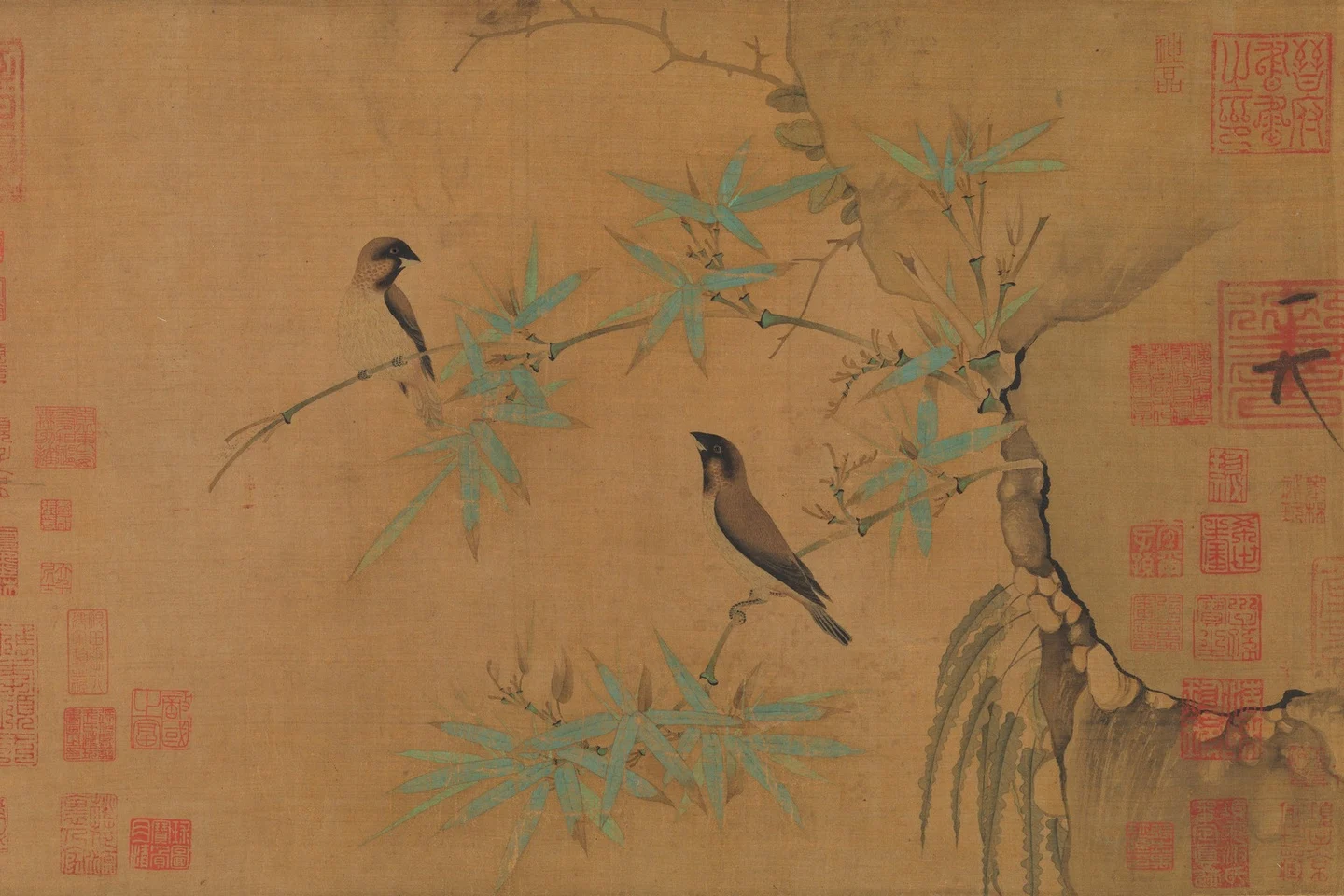 Emperor Huizong
Finches and bamboo
early 12th centuryPeriod, style and subject
- Movement
- Chinese painting
- Genre
- Animals
- Medium
- Hanging scroll; ink on paper
- Collection
- The Metropolitan Museum of Art
- Dimensions
- Image, 135.3 × 61 cm
- Accession number
- 1989.363.137
Sources
Image provided under CC0. Image licence