Fish and Rocks
Bada Shanren · mid- to late 1600s
Explore the painting
The painting’s story and details
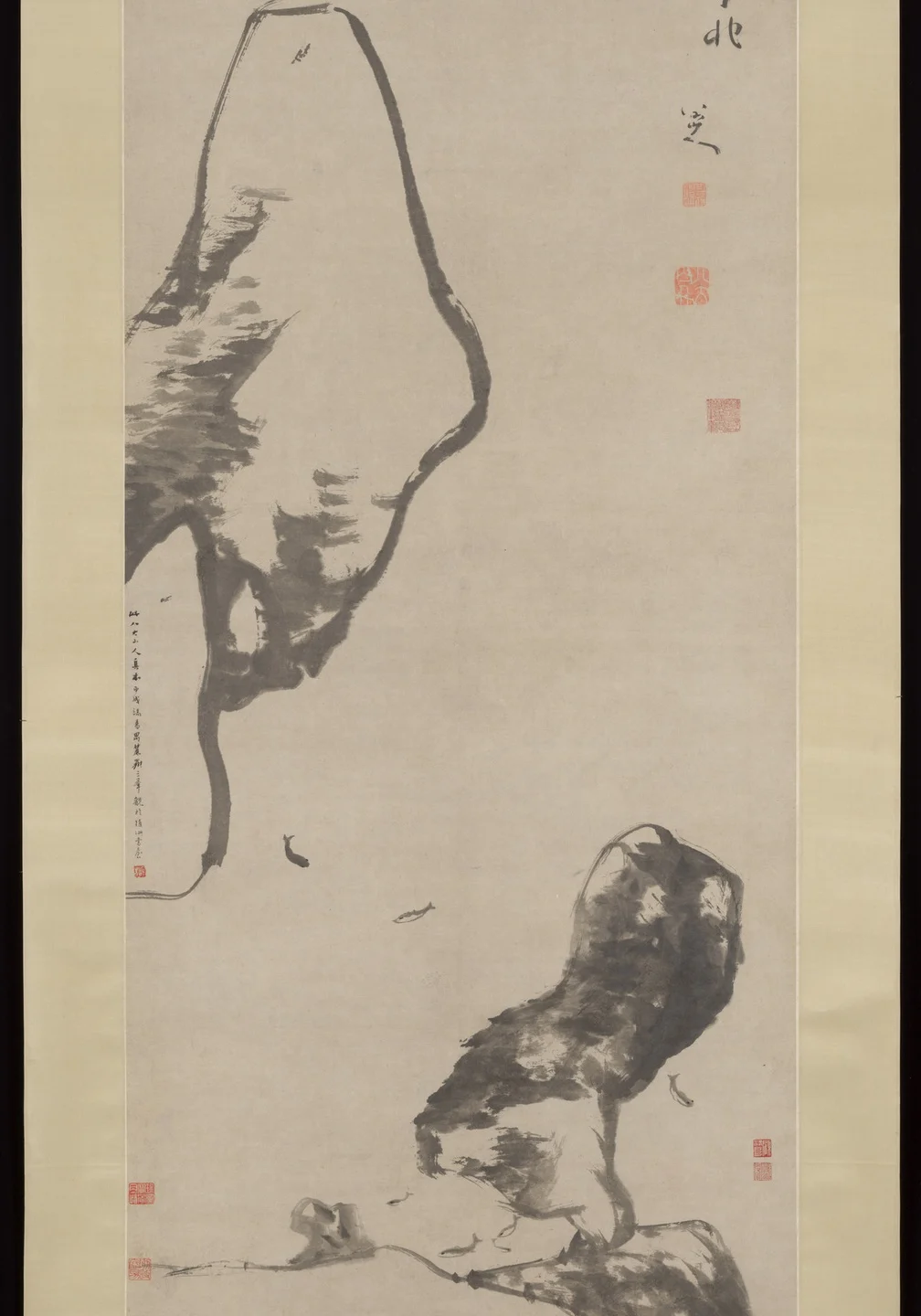
Two fish remain among rocks, although water is scarcely marked. Bada Shanren, also known as Zhu Da, painted the scroll in the later seventeenth century. Descended from the Ming imperial family, he took refuge in a monastery after the Manchu Qing dynasty came to power. Animals and plants in his later painting often occupy strange spaces that resist measurement.
The larger fish faces right and the smaller one left. Their bodies lie close while following different paths. Fine fins and small eyes emerge among a few dense strokes. Most of the action concentrates in this brief counter-movement surrounded by a broad unpainted area.
An uneven dark contour defines the rock at the right. Its light centre matches the surrounding paper. The boundary makes one area solid stone while leaving its neighbour as water. Minimal means distinguish substances, making the viewer aware of how much depends on a single line.
Rocks at the left form a dense cluster of dark patches. Wet ink spreads in places and leaves a dry trace elsewhere. That variation becomes apparent beside the fishes’ fine fins. A single material conveys both a small body’s fragility and a heavy, uneven rock surface.
Another elongated rock appears near the right edge, far from the others. No support is visible beneath it. The eye searches unsuccessfully for a common water level. The arrangement produces a sense of uncertain position before the artist’s biography is known.
Poems and red seals alternate with fish and rocks. After the poems, Bada used a distinctive seal resembling a shoe’s impression in soft earth. The mark fixes a personal presence among unstable forms. Writing occupies the same open world as the depicted creatures.
The museum proposes reading the fish as people loyal to the fallen Ming who had lost their former place. Zhu Da’s biography and a space without secure footing support that possibility. Yet the painting’s force begins with its visible arrangement: two different movements, scattered rocks and the gaps between them. Political memory gives that sensation a particular historical cause.
More paintings to compare
 Bada Shanren
Fish and rocks
dated 1699 Yao Shou
Pillars of the Country
Ming dynasty (1368–1644), 1494 Chai Zhenyi and Chai Jingyi
Flowers and Insects
Qing dynasty (1644–1911), reign of Kangxi (1662–1722) Ren Yi
The Five Virtues
Qing dynasty (1644–1911), 1895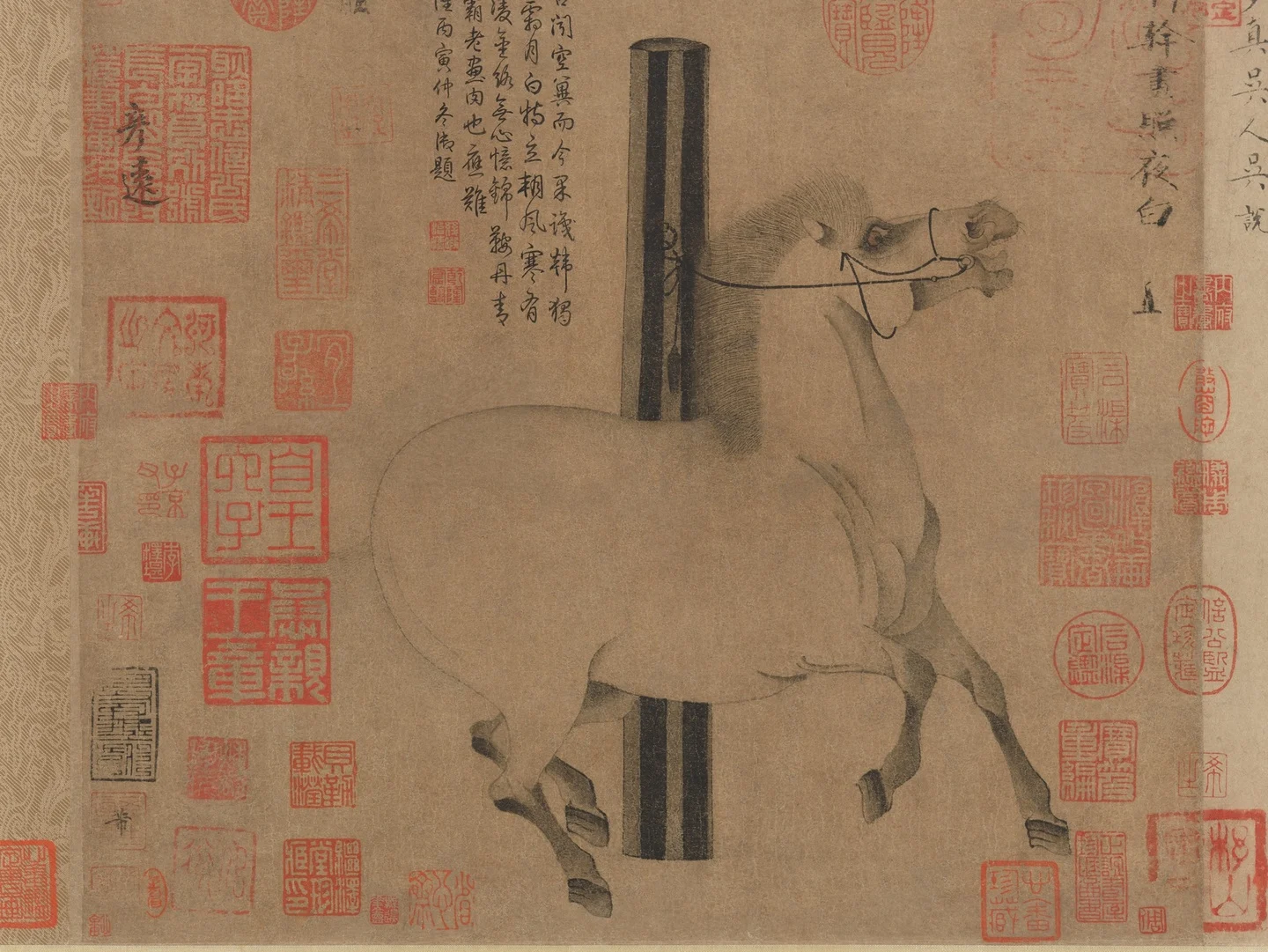 Han Gan
Night-Shining White
ca. 750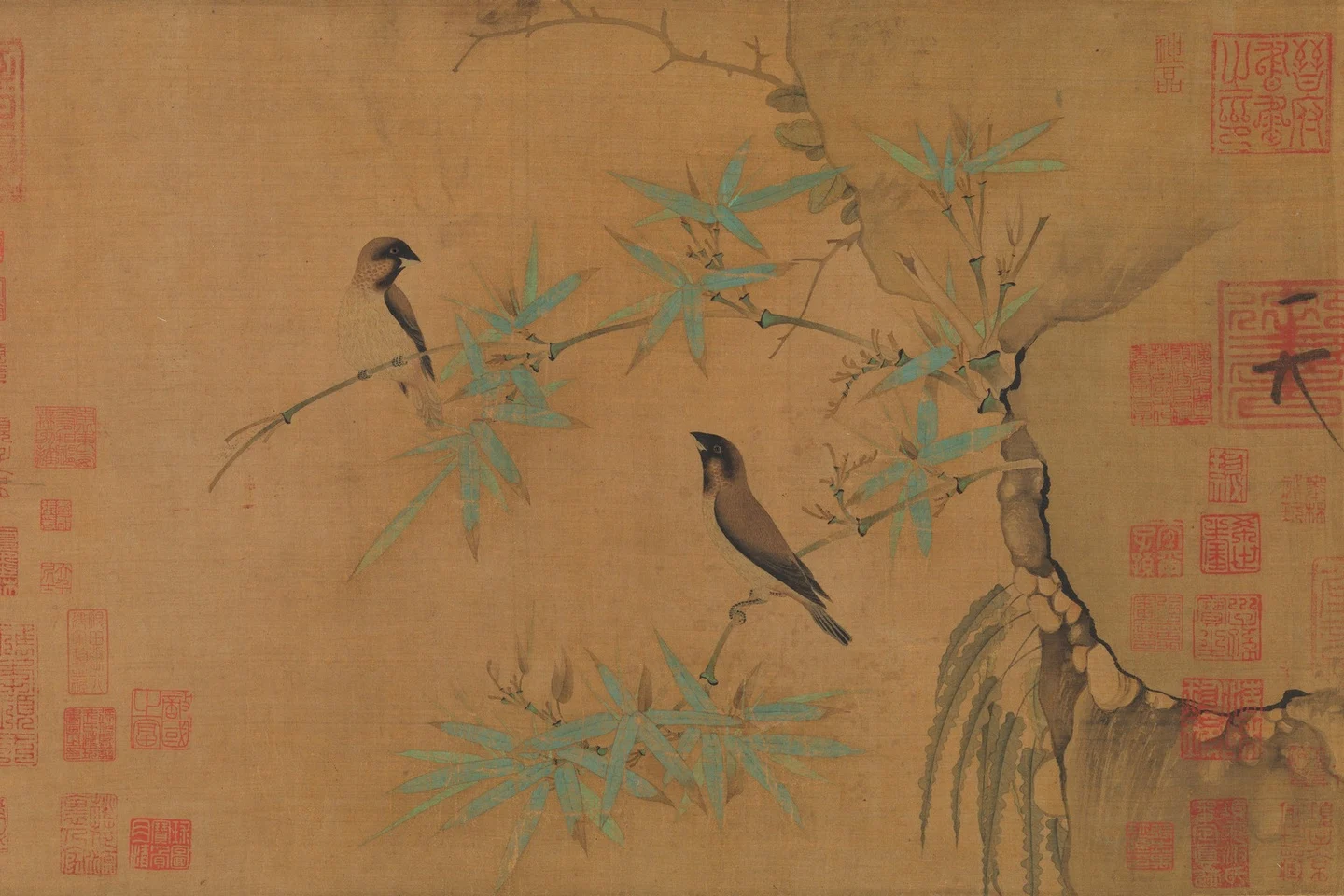 Emperor Huizong
Finches and bamboo
early 12th centuryPeriod, style and subject
- Movement
- Chinese painting
- Genre
- Animals
- Medium
- Handscroll; ink on paper
- Collection
- Cleveland Museum of Art
- Dimensions
- Painting, 29.6 × 158.4 cm
- Accession number
- 1953.247
Sources
Image provided under CC0. Image licence