Dragon; Tiger
Fachang Muqi · c. 1250–79
Explore the painting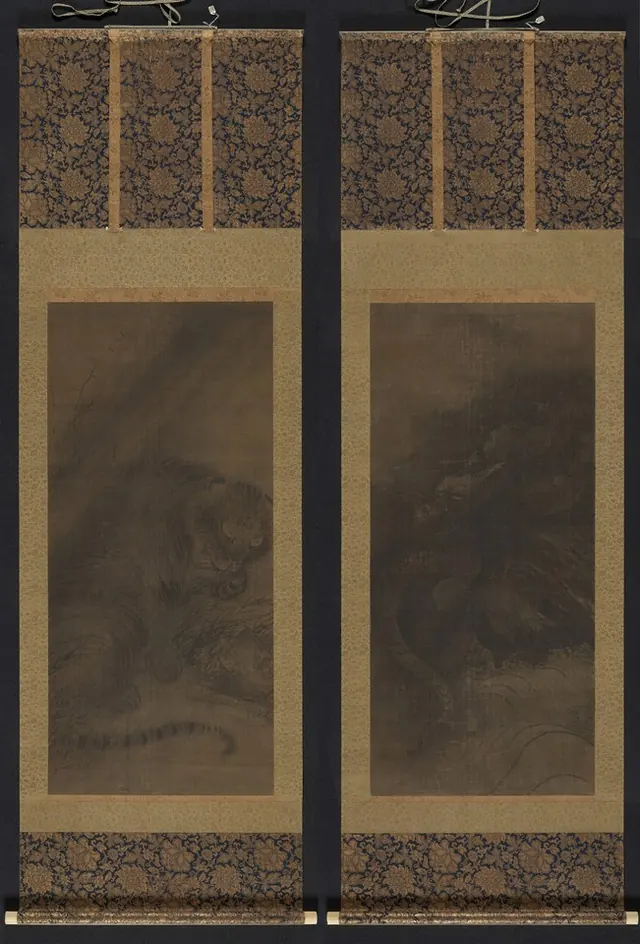
The painting’s story and details
A tiger washes itself while a dragon appears among water and mist. Fachang Muqi painted this pair of scrolls around 1250–1279. In their Chan Buddhist setting, they probably hung beside a central image such as Guanyin. The creatures were associated with yin and yang, differing forces that complement each other.
The tiger lowers its head towards a raised paw. The painter shows a familiar feline action. It allows attention to linger beside a powerful animal without expecting an immediate attack. Fine whiskers and a rounded muzzle bring it close to everyday observation.
The heavy body occupies the lower left scroll, with a striped tail curving near the ground. Dark bands follow the flanks’ volume and convey weight. Nearby plants give the animal a particular setting. Even with colour largely gone, brushwork maintains differences between fur, branches and soil.
The dragon’s head is lighter than the surrounding darkness. Its eye, long snout and whiskers identify it before the position of the whole body becomes clear. The mythical creature appears in fragments. Looking repeats an emergence from mist, one feature followed by another.
The dragon’s twisting body disappears into dark clouds. Its lines must be sought, whereas the tiger’s body is immediately legible. The two scrolls therefore set different tempos of attention. One creature occupies a stable earthly place; the other eludes attempts to grasp it whole.
Broad wave arcs pass beneath the dragon. Their clear crests differ from mist’s soft transitions. Muqi presents water in several ways, linking different parts of the scroll. The silk has darkened over time; the museum also notes the fading reddish tint on the tiger’s nose and tongue. Some of today’s gloom belongs to the object’s age.
Displayed together without a central Buddhist image, the dragon and tiger readily become independent protagonists. If the scrolls originally belonged to a three-part arrangement, they may have directed attention towards the figure between them. Muqi’s paintings were particularly valued in Japan. Their long lives show religious images retaining their force as countries, settings and viewing habits change.
More paintings to compare
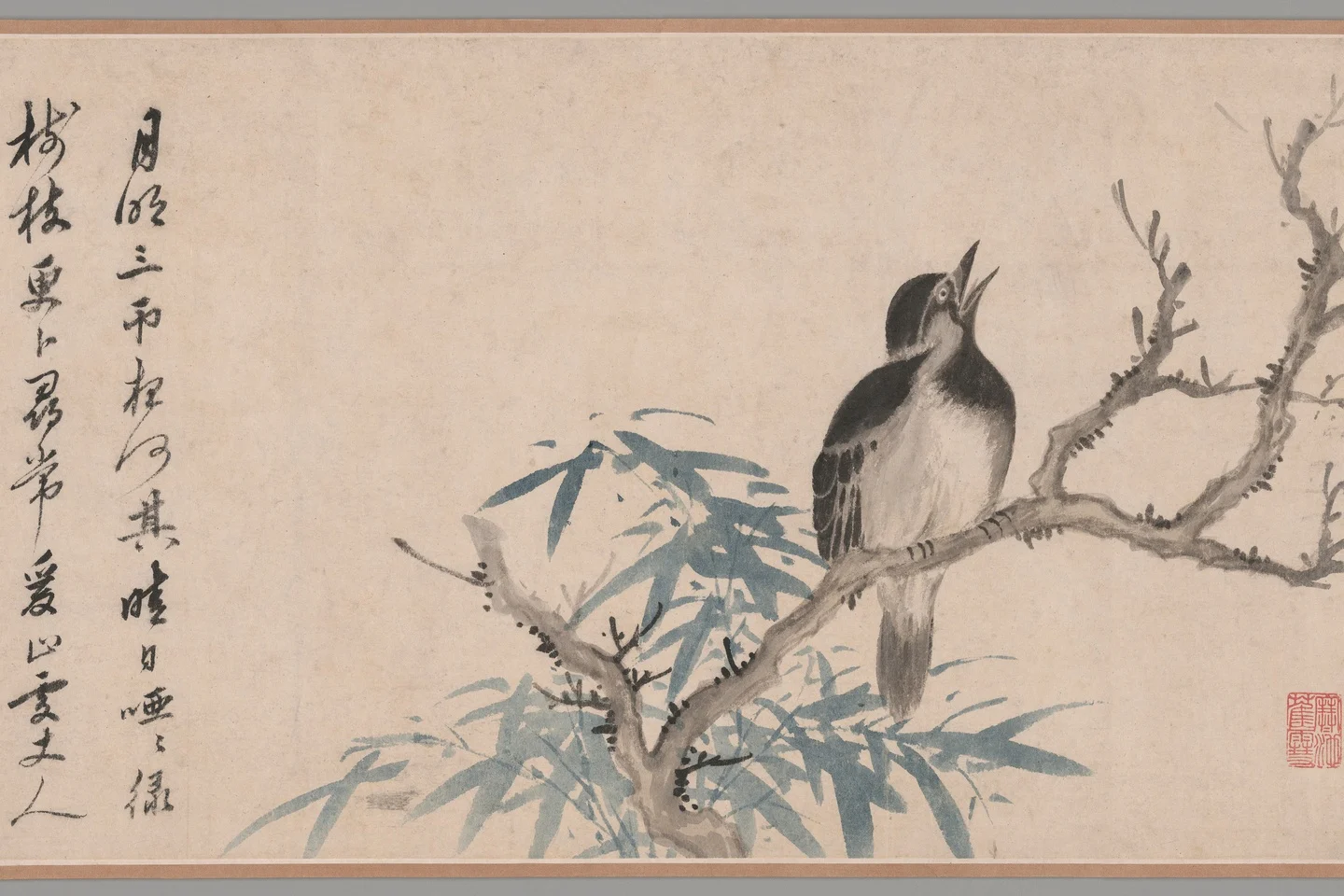 Yao Shou
Pillars of the Country
Ming dynasty (1368–1644), 1494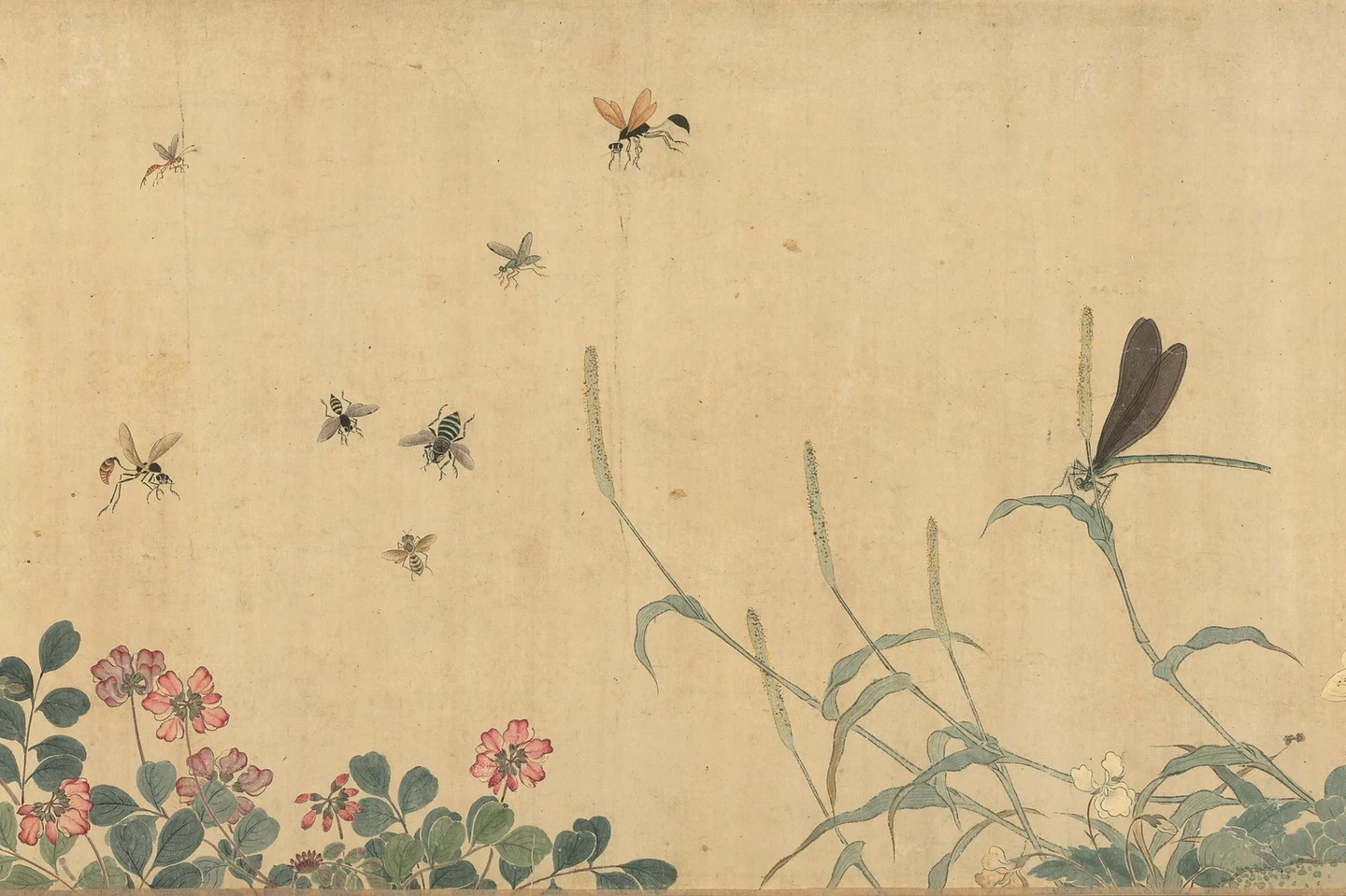 Chai Zhenyi and Chai Jingyi
Flowers and Insects
Qing dynasty (1644–1911), reign of Kangxi (1662–1722)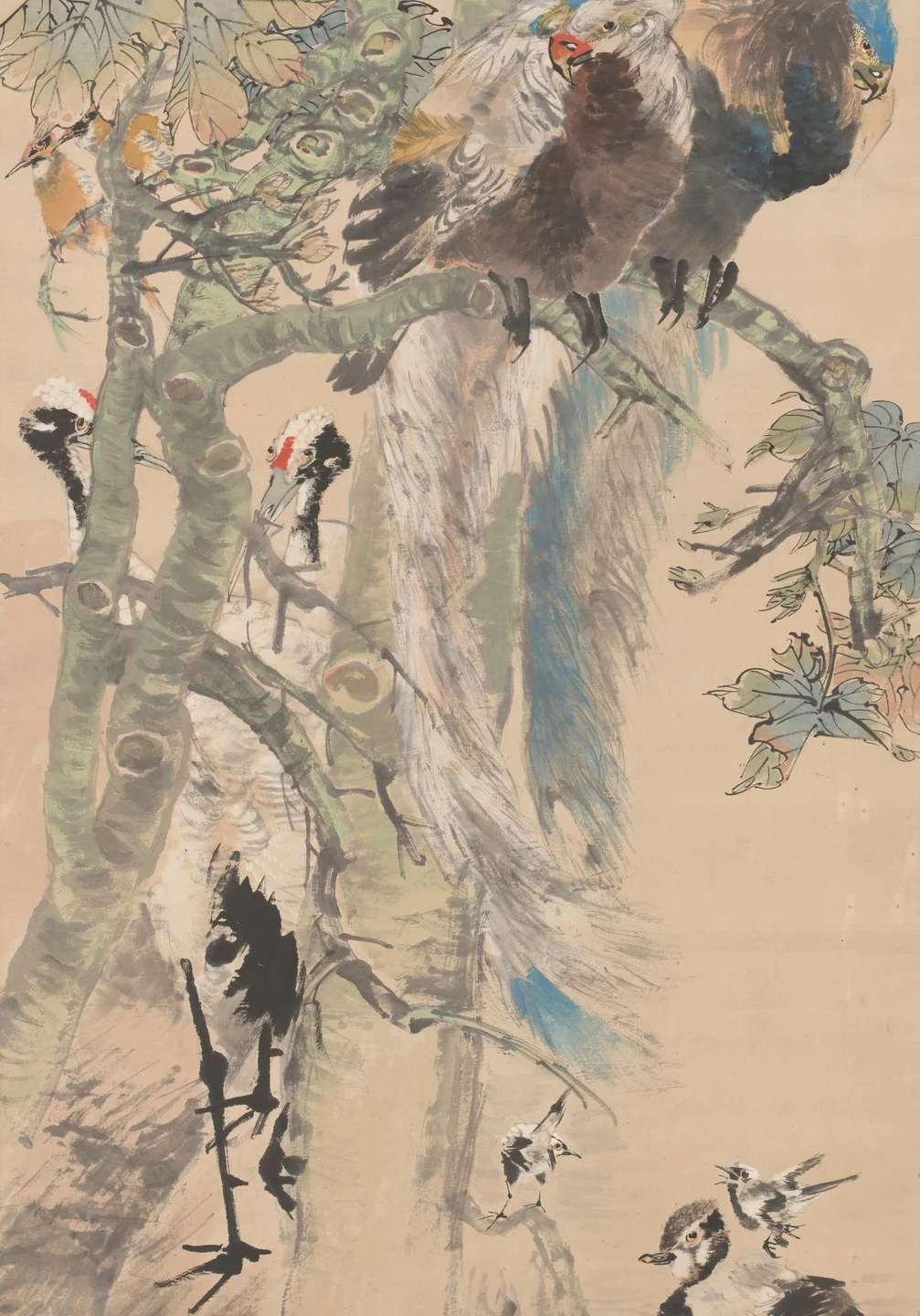 Ren Yi
The Five Virtues
Qing dynasty (1644–1911), 1895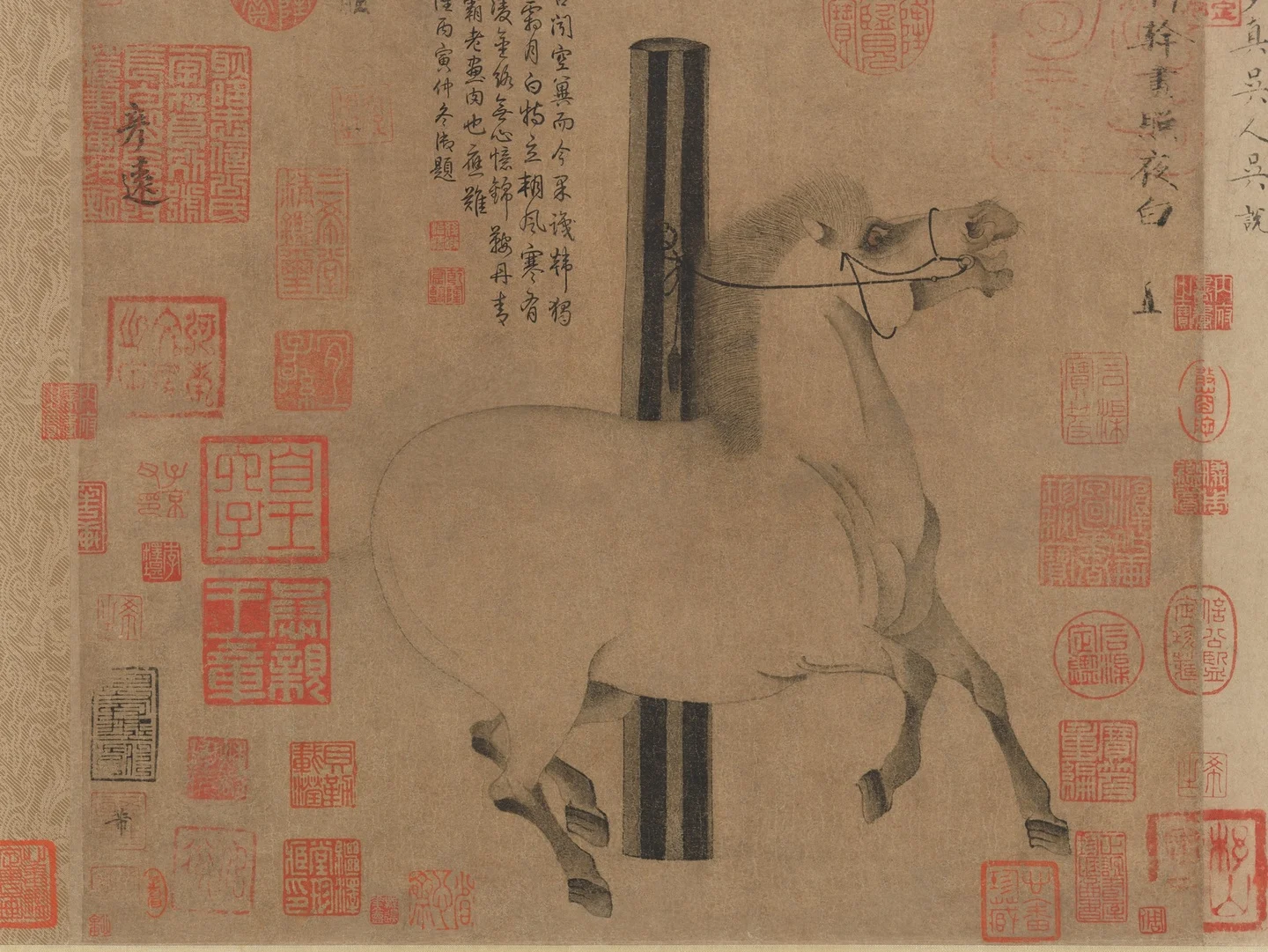 Han Gan
Night-Shining White
ca. 750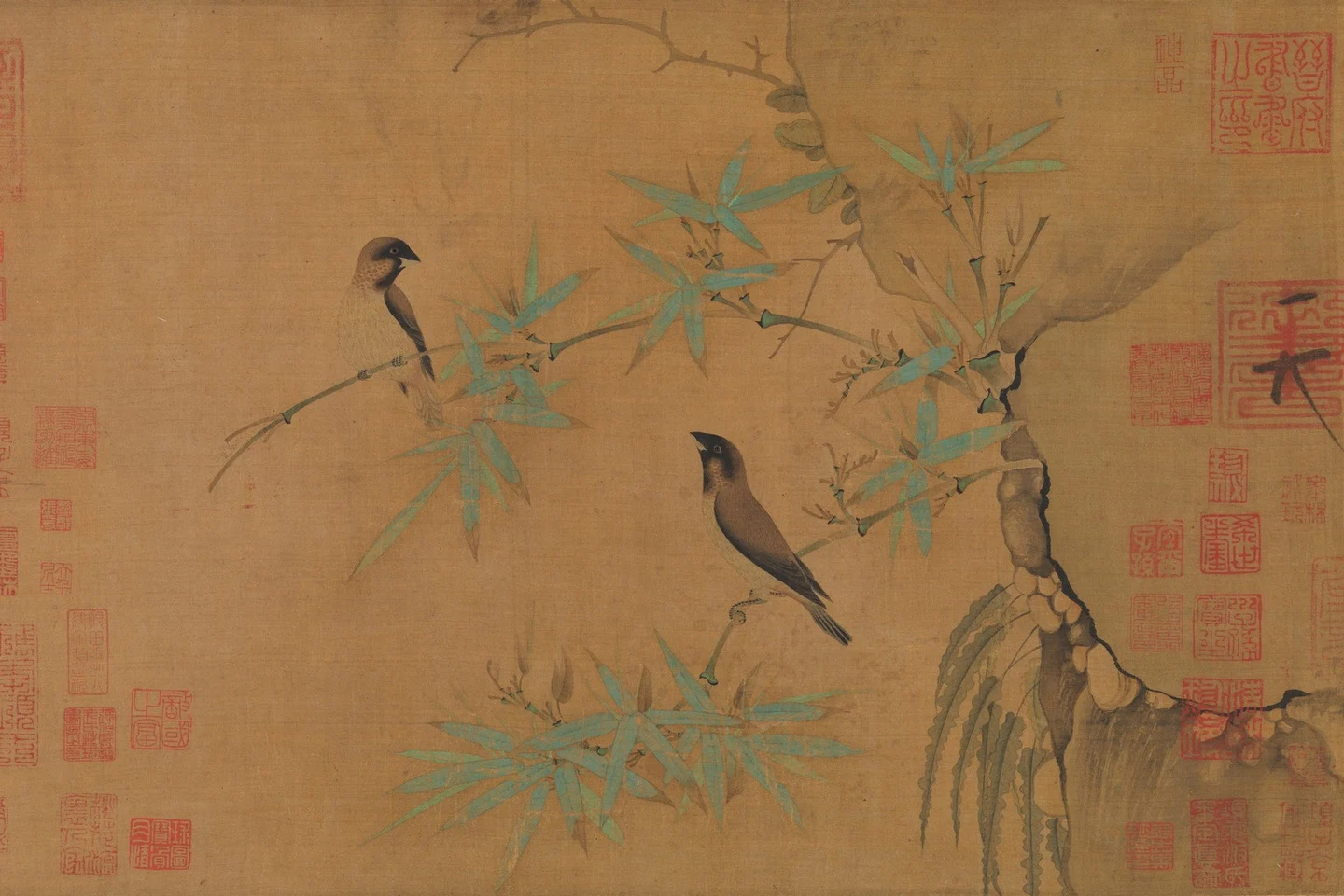 Emperor Huizong
Finches and bamboo
early 12th century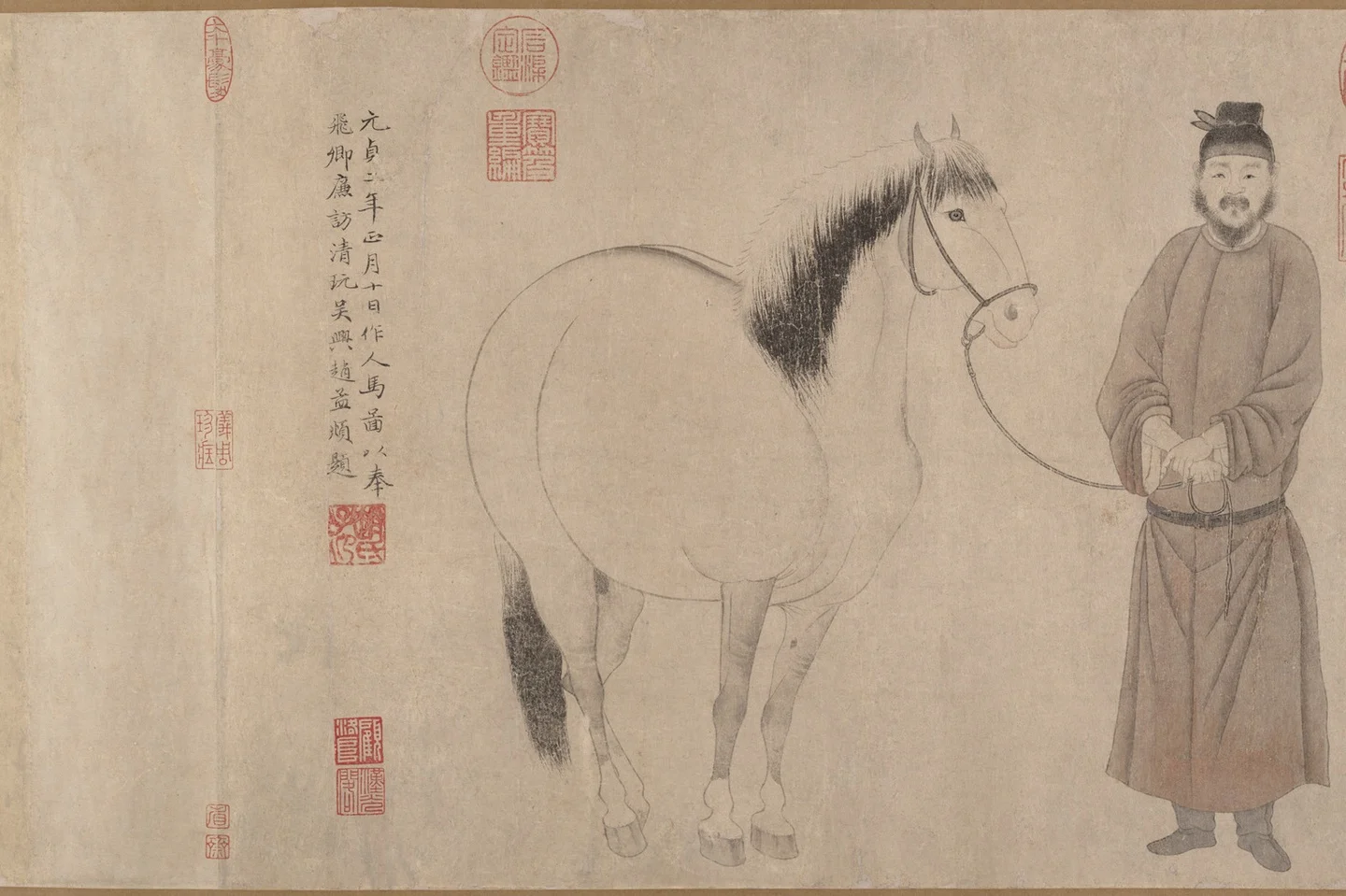 Zhao Mengfu, Zhao Yong and Zhao Lin
Grooms and horses
dated 1296 and 1359Period, style and subject
- Movement
- Chinese painting
- Genre
- Animals
- Medium
- Pair of hanging scrolls; ink on silk
- Collection
- Cleveland Museum of Art
- Dimensions
- Painting, 125.2 × 57.2 cm
- Accession number
- 1958.427
Sources
Image provided under CC0. Image licence