River and Mountains on a Clear Autumn Day
Dong Qichang · c. 1624–27
Explore the painting
The painting’s story and details
Dong Qichang painted this autumn landscape around 1624–1627 and supplied a bold inscription. He compared it with a painting by Huang Gongwang and regretted that the old master could no longer see his work. As painter, collector and writer on art, Dong conversed with predecessors through pictures of his own. Respect for antiquity readily coexisted with a wish to display his skill.
Trees with different crowns occupy the nearest bank. Loose circles describe some leaves, while dense dark touches form others. Even small trees are immediately distinguishable. Exposed brushwork allows the viewer to appreciate how a few techniques create pictorial variety.
The principal mountain chain runs diagonally. Rounded passages give way to sharp fractures, with dark folds gathering along one side of slopes. The eye follows this direction between nearer and farther rock masses. An ascent develops across the horizontal scroll, gradually taking in the entire image.
Mountains at the left grow pale and lose dense vegetation. Broad open areas remain between them, giving the crowded slopes room. Depth depends on differences in ink density and on the amount of detail retained at each distance.
A small bank projection below connects stones with open water. Its outlines continue the mountains’ curves at a sharply changed scale. The transition joins a nearby place to the panorama. Dong may have recalled Dong Yuan’s Xiao and Xiang Rivers, which he owned, a further connection proposed by the museum.
Large calligraphy beside the landscape makes the painter’s judgment part of the object. Smaller inscriptions continue to the left. Painted on Korean paper, the work bears an impression reading Seal of the King of Joseon. Material and later marks recall a wider world of exchange and collecting around the conversation about Chinese masters.
Dong Qichang both made paintings and explained which earlier masters deserved greatest attention. His landscape participated in that history of art. He offered a comparison that placed himself beside admired predecessors. Tradition was thus reshaped by someone who wielded both a brush and the authority to judge.
Featured in tours
Chinese landscape. The scholar’s life
Public service, retirement, gardens, poetry and the memory of earlier masters.
More paintings to compare
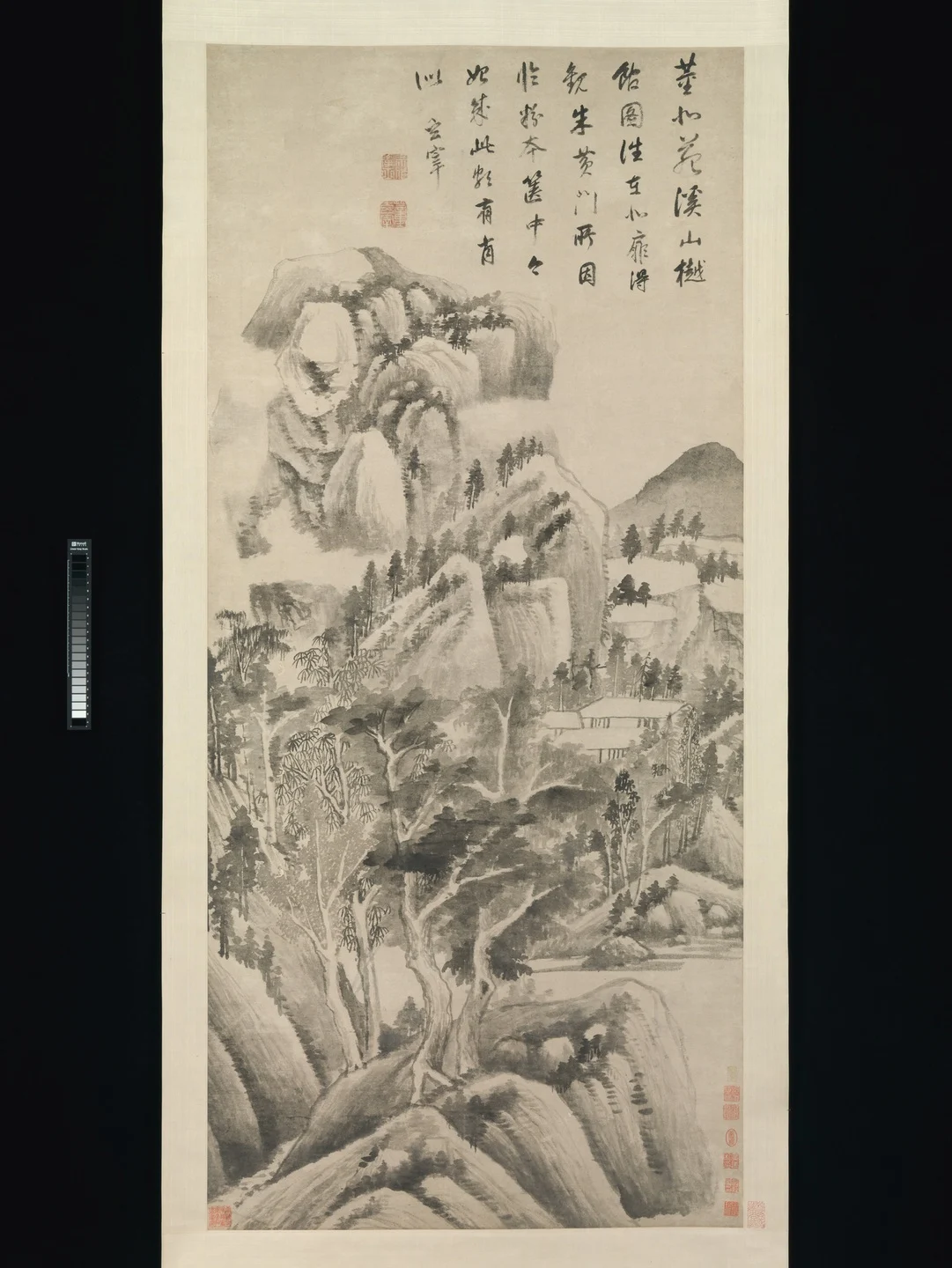 Dong Qichang
Shaded Dwellings among Streams and Mountains
ca. 1622–25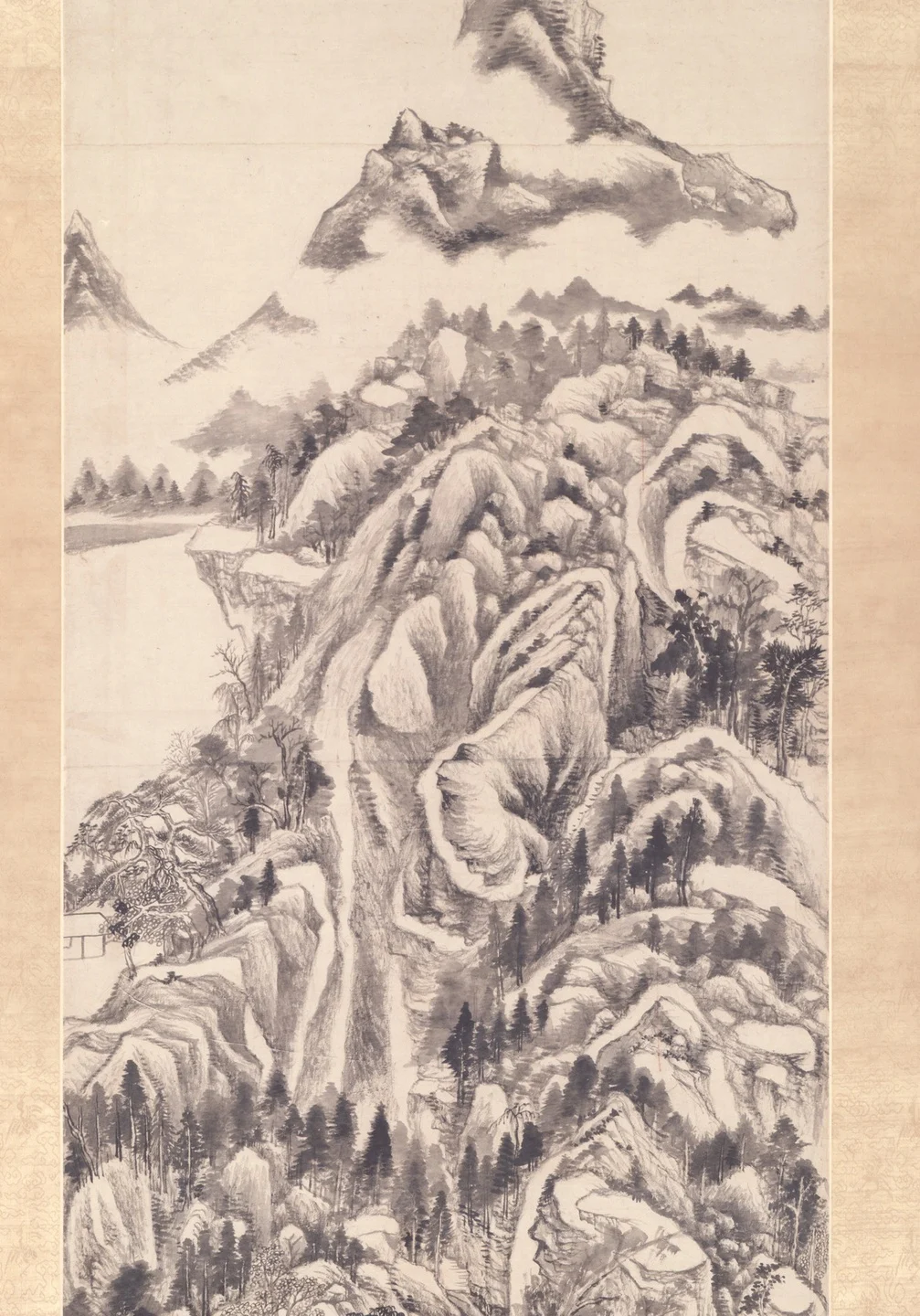 Dong Qichang
Mt. Qingbian
1617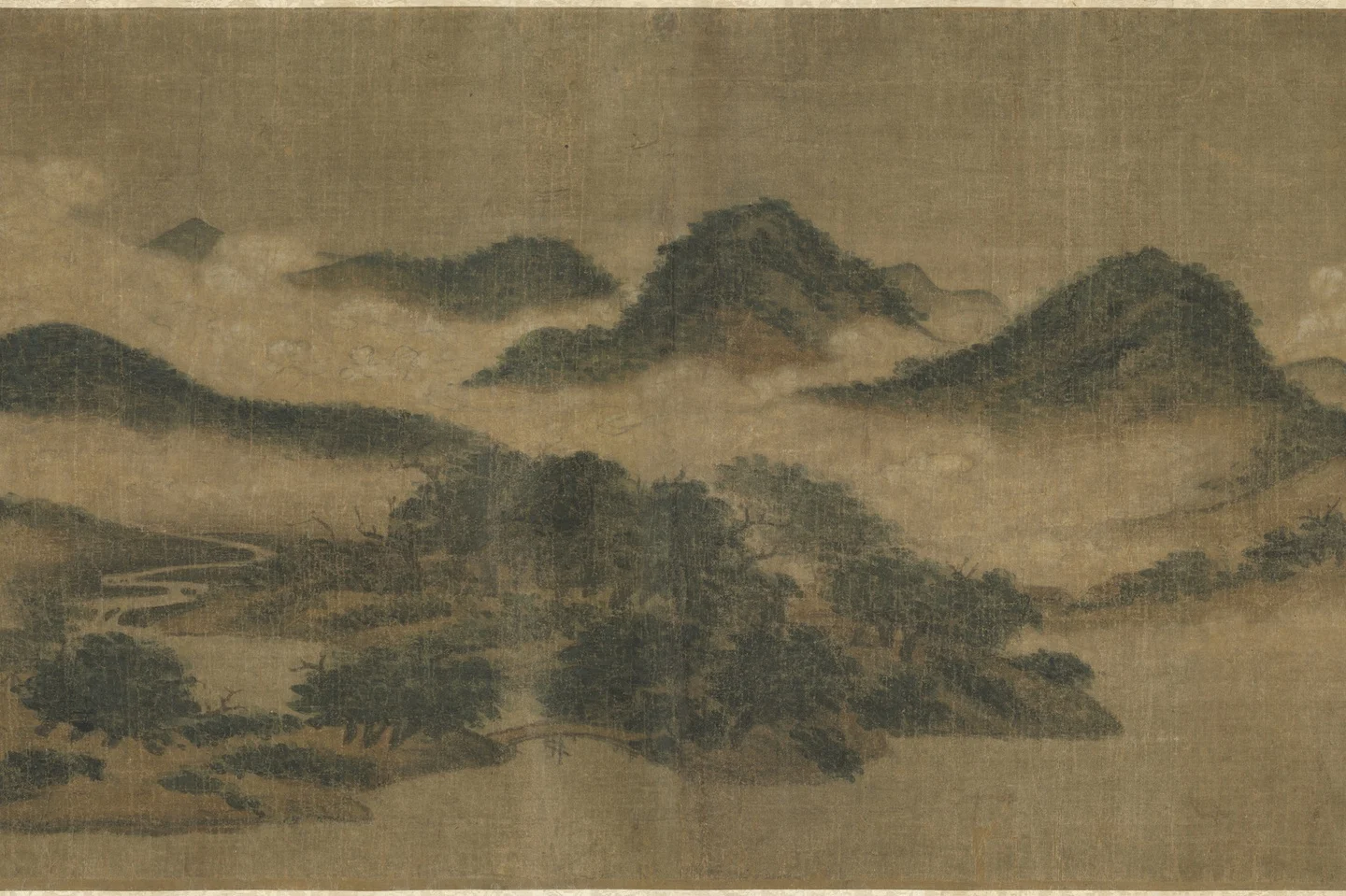 Mi Youren
Cloudy Mountains
1130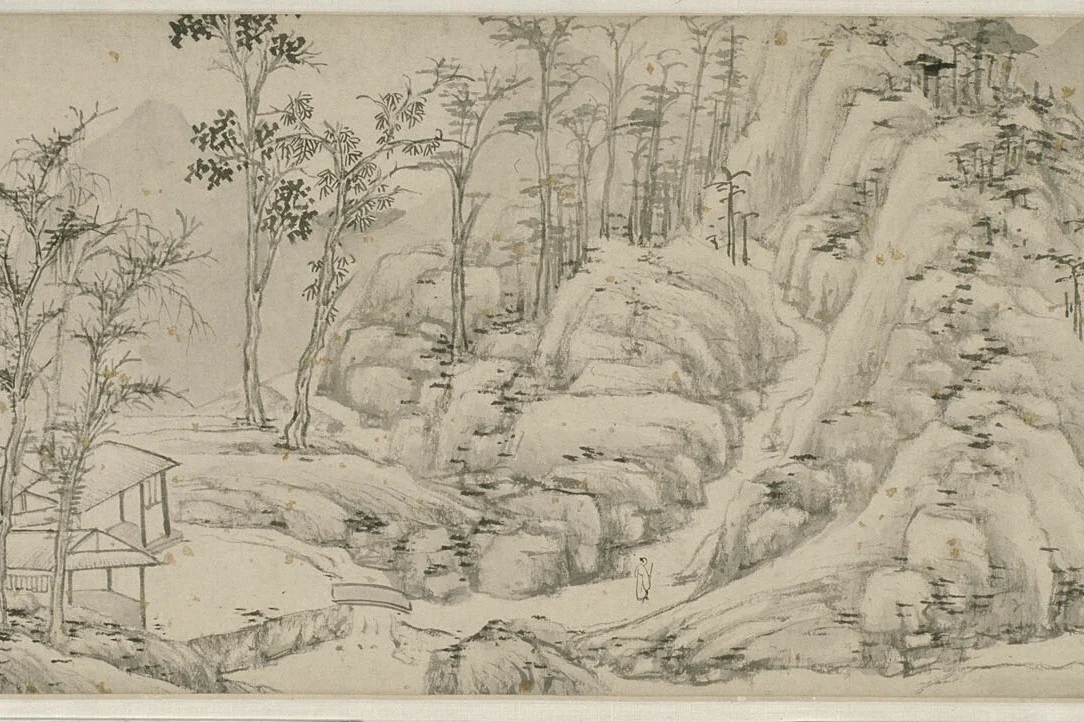 Wen Zhengming
Autumn Mountains 秋山圖
Ming dynasty (1368–1644), early 16th century 明朝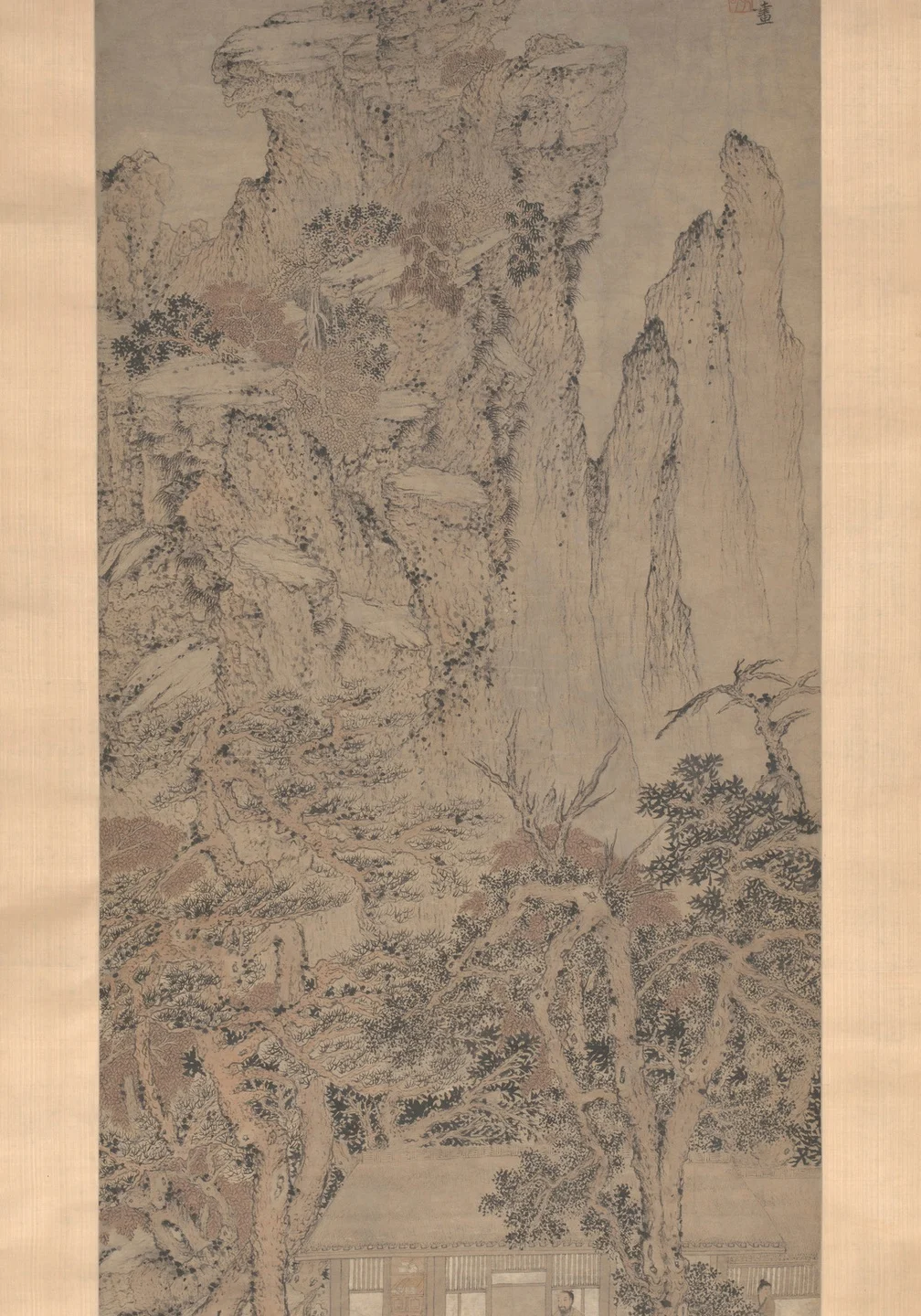 Wang Meng
Quiet Life in a Wooded Glen 林麓幽居圖
Yuan dynasty (1279–1368), dated 1361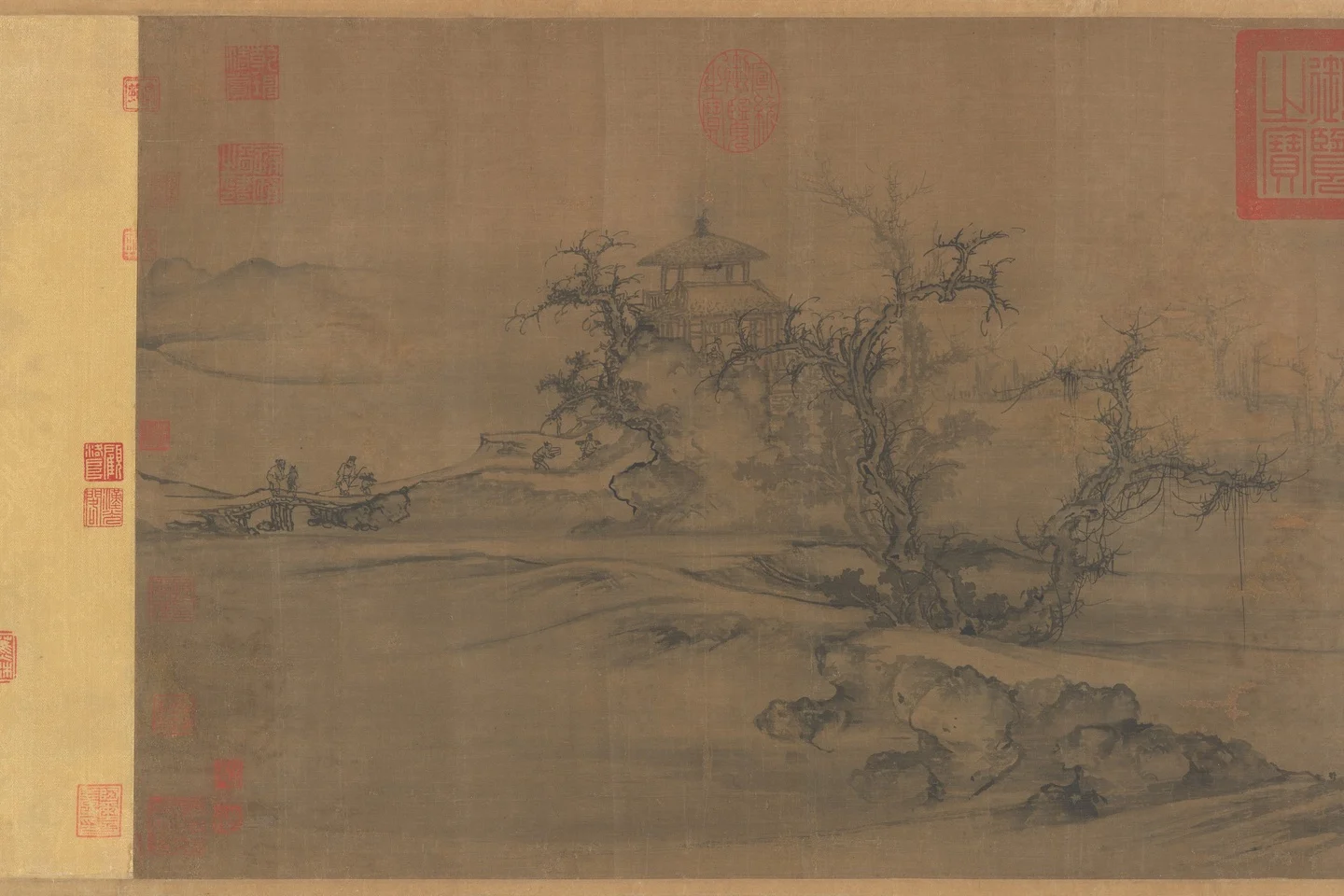 Guo Xi
Old Trees, Level Distance
ca. 1080Period, style and subject
- Movement
- Chinese painting
- Genre
- Landscape
- Medium
- Handscroll; ink on Korean paper
- Collection
- Cleveland Museum of Art
- Dimensions
- Painting only, 38 × 136.8 cm
- Accession number
- 1959.46
Sources
Image provided under CC0. Image licence