Shaded Dwellings among Streams and Mountains
Dong Qichang · ca. 1622–25
Explore the painting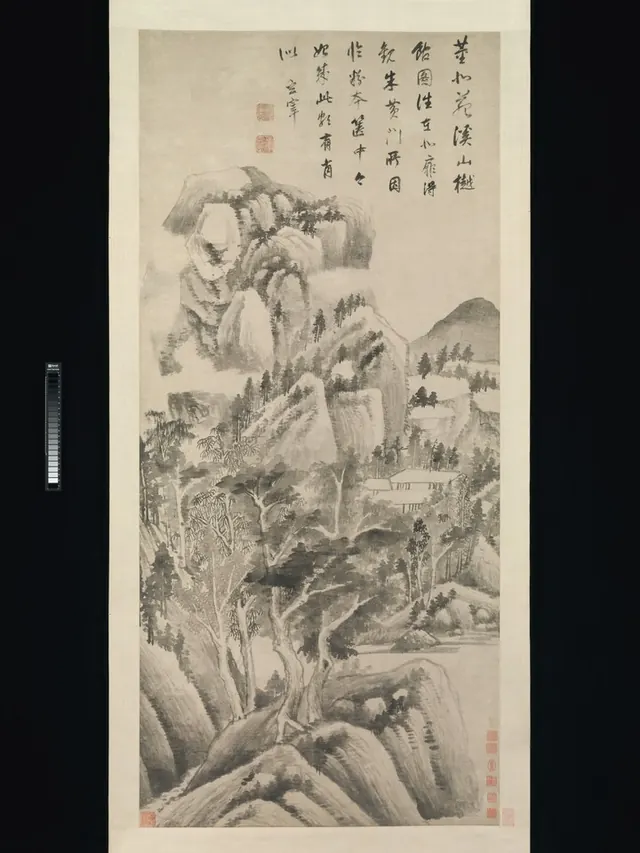
The painting’s story and details
Angular mountains rise above small dwellings. Dong Qichang painted this scroll around 1622–25, drawing on a work by the tenth-century master Dong Yuan. Almost seven centuries separated them. Turning to the past was his means of renewing painting. He sought methods in earlier art that could be recombined through the movements of his own brush.
The upper rocks have pale planes and broad dark edges. Similar bends recur at different heights, as though the ledges were built from related forms. Dong does not conceal this repetition. He coordinates lines and patches so that separate rocks form a connected whole, each retaining its own direction and weight.
The houses on the right look especially light beside the massive mountains. Their roofs are thinly drawn and their walls almost dissolve into the paper. They establish scale without becoming the centre of an event. No clear domestic activity is shown. The dwellings suggest the possibility of human presence within a landscape organised chiefly through mountains, trees and intervals.
Trees with different crowns gather before the houses. Some leaves form fine loops; others merge into broad dark bands. Trunks divide or curve almost parallel to their neighbours. The range of movements is limited, but their combinations change. Like handwriting, this drawing can preserve an author’s recognisable manner within each new arrangement.
A pale band at the lower right separates dense areas of rock and trees. Unmarked paper establishes space without continuous colouring. On the nearby ledge, dark patches gather in an almost stepped sequence. Alternating filled and open areas holds the scroll’s complex structure together. Related contrasts appear between the heavier and lighter strokes of the calligraphy above.
The inscription occupies a field of its own above the mountains. Dong connected painting with calligraphy and emphasised personal expression. He was also a theorist who decided which earlier masters should serve as models. Those choices affected others. His pupil Wang Shimin collected old paintings on his advice, and that collection helped consolidate a particular artistic tradition.
In the following period, Dong’s ideas became a foundation of the Orthodox School, an influential tradition that established approved models of painting. Renewal had become an authoritative standard for pupils and collectors. The scroll raises a specific question about tradition: what possibilities does a selected group of predecessors open, and which works remain outside it?
Featured in tours
Chinese landscape. The scholar’s life
Public service, retirement, gardens, poetry and the memory of earlier masters.
More paintings to compare
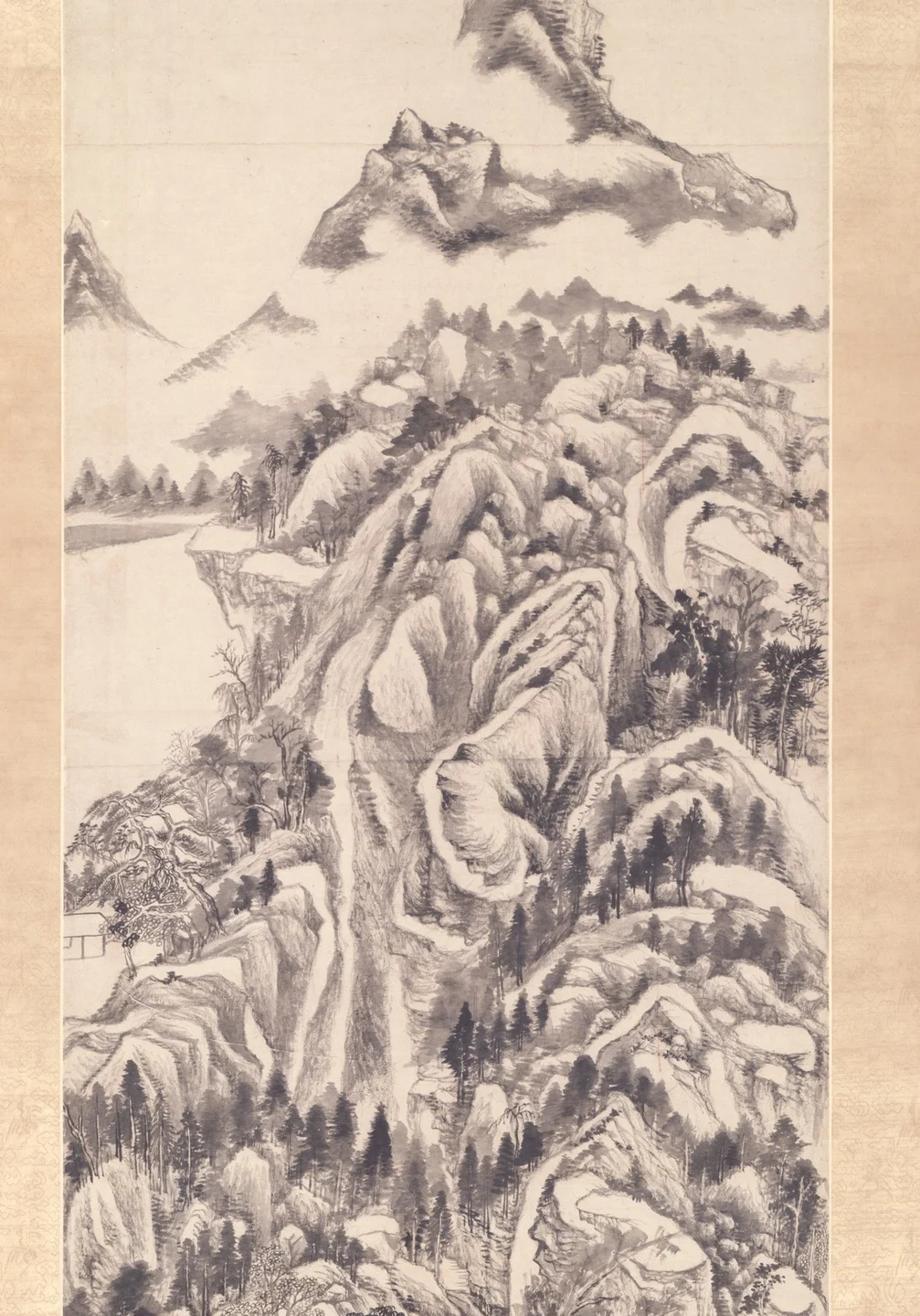 Dong Qichang
Mt. Qingbian
1617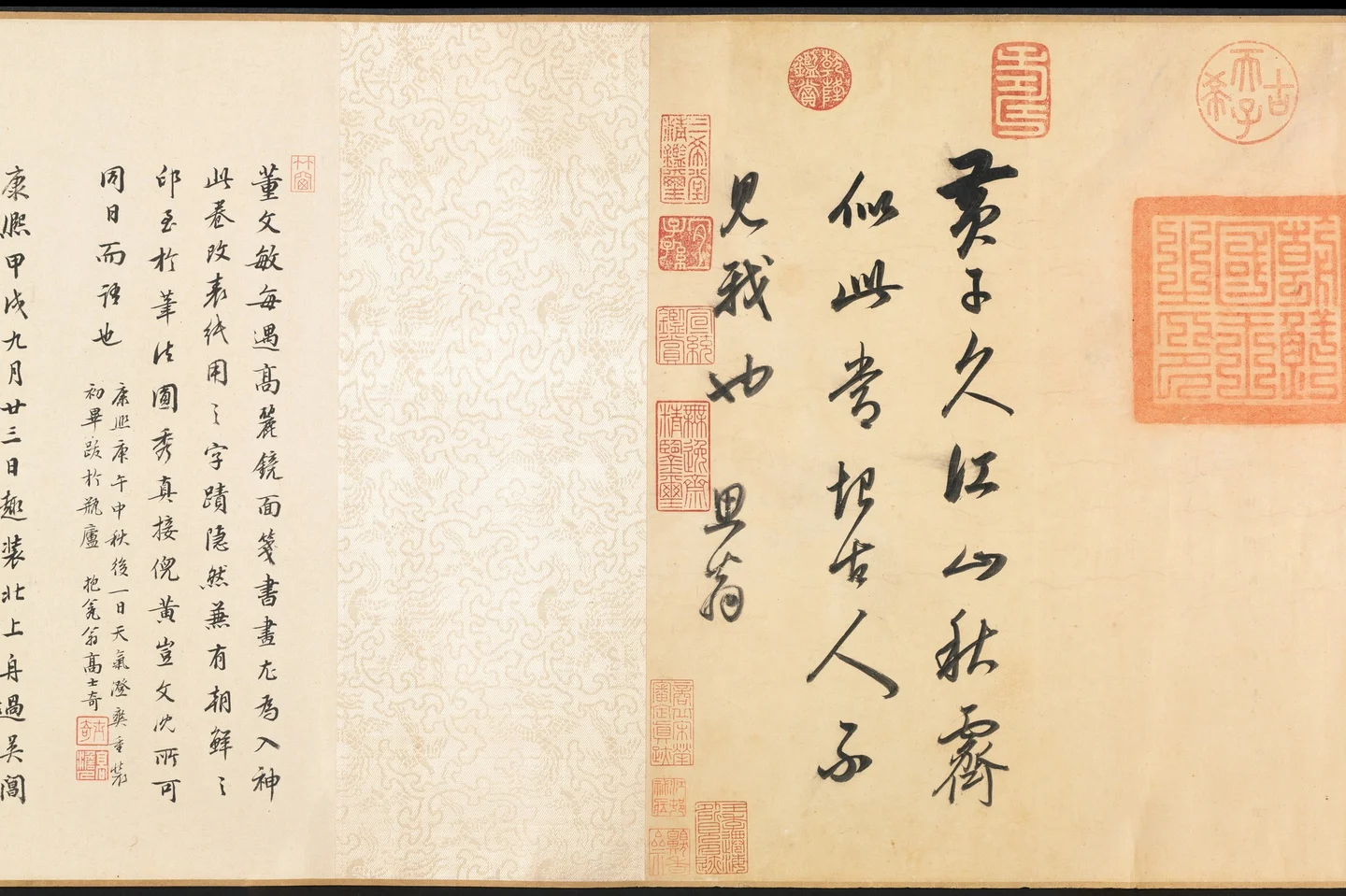 Dong Qichang
River and Mountains on a Clear Autumn Day
c. 1624–27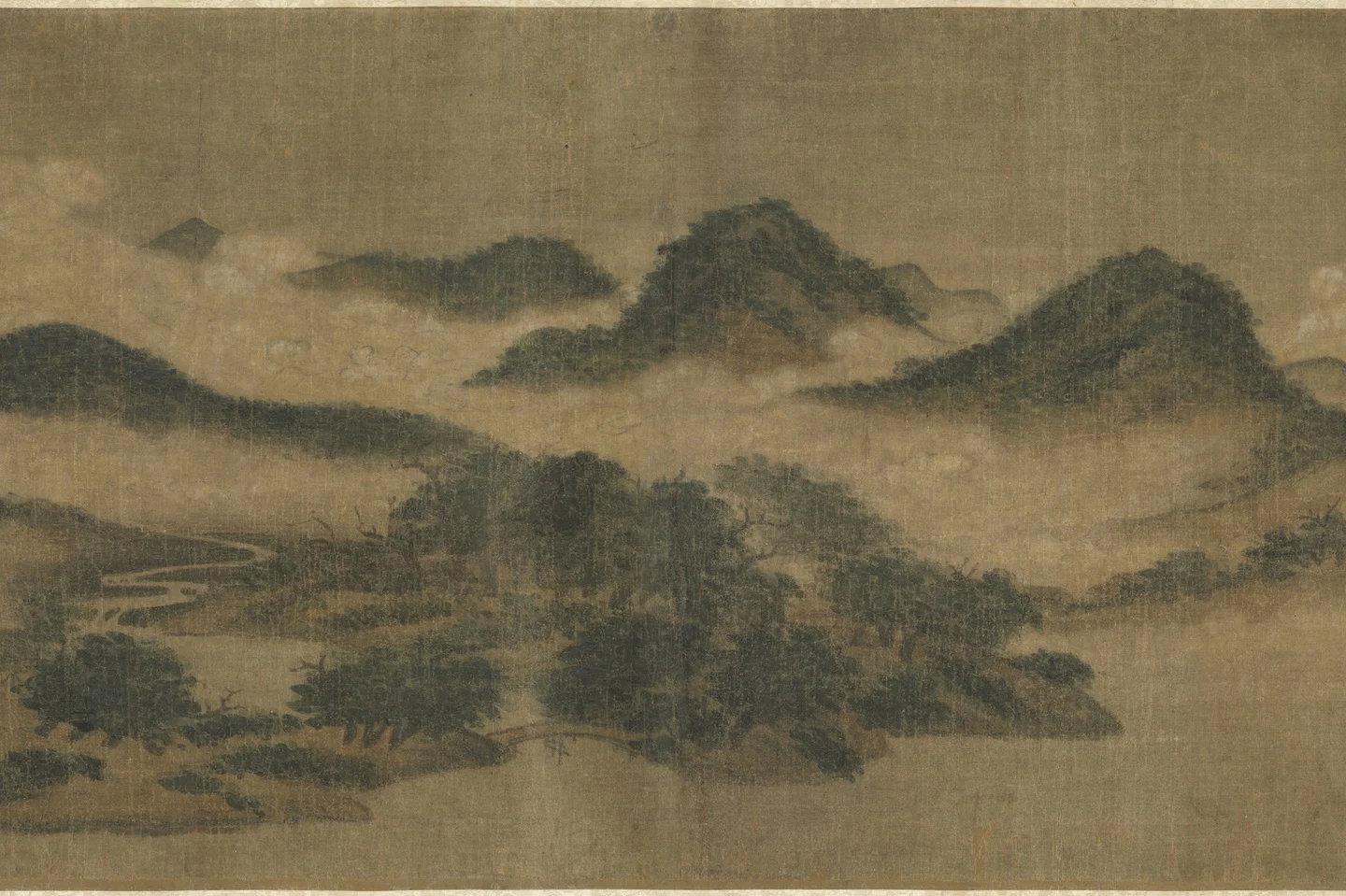 Mi Youren
Cloudy Mountains
1130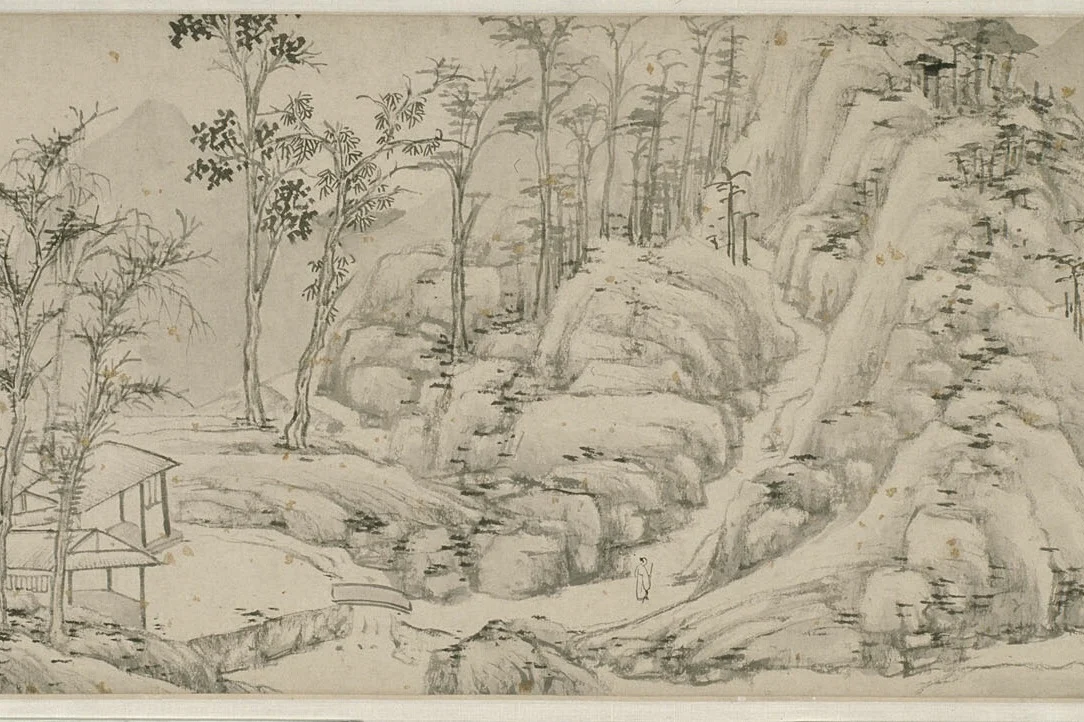 Wen Zhengming
Autumn Mountains 秋山圖
Ming dynasty (1368–1644), early 16th century 明朝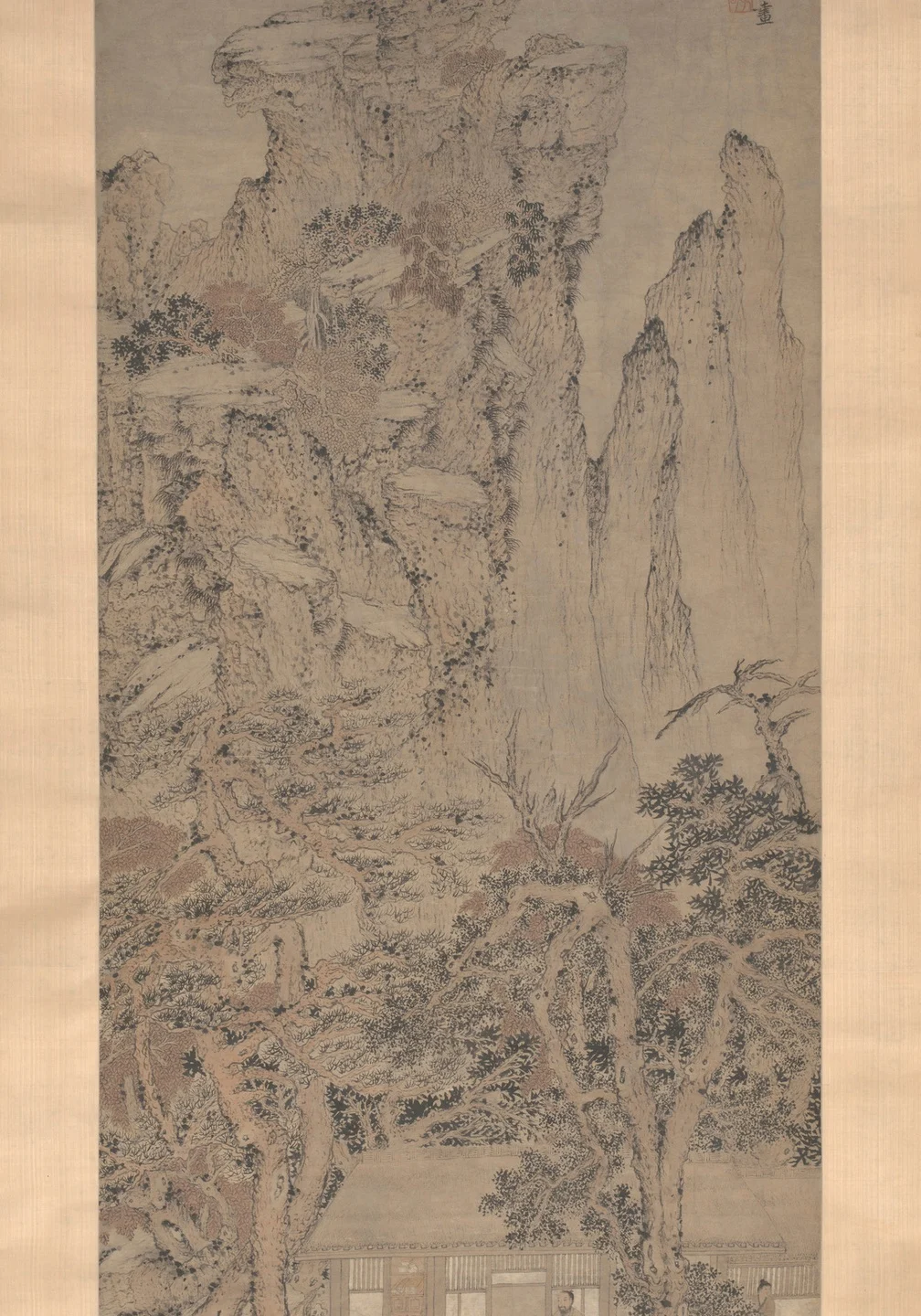 Wang Meng
Quiet Life in a Wooded Glen 林麓幽居圖
Yuan dynasty (1279–1368), dated 1361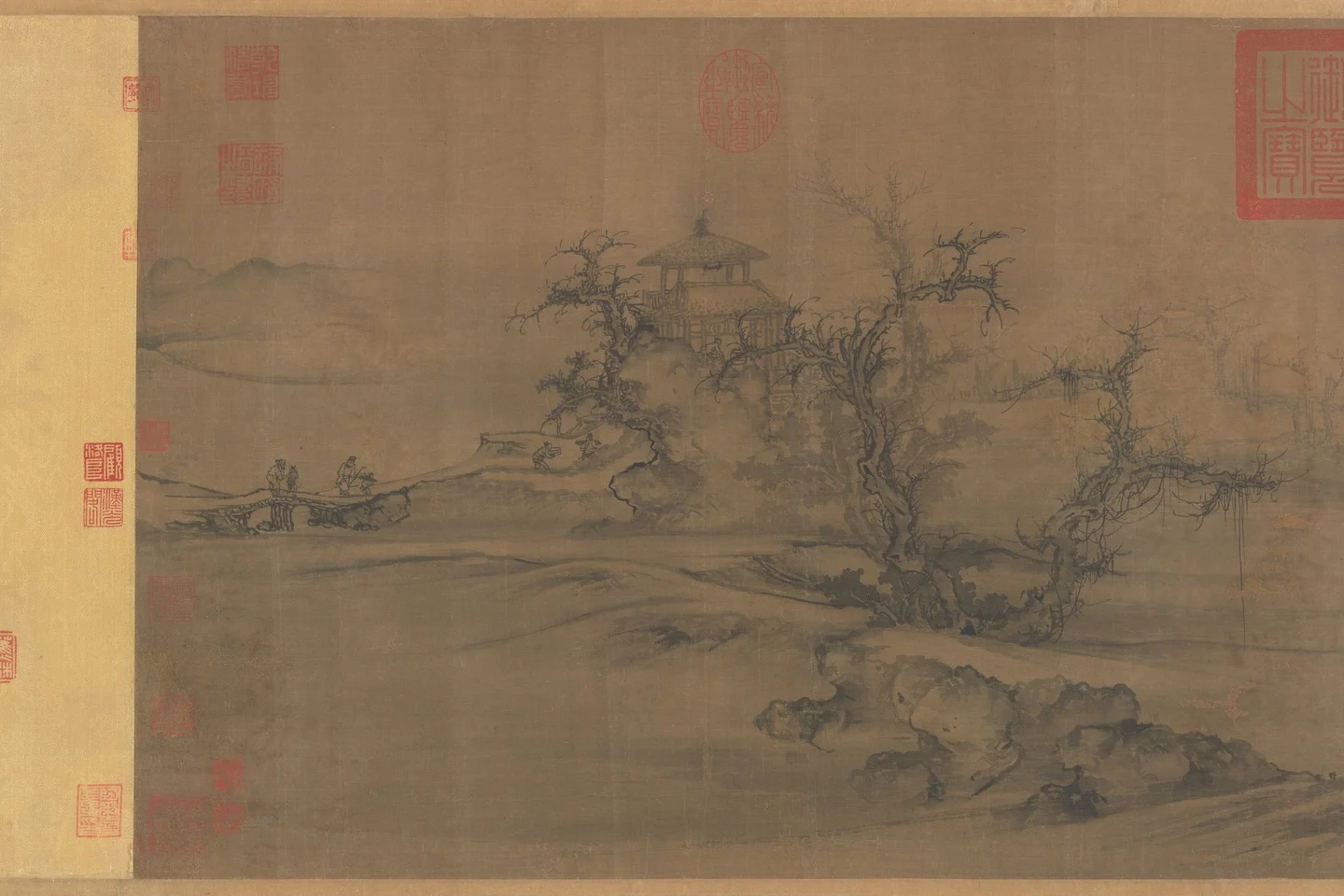 Guo Xi
Old Trees, Level Distance
ca. 1080Period, style and subject
- Movement
- Chinese painting
- Genre
- Landscape
- Medium
- Hanging scroll; ink on paper
- Collection
- The Metropolitan Museum of Art
- Dimensions
- Image, 158.4 × 72.1 cm
- Accession number
- 1979.75.2
Sources
Image provided under CC0. Image licence