Mt. Qingbian
Dong Qichang · 1617
Explore the painting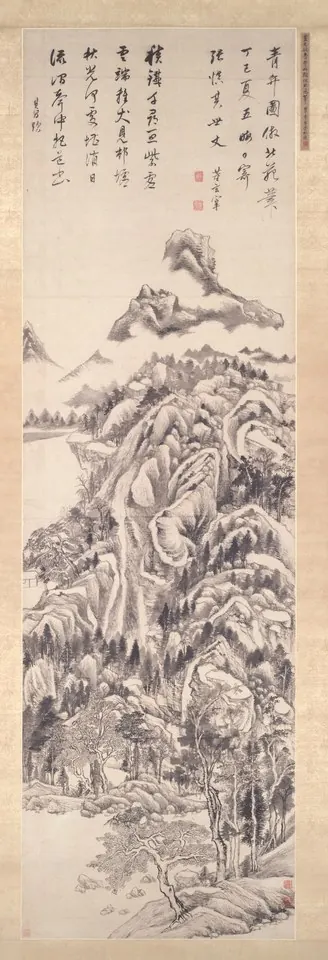
The painting’s story and details
Dong Qichang painted Mount Qingbian in 1617. He combined government service with painting, collected works of art and wrote about how to judge them. He later became Minister of Rites. His judgments influenced which earlier masters other artists chose to study. In this painted scroll, more than two metres high, familiar mountains become an intricate construction of rocks, trees and bands of mist. His interest in earlier painting helps explain its arrangement.
Trees at the foot have crooked trunks and densely branching crowns. The bends of individual branches are much easier to follow here than the arrangement of slopes above. When studying old paintings, Dong compared their makers’ methods. This scroll invites a similar kind of observation: following a branch’s turn, the pressure of the brush and the change from a thin line to a dense patch of ink.
The rocks at the right form angular loops. Art historian James Cahill suggested that Dong may have had Wang Meng’s Qingbian Mountains of 1366 in mind. Yet this scroll’s inscription names the earlier Dong Yuan as its model. The connection with Wang Meng remains a scholarly hypothesis. The inscription identifies the painter’s chosen reference; comparing the works lets us examine how closely that reference describes his practice.
Buildings at the left seem wedged between trees and fractured rock. Habitable patches alternate with slopes difficult to imagine along a continuous route. Dong had visited these mountains but rearranged them here. Resemblance to the location gives way to combinations of pictorial decisions that a connoisseur could recognize and compare.
Rows of dark trees recur at different heights. Short horizontal marks form related triangles. They indicate vegetation while connecting disjointed rocks. The Cleveland Museum emphasizes the independent role of brush and ink in this landscape. We can follow repeated marks even when a comprehensible route up the mountain disappears.
A broad interval of mist separates the summit from the lower slopes, with calligraphy above it. Dong grouped the masters he favoured within a “Southern School,” borrowing a two-lineage model from Chan Buddhism. This was an artistic genealogy with chosen teachers. Words above a landscape helped explain the tradition to which a new work belonged.
Studying old masters allowed Dong to transform their methods and combine them within one work. His pupil Wang Shimin collected paintings on his advice. These selected models helped establish the Orthodox School under the succeeding Qing dynasty, a circle of painters who made that tradition the basis of their training. This invites reflection on a connoisseur’s influence. When personal taste helps decide whose works are preserved and studied, its effects extend through art history far beyond a single painting.
Featured in tours
Chinese landscape. The scholar’s life
Public service, retirement, gardens, poetry and the memory of earlier masters.
More paintings to compare
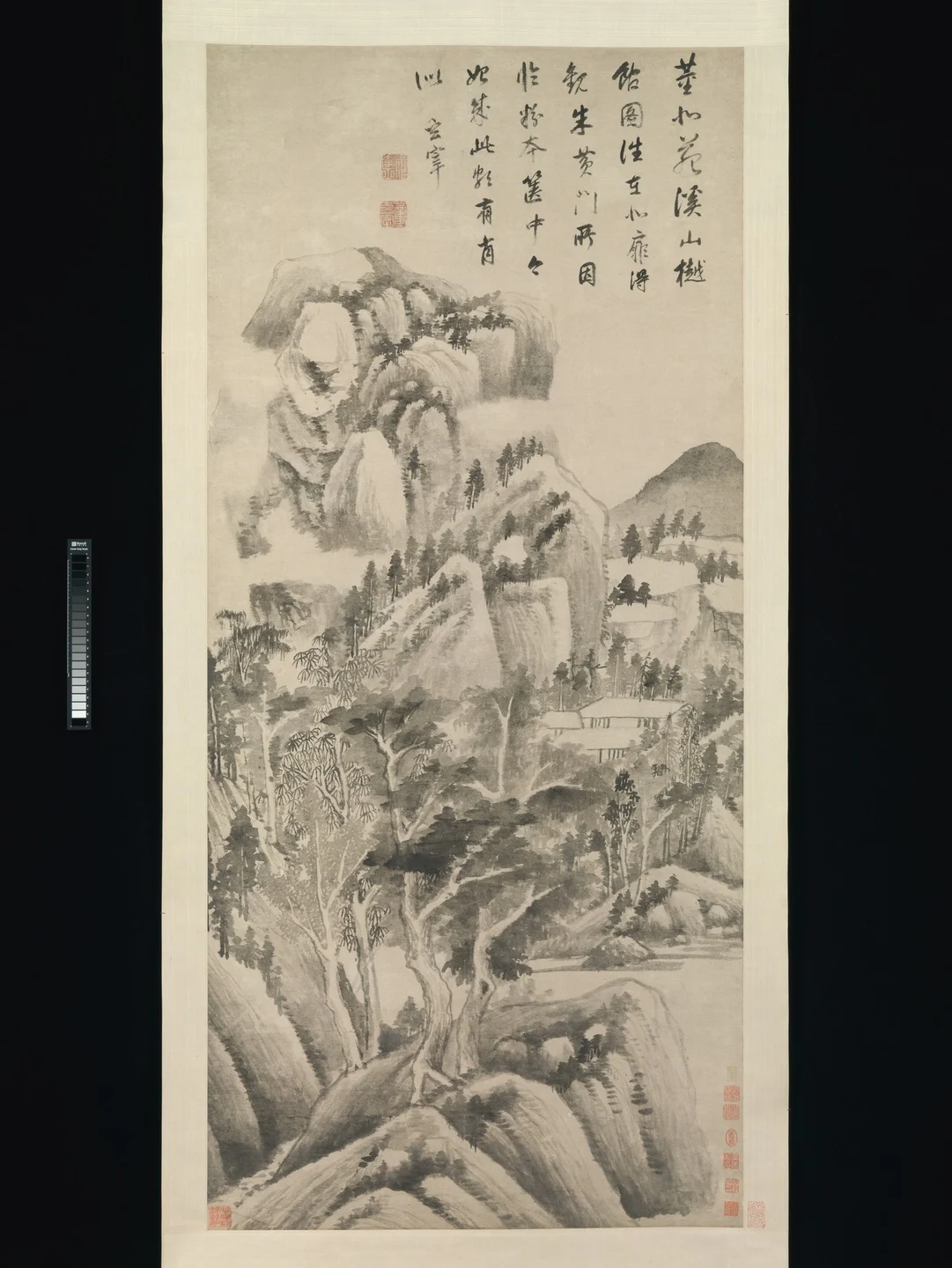 Dong Qichang
Shaded Dwellings among Streams and Mountains
ca. 1622–25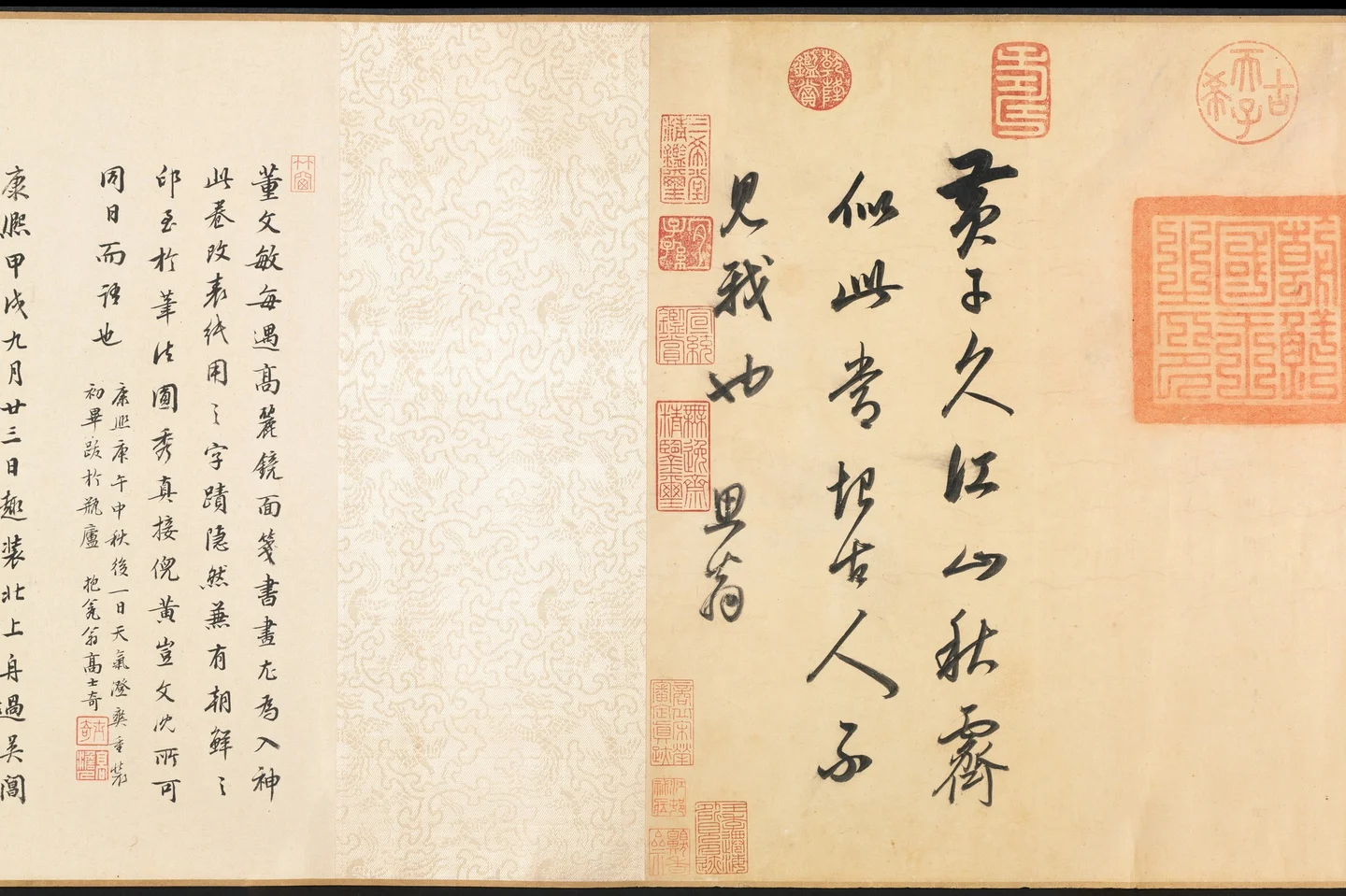 Dong Qichang
River and Mountains on a Clear Autumn Day
c. 1624–27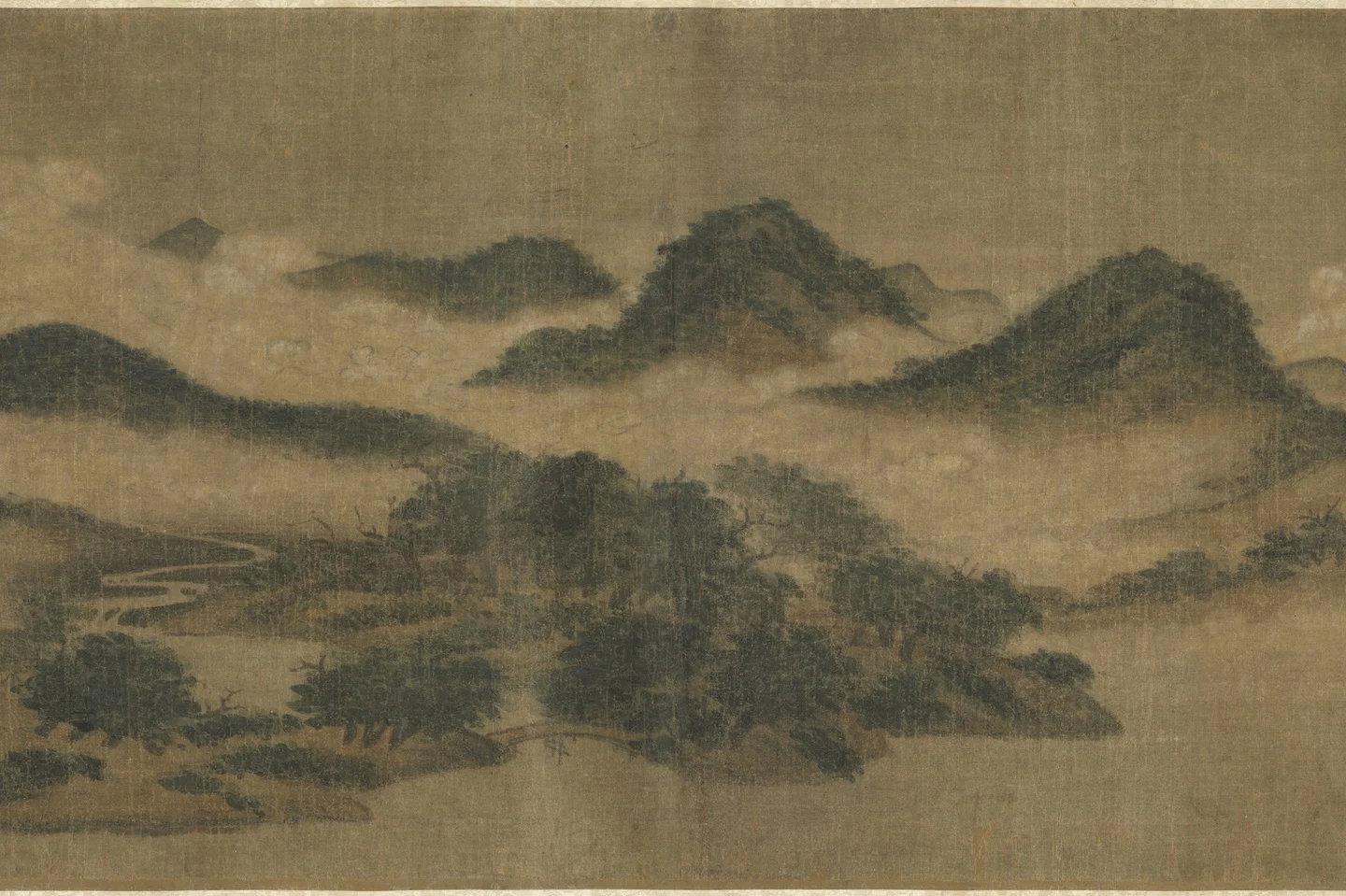 Mi Youren
Cloudy Mountains
1130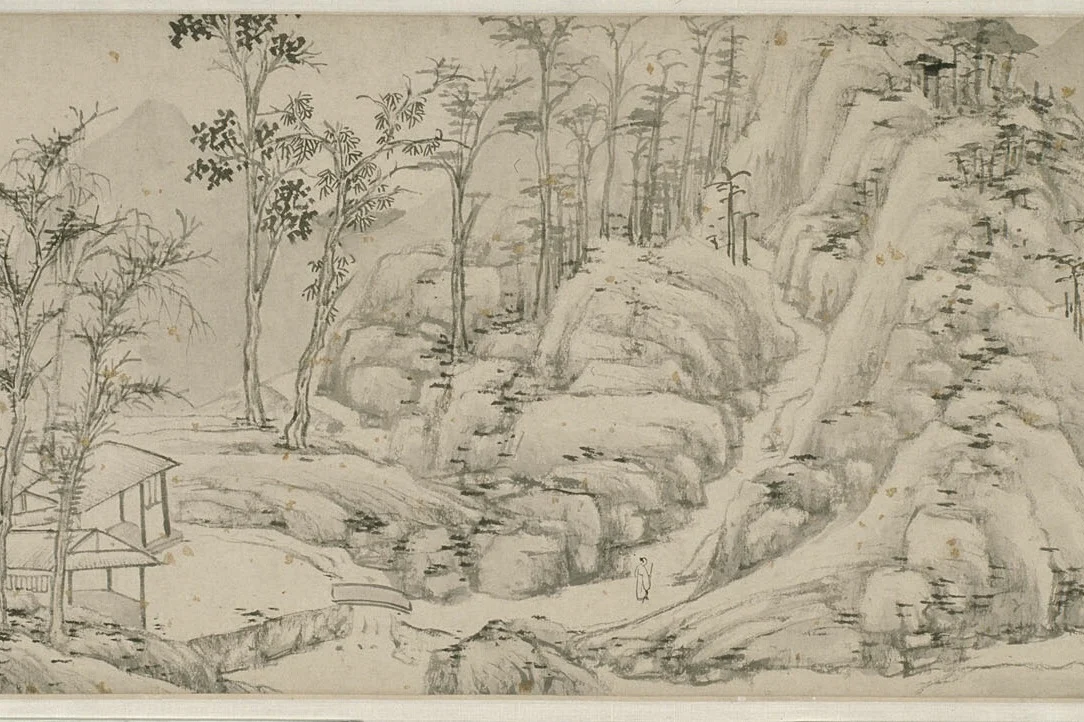 Wen Zhengming
Autumn Mountains 秋山圖
Ming dynasty (1368–1644), early 16th century 明朝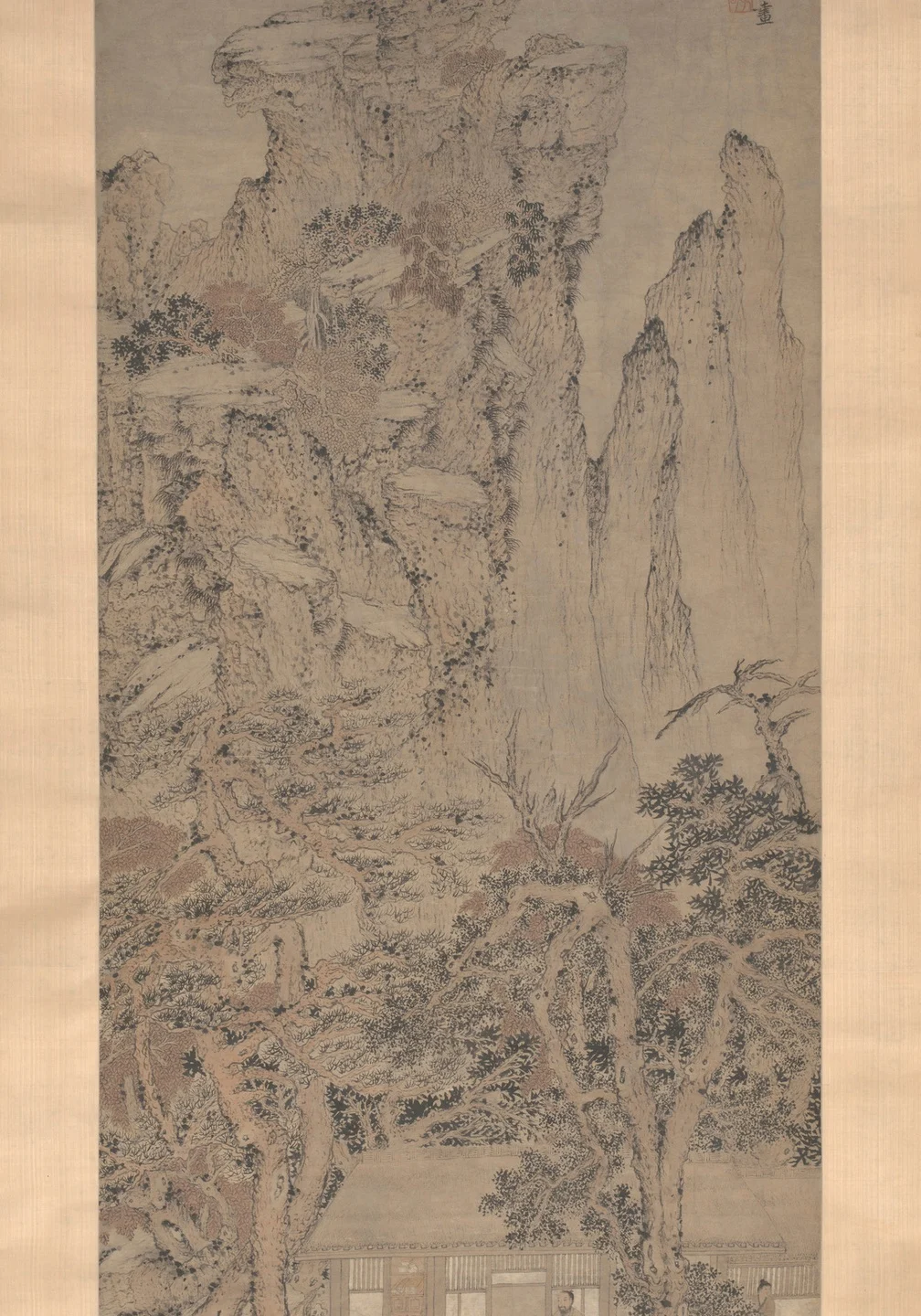 Wang Meng
Quiet Life in a Wooded Glen 林麓幽居圖
Yuan dynasty (1279–1368), dated 1361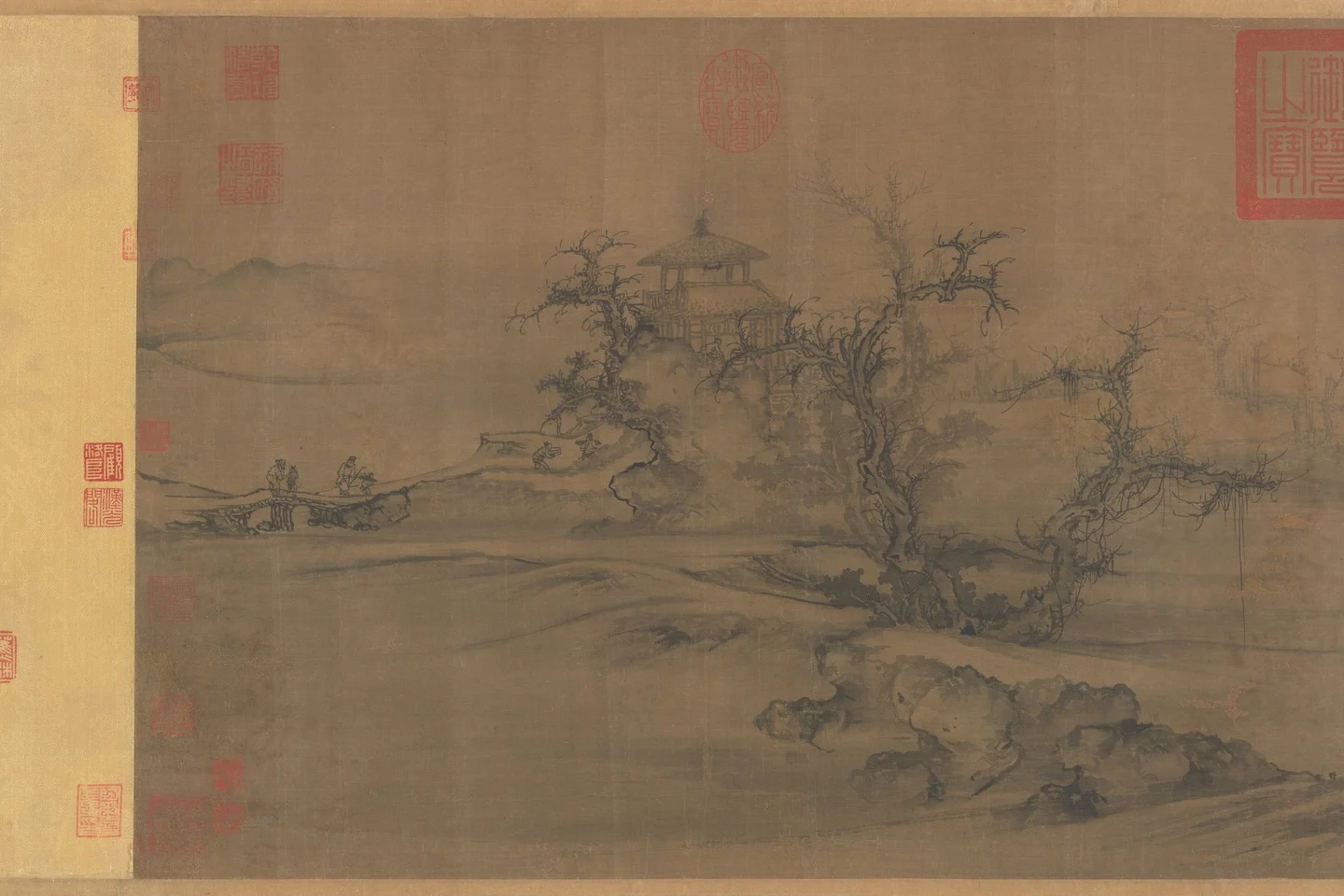 Guo Xi
Old Trees, Level Distance
ca. 1080Period, style and subject
- Movement
- Chinese painting
- Genre
- Landscape
- Medium
- hanging scroll, ink on paper
- Collection
- Cleveland Museum of Art
- Dimensions
- Painting, 225 × 67.6 cm
- Accession number
- 1980.10
Sources
Image provided under CC0. Image licence