Three Horses and Four Grooms
Ren Renfa · c. 1320s
Explore the painting
The painting’s story and details
Four grooms lead three horses. Ren Renfa made the scroll around the 1320s under the Mongol Yuan dynasty. Both Chinese connoisseurs and Mongol courtiers valued his horse paintings. Their shared interest allowed older Chinese art to be revisited within a new political setting. The painter studied Li Gonglin’s line and the coloured horses of the Tang master Han Gan.
The bay horse at the right appears first when the scroll opens conventionally from right to left. A white blaze distinguishes its face. A raised foreleg and inclined head suggest movement being contained. Two attendants set this horse apart, inviting an expectation of particular strength or value.
A man in red holds the rein while another in pale clothing looks back. Their faces and hands turn towards the horse. The painter shows how much attention the animal requires before the viewer begins judging its beauty. A calm procession depends on the ongoing work of those leading it.
The middle horse has a lighter, warm golden coat. Its head turns towards the viewer, interrupting the procession’s single direction. Red decoration at the neck echoes its attendant’s clothing. Colour distinguishes the pairs and holds attention on the animal without a detailed landscape around it.
Small dapples cover the grey horse at the left. The painter distinguishes a pale flank, dark mane and slender legs while keeping the contour light. Restrained colours convey the coat’s surface. Older models are combined with attention to differences among three particular bodies.
Calligraphy begins to the left of the image, extending the encounter beyond the procession. Writing and painting in a handscroll are examined successively at close range. A rein’s fine line and a written character belong to different activities, but both reveal the hand’s assurance.
The horses receive special attention, while their grooms make that display possible. Each animal has its own coat and pose; every person is occupied in attending it. The scroll offers admiration for breeding and care while retaining traces of the labour behind a prestigious pursuit. At the Mongol court, an established Chinese subject continued through the interest of new viewers.
More paintings to compare
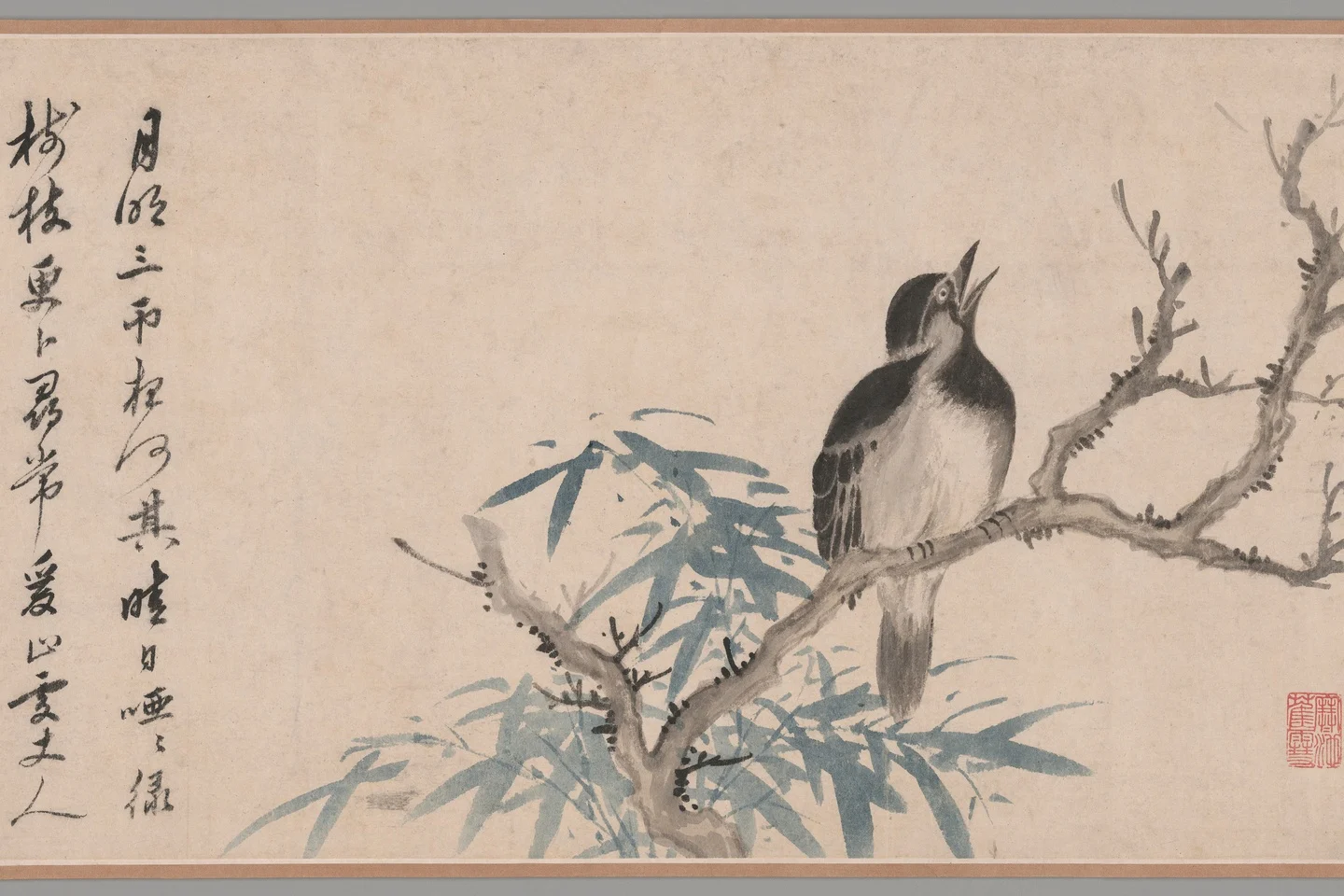 Yao Shou
Pillars of the Country
Ming dynasty (1368–1644), 1494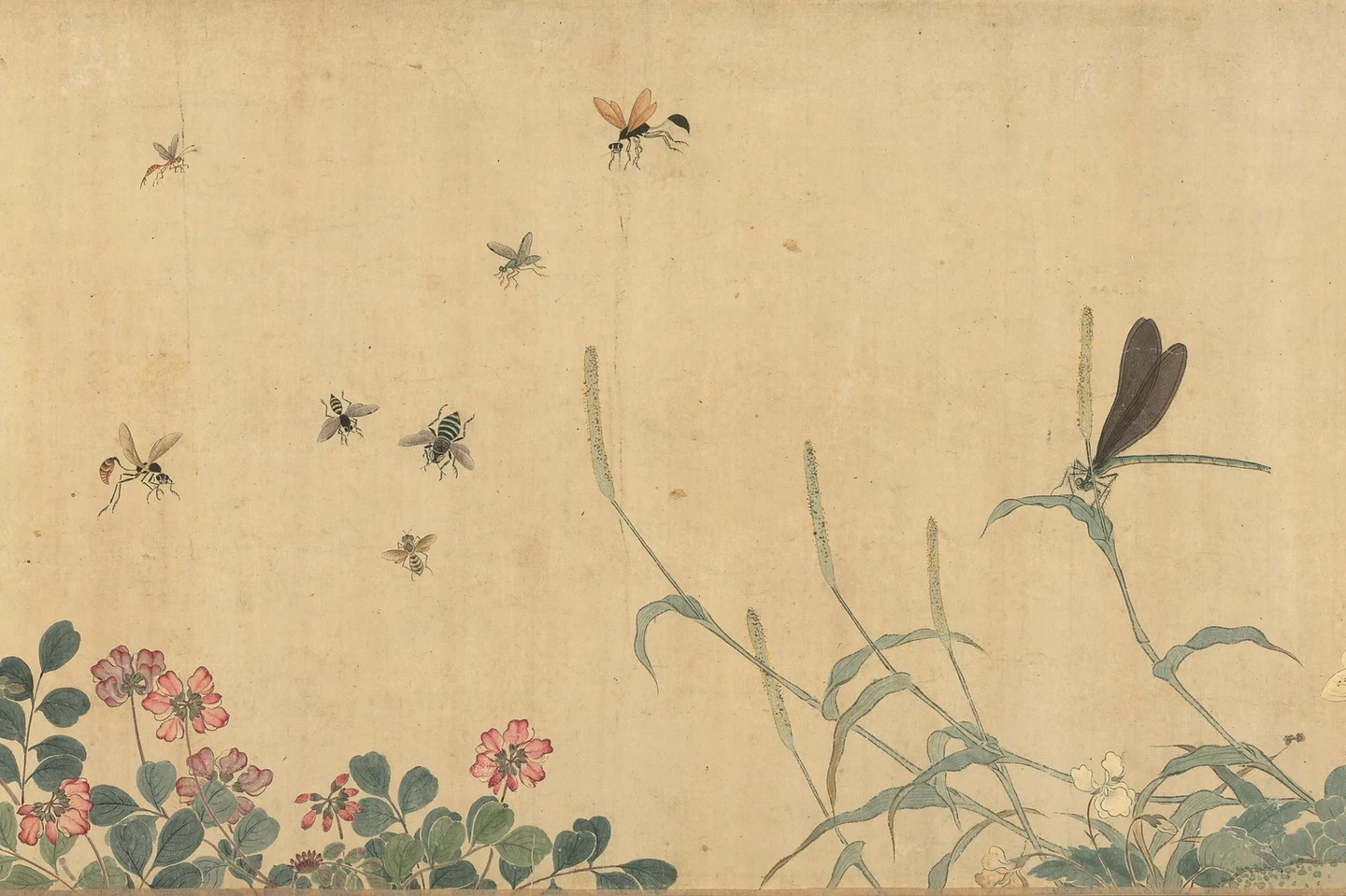 Chai Zhenyi and Chai Jingyi
Flowers and Insects
Qing dynasty (1644–1911), reign of Kangxi (1662–1722)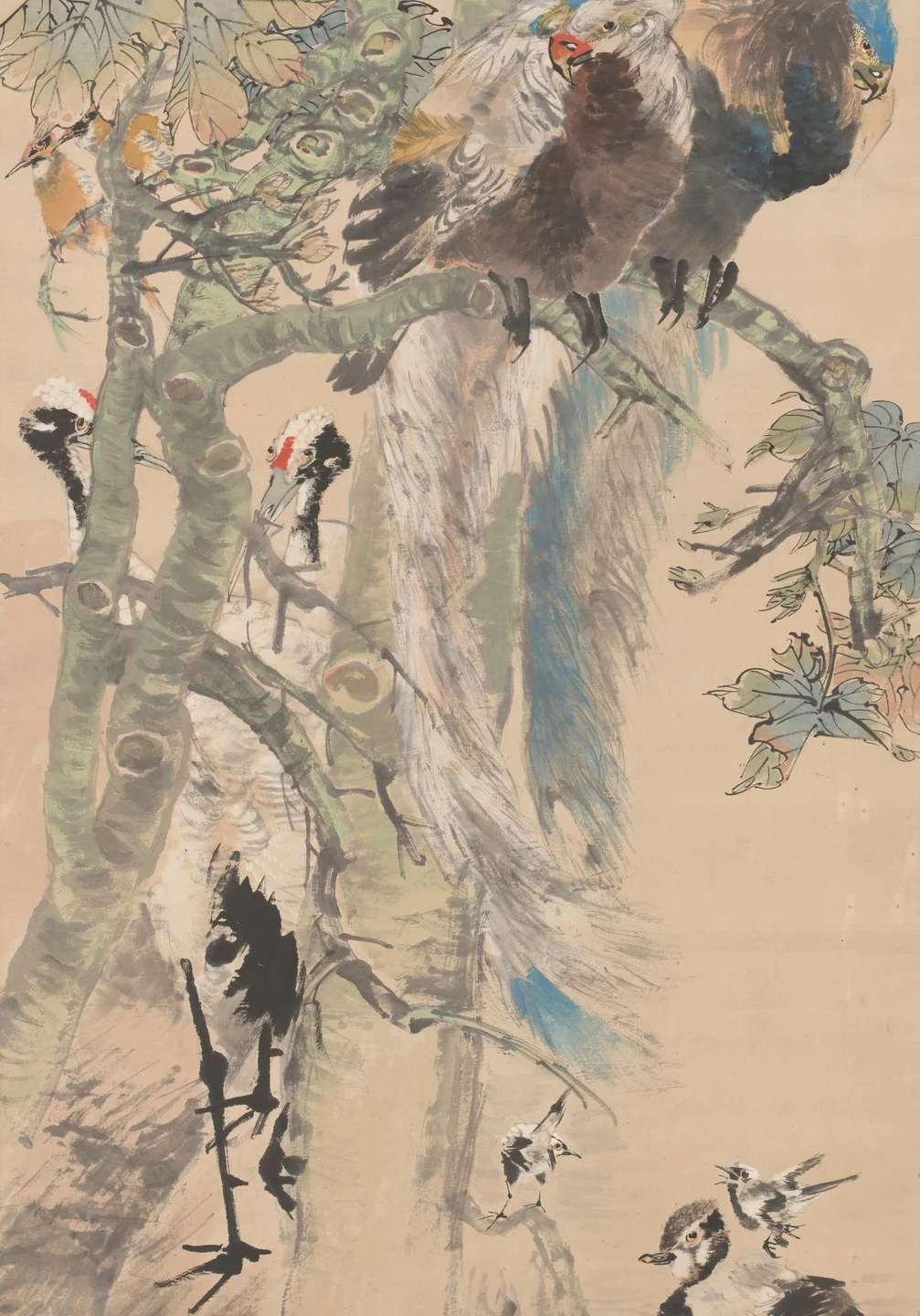 Ren Yi
The Five Virtues
Qing dynasty (1644–1911), 1895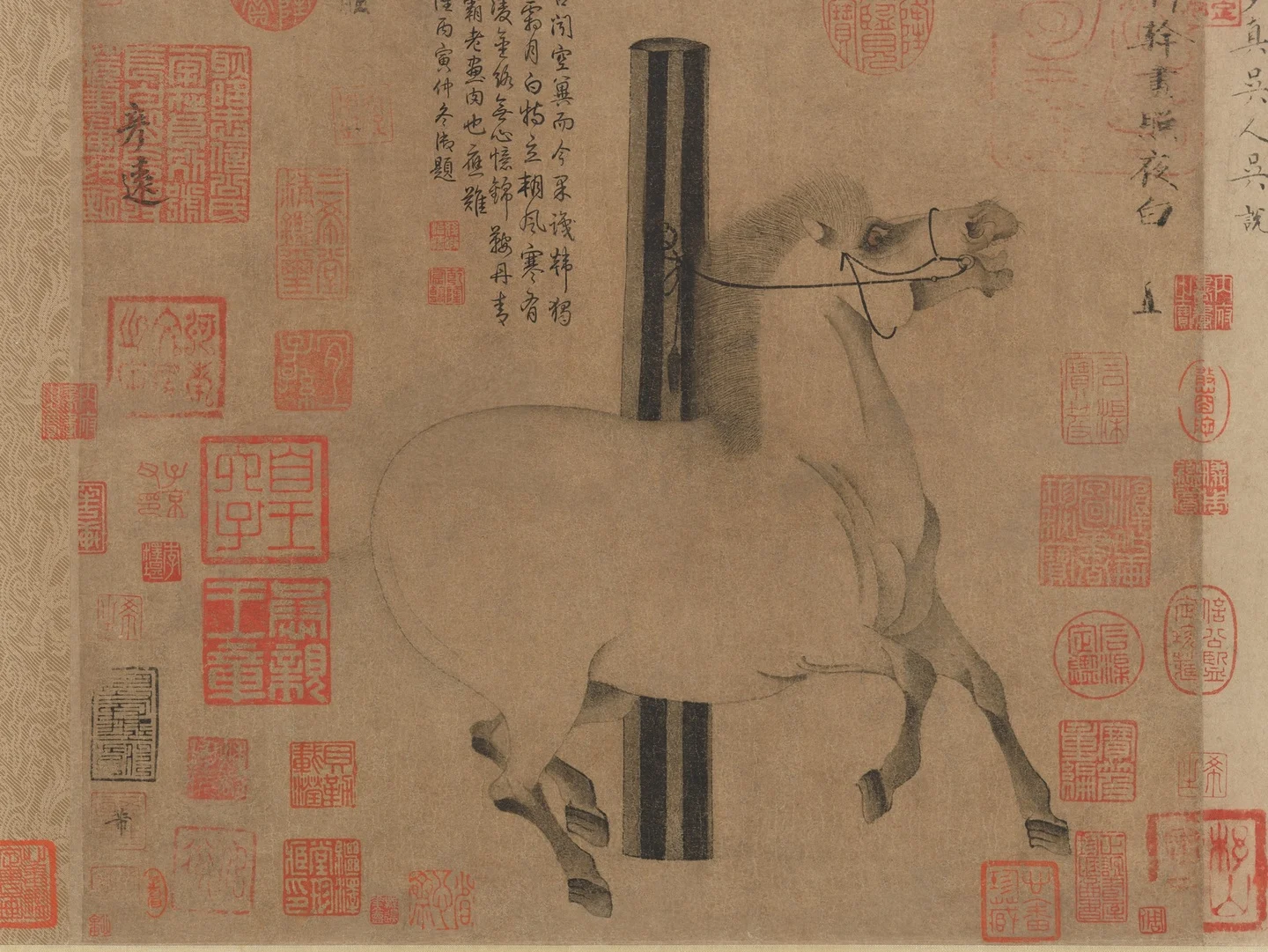 Han Gan
Night-Shining White
ca. 750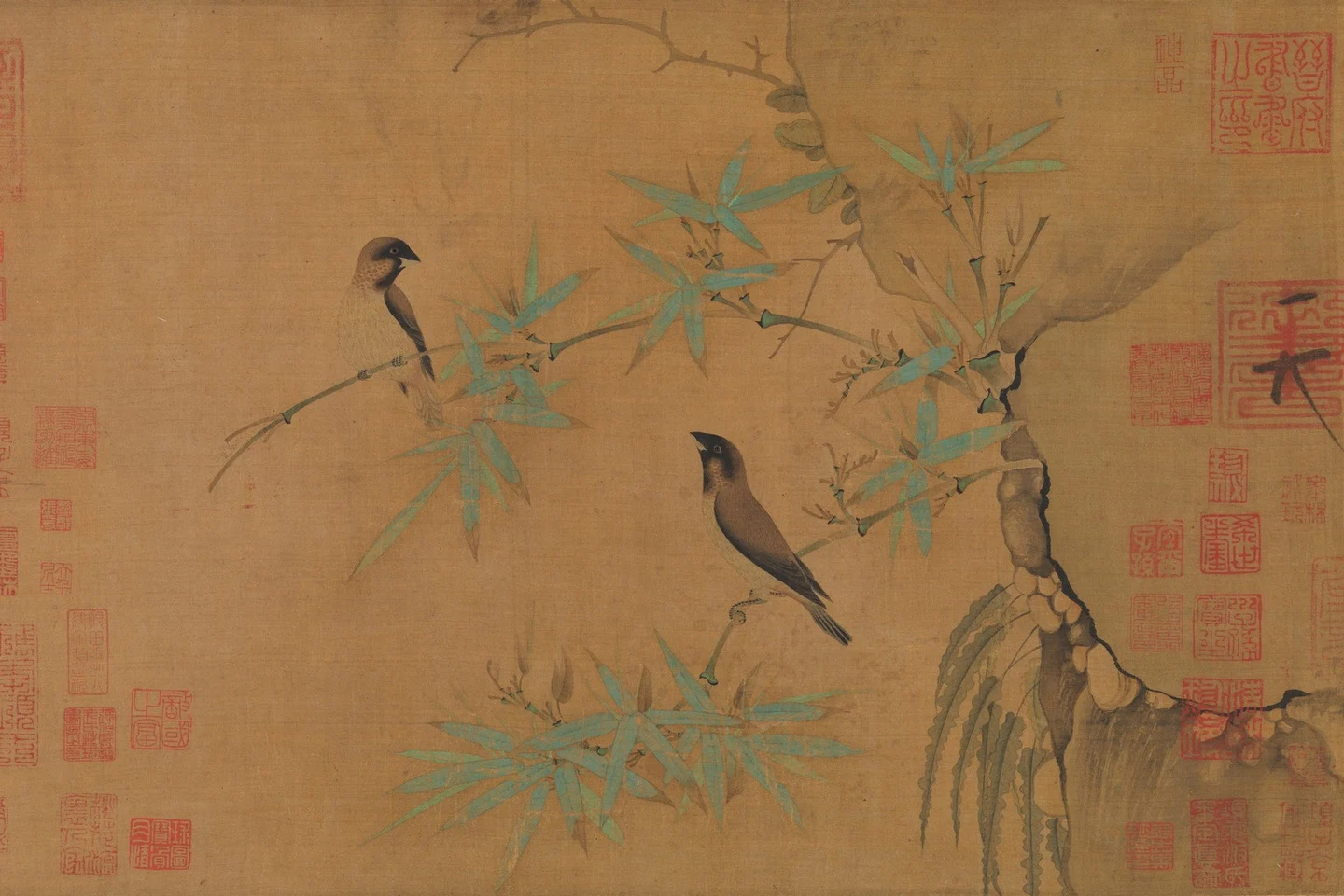 Emperor Huizong
Finches and bamboo
early 12th century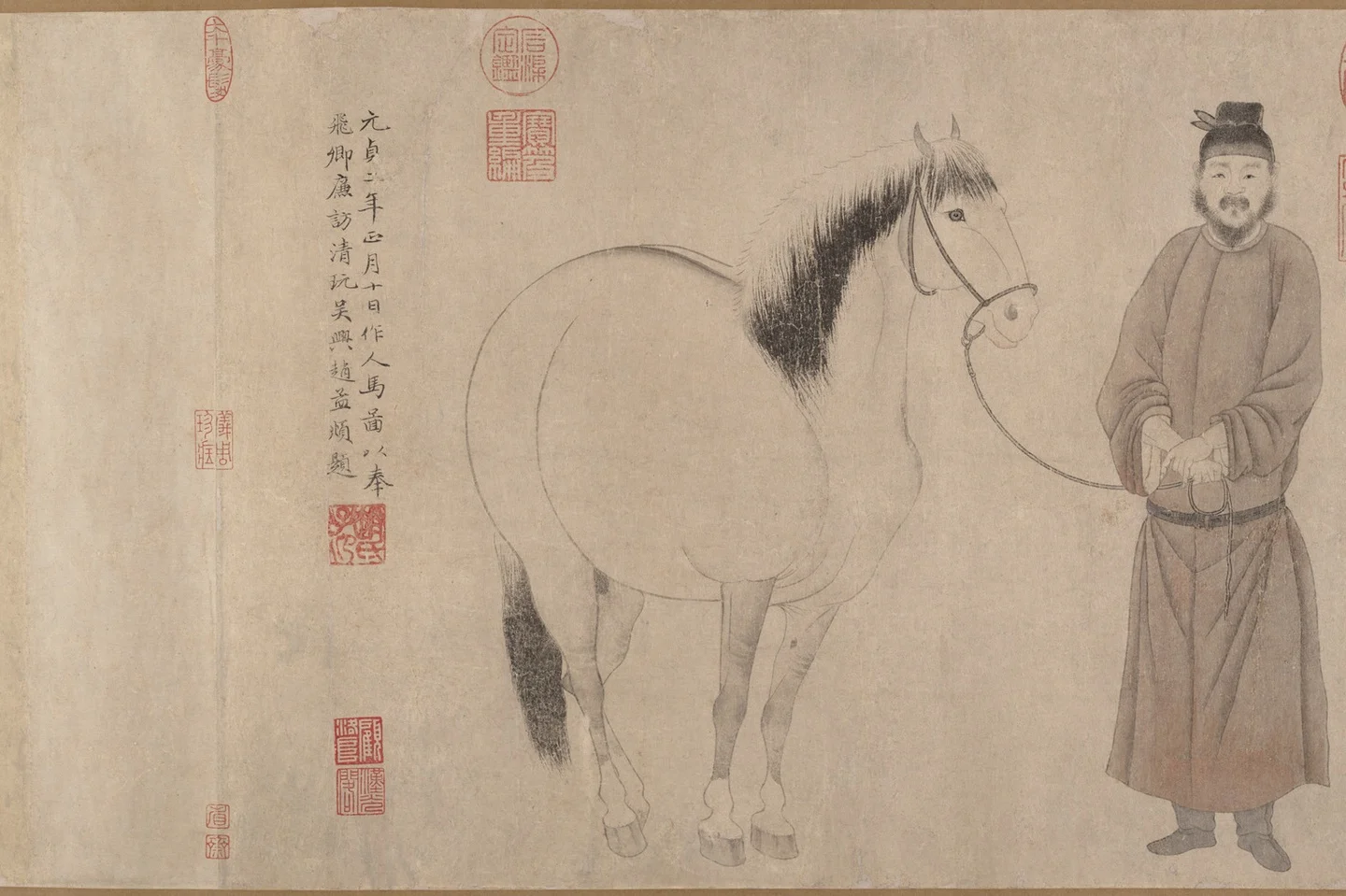 Zhao Mengfu, Zhao Yong and Zhao Lin
Grooms and horses
dated 1296 and 1359Period, style and subject
- Movement
- Chinese painting
- Genre
- Animals
- Medium
- handscroll; ink and color on silk
- Collection
- Cleveland Museum of Art
- Dimensions
- Painting, 28.5 × 137.5 cm
- Accession number
- 1960.181
Sources
Image provided under CC0. Image licence