River Village: Fisherman's Joy
Zhao Mengfu · c. 1302–3
Explore the painting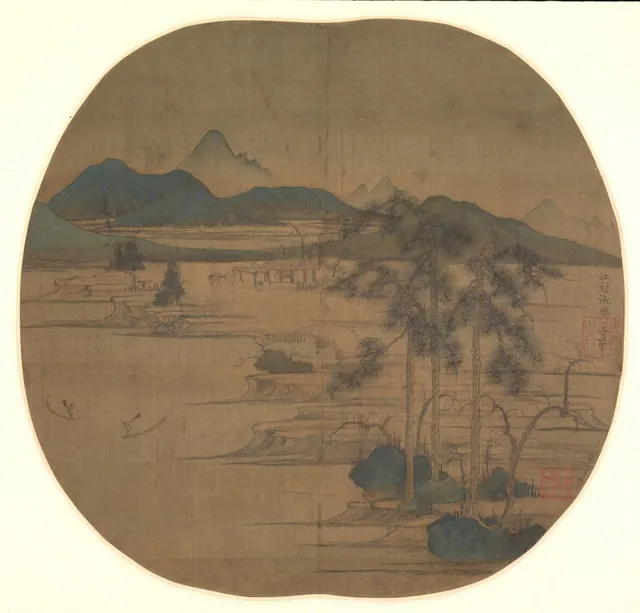
The painting’s story and details
Two fishermen pass a village by boat. Zhao Mengfu painted this small landscape around 1302–1303, after years of service to Mongol rulers. Descended from the defeated Southern Song imperial family, he accepted Khubilai Khan’s invitation to the court at Dadu, today’s Beijing, in 1286. A southern river landscape here meets techniques from northern painting.
Two fishermen stand in narrow boats at the left. Fine lines indicate paddles, hulls and people, surrounded by a broad expanse of water. The foreground trees are drawn in much greater detail. This difference helps establish the distance between the near bank and the boats. The fishermen are too small for their faces to reveal a mood. Joy is named in the work’s title rather than expressed through a smile or gesture.
Houses and an enclosure stand on the opposite bank. A person and donkey are visible nearby, with another figure inside a building. Such small details make the village inhabited. While fishermen work on the water, other activities continue near the homes, scarcely noticeable at first.
Fine spiky clusters form the foreground pines. Their trunks rise before distant houses, making the interval between banks palpable. The museum connects these branches and rough rocks with northern landscape tradition. They lend solidity to a view containing so much open water.
The nearest rocks are blue and green, with related colours recurring in the distant mountains. The museum identifies the work as a blue-green landscape, a manner associated with early Chinese painting. Turning to the past was central to Zhao Mengfu’s method. The Metropolitan Museum describes how he studied and reworked earlier models in pursuit of a “spirit of antiquity.” In this small fan, the choice of colour connects a river view with an artistic tradition.
Low banks and several mountain ranges fit within the rounded field of a fan. The silk painting is now mounted as an album leaf measuring about thirty centimetres. At that scale, the buildings and people require close inspection. A screen makes them easy to enlarge; before the object itself, a viewer would need to lean closer and discover these details gradually.
Zhao Mengfu descended from a deposed dynasty and served its conquerors. The Metropolitan Museum connects his art with the ideal of “reclusion at court,” an attempt to preserve inner independence while holding office. Against that background, the fishing village can suggest a desired life away from court affairs. This raises an uncomfortable question. Is mental distance from power enough if one continues to serve it? That is a possible reading of the work; we have no evidence that Zhao intended this particular fan to express it.
Featured in tours
Chinese landscape. The scholar’s life
Public service, retirement, gardens, poetry and the memory of earlier masters.
More paintings to compare
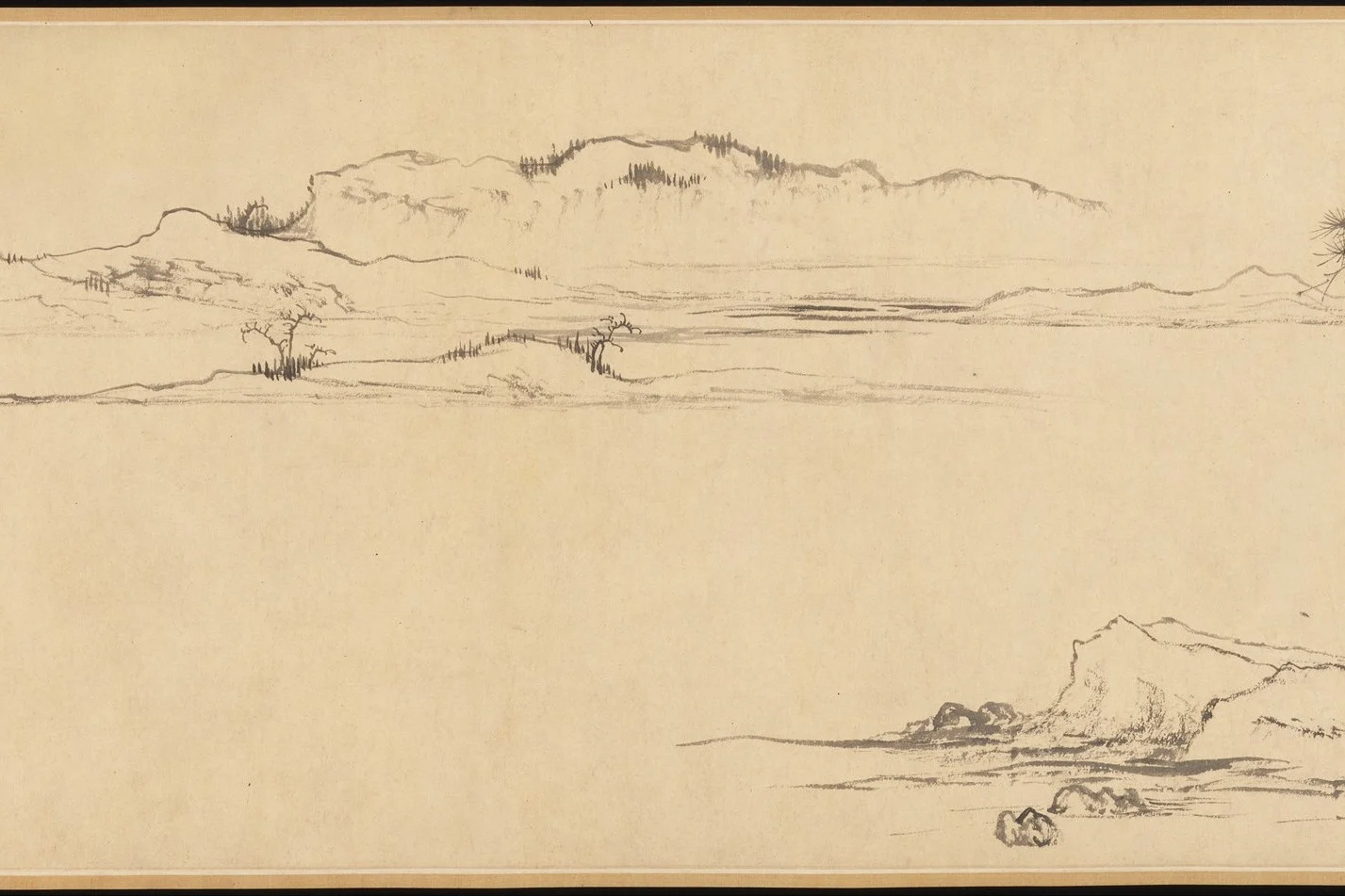 Zhao Mengfu
Twin Pines, Level Distance
ca. 1310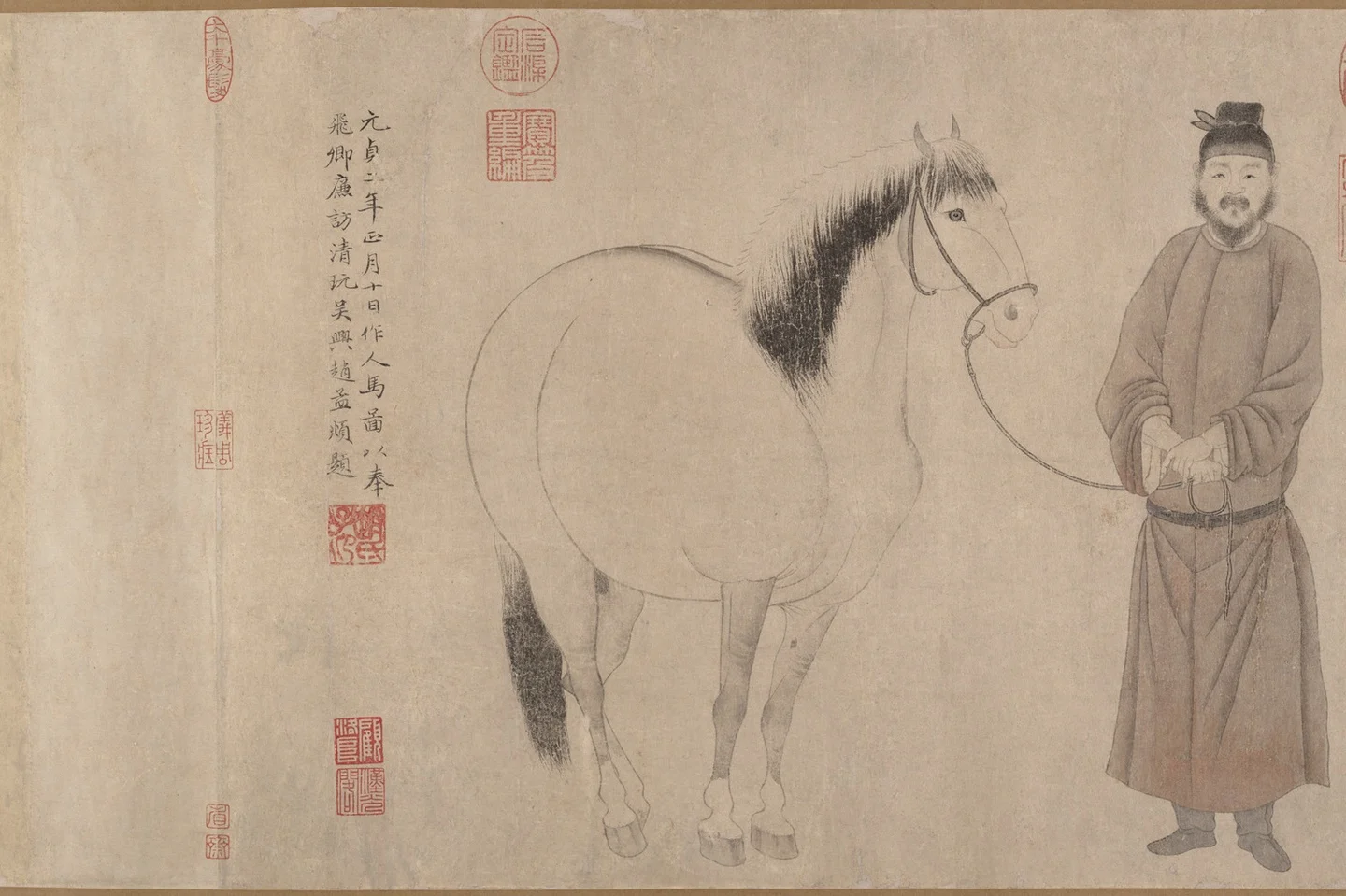 Zhao Mengfu, Zhao Yong and Zhao Lin
Grooms and horses
dated 1296 and 1359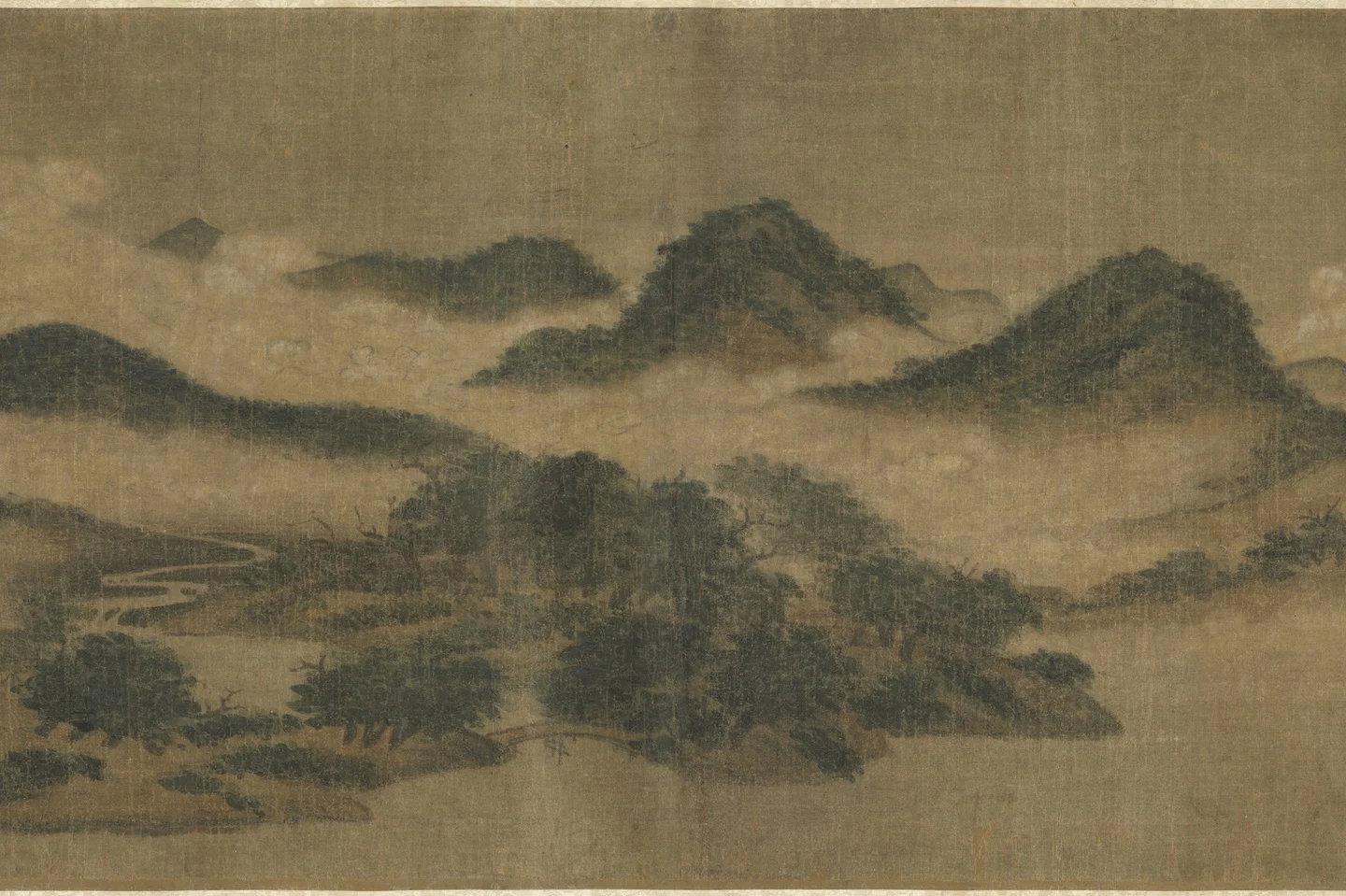 Mi Youren
Cloudy Mountains
1130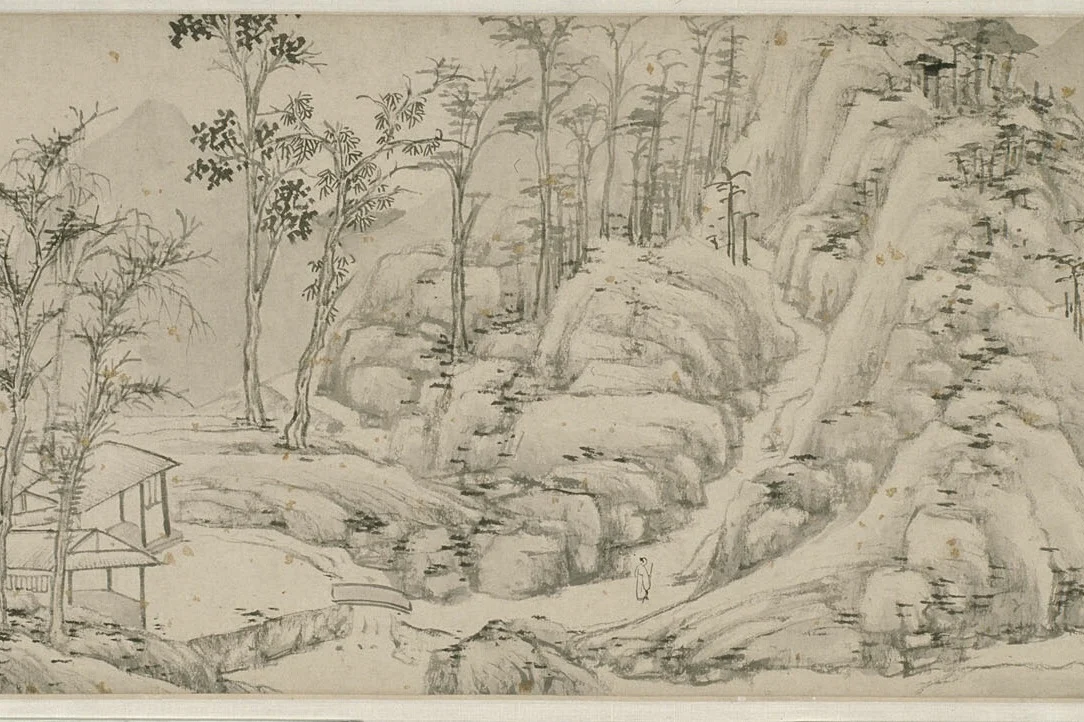 Wen Zhengming
Autumn Mountains 秋山圖
Ming dynasty (1368–1644), early 16th century 明朝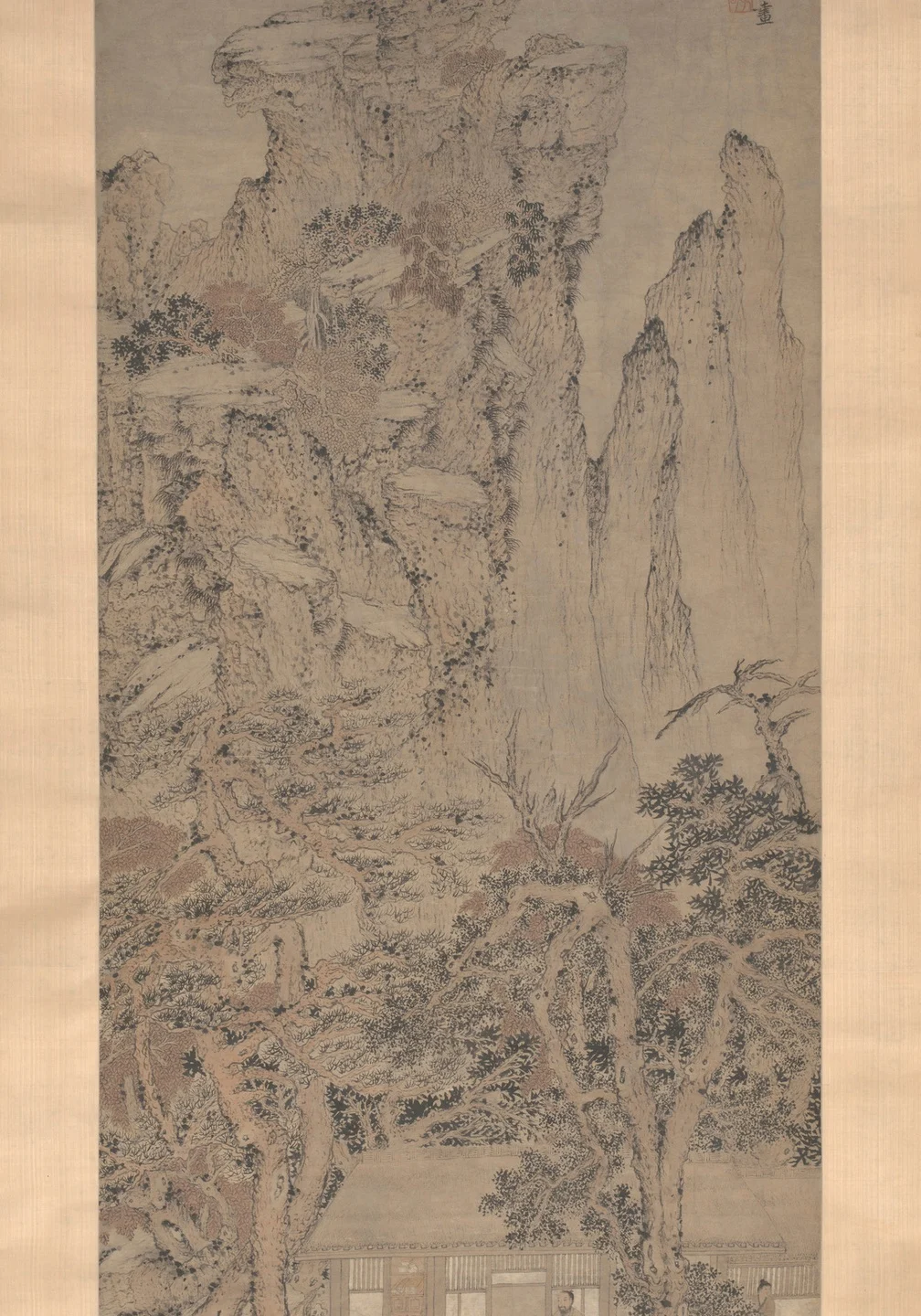 Wang Meng
Quiet Life in a Wooded Glen 林麓幽居圖
Yuan dynasty (1279–1368), dated 1361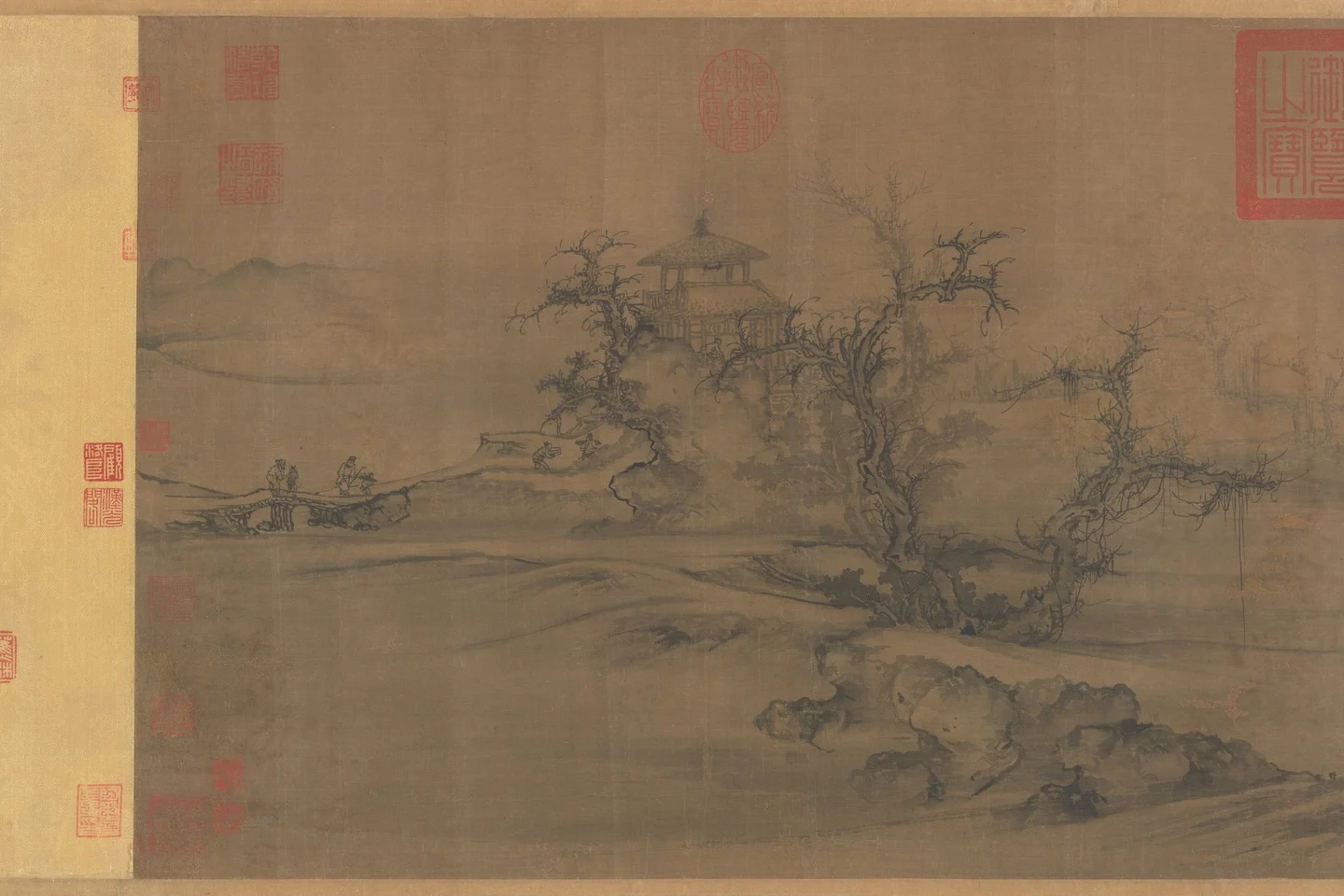 Guo Xi
Old Trees, Level Distance
ca. 1080Period, style and subject
- Movement
- Chinese painting
- Genre
- Landscape
- Medium
- Fan painting mounted as album leaf; ink and color on silk
- Collection
- Cleveland Museum of Art
- Dimensions
- Overall, 28.6 × 30 cm
- Accession number
- 1978.66
Sources
Image provided under CC0. Image licence