Garden of the Inept Administrator
Wen Zhengming · 1551
Explore the painting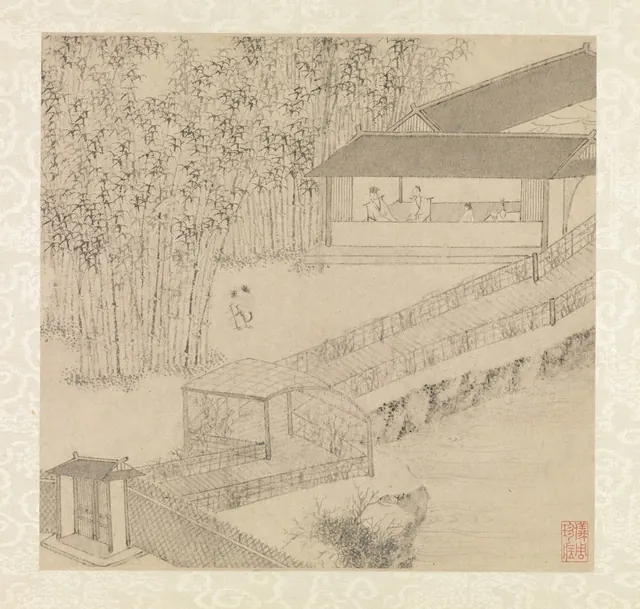
The painting’s story and details
This leaf belongs to Wen Zhengming’s 1551 album Garden of the Inept Administrator. The artist was eighty-one and had long known the Suzhou garden, where he had once been given a studio. Its views belonged to his personal history. The album preserved places for friendship and work, turning a walk through a private garden into an object that could be held in the hands.
Several people sit in the open pavilion. Their faces are sparely indicated, while the intervals between them and the long railing remain clear. No one is singled out as a ceremonial host. The light structure brings people together beside plants, air and an open courtyard. For scholars and artists, a garden could provide a place for conversation, poetry and shared leisure.
Bamboo occupies nearly the whole left side. Slender stems repeat, with leaves branching into short dark strokes. Beside the straight roof lines, the vegetation seems especially dense. Using ink alone, the painter distinguishes materials through pressure and the concentration of marks. Architecture remains clear and measured; the bamboo grove forms an intricate, irregular pattern.
A small figure stands in the courtyard between bamboo and pavilion. Unmarked paper surrounds it, while stems and railings crowd the edges. The open area becomes room for human movement. Such alternations structure the garden: shelter gives way to open ground, and a short passage leads to another view. The visitor is never offered the entire site at once.
From the lower gate, a path turns and runs beside the water. Railings, decking and a covered passage reveal how much work this quiet setting required. Suzhou’s gardens flourished with the region’s agricultural and commercial wealth. Withdrawal from business required money, land and maintenance. Wen depicts nature already selected and arranged for a particular way of life.
A red seal at the lower right supplies the leaf’s only bright colour. In the full album, paintings were accompanied by poetry and calligraphy. Wen joined three arts, each adding something to the walk. Ink gave plants their outlines; poetry could supply fragrance, the sound of rain and memory. The garden became the subject of a larger work unfolding as its leaves were turned.
In 1535 Wen had already painted thirty-one views of this garden. Sixteen years later he made eight new leaves. The same place could return as a subject at a different age and with a different selection of impressions. The garden survives, but repeated rebuilding makes the views difficult to identify. The album preserves one person’s experience at a particular time; a walk today cannot reproduce it exactly.
Featured in tours
Chinese landscape. The scholar’s life
Public service, retirement, gardens, poetry and the memory of earlier masters.
More paintings to compare
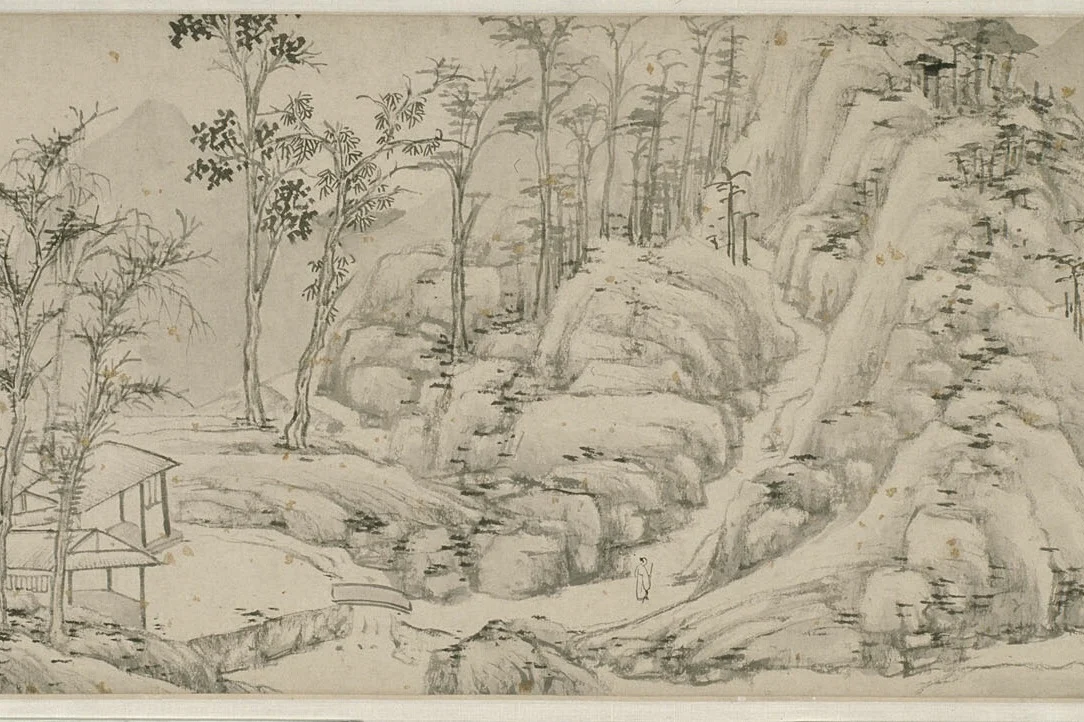 Wen Zhengming
Autumn Mountains 秋山圖
Ming dynasty (1368–1644), early 16th century 明朝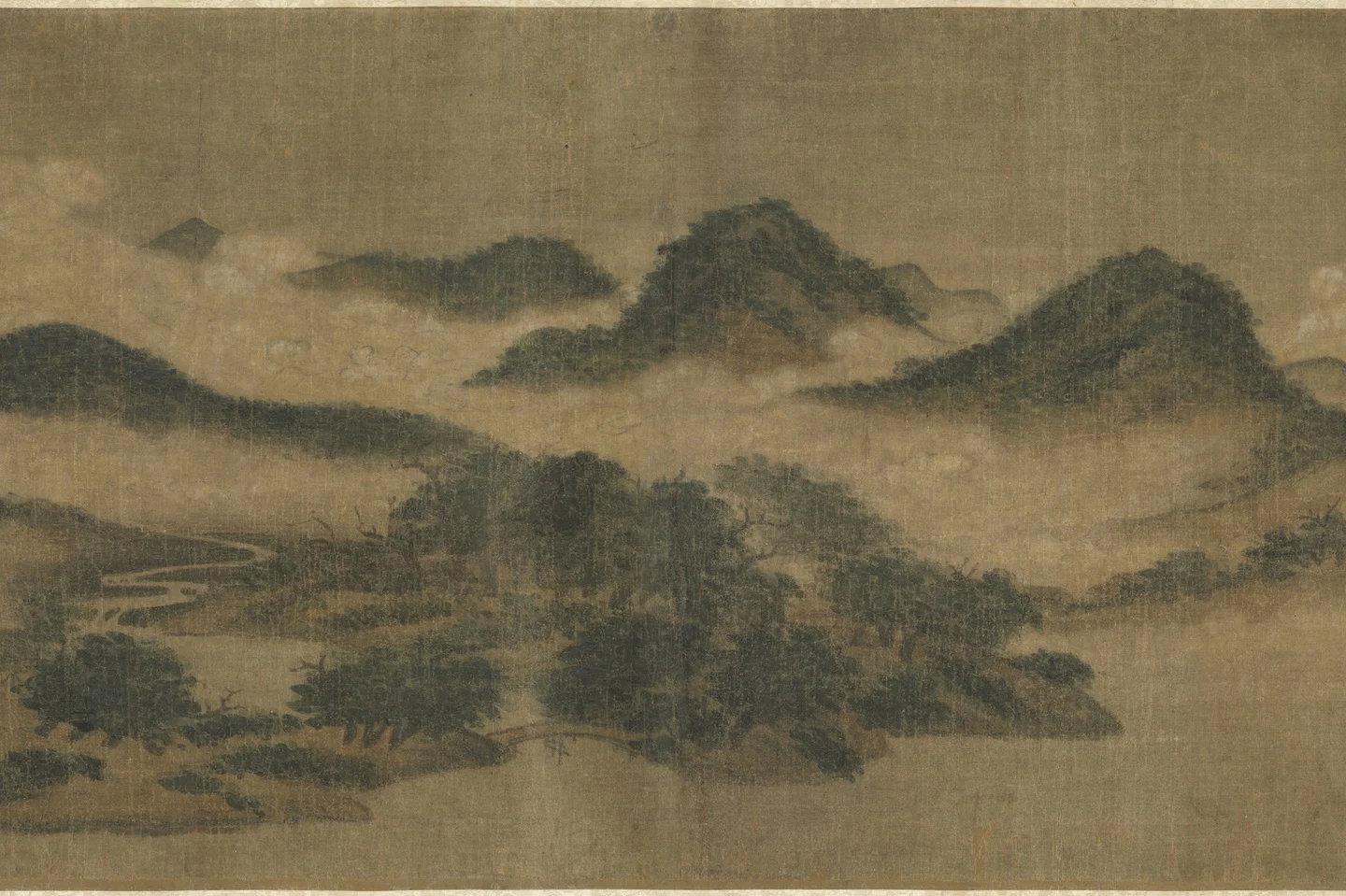 Mi Youren
Cloudy Mountains
1130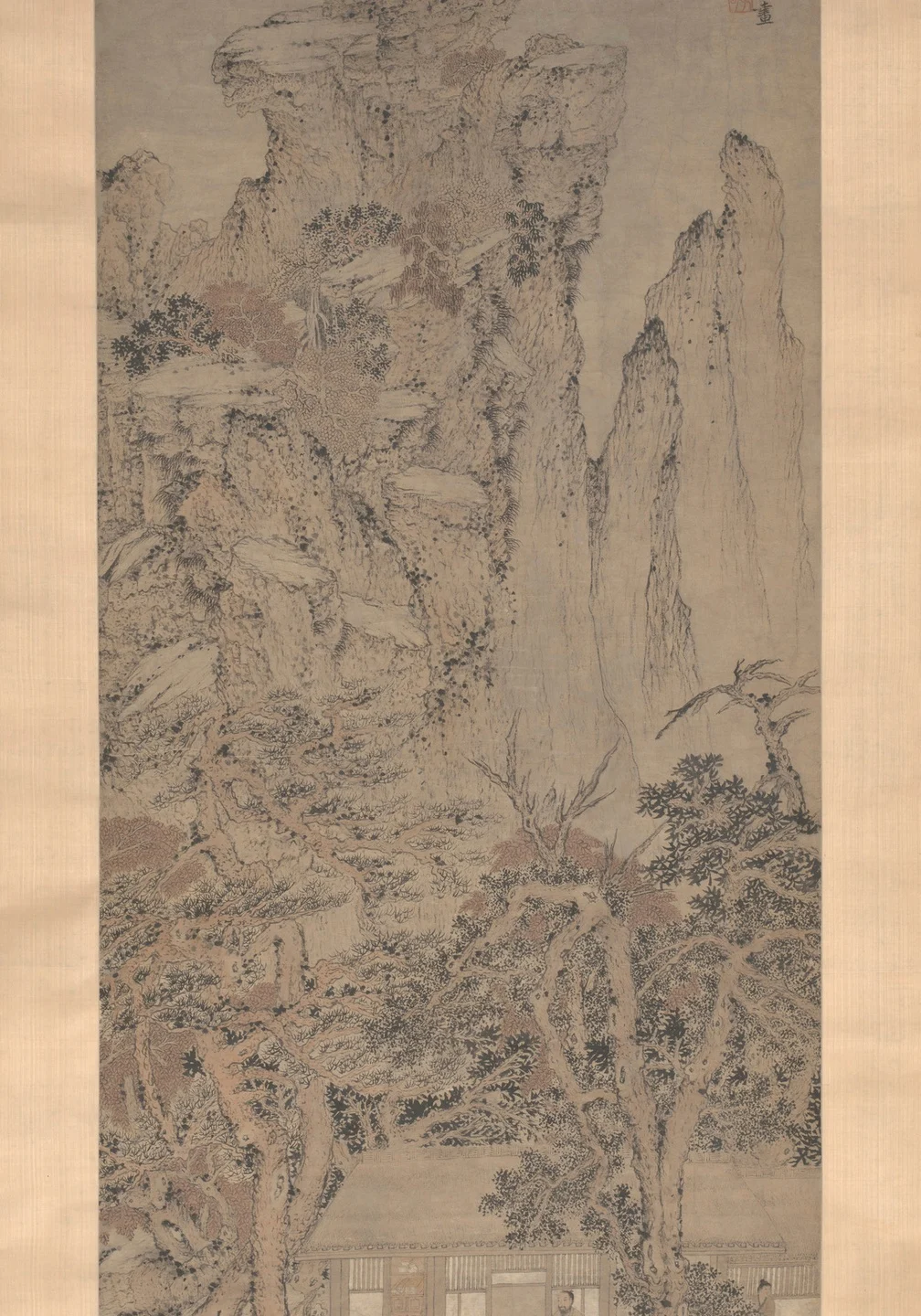 Wang Meng
Quiet Life in a Wooded Glen 林麓幽居圖
Yuan dynasty (1279–1368), dated 1361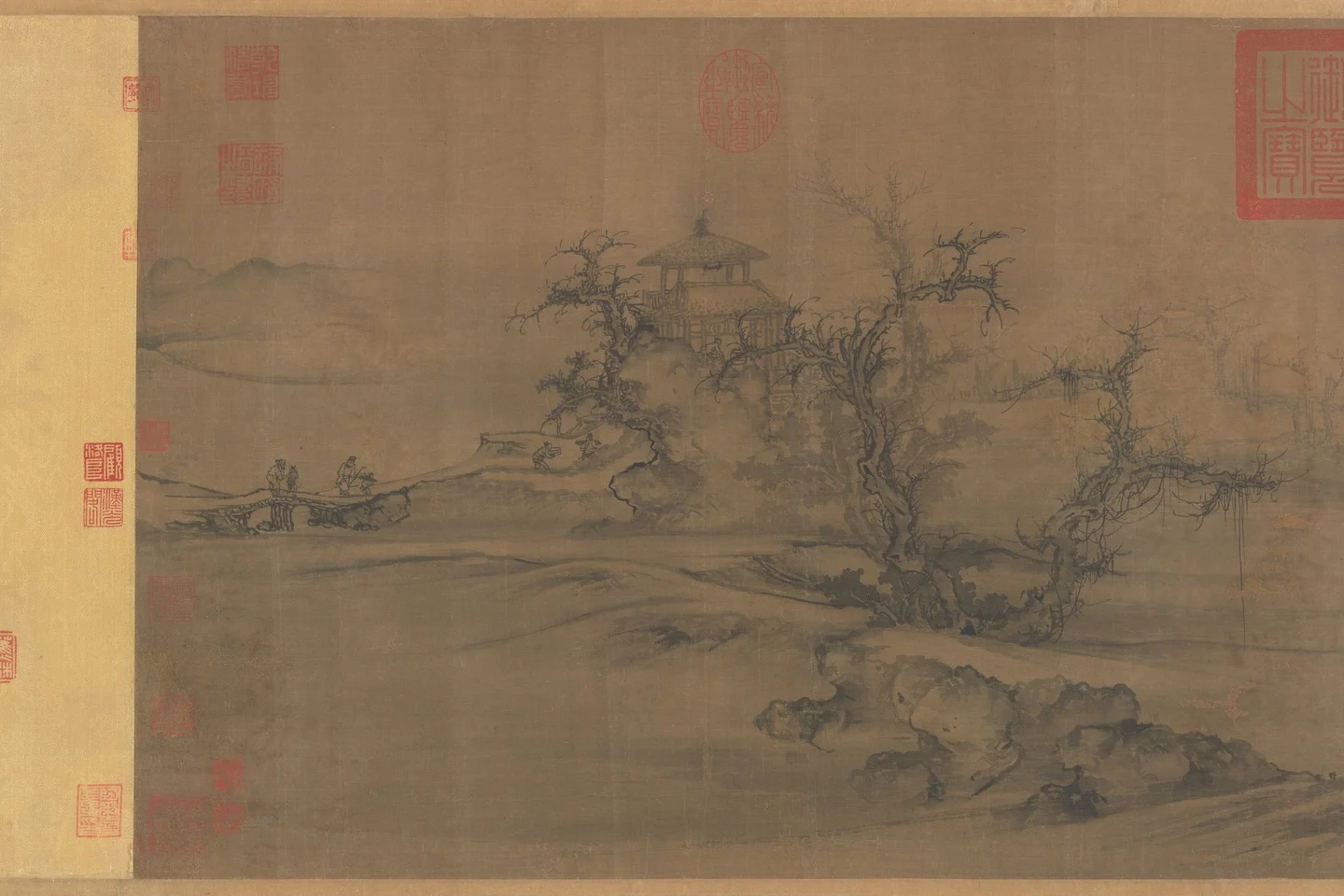 Guo Xi
Old Trees, Level Distance
ca. 1080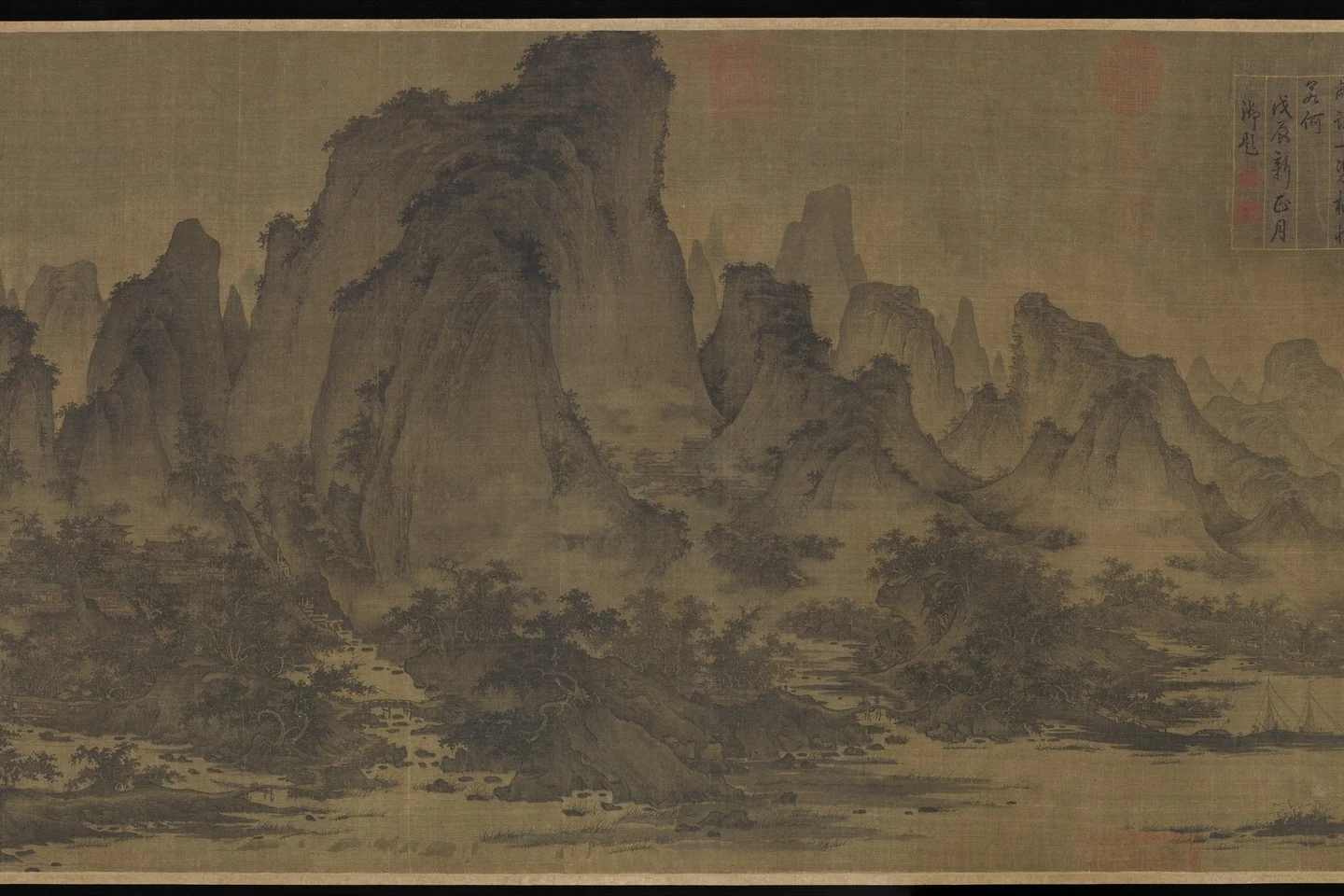 Attributed to Qu Ding
Summer Mountains
ca. 1050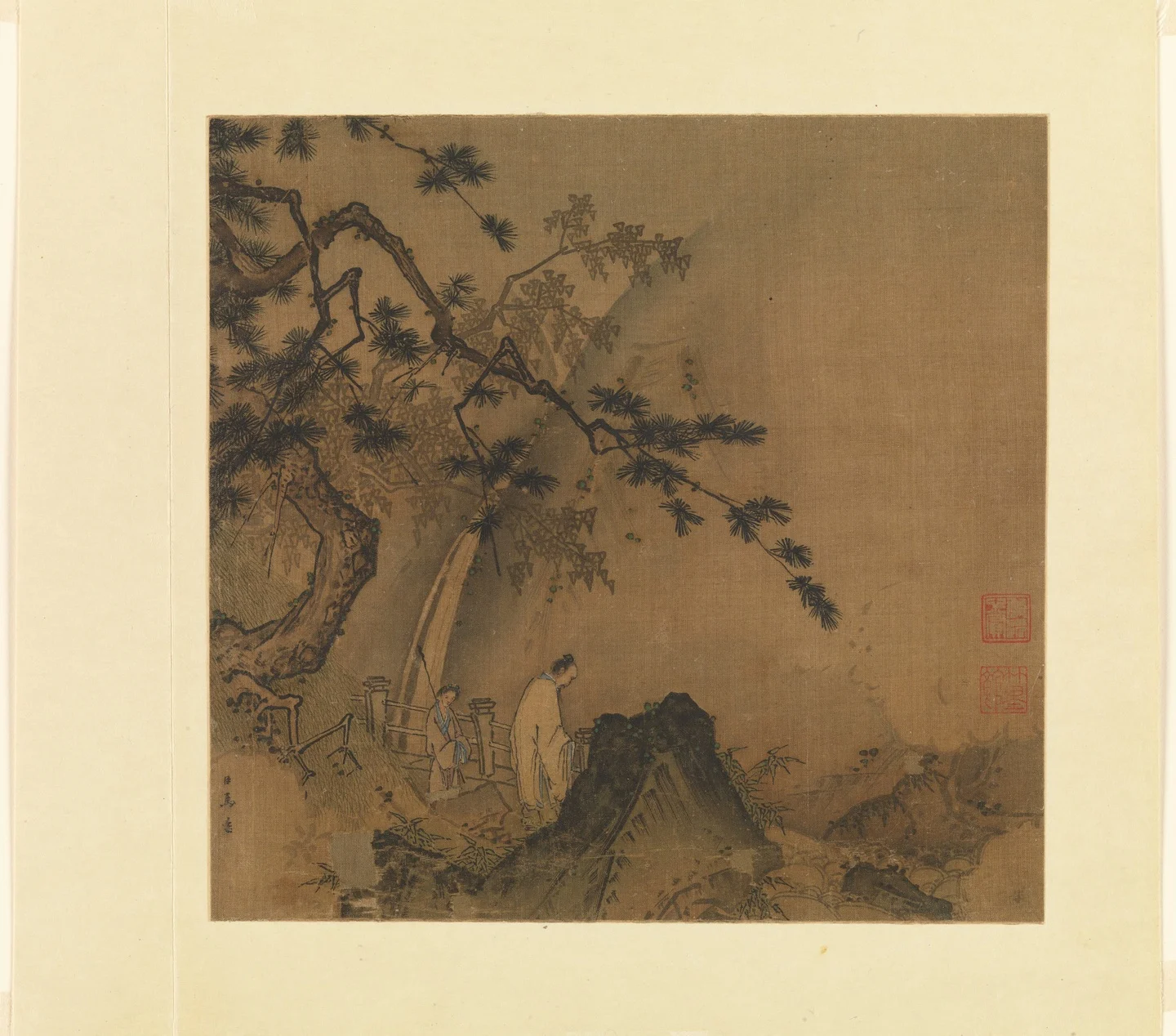 Ma Yuan
Scholar viewing a waterfall
early 13th centuryPeriod, style and subject
- Movement
- Chinese painting
- Genre
- Landscape
- Medium
- Album of eight leaves; ink on paper
- Collection
- The Metropolitan Museum of Art
- Dimensions
- Image, 26.4 × 27.3 cm
- Accession number
- 1979.458.1a–ii
Sources
Image provided under CC0. One painting from an eight-leaf album. Image licence