Wind among the Trees on the Riverbank
Ni Zan · 1363
Explore the painting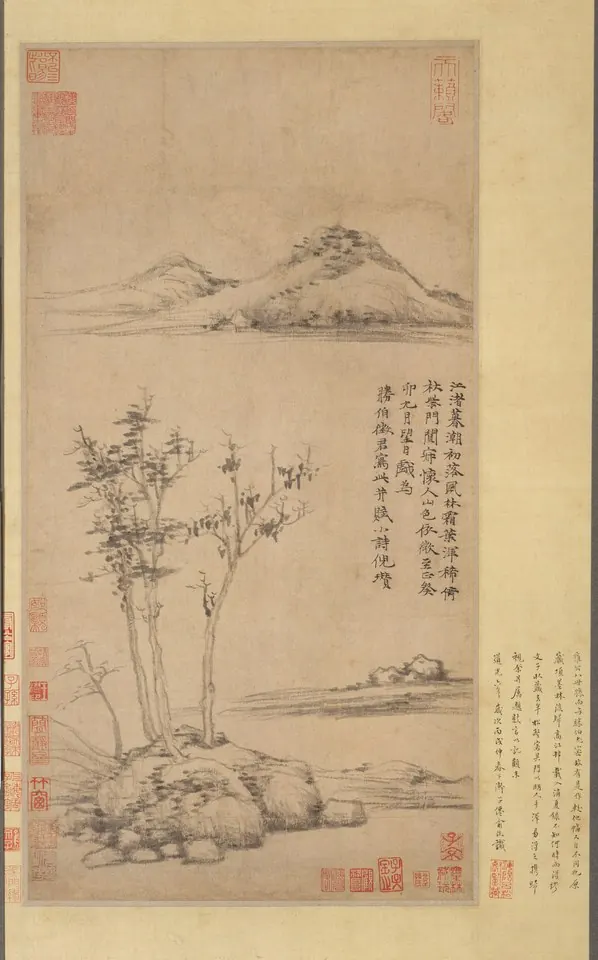
The painting’s story and details
A few trees stand on a rocky bank, with distant hills and a broad interval between them. Ni Zan painted this landscape for the scholar and artist Yu Kan in 1363. No human figure appears, but the poem on the right expresses thoughts of a friend. An image of solitude was addressed to another person. The scroll maintained a relationship through drawing and verse that its recipient could revisit.
The low bank has little vegetation beyond a group of slender trees. There is no dwelling in this part of the painting either. During these years Ni Zan was living away from his former home in Wuxi, with his family southwest of Suzhou. He nicknamed the new shelter the Snail’s Hut. These rocks should not be treated as an exact view of that home. Biography helps us understand the value of a settled place and a friendship without turning the landscape into a literal record.
Thin angular lines carry the branches upwards. Small clusters of leaves remain here and there, with wide gaps between them. The poem describes a grove thinned by frost, helping us recognise a seasonal condition in the sparse foliage. Individual brush touches become especially clear when enlarged. The leaves preserve both the tree’s form and the movement of the hand that painted it. The whole riverbank remains recognisable through remarkably few marks.
The rocks have irregular outlines, with dry strokes inside their contours. Pale paper remains visible between traces of ink. At first the surface may seem unfinished. Ni Zan consciously pursued a free, sketch-like manner that rewards close looking. A small change in pressure makes a line solid or broken. We follow the rock’s outline and the sequence of brush movements that produced it. In this respect, the drawing approaches calligraphy.
The distant hills are drawn more softly than the nearby trunks. Between them, water is scarcely marked by the brush, and distance emerges from the placement of banks. The space is convincing despite giving little information about the river’s depth or surface. We connect its separate parts ourselves. Notice how the meaning of unpainted paper changes. Between the banks it becomes water; above the hills it becomes sky, although the material remains exactly the same.
In the poem, evening light fades from the hills, a closed gate is silent and someone thinks of a friend. The words introduce a presence absent from the drawing. Ni Zan’s wife died in 1363; the Met’s scholars suggest that the work may reflect a growing sense of isolation. That is a possible reading, not an established reason for making the scroll. The dedication to Yu Kan confirms that the artist addressed someone with whom he wished to share the experience of this evening landscape.
Red seals and an additional inscription in the margin show how the scroll accumulated traces of later reading. Other people brought it into their own lives while preserving the artist’s name and original dedication. An unpeopled riverbank could connect viewers across generations. Its restraint gives viewers time to examine the brushwork and return to words that might initially have seemed a caption. The sparse leaves, the evening described in the poem and the address to a friend are enough to create a personal statement from very few elements.
Featured in tours
Chinese landscape. The scholar’s life
Public service, retirement, gardens, poetry and the memory of earlier masters.
More paintings to compare
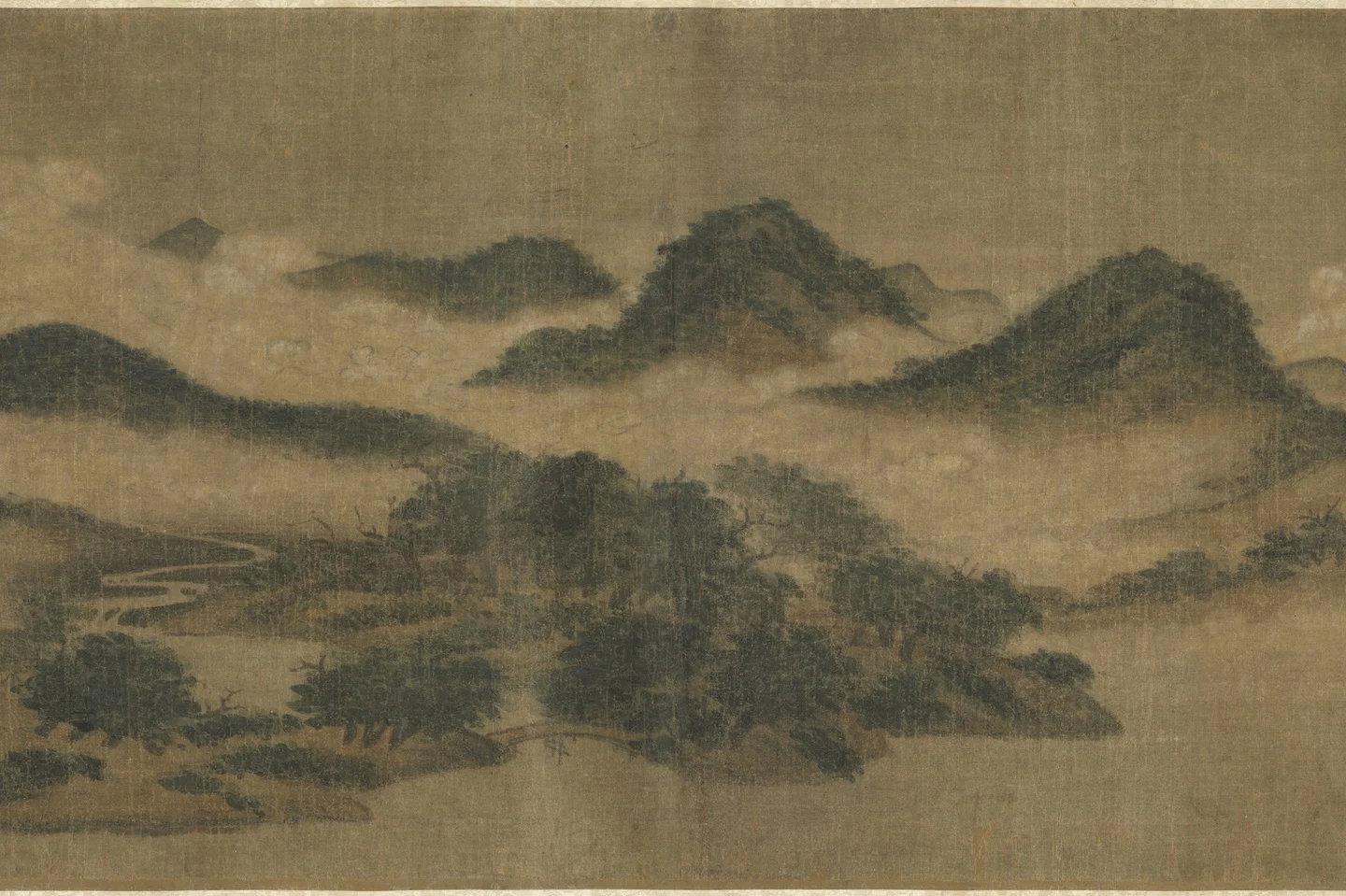 Mi Youren
Cloudy Mountains
1130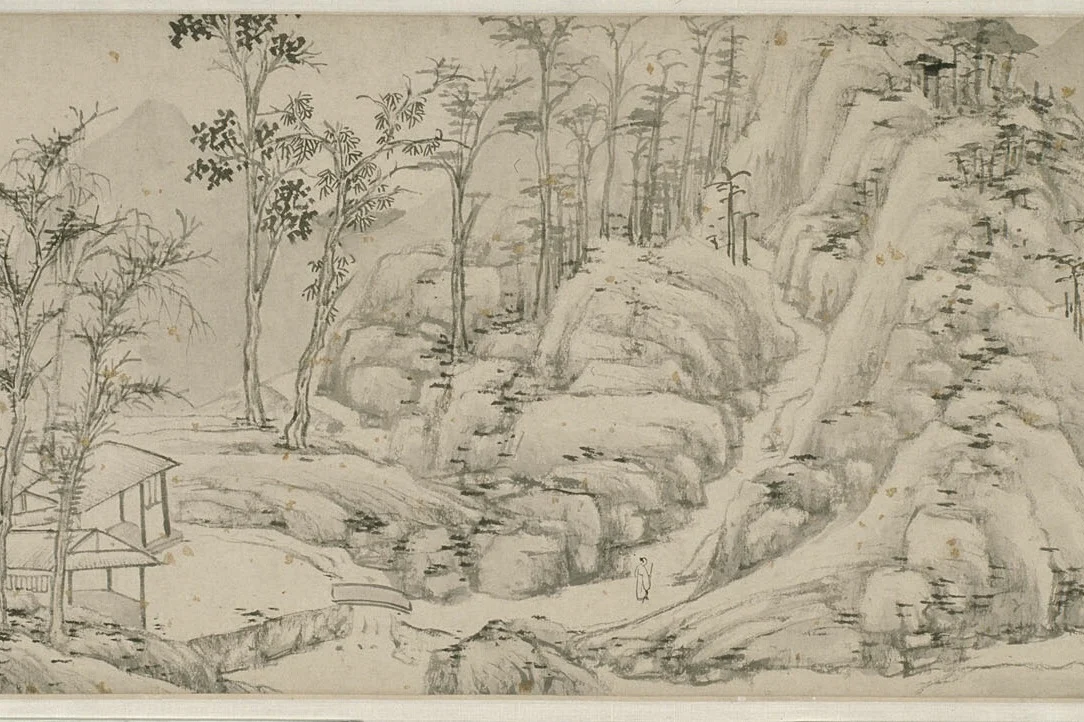 Wen Zhengming
Autumn Mountains 秋山圖
Ming dynasty (1368–1644), early 16th century 明朝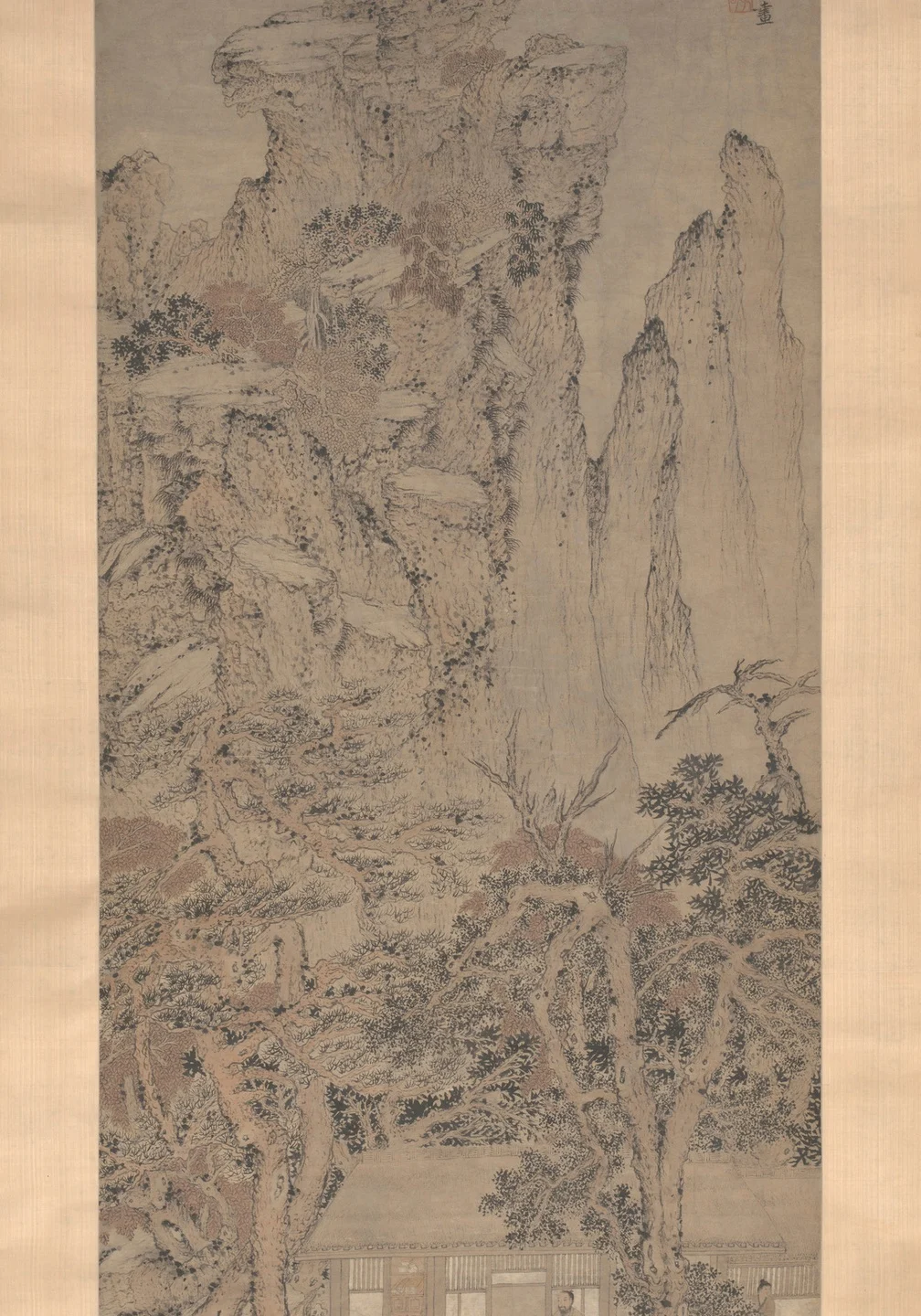 Wang Meng
Quiet Life in a Wooded Glen 林麓幽居圖
Yuan dynasty (1279–1368), dated 1361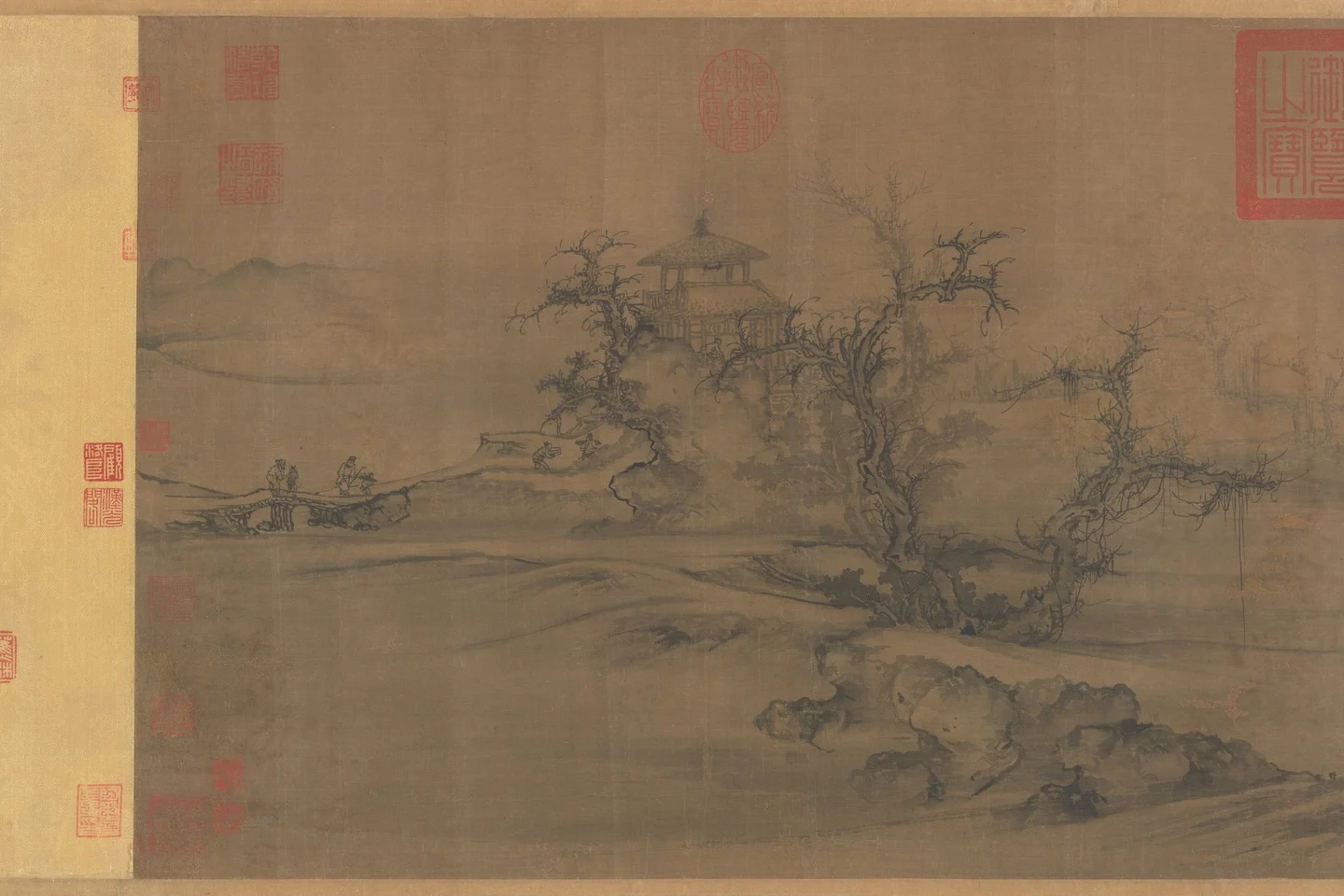 Guo Xi
Old Trees, Level Distance
ca. 1080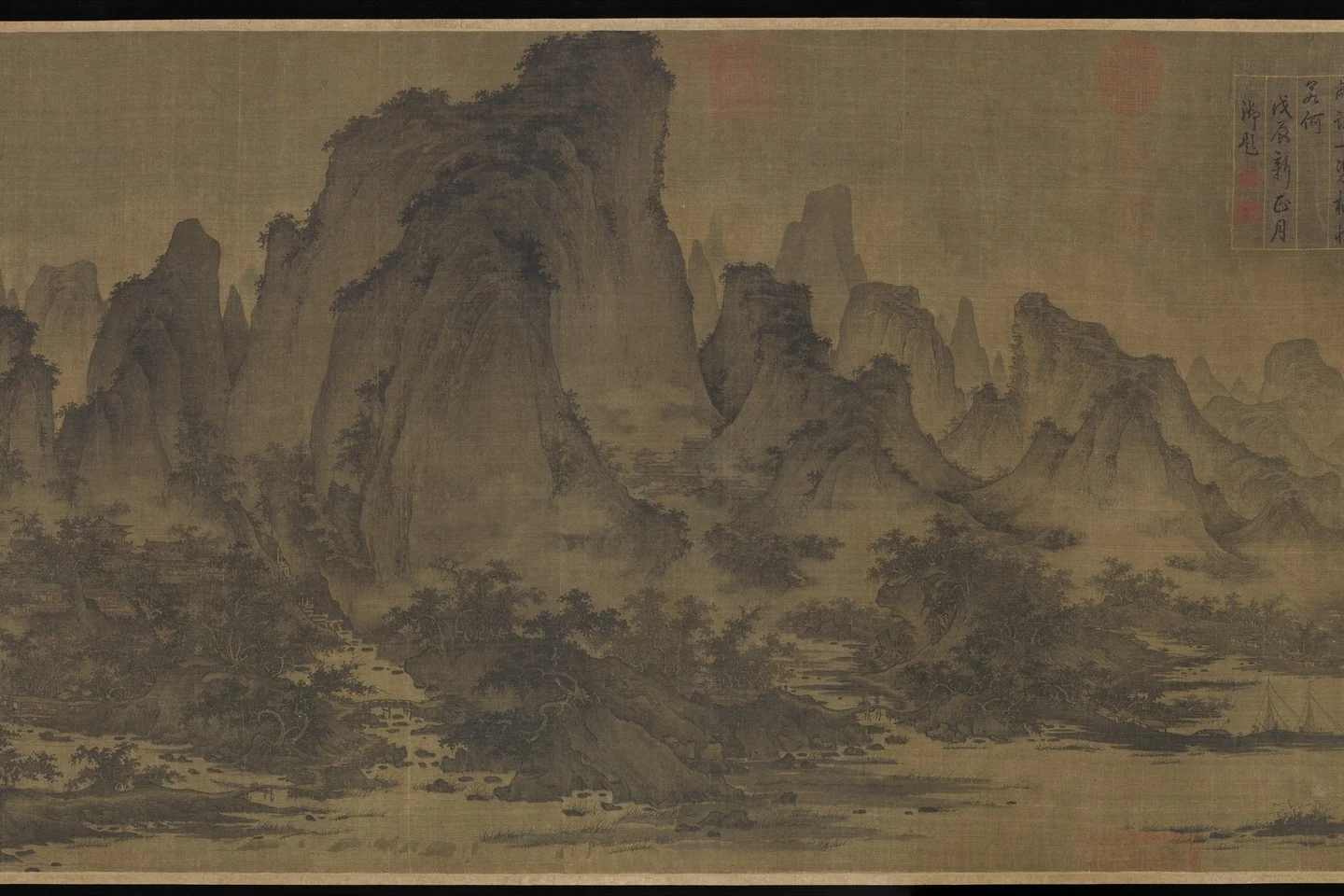 Attributed to Qu Ding
Summer Mountains
ca. 1050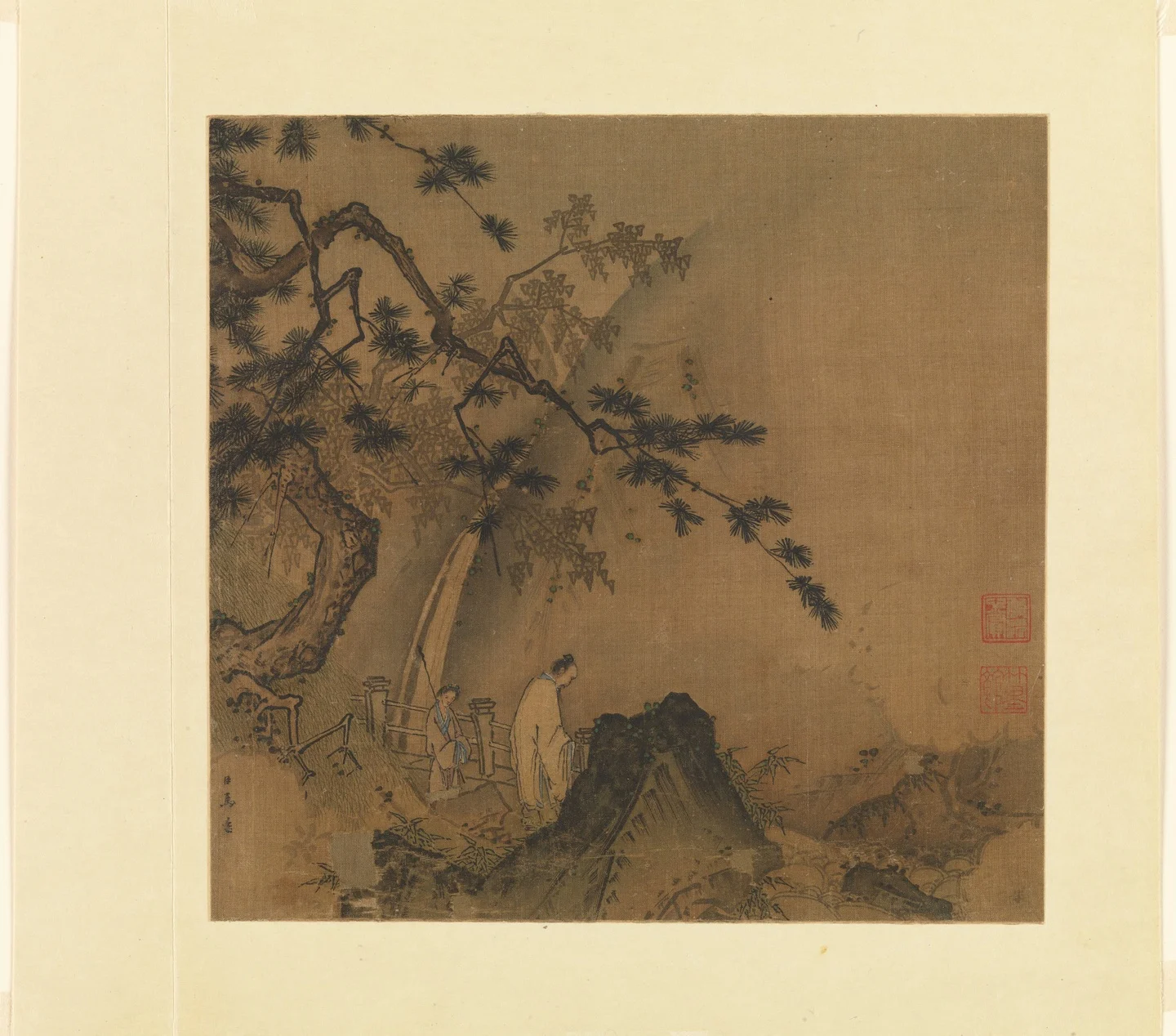 Ma Yuan
Scholar viewing a waterfall
early 13th centuryPeriod, style and subject
- Movement
- Chinese painting
- Genre
- Landscape
- Medium
- Hanging scroll; ink on paper
- Collection
- The Metropolitan Museum of Art
- Dimensions
- Image, 59.1 × 31.1 cm
- Accession number
- 1989.363.39
Sources
Image provided under CC0. Image licence