Fisherman
Wu Zhen · ca. 1350
Explore the painting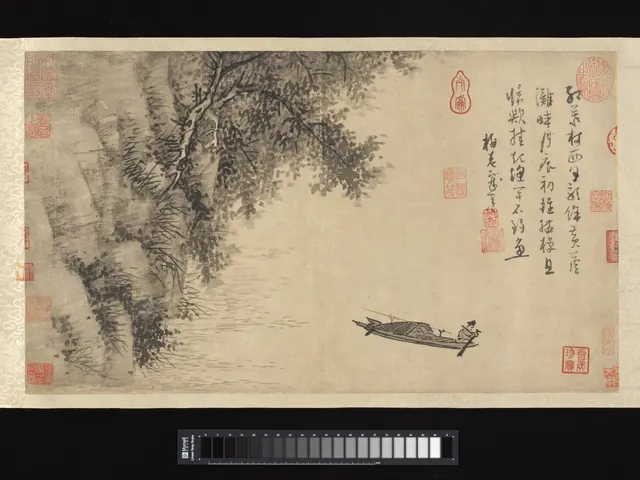
The painting’s story and details
The fisherman has finished fishing and taken up his oar. Wu Zhen chose the moment of returning home, described in the poem on the right. So much paper remains empty around the boat that its movement feels unhurried. The scroll was made around 1350, under China’s Mongol Yuan dynasty. An educated viewer could recognise the fisherman-recluse as an image of life apart from government service. One man on a river could speak to the position of a whole social group.
The fisherman occupies very little space. A few lines suffice for his head, bent arms and body. He sits at the end of a long boat, with a woven shelter behind him. The artist dispenses with a detailed face or costly clothing, leaving the figure open to identification. A viewer could imagine being in his position without asking who had posed. The oar and boat still tie this general figure to a particular everyday occupation.
The poem supplies things the drawing cannot tell us on its own. Leaves are red, reeds yellow, evening is arriving and moonlight appears. The landscape itself is painted entirely in ink. Reading the lines adds colour and a time of day. Words also establish the journey home. The inscription is necessary to the action’s development. If we looked only at the boat, it could equally be setting out for another fishing trip.
The tree reveals how the brush works. Long movements establish dark branches, short touches gather into leaves, and distant foliage dissolves into grey. Similar changes of pressure and ink density appear in the characters on the right. Painting and calligraphy preserve the character of one hand. For a connoisseur, that manner had value in itself. A familiar subject was worth revisiting because of the particular way an artist rendered it.
Pointed clumps of reeds line the bank. Below them, the brush changes direction and short horizontal strokes suggest ripples. Nearer the boat they almost disappear. The river continues where the artist stops drawing it. We infer the space from the bank and the small vessel. Zooming in reveals the transition from a densely worked surface to a few traces of ink and then to completely untouched paper. The boat lies at the edge of these different ways of drawing.
Red seals appear along the edges and beside the poem. They recall the scroll’s continuing life among viewers and collectors after its maker’s death. Wu Zhen lived in seclusion and had little fame in his lifetime. Later connoisseurs counted him among the Four Great Masters of the late Yuan; his manner particularly appealed to Shen Zhou in the Ming period. His reputation grew among people who recognised a valued model in this apparently informal drawing.
Return to the moment Wu Zhen selected. Fishing is over and home lies ahead. The peaceful return makes this image of independence appealing. It is also a poet’s view of a fisherman’s life. The scroll tells us nothing about the size of his catch or tomorrow’s income. A working man allows an educated viewer to imagine freedom from his own obligations. This reading preserves the scene’s appeal while recognising the difference between a fisherman’s experience and a dream about it.
Featured in tours
Chinese landscape. The scholar’s life
Public service, retirement, gardens, poetry and the memory of earlier masters.
More paintings to compare
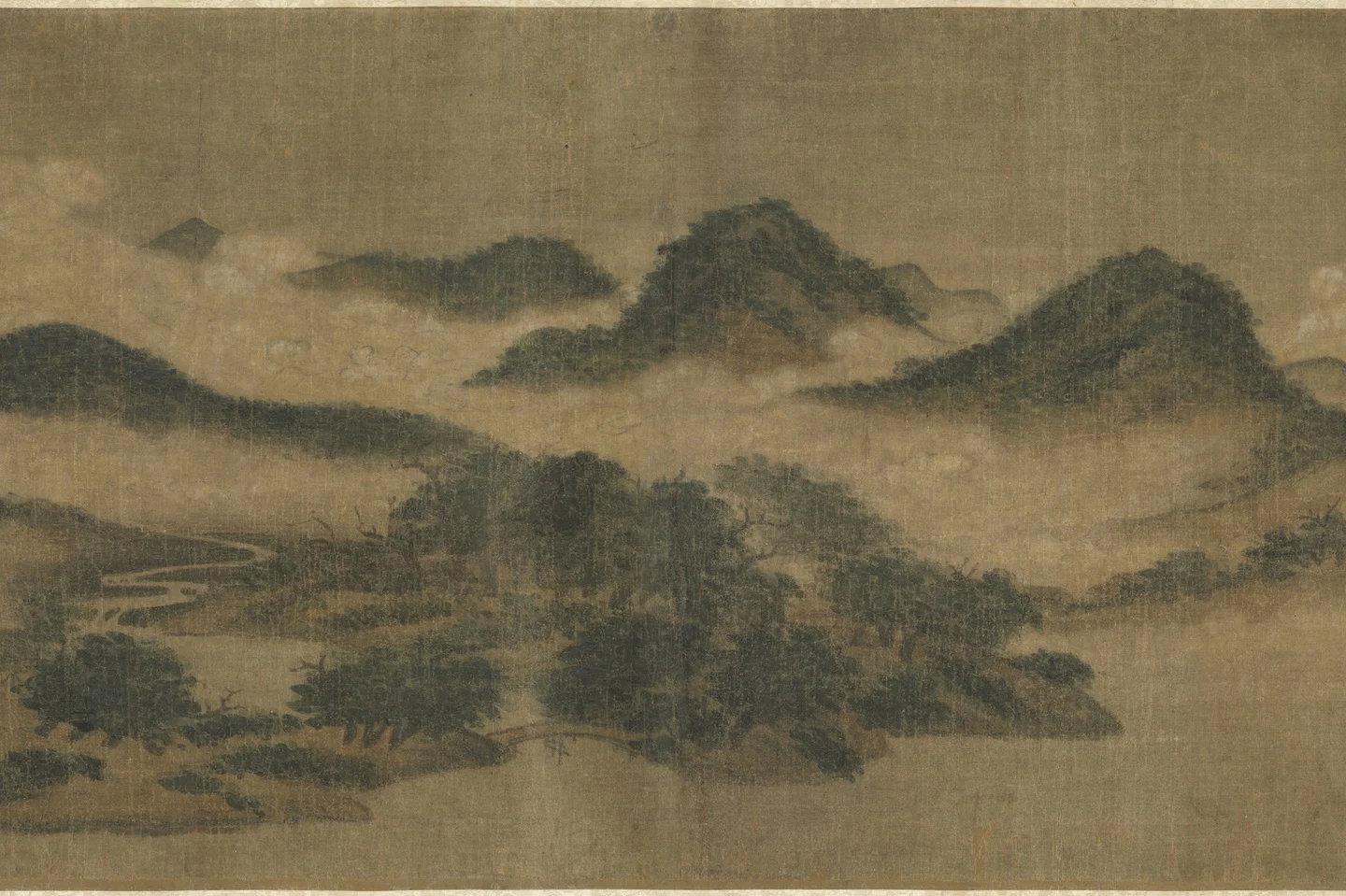 Mi Youren
Cloudy Mountains
1130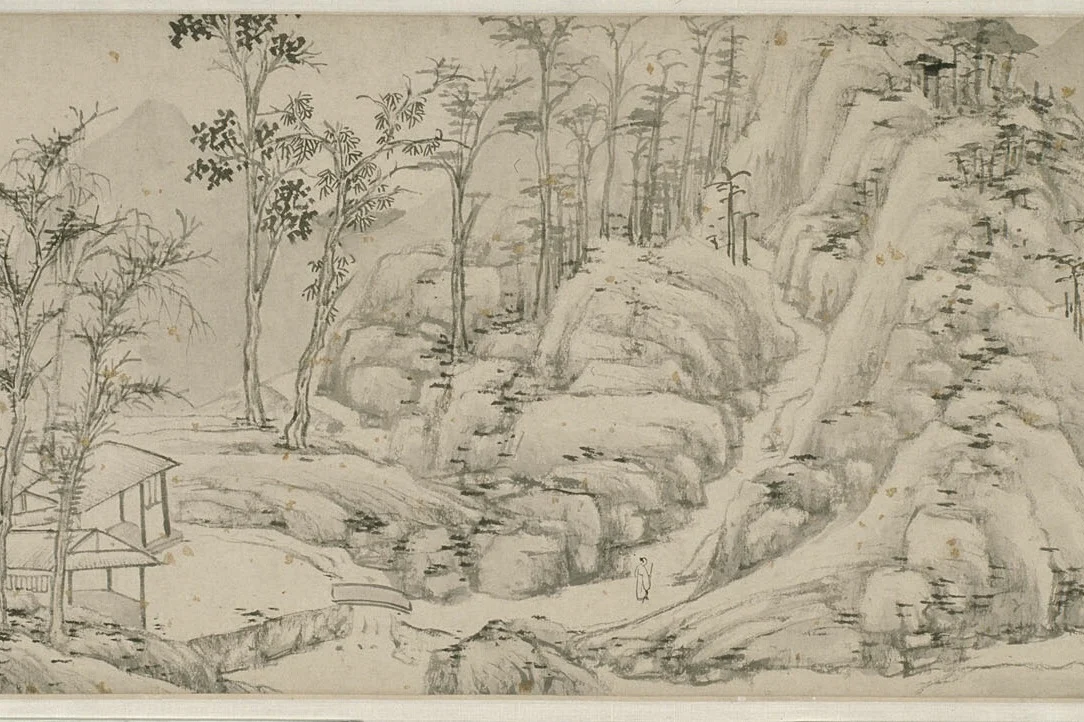 Wen Zhengming
Autumn Mountains 秋山圖
Ming dynasty (1368–1644), early 16th century 明朝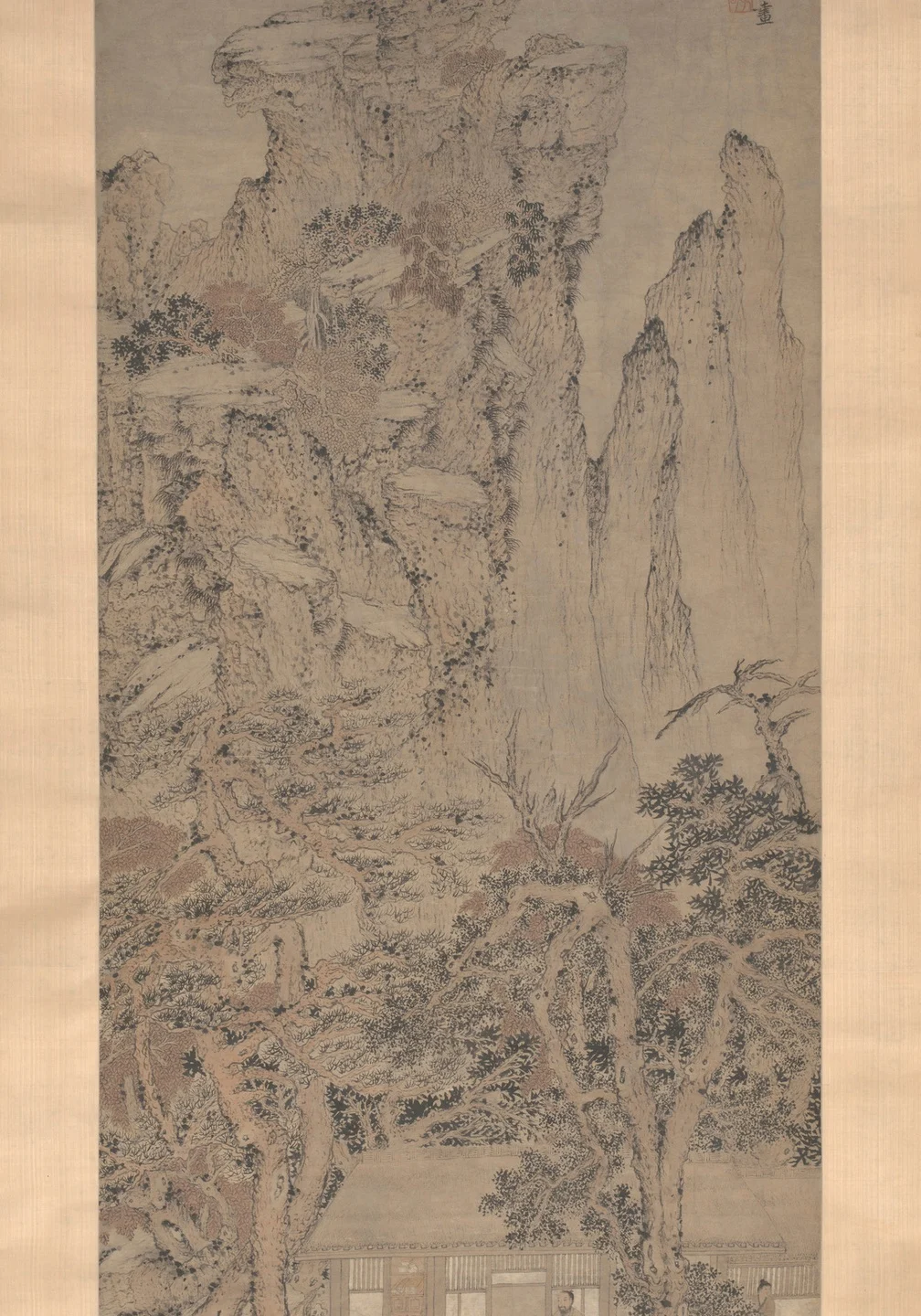 Wang Meng
Quiet Life in a Wooded Glen 林麓幽居圖
Yuan dynasty (1279–1368), dated 1361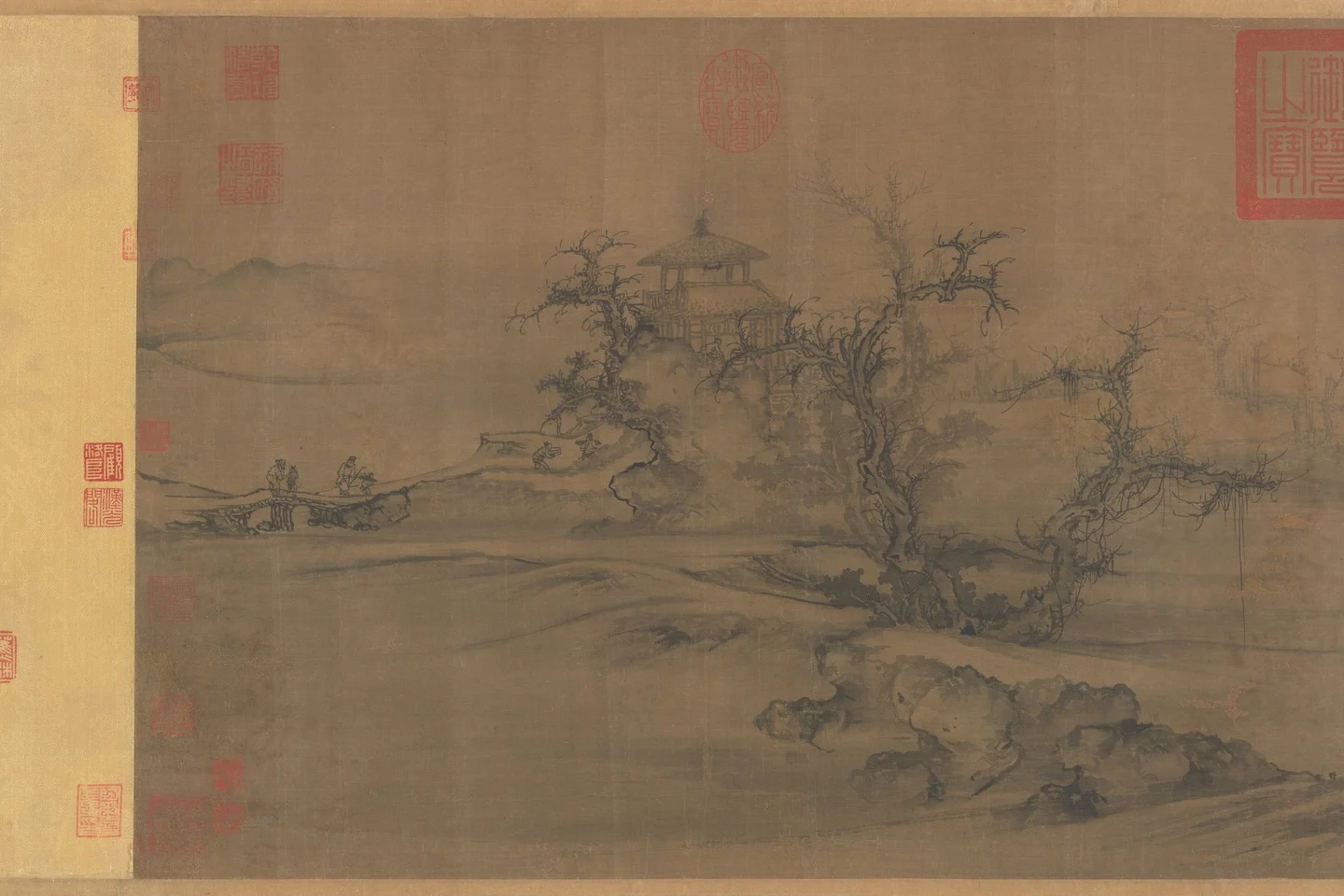 Guo Xi
Old Trees, Level Distance
ca. 1080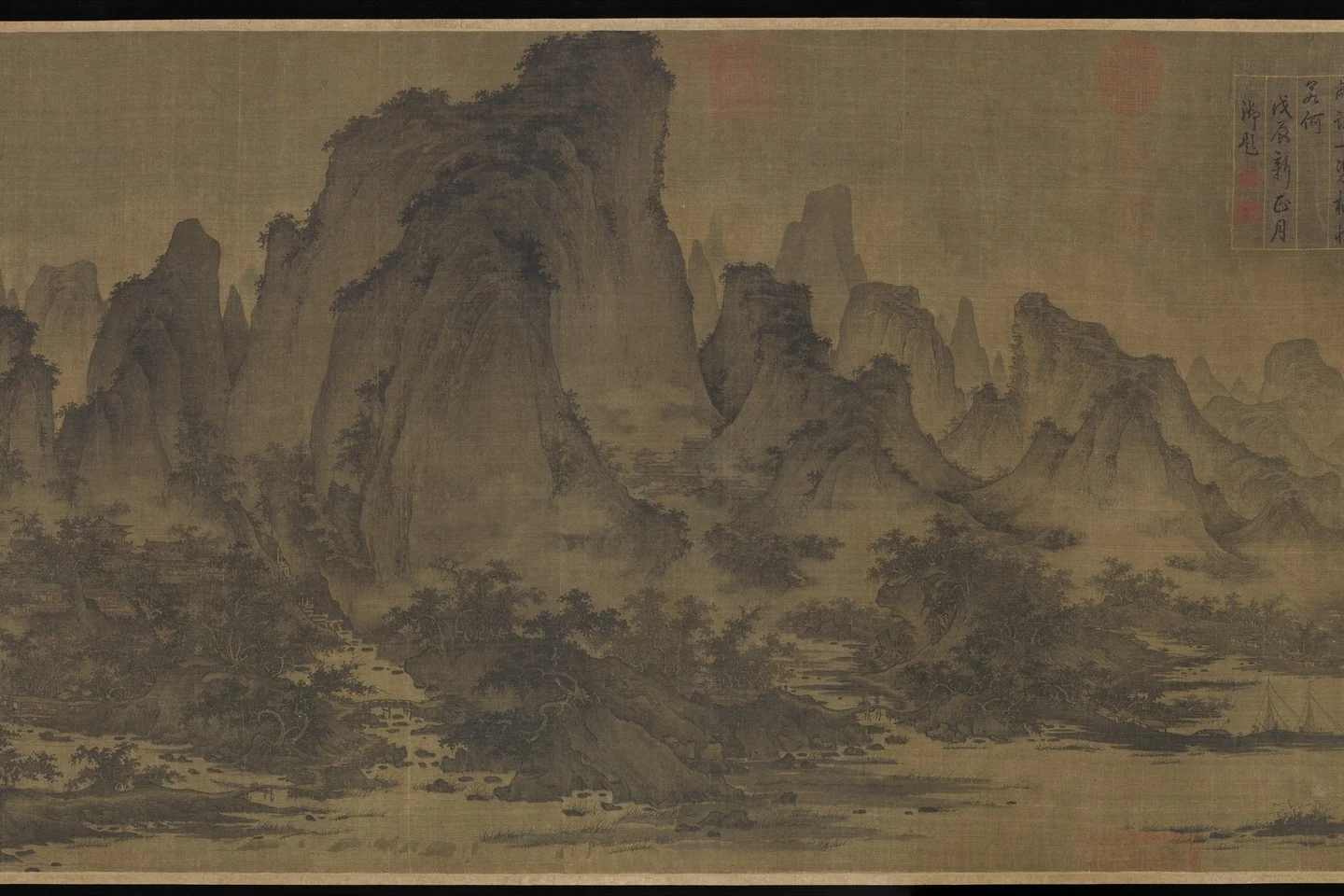 Attributed to Qu Ding
Summer Mountains
ca. 1050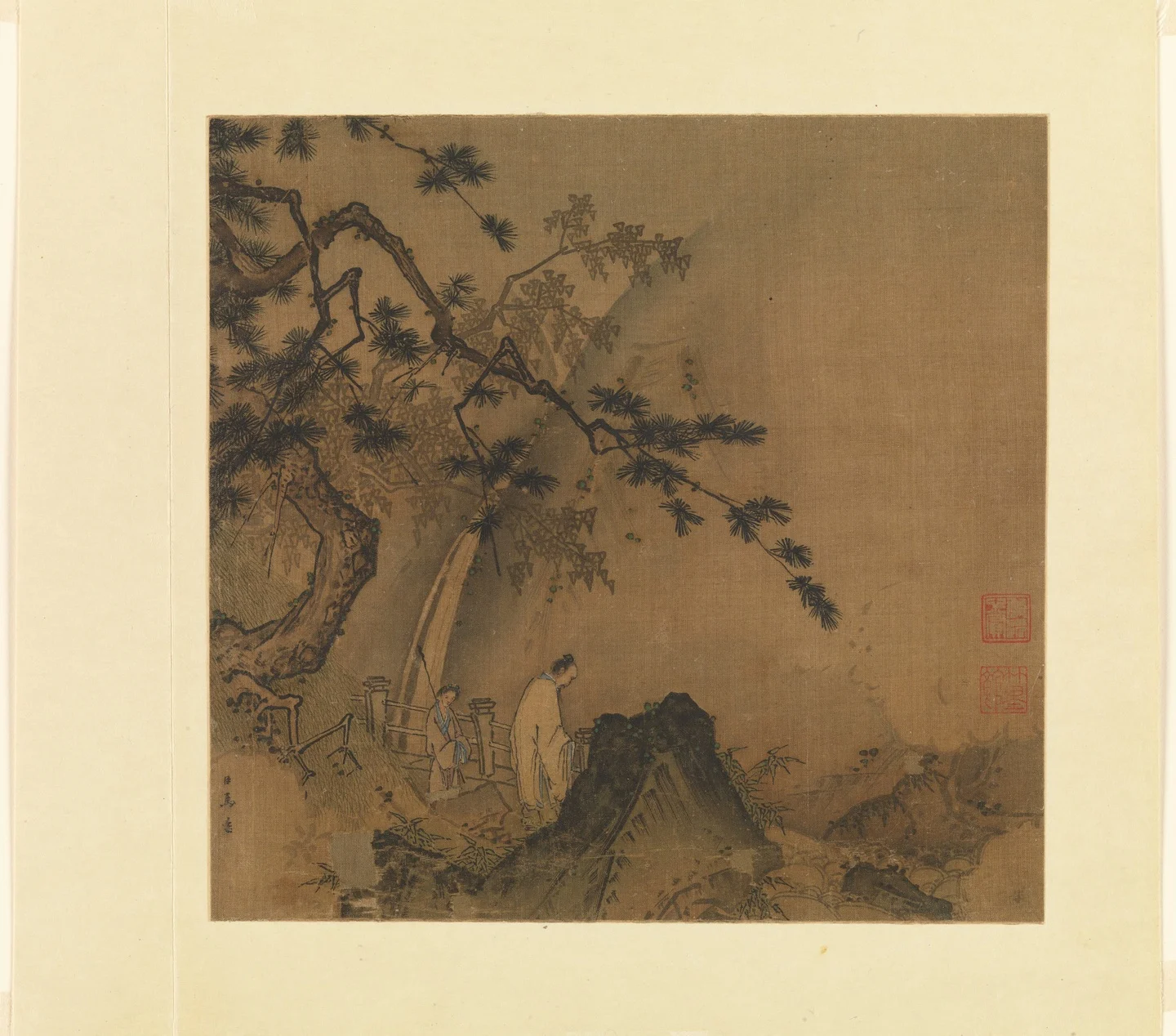 Ma Yuan
Scholar viewing a waterfall
early 13th centuryPeriod, style and subject
- Movement
- Chinese painting
- Genre
- Landscape
- Medium
- Handscroll; ink on paper
- Collection
- The Metropolitan Museum of Art
- Dimensions
- Image, 31.1 × 53.8 cm
- Accession number
- 1989.363.33
Sources
Image provided under CC0. Image licence