The Adoration of the Shepherds
Andrea Mantegna · shortly after 1450
Explore the painting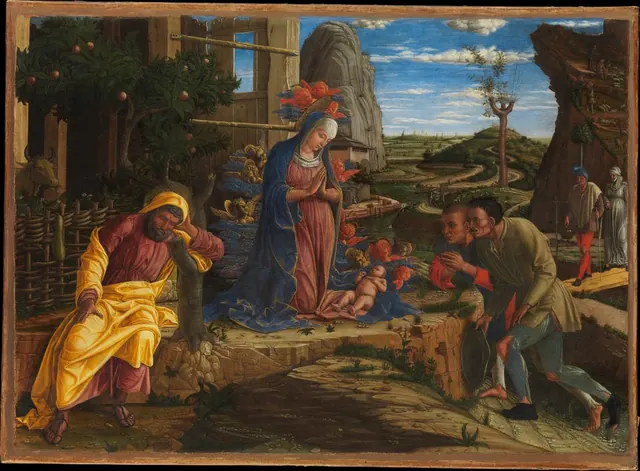
The painting’s story and details
Two shepherds in worn clothing, their legs bare, approach the newborn Christ. Mantegna painted this small picture in the 1450s, when he was little more than twenty. Keith Christiansen, a curator at the museum, has suggested that Borso d’Este, ruler of Ferrara, commissioned it, though this cannot be proved. Something else is documented. Borso’s half-brother Lionello ordered a portrait from Mantegna in 1449 and bought entire altarpieces from the Netherlander Rogier van der Weyden. The Este court prized painting in which every blade of grass and every fold is described separately. Scholars connect the shepherds’ emphatically physical appearance with that taste.
The shepherds bend towards the child. One joins his hands in prayer; the other holds his removed cap beside his knee. Their weathered faces, torn clothing and bare feet are painted as carefully as the stones below. In the Gospel of Luke an angel tells the shepherds of the Saviour’s birth. Mantegna shows both the angel’s appearance and the shepherds’ arrival beside the child. Their working clothes retain the signs of poverty within the sacred story. For a wealthy patron, the image could serve as a reminder of who first received the announcement of the Nativity.
High on the right, on a ledge of the cliff, an earlier event appears. An angel comes to shepherds among their sheep and announces the birth. The picture holds several moments of one story. While the large figures already stand before the infant, what brought them here is still unfolding in the distance. In a small devotional image this device allowed the story to be followed piece by piece over a long time. Two travellers at the right edge, a man in red hose and a woman in white, walk the same road. These travellers connect the large foreground figures with the road receding into the distance.
Mary joins her hands and bows her head towards the child. The infant lies at her feet beside the edge of her clothing. Blue clouds filled with red and gold cherubim rise around them. From a distance that blue is easily mistaken for a continuation of her mantle. Close viewing reveals wings and small faces. Mantegna places a heavenly vision directly among the stones and grass. Carefully depicted natural details and cherubim occupy the same space, allowing the miracle to be imagined within the world inhabited by the painting’s viewers.
At the left Joseph sleeps with his head propped on his hand. He wears a long yellow garment in the antique manner and sandals, which sets him apart from the shepherds in contemporary dress. The catalogue reads this as a deliberate pairing of two eras within one scene. Behind Joseph runs a wattle fence, and the head of an ox appears in the dark opening of the stable. His still figure balances the shepherds’ approach from the opposite side. The sacred event takes place among wood, stone and farm buildings, and Mantegna keeps them in view.
A green squash hangs on the wattle fence. Above it grows an orange tree bearing fruit, and a flower pushes out of a crack in the foreground rocks. According to the catalogue, such details appealed to both Lionello and Borso d’Este. Christiansen allows that the squash may refer to an Este heraldic device, the so-called paraduro. The connection with the emblem remains conjectural. Around 1450 the Ferrarese court debated whether painting could rival poetry in describing the world. Lionello, in a dialogue by Angelo Decembrio, admired small pictures with deceptively lifelike details yet doubted their power. Here the small details invite sustained viewing and a closer look at how convincingly a painter can represent the visible world.
Beyond the rocks a green plain opens with a winding river, and tiny figures appear by the water. One man waits for a boat at the bank; sheep move along a path. The catalogue also makes out a woman spinning and hens feeding. The hard rocks of the foreground are set against the soft distant landscape. Even far away the outlines stay crisp, and in Mantegna’s early work volume is often built by this sharp drawing that recalls carved forms. Giovanni Bellini, the brother of Mantegna’s wife, later repeated this river view with its rocky outcrop in the Dead Christ in the Museo Poldi Pezzoli in Milan.
For a Christian viewer, the poor shepherds here become witnesses of an event of universal significance. The picture joins costly painting that demands close viewing with religious recognition of people of the lowest rank. Its small size, 40 by 56 centimetres, makes that encounter especially intimate. The shepherds’ faces and clothes have to be examined at nearly reading distance. The painting long remained in aristocratic hands. In 1586 a Nativity by Mantegna is recorded in the chapel of Margherita Gonzaga, duchess of Ferrara; it then entered the Roman collection of Cardinal Aldobrandini, was taken to England around 1800, and was bought by the museum in 1932. In 1927 the paint layer was transferred from panel to canvas, and an examination in 2009 showed that the edges were never trimmed. The scene keeps the boundaries the artist gave it.
Featured in tours
Christian images. From mosaic to Caravaggio
Icons, manuscripts, domestic devotional pictures and church altarpieces.
More paintings to compare
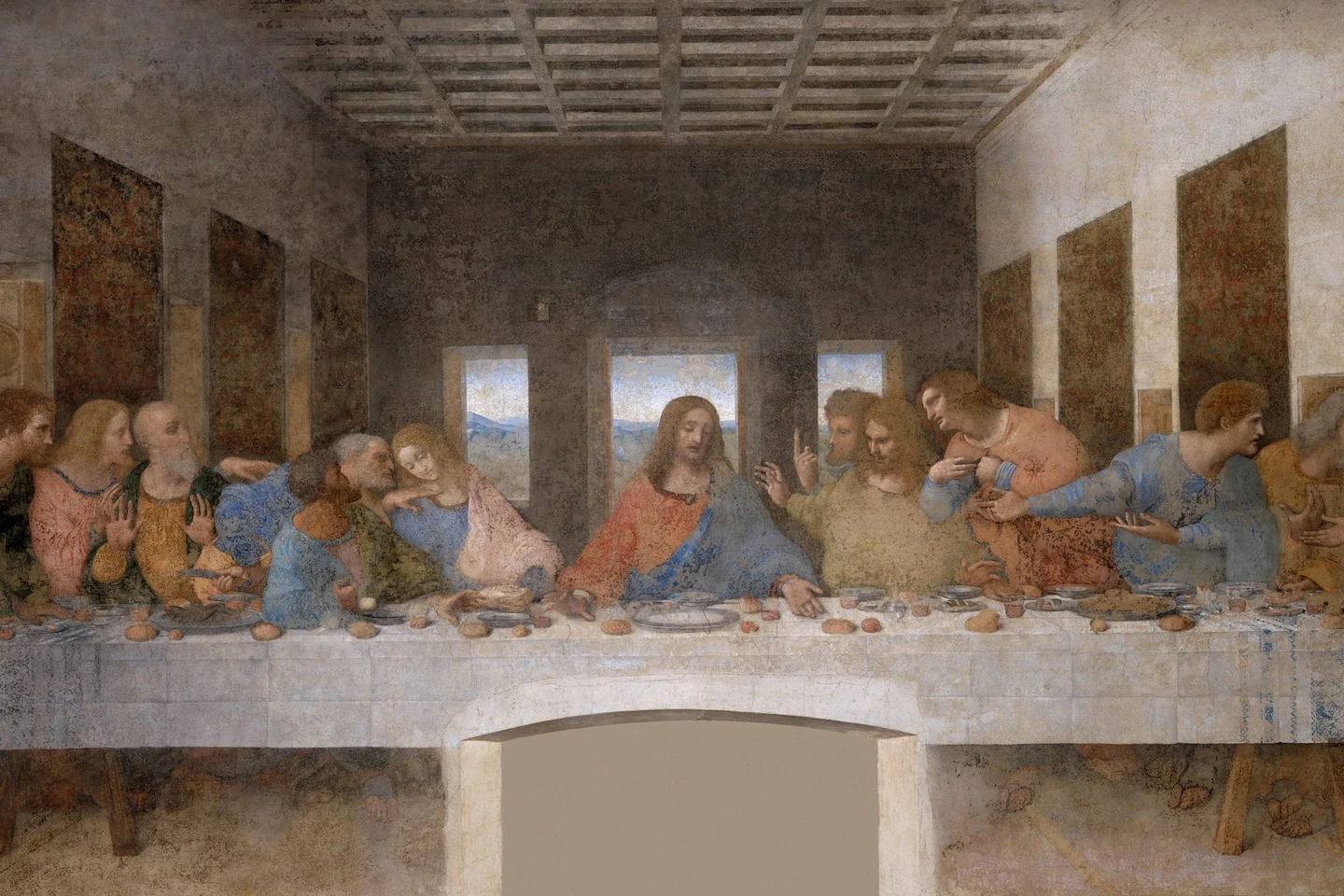 Leonardo da Vinci
The Last Supper
1495–1498 Fra Angelico
Annunciation at San Marco
About 1440–1450 Sandro Botticelli
Adoration of the Magi
1470–1475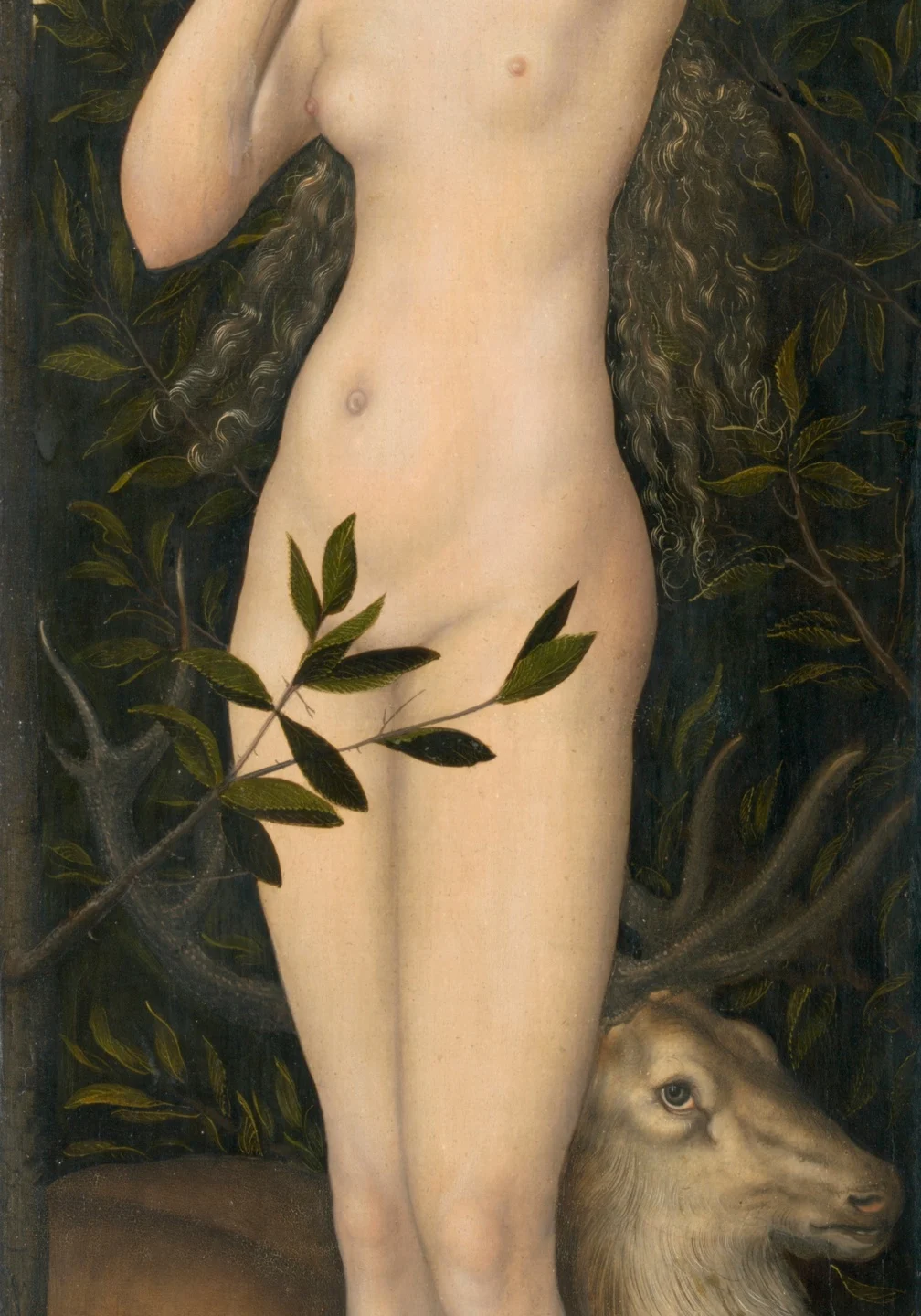 Lucas Cranach the Elder
Eve
1533–37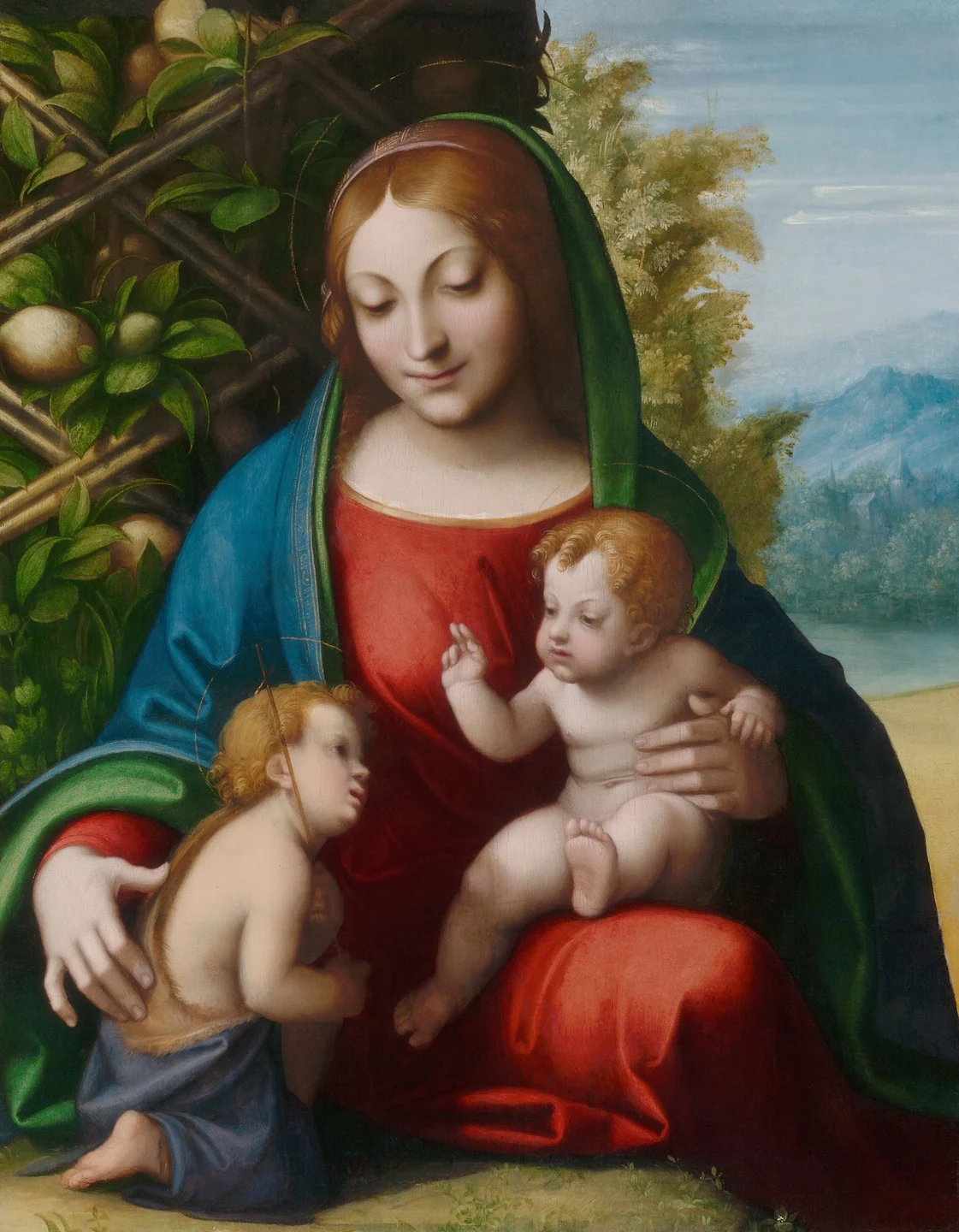 Antonio da Correggio
Virgin and Child with the Young Saint John the Baptist
c. 1515 Albrecht Dürer
Virgin and Child with Saint Anne
probably 1519Period, style and subject
- Movement
- Renaissance
- Genre
- Religious art
- Medium
- Tempera on canvas, transferred from wood
- Collection
- The Metropolitan Museum of Art
- Dimensions
- 40 × 55.6 cm
- Accession number
- 32.130.2
Sources
Image provided under CC0. Image licence