Portrait of Fyodor Dostoevsky
Vasily Perov · 1872
Explore the painting
The painting’s story and details
Pavel Tretyakov commissioned Perov’s portrait of Dostoevsky for his collection. Painted in 1872, it was made during the writer’s lifetime with his participation. Anna Dostoevskaya recalled that the artist visited repeatedly, talking with her husband and observing changes in his expression.
Light falls on the high forehead and face. The eyes look past the viewer, the lips are closed and the head inclines slightly. This arrangement suggests concentration. Anna Dostoevskaya believed the artist had captured an expression she recognized from her husband’s creative reflections.
The hands are clasped over the knees. Their interlocking fingers form the second focus after the face. The gesture closes the figure’s silhouette, joining both hands into one compact shape. The image does not establish the precise thought or emotion occupying its sitter.
Broad passages describe the brown coat, with a few folds and pale marks along its edges. Its restrained colour approaches the background. Face and hands consequently stand out more strongly, while the clothing retains everyday specificity without becoming the principal subject.
Between the lapels appear a white shirt and a dark tie with small red accents. This is one of the few colour contrasts at the figure’s centre. A narrow triangle of pale fabric directs the eye upward toward beard and face, integrating costume details with the composition.
Perov placed his signature and date in the lower right corner. They anchor the image in a particular encounter between contemporaries. Elsewhere the background is almost empty. No writing-room furnishings intervene, and attention repeatedly returns to the seated figure.
Tretyakov acquired the finished portrait in 1872. The commission connects painting with the formation of Russian literature’s public image. Perov supplied a recognizable likeness and a carefully arranged pose. Anna Dostoevskaya’s testimony helps explain why contemporaries understood this likeness as more than a record of facial features.
More paintings to compare
 Vasily Perov
The Last Tavern at the City Gates
1868 Vasily Perov
Troika. Apprentice Workmen Carrying Water
1866 Vasily Perov
Hunters at Rest
1871 Vasily Perov
The Drowned Woman
1867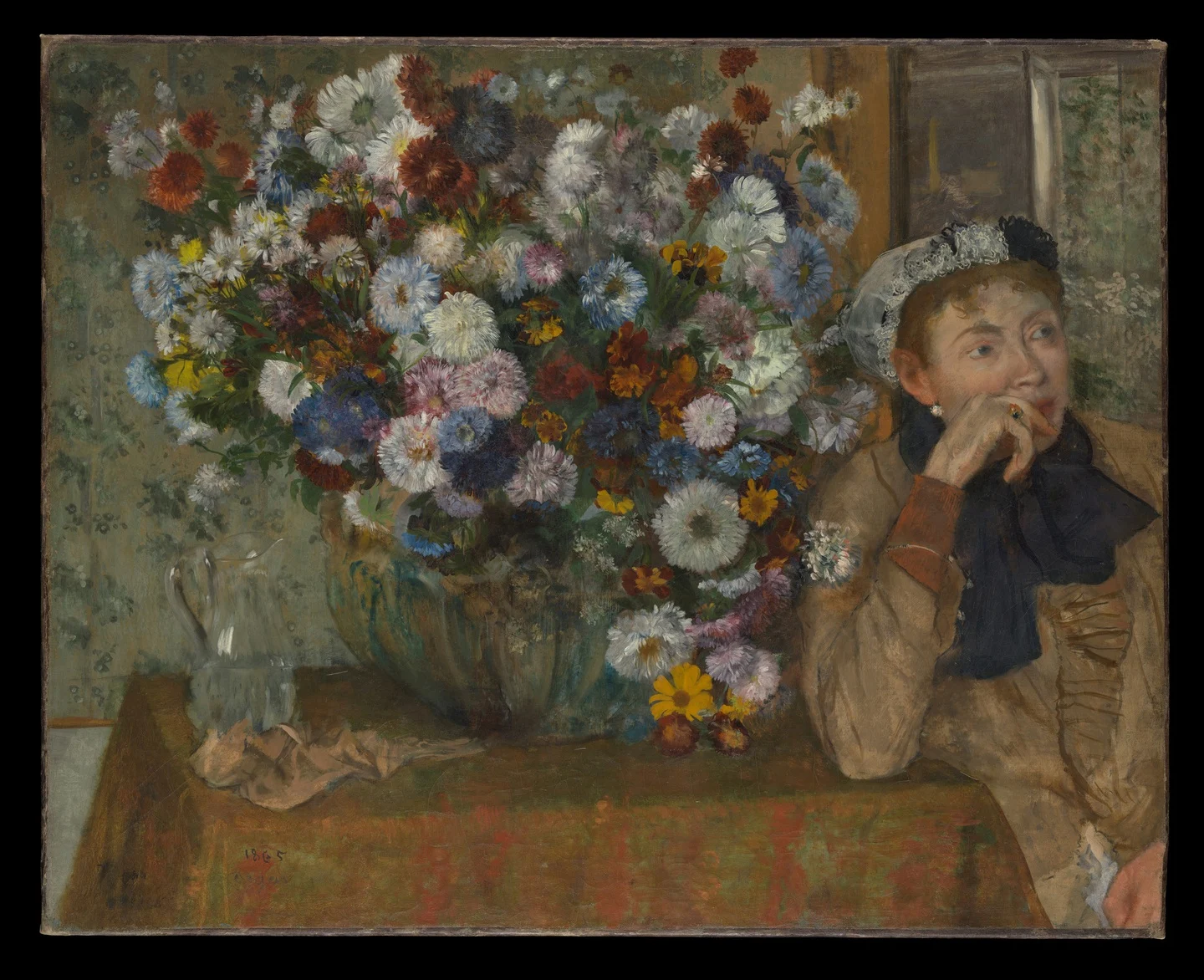 Hilaire Germain Edgar Degas
A Woman Seated beside a Vase of Flowers (Madame Paul Valpinçon?)
1865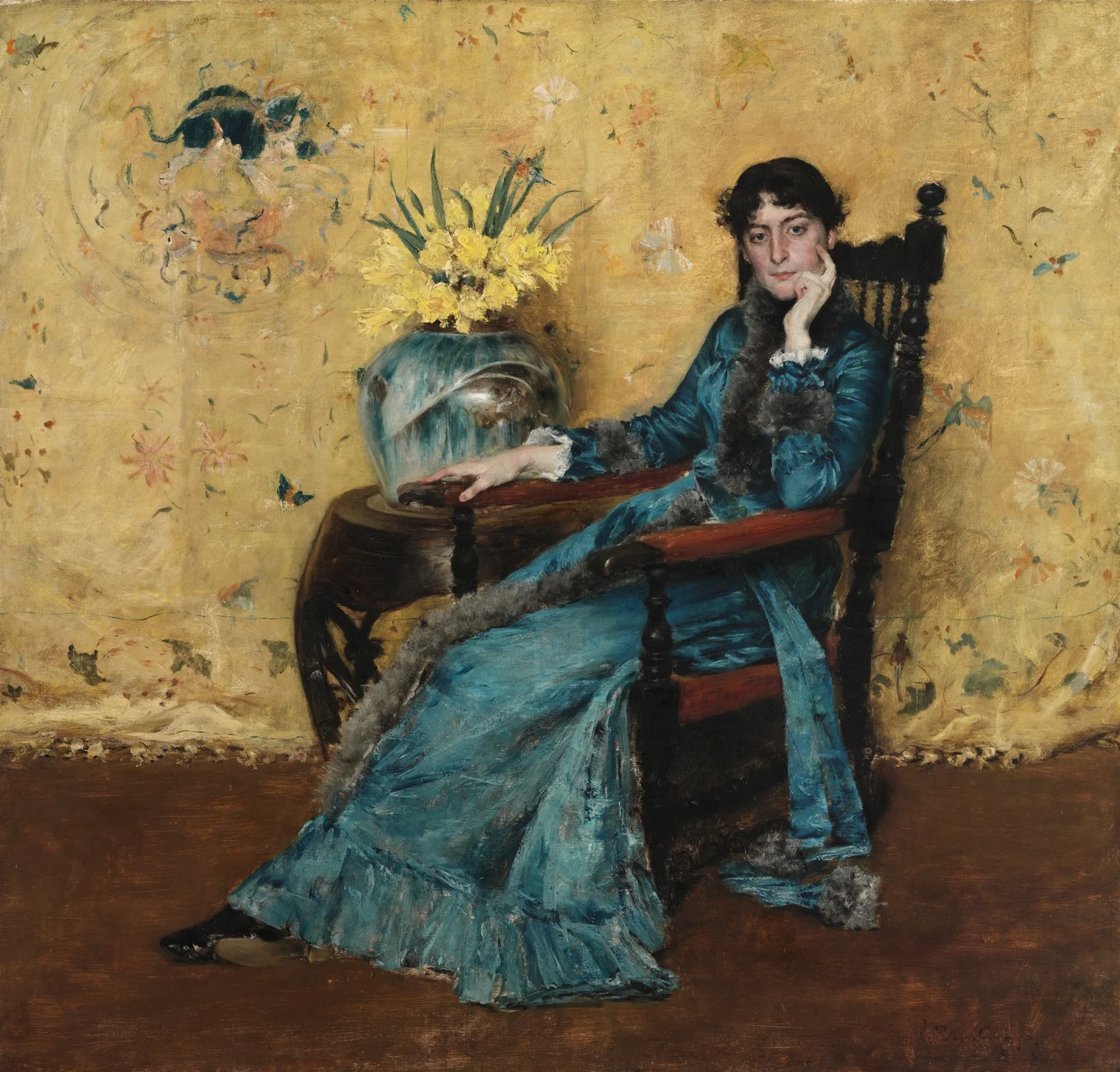 William Merritt Chase
Portrait of Dora Wheeler
1882–83Period, style and subject
- Movement
- Realism
- Genre
- Portrait
- Medium
- Oil on canvas
- Collection
- State Tretyakov Gallery
- Accession number
- 386
Sources
Public domain. Reproduction from Wikimedia Commons.