A Woman Seated beside a Vase of Flowers (Madame Paul Valpinçon?)
Hilaire Germain Edgar Degas · 1865
Explore the painting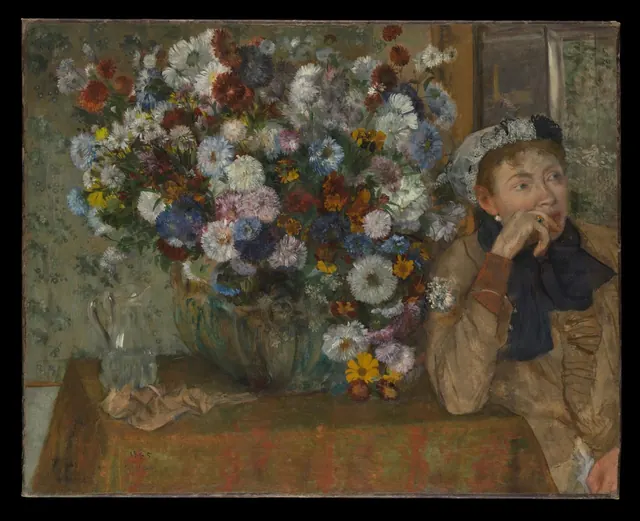
The painting’s story and details
In 1865 Degas placed an enormous bouquet in the middle of his painting, leaving the woman at the right edge. She is probably the wife of his schoolfriend Paul Valpinçon, whose country house at Ménil-Hubert the artist visited. Personal acquaintance offered access to domestic life. From that setting emerged an unusual meeting of portraiture and floral still life.
The woman brings her hand to her mouth and looks beyond the painting. Her elbow rests on the table, and a ring appears on her finger. Degas developed the pose in a pencil drawing of the same year, now at Harvard. Degas planned a figure that would retain a portrait likeness while occupying only a small part of the picture.
The museum identifies dahlias, asters and gaillardias in the bouquet, whose flowering suggests late summer. White, red, blue and yellow heads fill almost the entire height of the canvas. Beside them, the face looks small and restrained in colour. The bouquet commands attention both as garden flowers and as the room’s most richly painted surface.
The vase appears only beneath the lowest stems. Its rounded body is painted in muted green and brown bands. Flowers spread far beyond the vessel, approaching the woman’s sleeve. This overlap makes the bouquet seem particularly large. Table, vase and figure sit close together, leaving little open space between the front edge and wall.
A glass pitcher with a handle stands on the left. A few highlights and dark edges convey its transparency, with the surroundings visible through it. Pale gloves lie nearby. These small things return the scene to a domestic table shared by flowers, water and articles of clothing. The still life occupies space that someone uses.
The ochre tablecloth extends in a broad band below. Its reddish and greenish pattern echoes the bouquet’s colours more quietly. The vertical sleeve on the right crosses the table edge. Degas connects the figure with her surroundings through contact and repeated colour, so she remains integral to the painting even as flowers occupy most of the room.
The same year, 1865, marked Degas’s turn from historical subjects towards modern life. Unusual displacements would later appear in his theatres, rehearsal rooms and cafés. Here the change is already visible in an ordinary room. The bouquet occupies the centre, while the person’s presence is established through pose, gaze and relationships with surrounding objects.
More paintings to compare
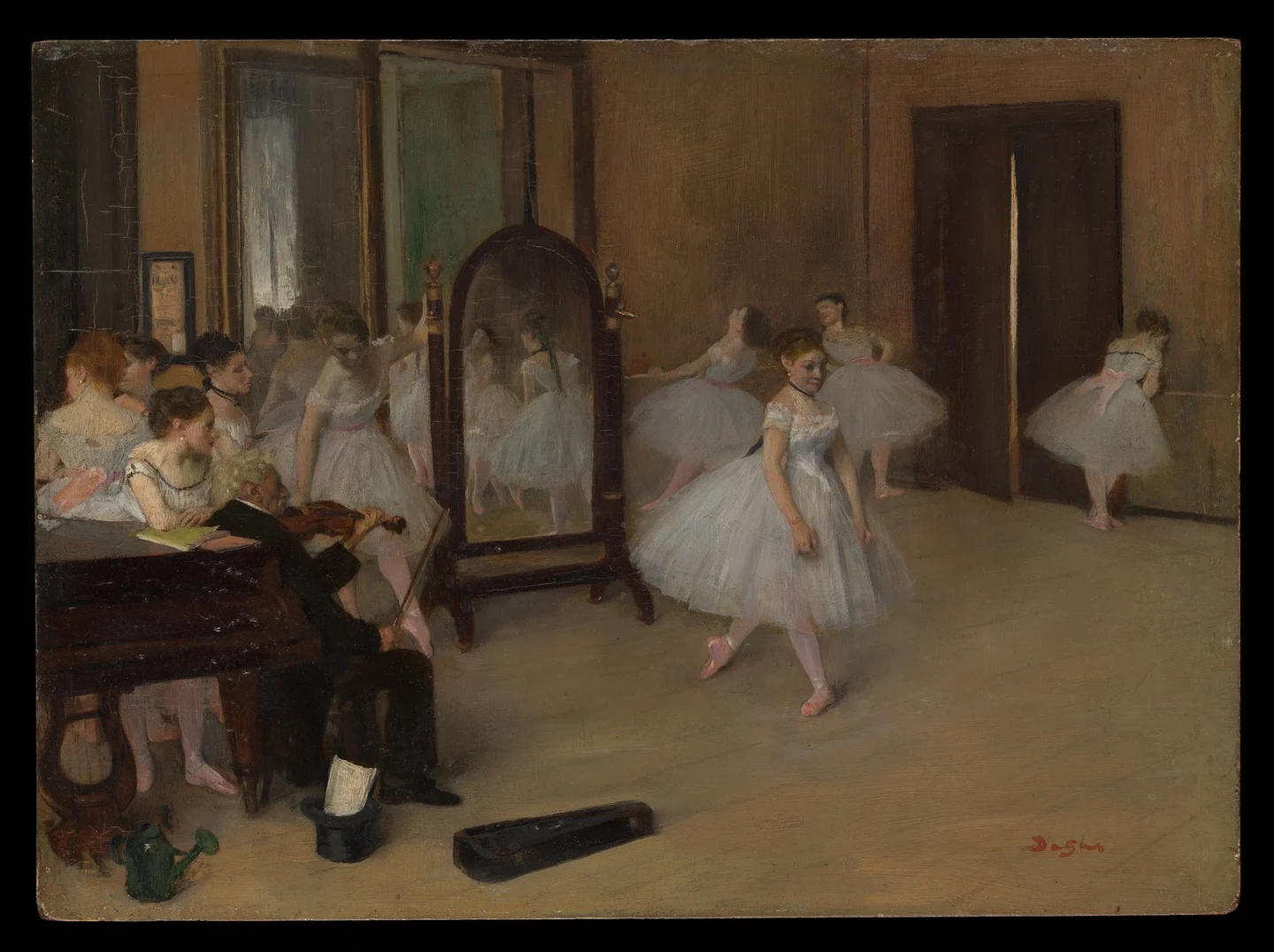 Edgar Degas
The Dancing Class
About 1870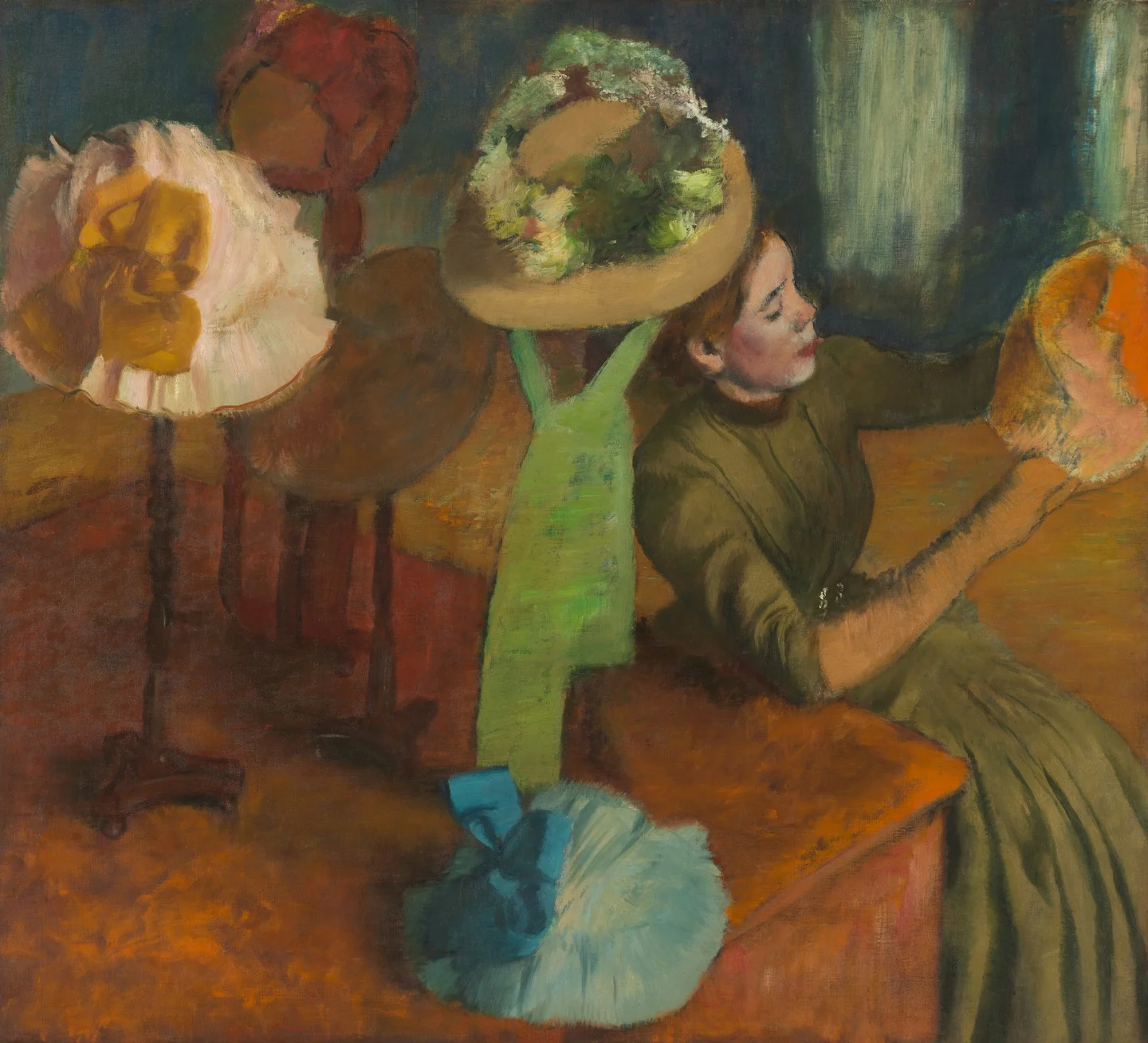 Hilaire Germain Edgar Degas
The Millinery Shop
1879-86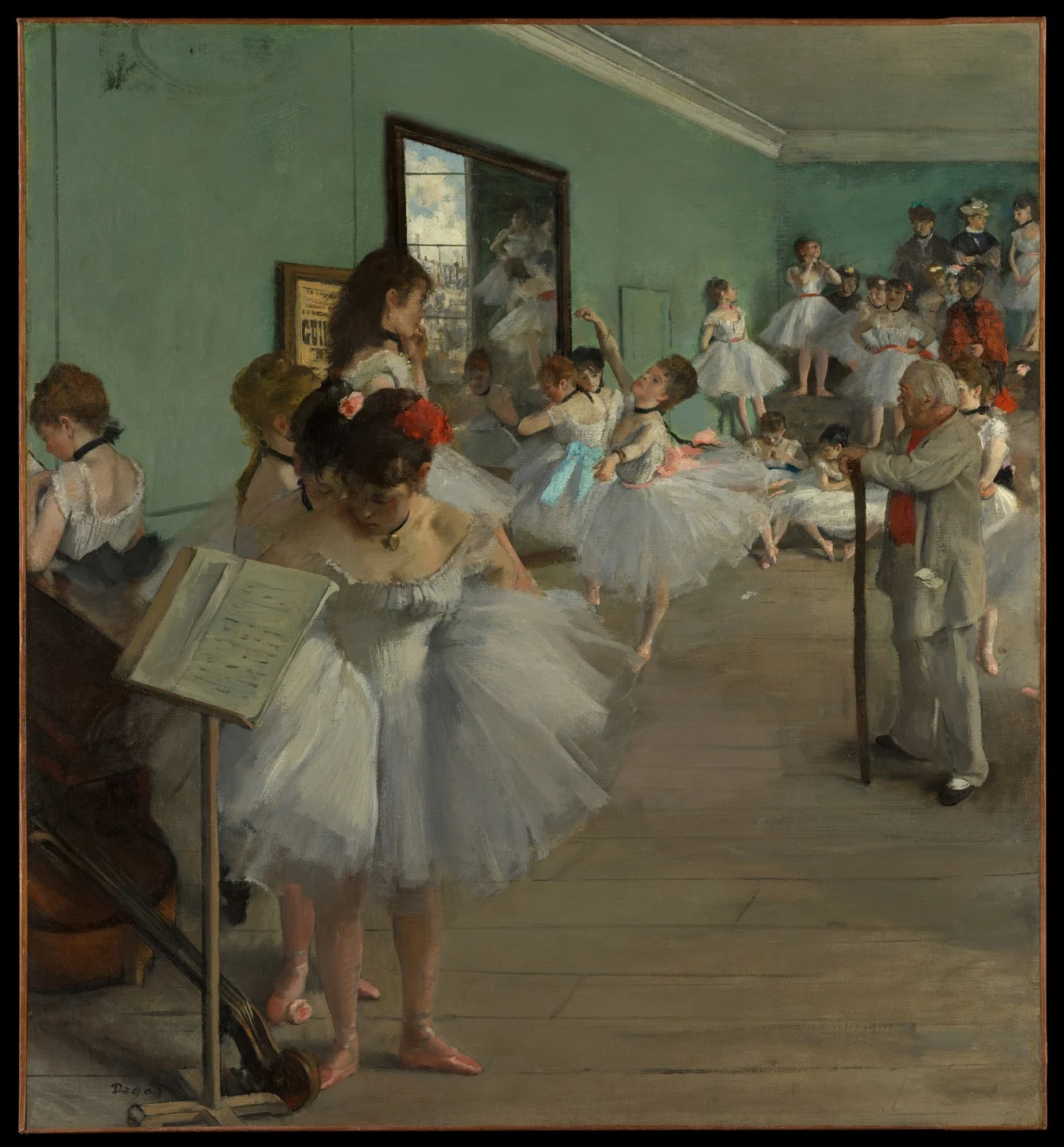 Hilaire Germain Edgar Degas
The Dance Class
1874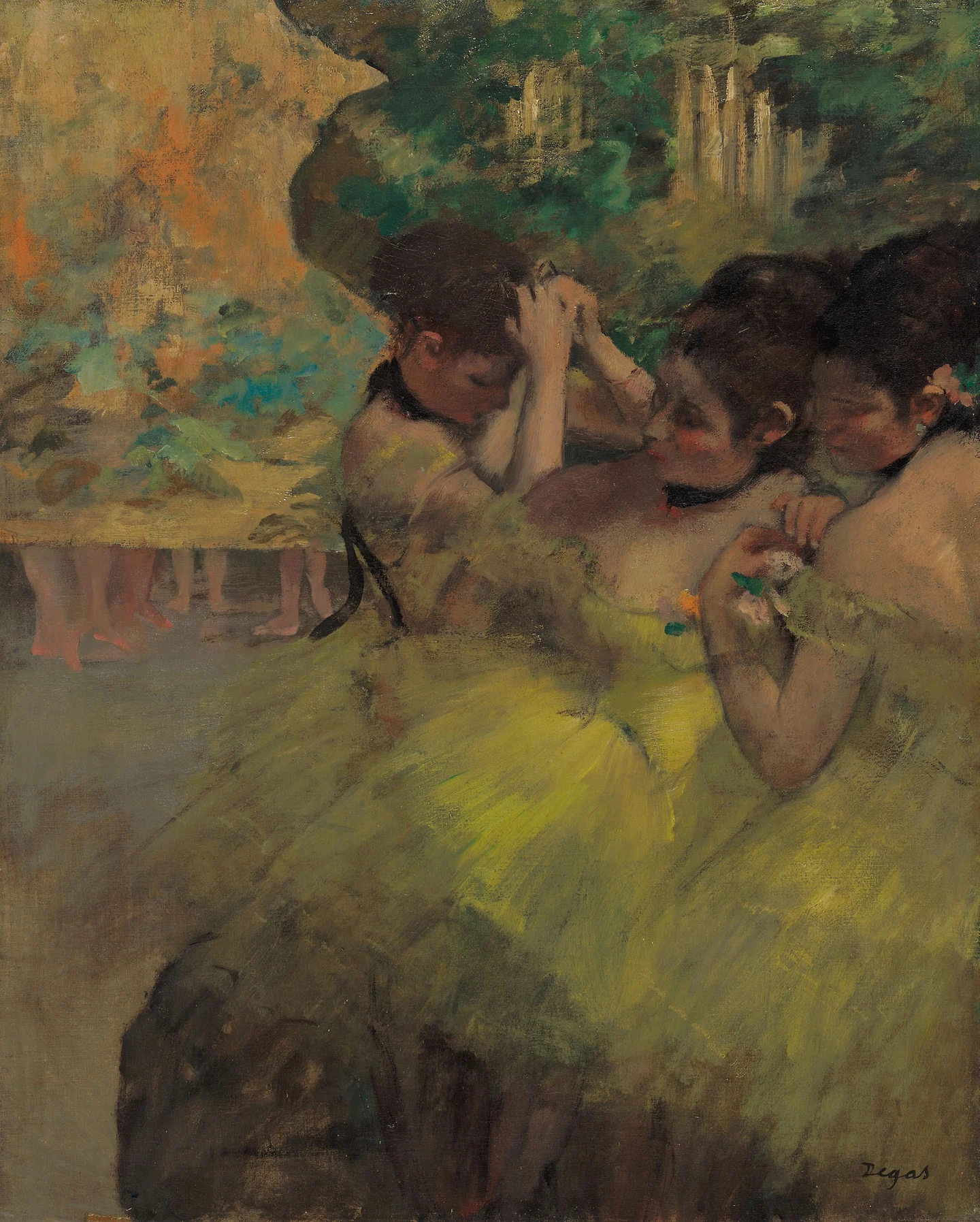 Hilaire Germain Edgar Degas
Yellow Dancers (In the Wings)
1874–76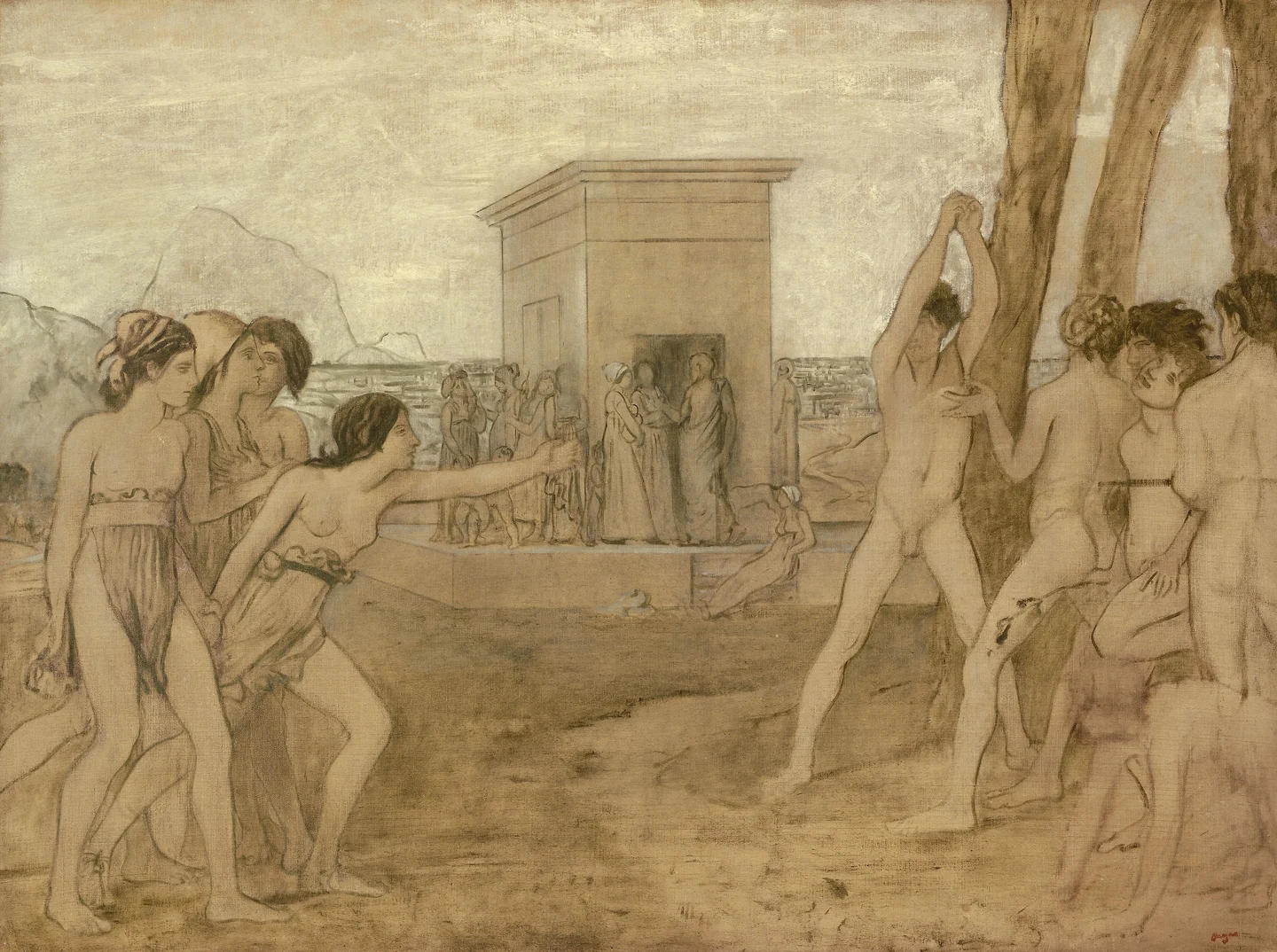 Hilaire Germain Edgar Degas
Young Spartan Girls Challenging Boys
c. 1860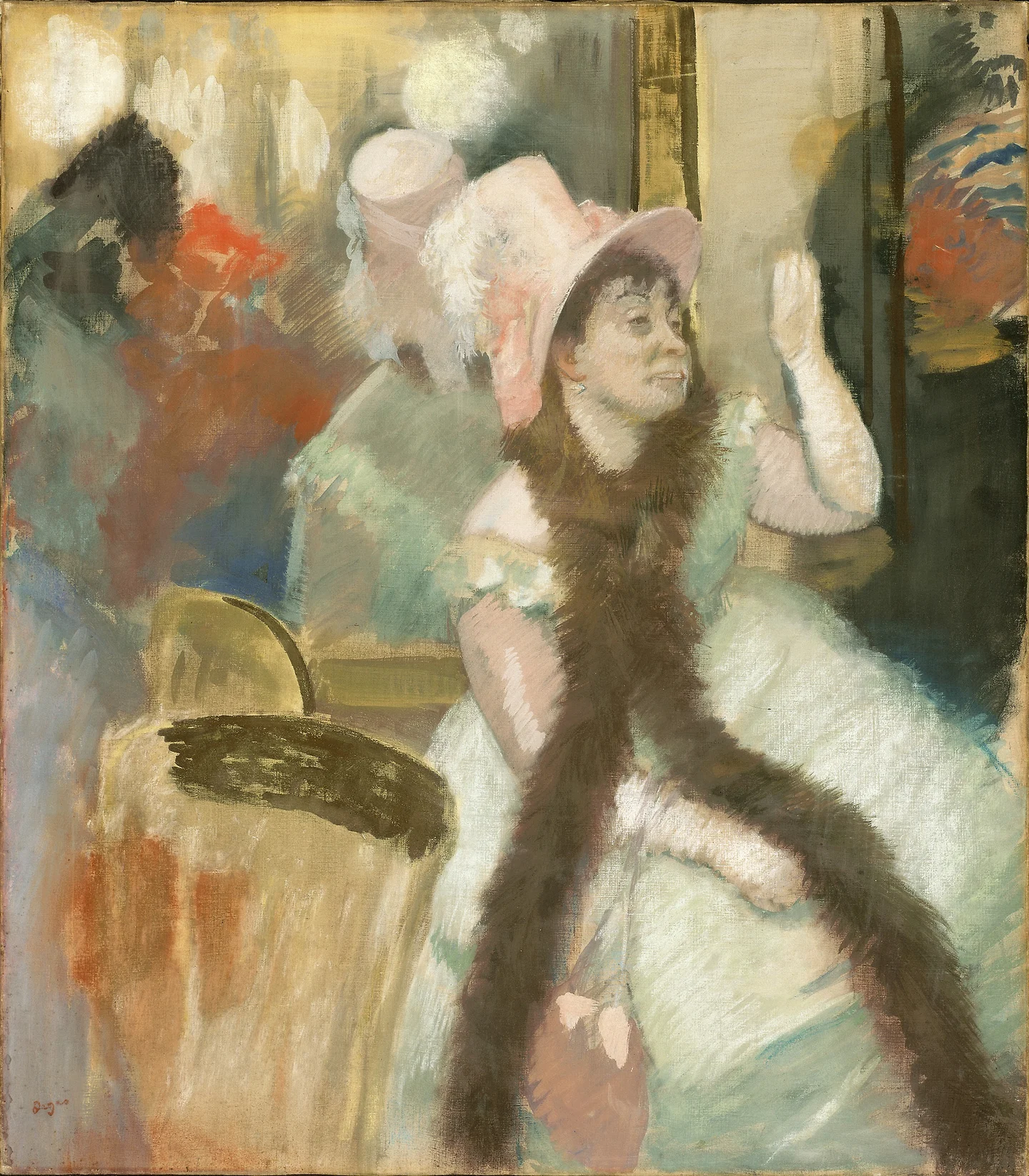 Hilaire Germain Edgar Degas
Portrait after a Costume Ball (Portrait of Madame Dietz-Monnin)
1879Period, style and subject
- Movement
- Realism
- Genre
- Portrait
- Medium
- Oil on canvas
- Collection
- The Metropolitan Museum of Art
- Dimensions
- 73.7 × 92.7 cm
- Accession number
- 29.100.128
Sources
Image provided under CC0. Image licence