Girl with a Pearl Earring
Johannes Vermeer · c. 1665
Explore the painting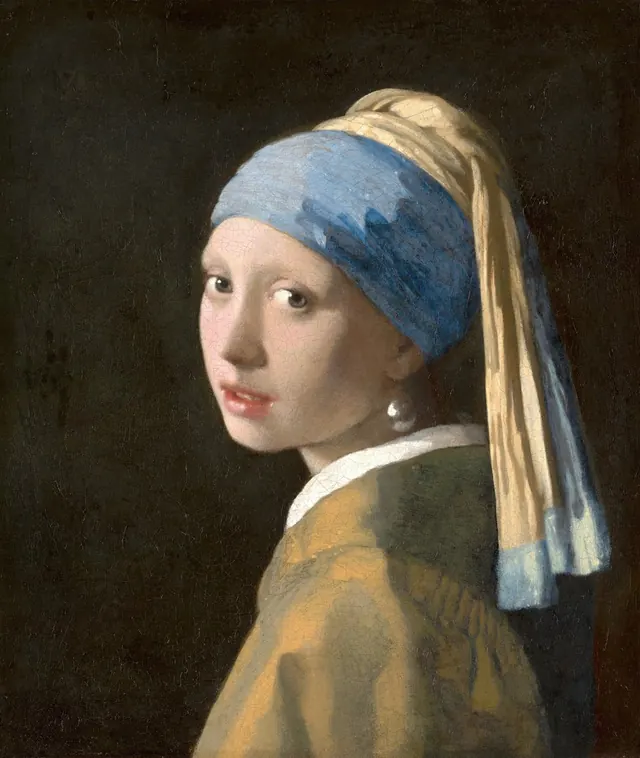
The painting’s story and details
A girl looks back over her shoulder, and light picks out her face, lips and earring. Vermeer painted her around 1665 in Delft. Such an image was called a tronie, a study of a face, expression and unusual costume. Even if a real girl posed, this kind of painting did not have to communicate her name or social position. The model’s identity remains unknown.
Her gaze meets ours while her shoulder remains turned away. The head and body together suggest a brief, recognizable moment of turning. Individual strokes are almost invisible around the eyes. Examination of the surface revealed eyelashes that are now difficult to distinguish without instruments. What looks extremely simple today originally contained subtler details, some altered by time.
Her lips are slightly parted. Small highlights suggest moisture, while the cheeks have smoother transitions. Vermeer distinguishes surfaces through the amount and handling of paint. Researchers found that he used two kinds of lead white with different properties. That technical choice explains the softness of the face more securely than guesses about what the girl was about to say.
The earring appears rounded and weighty although Vermeer barely outlines it. An upper highlight and a soft reflection beneath invite the eye to complete the form. The Mauritshuis suggests that such a large pearl could be an imitation or an invention. It therefore cannot identify the girl as either a wealthy heiress or a servant receiving an expensive gift. The painting supplies no such information.
The blue part of the turban contains ultramarine made from lapis lazuli. The raw material came from what is now Afghanistan and reached European painters through long-distance trade. A few centimetres of canvas contain material that travelled an enormous distance. The turban itself was an unusual, staged costume for a seventeenth-century Dutch girl. It gave Vermeer a broad blue shape beside lighter fabric near the face.
The long end of the fabric falls almost vertically behind her shoulder, emphasizing the turn of the head and separating the figure from the dark background. During painting, Vermeer altered the turban’s top, the ear and the neck’s outline. These revisions show how carefully he adjusted neighbouring forms. The impression of a passing encounter emerged from sustained work.
The background originally included a green curtain whose folds have become almost invisible as its pigments changed. Today’s reproduction therefore records both Vermeer’s work and the ageing of its materials. Research recovers aspects of his process while leaving the model’s biography open. The image needs no invented love story. A few carefully placed patches of light already establish a compelling human presence. Why are we so eager to know the girl’s name? Her direct gaze makes the encounter feel personal, although the painting gives little information about her life. An imagined biography can obscure what actually survives. The turn of a head, light and a few highlights create a sense of closeness. We feel a person’s presence far more clearly than we know her history.
More paintings to compare
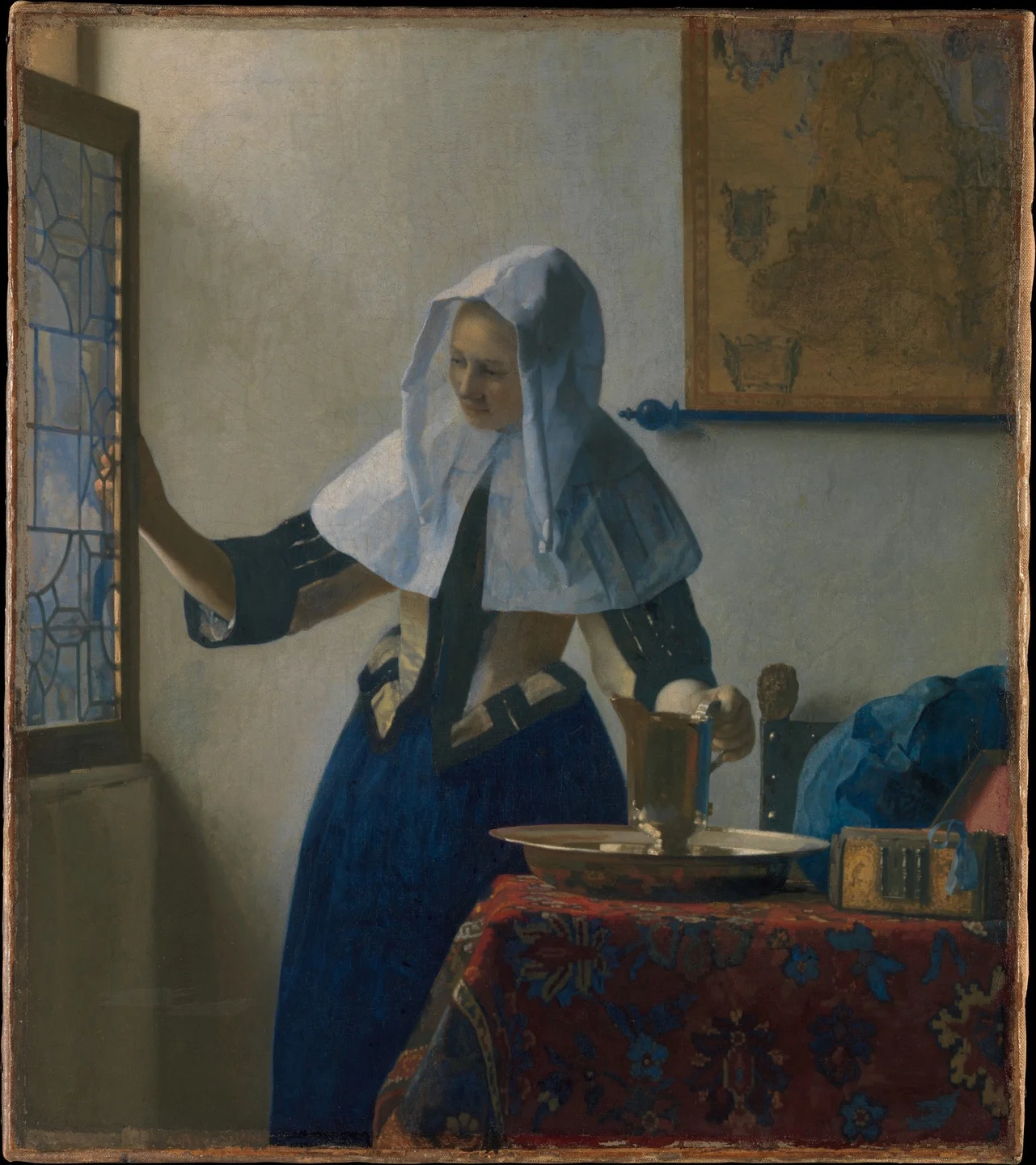
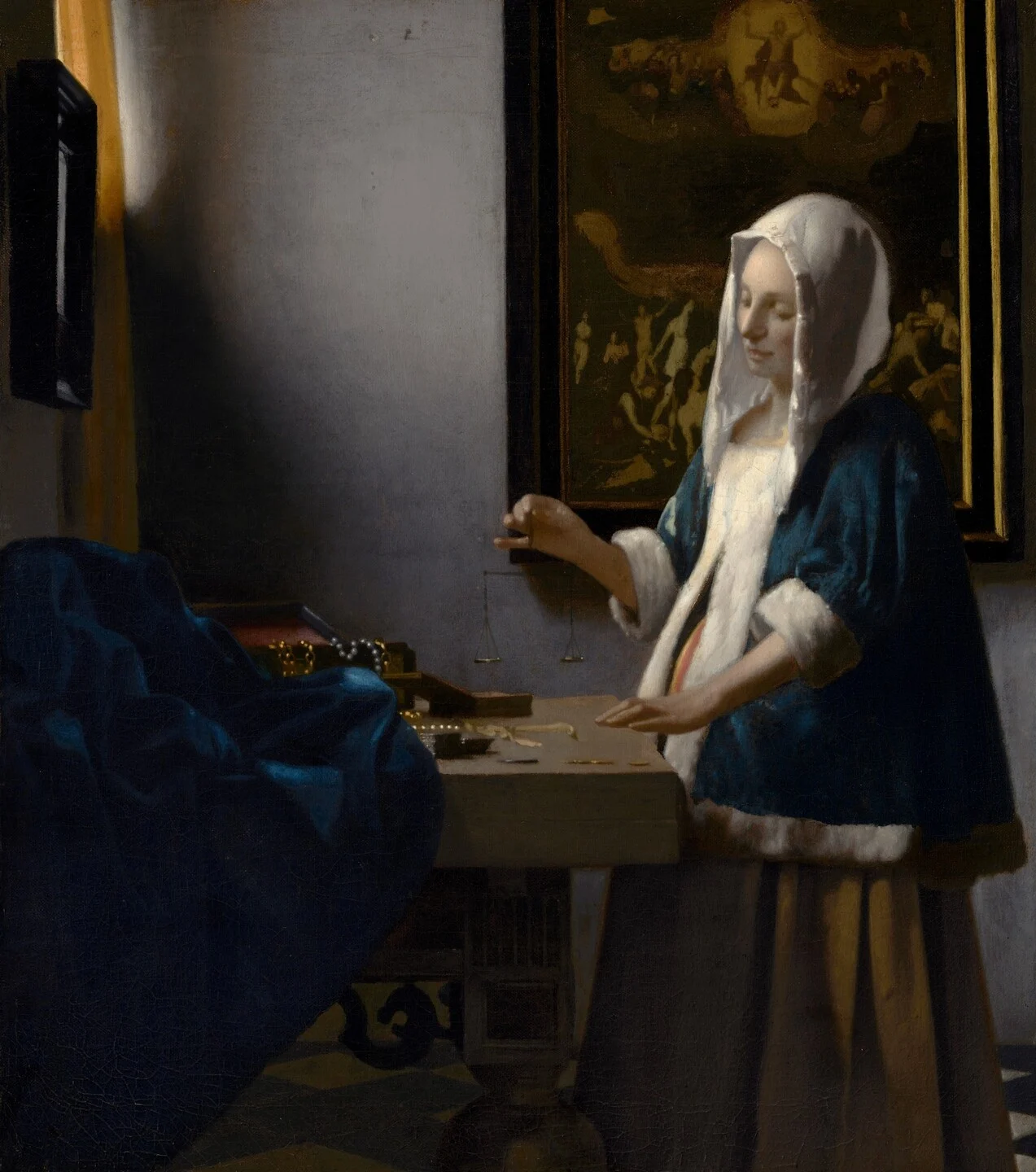
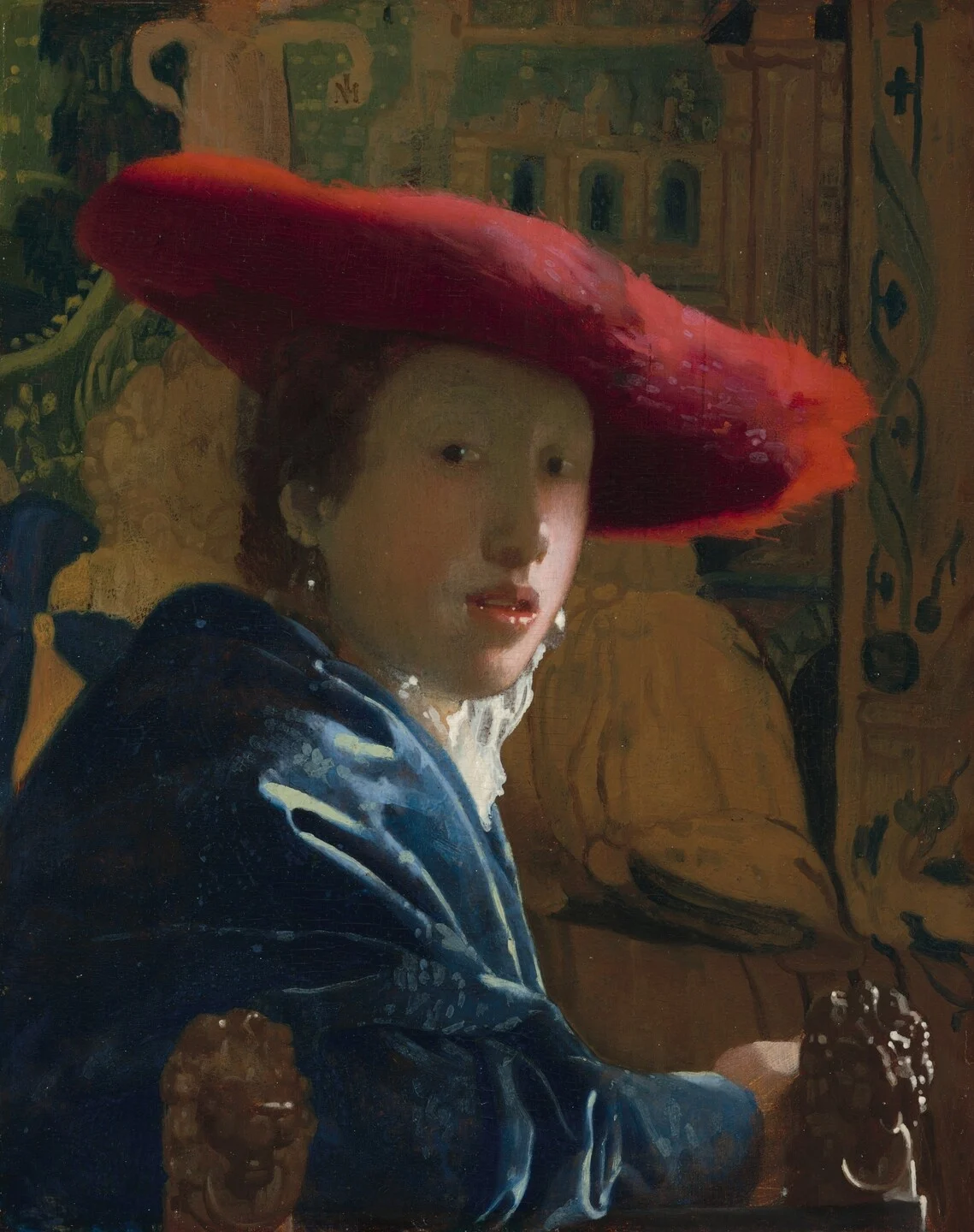
Period, style and subject
- Movement
- Baroque
- Genre
- Portrait
- Medium
- Oil on canvas
- Collection
- Mauritshuis, The Hague
- Dimensions
- 44.5 × 39 cm
- Accession number
- 670
Sources
Reproduction of a public-domain artwork. Image licence