Maize and Cockscombs
Unidentified Japanese painters · mid 17th century
Explore the painting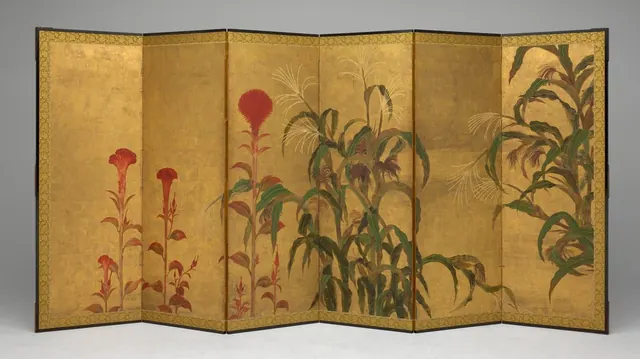
The painting’s story and details
Maize and red cockscombs occupy six panels of a gold screen made in the mid-seventeenth century. A modern viewer may first respond to a striking plant design. In Edo-period Japan, maize was an introduced crop. Its prominent treatment shows new plants entering prestigious domestic decoration through methods inherited from court painting.
A red celosia rises on a thin stem at the left. Its dense flower head resembles a comb, giving the plant its common English name, cockscomb. The distinctive form remains recognisable while its clear silhouette reads at a distance. Botanical observation and large-scale decoration meet in one choice of shape.
A taller flower near the centre repeats the red accent at a different size and outline. Every irregular edge remains visible against gold. Open intervals are as noticeable as the sparse row of stems. Within a room viewers could take in the screen as a whole before approaching individual details.
Maize occupies much of the right half. Its broad leaves and height differ sharply from the cockscombs. The museum connects this subject with interest in natural science and new imagery. An agricultural crop introduced from afar enters a gilded interior. Its unfamiliar forms become the principal ornament of a large surface.
Fine tassels spread above the stems. The painter distinguishes parts of the plant rather than repeating a conventional leaf. Such observation recalls botanical illustration, but the screen has no labels or measurements. Precision serves a decorative object intended for an interior.
Long leaves bend across panel divisions, carrying our attention between sections. The folding structure changes the actual depth of the surface. Turning the screen could make a leaf appear closer or recede. A reproduction preserves only one of its possible positions.
Shorter cockscombs grow beneath the larger plants. Differences in scale and growth diversify the row. Gold remains between them and the earth is barely described. The painter separates recognisable plants from a particular patch of nature and makes them an independent visual subject.
Only one screen of the original pair survives. Military rulers, aristocrats and prosperous townspeople supported Edo decorative culture. The foreign crop can be read as an object of curiosity and part of prestigious consumption. Maize on costly gold shows an agricultural subject acquiring a different value within artistic display.
Featured in tours
Japanese painting. Scrolls and screens
Literature, temples, the arrangement of rooms and everyday life.
More paintings to compare
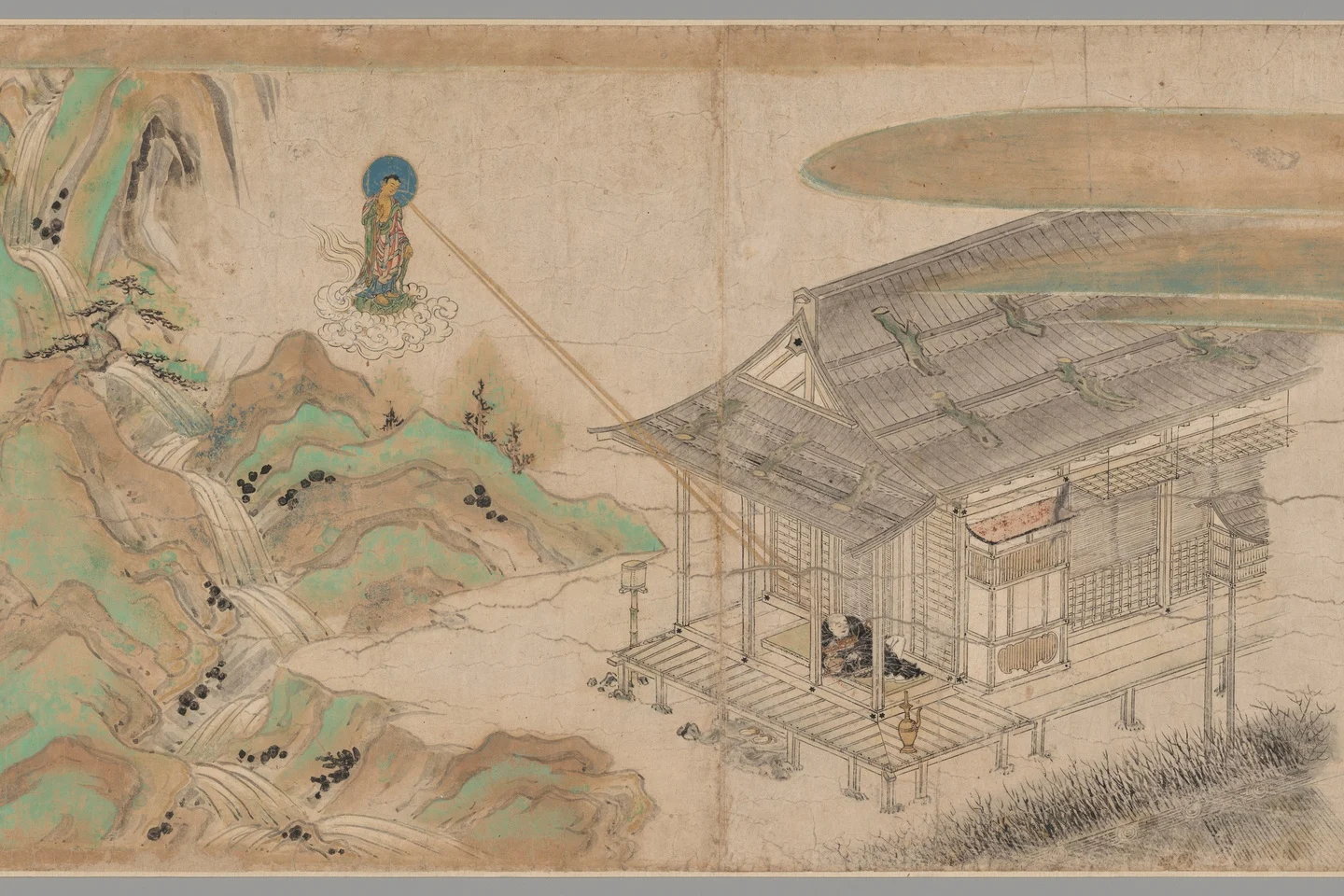 Unidentified Japanese painters
Legends of the Yūzū Nembutsu Sect
Kamakura period (1185–1333), 14th century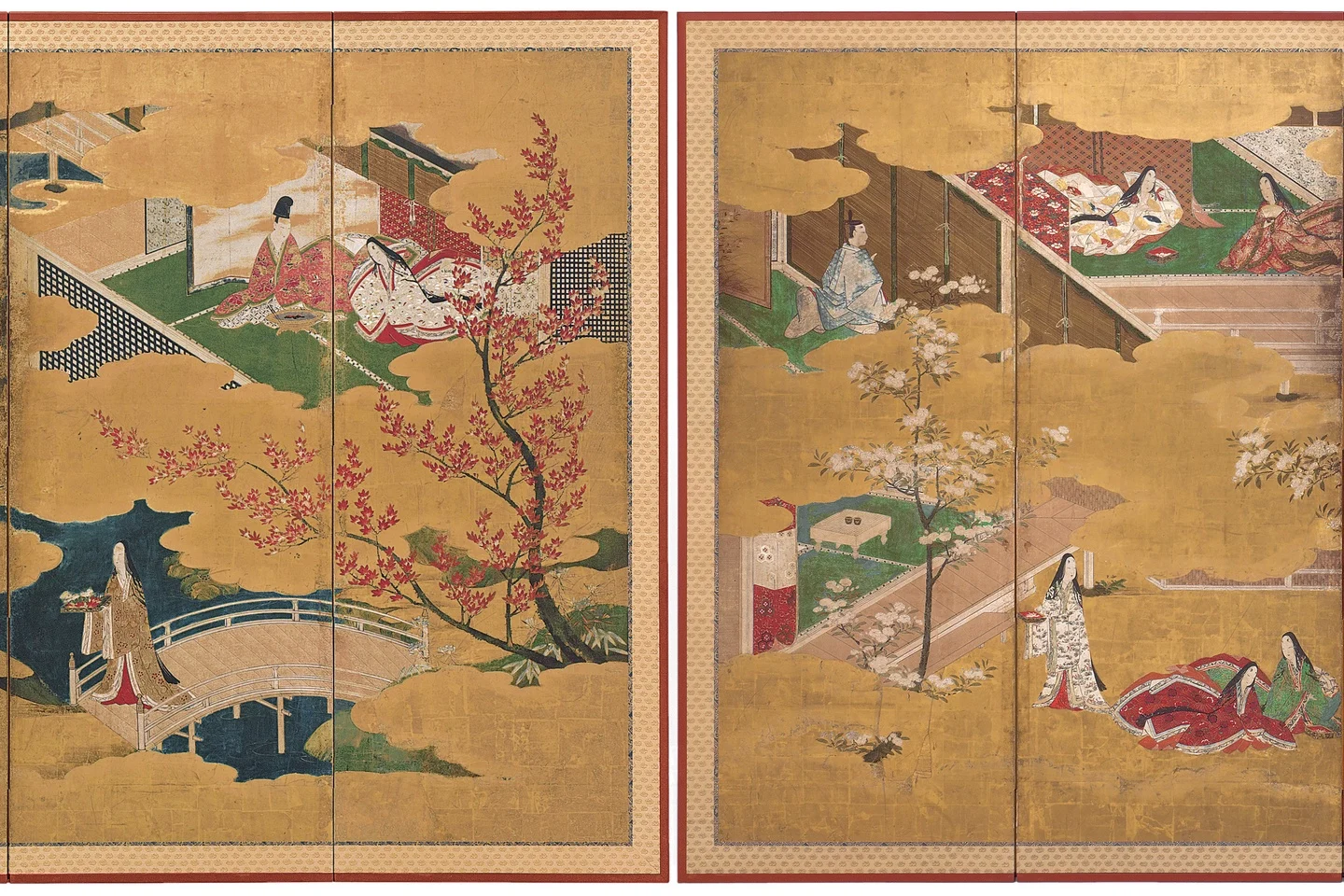 Unidentified Japanese painters
The Tale of Genji
early 17th century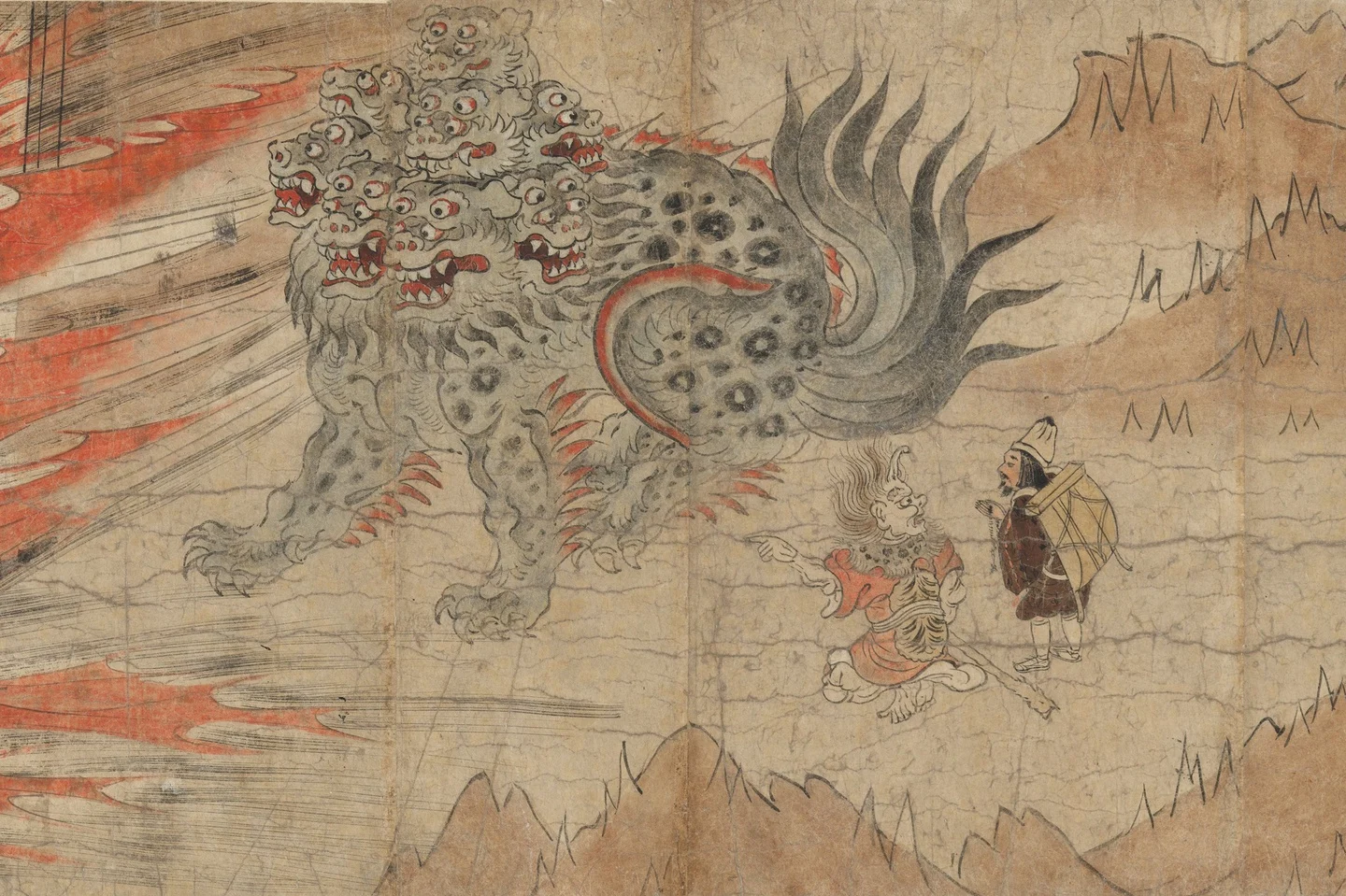 Unidentified Japanese painters
Illustrated Legends of the Kitano Tenjin Shrine (Kitano Tenjin engi emaki)
late 13th century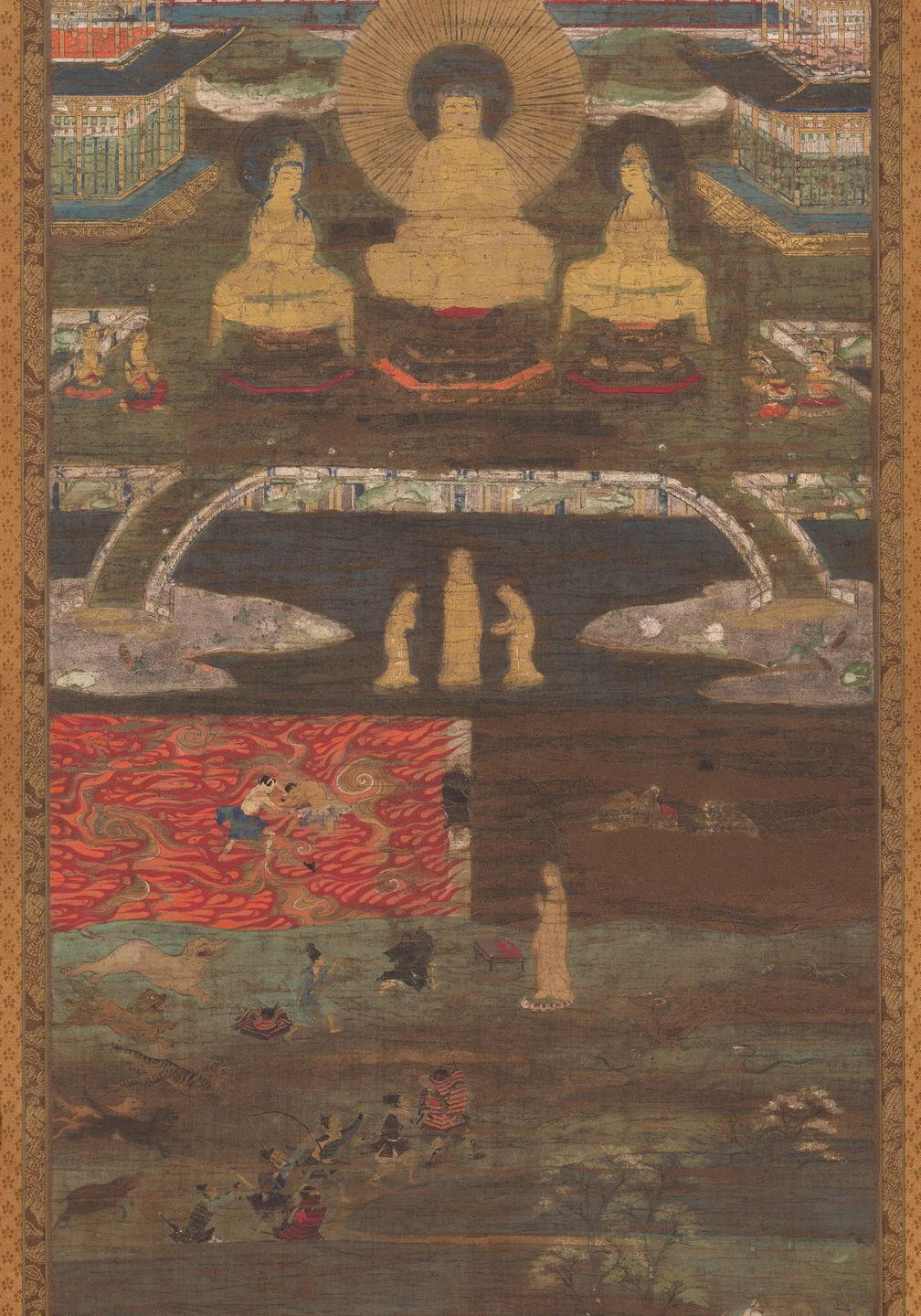 Unidentified Japanese painters
The White Path Between Two Rivers
1200s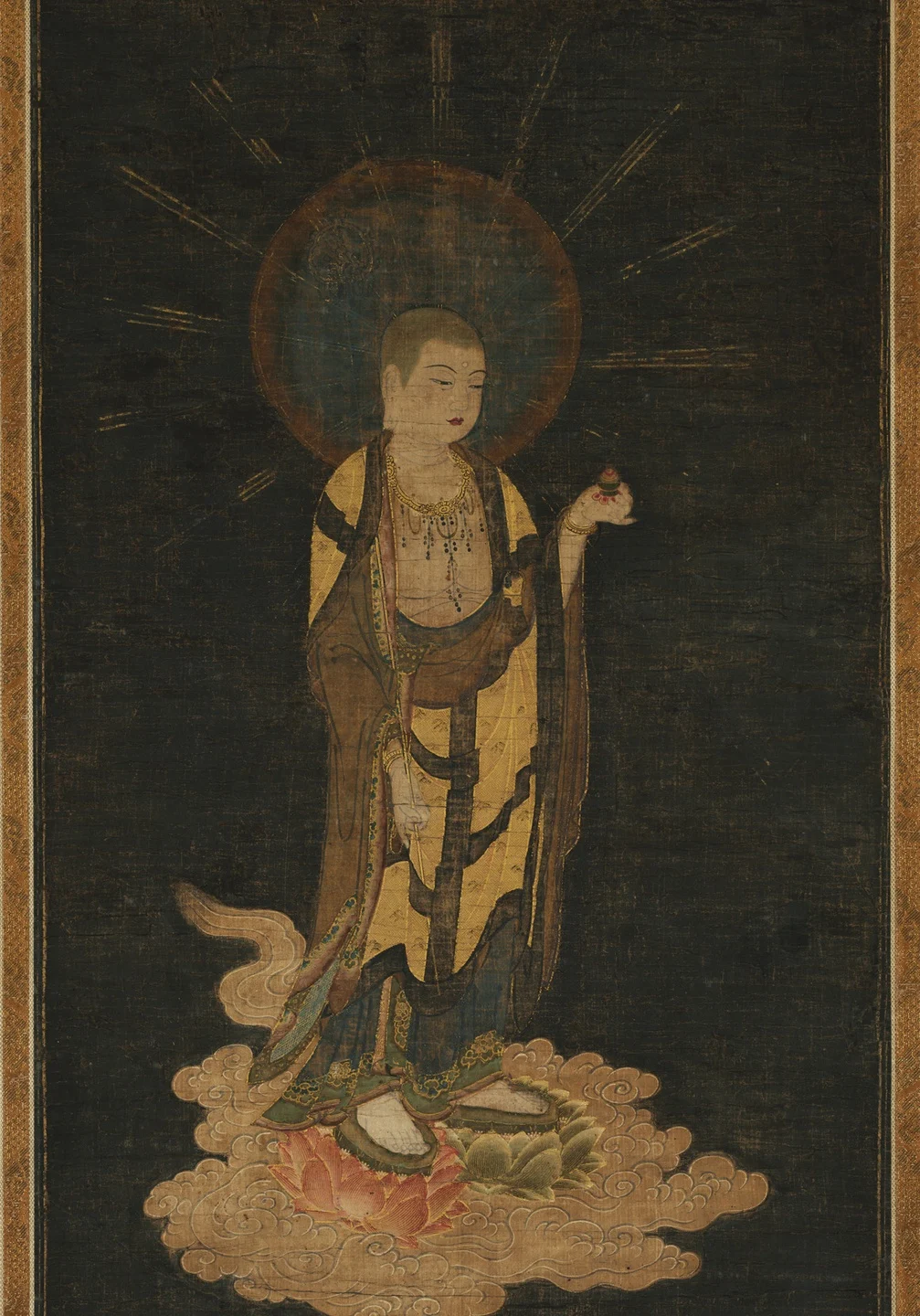 Unidentified Japanese painters
Welcoming Descent of Jizō
1200s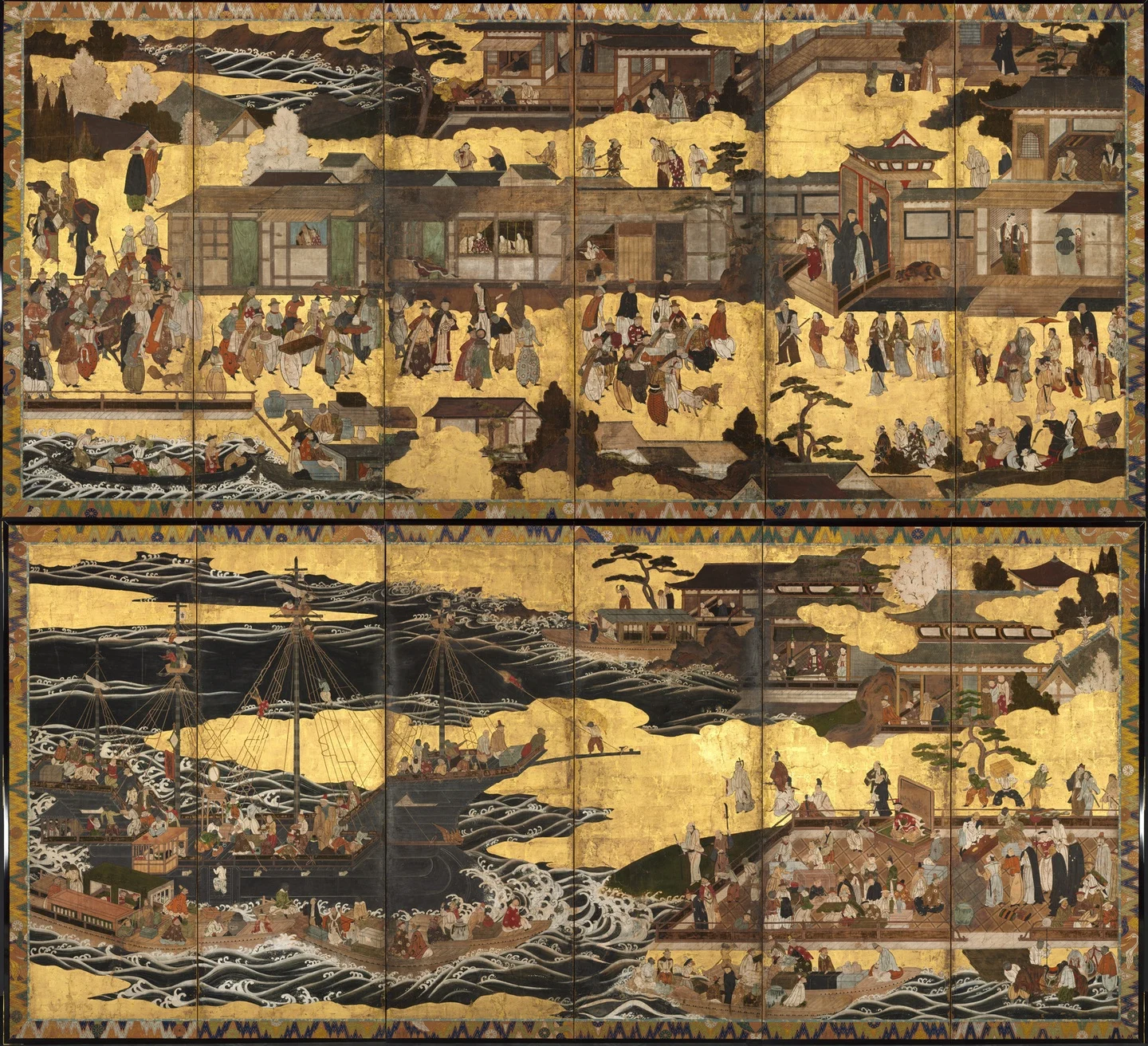 Unidentified Japanese painters
Arrival of the "Southern Barbarians"
c. 1600Period, style and subject
- Movement
- Japanese painting
- Genre
- Still life
- Medium
- Six-panel screen; ink, color, and gold on paper
- Collection
- Art Institute of Chicago
- Dimensions
- 170.2 × 357 cm
- Accession number
- 1959.599
Sources
Image provided under CC0. Image licence
Adapted and translated from Art Institute of Chicago materials. · Text licence