Arrival of the "Southern Barbarians"
Unidentified Japanese painters · c. 1600
Explore the painting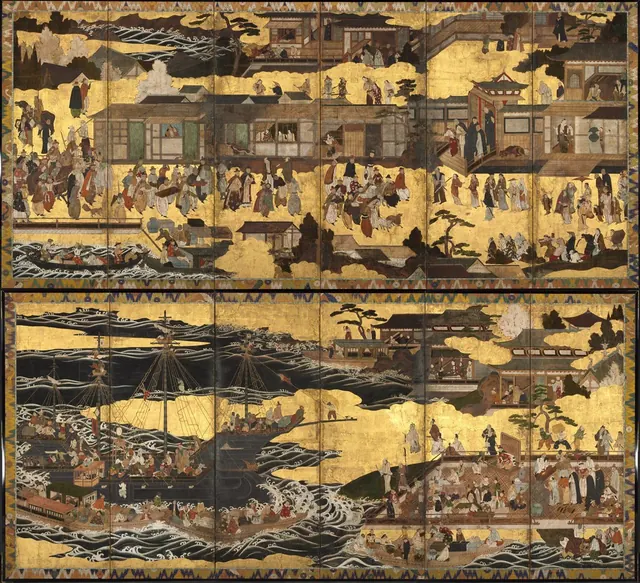
The painting’s story and details
Around 1600, a Japanese artist depicted European traders arriving across a pair of six-panel screens. “Southern barbarians” preserves a contemporary Japanese designation for foreigners whose ships approached from the south. The museum identifies them as probably Portuguese because Catholic priests accompany them. Europeans themselves become an unusual spectacle examined closely by another culture.
On the lower screen, small boats surround an enormous ship. Masts and rigging rise above its high dark deck. White wave lines curve around the hull and fill the spaces between vessels. The painter emphasizes the scale of a ship capable of carrying people and goods across great distances. Maritime technology becomes the foreigners’ first visible sign.
On the landing stage, people carry bundles and boxes, converse and move between boats. Arrival becomes an extended undertaking involving many participants. Goods pass from the ship into a Japanese setting through their hands. Behind the encounter’s ceremony appears trade’s practical side: unloading, carrying and coordination.
On the upper screen, broad trousers, tall headgear and unfamiliar cloaks distinguish the arrivals. Their silhouettes differ noticeably from Japanese dress. Costume details turn foreigners into recognizable types. Clothing becomes the principal means of distinction, making an individual readily stand for an entire group.
Figures in long dark clothing stand beside the building at the right. Catholic priests travelled through the same maritime networks as merchants. For Japanese authorities, trade and the spread of a new religion gradually became distinct political problems. The priests’ presence places within this lively encounter the beginnings of relationships that would later generate serious conflict.
Gold bands conceal sections of streets and buildings. They divide events into manageable groups despite the immense crowd. Gold also reflected light within the room containing the screens. A representation of distant maritime connections simultaneously created a luxurious domestic setting. Trade’s geography entered its owner’s space as spectacle and decoration.
The Portuguese were expelled from Japan in 1639; European trade later continued through a restricted Dutch presence. The painting thus preserves a world of contact soon to change substantially. It also reverses familiar European accounts of “discovering” other countries. Here local people observe newcomers, classify them and determine their place within an existing world.
Featured in tours
Japanese painting. Scrolls and screens
Literature, temples, the arrangement of rooms and everyday life.
More paintings to compare
 Unidentified Japanese painters
Maize and Cockscombs
mid 17th century Unidentified Japanese painters
Legends of the Yūzū Nembutsu Sect
Kamakura period (1185–1333), 14th century Unidentified Japanese painters
The Tale of Genji
early 17th century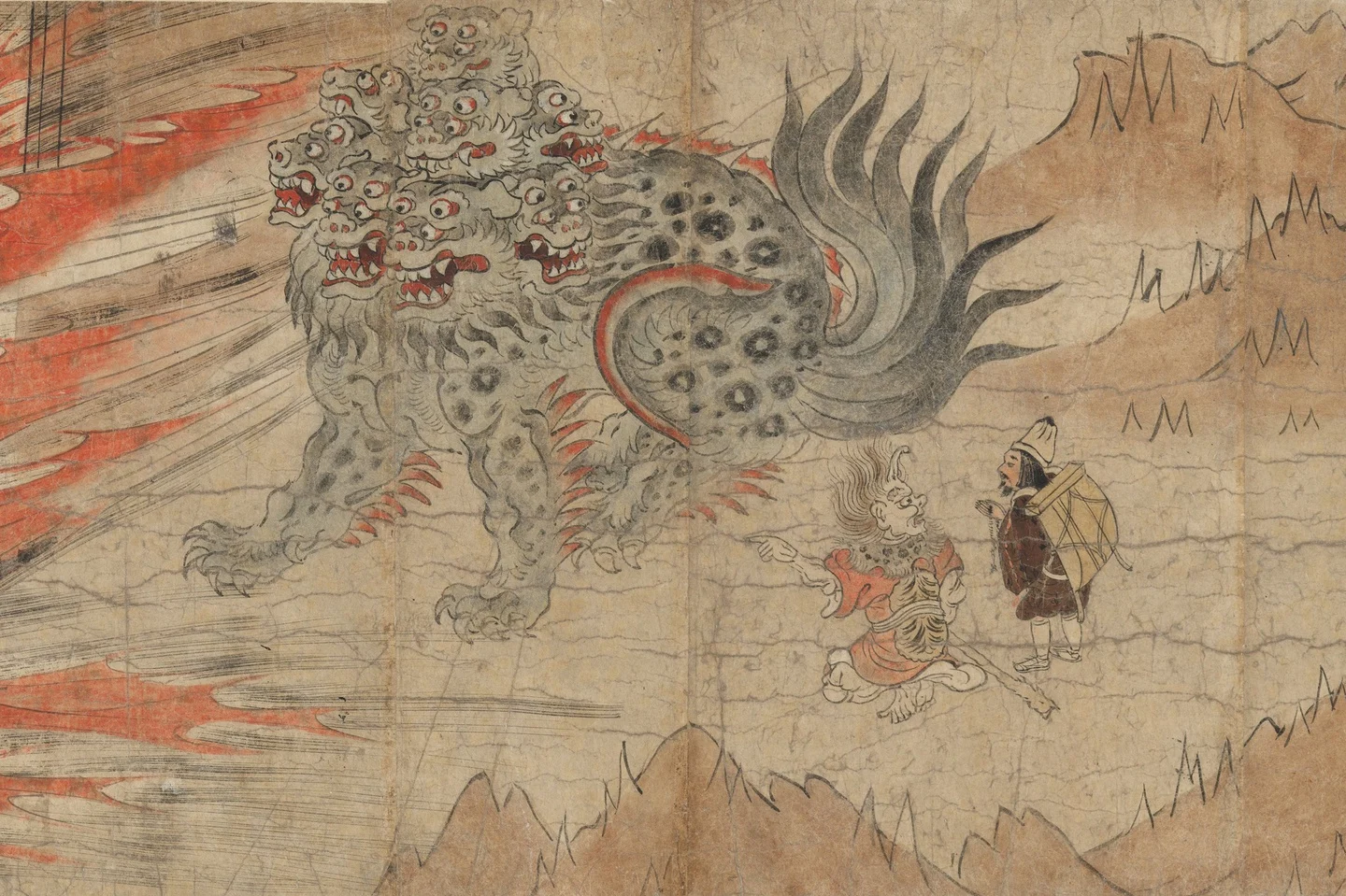 Unidentified Japanese painters
Illustrated Legends of the Kitano Tenjin Shrine (Kitano Tenjin engi emaki)
late 13th century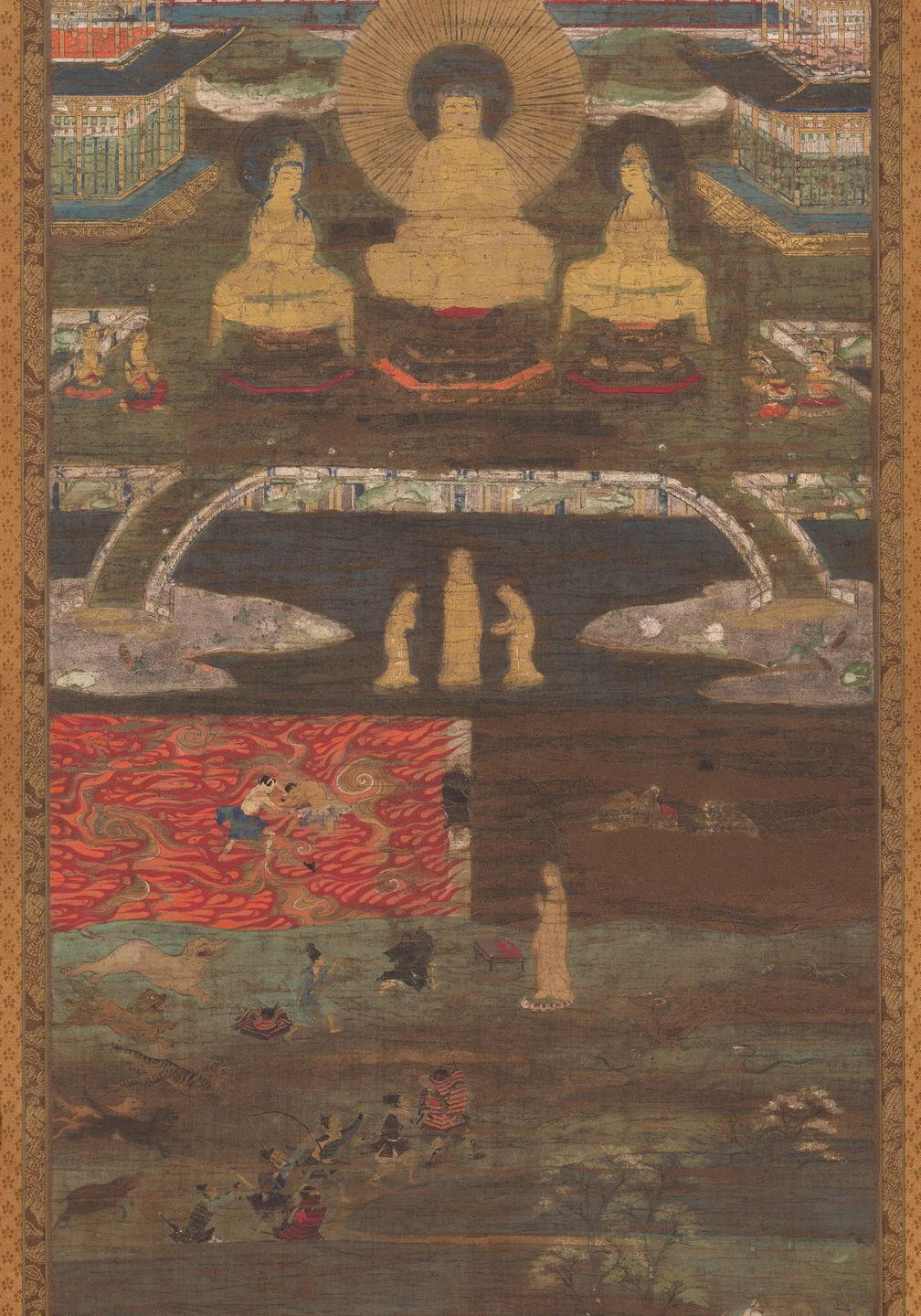 Unidentified Japanese painters
The White Path Between Two Rivers
1200s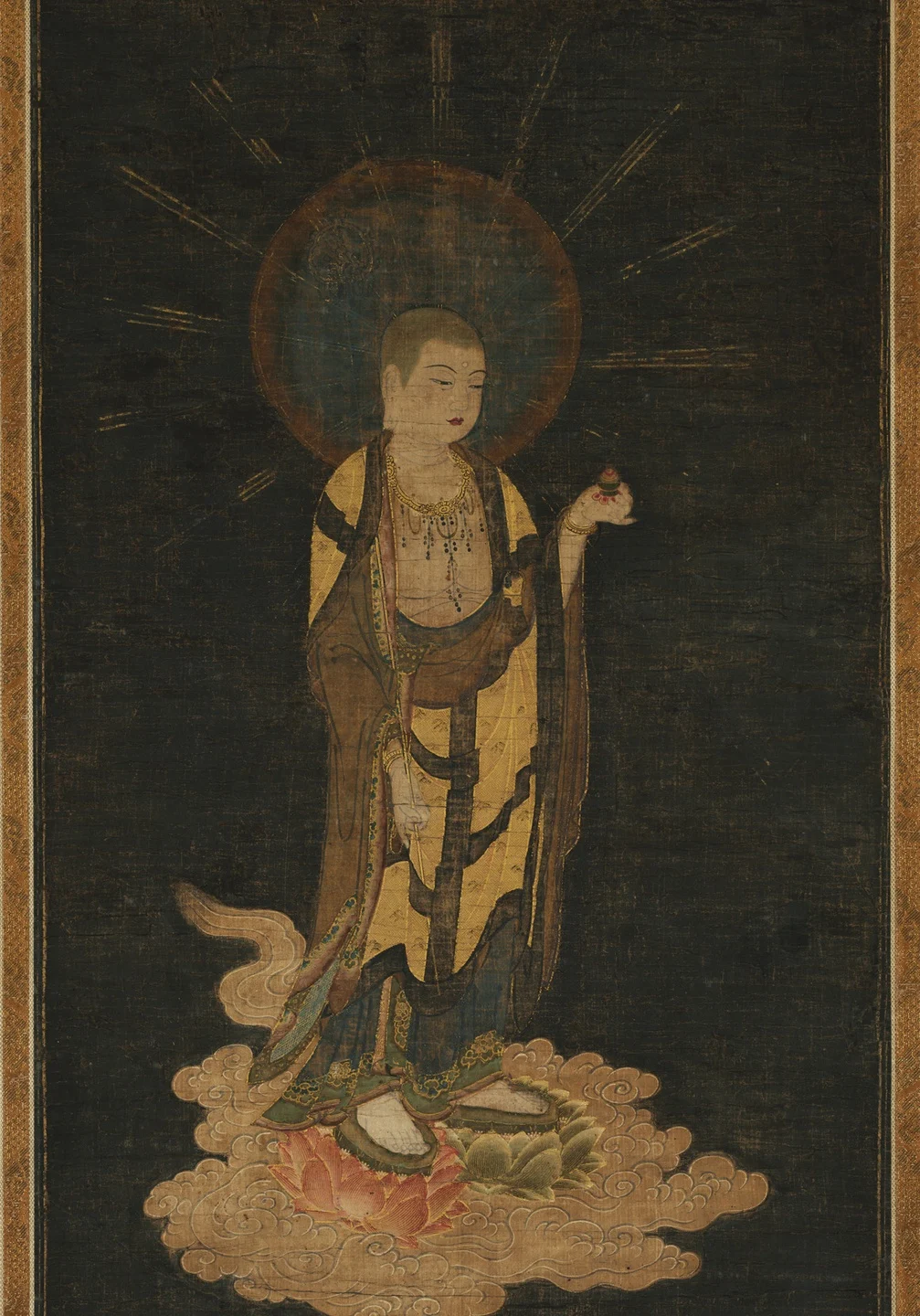 Unidentified Japanese painters
Welcoming Descent of Jizō
1200sPeriod, style and subject
- Movement
- Japanese painting
- Genre
- History painting
- Medium
- Pair of six-panel folding screens; ink, color, and gold on paper
- Collection
- Cleveland Museum of Art
- Dimensions
- Overall, 146.7 × 337.2 cm
- Accession number
- 1960.193
Sources
Image provided under CC0. Image licence