Japanese painting. Scrolls and screens
Literature, temples, the arrangement of rooms and everyday life.
Open the tour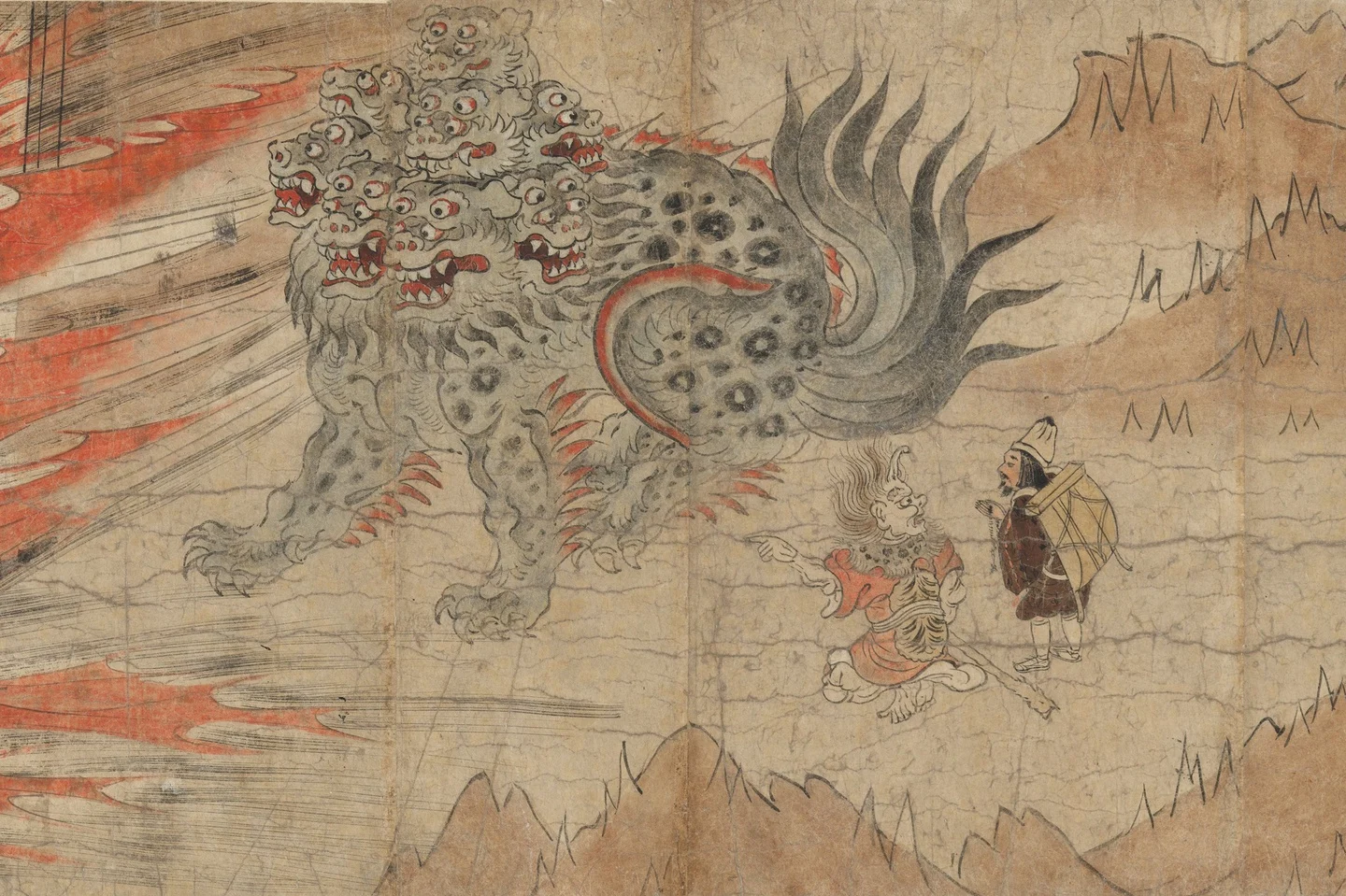 Unidentified Japanese painters
Illustrated Legends of the Kitano Tenjin Shrine (Kitano Tenjin engi emaki)
late 13th century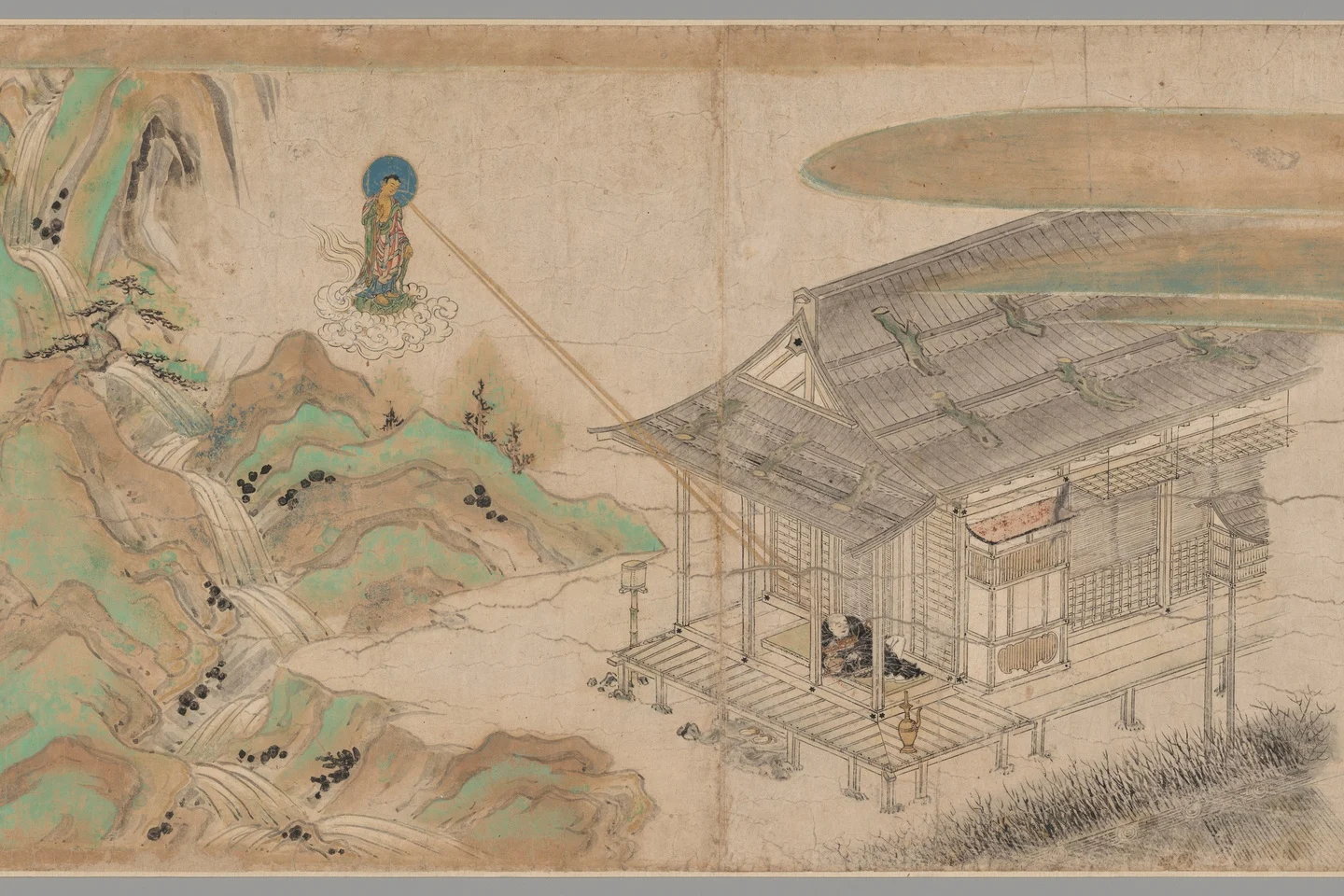 Unidentified Japanese painters
Legends of the Yūzū Nembutsu Sect
Kamakura period (1185–1333), 14th century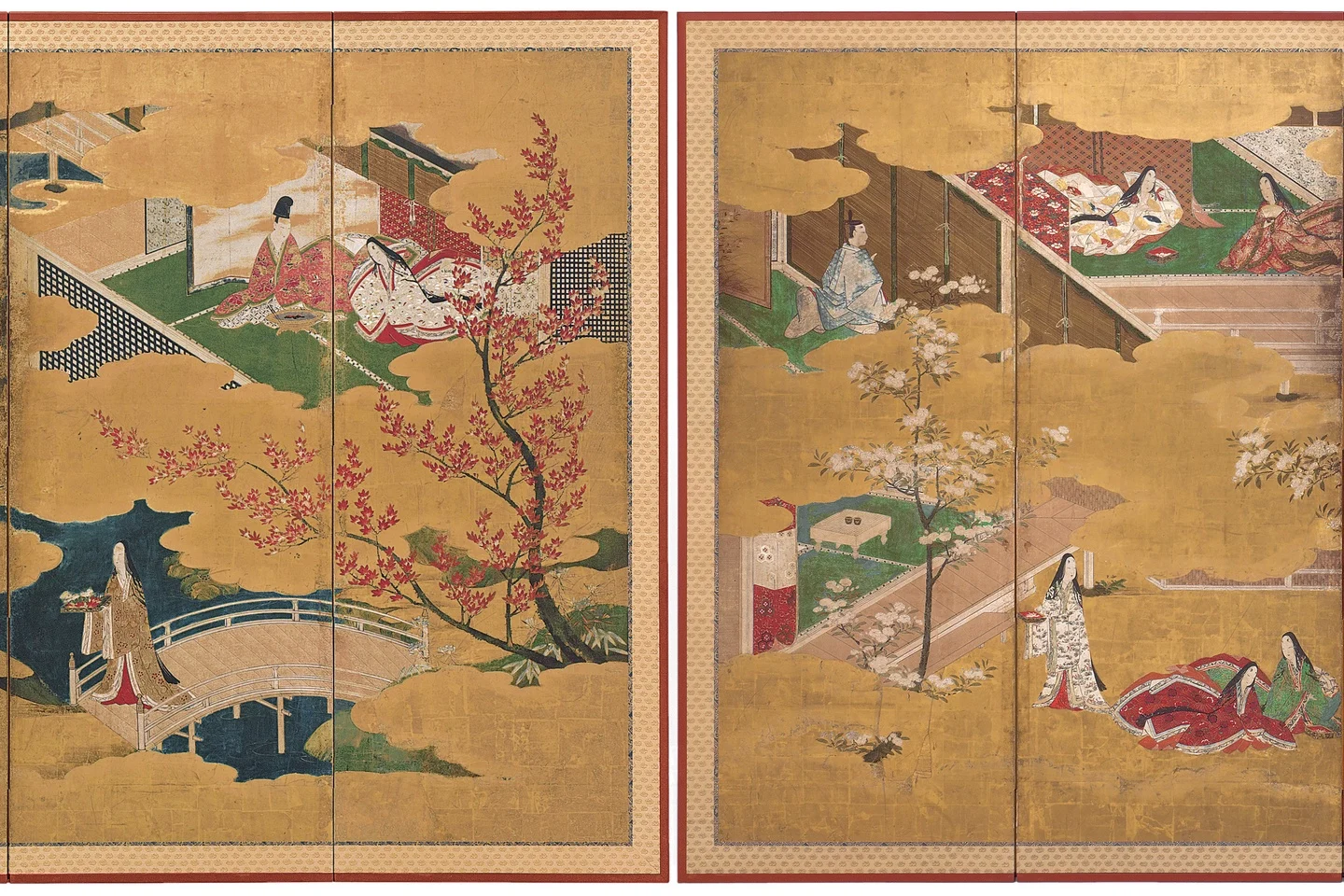 Unidentified Japanese painters
The Tale of Genji
early 17th century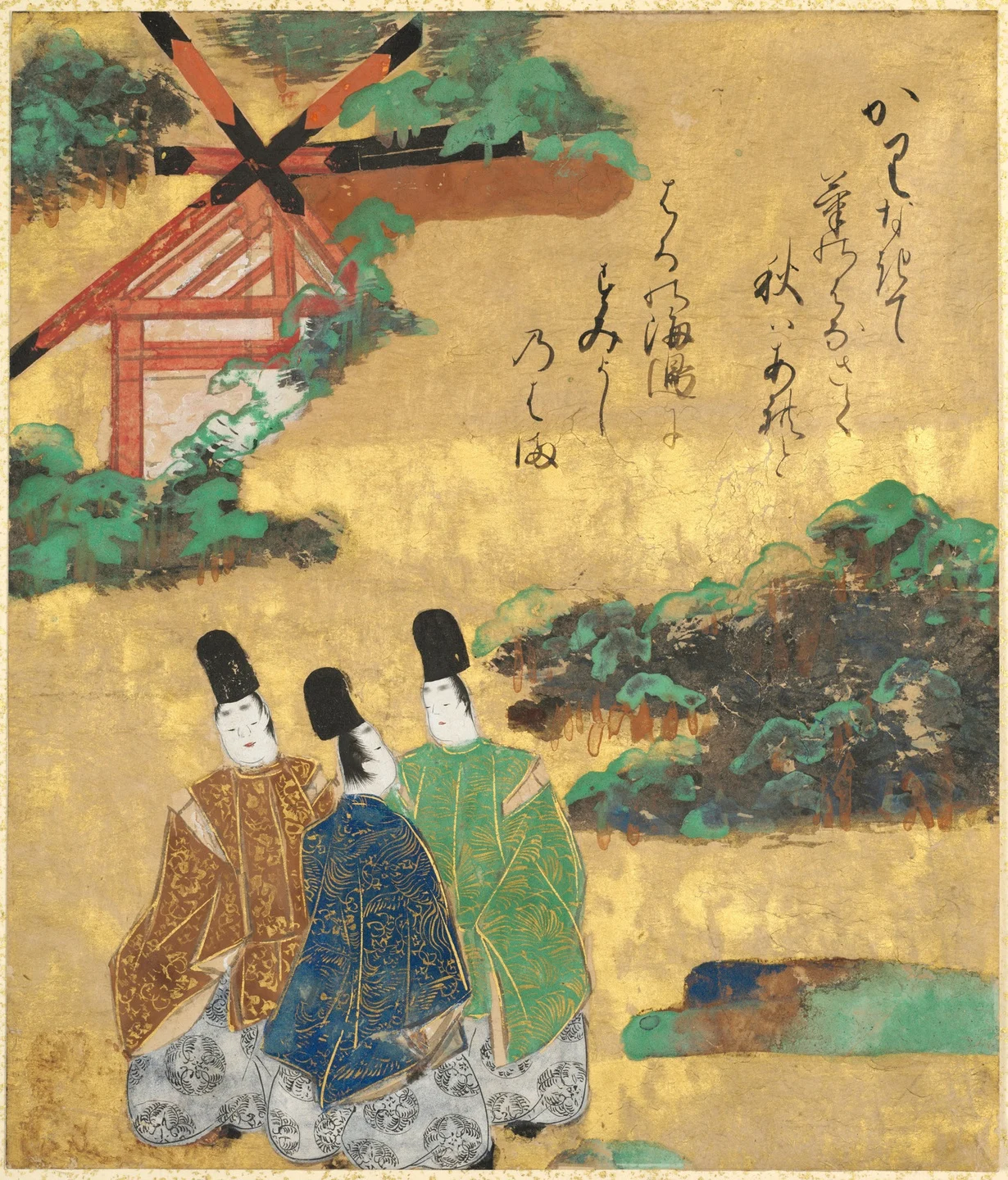 Tawaraya Sōtatsu
The Beach at Sumiyoshi from the Tales of Ise
c. 1634Literature, temples, the arrangement of rooms and everyday life.
Japanese painting had different supports and viewers. A scroll was opened gradually, a screen stood within a room, and a temple image participated in religious practice. We begin with narrative works, then examine large decorative surfaces and later approaches to poetry and urban culture.
A story unfolds
Literary and temple scrolls call for gradual viewing. Architecture and recurring figures help move the action.
Illustrated Legends of the Kitano Tenjin Shrine (Kitano Tenjin engi emaki)
Unidentified Japanese painters · late 13th century
The scrolls recount Sugawara Michizane’s exile, posthumous vengeance and transformation into the deity Tenjin. This set is among the earliest important surviving versions. Episodes were designed to appear successively as a viewer unrolled the image.
Legends of the Yūzū Nembutsu Sect
Unidentified Japanese painters · Kamakura period (1185–1333), 14th century
The handscroll recounts the monk Ryōnin’s life and the spread of his teaching. After a vision of Amida Buddha, he encouraged shared recitation of the nembutsu prayer. One person’s merit was understood to benefit everyone. Unrolling the work an arm’s length at a time revealed successive encounters and conversions.
The Tale of Genji
Unidentified Japanese painters · early 17th century
Five episodes from Murasaki Shikibu’s Tale of Genji share one landscape although they occur at different times. Their subjects were chosen for auspicious associations. The screens may have belonged to a bride’s trousseau and travelled to her new home. Classical literature entered domestic furnishing and family wishes.
The Beach at Sumiyoshi from the Tales of Ise
Tawaraya Sōtatsu · c. 1634
The inscription comes from The Tales of Ise, a tenth-century poetic narrative. It praises Sumiyoshi's shore in spring. The red building above identifies the famous shrine. Poetry, image, and knowledge of a place worked together, allowing viewers to recognize a cultural landscape from a few features.
Group Pilgrimage to the Jizo Nun
Ike Taiga · 1755/65
Pilgrims visit a nun believed able to communicate with the bodhisattva Jizō. Taiga accompanies the scene with his own inscription. He renewed Chinese-derived literati painting through Japanese everyday life and humour. The marks may have been made with twisted paper dipped in ink rather than a conventional brush.
A room becomes an image
Screens divided rooms and reflected light. Their folds affect the image, while large forms remain legible at a distance.
Gibbons in a Landscape
Sesson Shukei · ca. 1570
Gibbons try to catch the moon’s reflection, a Zen image of mistaking appearance for reality. Sesson developed imagery associated with the Chinese monk-painter Muqi into a large Japanese screen. Scale and folds changed the experience of ink painting.
Landscape of the Four Seasons
Sesson Shukei · About 1560
The monk-painter Sesson developed his manner while travelling through eastern Japan. Read from right to left, the screens move from early plum blossoms to snowy mountains. Temples, villages and boats share an imagined Chinese landscape. The folded surfaces intensify depth within a setting suited to natural and religious contemplation.
Arrival of the "Southern Barbarians"
Unidentified Japanese painters · c. 1600
The screens show European merchants, probably Portuguese, accompanied by Catholic priests. Their Japanese name referred to ships arriving from the south. The Portuguese were later expelled, and European trade was restricted to Dutch presence. The painting preserves an early Japanese view of foreign visitors and their belongings.
Old Plum
Kano Sansetsu · 1646
Four sliding panels once formed a wall at Tenshō’in in Kyoto’s Myōshinji complex. Fresh blossoms appear on an old twisted trunk. Paintings from the reverse now survive separately in Minneapolis. Museum separation changed the ensemble’s architectural experience.
Willow Bridge and Waterwheel
Hasegawa Sôya · c. 1650
A bridge, moon and willows evoked Uji, a place familiar from classical Japanese poetry. Sōya, son of Hasegawa Tōhaku, continued his father’s work in large decorative formats. Gold and silver appear as leaf, dust and paint. Even the direction of applied gold leaf reinforces the bridge’s curve.
Maize and Cockscombs
Unidentified Japanese painters · mid 17th century
This screen survives as half of an original pair. Bold patterns and bright colours belong to Edo decorative culture, supported by warriors, aristocrats and prosperous townspeople. Maize had arrived from abroad. Its close observation records an interest in new plants and natural knowledge.
Autumn Maples with Poem Slips
Tosa Mitsuoki · c. 1675
At courtly seasonal gatherings, poems were written on narrow paper slips and tied to branches. This screen formed a pair with flowering cherry and was associated with Empress Tōfukumon-in. As shogunal power grew, the imperial court sustained older poetic customs. Painting preserved that cultural identity.
Rough Waves
Ogata Kōrin · ca. 1704–9
Kōrin used paired brushes to draw wave contours. Branching foam turns observed water into a forceful decorative pattern. The Dōsū seal and recent research support a date during his Edo residence, between 1704 and 1709.
Nature and learned tradition
Plants, the moon and mountains join observation to established literary themes. Brushwork preserves an individual manner.
Quail and Millet
Kiyohara Yukinobu · late 17th century
Yukinobu, daughter of Kusumi Morikage, adapted inherited ink-painting themes. Quails and grain occupy an asymmetrical arrangement with open space around them. The museum proposes domestic harmony as a reading of the grouping within flower-and-bird tradition.
White Plum Blossoms and Moon
Itō Jakuchū · 1755
Jakuchū managed his family’s grocery business before turning fully to painting. This is among his earliest dated works from that transition. An old trunk, fresh blossoms and the moon join close botanical attention with a decorative arrangement across the surface.
White Herons
Maruyama Ōkyo · 1769
The herons’ white bodies are unpainted paper, defined by soft washes around them. Ōkyo advocated drawing living subjects from different viewpoints. Observation renewed established bird-and-flower themes through close attention to natural structure.
Bamboo and Rocks in Clearing Skies
Ike Taiga · mid-1700s
The screen's title corresponds to a design in Taiga's Brush Methods. A stream descends from the mountains into a river, and a village lies farther back. Moving water and wet ink develop the theme of a landscape after rain. A large foreground rock connects the viewer's position with the distant scene.
Seventy-Two Peaks Under the Blue Sky with Mount Furong
Matsumura Goshun · 1785
The low screen was probably a partition for a small tea room. Its inscription identifies China's Heng mountain range and singles out Mount Furong. Goshun may have followed his teacher Buson's final treatment of the same subject. Gold and silver let the restrained landscape respond to a room's changing light.
Persimmon Tree
Sakai Hōitsu · 1816
An inscription dates this screen to autumn 1816. Hōitsu used the priestly name Monsen Kishin after becoming a monk. Rinpa mottled-ink effects meet close observation of a persimmon tree, joining decorative design with uneven natural surfaces.
Farmer Returning Home in Autumn
Yosa Buson · 1781
A farmer shoos a crow from his grain while a water buffalo pulls the cart through a stream. Buson was a poet who traveled in Basho's footsteps and taught poetry in Kyoto. He learned painting from Chinese printed manuals. The small rural episode joins that book-based training with attention to country life.
New audiences
Urban culture and widely known literary subjects expanded the range of themes. Women painters also worked within these traditions.
Dancer with a Maple Branch
Katsukawa Shunsho · About 1780-90
A woman performs the autumn Momijigari dance with a branch of red maple. Her partly loosened outer robe reveals a red sleeve underneath. Props and colour establish the season. Maple leaves connect the performance with the Japanese custom of admiring autumn foliage.
Operating on Guan Yu's Arm
Katsushika Ōi · 1840s
In Romance of the Three Kingdoms, poison is scraped from Guan Yu's arm after an arrow wound while he continues a game. Oi contrasts his composure with the attendants' reactions. Hokusai's daughter collaborated with him and made her own paintings. This is her largest surviving work.
Hell Courtesan
Kawanabe Kyōsai · 1871–89
According to legend, the courtesan wore scenes of Buddhist hells to connect her suffering with former lives. Kyosai returned to the subject several times. Here gods of good fortune and Enma, ruler of hell, appear in a parody on her clothing. The richly patterned robe contains a narrative within the larger portrait.
The Gathering at the Orchid Pavilion (front); Geese among Reeds (back)
Noguchi Shohin · 1900
The screens revisit a Chinese gathering of scholars in 353. Guests composed poetry while wine cups floated down a stream. Shōhin became a leading Japanese woman painter, an Imperial Household artist and a prizewinner at Chicago’s 1893 exposition. An old literary subject entered her internationally recognised work.
Viewing methods shaped composition
Viewing methods shaped composition. Scrolls unfolded narratives, screens spread large forms across folds, and individual sheets offered small episodes for close attention.
Artists learned from predecessors and drew on Chinese sources, literature and observation. Particular commissions help explain why some methods lasted for centuries while others changed.
Artists in the tour
Sources
- Unidentified Japanese painters — Illustrated Legends of the Kitano Tenjin Shrine (Kitano Tenjin engi emaki)
- Unidentified Japanese painters — Legends of the Yūzū Nembutsu Sect
- Unidentified Japanese painters — The Tale of Genji
- Tawaraya Sōtatsu — The Beach at Sumiyoshi from the Tales of Ise
- Ike Taiga — Group Pilgrimage to the Jizo Nun
- Sesson Shukei — Gibbons in a Landscape
- Sesson Shukei — Landscape of the Four Seasons
- Unidentified Japanese painters — Arrival of the "Southern Barbarians"
- Kano Sansetsu — Old Plum
- Hasegawa Sôya — Willow Bridge and Waterwheel
- Unidentified Japanese painters — Maize and Cockscombs
- Tosa Mitsuoki — Autumn Maples with Poem Slips
- Ogata Kōrin — Rough Waves
- Kiyohara Yukinobu — Quail and Millet
- Itō Jakuchū — White Plum Blossoms and Moon
- Maruyama Ōkyo — White Herons
- Ike Taiga — Bamboo and Rocks in Clearing Skies
- Matsumura Goshun — Seventy-Two Peaks Under the Blue Sky with Mount Furong
- Sakai Hōitsu — Persimmon Tree
- Yosa Buson — Farmer Returning Home in Autumn
- Katsukawa Shunsho — Dancer with a Maple Branch
- Katsushika Ōi — Operating on Guan Yu's Arm
- Kawanabe Kyōsai — Hell Courtesan
- Noguchi Shohin — The Gathering at the Orchid Pavilion (front); Geese among Reeds (back)