Illustrated Legends of the Kitano Tenjin Shrine (Kitano Tenjin engi emaki)
Unidentified Japanese painters · late 13th century
Explore the painting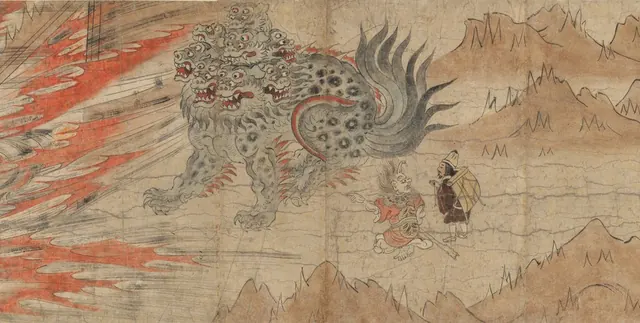
The painting’s story and details
The many-headed monster belongs to a story of injustice at the imperial court. These late thirteenth-century scrolls recount the life of Sugawara no Michizane, a scholar and statesman who died in exile in 903. Later disasters were attributed to his angry spirit. Shrines were established to appease him, and the disgraced official became the revered deity Tenjin.
A traveler at the right approaches terrifying beings. This fragment belongs to the scrolls’ otherworldly episodes. A distinctive feature of this version is an extended account of the monk Nichizo’s journey through other realms. There he encounters the repentant Emperor Daigo, who ordered Michizane’s exile.
A small horned figure extends an arm toward the monster. The gesture connects the traveler to what he is about to see. The account of the afterlife unfolds through successive encounters. The viewer has a guide within the image, and terror occupies a particular place along the route.
Numerous heads crowd above an enormous body. Mouths facing different directions multiply the threat around the traveler. The painter is not constructing a plausible animal. He assembles a memorable image of punishment that could have greater force than a written inventory of torments.
Fire rises at the left. Images of hellish suffering drew on Buddhist ideas about the afterlife. In the story of Tenjin’s shrine, these ideas coexist with worship of a deified human being. Medieval Japanese religious life joined traditions that a modern catalogue may place in separate categories.
Hills at the right leave an approach to the scene. A handscroll was opened progressively, revealing successive stretches of the journey. Fire and monster appeared in the course of reading. Their impact depended on the sequence of display and the hand revealing the image.
Earthly authority changes in the afterlife story. An emperor answers for a decision that harmed his subordinate. The legend restores Michizane’s honor while explaining why he must be revered. The scroll preserves the memory of a political injustice transformed into a religious cult, making its consequences visible through terrifying scenes.
Featured in tours
Japanese painting. Scrolls and screens
Literature, temples, the arrangement of rooms and everyday life.
More paintings to compare
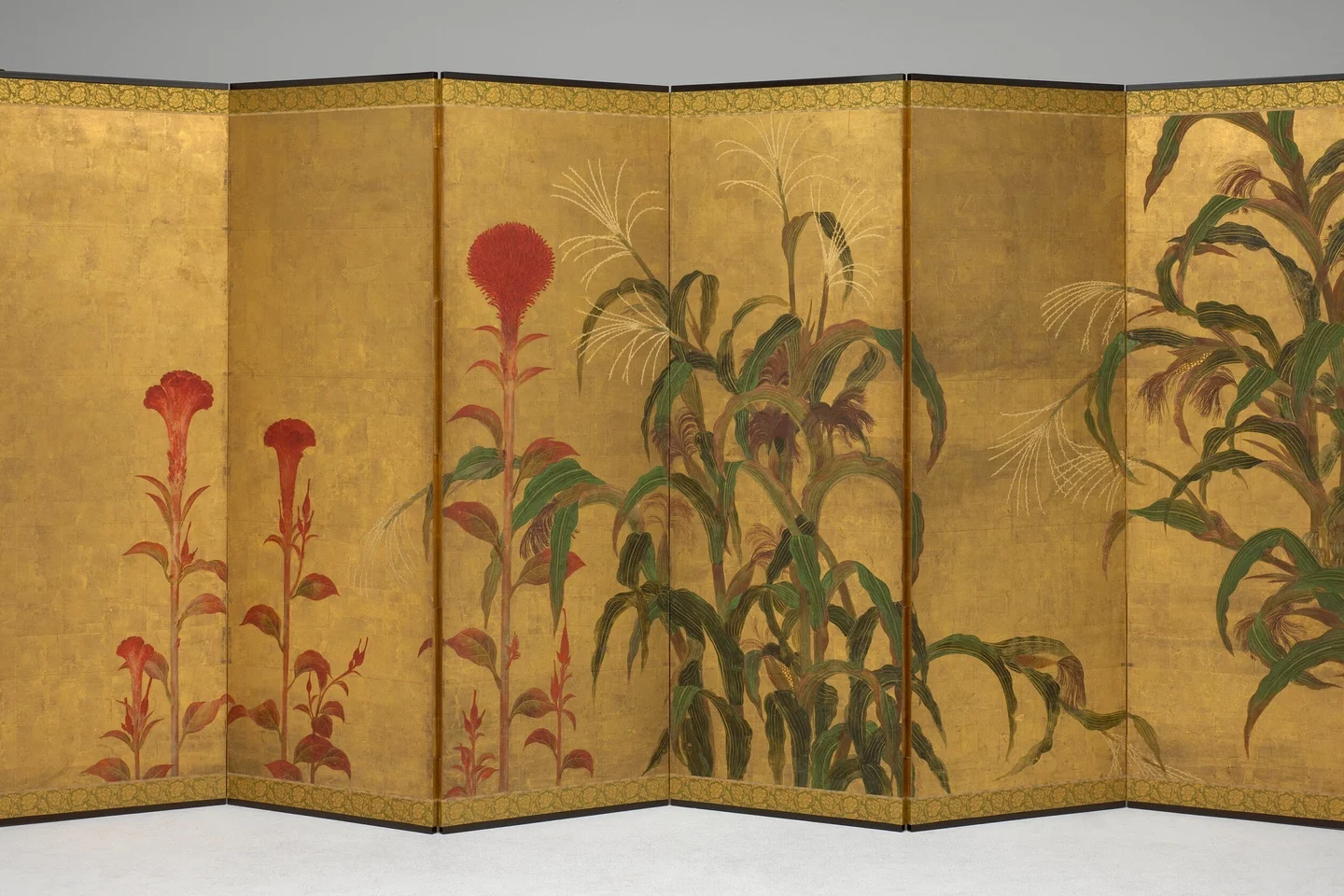 Unidentified Japanese painters
Maize and Cockscombs
mid 17th century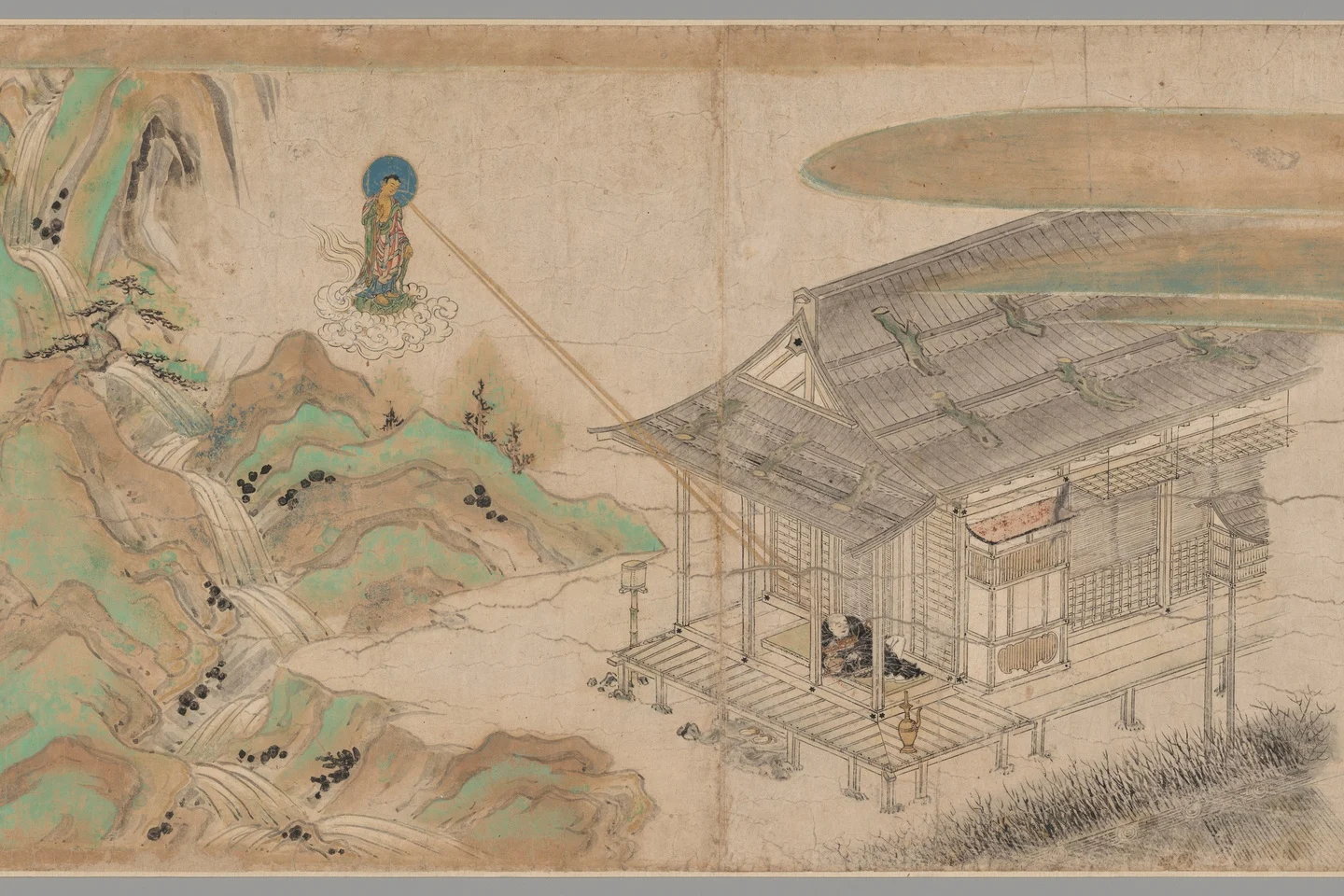 Unidentified Japanese painters
Legends of the Yūzū Nembutsu Sect
Kamakura period (1185–1333), 14th century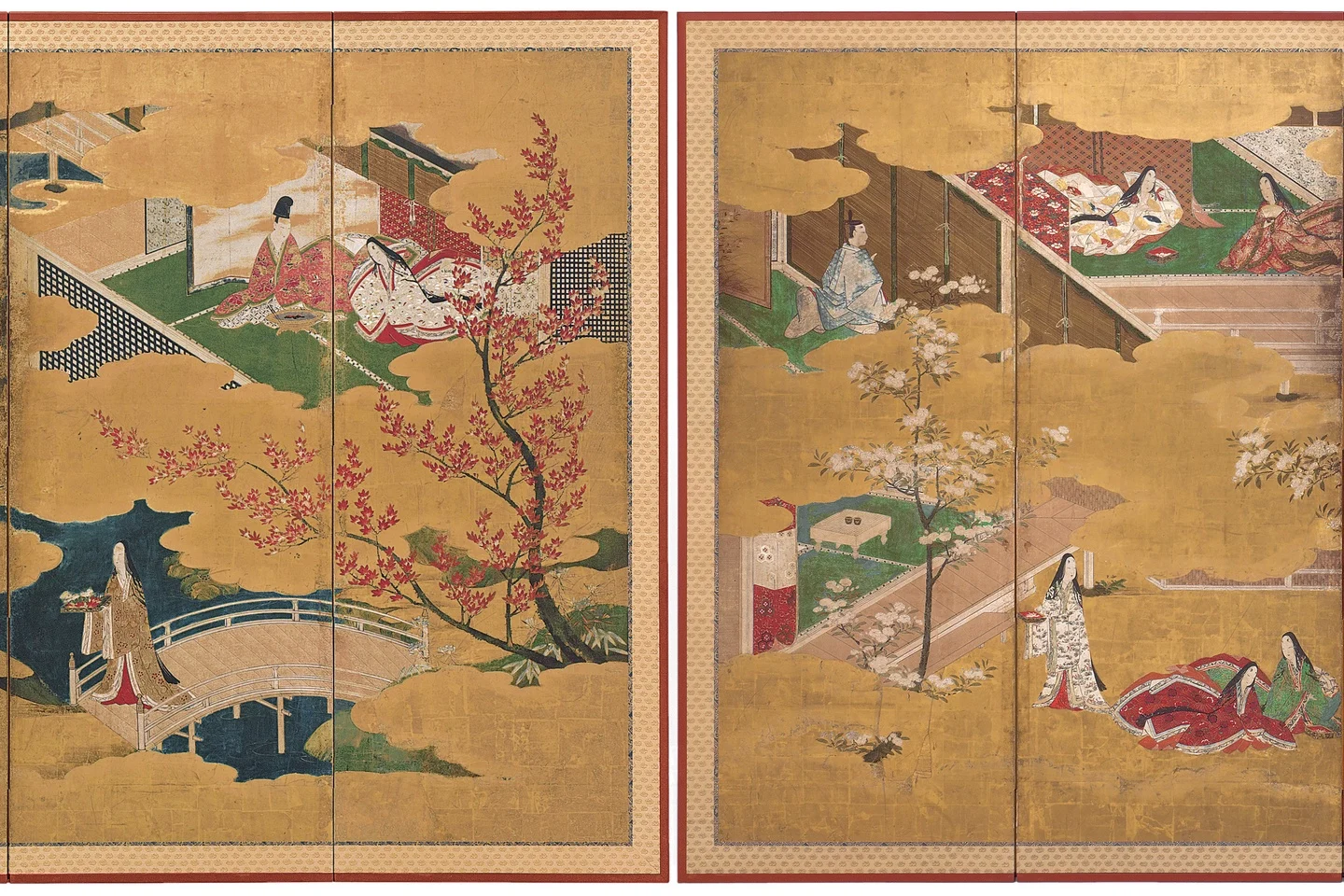 Unidentified Japanese painters
The Tale of Genji
early 17th century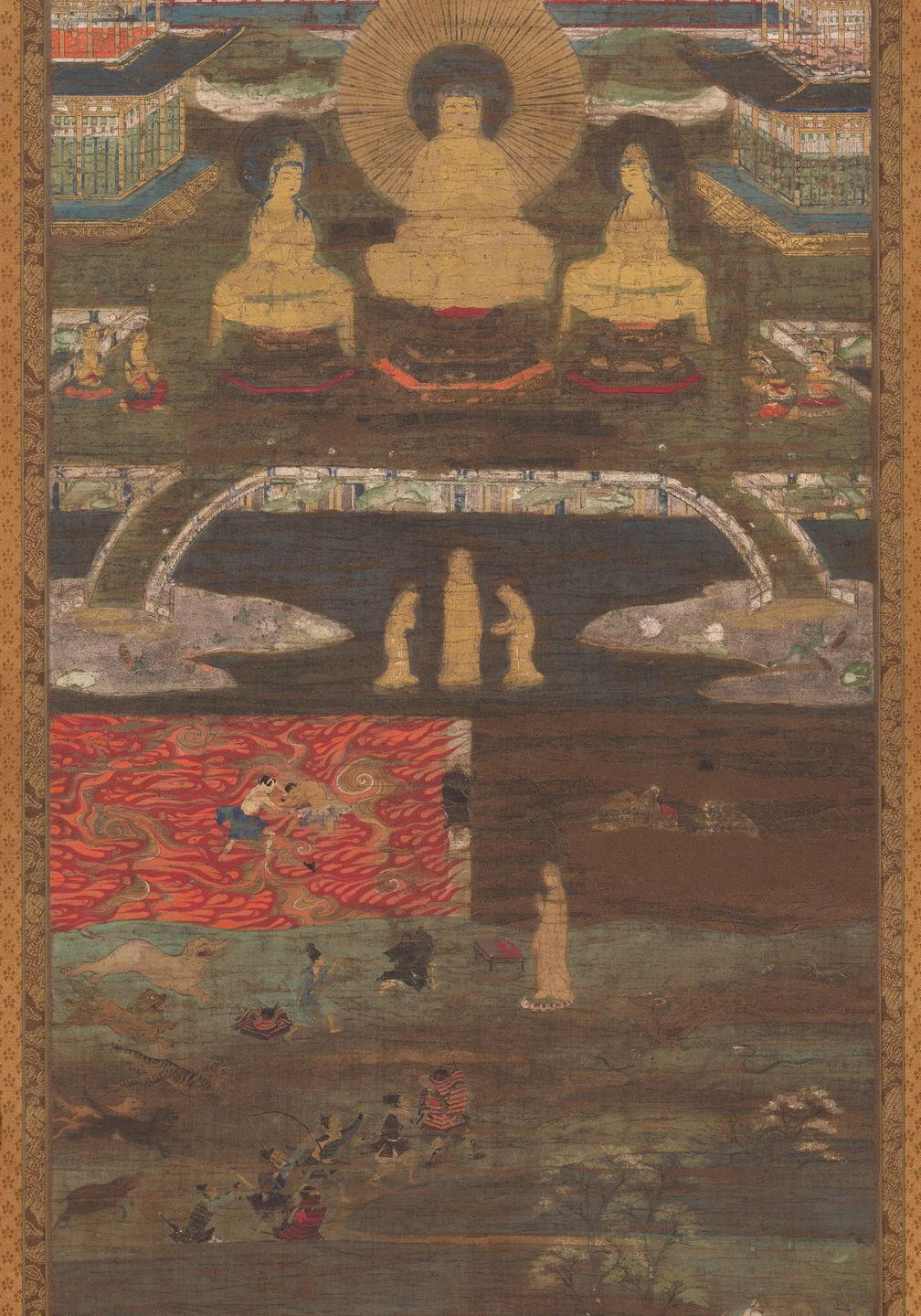 Unidentified Japanese painters
The White Path Between Two Rivers
1200s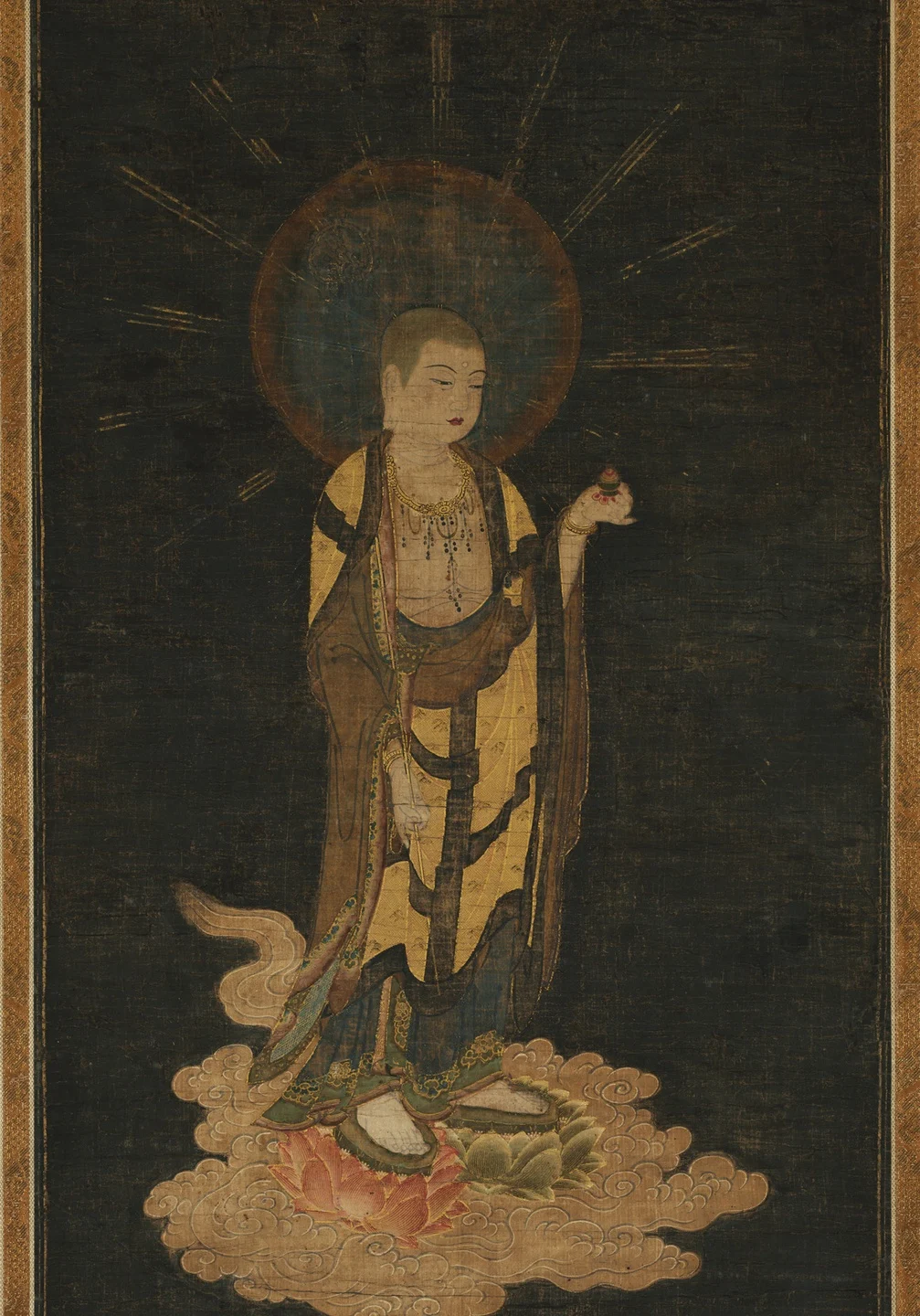 Unidentified Japanese painters
Welcoming Descent of Jizō
1200s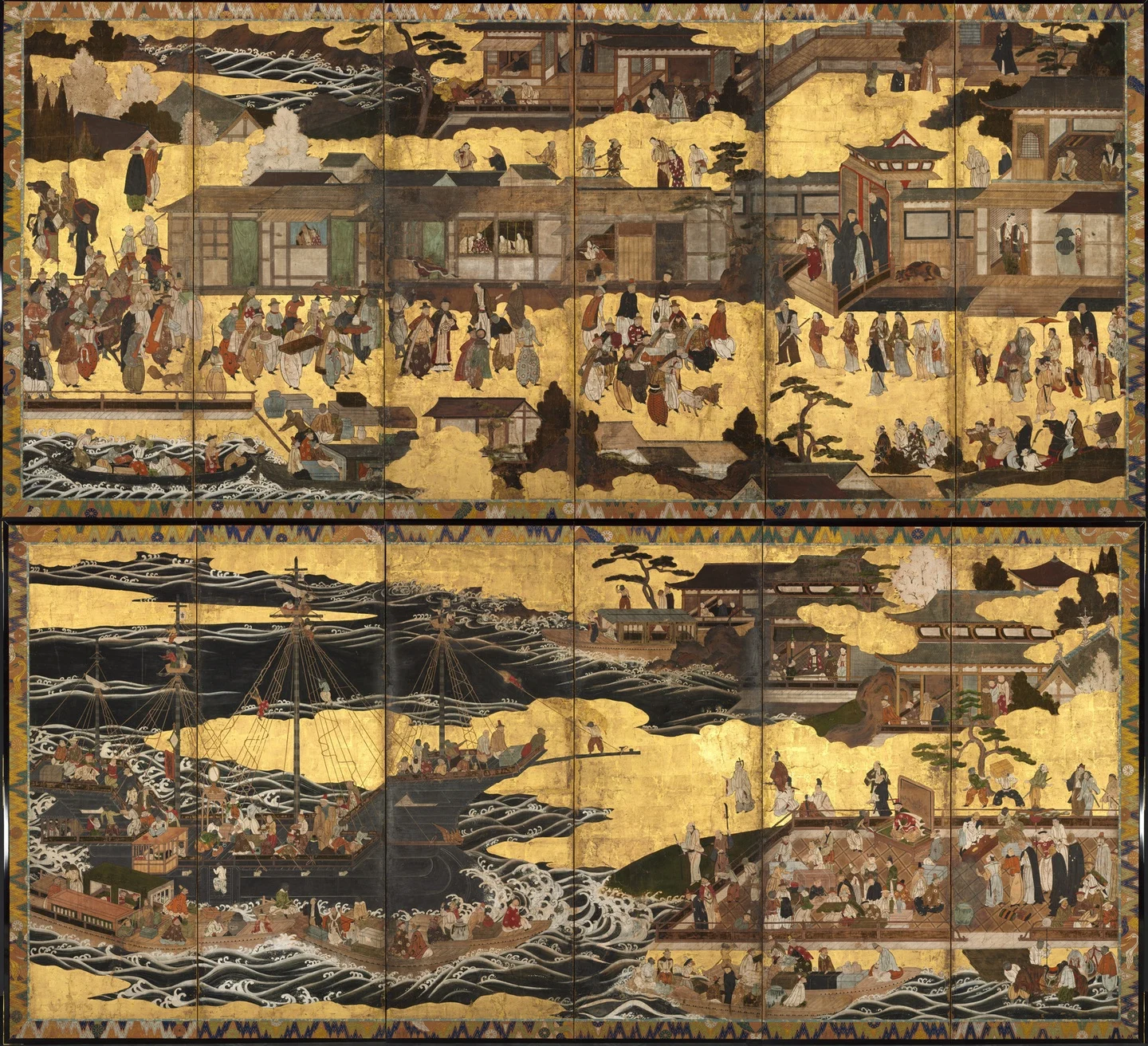 Unidentified Japanese painters
Arrival of the "Southern Barbarians"
c. 1600Period, style and subject
- Movement
- Japanese painting
- Genre
- Religious art
- Medium
- Set of five handscrolls; ink, color, and cut gold leaf (kirikane) on paper
- Collection
- The Metropolitan Museum of Art
- Dimensions
- Five scrolls, height 28.8 cm; lengths 571.4–894.5 cm
- Accession number
- 25.224a–e
Sources
Image provided under CC0. Detail of one of five scrolls. Dimensions describe the complete set. Image licence