Rêverie (Portrait of Gabrielle Borreau)
Gustave Courbet · 1862
Explore the painting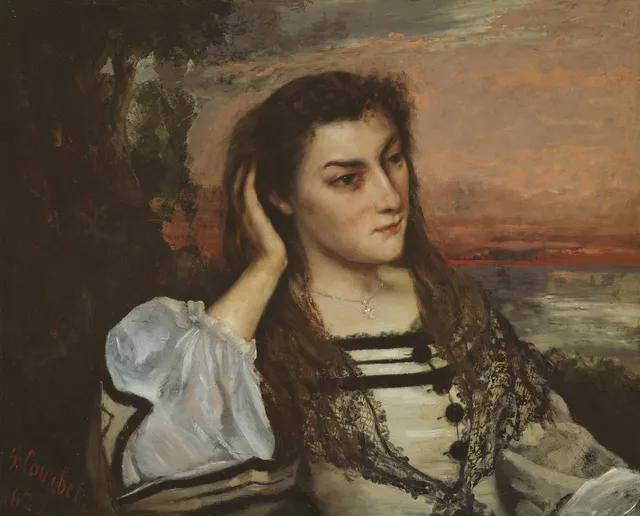
In 1862 Courbet painted Gabrielle Borreau, the fourteen-year-old daughter of Laure Borreau. For a long time the picture was taken for another portrait of her mother. Family resemblance and the sitter’s mature presentation encouraged the mistake. It is a revealing case of an image proving more persuasive than biographical information. The title Reverie also directs perception towards a particular state of mind. Yet this is a specific adolescent whom the artist presented as the heroine of a Romantic portrait.
Strong eyebrows, elongated eyes and a pointed chin give the face individuality. Courbet softens transitions across the skin while retaining distinctive features. The gaze turns aside and asks for no answering encounter. We can study the sitter without feeling that she is examining us. Such an arrangement often makes a portrait seem intimate. The viewer’s closeness to a face, however, does not provide access to the experience of a person whose attention lies outside the picture.
A palm touches the head while the elbow extends sideways. Art had long associated this pose with thought and reflection. Courbet uses a recognisable gesture without adding an object that would explain its cause. There is no letter, book or companion. The hand helps construct a state that can be read broadly. This makes the title easy to accept as an account of inner life, although it primarily names the painter’s chosen way of presenting the sitter.
Dark bands cross the white clothing, surrounded by patterned fabric. The brushwork is noticeably freer here than on the face. Broad light areas construct a sleeve, while quick dark touches suggest ornament. This contrast makes the flesh seem especially soft and alive. Courbet’s Realism appears in the conviction of surfaces, yet the composition is far from a neutral record of appearance. Dress and gesture participate in a carefully organised impression offered to the viewer.
Dense dark foliage on the left nearly merges with the hair. It supports the light face and suggests a sheltered setting. The museum study connects such construction with Spanish and Venetian painting that Courbet studied in the Louvre. His forceful declarations of artistic independence did not prevent him from using earlier models. An artistic programme and an individual work need not coincide. A painting often proves more varied than the formula with which its maker addresses the public.
Water opens on the right beneath a reddish band of sunset. Energetic, sometimes thickly applied paint creates an emotional setting for the calm face. The sunset does not verify Gabrielle’s sadness or dreaming. It supplies a familiar cultural association that encourages a reflective reading. Replacing it mentally with a neutral wall would substantially change the image. Surroundings actively participate in what we feel entitled to say about a person.
The history of mistaken identification is especially significant for a modern viewer. Pose, clothing and landscape led audiences to see an adult woman where an adolescent had been depicted. That does not make the painting unsuccessful, but demonstrates the power of artistic staging. Courbet made a convincing image that outlived knowledge of its sitter and temporarily displaced it. Attentive viewing means noticing both an individual face and the decisions through which we assign it age, character and a state of mind.
More works by Gustave Courbet


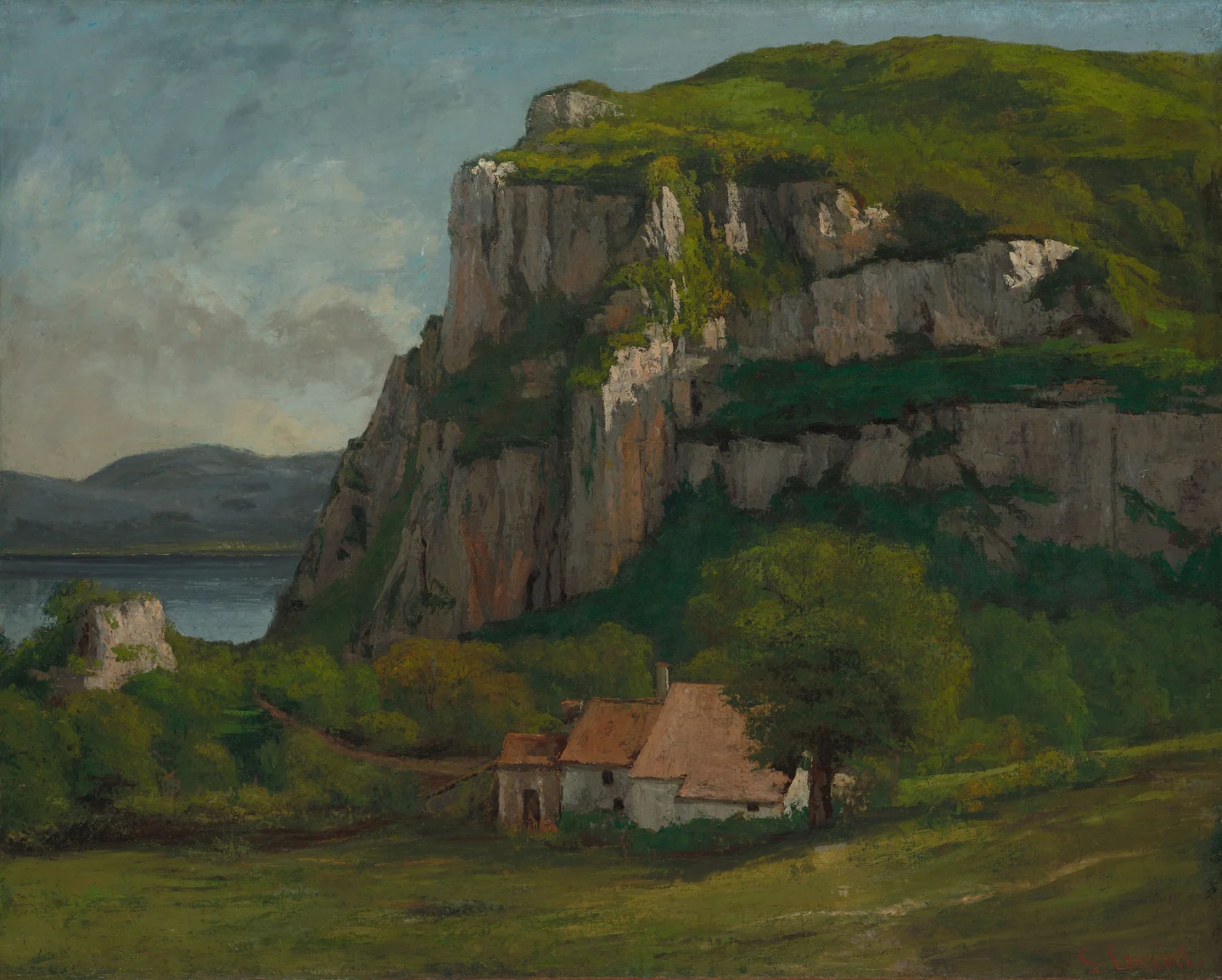
- Medium
- Oil on paper, mounted on canvas
- Collection
- Art Institute of Chicago
- Accession number
- 1987.259
Sources
Wikimedia Commons reproduction. Public domain. Image licence