The Race Track (Death on a Pale Horse)
Albert Pinkham Ryder · c. 1896–1908
Explore the painting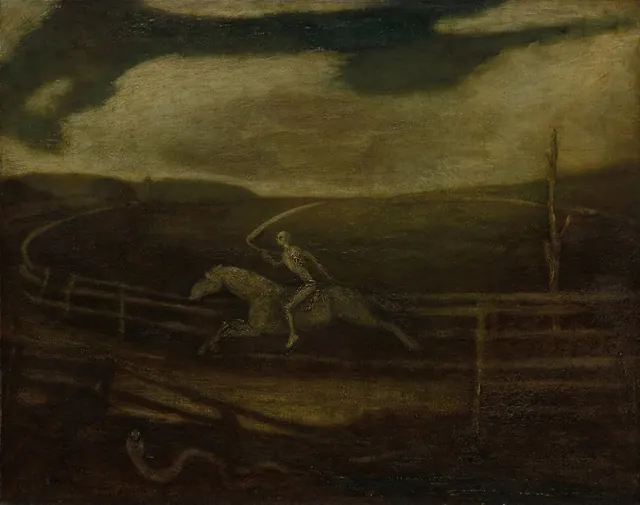
The painting’s story and details
A skeleton carrying a scythe rides around an empty racetrack. Albert Pinkham Ryder worked on this painting from about 1896 to 1908. The Cleveland Museum connects it with the death of an acquaintance who lost five hundred dollars on a horse race in 1888 and subsequently took his own life. The painting moves that private tragedy into an imagined setting. Track and fence remain from an actual sporting event. Death is the sole rider, and no particular New York racecourse can be identified from this view.
Light catches the rider’s skull and ribs. His torso leans with the movement, one arm lifting a long scythe. In European art, a skeleton with a scythe had long represented death overtaking the living. Ryder joins that familiar symbol to the posture of a racing rider. This is allegory: an abstract idea receives a body and performs an intelligible action. The story loses its everyday particulars but becomes accessible to someone who knows nothing about the artist’s dead acquaintance.
The pale horse runs to the left. Its head is lowered, its legs extended, and its light back separates it from the dark earth. Neither rivals nor spectators are present. At a race we usually watch to see who takes the lead; here the rider has no one to overtake. Ryder retains the horse’s movement while removing the means of measuring its success. The race seems to lack the ordinary ending when competitors stop and the audience goes home.
The fence follows the oval track and returns to the foreground. The bend remains clear even where earth almost merges with sky. The closed route can be read as a repetition of risk: another wager, another circuit. That connection arises from the shape of the track itself. No finish line appears, and our eyes follow the rider back around the course.
A snake coils along the lower edge. Its body repeats the track’s curves, bringing an unsettling detail very close to us. The museum identifies it as a sign of temptation and evil. This supports a reading of the painting as a warning against gambling. It cannot, however, explain why a particular person died. Ryder joins a private event to traditional moral imagery, leaving a distance between them: allegory inevitably simplifies a human history.
A bare tree stands on the right beneath dark clouds. Almost the entire landscape is painted in subdued brown and greenish tones. Ryder frequently drew on literature and religion, giving nature the character of a vision. He could rework a canvas for years, applying fresh paint over layers that had not dried. Many of his paintings are consequently fragile. Their present dark surfaces need to be seen with that complicated material history in mind.
The Cleveland Museum notes that Ryder worked on The Race Track for years and was reluctant to part with it. This suggests that the personal memory continued to matter to him, although his exact feelings are unknown. One viewer may see a condemnation of gambling; another, an image of loss returning in memory. The empty racecourse accommodates both readings. The event ended years earlier, while the rider in the painting still follows the same circuit.
More paintings to compare
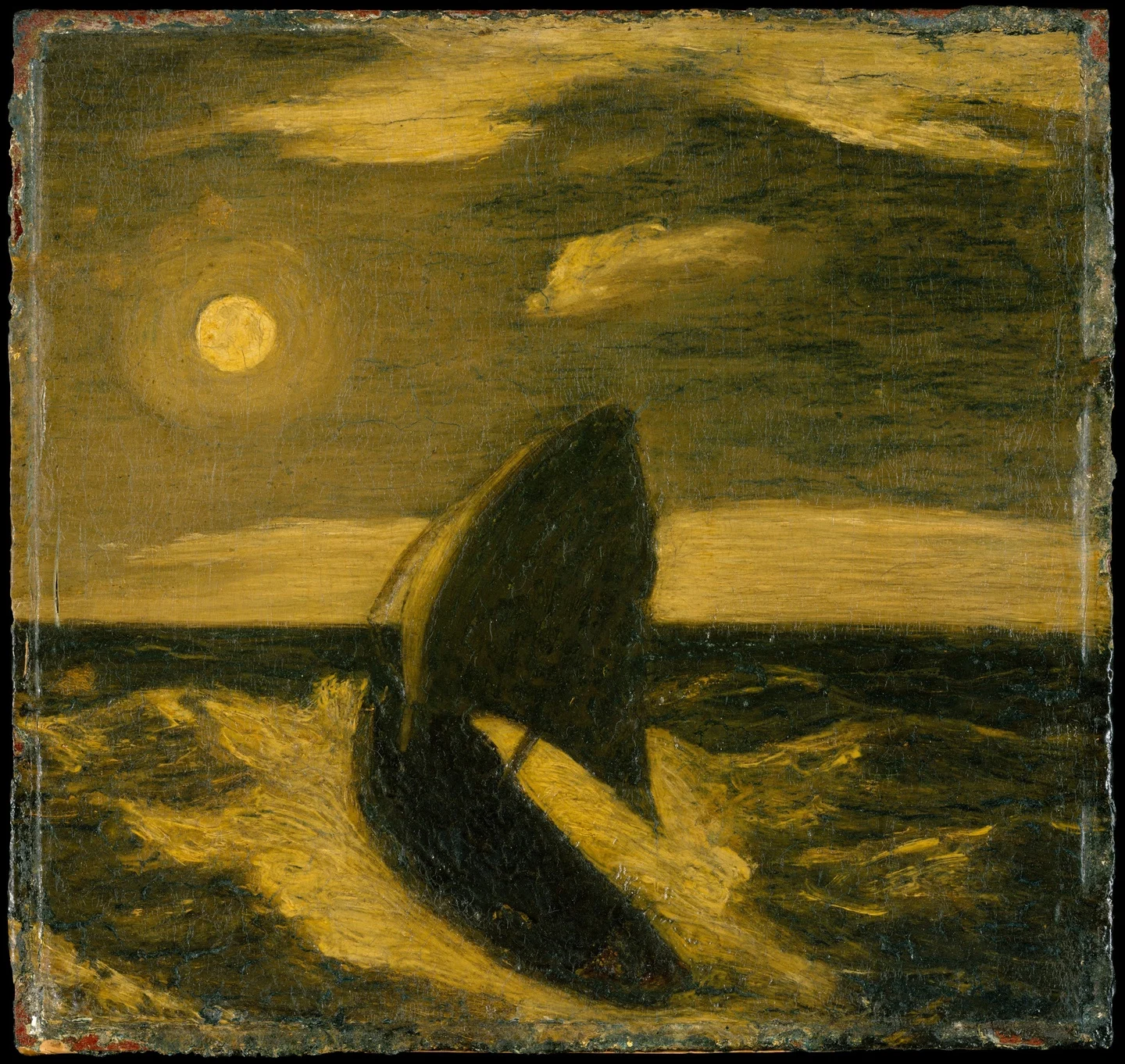 Albert Pinkham Ryder
The Toilers of the Sea
ca. 1880–85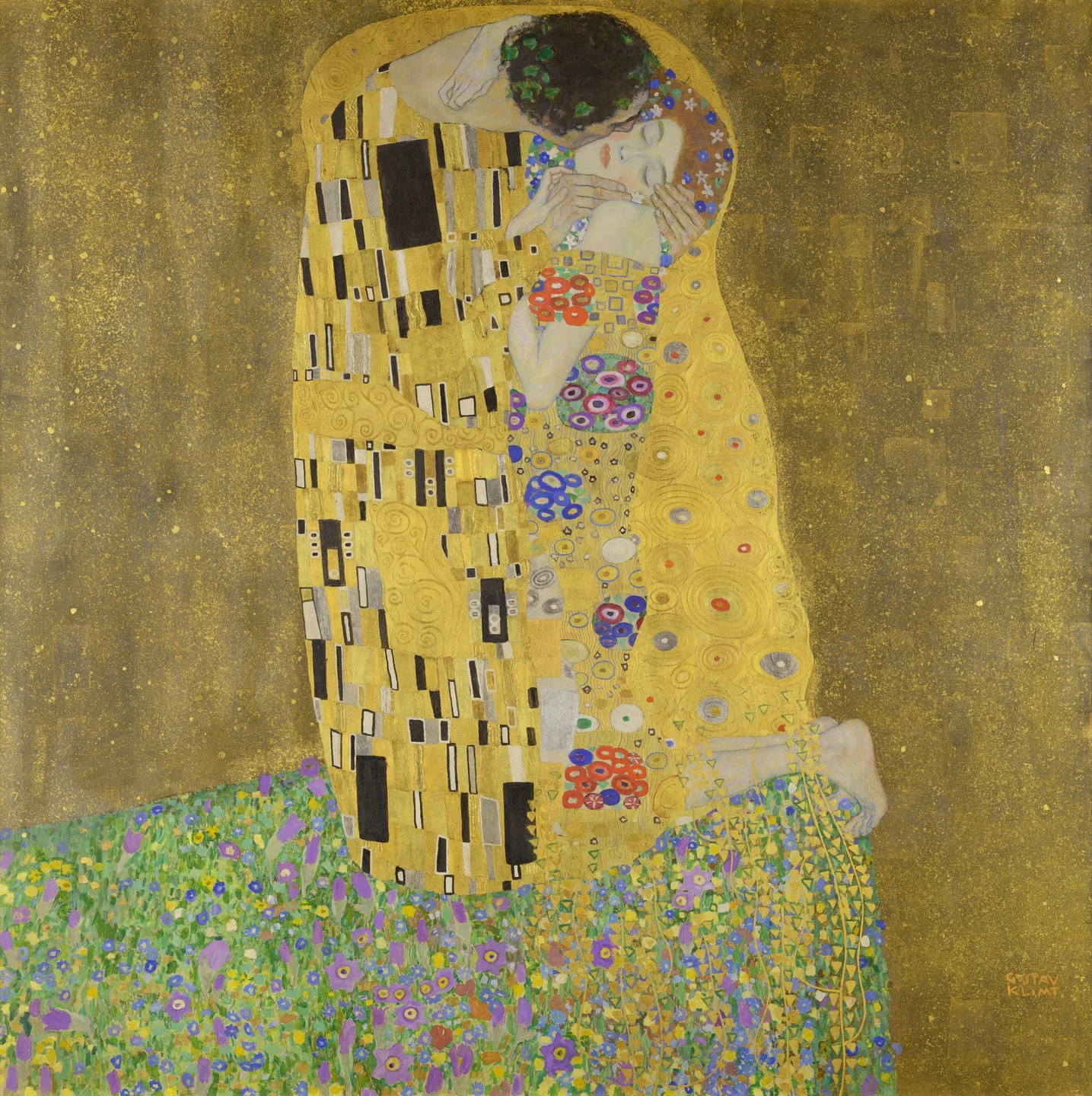 Gustav Klimt
The Kiss (Lovers)
1908 (completed 1909)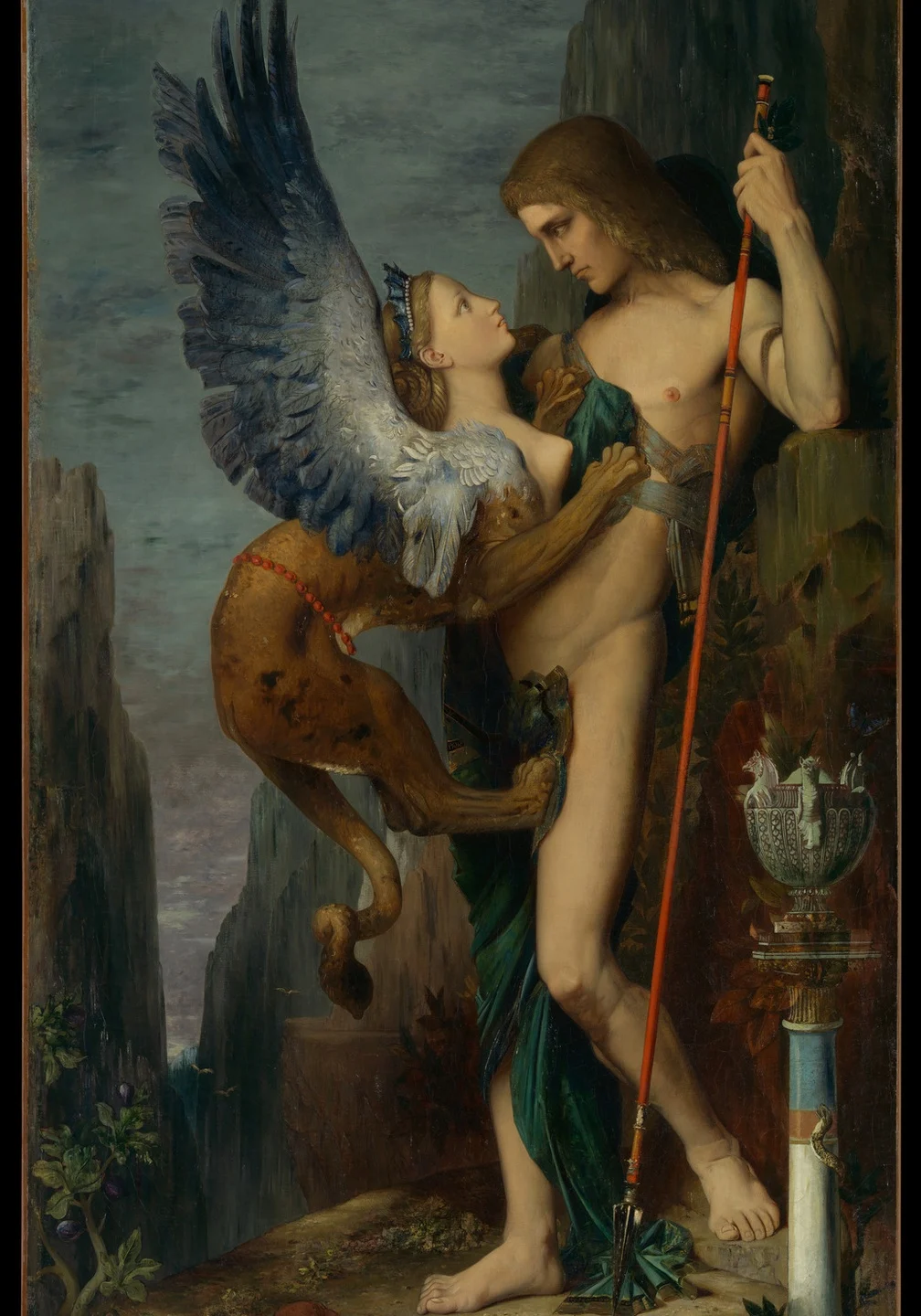 Gustave Moreau
Oedipus and the Sphinx
1864 Mikhail Vrubel
The Swan Princess
1900 Valentin Serov
The Abduction of Europa
1910 Pierre Puvis de Chavannes
The Sacred Grove, Beloved of the Arts and the Muses
1884–89Period, style and subject
- Movement
- Symbolism
- Genre
- Myths & allegories
- Medium
- oil on canvas
- Collection
- Cleveland Museum of Art
- Dimensions
- Unframed, 70.5 × 90 cm
- Accession number
- 1928.8
Sources
Image provided under CC0. Image licence